
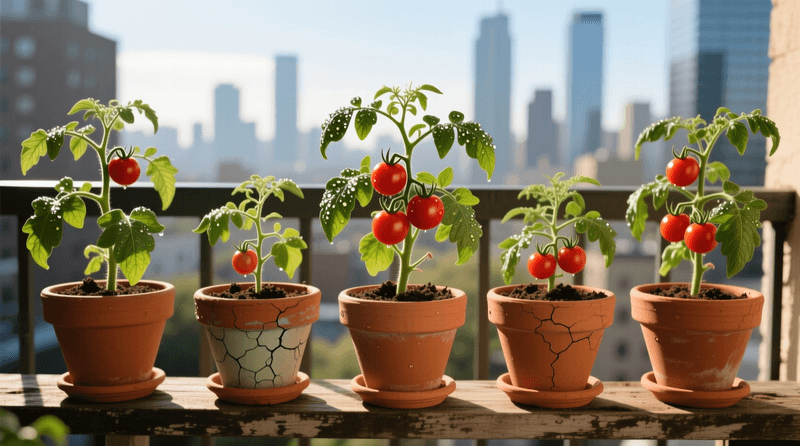
Late summer is brutal on container tomatoes in the South, and a plant that looks small, weak, or stalled can send a gardener scrambling for answers. Watering habits are often worth examining first, but they are rarely the only factor at play.
Repeated shallow applications or letting the potting mix get dangerously dry between waterings are two common problems that can leave roots stressed and fruit development stalled. Knowing how to tell one problem from another, and from unrelated causes like heat or pests, is the fastest way to get your plant back on track.
Small fruit and weak growth can signal stress—but not one guaranteed cause
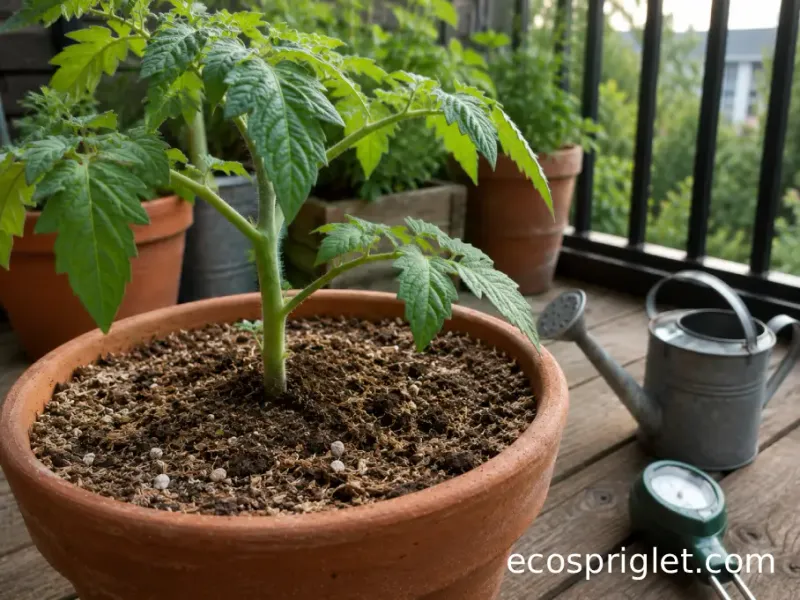
Yellowing leaves, small fruit, stunted stems, and a generally exhausted-looking tomato plant are among the most common distress calls a container gardener faces in late summer. Containers dry out faster than in-ground beds because there is a limited volume of potting mix, and that mix is surrounded by air on all sides, heating up quickly in the Southern sun.
A plant that looks this way may be dealing with a watering problem, but it may not be, and assuming the wrong cause can make things worse.
Two watering issues are worth examining first. Repeated shallow applications that only wet the top layer of the mix can encourage roots to stay near the surface, where they are most exposed to heat and rapid drying.
Separately, allowing the mix to become very dry between thorough waterings can cause moisture stress, wilting, weak growth, and poor fruit development. Both are real problems, but University of Minnesota Extension guidance on growing tomatoes makes clear that thorough, even moisture management matters more than any single watering rule.
Heat-related pollination failure, blossom drop, undersized containers, nutrient problems, pests, disease, and root damage can all produce symptoms that look nearly identical to water stress. Minnesota Extension’s tomato diagnostic tool lists pale leaves, mottled foliage, distorted growth, and galls as signs pointing away from watering alone.
Check the plant and the potting mix directly before deciding on a fix.
Repeated surface sips can keep tomato roots too shallow
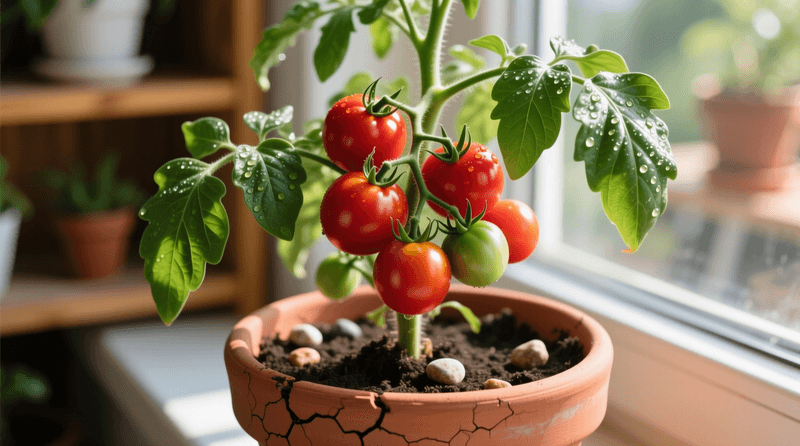
The habit that causes the most quiet, cumulative damage in container tomatoes is what some extension specialists call sip watering: giving the plant a small splash of water that barely penetrates the top inch or two of the mix. Roots grow toward moisture, so when only the surface stays consistently damp, roots tend to cluster near the top rather than spreading deeper into the pot.
Surface roots face higher temperatures, dry out faster between waterings, and are less able to support the plant during a hot afternoon.
University of Minnesota Extension recommends wetting the full root zone rather than applying frequent surface sprinkles, specifically because shallow watering increases heat and drought exposure for the root system. The goal is relatively even moisture throughout the depth of the container, not a wet crust over a dry core.
Allowing the mix to become very dry between waterings is a separate but related concern. Severe dry-down can cause moisture stress, wilting, and weakened fruit development regardless of whether it also affects root depth.
Minnesota Extension’s container plant guidance identifies prolonged drying as one of the main stressors for potted plants in hot conditions. The fix for both problems starts with understanding what the root zone actually feels like below the surface.
Check below the surface before you water
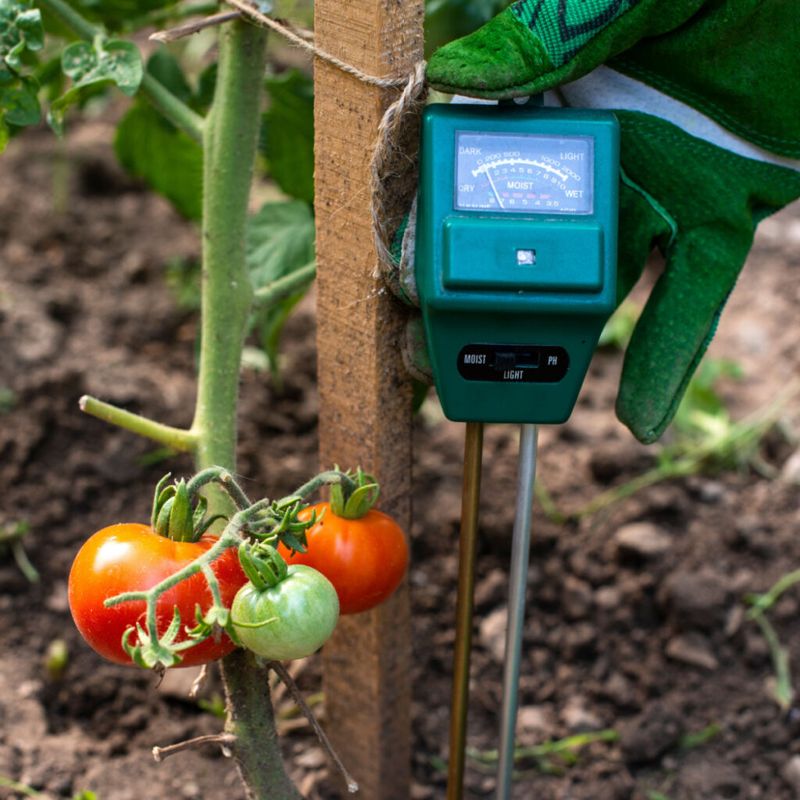
Before reaching for the hose, push a finger two to three inches into the potting mix near the edge of the pot. If the mix at that depth feels moist and cool, the root zone likely does not need water yet, even if the surface looks dry and crusty.
A dry-looking top layer forms quickly in heat and wind and can be completely misleading about conditions where the roots actually live.
Texas A&M AgriLife Extension’s vegetable gardening guidance emphasizes examining moisture below the surface rather than relying on plant appearance or a calendar schedule. A moisture meter or probe can do the same job and reaches deeper into a large pot.
The reading several inches down is the one that matters for watering decisions.
The reverse situation is just as important to recognize. On an intensely hot afternoon, tomato plants sometimes wilt even when the mix is adequately moist, because the roots cannot move water fast enough to match what the leaves are losing to heat.
Minnesota Extension notes that adding water to already saturated media creates new problems rather than solving the original one. Check the root zone first, and let that check make the call.
Water the full root zone, then let the pot drain
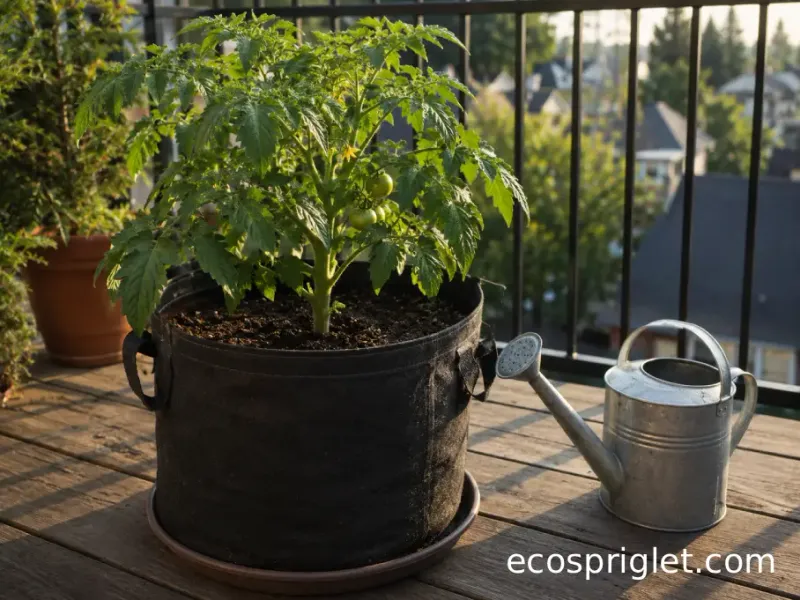
Once the root-zone check confirms the mix is dry enough to need water, apply it slowly at the base of the plant rather than splashing it across the foliage. Move around the pot if it is large, and keep going until you see water beginning to exit the drainage holes at the bottom.
That exit flow tells you the water has traveled through the full depth of the mix rather than channeling down one side and leaving the rest dry.
University of Minnesota Extension specifically recommends watering at the base of the plant and keeping foliage as dry as practical, because wet leaves combined with soil splash can increase the risk of fungal disease. There is no single clock rule about morning versus evening watering that applies in every situation, but base watering that leaves the leaves dry is consistently safer than overhead irrigation.
After the pot drains, empty any saucer or decorative outer pot that has collected standing water. Minnesota Extension’s container guidance explains that prolonged saturation reduces the air space around roots, can contribute to root damage, and can also cause nutrients to leach out of the mix faster.
A thorough soak followed by free drainage is the target, not a pot that sits in a puddle. Empty that saucer within an hour or two of watering.
Let the container, not the calendar, set the schedule
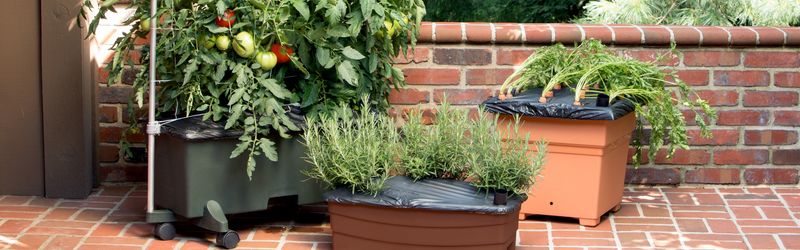
A fixed watering schedule is one of the most common traps in container gardening, because no single interval fits every pot. A small, shallow, dark-colored, or porous container sitting in full afternoon sun with wind moving across it can dry down to the root zone within a single day during a Southern summer.
A larger pot, a lighter-colored container, or one that sits in partial shade may stay adequately moist for two or three days under the same conditions.
Minnesota Extension states that during hot, dry weather, container plants may need water once or more than once per day, and that the correct interval depends on whether the mix is actually drying out rather than on the calendar alone. Daily watering is not automatically overwatering.
The danger is applying water to a mix that is already saturated or leaving the pot sitting in standing water, not the frequency itself.
UF/IFAS guidance on Florida tomato production reinforces the same principle for Southern conditions: monitoring irrigation closely and avoiding both under-watering and over-watering is the key practice, especially when intense sun, warm nights, and wind act together. Recheck the root zone every day during a heat stretch, and adjust frequency based on what you find rather than what the schedule says.
Improve the pot’s drainage, size, mulch, and exposure
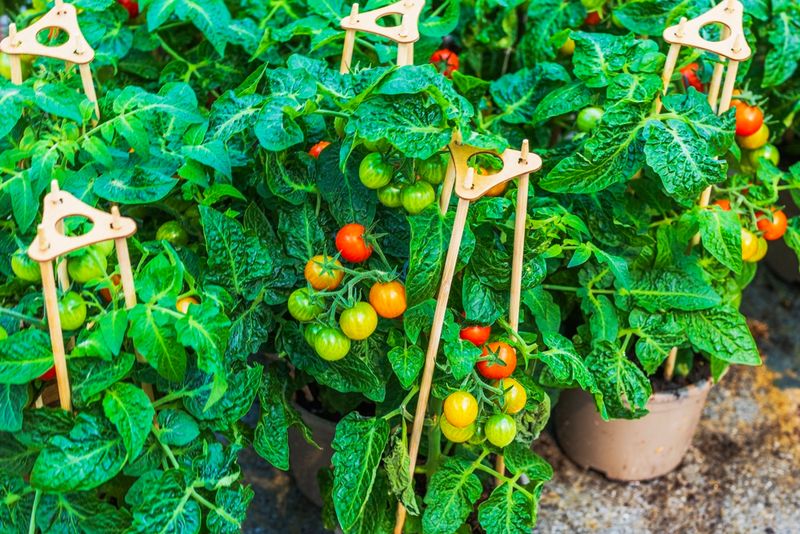
Fixing the immediate moisture problem is only part of the job. The container itself can make consistent moisture management much harder or much easier going forward.
Drainage holes are non-negotiable: a pot without them will stay saturated after every watering regardless of technique. Illinois Extension’s container drainage guidance also cautions against placing a layer of gravel at the bottom of the pot, because it can actually cause water to perch above the gravel layer rather than drain freely through the mix.
Texas A&M AgriLife Extension recommends at least five gallons of potting mix for tomatoes, peppers, and eggplants. Smaller containers dry faster as plants mature and the root system fills the pot, so if your tomato has been in the same container since spring, it may simply have outgrown it.
University of Arizona Cooperative Extension notes that patio and determinate tomato varieties are generally better suited to container growing than large indeterminate types, which need substantially more root volume and support.
A thin layer of clean mulch, such as straw, coconut coir, or herbicide-free grass clippings kept away from the stem, can slow evaporation and moderate surface temperature noticeably. Arizona Extension guidance also suggests that temporary afternoon shade or moving a container to a less exposed location can protect roots and flowers during peak heat, though excessive shade will reduce the light the plant needs for growth and fruit production.
A few hours of protection from the harshest western sun is usually enough to make a real difference.
If the plant stays weak, investigate heat and other causes
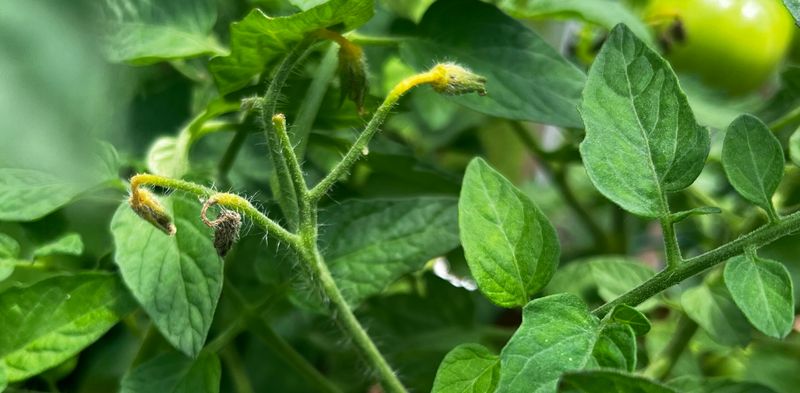
Correcting the watering routine is the right first step, but some plants will not bounce back quickly, and others will not respond at all because the original problem was never about water. Sustained high daytime temperatures, especially above 95 degrees Fahrenheit, and warm nights above 75 degrees can prevent pollen from fertilizing flowers properly.
University of Georgia Cooperative Extension’s tomato production handbook identifies moisture stress as one cause of flower and young-fruit shedding, but heat-driven pollination failure can look identical from the outside even when the plant is adequately watered.
Virginia Cooperative Extension’s tomato guide explains that high temperatures reduce fruit set and fruit size even when other conditions are favorable. Improved watering alone will not restore fruit that was lost to heat-damaged flowers or blossom drop that already occurred.
New flower production under cooler conditions is what eventually brings recovery.
If the plant stays weak after watering is corrected, work through a broader checklist. Minnesota Extension’s tomato diagnostic guide points to pale leaves as a possible nutrient signal, and to mottling, distorted growth, galls, or lesions as signs of disease, herbicide injury, insects, or nematodes.
Repeated watering can leach nutrients from containers, so label-directed fertilizer applications may be necessary, but overfertilizing will not correct a heat or moisture problem. Iowa State University Extension notes that blossom-end rot involves localized calcium movement in developing fruit, and that correcting moisture consistency is usually more effective than automatically adding calcium products.
Check roots, pot size, drainage, sunlight, and feeding history before reaching for any single-ingredient remedy.
Use a check, soak, drain, and recheck rescue routine
A straightforward four-step routine covers the essentials: check the mix several inches below the surface, water slowly and thoroughly at the base if the root zone is dry until water exits the drainage holes, let the pot drain freely, and empty any standing water from the saucer or outer pot. Minnesota Extension and its tomato-growing guidance both support this sequence as the foundation of container moisture management.
Recheck the root zone every day during hot weather and adjust frequency based on what the mix actually feels like, not on a fixed schedule.
Once the plant is no longer severely stressed, adjust mulch, exposure, container size, or label-directed feeding as needed. Virginia Cooperative Extension reminds gardeners that new growth and fruit production may not recover immediately after heat or moisture stress, and that persistent weakness, discoloration, or unusual symptoms call for a broader inspection of pests, disease, roots, and growing conditions.
A tomato that has been through a rough Southern August often needs time as much as it needs better technique.