
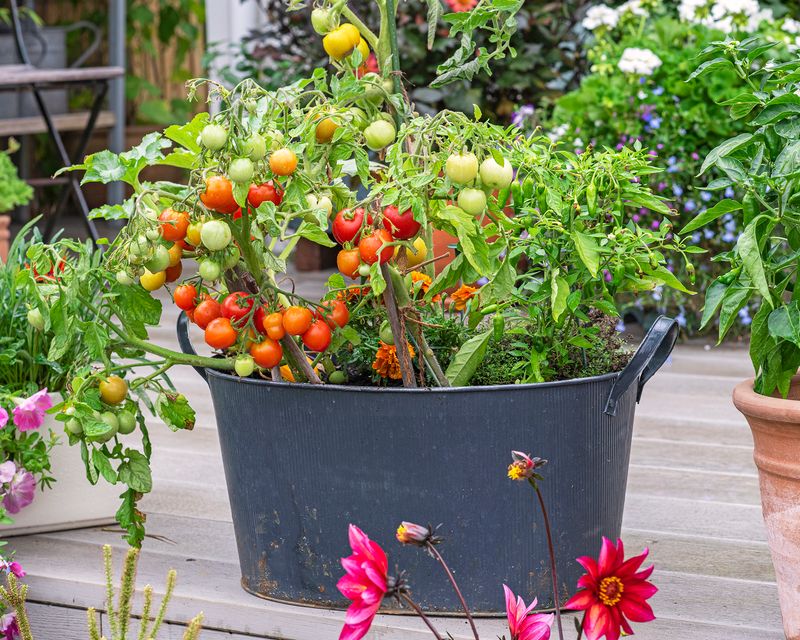
Late summer heat can quietly shut down a tomato plant’s ability to set fruit, even when the leaves still look perfectly green and healthy. For gardeners in Florida, Texas, and across the South, this is one of the most frustrating moments of the growing season.
The problem has more than one cause, and understanding what is actually happening inside your pot is the first step toward making smart, targeted fixes.
Heat can interrupt fruit set before the plant looks sick
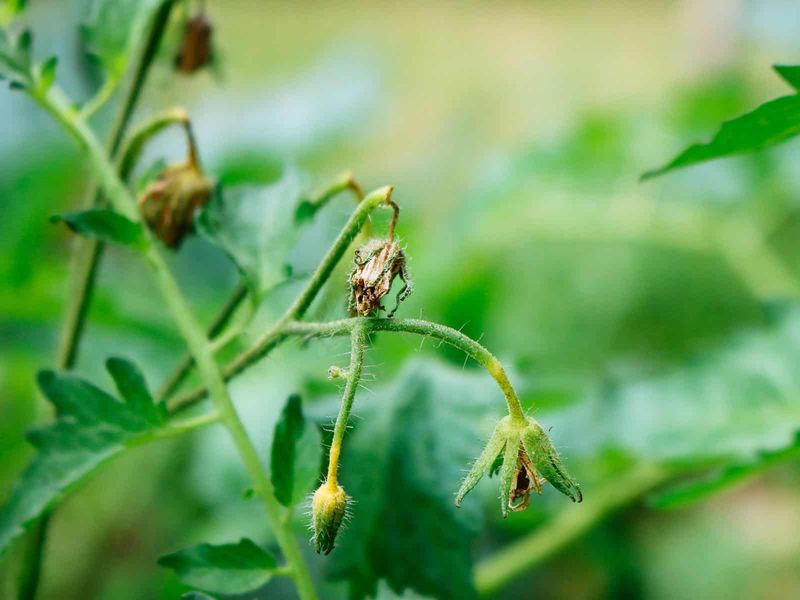
Tomato plants can stop setting fruit while their foliage stays lush and green, which makes the problem easy to miss until the harvest window has already passed. Sustained high temperatures are a well-documented cause.
Penn State Extension research on heat stress and tomatoes explains that excessive heat can cause abnormal pollen development, reduce pollination success, and trigger flower abortion, all before any leaf damage appears.
Nighttime temperatures matter just as much as daytime highs. When nights stay consistently above roughly 70 to 75 degrees Fahrenheit, tomatoes can fail to set fruit even if daytime conditions seem manageable.
Daytime temperatures above roughly 85 to 90 degrees Fahrenheit are commonly unfavorable as well, though the exact threshold varies by cultivar, humidity, wind, and how exposed the root zone is to radiant heat.
A container can intensify all of this. A small pot heats faster, dries out more quickly, and gives roots less buffer against temperature swings than in-ground soil.
That makes container conditions a real factor worth examining, but heat itself can stop fruit set independently, regardless of pot size. The rest of this guide works through each possible contributor one symptom at a time, so you can focus your effort where it is most likely to help.
What does “stopped fruiting” actually look like?
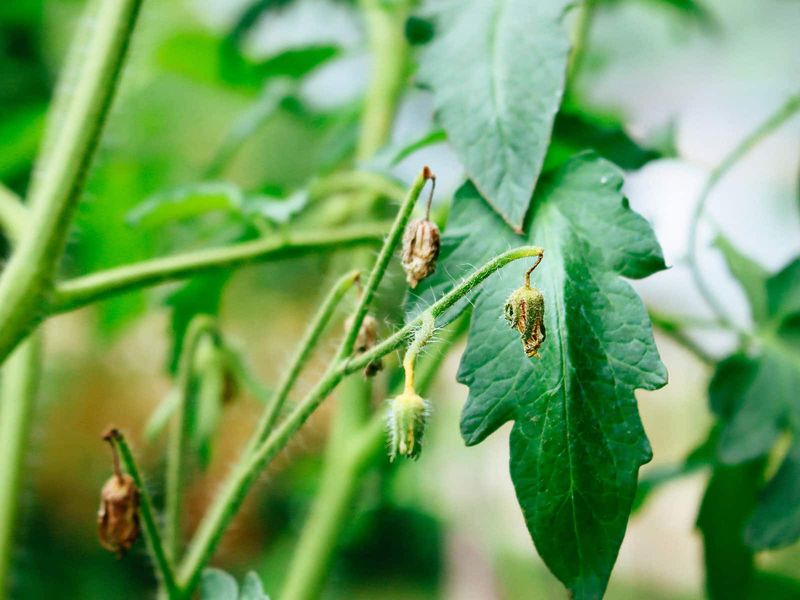
Before adjusting anything in your container setup, take a close look at what your plant is actually doing. The phrase “stopped fruiting” covers at least four distinct problems, and each one points toward a different set of causes.
If flowers are forming and then falling off without producing fruit, heat stress and poor pollination are the most common explanations. Warm nights, low humidity, and temperature extremes around bloom time can all contribute to flower drop.
University of Minnesota Extension guidance on heat and vegetable gardens notes that tomatoes are especially sensitive to high temperatures during the flowering stage.
If the plant is producing no flowers at all, the causes shift. Excessive nitrogen in the potting mix, insufficient direct sunlight, plant age, or severe ongoing stress are more likely culprits than heat alone.
Small fruit that is present but refusing to turn red is a different story again: extreme heat can interfere with the pigment development that drives ripening, and fruit may resume normal color development once nights cool.
Finally, if you are seeing dark, sunken, leathery patches on the bottom of the fruit, that is blossom-end rot. University of Georgia Extension’s guide on blossom-end rot identifies it as a calcium-transport disorder tied primarily to uneven moisture, not a failure to set fruit.
Applying calcium sprays or crushed eggshells will not fix flower drop or poor fruit set, and mixing up these diagnoses can lead to fixes that do not match the problem.
A small pot can amplify heat and moisture stress
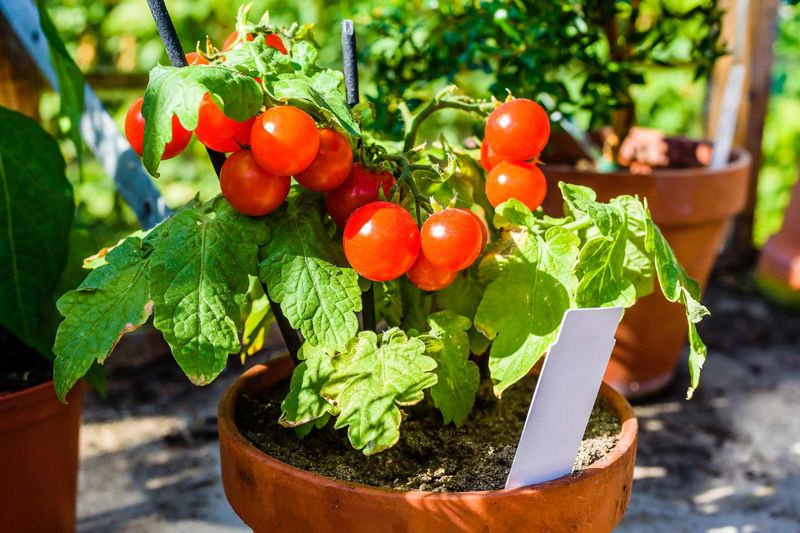
Pot size deserves a real look when your tomatoes are struggling in summer, even if it is not the single universal cause. A container with limited soil volume heats up faster in direct sun, loses moisture more rapidly through evaporation, and gives a large fruiting plant less root-zone capacity to draw from during periods of high heat and evaporative demand.
University of Illinois Extension’s container gardening guide recommends matching container size to the mature size of the plant, with many tomato varieties performing better in containers at least 5 gallons in volume, and larger indeterminate types often needing considerably more space. These are starting points, not guarantees, because variety and mature plant size matter more than a single number.
A tomato growing in a pot that is clearly too small for its size and root system becomes less resilient when temperatures rise. Moisture swings become more extreme, root temperatures spike faster, and the plant has fewer resources to sustain flowering and fruit development under stress.
That said, tomatoes in small containers can and do fruit under favorable conditions. The issue is that a marginal container becomes a bigger liability specifically when summer heat and dry air push the plant toward its limits.
If your pot looks undersized relative to your plant, that is worth addressing, though it will not automatically reverse heat-induced flower drop that has already occurred.
A larger pot helps only when the root zone can breathe
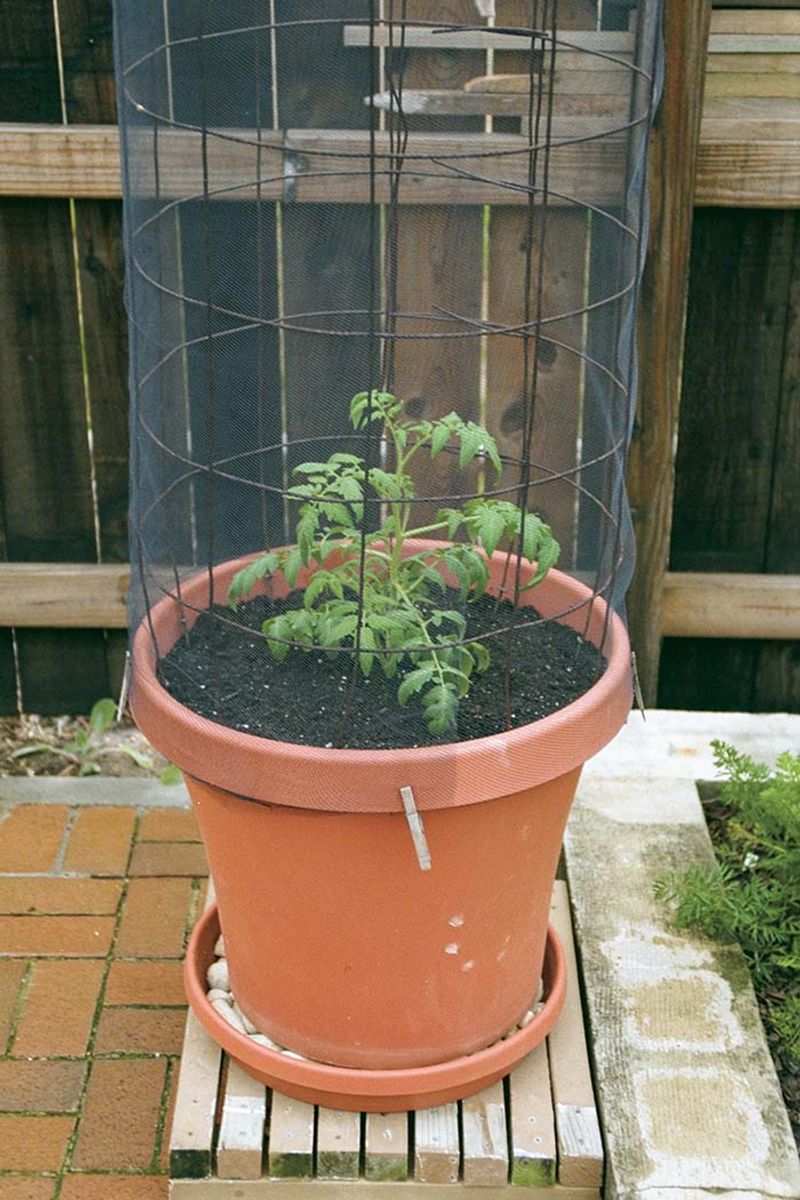
Moving to a bigger pot is not a universal fix. A large container that stays waterlogged after rain or irrigation can stress roots just as seriously as a pot that dries out completely, because roots need both moisture and oxygen to function.
Start with the basics. Check that your container has drainage holes, and make sure your saucer is not sitting full of standing water after you irrigate.
University of Illinois Extension’s guidance on container drainage is direct on one widely repeated shortcut: placing a layer of gravel at the bottom of a pot does not improve drainage. It creates a saturated zone in the potting mix just above the gravel, which can actually hold more water near the roots.
The mix itself matters too. Garden soil on its own tends to compact in containers and drain poorly, which reduces the air pockets roots need.
A lightweight commercial potting mix formulated for containers generally provides better drainage and aeration than garden soil alone.
When deciding whether to repot, consider the plant’s current size and the container’s actual condition rather than assuming bigger is always better. If drainage holes are clear, the mix is not compacted or hydrophobic, and the pot is reasonably sized for the variety, repotting mid-season during a heat wave may add stress rather than relieve it.
Correct obvious drainage problems now, and plan a better container setup for the next planting cycle.
Water by the pot’s moisture, not by the calendar
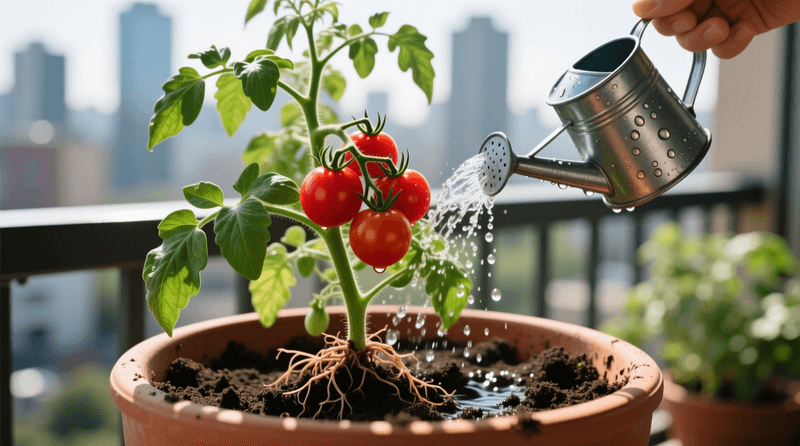
Container tomatoes in summer heat can dry out fast, sometimes within a single afternoon depending on pot size, material, wind, and plant size. Checking the potting mix regularly is more reliable than following a fixed daily schedule, because conditions change and what works on a mild morning may not be enough by late afternoon.
The practical approach: push your finger an inch or two into the potting mix. If it feels dry at that depth, water thoroughly until you see excess draining from the bottom of the pot.
University of Illinois Extension’s watering tips for container gardens emphasizes watering until drainage occurs rather than applying a fixed amount, because that ensures the full root zone gets moisture rather than just the top layer. Then check again as temperatures climb through the day.
In peak summer heat, some containers do need water daily or even twice daily. That is an observation about conditions, not a rule to follow regardless of what the mix feels like.
Watering on a rigid schedule without checking the soil can lead to waterlogged roots on cooler or cloudy days, which reduces oxygen availability and can damage the root system.
Cycling between bone-dry and soaking wet is particularly hard on container tomatoes. University of Minnesota Extension’s irrigation guidance connects erratic moisture with increased risk of blossom-end rot and fruit cracking, both of which compound an already difficult heat situation.
Stable, even moisture will not guarantee fruit set during extreme heat, but it removes one significant stressor from the equation.
Lower the afternoon heat without removing essential light
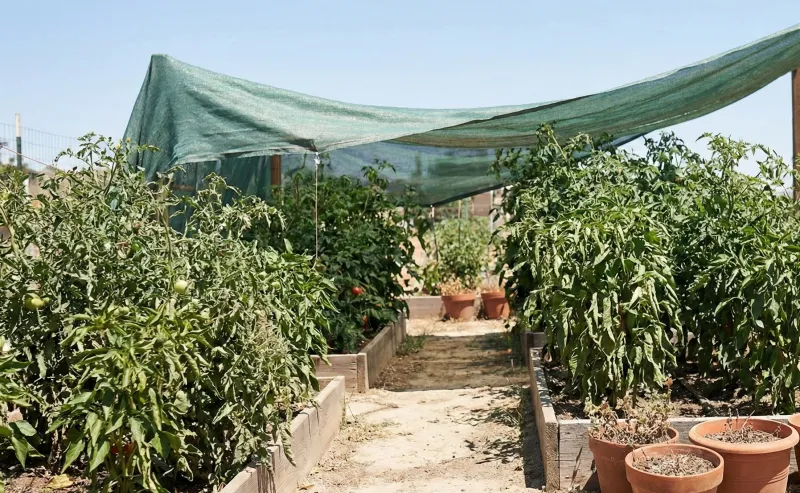
Tomatoes need substantial direct sunlight to flower and produce fruit, so any strategy that reduces heat load has to preserve enough light for the plant to keep working. Heavy all-day shade is not a practical solution, and it can reduce photosynthesis enough to delay flowering further.
A more targeted approach is temporary or moderate afternoon shade. Moving a container to a spot that receives morning sun and afternoon shade during the hottest weeks can reduce the peak heat load without starving the plant of light.
University of Arizona Extension’s tomato production guide notes that afternoon shade can help reduce heat stress during extreme conditions while still allowing adequate morning light for fruit development.
A thin layer of suitable organic mulch placed on top of the potting mix can also help. Mulch slows evaporation from the soil surface and moderates root-zone temperature fluctuations, giving roots a slightly more stable environment during temperature peaks.
Keep the mulch a short distance from the stem to avoid creating a moisture trap against the plant.
Resist the urge to prune off leaves aggressively during a heat wave. Foliage shades the developing fruit and reduces sunscald risk on exposed tomatoes.
Removing too much leaf cover during extreme heat can leave fruit vulnerable and add stress to a plant that is already working hard to survive. Moderate, targeted pruning at a cooler time of year is a different situation entirely.
Use restrained fertility and choose heat-tolerant varieties
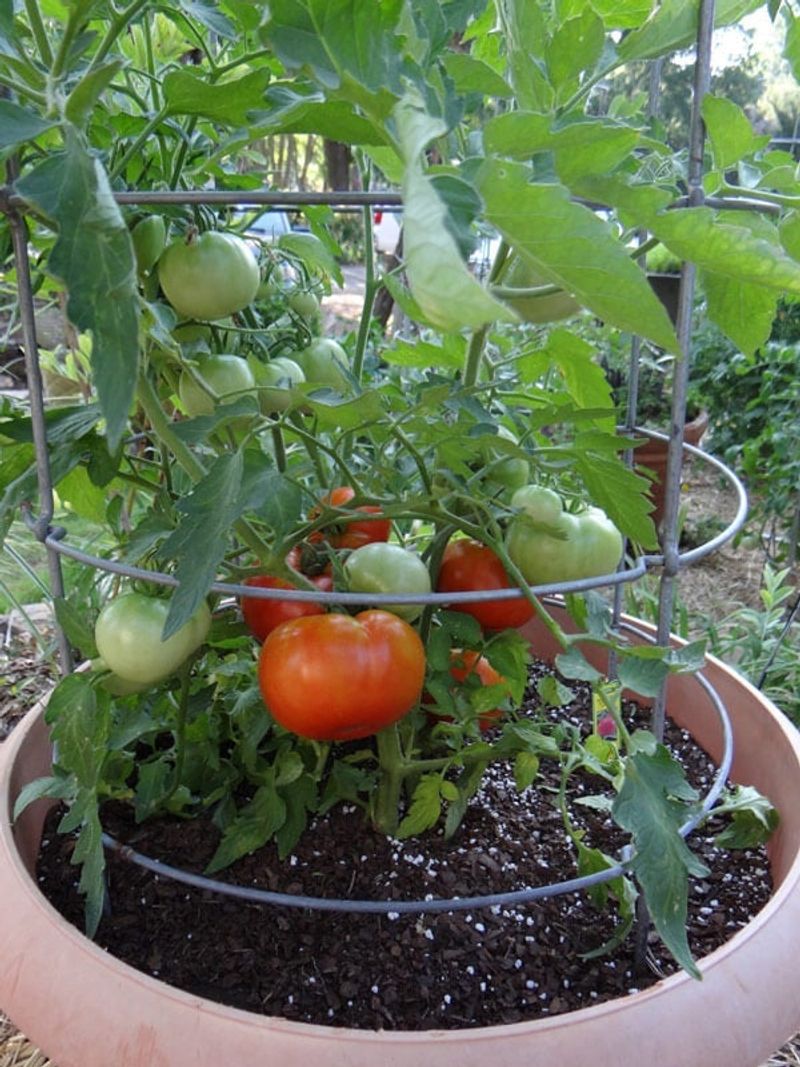
Reaching for fertilizer when a tomato stops fruiting feels like a logical response, but the timing and type of fertilizer matter more than the quantity. Frequent watering in a container can leach nutrients from the potting mix over time, which means some supplemental feeding is reasonable.
The problem comes with excess nitrogen.
Penn State Extension’s guide on growing tomatoes from seedlings to fruit points out that too much nitrogen encourages vigorous, leafy growth at the expense of flower and fruit production. If your plant is producing abundant dark green foliage but few flowers, excess nitrogen is a reasonable suspect.
Follow the label rate for your specific fertilizer, and adjust based on what the plant is actually showing you rather than adding more on the assumption that more is better.
Stabilizing moisture and managing heat exposure should come before any fertilizer adjustment. Once the root environment is more stable, the plant is in a better position to respond to nutrition.
For gardeners planning ahead, heat-tolerant and hot-set tomato cultivars are worth considering for future seasons. University of Florida IFAS Extension research on tomato varieties for Florida identifies cultivars bred specifically to set fruit under warm conditions.
This is a variety-selection decision for the next planting, not a rescue for flowers that have already dropped. Florida and Texas also have different planting windows and heat profiles, so variety recommendations that work in one region may not translate directly to the other.
Follow a symptom-based stabilization plan
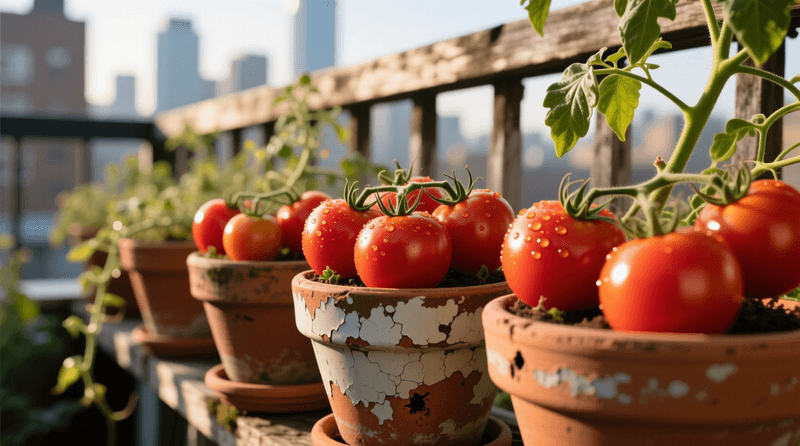
Working through a potted tomato problem in late-summer heat is most useful when you start with what you can actually see. Identify the symptom first: flowers dropping, no flowers forming, fruit not ripening, or blossom-end rot.
Each pattern points toward a different priority, and treating the wrong one wastes time the plant may not have.
From there, check pot size and drainage before assuming a nutrient or watering problem. Confirm drainage holes are clear, empty any standing water from the saucer, and verify the potting mix is neither bone-dry nor waterlogged.
University of Illinois Extension’s container watering guidance and their drainage recommendations are practical starting points for both checks. Stabilize moisture, consider temporary afternoon shade if conditions are extreme, and hold off on calcium supplements, extra nitrogen, or aggressive pruning unless your symptom diagnosis specifically supports one of those steps.
Flowers already lost to heat cannot be recovered immediately, and the next fruiting response depends on weather cooling, the plant’s overall condition, and the cultivar’s heat tolerance. The best long-term move is planning the next cycle around a suitably sized, well-drained container and a variety matched to your local growing window.
Getting those two things right reduces how much corrective work heat forces on you later.