
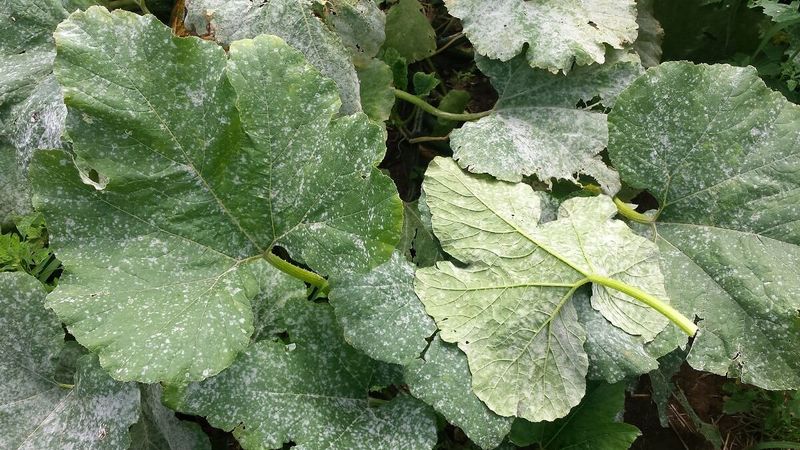
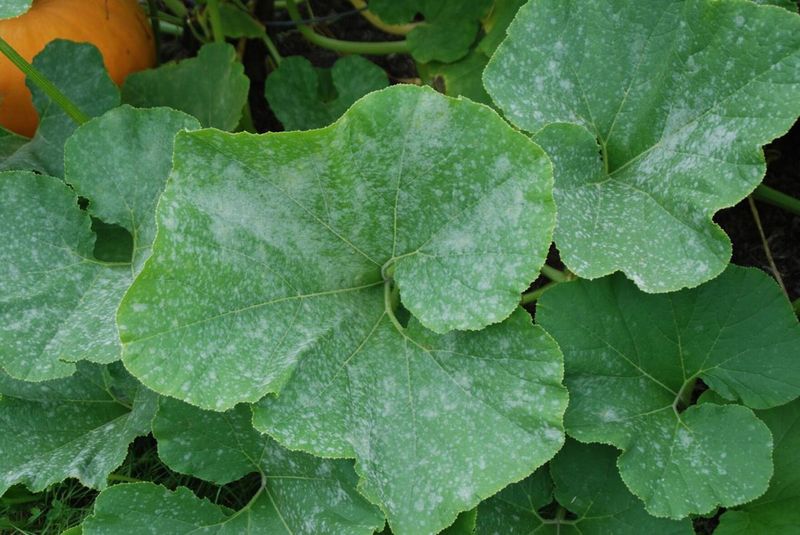
Spotting a white, flour-like coating spreading across your squash leaves can be alarming, especially when the plants were doing fine just a week before. That dusty growth is usually powdery mildew, one of the most common fungal diseases to hit cucurbit crops.
Catching it early and responding with the right steps can protect the rest of your harvest before the season ends.
A Dry White Coating Usually Suggests Powdery Mildew
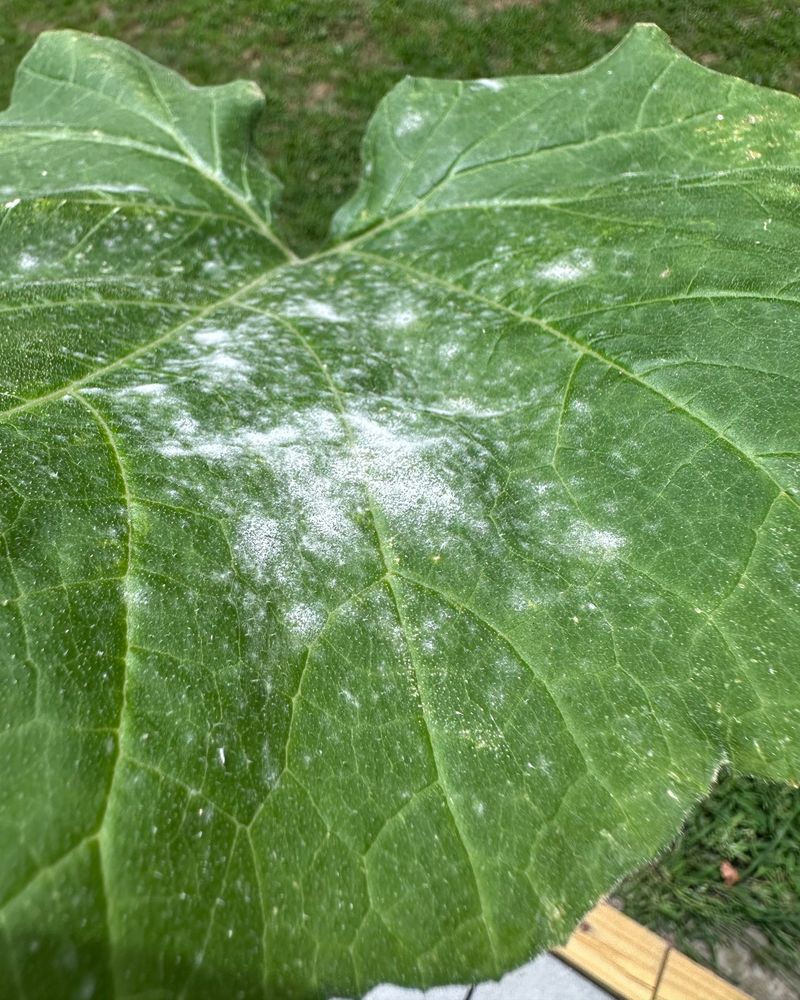
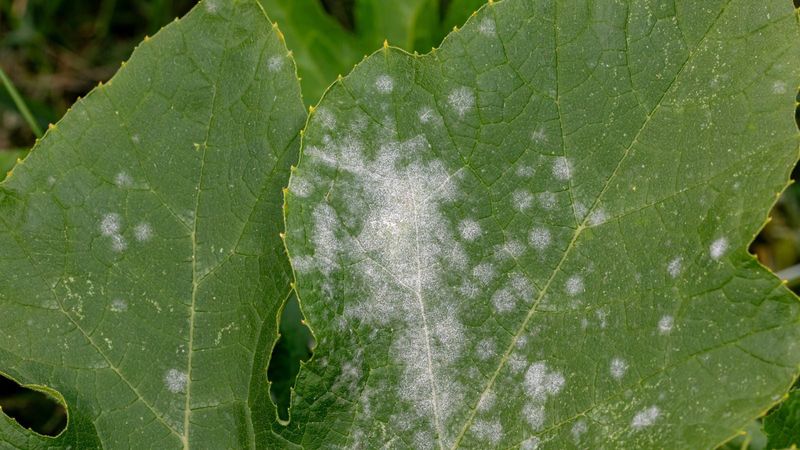
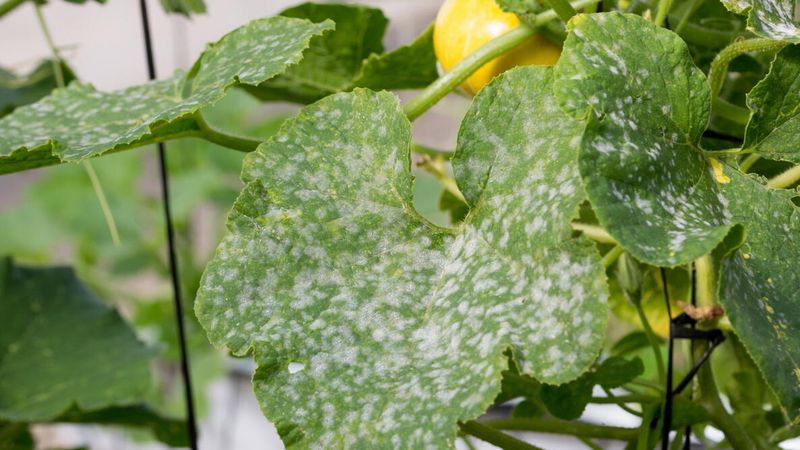
Squash leaves dusted with a white, talcum-like powder are one of the more recognizable sights in a late-season vegetable garden. The pattern typically starts as small pale-yellow or white spots, often on older leaves or the shadiest parts of the plant, then expands into the larger powdery patches that catch your eye from across the garden.
University of Minnesota Extension guidance on cucurbit powdery mildew describes these patches as spreading to petioles, stems, and vines as the infection progresses.
Powdery mildew is the most likely explanation when the coating looks dry and flour-like and appears on the leaf surface rather than underneath. That said, appearance alone cannot confirm the diagnosis.
Other problems can mimic a white coating, so treating without a closer look risks wasting time and money on the wrong response.
All cucurbits are susceptible, including zucchini, cucumber, pumpkin, melon, and watermelon, though squash tends to show symptoms readily. One fungus commonly associated with cucurbit powdery mildew is Podosphaera xanthii, but cucurbit powdery mildew can involve more than one fungal pathogen and you cannot identify the causal species by looking at the leaf.
A close inspection of several leaves, on both sides, is the right first move before reaching for any treatment.
Check Both Sides Before You Treat
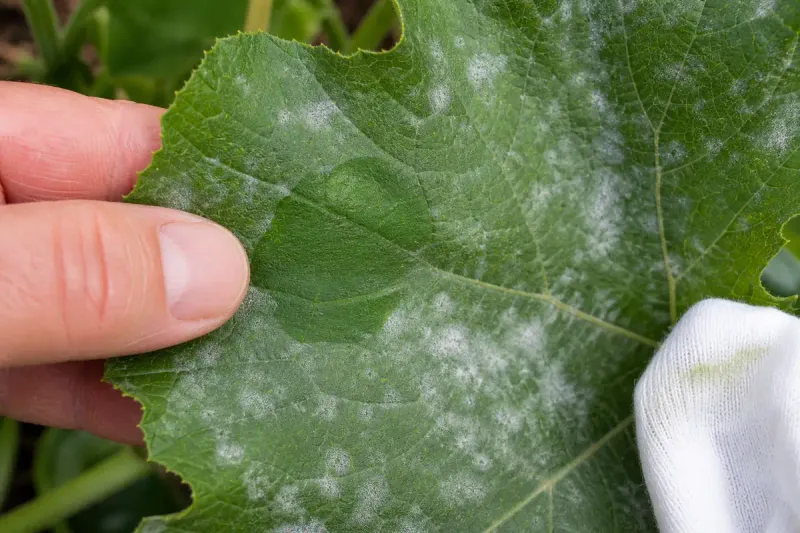
Flipping a few leaves over before you do anything else is one of the most useful habits in vegetable garden troubleshooting. Powdery mildew produces its characteristic dry, flour-like growth on the upper surface of leaves, and while it can sometimes appear on the underside as well, the coating tends to be most obvious on top.
The texture matters: if you can rub the white material off gently and it feels dry and powdery, that fits the powdery mildew pattern.
Downy mildew is the most important look-alike to rule out. University of Minnesota’s squash leaf diagnostic tool notes that downy mildew typically causes angular yellow or pale-green lesions on the upper leaf surface, while the underside develops gray, purple, or whitish fuzzy growth, particularly under wet or highly humid conditions.
That pattern is meaningfully different from powdery mildew’s dry surface coating.
Beyond downy mildew, other possibilities include spray or fertilizer residue, insect-related damage, or other foliar disorders that can leave a pale or whitish appearance. Check several leaves across different parts of the plant, not just one.
Treating a misidentified problem can delay the right response, and some products are not appropriate for every situation. Confirm the symptom pattern fits before moving forward.
Late-Season Conditions Can Reveal the Disease
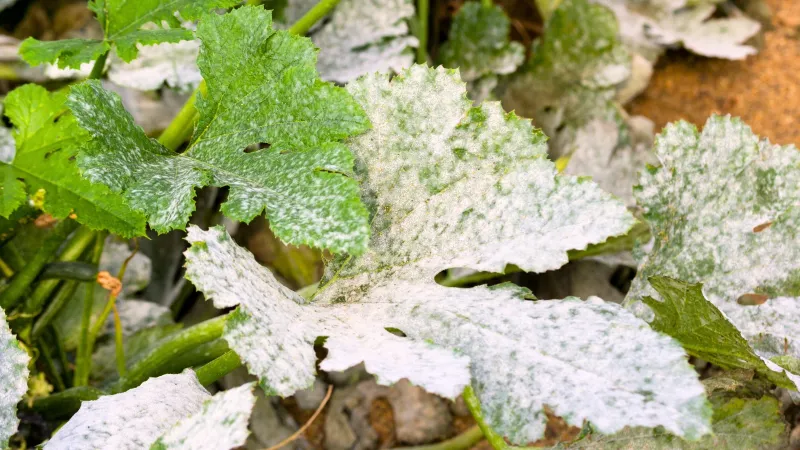
Powdery mildew often becomes noticeable in late summer, but the timing is not simply a matter of heat. Disease development depends on a combination of factors: the presence of the pathogen, a susceptible host plant, warm temperatures, overnight humidity, shade from dense foliage, and plant spacing that limits air movement through the canopy.
No single factor explains every outbreak.
One detail that surprises many gardeners is that powdery mildew does not require rain or continuously wet leaves to spread. UC IPM’s guide to cucurbit powdery mildew explains that dry daytime conditions can actually help spores form and travel by wind, while humidity during cooler overnight hours supports infection.
This is why the disease can appear even during dry stretches when other fungal problems seem unlikely.
In Florida, powdery mildew is recognized as a recurring squash disease, with University of Florida IFAS Extension documentation on summer squash production noting it often shows up on older leaves and stems as the season progresses. Timing varies elsewhere and depends heavily on local conditions rather than following a predictable regional calendar.
If your plants are crowded, heavily shaded, or growing in a spot with poor air movement, conditions are more favorable for the disease to take hold regardless of the temperature on any given afternoon.
The Main Damage Happens to the Foliage
Powdery mildew targets the leaves rather than the squash fruit directly, which sometimes leads gardeners to underestimate its impact. The coating itself is not simply cosmetic.
As infection spreads and more leaf area is covered, the plant’s ability to photosynthesize drops, and that loss compounds over time.
Heavy foliage loss can weaken the plant, reduce fruit size or overall yield, and push the plant toward premature ripening earlier than you planned. Fruit that loses its leaf canopy cover also faces increased sunscald risk, since the leaves that normally shade developing squash are no longer doing that job.
University of Minnesota Extension’s cucurbit disease resource supports this picture of cascading effects from significant leaf loss.
A few affected leaves on an otherwise healthy plant do not automatically mean the season is over. Plants can tolerate some level of infection, particularly if it is caught before it spreads widely.
What treatment cannot do is restore leaves that are already badly damaged. Once foliage is heavily covered and dying, no spray will bring those leaves back.
The practical goal is protecting the healthy growth that remains and slowing the spread to new leaves before more of the canopy is compromised.
Remove the Worst Leaves and Open the Canopy
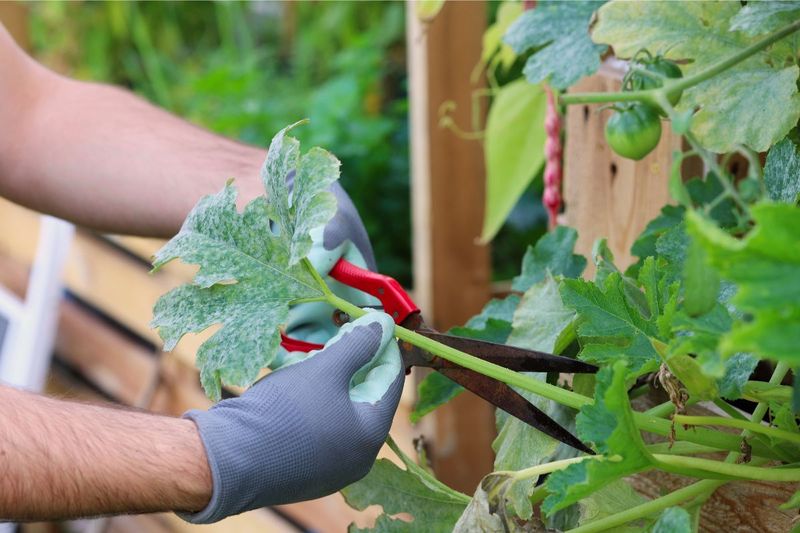
Once the symptom pattern points toward powdery mildew, the first physical step is removing severely infected or dying leaves and plant parts. The goal is to reduce the amount of active fungal material on the plant while keeping enough healthy foliage in place for continued photosynthesis and fruit development.
Stripping every discolored leaf is not the target; retaining productive, green tissue matters for the plant’s recovery.
Collect the removed material and discard it away from the garden rather than leaving it on the ground nearby. University of Minnesota Extension’s home garden disease management guidance advises against putting diseased material in home compost piles, since many backyard piles do not reach temperatures high enough to reliably kill fungal spores.
Bagging the debris and disposing of it separately is the safer choice.
After pruning, look at the canopy structure. Weeds growing through or around the squash compete for light and restrict airflow, so clearing them helps.
UC IPM’s cucurbit powdery mildew resource recommends spacing plants so air moves freely through the canopy and choosing a sunny location when possible. Watering at the soil level rather than routinely wetting the foliage is also a sound general practice for reducing disease pressure in the bed.
These steps lower the conditions that favor continued spread, but they will not instantly reverse an existing infection.
Use a Crop-Labeled Treatment Early
Fungicide products are most useful when applied before infection is widespread or at the very first signs of disease. Once the canopy is heavily covered, products have a harder time keeping up with the spread, and they will not repair foliage that is already badly damaged.
The practical window for treatment is early, when there is still healthy new growth to protect.
Choosing the right product starts with the label. UC IPM’s vegetable powdery mildew guidance makes clear that home gardeners should use only a product whose current label specifically lists squash or the crop being treated.
Using a product on a crop it is not registered for is not just ineffective; it is a violation of federal law.
The label is also the controlling document for every application detail. EPA guidance on pesticide labels explains that the label is legally enforceable and governs the application rate, required protective equipment, reentry intervals, and the preharvest interval, which is how many days must pass between the last application and harvest.
Reading and following the current label before each use is not optional. Products change, registrations change, and a label from a previous season may not reflect what is currently permitted.
No brand names or fixed spray schedules are recommended here because those details must come from the product’s own current, registered label.
Avoid Spray Choices That Fail in High Heat
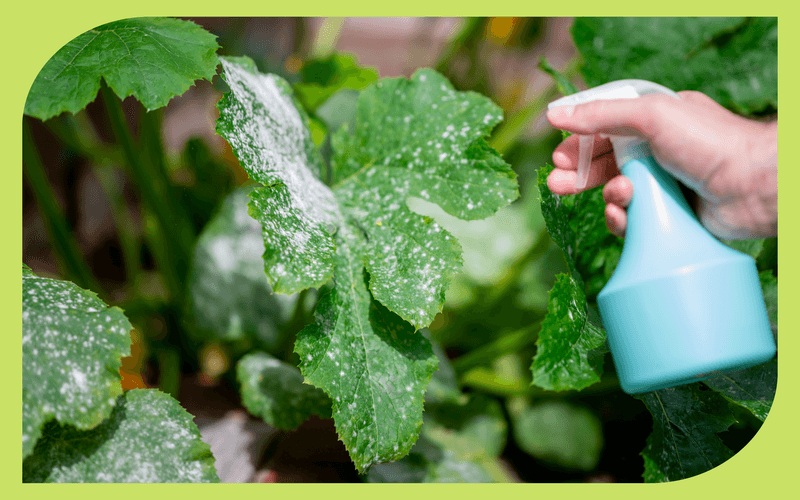
Southern summers create a specific set of risks when it comes to applying treatments to squash. Horticultural oils and plant-based oils such as neem oil can suppress mild to moderate powdery mildew infections, but they carry real injury risk under certain conditions.
UC IPM’s vegetable powdery mildew resource is direct on this point: do not apply horticultural or plant-based oils to drought-stressed plants, when temperatures exceed 90 degrees Fahrenheit, or close to a sulfur application. Combining these conditions with an oil spray can cause phytotoxic leaf injury that compounds the damage already present.
Sulfur-based products are another option that requires caution with cucurbits. UC IPM’s cucurbit-specific powdery mildew page notes that some cucurbit varieties are sensitive to sulfur, and that sulfur should not be applied at or near 90 degrees Fahrenheit or above unless the product label provides different, more specific direction.
A gap of at least two weeks between oil and sulfur applications is also recommended unless the label says otherwise.
Improvised home remedies deserve a clear-eyed look before you try them. Milk sprays, vinegar, dish soap, and homemade baking-soda mixtures are sometimes mentioned online, but Colorado State University Extension’s powdery mildew resource describes baking-soda and oil mixtures as experimental, with evidence drawn mainly from roses rather than squash.
Household detergents in particular can injure squash foliage and are not a reliable substitute for a labeled product. Stick to products designed and registered for the job.
Reduce Pressure in the Next Planting
Prevention is far easier than rescue, and most of the steps that help during an active infection translate directly into habits worth building before the next planting. Site selection matters more than many gardeners expect.
Squash growing in a spot with full sun and good natural airflow starts the season with a structural advantage over plants crowded into a shaded corner of the garden.
Spacing plants so air moves freely through the canopy, keeping weeds cleared from around the bed, directing water to the soil rather than routinely wetting foliage, and avoiding excess nitrogen are all practices that reduce the dense, shaded canopy conditions that favor disease spread. UC IPM’s cucurbit powdery mildew guidance ties each of these steps to lower disease pressure over the growing season.
Variety selection is another tool worth using. Seed suppliers sometimes describe varieties as powdery-mildew resistant or tolerant, and choosing one of those options can reduce how severely the disease develops.
Still, resistance is not a guarantee. Cornell field evaluations of resistant butternut squash varieties found that resistance reduced disease severity but became less protective as disease pressure increased.
The practical sequence remains the same whether you are rescuing a current planting or preparing the next one: confirm the symptom pattern, remove the worst-affected foliage, protect new growth before infection spreads widely, and stay away from heat-incompatible sprays. A garden that finishes the season with a plan already in place starts the next one ahead.