
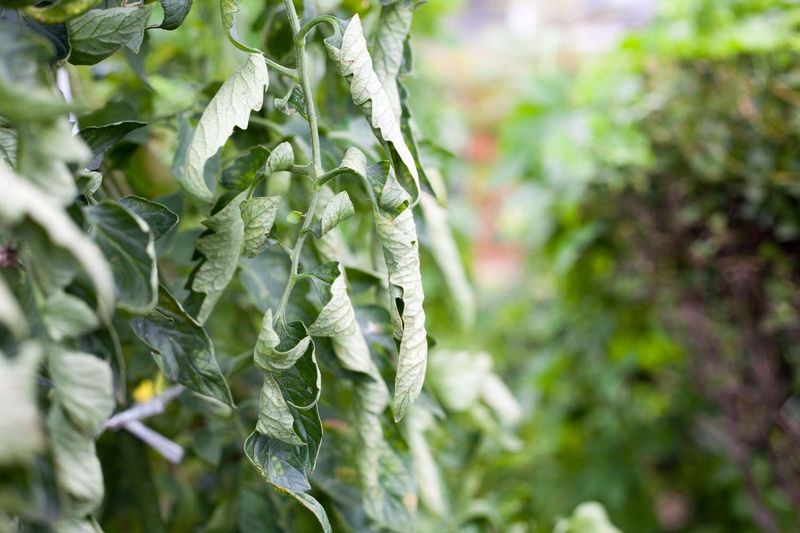
Stepping out to check your tomato plants and finding a row of tightly curled, leathery leaves can send any gardener straight into panic mode. Before you reach for a fungicide or start pulling plants, take a breath – what you’re seeing is often a normal stress response rather than a sign of disease.
Knowing how to read the full pattern of symptoms, check the soil, and respond calmly can make the difference between a season-saving fix and an unnecessary overreaction. August heat is hard on tomatoes, but most plants are tougher than they look.
The classic green, leathery curl often reflects physiological stress
Tomato leaves that curl up and roll inward toward the midrib, while staying a healthy shade of green and feeling noticeably firm or leathery to the touch, are showing a pattern that gardeners and extension specialists have a name for: physiological leaf roll. According to University of Minnesota Extension’s tomato disorder guide, this symptom typically starts on the lower leaves and works upward as stress continues.
The leaves are not rotting, browning at the edges, or developing spots – they simply look like they’ve tightened into a tube.
This pattern is reassuring in one specific way: it does not automatically mean blight, early blight, late blight, or a virus has arrived. University of Illinois Extension describes mild physiological leaf roll as generally non-damaging to plant growth and tomato yield in most cases.
The plant is responding to stress by reducing the leaf surface exposed to sun and wind, not dying.
That said, the appearance alone cannot rule out other problems. Viruses, foliar diseases, herbicide drift, and insect feeding can all produce curling or distortion.
The classic green, broadly rolled pattern is a useful starting point, but the whole picture – including new growth, fruit condition, and nearby plants – matters before drawing any firm conclusion.
August heat can trigger leaf roll even when soil is not bone-dry
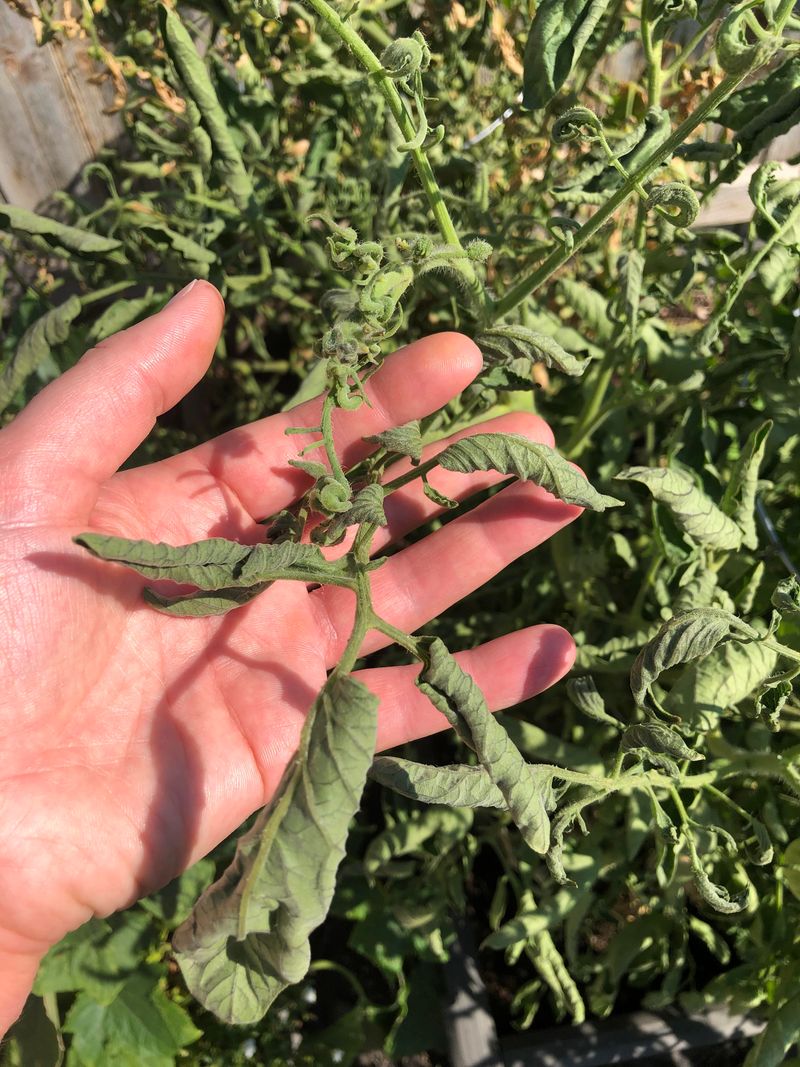
On a scorching August afternoon with temperatures climbing past 90 degrees Fahrenheit and a steady breeze pulling moisture from every leaf surface, tomato plants face a demand their roots often cannot keep up with. Illinois Extension’s overview of heat stress in the garden explains that high temperatures dramatically increase the rate at which leaves lose water through transpiration, and when that loss outpaces what the roots can absorb and move upward, the plant begins to show visible stress signals – including leaf curl.
Rolling the leaf edges inward reduces the surface area exposed to direct sun and moving air, which slows water loss. It is a protective response, not a sign that the plant has given up.
Illinois Extension’s leaf roll resource notes that heat and wind can provoke this response even when the soil still holds some moisture, because the leaves simply cannot receive water fast enough from the root system under those conditions.
Clemson Extension also identifies rapid growth, heavy pruning, root disturbance, excessive nitrogen, and waterlogged soil as additional triggers that can produce similar symptoms. Uneven or insufficient soil moisture is one contributor worth checking, but heat and wind can do this on their own, which means curled leaves during a heat wave are not automatic proof that the plant is thirsty.
Check available root-zone moisture before watering
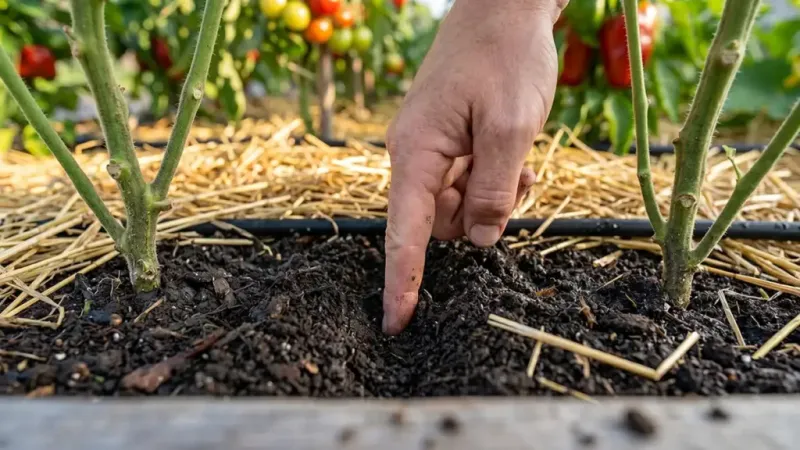
Reaching for the hose the moment you spot curled tomato leaves is an understandable instinct, but it can backfire. The first and most useful diagnostic step is to push a finger, a wooden dowel, or a soil probe several inches down into the root zone, which extends roughly six to twelve inches below the surface for established plants.
What you find there – genuinely dry, crumbly soil versus cool, damp soil – tells you more than the appearance of the leaves alone.
University of Minnesota Extension’s tomato growing guide offers roughly 1 inch of rainfall or irrigation per week as a general benchmark for tomatoes, but frames it as a starting point rather than a rigid rule. Sandy soils drain faster and may need more frequent attention.
Heavy clay soils hold moisture longer and can stay wet long after a rain. Containers, raised beds with fast-draining mix, hot and windy exposures, large plants with heavy fruit loads, and stretches of cloudless weather all shift the actual need away from any fixed weekly number.
Persistently wet or soggy soil is a reason to hold off on watering, not add more. Oregon State Extension’s soil-plant-water relationships guide explains that waterlogged soil cuts off oxygen to roots, which can damage or kill root tissue and leave the plant unable to absorb water even if the soil is technically wet.
A plant in saturated ground may look drought-stressed because its roots cannot function properly. Checking the actual soil condition before acting protects you from making that mistake.
Give genuinely dry plants a slow, thorough soak
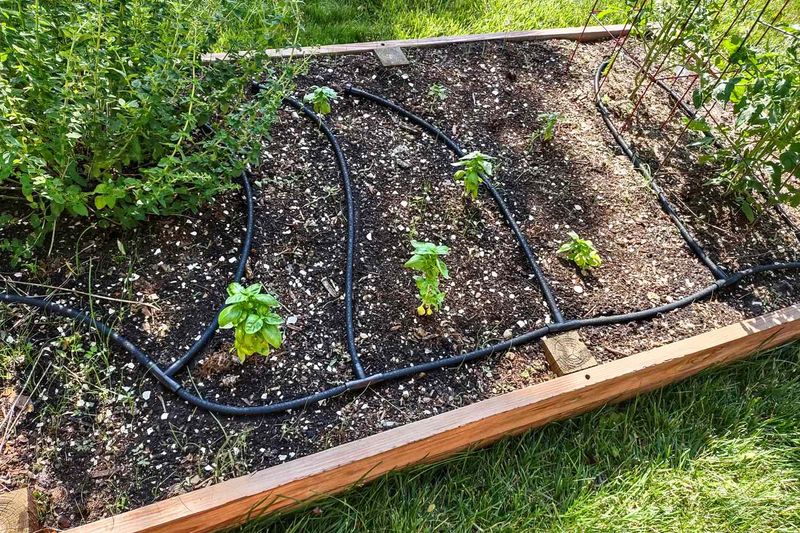
When the soil several inches down genuinely feels dry and the weather has been hot and relentless, the right move is a slow, thorough watering applied directly to the soil surface at the base of the plant. University of Minnesota Extension recommends applying water slowly enough that it soaks into the root zone rather than running off the surface.
Frequent shallow sips – a quick spray every day or two – encourage roots to stay near the surface, which leaves plants more vulnerable to heat and drought as the season wears on.
Watering in the morning, when practical, gives foliage time to dry and reduces the window for fungal problems to develop. Directing water at the soil rather than overhead also matters: wet foliage and soil splash are associated with the spread of several common tomato diseases, so a soaker hose or drip line at the base of the plant is a practical upgrade from an overhead sprinkler.
A two- to three-inch layer of mulch around the plants – keeping it pulled a few inches away from the main stem – can make a meaningful difference in how long that moisture lasts. Oregon State Extension’s tomato growing guide notes that mulch conserves soil moisture, moderates soil temperature, reduces evaporation between waterings, and limits the soil splash that can carry pathogens onto lower leaves.
Consistent moisture, rather than alternating between dry and saturated, is the goal.
Adjust the plan for containers and extreme heat
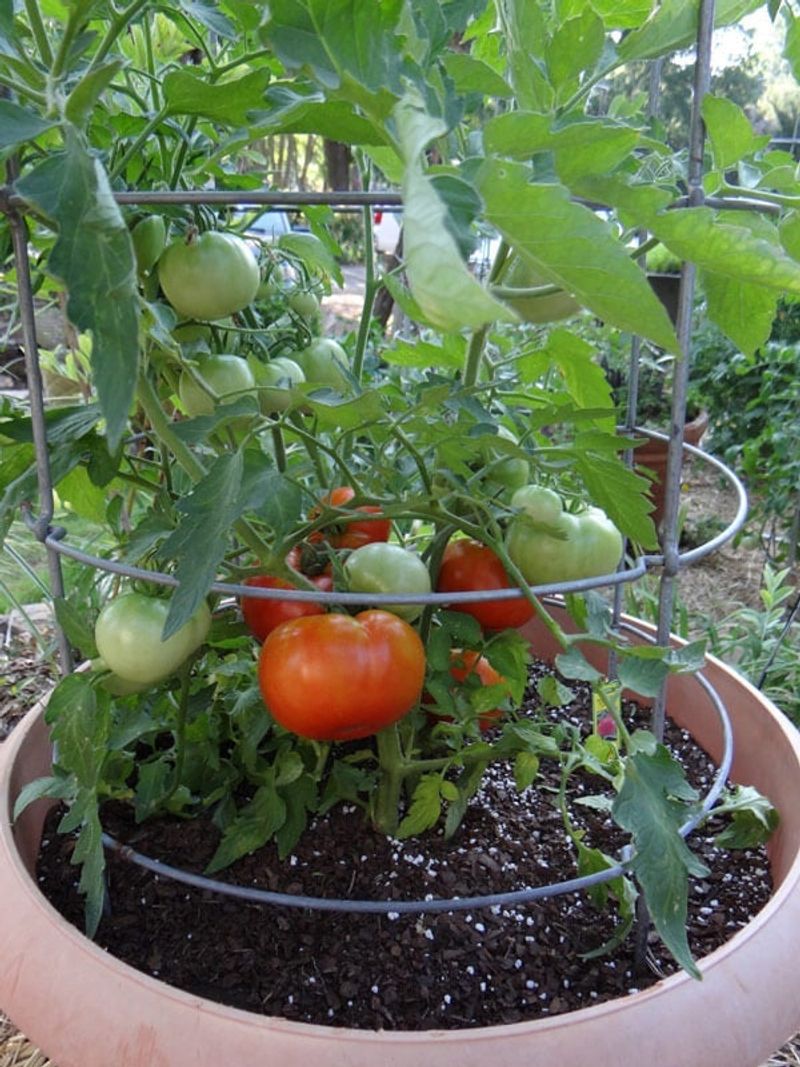
Container-grown tomatoes operate under a different set of rules than plants in the ground. A pot or grow bag has a limited volume of growing medium that can dry out completely within a single hot afternoon, especially when the container is sitting on a concrete patio that radiates heat from below.
University of Minnesota Extension’s container plant care guide notes that during hot, dry weather, container plants may require daily watering or, depending on size and conditions, attention more than once per day. The goal is to keep the growing medium adequately and evenly moist without leaving it continuously soggy, which cuts off air to the roots just as drought does.
When temperatures push well above 90 degrees Fahrenheit for extended stretches, temporary afternoon shade can reduce the solar load on plants and slow water loss from leaves. Penn State Extension’s heat stress resource presents shade as a stress-reduction measure rather than a guaranteed fix, and it works best when deployed during the hottest part of the day – typically mid-afternoon – rather than blocking morning light that the plant needs for photosynthesis.
Heavy pruning during a heat wave is a step to avoid. Illinois Extension cautions that removing too much foliage at once strips the shade that leaves provide to the fruit below, raising the risk of sunscald on exposed tomatoes.
Selective removal of clearly dead or diseased material is fine, but aggressive thinning during peak heat tends to create more problems than it solves.
Look for warning signs that point beyond ordinary leaf roll
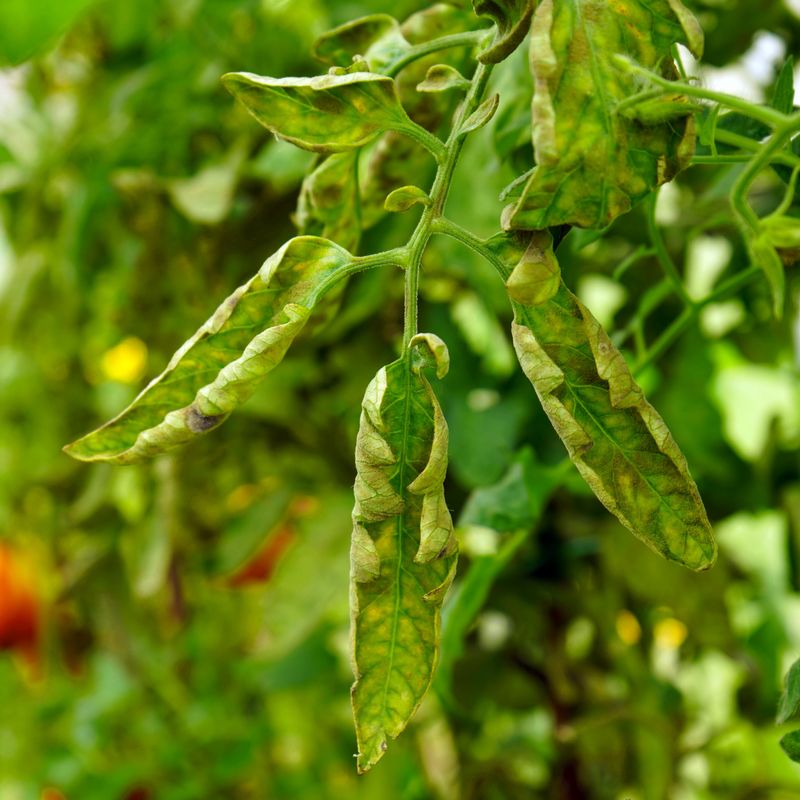
Classic physiological leaf roll has a recognizable profile: leaves curl upward and inward, stay green, feel firm, and tend to appear first on the lower part of the plant during hot weather. Symptoms that stray from that profile deserve a closer look before assuming heat stress is the whole story.
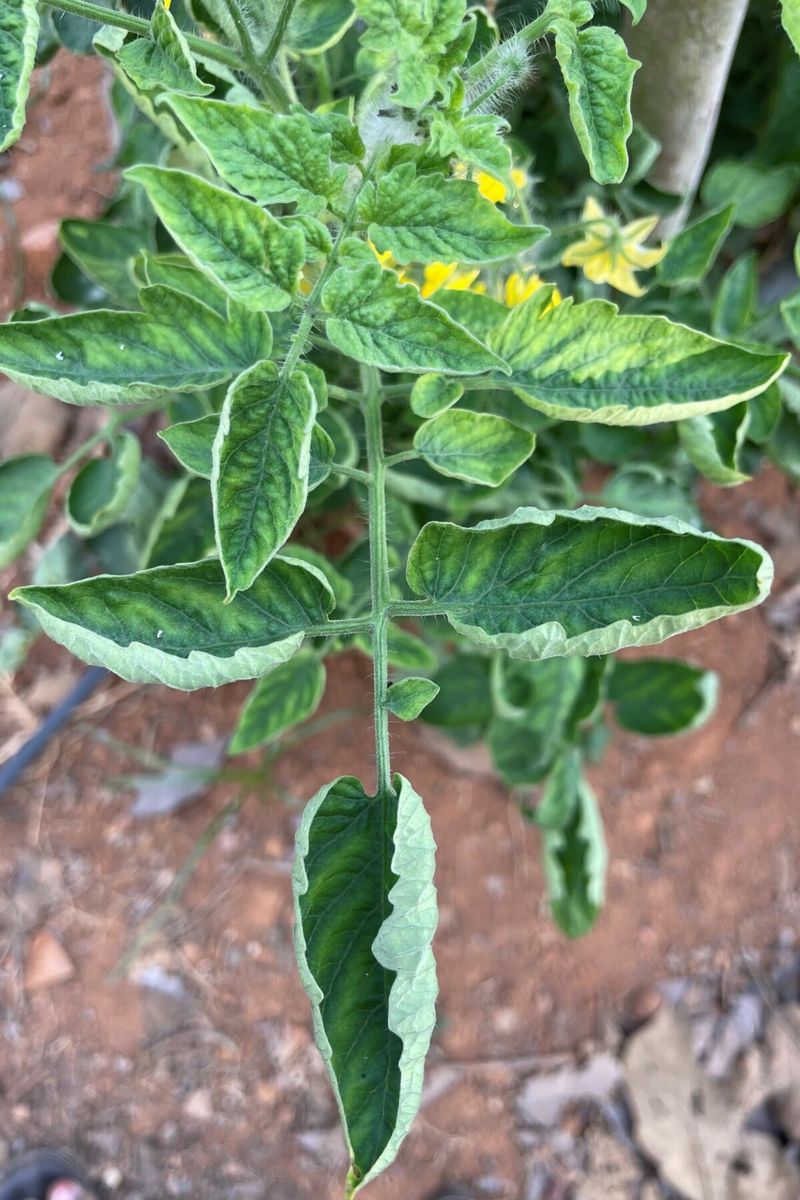
Mottled yellow-green patterns on the leaf surface, stunted or unusually narrow new growth, distorted young leaves that look twisted or strapped, abnormal fruit development, dead spots or brown lesions on leaf tissue, rapid overall decline, or symptoms concentrated in one section of the plant while the rest looks fine – any of these combinations should prompt a broader investigation. University of Minnesota Extension’s tomato leaf diagnosis tool walks through several of these patterns and the conditions associated with each.
Visual symptoms alone may not confirm a virus; laboratory testing or a diagnosis from a local extension plant clinic may be necessary to know for certain.
Aphids are worth checking for whenever curling appears on young growth. Look for clusters of small soft-bodied insects on the undersides of leaves, sticky honeydew residue on leaves or stems, yellowing, or stunted shoot tips.
Herbicide injury can look remarkably similar to viral distortion. University of Minnesota Extension’s tomato disorders page notes that herbicide-affected plants often show downward curling, twisted or narrowed new leaves, thickened or unusually prominent veins, brittle or distorted stems, and damage that is most severe on the side of the plant closest to a recently treated lawn or neighboring field.
If any of those clues fit, a watering adjustment will not help.
Improve the plant’s conditions without promising a reset
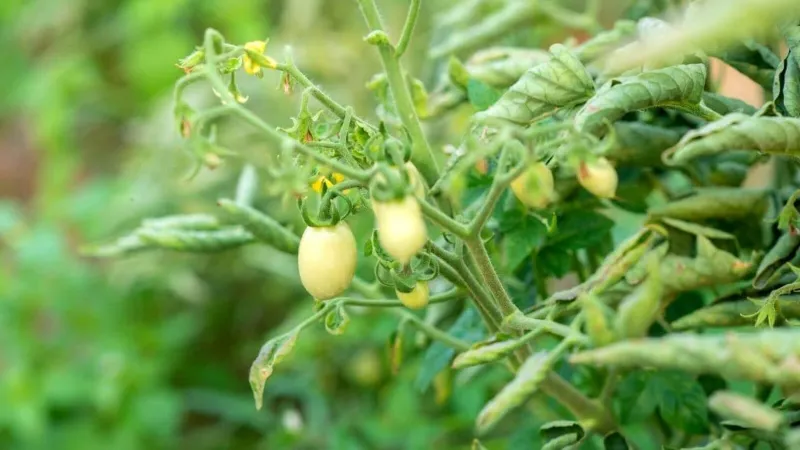
After correcting soil moisture and reducing heat stress where possible, the temptation is to look at the curled leaves and wait for them to flatten back out as proof the fix worked. That may not happen.
Illinois Extension notes that leaves often recover from mild physiological roll as stress eases, but University of Minnesota Extension points out that rolled leaves may stay rolled even after cool, wet weather returns. A more reliable signal is new growth: if the leaves emerging at the top of the plant look normal, the plant is likely moving past the stressful period.
A few common rescue impulses tend to make things worse rather than better. Adding extra water when the soil is already moist risks saturating the root zone and damaging the very roots the plant needs to recover.
Oregon State Extension explains that oxygen-depleted, waterlogged soil impairs root function in ways that mimic drought symptoms. High-nitrogen fertilizer applied during heat stress pushes rapid soft growth that loses water even faster.
Stripping off every curled leaf removes foliage that shades fruit and reduces the plant’s capacity to photosynthesize.
Blossom-end rot is a separate problem worth distinguishing here. Illinois Extension’s tomato resource describes it as a fruit disorder linked to localized calcium deficiency and fluctuating moisture availability – watering more will not repair a tomato that already has the characteristic dark, leathery spot at the blossom end.
Heat can also independently reduce pollen viability and fruit set, as Penn State Extension explains, so correcting leaf curl does not guarantee a full harvest.
Use the whole symptom pattern to choose your next step
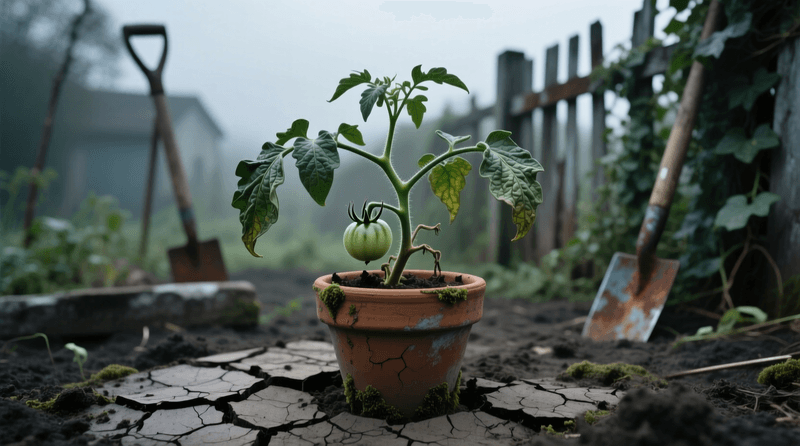
Green leaves curling upward and inward during August heat, especially on the lower portions of an otherwise vigorous plant, point toward physiological stress as a likely explanation. That is a reasonable starting assumption – but it is a starting point, not a final answer.
The full picture guides the response: check the root-zone soil before adding water, soak slowly and thoroughly when the soil is genuinely dry, apply mulch to hold moisture between waterings, and reduce extreme heat exposure when practical. University of Minnesota Extension frames consistent, responsive moisture management as the foundation of a healthy tomato plant through summer.
Monitor new growth over the following days rather than fixating on whether existing curled leaves relax. If new leaves emerge looking normal and the plant continues flowering or setting fruit, conditions are likely improving.
If new leaves show distortion, mottling, unusual narrowing, or other changes outside the classic roll pattern, revisit the University of Minnesota leaf diagnosis tool or contact a local extension plant clinic for a closer look.
The curl alone does not tell the whole story. Soil condition, weather history, new growth appearance, fruit health, and any pest or chemical exposure nearby all contribute to an accurate diagnosis.
Treating the plant’s actual conditions – rather than reacting to one symptom in isolation – is what gives it the best chance through the rest of the season.