
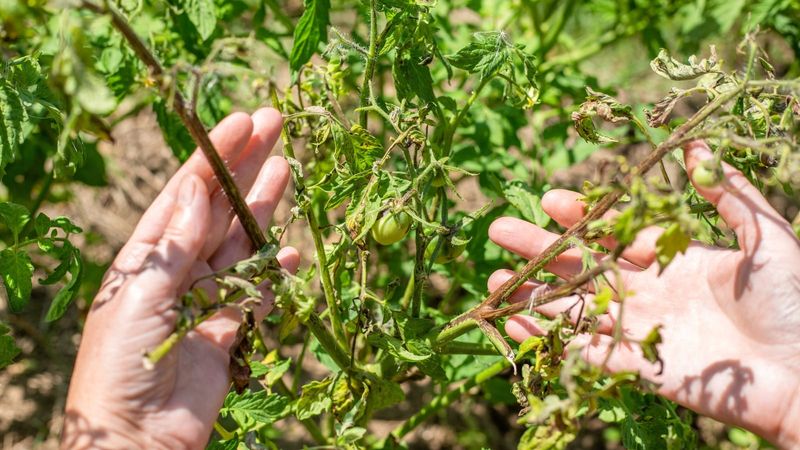
Your tomato plants looked great in June, and now they seem stuck – fewer flowers, fruit that won’t size up, or leaves that look perfect while the harvest disappoints. August heat is a real factor, but so is what you’ve been putting in the soil.
Before reaching for another bag of fertilizer, it helps to understand what’s actually slowing things down. A quick look at the plant’s symptoms can point you toward the right fix.
Heat really can stall a tomato plant
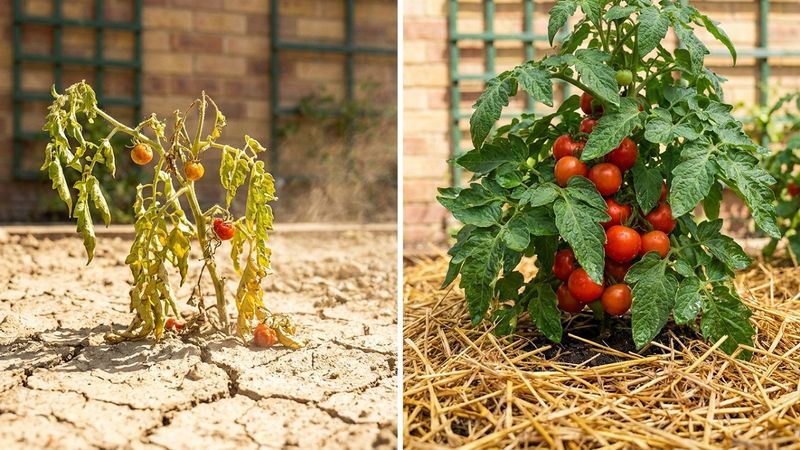
Tomatoes are warm-weather crops, but they have limits. Penn State Extension research on heat stress and tomatoes identifies daytime temperatures around 88-102 degrees Fahrenheit and nighttime temperatures above 70 degrees as conditions that can push plants into genuine stress.
Flowers and developing fruit are far more vulnerable to those conditions than the leaves and stems you see looking green and healthy.
When heat hits those ranges, pollen becomes less viable, pollination rates drop, and flowers may abort before fruit even starts to form. Fruit that does set can end up smaller than expected, with lower weight and sometimes delayed ripening.
Those effects are direct and documented, not a side effect of something else going wrong in the garden.
The title’s suggestion that the sun is not the problem is worth correcting plainly: heat can be the primary cause of a stalled tomato plant. The more useful framing is that heat may be the immediate stressor, while a repeated high-nitrogen feeding habit can create a separate, recognizable problem in plants that already have adequate nutrition.
Diagnosing which situation you are dealing with – or whether both are happening at once – is the starting point for any response that actually helps.
Look for the excess-nitrogen pattern
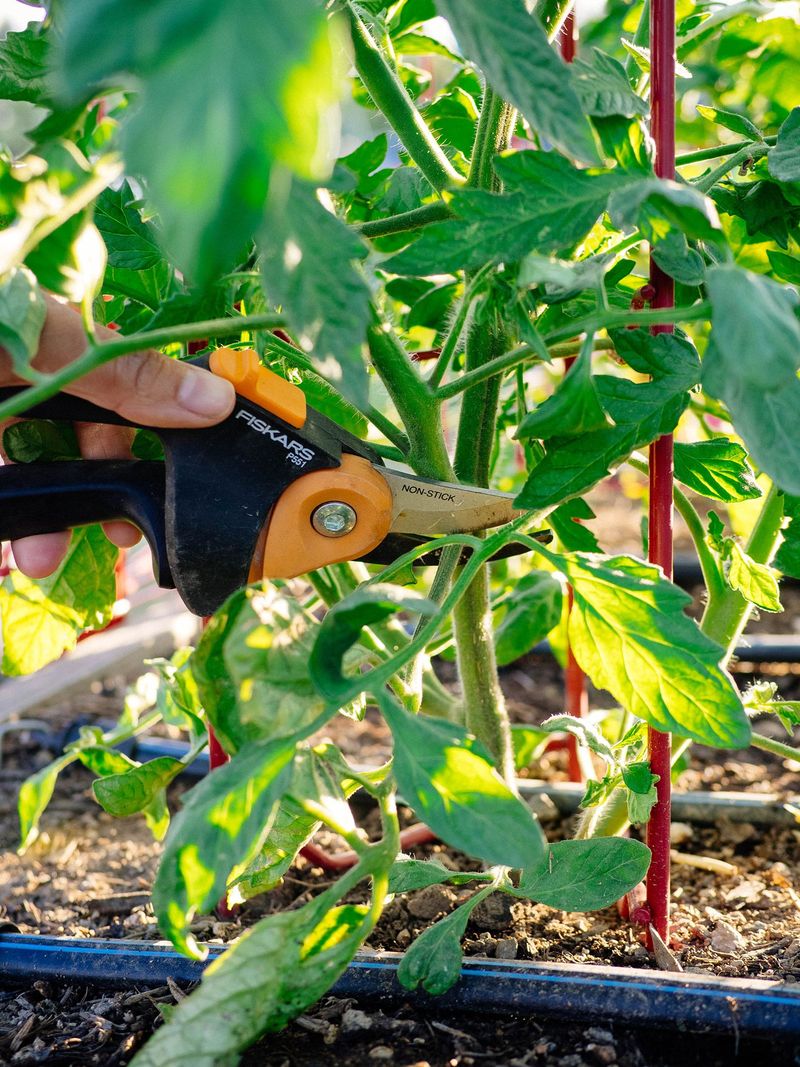
A tomato plant that is all vine and very little fruit tells a specific story. University of Minnesota Extension guidance on growing tomatoes describes how excess nitrogen pushes plants toward vigorous vegetative growth at the expense of flowering and fruit production.
If your plant looks impressively lush – deep green, thick stems, abundant foliage – but is producing few flowers or fruits, that growth pattern is worth examining before you apply more fertilizer.
The problem often develops when gardeners respond to poor fruiting by feeding more. When flowers drop because of heat or pollination problems, the natural instinct is to give the plant a boost.
But if the soil already has adequate nitrogen, adding more can reinforce the leafy pattern rather than solve the underlying flower loss. Colorado State University Extension also notes that excess nitrogen in tomato production can delay flowering and fruiting and may contribute to nutrient imbalance or increased blossom-end rot risk.
To be clear, this pattern is not proof of nitrogen excess without considering other possibilities. Heat, root damage, disease, or cultivar traits can also produce a plant that fruits poorly.
What the dark-green, heavily vegetative plant signals is that fertilizer is a reasonable suspect – not a guaranteed diagnosis. Pause the feeding routine first and look at the full picture before drawing conclusions.
Start the August reset at the roots
When temperatures are extreme and a tomato plant is wilting or visibly stressed, the right first move is not fertilizer – it is stabilization. Oregon State University Extension advises waiting for a cooler period before fertilizing during intense heat, because stimulating new growth when the plant is already overwhelmed is not helpful and can cause harm.
Granular fertilizer applied to dry, stressed roots can also damage or kill plants.
Consistent moisture at the root zone is the most immediate thing you can do. Water deeply and regularly rather than in short, frequent spurts, and aim to keep the root zone from swinging between wet and bone dry.
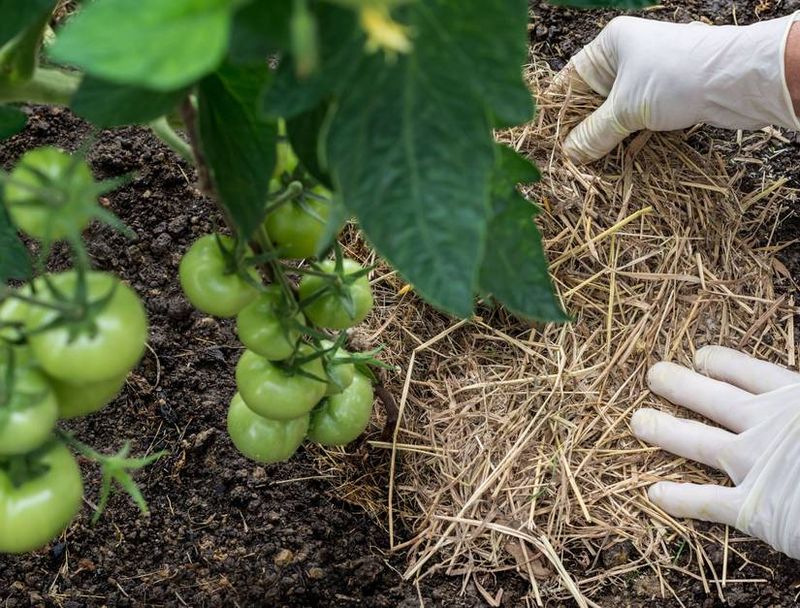
OSU Extension’s heat-wave garden guide recommends mulch as a practical tool for reducing evaporation and moderating soil temperature, both of which help reduce root-zone stress. A two-to-three-inch layer of straw or shredded leaves around the base of the plant can make a meaningful difference.
Steadier moisture also helps limit fruit cracking and the conditions associated with blossom-end rot, though it cannot undo damage already done to flowers that dropped during the hottest days. Think of this step as stopping the bleeding rather than reversing the injury.
Once temperatures ease and the plant is no longer in crisis, you can assess what, if anything, it actually needs next.
Use symptoms to separate likely causes
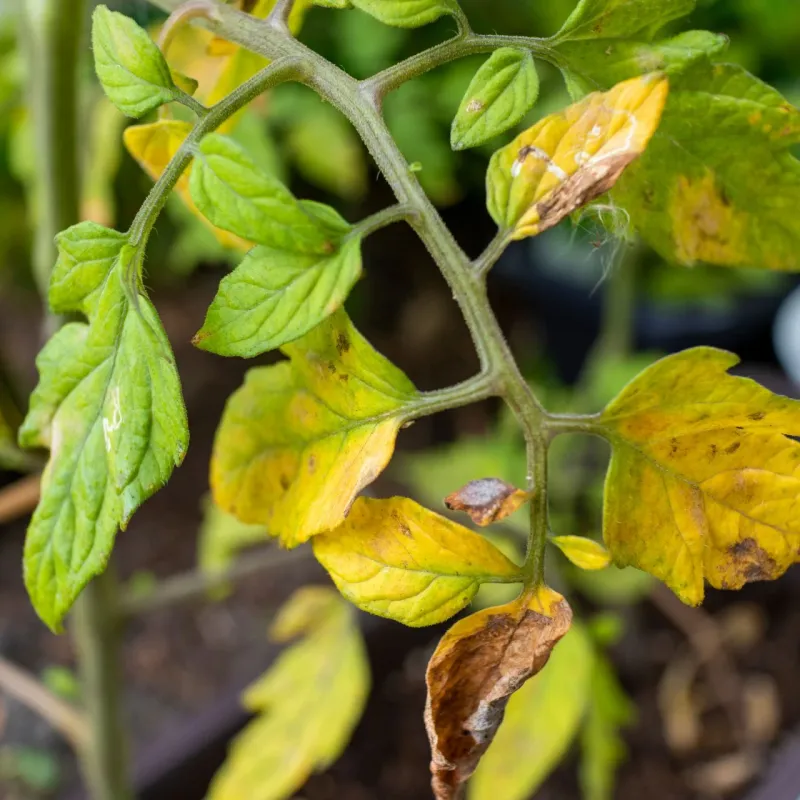
Not every stalled tomato plant has the same problem, and treating them all the same way leads to fixes that miss the mark. Four symptom patterns are worth knowing, each pointing toward a different likely cause.
Flowers dropping with very few new fruits forming is most consistent with heat stress, moisture fluctuation, or pollination problems. That pattern calls for stabilizing moisture and waiting for cooler weather, not more fertilizer.
A large, dark-green plant with abundant foliage but very few flowers is a different picture, and excess nitrogen is a more plausible contributor there. Penn State’s heat stress research notes that flowers and developing fruit are the most vulnerable parts of the plant, but a plant that never produces many flowers in the first place may have a feeding issue rather than a heat issue.
Uniformly yellow lower leaves combined with weak, thin growth suggests a possible nitrogen shortage, particularly in soils with low organic matter. Colorado State University Extension notes that low-organic-matter soils can run short of nitrogen in mid- to late summer, and in that case a light, label-directed application after the heat eases may be appropriate.
Brown or black leathery patches at the blossom end of the fruit are a sign of blossom-end rot. OSU Extension’s blossom-end rot resource explains that this condition reflects impaired calcium transport, often linked to inconsistent moisture, heat, rapid growth, or nutrient imbalance – not necessarily a soil calcium deficiency.
These patterns provide clues rather than certainties, and several stresses can occur at the same time.
Feed only after a demonstrated need
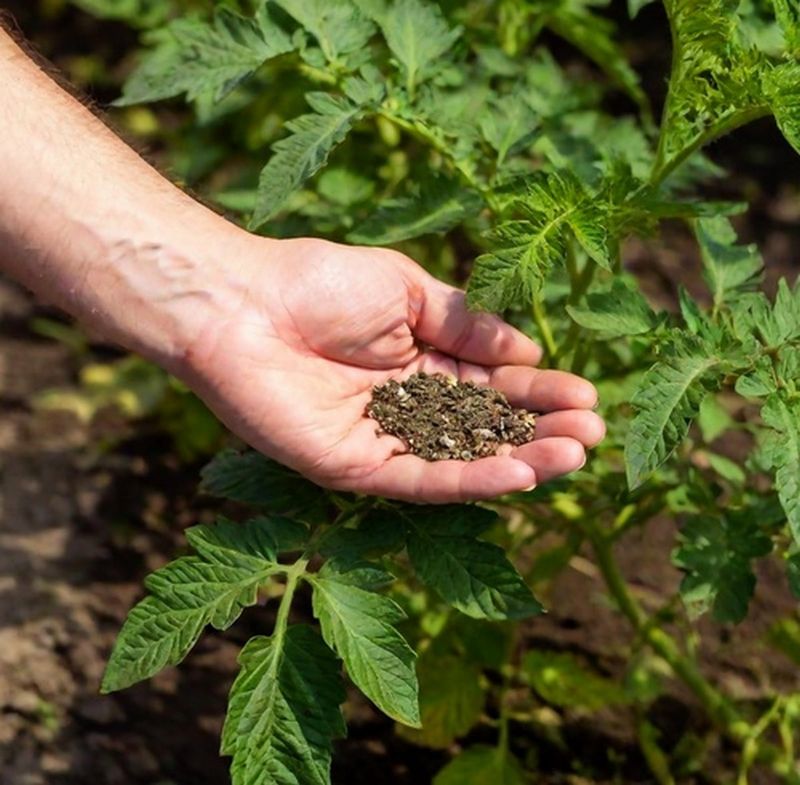
Once temperatures drop and the plant is no longer under acute heat stress, the question of fertilizer deserves a careful look. University of Arizona Cooperative Extension notes that a tomato plant well fertilized early in the season may not need additional feeding after the first fruits have set.
Applying fertilizer to a plant that already has adequate nutrition does not improve fruit production and may actually work against it by encouraging more leafy growth instead.
A plant showing weak growth and uniformly yellowing lower leaves is a different case. That symptom pattern in a low-organic-matter soil may indicate a genuine nitrogen shortfall, and a light, label-directed application can be appropriate once conditions cool.
For any question about phosphorus, potassium, or whether lime is needed, a soil test is the right tool. Colorado State University Extension recommends soil testing before adding these nutrients, because blanket applications of high-phosphorus tomato fertilizers can create imbalances rather than solve problems.
One detail many gardeners miss involves how fertilizer amounts are calculated. CSU Extension’s nitrogen recommendations guide explains that fertilizer advice refers to pounds or ounces of actual nitrogen, not the same weight of the fertilizer product itself.
A product labeled 10-10-10 is only ten percent nitrogen by weight, so applying the same weight as a higher-nitrogen product delivers far less actual nitrogen. Reading the label and calculating from the nutrient percentage – rather than scooping by habit – is how you avoid both underfeeding and overfeeding.
University of Minnesota Extension also cautions against adding nutrients without evidence of a need, particularly for established plants in fertile soil.
Adjust the plan for container tomatoes
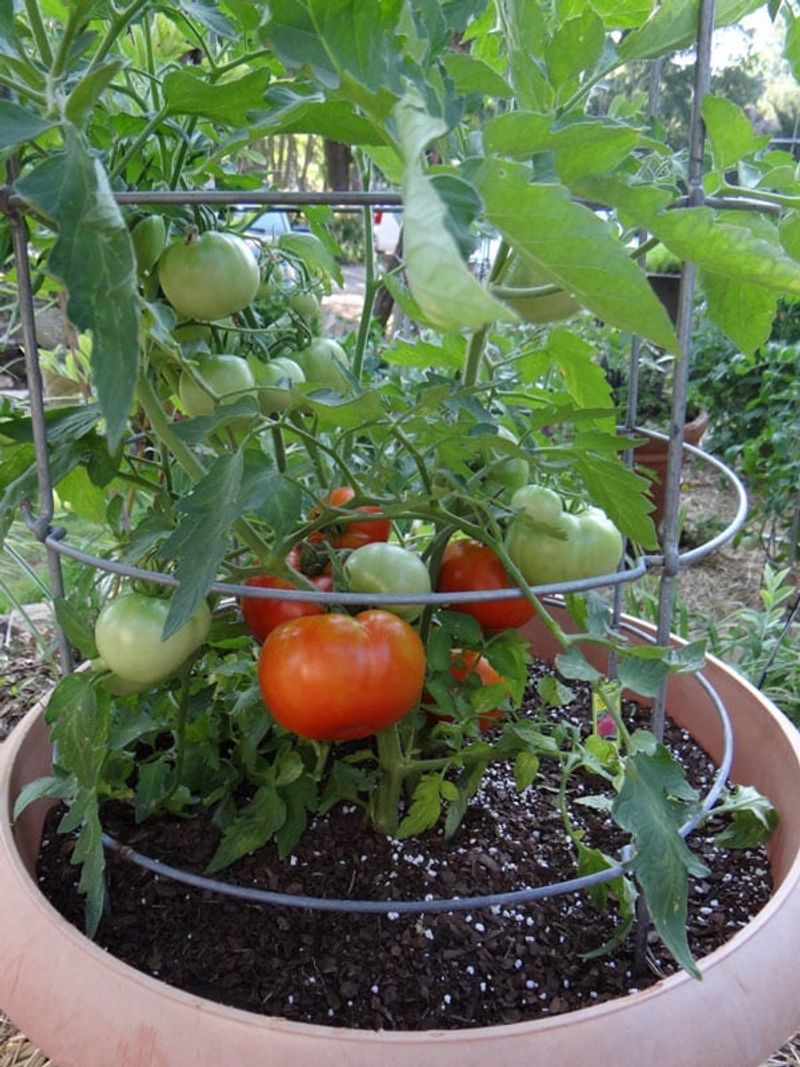
Container tomatoes operate under different rules than their in-ground counterparts, and the August reset looks somewhat different for them. University of New Hampshire Extension guidance on container tomatoes explains that pots hold far less stored water and nutrients than garden beds, which means plants may need watering more than once a day during a heat wave and can run low on nutrients faster than soil-grown plants.
That greater need for water and controlled-release or soluble fertilizer does not mean more is always better. Containers are also more vulnerable to salt buildup from repeated fertilizer applications, and dry potting mix can cause fertilizer to concentrate around roots and cause damage.
The first priority during extreme heat is the same as it is for in-ground plants: stabilize moisture before thinking about feeding.
Resist the temptation to transfer an in-ground fertilizing schedule directly to pots, or to compensate for heat-related fruit loss by adding extra product to the container. Any feeding should be measured, label-based, and matched to the plant’s actual condition and the specific potting medium being used.
After the heat eases, assess whether growth and fruit set are resuming normally before making any adjustments to the feeding routine.
Judge recovery by new growth and fruit set
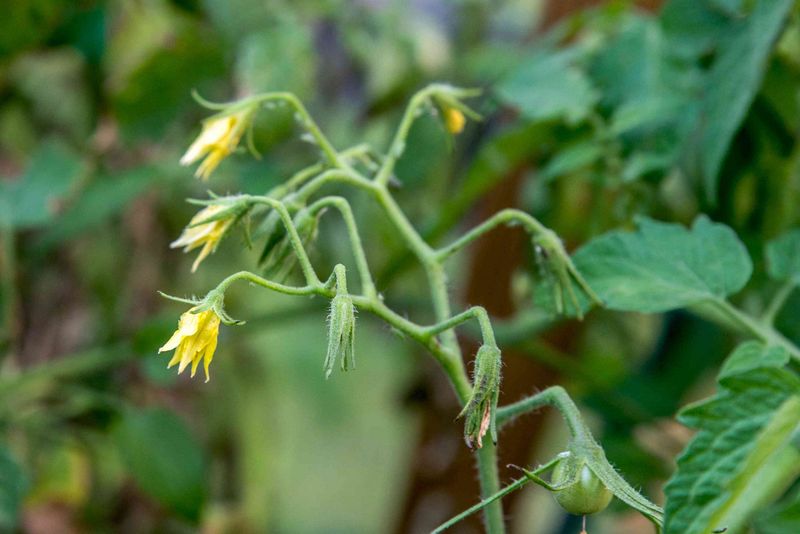
Pausing unnecessary fertilizer can stop additional excessive vegetative growth, and consistent moisture with mulch can reduce ongoing root-zone stress. Neither step can restore flowers that already dropped during the hottest days.
Penn State Extension is clear that heat damage to existing flowers cannot be reversed – recovery shows up in new growth and new fruit set after conditions improve, not in a sudden turnaround of blossoms that already aborted.
Watch for new flower clusters forming and small fruits beginning to set during a cooler stretch. That is the real signal that the plant has stabilized.
If new growth looks pale, thin, or weak rather than healthy and productive, revisit the symptom checklist from earlier and consider whether a soil test or a label-directed application makes sense at that point. OSU Extension’s guidance on extreme heat reinforces that waiting for genuinely cooler conditions is the right threshold for any fertilizer decision.
The practical sequence is straightforward: stabilize moisture, apply mulch, inspect symptoms honestly, wait for cooler weather, then act on a demonstrated need rather than a routine schedule. Heat may start the stall, but an automatic high-nitrogen feeding habit is one avoidable practice that gardeners can reset – and that reset begins with watching the plant rather than reaching for the fertilizer bag.