
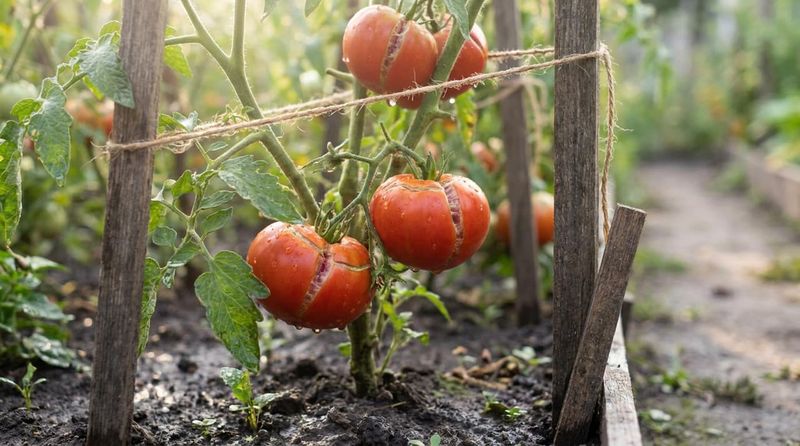
Walking out to your garden and finding a ripe tomato split wide open is one of the more frustrating sights of late summer. The crack looks dramatic, and it is easy to assume the heat cooked it from the outside in.
What actually happened is subtler and far more manageable: the plant absorbed a sudden rush of water after the soil had been dry, and the fruit expanded faster than its skin could keep up. Understanding that sequence gives you real tools to protect the tomatoes still on the vine.
A Dry-to-Wet Swing Usually Starts the Crack
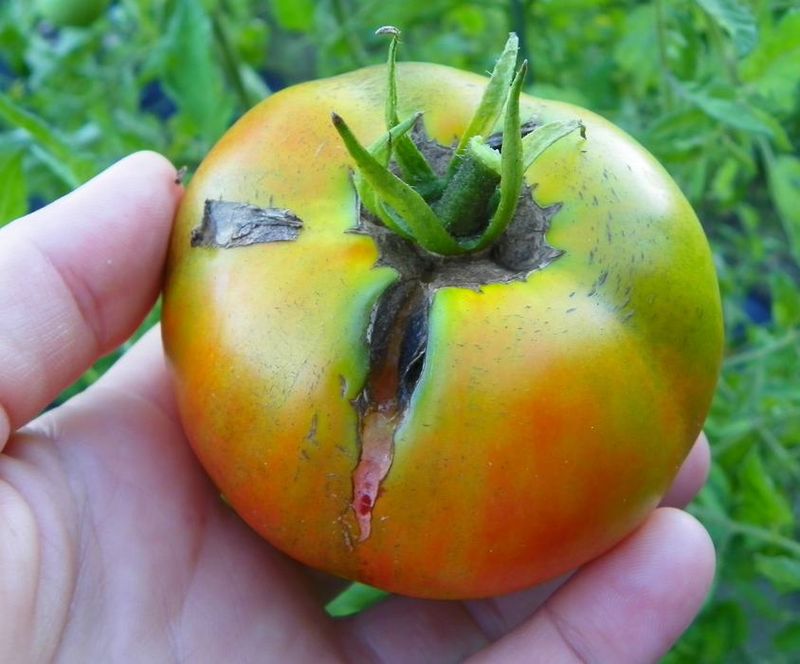
Tomato cracking is a physiological growth disorder, not an infectious disease, and the trigger is almost always a rapid shift in soil moisture. When a dry spell ends with a heavy rainstorm or a large irrigation event, roots pull water into the plant quickly.
The fruit responds by expanding faster than its outer skin can stretch, and the skin tears open along the path of least resistance near the stem scar.
According to University of Minnesota Extension guidance on tomato disorders, this kind of cracking is a physiological response to fluctuating water supply rather than a sign of disease. The key sequence is dry soil followed by abundant moisture, not rain by itself.
A plant that has been receiving steady, consistent moisture is far less likely to crack when a normal storm passes through.
Late-summer heat plays a real but secondary role. High temperatures can speed up fruit growth and increase the plant’s overall water demand, which means a dry period during a heat wave creates a sharper dry-to-wet contrast when rain finally arrives.
UGA’s commercial tomato production handbook identifies temperatures around 90 degrees Fahrenheit or above, combined with prior dryness and wet soil, as conditions associated with radial cracking. Cracking can also occur in cooler weather whenever moisture swings sharply, so heat should be treated as a contributing factor rather than the root cause.
Read the Pattern at the Stem End
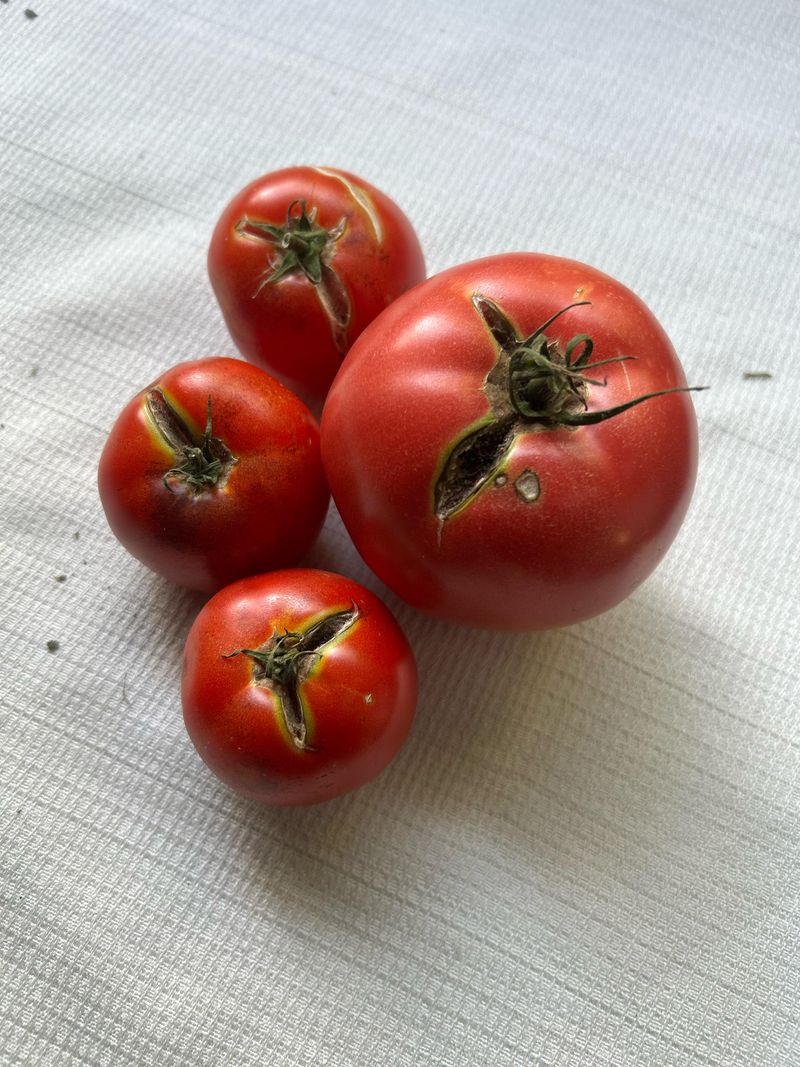
Most crack damage shows up in one of three recognizable patterns. Radial cracks extend outward from the stem scar like spokes on a wheel and tend to be the deepest and most dramatic openings.
Concentric cracks form rings around the stem end, running parallel to each other in arcs that can vary from shallow lines to pronounced splits. Fine rain-check or russeting cracks are much smaller and often leave a rough, corky scar rather than a large opening.
Minnesota Extension’s tomato disorder resource describes all three patterns, and the Minnesota Garden Diagnostics tool for tomato fruit cracks helps gardeners match what they see to likely causes. Recognizing the pattern can point you toward the moisture-fluctuation explanation, but it does not confirm one exact cause on its own.
Cracking becomes more likely as fruit approaches full size and ripeness because the skin becomes less elastic over time. Warm weather speeds that growth window, and fruit exposed to intense direct sun may be more vulnerable along the sun-facing side.
UConn IPM notes that larger-fruited varieties tend to show more cracking than smaller-fruited types, and cultivar genetics influence how flexible the skin remains during rapid expansion. The pattern you find is a useful description of the damage, not a definitive verdict on what caused it.
Distinguish Cracks From Other Tomato Damage
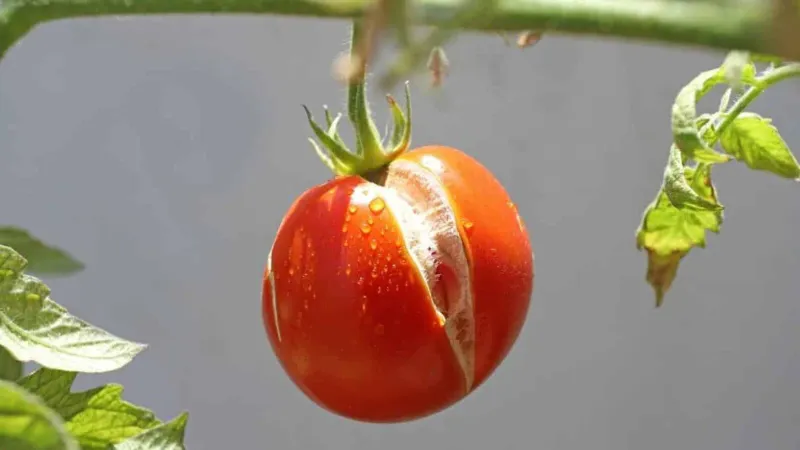
A clean split near the stem end, showing up shortly after heavy rain or a large watering event on plants that otherwise look healthy, is consistent with physiological cracking. That pattern supports the moisture-fluctuation explanation, though it does not conclusively rule out secondary decay or other issues developing afterward.
When you are not sure what you are looking at, comparing the location and appearance of the damage to other common problems can help you decide whether more is going on.
Blossom-end rot appears at the opposite end of the fruit from the stem, showing up as a dark, leathery, or sunken area at the flower scar. It involves disrupted calcium uptake, often worsened by inconsistent moisture, and has nothing to do with the stem-end splits that cracking produces.
UGA’s troubleshooting guide for cultural tomato problems covers both disorders and makes the location difference clear. Adding calcium supplements is not a general fix for cracking; that approach addresses blossom-end rot, a separate problem.
Sunscald looks different again. It typically appears as a pale yellow, white, or papery patch on the side of the fruit that faces the sun directly, rather than as a split centered at the stem scar.
Disease lesions and secondary decay are darker, may expand over time, and often show water-soaked or rotting tissue. Penn State Extension’s guidance on late blight notes that disease-affected fruit is not appropriate for canning and requires a different response than a clean physiological crack.
If lesions are spreading, darkening, or accompanied by leaf and stem symptoms, assess whether disease or active decay is involved before deciding how to use the fruit.
Stabilize Root-Zone Moisture After Rain
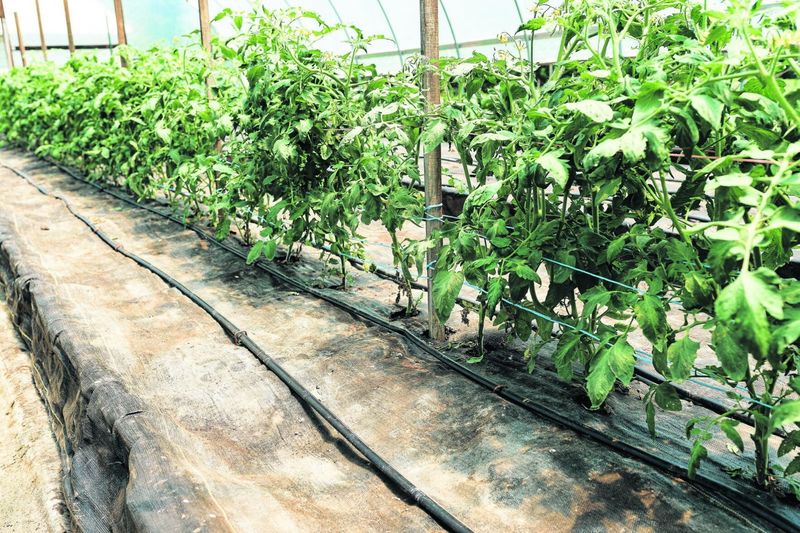
After a storm, the instinct to skip watering for a day or two is sound, but the decision should be based on what the soil actually tells you rather than a calendar. Push your finger two to three inches into the root zone and check whether the soil feels moist or dry.
A basic rain gauge placed in the garden can show you how much water the storm delivered so you know whether irrigation is needed at all.
UGA Fulton County Extension’s tomato tips recommend checking soil moisture before irrigating rather than following a fixed schedule. A rough starting point for tomato water needs is about 1 to 2 inches per week, including rainfall, but that figure shifts with local conditions.
UGA’s home vegetable garden guide and University of Florida IFAS guidance for Florida vegetable gardens both note that sandy Southern soils, containers, raised beds, extreme heat, and wind can all push water needs higher and more frequent than the standard figure suggests.
Mulching the root zone with 2 to 3 inches of straw, wood chips, or similar material slows evaporation and buffers the soil against the sharp dry-to-wet swings that trigger cracking. When you do water, aim for a deep soak at the base of the plant rather than frequent shallow sprinkling.
University of Minnesota Extension’s vegetable irrigation strategies and UC IPM’s guidance on tomato fruit cracks both support drip irrigation or soaker hoses as practical options for delivering water directly to the root zone without repeatedly wetting foliage or creating the sudden surface surge that can spike root-zone moisture. Morning is generally the better time to water when you have a choice, giving leaves time to dry before evening.
Protect Fruit With Foliage and Variety Choice
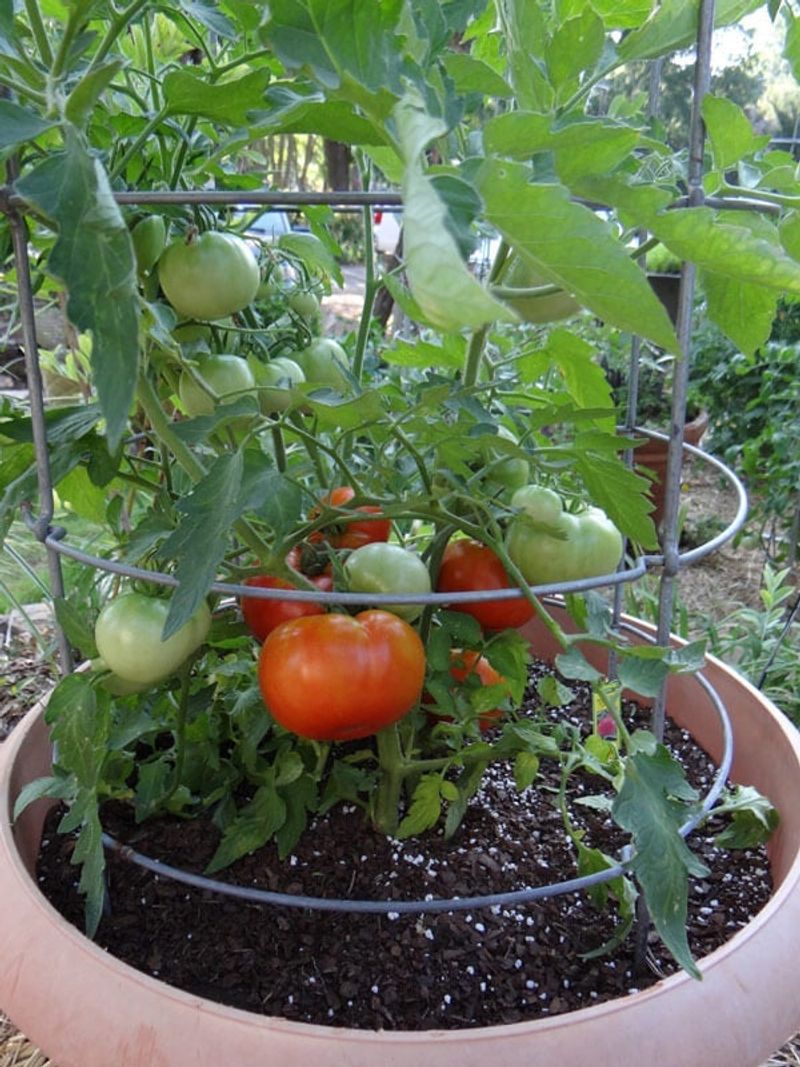
Leaf cover does more than photosynthesize. A full, healthy canopy shades ripening fruit from intense afternoon sun, moderates temperature swings around the fruit surface, and reduces the kind of exposure that can make cracking and sunscald more likely to occur together.
Protecting that canopy during hot weather matters more than most gardeners realize.
Penn State Extension’s article on tomato cracking identifies excessive pruning as a contributing factor, and UGA’s tomato handbook supports maintaining healthy foliage as part of overall fruit protection. Removing diseased or damaged leaves makes sense, but stripping healthy growth during peak heat can expose fruit to direct sun and increase temperature stress.
Save major pruning decisions for cooler periods or for plants trained under a specific system that accounts for canopy management.
Variety selection gives you another layer of protection going into the next season. Large-fruited tomatoes and many heirloom types tend to crack more readily because their skin is thinner or less elastic relative to their interior volume.
UConn IPM and the Minnesota Garden Diagnostics fruit-crack page both note that crack-resistant or crack-tolerant hybrids can meaningfully lower susceptibility. No variety is immune under all conditions, particularly when moisture swings are extreme, but choosing a tolerant cultivar can reduce how often and how severely the problem appears in your garden.
Harvest Cracked Fruit Before It Decays
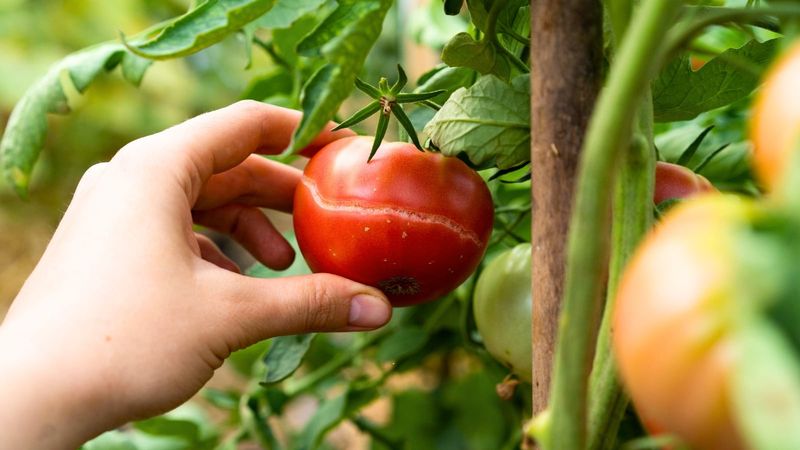
An open crack is an invitation for trouble. Fungi, bacteria, and insects can enter through the split within hours, especially in the warm, humid conditions common across the South in late summer.
Picking cracked fruit as soon as you spot it, rather than leaving it on the vine to finish ripening, gives you the best chance of salvaging it before decay sets in.
Texas A&M AgriLife Extension’s tomato problem solver recommends prompt harvest of cracked fruit for exactly this reason, and Minnesota Extension echoes that guidance. A recently cracked tomato that is otherwise firm, has no mold, no oozing, and no foul odor may still be perfectly usable.
Bring it inside promptly, cut away the cracked and damaged tissue generously, and use what remains right away rather than storing it.
Discard any fruit showing active rot, mold growth inside the crack, liquid oozing from the split, an off smell, or extensive softening around the damaged area. Ask Extension’s food safety guidance and Utah State Extension’s tomato troubleshooting resource both support using sound cracked fruit while discarding anything with spoilage signs.
For home canning specifically, the standard is higher: Minnesota Extension’s canning guidance and Penn State Extension’s tomato preservation guide are consistent that damaged, diseased, or overripe fruit should not go into the canning jar. Stick with firm, high-quality, disease-free tomatoes for any preserved product.
Use a Simple Crack-Prevention Routine
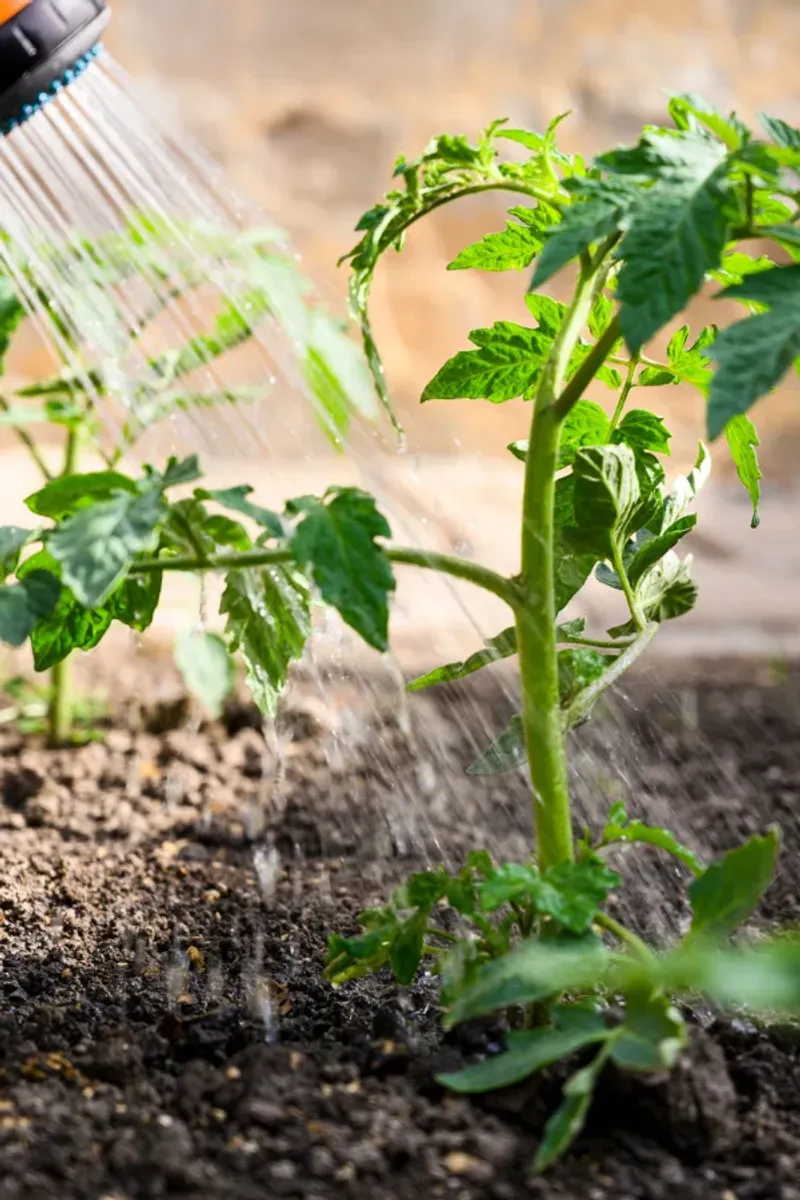
Putting all of this into a working routine does not require new equipment or complicated schedules. After any significant rain, check the rain gauge and press your fingers into the root zone before reaching for the hose.
If the soil feels moist at depth, hold off on irrigation. If you spot a crack, look at where it sits on the fruit and consider whether dry conditions preceded the wet spell, then check for any signs of disease or decay before deciding what to do with the tomato.
Keep mulch replenished around the base of your plants throughout the season so the soil does not dry out sharply between waterings or storms. Preserve healthy leaf cover rather than cutting back aggressively, and if cracking is a recurring problem in your garden year after year, consider trialing a crack-tolerant hybrid variety alongside your usual picks.
UC IPM’s fruit-crack guidance and Penn State Extension’s cracking article both frame steadier moisture as the most reliable lever available to home gardeners.
Steadier moisture reduces the risk, but it cannot eliminate cracking across every storm pattern, soil type, and tomato variety a Southern garden might encounter. Minnesota Extension’s vegetable irrigation strategies put it plainly: consistent root-zone moisture is the goal, not perfection.
A garden that rarely goes bone-dry between waterings will almost always produce fewer split tomatoes than one that swings between extremes, and that is a realistic and worthwhile outcome to aim for.