
Something feels wrong when your zucchini plant looks lush and healthy but the fruit keeps dying at the tip. Before you reach for a fertilizer or assume the worst, knowing what stage the fruit was at when it failed can point you toward the real fix.
A tiny fruit that yellows and shrivels right after flowering tells a very different story than a full-sized zucchini that develops a dark, leathery patch on one end.
Match the symptom to the fruit’s stage
Not every rotting zucchini tip has the same cause, and treating the wrong one wastes time and energy. The word “rot” covers a wide range of outcomes, and the fruit’s size and development stage at the moment things went wrong is the most useful first clue you have.
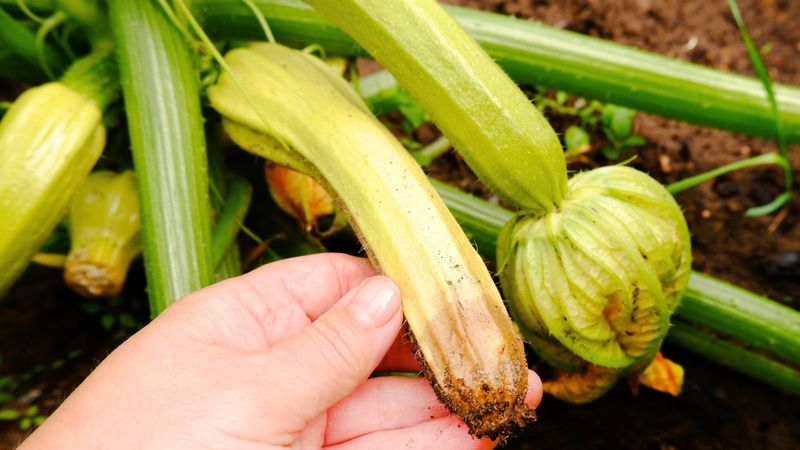
When a zucchini stays small, turns yellow, shrivels, or looks misshapen shortly after the flower drops, UMN Extension guidance on summer squash supports checking pollination first. Poor pollination can cause the ovary to stop developing normally, which results in tiny, poorly formed, or aborted fruit rather than a plant disease or nutrient disorder.
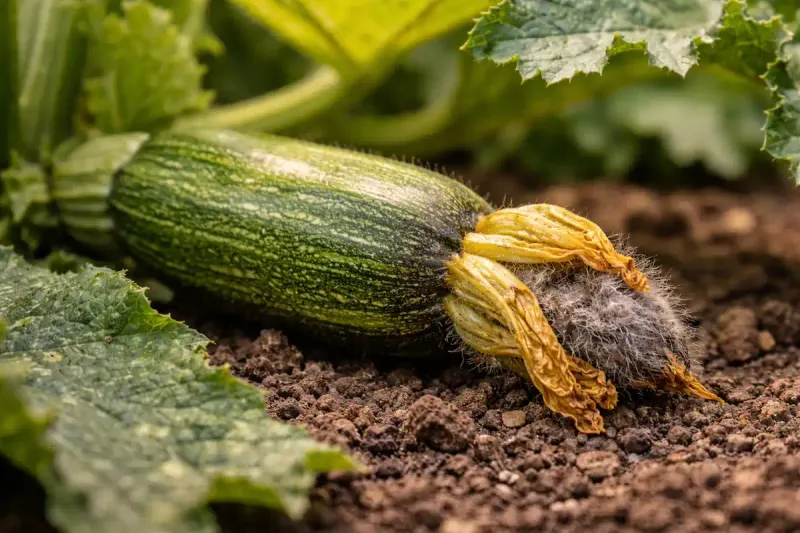
The picture changes once a fruit has already grown to a noticeable size. A dark, sunken, leathery lesion forming on the blossom end of an enlarged fruit points more toward blossom-end rot or secondary decay than toward a pollination failure.
USU Extension’s blossom-end rot notes explain that this type of damage involves inadequate calcium delivery to developing tissue, which is a different problem with different solutions.
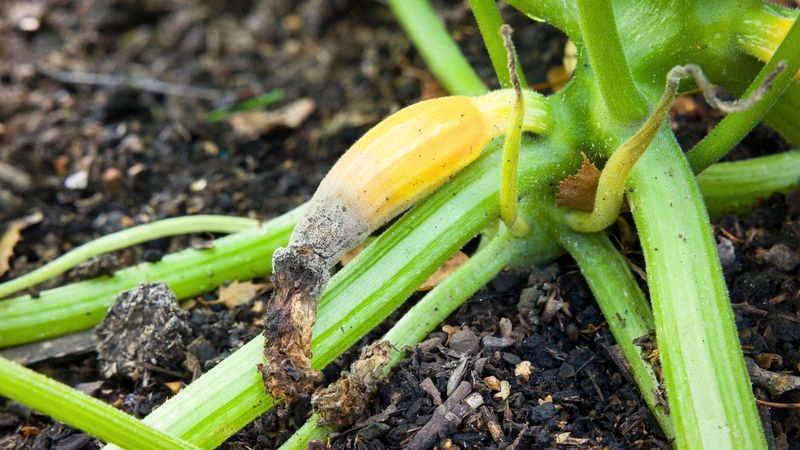
Secondary infections can also appear on fruit that already failed for another reason, including poor pollination. Choanephora rot guidance from UMN Extension notes that fuzzy fungal growth often follows a fruit that was already declining.
Matching the right diagnosis to the right stage is what makes the rest of your troubleshooting useful.
Female flowers need pollen to make normal fruit
Zucchini plants produce two kinds of flowers on the same vine, and knowing which is which lets you investigate a potential pollination problem yourself without guessing. The difference is visible to the naked eye once you know what to look for.
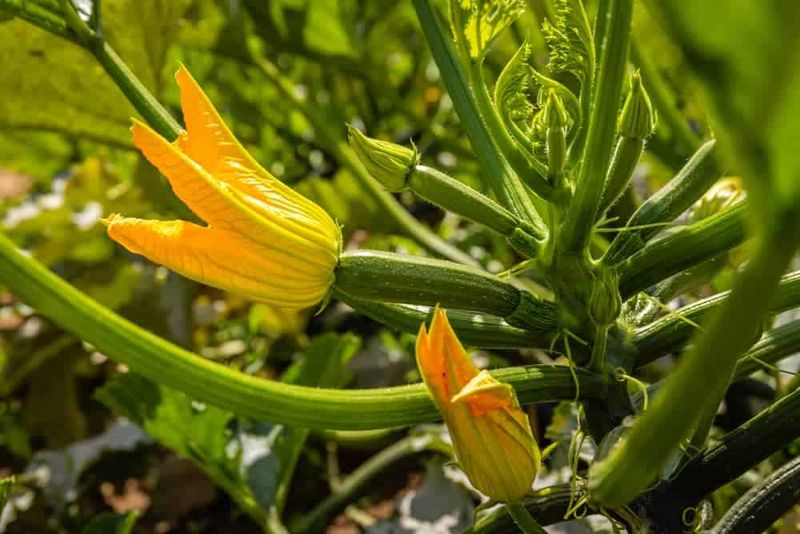
A male flower grows on a thin, straight stem with no swelling at its base. A female flower has a small, zucchini-shaped swelling sitting between the base of the petals and the vine.
That swelling is the immature fruit, and it will only develop into a full zucchini if the female flower receives pollen from a male flower during its short opening window.
According to UMN Extension’s pollination requirements resource, the ovary of a female flower must be fertilized for normal fruit development to proceed. Without adequate pollen transfer, the ovary stops growing, and the small swelling behind the flower begins to yellow and collapse rather than swell into a full fruit.
Male flowers typically appear on the plant before female flowers do, which can initially make it seem like the plant is producing flowers but no fruit. That early gap is normal.
Problems arise when female flowers open but pollen never reaches them, whether because male flowers are absent, pollinators are not visiting, or conditions have reduced pollen quality or viability.
Inspect flowers in the morning for missed pollination
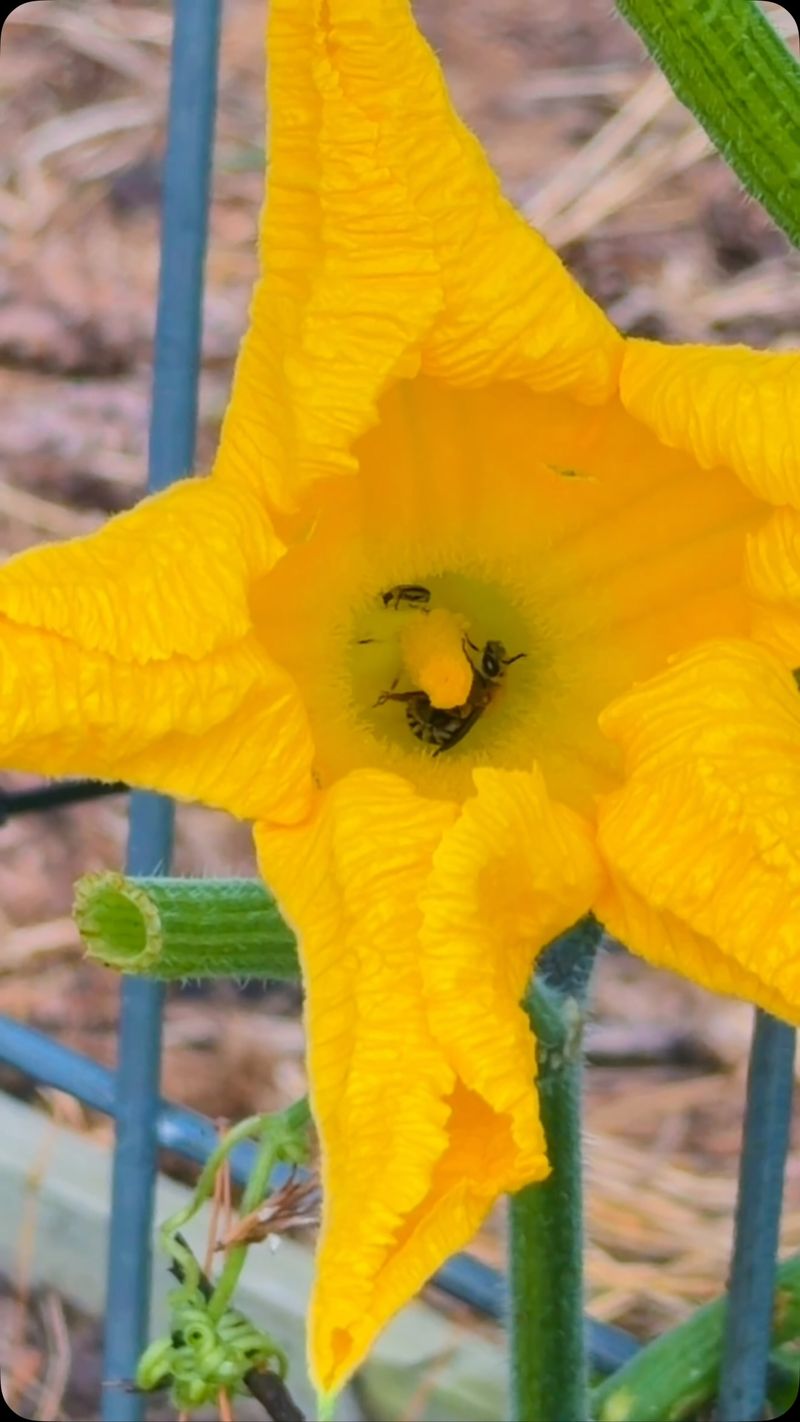
Squash flowers open early and close within a few hours, so the window for successful pollination is short. Heading out to your garden in the morning, ideally before mid-morning heat sets in, gives you the best chance to observe what is actually happening at the flower level.
Watch whether bees are visiting both male and female flowers during that window. Squash bees and bumblebees are especially effective pollinators for zucchini, and UGA Extension’s pollinator guide highlights their importance to squash crops.
Seeing a bee in the garden is not the same as confirmed pollination, though. A bee that visits only male flowers, or arrives after the female flower has already closed, does not transfer pollen to the fruit-producing flower.
Late-summer conditions common in Florida and Texas can complicate things further. UF/IFAS research on squash pollination identifies very high temperatures, high humidity, fog, and continuous rain as conditions that can reduce pollination success by affecting pollinator activity, pollen viability, and the balance of male to female flowers on the vine.
A temporary drop in fruit set during a stretch of brutal heat is not automatically a sign of a permanent plant problem. UMN Extension’s vining vegetable guide notes that fruit set can recover once weather moderates and pollinator activity resumes.
Document what you observe in the morning before deciding on any intervention.
Hand-pollinate a newly opened female flower
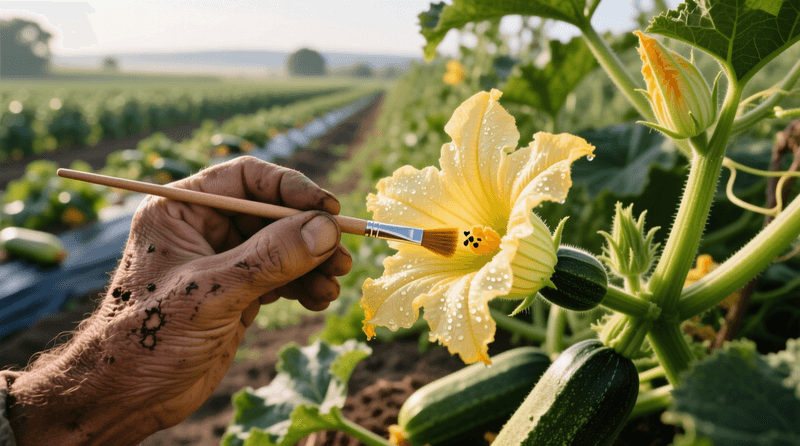
When morning observation suggests that bees are scarce, visits are brief, or female flowers are closing without fruit development, hand-pollination is a practical option that home gardeners can carry out with minimal equipment. Think of it as giving the plant a little help rather than replacing the whole pollination system.
The technique is straightforward. Locate a freshly opened male flower and a freshly opened female flower on the same morning.
Using a small artist’s brush, collect pollen from the anthers at the center of the male flower and transfer it to the sticky stigma inside the female flower. Alternatively, Illinois Extension’s hand-pollination guidance describes simply touching the male flower directly to the female flower so the pollen makes contact with the stigma.
Timing matters as much as technique. Both flowers need to be open and fresh when you do this, which is why morning is the right time to act.
A female flower that has already begun to close or wilt will not respond the same way as one that opened within the last hour or two.
Keep your male flowers on the plant. Illinois Extension’s summer squash guide notes that male flowers are the pollen source, and removing them eliminates the material you need for hand-pollination or for any visiting bee to do the job naturally.
Hand-pollination is an aid, not a guarantee, but it gives each female flower a real chance during difficult late-summer conditions.
Use a different diagnosis for an enlarged fruit with a true lesion
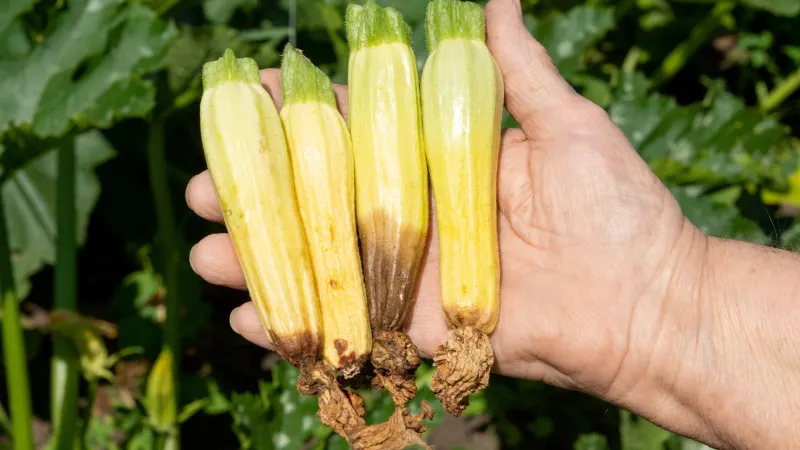
Once a zucchini has grown well beyond its initial small stage, a dark, sunken, leathery patch at the blossom end is telling you something different from what a failed tiny fruit would. At that point, pollination already succeeded well enough for the fruit to enlarge, so looking for a missed bee visit is not the productive next step.
Blossom-end rot is a physiological disorder, not a fungal infection, and USU Extension’s blossom-end rot resource explains that it develops when calcium delivery to the rapidly expanding blossom-end tissue becomes inadequate. Moisture stress, root damage, extreme heat, and rapid growth can all interfere with how efficiently the plant moves calcium through its tissues, even when soil calcium levels are perfectly adequate.
This is a water-transport and uptake problem as much as a soil-chemistry problem.
A separate but related issue can appear during wet stretches. UMN Extension’s Choanephora rot page describes soft rot with white-to-purple-black fuzzy growth on the blossom end as a sign of Choanephora fungal infection, which thrives in warm, humid, wet conditions common across the South in summer.
Prolonged moisture on flowers and fruit is the key risk factor.
Poorly pollinated fruit that aborts can also develop secondary fungal or bacterial decay as it deteriorates, which can look similar to disease at a glance. Checking whether the affected fruit was small and shriveling from the start or had already reached a normal size before the lesion appeared helps you separate these possibilities and choose the right response.
UMN Extension’s vegetable irrigation strategies reinforce that stable moisture management is a central part of preventing the conditions that lead to blossom-end rot and decay.
Stabilize moisture and reduce conditions that favor decay
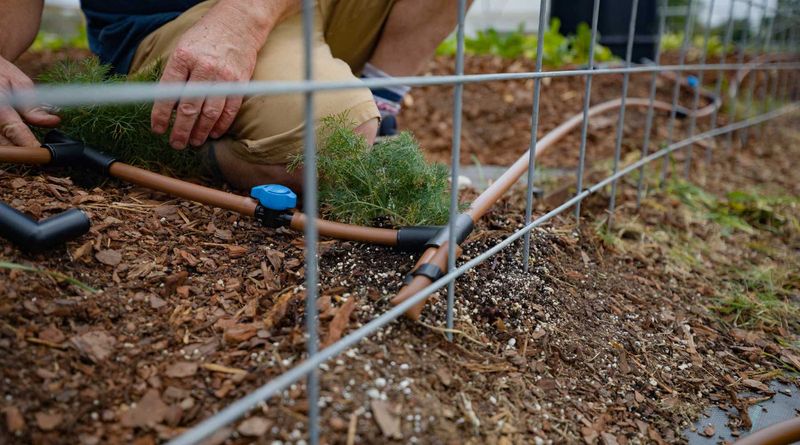
Consistent soil moisture is one of the most practical levers a backyard gardener has against both blossom-end rot and secondary decay. Moisture that swings between dry and waterlogged makes it harder for the plant to move calcium steadily into developing fruit, and wet conditions around flowers and fruit invite fungal problems.
UMN Extension’s vegetable irrigation resource recommends keeping soil moisture even without saturating the root zone, and adjusting based on your specific soil type, container setup, rainfall, mulch coverage, plant size, and heat. Sandy Florida soils drain fast and may need more frequent, lighter irrigation; heavy Texas clay holds moisture longer but can become waterlogged if overwatered.
A single number like one inch per week does not fit every Southern garden, so observe your soil and adjust accordingly.
Mulch is a reliable tool for reducing rapid moisture swings. A few inches of organic mulch around the base of the plant slows evaporation, keeps soil temperature more stable, and reduces the splash-back of soil onto lower leaves and fruit during rain or overhead watering.
UGA Extension’s blossom-end rot guidance supports mulching as part of a consistent moisture management approach.
Air circulation around flowers and fruit matters too. Drip or soil-level irrigation keeps foliage and fruit drier than overhead watering, which reduces the wet conditions that favor Choanephora rot and secondary fungal decay.
Remove any fruit that has clearly stopped developing or is visibly rotting. It will not recover, and UMN Extension’s guidance on garden disorders notes that removing failed or infected material reduces sources of ongoing decay and lets the plant direct resources toward healthier fruit.
Do not treat huge leaves with guessed nutrients
A zucchini plant with enormous leaves can look alarming when the fruit is failing, and it is tempting to assume the plant is getting too much nitrogen or is somehow out of balance. Large, lush foliage can reflect normal cultivar vigor, abundant summer water, or naturally fertile soil just as easily as it reflects excess fertilizer.
Leaf size alone does not confirm a nutrient problem.
UGA Extension’s blossom-end rot resource cautions against adding fertilizer or lime based on visual guesses, because excess nitrogen can push vigorous vegetative growth while making blossom-end rot worse by diverting resources away from developing fruit. A soil test is the right starting point before adjusting any fertility or pH.
Two popular home remedies deserve a clear correction. UMN Extension’s guidance on eggshells and Epsom salts states that eggshells decompose too slowly to provide a timely calcium correction and do not prevent blossom-end rot.
Epsom salts add magnesium, not calcium, and excess magnesium can actually interfere with calcium uptake; foliar Epsom-salt sprays can also scorch leaves.
Foliar calcium sprays are sometimes suggested as a quick fix, but Illinois Extension’s blossom-end rot explainer is clear that they will not restore tissue that has already been damaged. Fruit set may also improve naturally once extreme late-summer heat and humidity moderate, without any amendment at all.
Patience and a soil test are more useful than a guessed treatment.
Protect pollinators while you troubleshoot
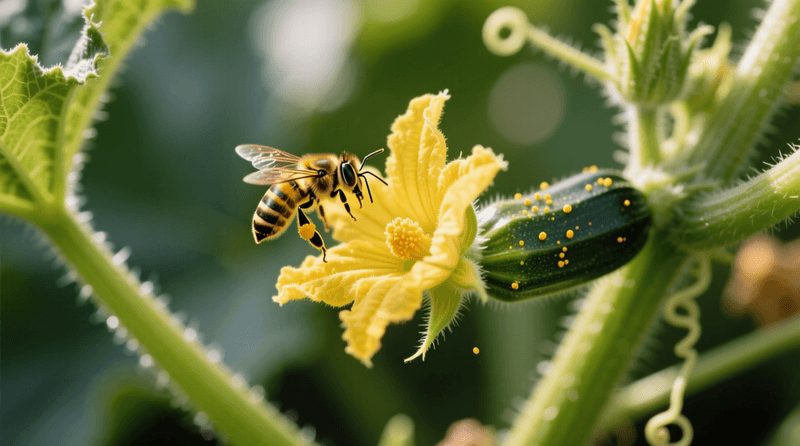
Poor fruit set can make a gardener want to do something, and sometimes that impulse leads toward reaching for a pesticide. Before spraying anything on blooming zucchini, consider what that application could do to the pollinators you are counting on to solve the very problem you are troubleshooting.
Broad-spectrum insecticides can harm bees, including the squash bees and bumblebees that are most effective at pollinating zucchini. UMN Extension’s squash vine borer guidance acknowledges that insecticide applications may sometimes be warranted for serious pest pressure, but stresses following the label carefully and avoiding applications when pollinators are actively foraging.
EPA pollinator protection guidance outlines strategies for reducing pesticide risk to bees, including applying treatments in the evening when flowers are closed and bees are less active, and choosing products with lower bee toxicity when treatment is genuinely necessary. The label is a legal document, and restrictions on blooming crops exist for good reason.
Spraying is not a response to poor pollination. If you suspect a pest is causing real damage, identify it first, confirm it is the actual problem, and then follow label directions with pollinator safety in mind.
Protecting the bees in your garden supports the pollination process you are working to improve.
Start with the flower, then treat the symptom
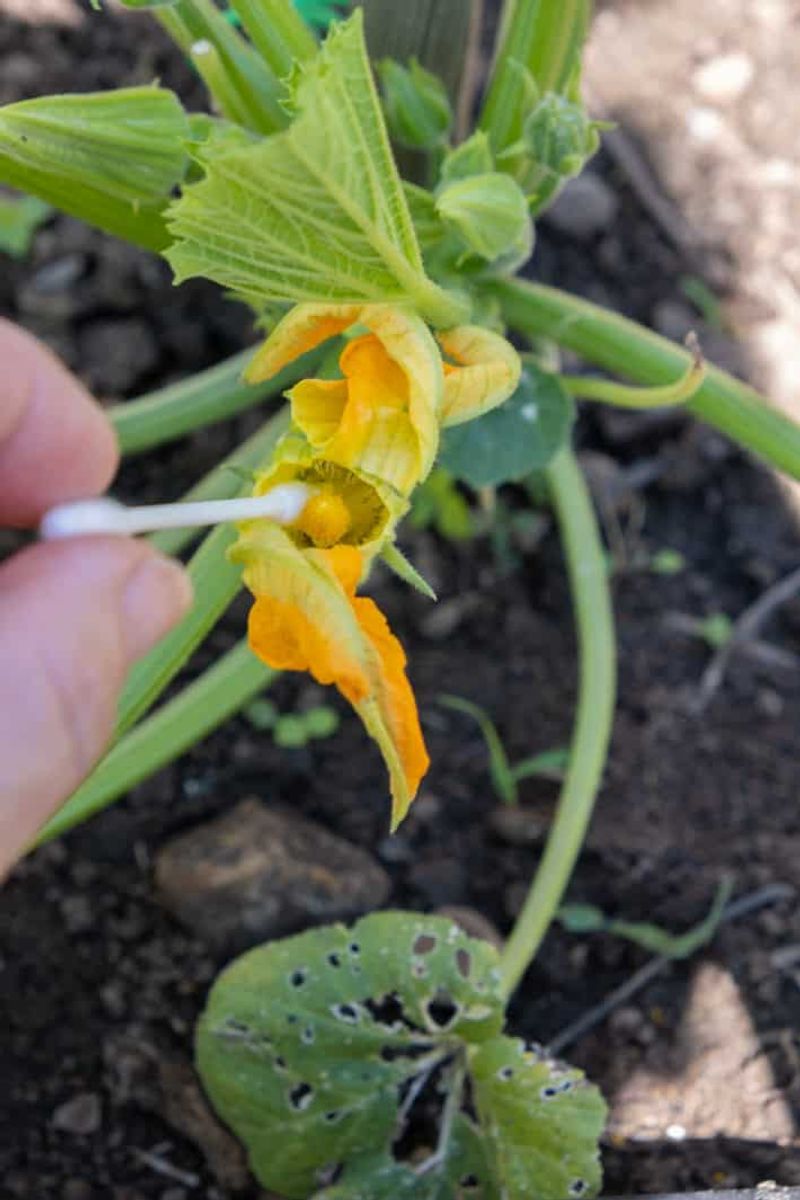
A clear decision path makes troubleshooting less stressful. When a small zucchini fruit yellows, shrivels, deforms, or fails to develop shortly after flowering, check the flowers first.
Look for male and female flowers on the plant, watch morning pollinator activity, and hand-pollinate a fresh female flower if visits seem inadequate. UMN Extension’s summer squash guide confirms that poor pollination is a leading cause of early fruit failure in zucchini.
When an enlarged fruit develops a dark, sunken, leathery lesion at the blossom end, shift focus to moisture management, airflow, sanitation, and disease clues. USU Extension’s blossom-end rot notes and UF/IFAS research on squash both support consistent moisture as the foundation of that response.
Remove failed fruit, improve air circulation, and observe whether conditions improve as summer heat eases.
Southern gardeners dealing with a heat-related pause in fruit set can take some reassurance from the fact that zucchini plants often resume normal production once temperatures moderate and pollinators return to full activity. Match the treatment to the stage of the fruit and the visible symptoms in front of you, and the right fix becomes much easier to find.