
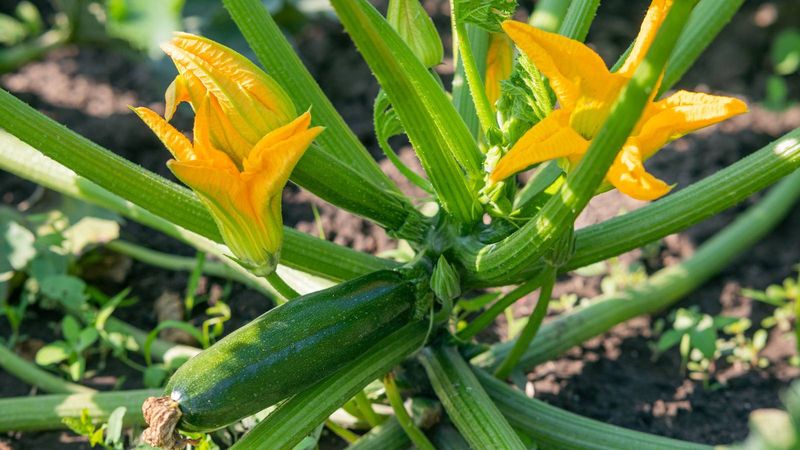
Watching your zucchini plant pump out blossom after blossom while never producing a single squash is genuinely frustrating, especially in the thick of a Southern summer. The good news is that the problem is usually diagnosable, and the first step costs nothing but a few minutes of attention in the early morning.
Before you blame the bees or reach for a fertilizer bag, you need to know which type of flower is actually falling off your plant.
Start with the flower, not the fallen blossom
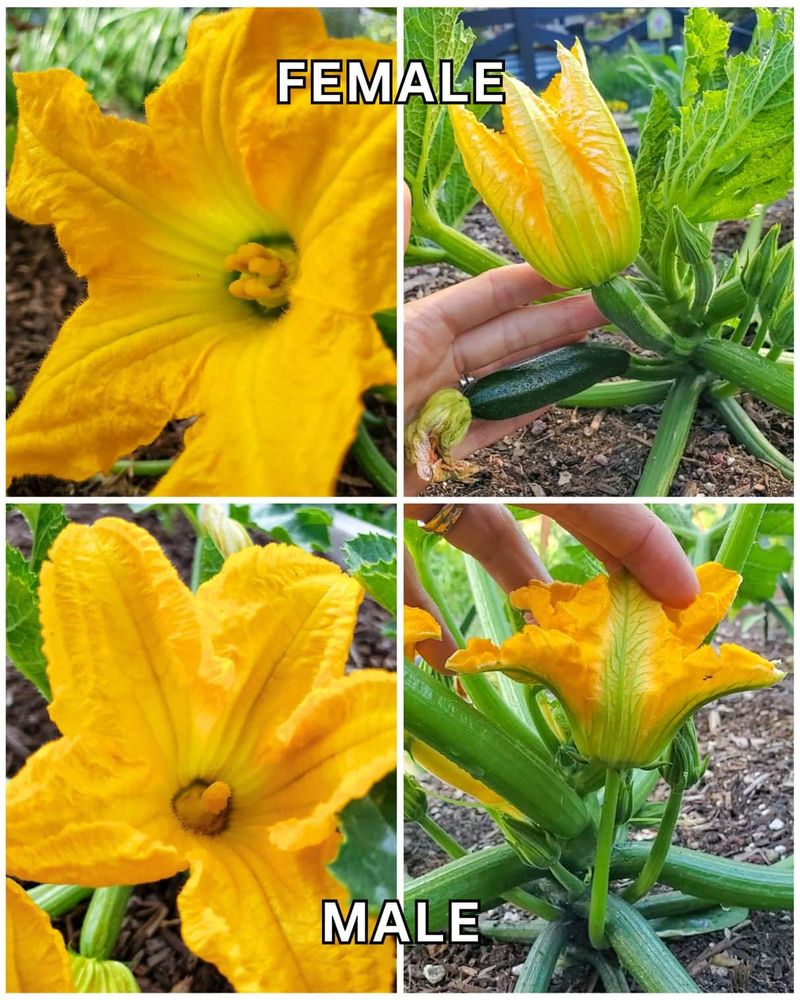
Zucchini plants grow two completely different kinds of flowers, and sorting them out is the first diagnostic step. Male flowers grow on long, thin stems with no swelling at the base.
Female flowers have a tiny, unmistakable miniature zucchini sitting right behind the petals – that swollen base is the ovary, and it is the only part of the plant that can develop into edible squash.
A lot of gardeners notice a wave of blossoms dropping early in the season and assume something is broken. University of New Hampshire Extension explains that squash commonly produces a flush of male flowers before female flowers even appear, and those male blossoms naturally fall off because they have no ovary to develop.
That is completely normal, not a sign of pollination failure.
The real investigation begins only after you confirm that female flowers are present and their tiny ovaries are failing to enlarge. Pick up a dropped blossom and look at the stem end.
If there is no miniature squash attached, it was a male flower and its drop tells you nothing about fruit set. If you find female flowers with swollen ovaries that are turning yellow, shriveling, or detaching without growing, that is the symptom worth investigating.
UC IPM’s guidance on blossom drop in cucurbits reinforces this point: diagnosing the problem accurately requires confirming which flower type is dropping before drawing any conclusions about pollinators or pollen transfer.
Heat can disrupt both pollination and fruit development
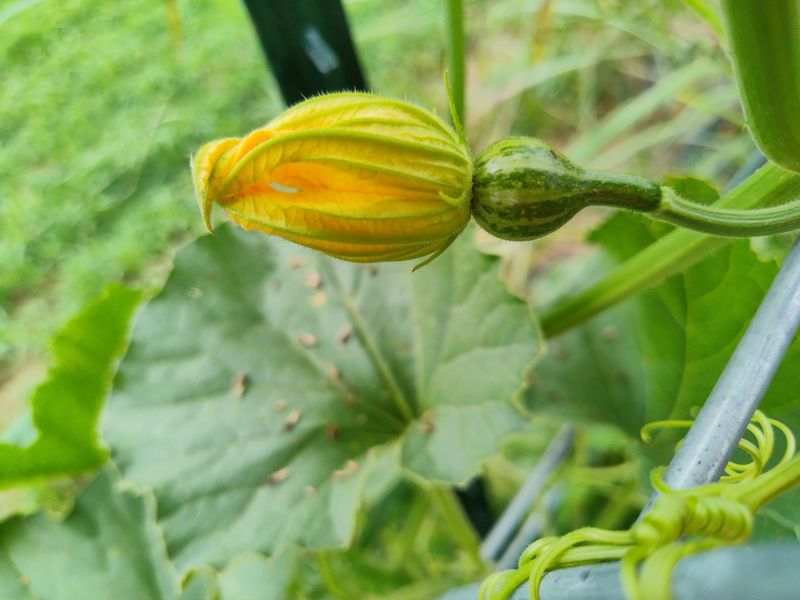
Late-summer heat does more than make gardening uncomfortable. When daytime temperatures climb into the 90s and nights stay in the 70s, the conditions can interfere with fruit set in several overlapping ways, and incomplete pollination is only one of them.
University of Delaware Extension’s review of fruiting disorders in summer squash describes how high heat can reduce pollen viability, slow or stop pollen-tube growth inside the flower, and cause small developing fruit to abort even after pollination has occurred. Warm nights compound the problem because the plant cannot recover its metabolic balance overnight the way it would in cooler weather.
Bee activity also drops during heat waves. Pollinators tend to forage less during the hottest parts of the day, and extreme heat can push that window so early in the morning that a gardener who checks the garden at 9 a.m. sees empty flowers and assumes no insects visited.
Rain and high humidity can make pollen clump and stick poorly to the stigma, while drought stress can suppress female flower production or shift the plant toward producing more male flowers.
These thresholds – roughly 90 degrees Fahrenheit by day and 70 degrees at night – are practical warning ranges, not universal biological cutoffs. How long the heat persists, what the humidity is doing, how consistently the soil stays moist, and the health of the individual plant all influence the outcome.
UF/IFAS research on pollination of Cucurbita crops in Florida notes that multiple stressors often operate together, making it difficult to pin fruit-set failure on a single cause.
Use the early morning to observe flowers and pollinator activity
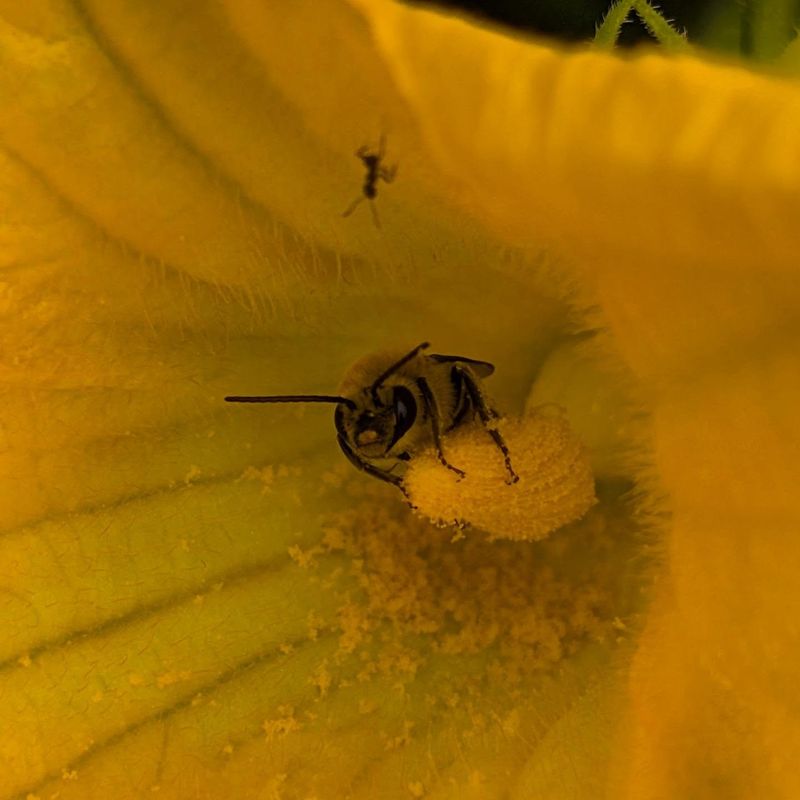
Zucchini blossoms open near dawn and stay receptive for only a short window, often closing by late morning or lasting roughly one day total. That narrow schedule means a mid-afternoon garden walk tells you almost nothing about what happened during the critical pollination period.
Getting outside between sunrise and about 9 a.m. gives you the best chance to see whether flowers are fully open, whether the stigma inside female flowers looks accessible, and whether any insects are actively visiting. USDA Agricultural Research Service guidance on squash pollination points out that squash bees, which are native bees specialized for Cucurbita flowers, forage very early in the morning and may finish their work before most gardeners step outside.
Spotting a bee does not confirm that pollination succeeded, and not spotting one does not confirm that it failed.
Honey bees are not the only pollinators that matter here. Bumble bees, squash bees, and various other native insects can all transfer pollen effectively.
UNH Extension notes that a gardener who sees no honey bees should not automatically conclude that pollination is absent. The absence of visible honey bees is not evidence of pollination failure on its own.
Early-morning observation is most useful as a starting point, not a verdict. Pair it with hand-pollination and watch what the ovary does over the following days to build a more complete picture of what is actually limiting your fruit set.
Hand-pollination tests whether pollen transfer may be limiting fruit set
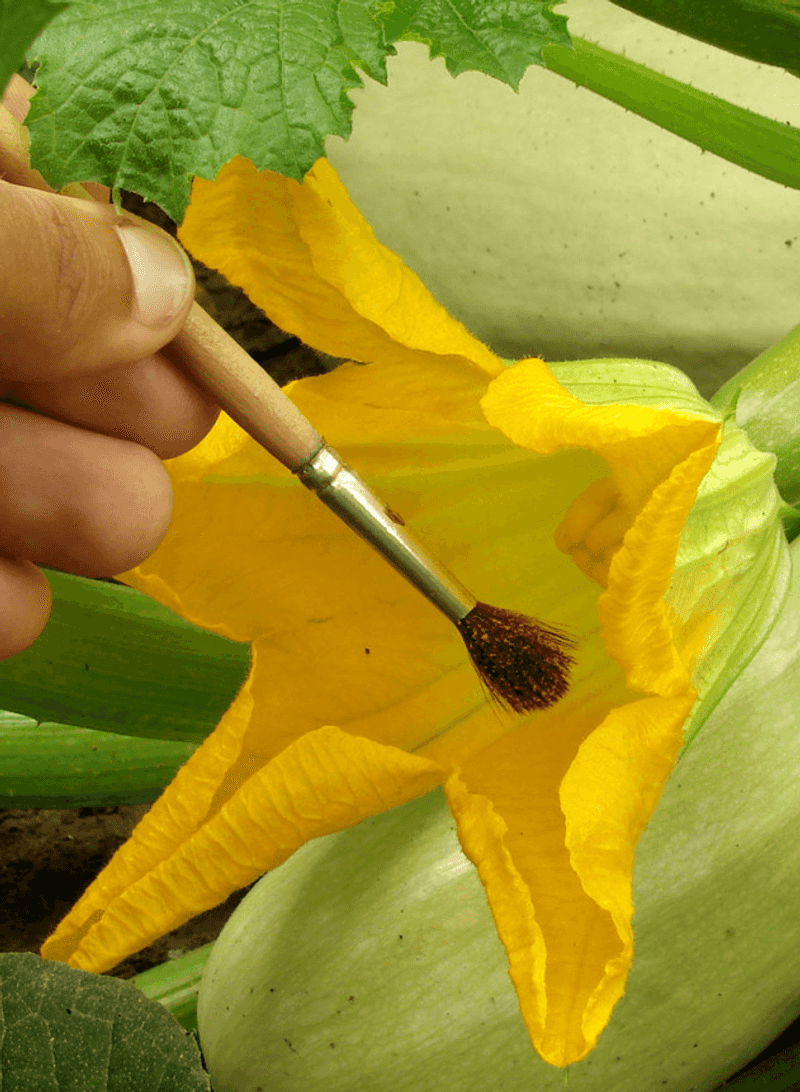
Hand-pollination is the most direct tool a home gardener has for testing whether insufficient pollen transfer is contributing to poor fruit set. The procedure is straightforward and takes only a minute or two per flower.
Start by finding a freshly opened male flower – the one on the long, thin stem with no swelling at the base. Either use that flower directly as a brush or collect its yellow pollen with a small, soft artist’s paintbrush.
Carry the pollen to a freshly opened female flower and gently dab or brush it onto the stigma, the sticky central structure inside the female bloom. Work in the morning while both flowers are fully open, and repeat the process for every available female flower rather than treating just one.
Mark each treated flower with a piece of yarn or a small stake so you can track it over the next several days.
UNH Extension’s guidance on zucchini flowering recommends this approach as a practical way to provide backup pollination and observe whether pollen availability is part of the problem. If hand-pollinated flowers begin to enlarge and develop normally while unassisted flowers drop, that points toward insufficient pollen transfer as a likely contributor.
However, hand-pollination cannot overcome every obstacle. UF/IFAS Cucurbita pollination research and University of Delaware Extension both note that heat can render pollen nonviable even before a gardener collects it.
If hand-pollinated flowers still abort, the cause likely extends beyond pollen transfer alone, and other stressors – heat, drought, disease, pests, or overall plant decline – deserve equal attention.
Track the ovary to judge what happened next
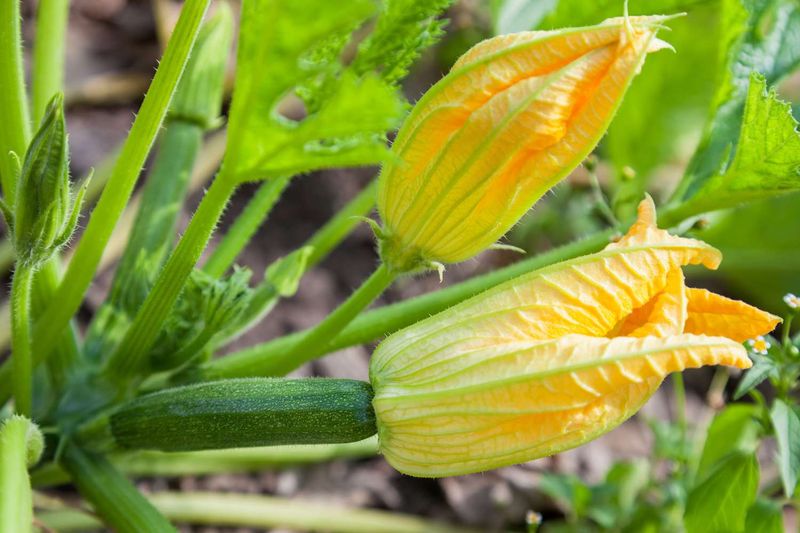
After natural pollination or a hand-pollination attempt, the ovary at the base of the female flower is your best evidence of what is happening. A successfully pollinated female should show visible enlargement within a day or two, with the tiny squash gradually firming up and extending in length.
A flower that was inadequately pollinated, or one stressed by heat, drought, or other factors, tends to follow a different path. UF/IFAS Gardening Solutions notes on summer squash describe the common failure signs: the ovary turns yellow, shrivels, becomes misshapen, or drops from the plant entirely without ever growing.
Tracking your marked flowers lets you separate this female fruit-set failure from the completely normal drop of male blossoms, which never had an ovary to begin with.
If your hand-pollinated flowers are still aborting, adding more pollen is unlikely to solve the problem on its own. That result is a signal to broaden your investigation rather than repeat the same step.
UF/IFAS Cucurbita pollination guidance lists several possible contributors beyond pollen shortage: sustained high heat, inconsistent watering, excess nitrogen pushing vegetative growth at the expense of fruit, fungal or bacterial disease affecting developing fruit, pest feeding on stems or leaves, or general plant decline from a long season in challenging conditions.
Treating one variable at a time and watching what the ovary does next is a more productive approach than assuming a single cause and applying one fix repeatedly. The ovary does not lie – it either grows or it does not, and that difference narrows the field of likely explanations.
Reduce plant stress while protecting pollinators
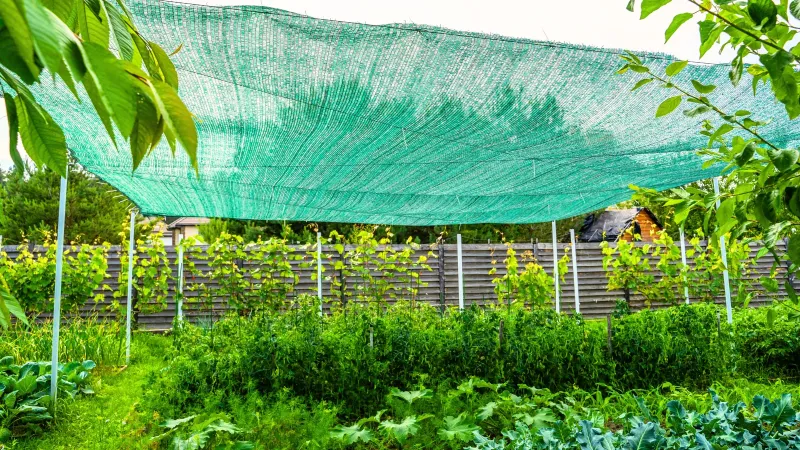
Addressing heat and water stress will not guarantee fruit set on its own, but reducing avoidable stress gives your plant a better chance of completing the process when flowers and pollinators are both doing their part. Even soil moisture is one of the most practical things you can manage.
University of Delaware Extension notes that water stress can compound heat-related fruit abortion and affect the male-to-female flower balance. The goal is consistent moisture that prevents the soil from drying out between waterings without keeping it saturated.
Deep, infrequent watering that encourages root depth tends to work better than light daily sprinkles, and a layer of mulch around the base of the plant helps hold moisture and moderate soil temperature.
Temporary afternoon shade using shade cloth or a simple frame can reduce heat load on the plant during the hottest part of the day. Oklahoma State University Extension suggests that shade cloth may help protect plants during extreme heat, but it does not replace viable flowers, effective pollen, and open access for pollinators.
If you use row covers for pest protection at any point, remove them completely during bloom or hand-pollinate the covered flowers. Oregon State University’s guidance on squash and zucchini is direct on this point: covers that remain over flowering plants will prevent insect pollination.
Insecticide use on flowering zucchini deserves serious caution. Avoid applying any pesticide to blooming plants whenever possible.
If a treatment is necessary, read the specific product label carefully before spraying – some labels prohibit applications during bloom entirely, and EPA pollinator protection guidance makes clear that evening application is not universally safe because some native bees, including squash bees, rest inside flowers overnight. Label language and local pesticide rules take priority over any general timing advice.
Sometimes better timing matters more than another intervention
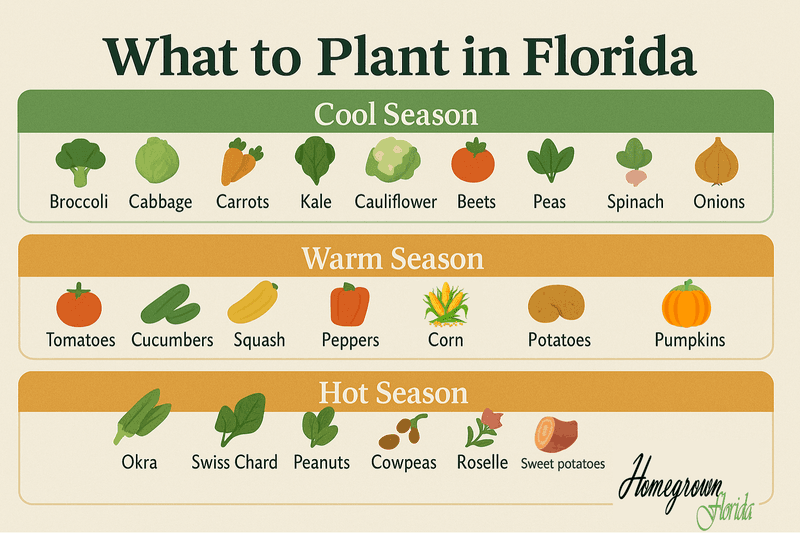
Persistent fruit-set failure during the hottest weeks of summer sometimes signals a timing problem more than a technique problem. When daytime heat stays extreme and nights stay warm for weeks at a stretch, fruit set can remain unreliable even when you are pollinating correctly and watering consistently.
UF/IFAS Gardening Solutions states plainly that summer squash generally performs poorly during Florida’s most intense summer heat and recommends region-specific planting windows instead of pushing through the hottest period. For North and Central Florida, August and September are listed as appropriate planting times for a fall crop.
South Florida’s main productive window begins in August and extends through the cooler months. Working within those windows, rather than against the peak of summer heat, often produces more squash with less frustration than any mid-season intervention can.
University of Delaware Extension similarly notes that cultivar, duration of heat, and overall plant health all influence how much fruit set recovers once conditions improve. For gardeners outside Florida, the same principle applies: if your plant has been battling heat for weeks and the ovaries keep aborting despite hand-pollination, consider whether the season itself is the limiting factor.
The practical sequence remains the same wherever you garden: confirm female flowers are present, inspect fresh blooms early in the morning, test pollen transfer by hand, mark treated flowers, and monitor the ovary. If fruit still aborts, reassess heat, moisture, and plant health before adding another intervention.
Sometimes the most useful thing a gardener can do is plan a better planting date for next time.