
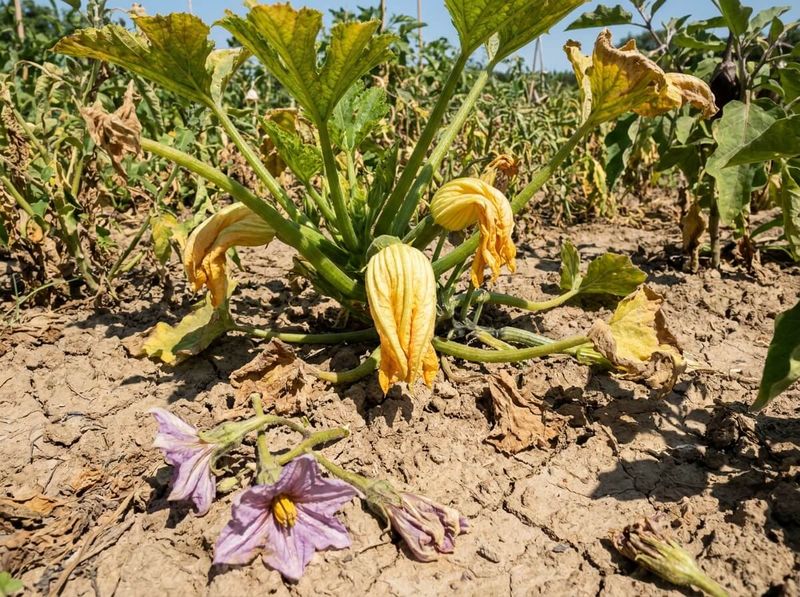
Walking out to your zucchini patch and finding nothing but flowers when you expected a harvest is genuinely frustrating, especially in the thick of a Southern summer. The good news is that the problem is often traceable, and knowing where to look first can save you from chasing the wrong fix.
When female flowers are forming but their tiny zucchini shrivel, yellow, or drop before sizing up, incomplete pollination deserves a close look. Heat plays a bigger role than most gardeners realize, and understanding how these two factors connect gives you a real path forward.
Start with the flower, not the missing zucchini
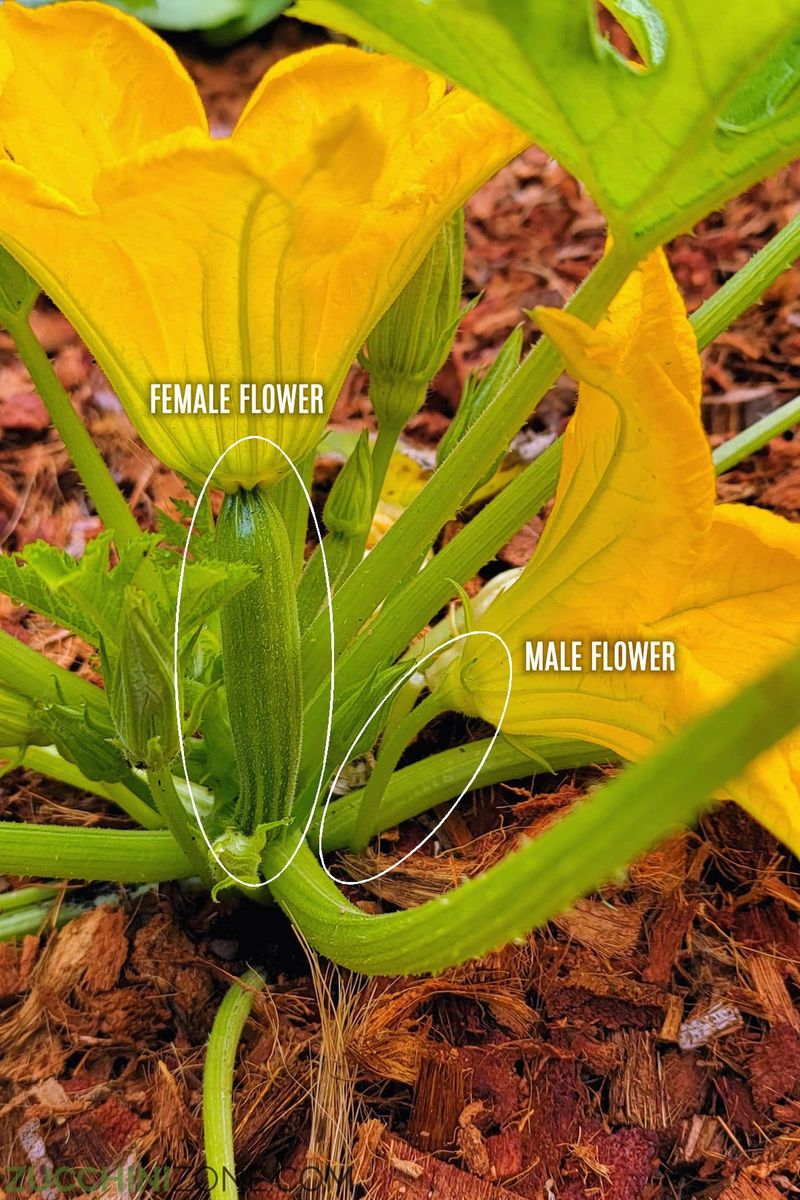
Before reaching for any remedy, crouch down and look at the flowers themselves. Zucchini produces two distinct blossom types on the same plant, and telling them apart is the single most useful diagnostic step you can take.
A female flower has a small, swollen, miniature-zucchini-shaped ovary sitting directly behind the blossom – that little bump is the only part that can grow into fruit. A male flower has a narrow base and rides on a longer, thinner stem with no swelling behind it.
University of New Hampshire Extension confirms that only female flowers carry the ovary capable of becoming a zucchini, so a plant covered entirely in male blossoms has not yet offered anything for pollen to fertilize.
Early male-heavy flowering is common and normal. Squash plants routinely open male flowers well before female flowers appear, which can make a healthy young plant look unproductive.
If every flower on your plant has a narrow base and no swelling behind it, the absence of fruit is not a pollination failure – there simply has not been a female flower to pollinate yet. Iowa State University Extension notes that this male-first pattern is a normal part of cucurbit development, not a crisis.
The more telling pattern is a female flower that opens, receives what should be its chance at fruit, and then produces a tiny zucchini that turns yellow, shrivels, stays abnormally small, becomes misshapen, or drops off entirely. When that happens, inadequate pollen transfer becomes a leading possibility.
UC Agriculture and Natural Resources notes that shriveling young fruit can also reflect heat, moisture stress, or other plant problems, so the symptom points toward pollination as a suspect without proving it outright.
Heat can disrupt fruit set before pollination fails
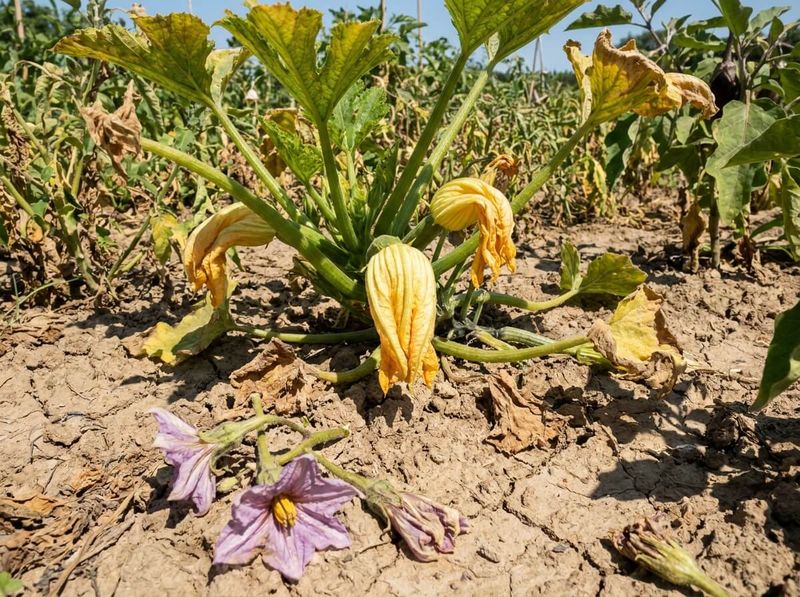
Heat and pollination problems are not two separate explanations for missing zucchini – they are deeply connected. When temperatures climb during a Southern summer, several things can happen at once, and each one chips away at the plant’s ability to set fruit.
Michigan State University Extension explains that high heat can delay female flowers, increase the rate at which flowers abort before they open, and place the whole plant under enough stress to impair normal reproduction even when pollinators are present.
The flower’s open window makes timing especially critical. Zucchini blossoms are receptive for only a short period, generally from early morning through late morning or around midday.
University of Georgia’s bee program notes that heat can cause flowers to close earlier than usual, compressing the already brief period when pollinators can make a meaningful visit. A blossom that looks open and healthy at sunrise may be functionally closed by the time the temperature spikes mid-morning.
Pollen itself can also be affected. Research on Cucurbita pepo – the species that includes zucchini – documents that pollen is sensitive to dehydration, aging, and warm development conditions, as shown in published laboratory work on stress-sensitive squash pollen.
Reduced pollinator activity in the heat, shorter flower openness, and compromised pollen quality can each reduce fruit set independently, or stack together to make the problem worse. Treating heat as the upstream cause helps explain why a garden that looked fine in spring can seem to stall out by late summer.
Watch the female flowers during their morning window
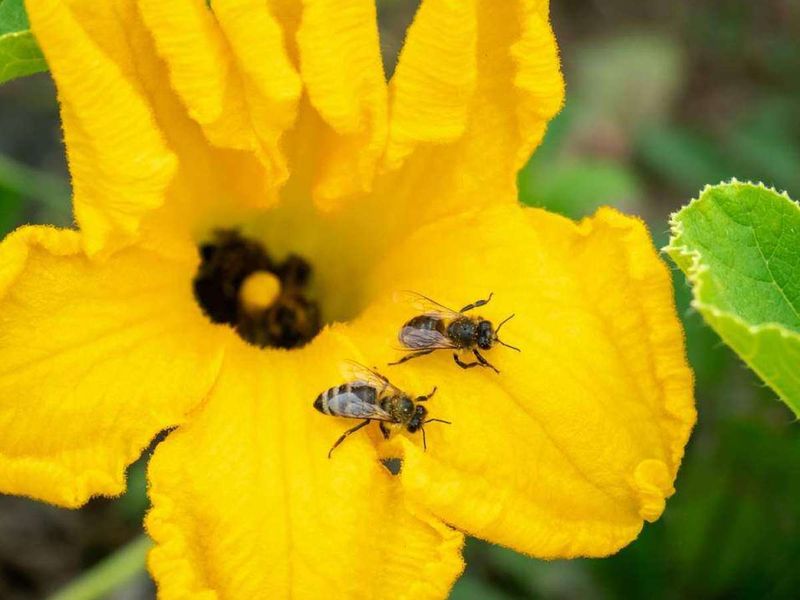
One of the most useful things a gardener can do before intervening is simply watch. Step outside early – well before the heat builds – and spend a few minutes near a newly opened female flower.
The question is not whether bees are flying somewhere in the yard; the relevant observation is whether they are visiting that female blossom during its short receptive window. Oregon State University Extension highlights squash bees as especially important early foragers because they specialize in Cucurbita flowers and often begin working before honey bees are active.
Bumble bees, honey bees, and other native insects can also transfer pollen to squash, so look for any visitor making contact with the flower’s center.
Seeing a bee land on the blossom is encouraging, but it does not guarantee that enough pollen reached the stigma. University of Georgia Extension’s crop pollination guidance makes clear that the adequacy of a visit depends on how much pollen is transferred, not just whether a bee was present.
A quick brush-by is different from a thorough foraging visit. If you watch several female flowers open over a few mornings and see little or no insect activity on those blossoms, incomplete pollen transfer becomes more plausible as a contributing factor.
Protecting the visitors you do have is just as important as observing them. EPA pollinator-protection guidance recommends avoiding pesticide applications when pollinators are actively foraging, following the product label, and using targeted or nonchemical controls where possible on blooming plants.
Spraying a blooming zucchini plant unnecessarily – even with a product labeled as low-risk – can reduce the very pollinator visits you are hoping to observe.
Hand-pollinate one fresh flower and mark it
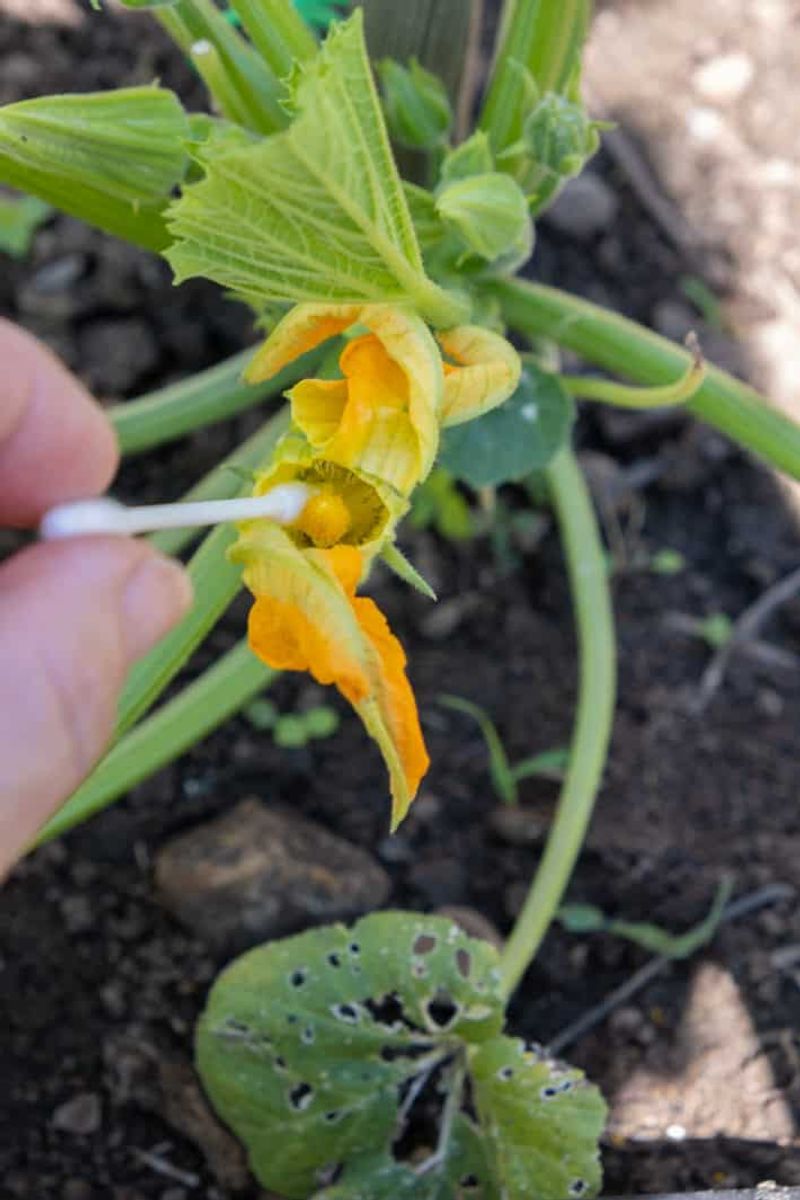
Hand-pollination is a practical rescue step and a useful comparison tool, not a guaranteed cure or a definitive test. Think of it as giving one flower its best possible chance while you continue watching the rest of the plant.
Choose a female blossom that has just opened – fresh flowers with a bright stigma are more receptive than older ones that have started to wilt. Then select a healthy male flower that is also newly opened and still carrying visible yellow pollen.
The transfer itself is straightforward. Using a small, dry paintbrush, collect pollen from the male flower’s anther and gently brush it onto the sticky stigma inside the female blossom.
University of New Hampshire Extension also describes an alternative method: remove the male flower entirely, fold or strip back its petals to expose the anther, and dab it directly against the female stigma. Either approach works; the goal is to move fresh, viable pollen onto the receptive surface without damaging the stigma.
After pollinating, mark the treated flower with a small piece of ribbon, twist-tie, or yarn tied loosely around the stem just below the ovary. That marker lets you track whether this particular flower develops into a zucchini while nearby untreated flowers continue to abort.
Kansas State University Extension recommends this kind of comparison approach because it gives you real observational data rather than a guess. One flower’s outcome – whether it succeeds or fails – cannot indict or clear the entire plant, but a pattern across several marked flowers over several mornings builds a clearer picture of what is actually limiting your harvest.
Reduce background stress at the roots
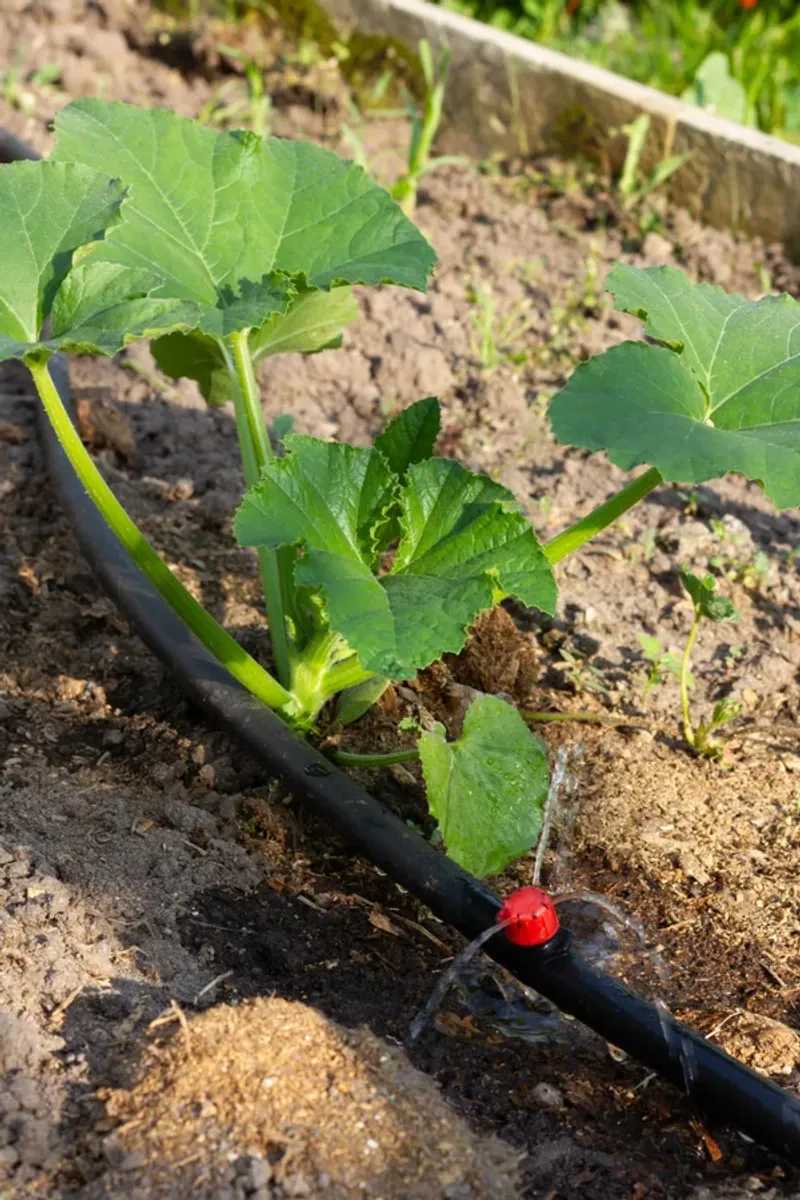
Pollination gets most of the attention when zucchini stops setting fruit, but the plant’s overall condition shapes whether any flower – hand-pollinated or naturally visited – can carry through to harvest. Reducing background stress at the root zone is one of the most reliable ways to support fruit set without replacing the pollination work you are already doing.
Consistent soil moisture is the most important variable to manage during hot weather. Both drought stress and excessive watering can cause flowers to wilt and abort, so the practical goal is steady, even moisture in well-drained soil rather than a cycle of dry spells and soaking.
Kansas State University Extension recommends focusing irrigation at the root zone rather than on foliage, and avoiding conditions where the soil stays saturated. A layer of mulch around the base of the plant can help the soil hold moisture longer between watering sessions, which is especially valuable during the hottest weeks of a Southern summer.
Fertilizer choices also matter more than many gardeners expect. A plant that looks lush and vigorous but refuses to set fruit may actually be getting too much nitrogen.
Michigan State University Extension cautions that excess nitrogen pushes a plant toward foliage production and can delay or reduce female-flower development. Rather than adding more fertilizer as a fruit-set rescue, base any applications on a soil test so you are correcting a real deficiency rather than creating a new imbalance.
Keeping the plant steady – well-watered, not over-fed, and mulched against heat – gives your hand-pollination work the best possible supporting conditions.
Know when heat or another problem is taking over
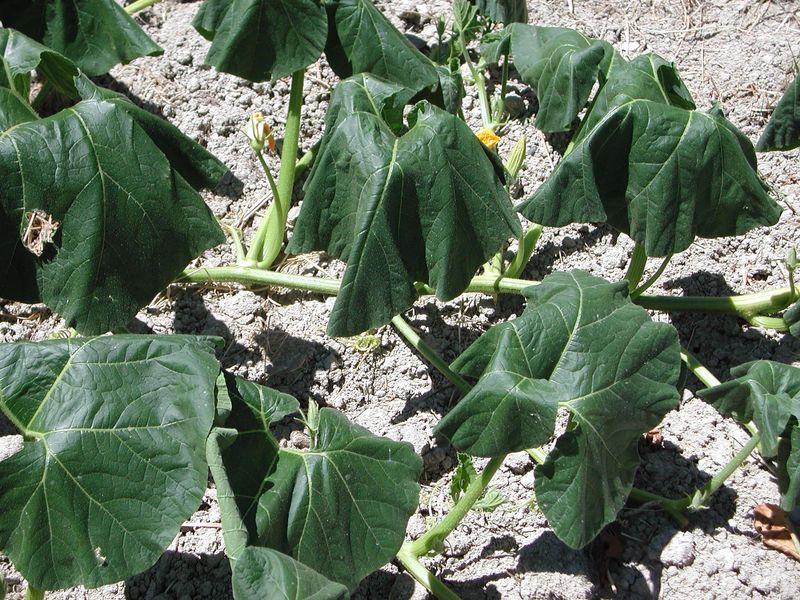
A failed hand-pollination attempt is information, not just disappointment. If the flower you marked shrivels just like the unmarked ones, that result suggests the limiting factor is something other than pollen transfer alone – and continuing to apply pollen while ignoring the real problem will not change the outcome.
Several conditions can produce the same shriveling, yellowing, or dropping symptom that looks like incomplete pollination on the surface.
When the plant is producing no female flowers at all, or when flowers are aborting before they fully open, pollen transfer is not the bottleneck. Michigan State University Extension explains that heat can directly increase flower abortion and delay female-flower production, meaning the problem is happening upstream of any pollination step.
Severe or ongoing drought stress can have a similar effect, leaving a plant that appears to be flowering but cannot sustain fruit development regardless of how much pollen reaches the stigma.
Pollen quality is another variable that hand-pollination cannot fix. Research on Cucurbita pepo pollen documents sensitivity to heat, dehydration, and aging, which means pollen collected from stressed or old flowers may not be viable even when carefully transferred.
UC Agriculture and Natural Resources also notes that shriveling young fruit can result from nutrient imbalance, disease, or insect injury – problems that need their own diagnosis. There is no single temperature threshold above which zucchini reliably stops setting fruit in every Southern garden; Iowa State University Extension ties specific heat-threshold figures to pumpkin female-flower abortion, not to zucchini as a general rule.
Use the marked-flower comparison as a clue, look carefully at what the plant’s flowers are actually doing, and be willing to consider moisture, nutrition, disease, or pest pressure when the pattern does not fit a simple pollination story.
Use a conditional morning routine
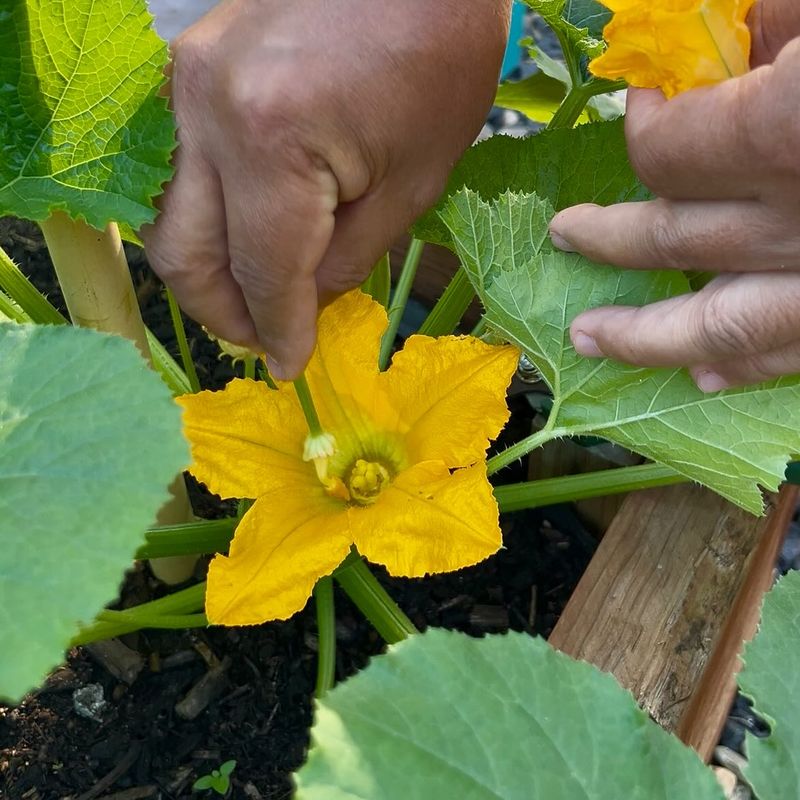
A simple morning habit covers most of what you can actually control. At first light, check whether any female flowers have opened – look for that small swollen ovary behind the blossom.
If one has, spend a few minutes watching it for pollinator visits before deciding whether to intervene. University of New Hampshire Extension recommends hand-pollinating in the morning when pollen transfer appears to be limiting, so act early if visits seem absent and conditions are otherwise reasonable.
When you hand-pollinate, mark the flower and note the date. Keep the root zone consistently moist in well-drained soil, hold off on extra nitrogen unless a soil test shows a real deficiency, and avoid spraying blooming plants with pesticides unless a specific pest problem leaves no other option.
Michigan State University Extension and Kansas State University Extension both emphasize that steady plant care supports any pollination rescue. EPA pollinator-protection guidance reinforces that label compliance and avoiding unnecessary applications matter more than timing alone.
Incomplete pollination deserves real attention when female flowers are forming young fruit that then aborts – but heat stress and broader plant problems remain the more likely explanation when female flowers are absent, abort before opening, or keep failing even after careful hand-pollination. The flower tells you where to look next.