
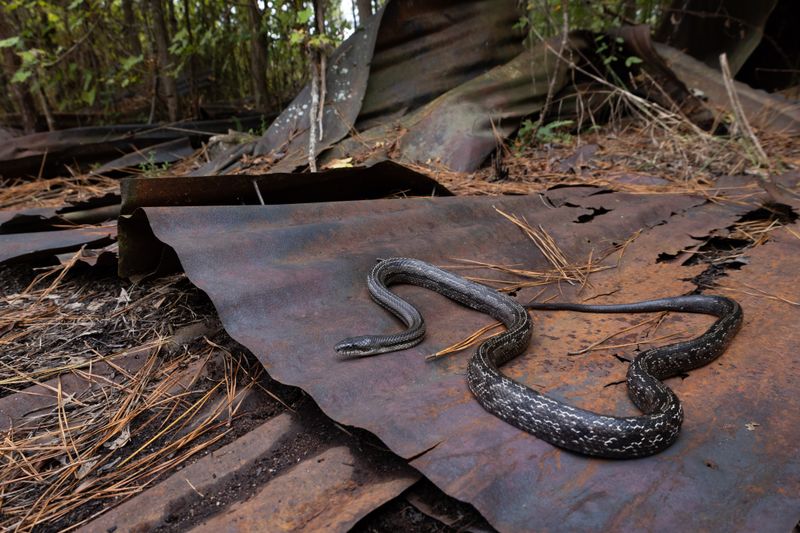
A big gray snake stretched across a Florida driveway can make your heart jump and your hand reach for a shovel. Before you act, it helps to know that many Florida snakes are harmless and some may help keep rodents in check.
Color and size alone cannot tell you which snake you have, though. Here is how to read the sighting, stay safe, and check your yard for the things that really matter.
What does a thick gray snake actually tell you?
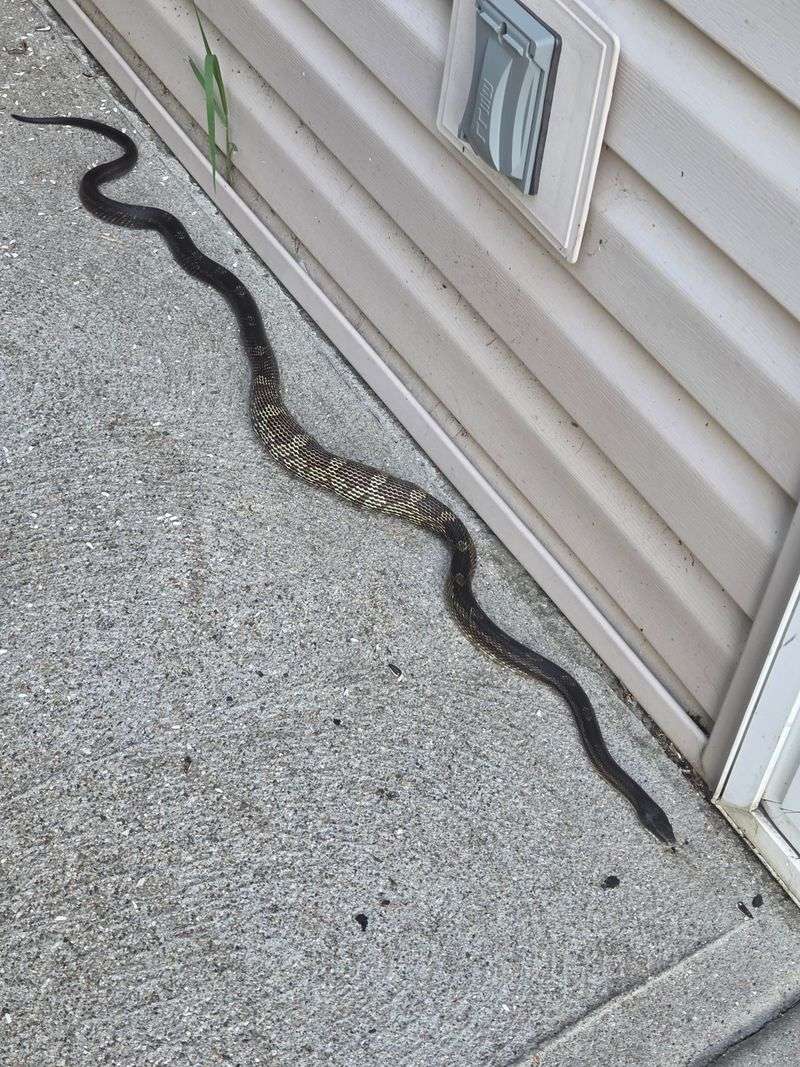
Color and size are poor identification tools. A snake that looks gray in bright light may be a different shade up close, and a snake that seems huge from a doorway may be much smaller when measured against a familiar object.
Florida has many snake species, so a quick glance is not enough to name one.
The gray ratsnake is a real Florida species, but the Florida Museum of Natural History places it in the Panhandle west of the Apalachicola River. Rat snakes elsewhere in the state can look different.
Adults in the peninsula can range from yellow to gray, sometimes with stripes or leftover blotches, and other species can look gray too.
That means the idea that your snake is a rat snake is only a possibility. The same goes for the idea that it is sunning or hunting, since nobody can tell what a snake is doing from a brief look.
A snake resting on pavement may simply be crossing it.
For a better answer, use a trusted guide such as the UF/IFAS identification guide for common residential snakes. Compare your location, markings, and body shape rather than color alone.
If you still are not sure, treat the snake as unidentified and give it space.
Rat snakes eat rodents, but a driveway sighting is not a hunt report
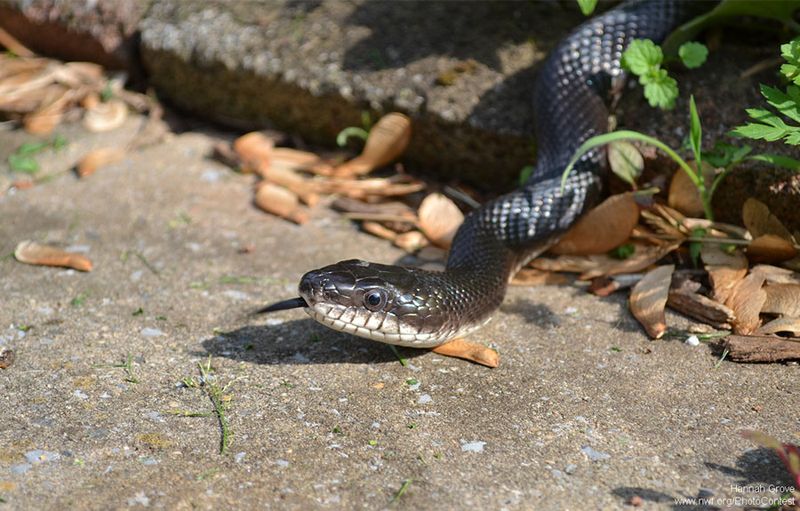
Here is the homeowner payoff. Florida’s gray ratsnake is nonvenomous, and its diet is varied.
The Florida Museum lists rodents along with frogs, lizards, birds, and eggs. Adults are generally about 42 to 72 inches long.
Snakes in general also play a part in rodent control, as the Florida Fish and Wildlife Conservation Commission explains in its guidance on living with snakes. Florida has 50 native snake species, and most are harmless to people who leave them alone.
Still, a general fact about a species is not a report about one animal. Seeing a snake on your driveway does not show that it is hunting, that it has visited your shed, or that it has cleared rats from an attic.
It may be traveling between hiding spots or looking for a different meal.
So appreciate what rat snakes do in a general way, but do not count on one to solve a pest problem. A snake is a bonus in a yard, not a pest control plan.
A snake near the house is a clue, not an attic diagnosis
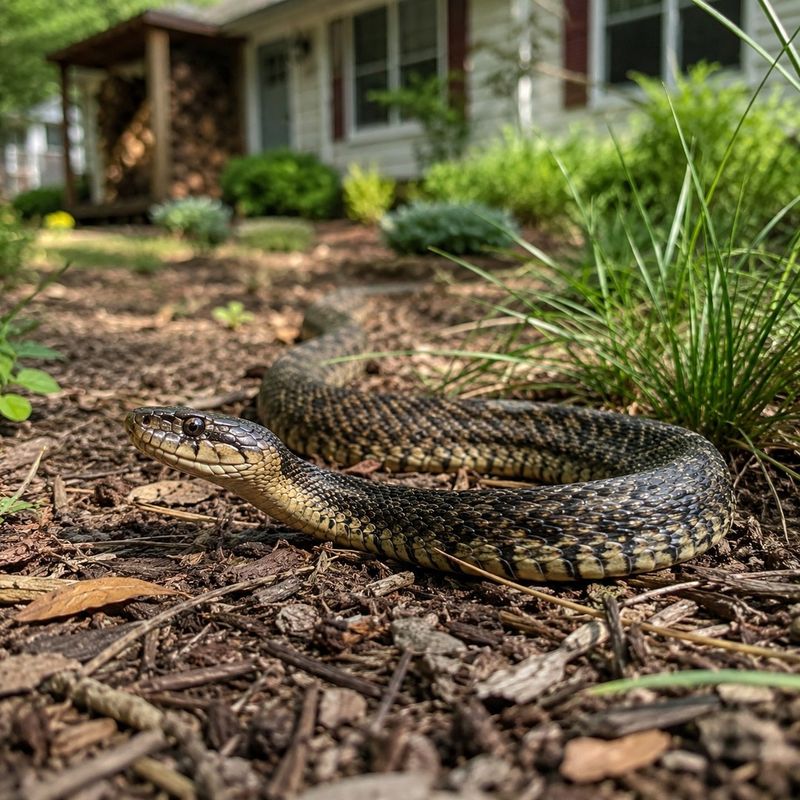
Think of a snake sighting as a small clue. According to FWC, frequent sightings near homes or outbuildings may point to rodents nearby.
The key word is may. It is a possibility, not a diagnosis.
One snake on one afternoon could be passing through. It might be following a different prey animal, such as frogs or lizards, or using your woodpile or mulch for shelter.
Rat snakes eat a wide menu, so rodents are only one option.
If you want to follow up, do a quick check of your own. Look in sheds, garages, and around the foundation for droppings, gnaw marks, greasy rub marks along walls, shredded nesting material, or chewed food packaging.
Listen for scratching in walls or ceilings at night.
Finding none of these signs is useful too. It means the snake is probably just a passerby.
If you do find signs, a pest professional can inspect properly. Either way, the sighting alone proves nothing about your attic.
How should you respond to a snake in the yard?
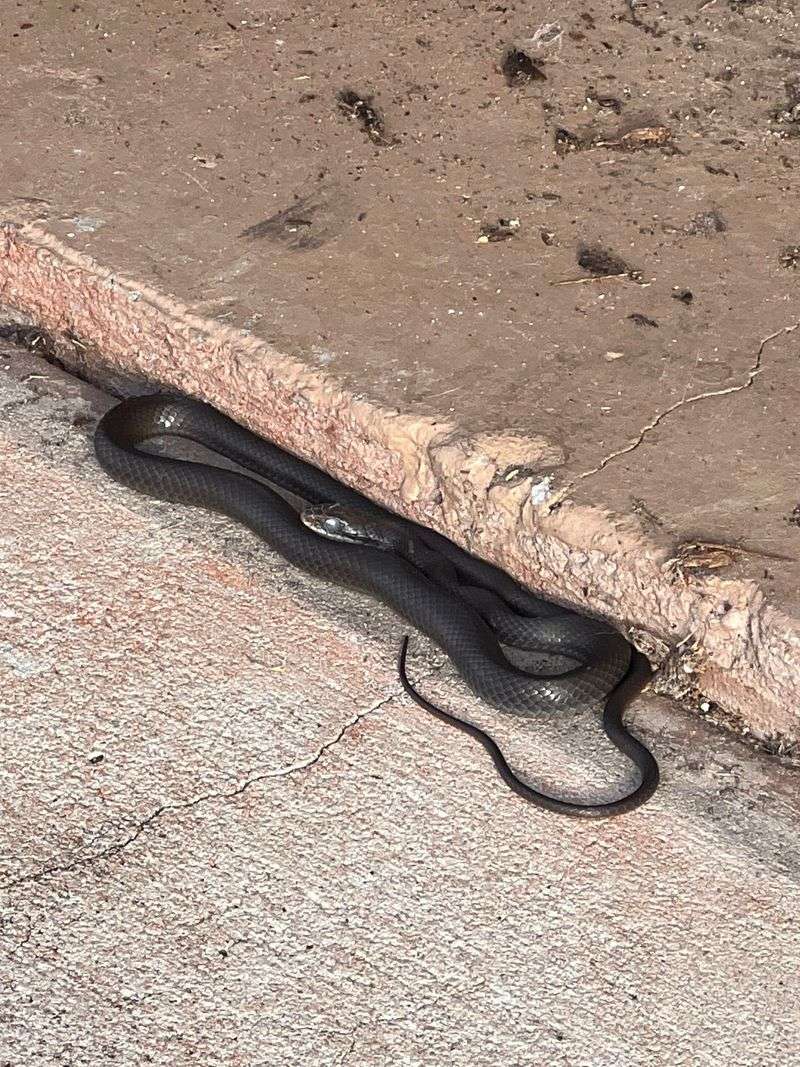
Stay calm and give the animal room. Call children and pets inside or well away, and watch from a distance.
Most snakes move on by themselves if no one bothers them.
UF/IFAS guidance on preventing snake encounters warns against handling a snake you cannot identify with confidence. It also notes that trying to kill a snake raises your chance of being bitten.
Even harmless snakes may bite defensively when cornered.
FWC advises leaving snakes alone and not killing one unless a venomous snake poses an immediate danger. Its snake guidance notes that Florida has six venomous native species among its 50.
If you cannot tell what you are looking at, snap a photo from a safe distance with your phone zoom. Then reach out to a professional who can identify it.
The Florida Museum offers tips for safely coexisting with snakes that fit this situation well.
Do not try to capture it, pin it, or chase it off with a shovel or hose. A guess based on color is not worth a bite.
Reduce the food and hiding places that draw rodents
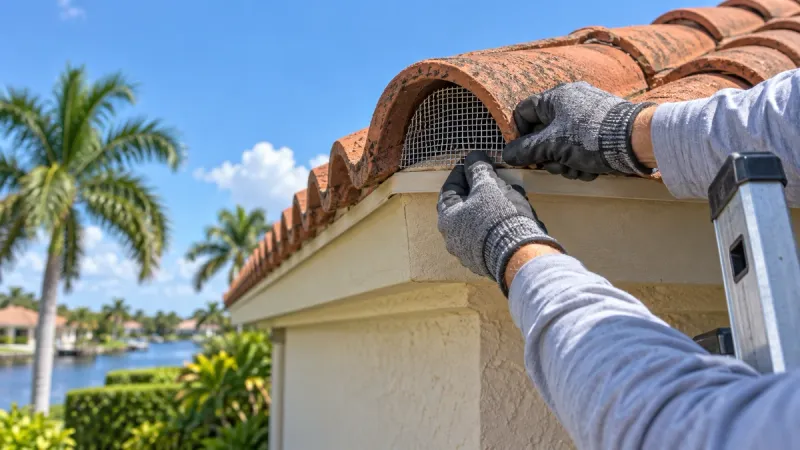
If rodents are the real worry, work on what draws them. UF/IFAS recommends securing food that attracts rodents, checking for rodent signs, clearing clutter and hiding places, and sealing openings around the home.
In practice, store pet food and birdseed in lidded metal or heavy plastic bins. Pick up fallen fruit, and keep trash cans closed.
Move woodpiles, stacked boxes, and old pots away from walls, and trim back dense vegetation touching the house.
Walk the outside of your home and look for gaps around pipes, vents, and door sweeps. Fruit trees can be a draw too, and the UF/IFAS roof rat guide describes snakes as only one piece of rodent control rather than a guaranteed fix.
These steps address possible attractants and entry points. They do not replace a proper inspection or pest control, and they do not mean a snake will keep rodents away.
Be careful with rodent poison. Pets and wildlife that eat poisoned rodents can be harmed too, so ask a professional about safer options.
A snake inside a building calls for a different plan
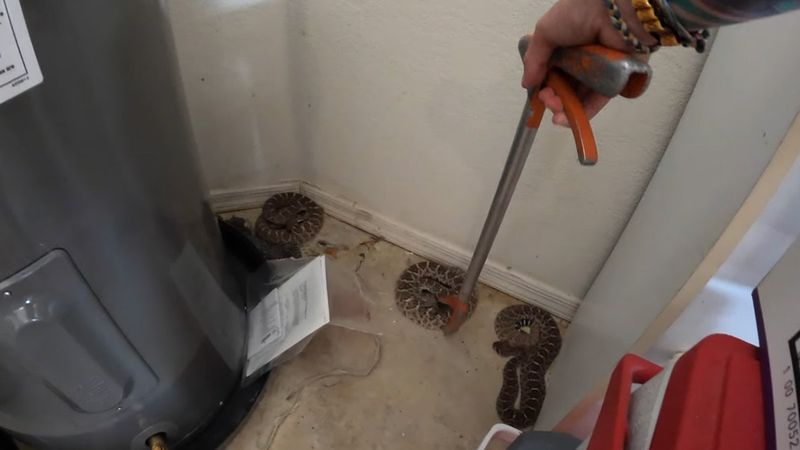
A snake crossing the lawn is one thing. A snake inside your home, garage, or shed is another.
Indoors, the animal is closer to people and pets, harder to observe, and more likely to feel trapped.
Start by keeping everyone out of the room and closing the door if you can do so safely. Keep pets away, and note where the snake was last seen.
If you can, take a photo from a distance.
According to UF/IFAS, if you are uncomfortable removing a snake or cannot safely identify it, you should contact a qualified wildlife professional. That is a sensible choice, not an overreaction.
Skip improvised captures with brooms, buckets, or bare hands. Those attempts are how bites happen, and you may harm a harmless animal.
A professional can identify it, remove it, and help you spot how it got in.
Afterward, look for gaps and rodent signs, since either one might explain the visit.
Let the sighting prompt calm, practical action
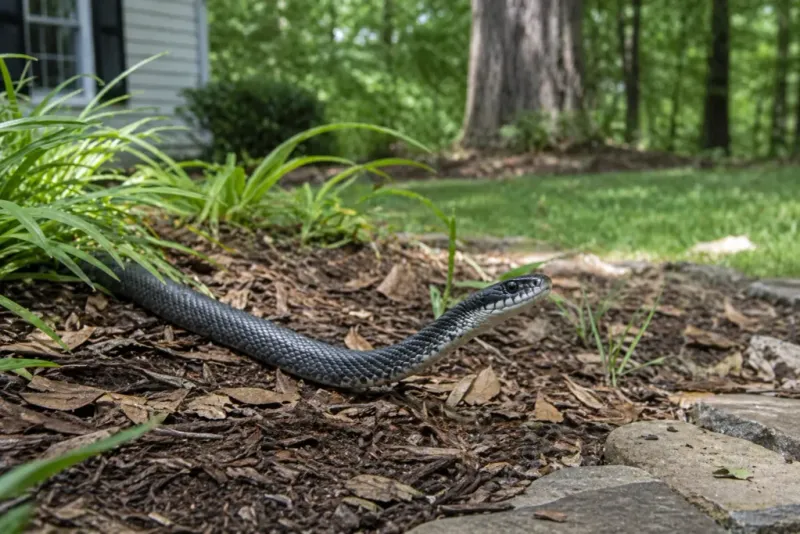
Looks alone cannot tell you a snake’s identity or what it is doing. Rat snakes do eat rodents, but your sighting is a reason to watch from a distance and check for rodent-friendly conditions, not proof of an attic problem.
For attractants and entry points, UF/IFAS guidance is a good place to start.
A quiet snake on the driveway is a prompt to look around, not a problem to solve with a shovel.