
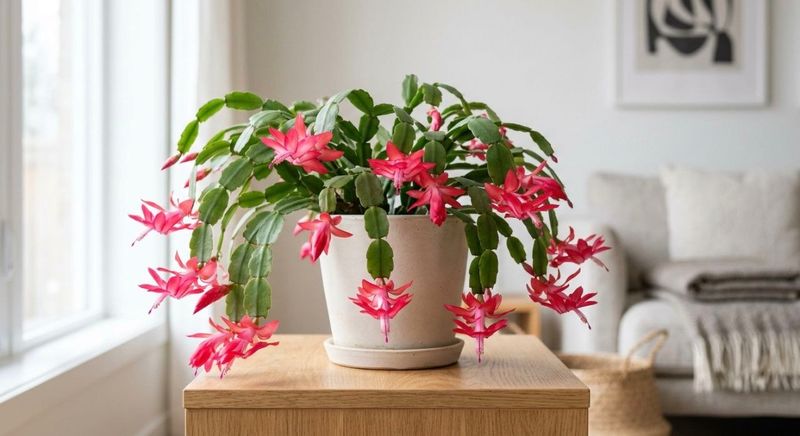
Few things sting like watching tiny buds fall off a Christmas cactus just days before they would have bloomed. The plant looked ready for the holidays, and now there are little pink pieces on the table.
A recent move may have played a part, but it is only one of several possible causes. Here is how to sort out what happened and protect the buds that are left.
Bud drop has several possible causes
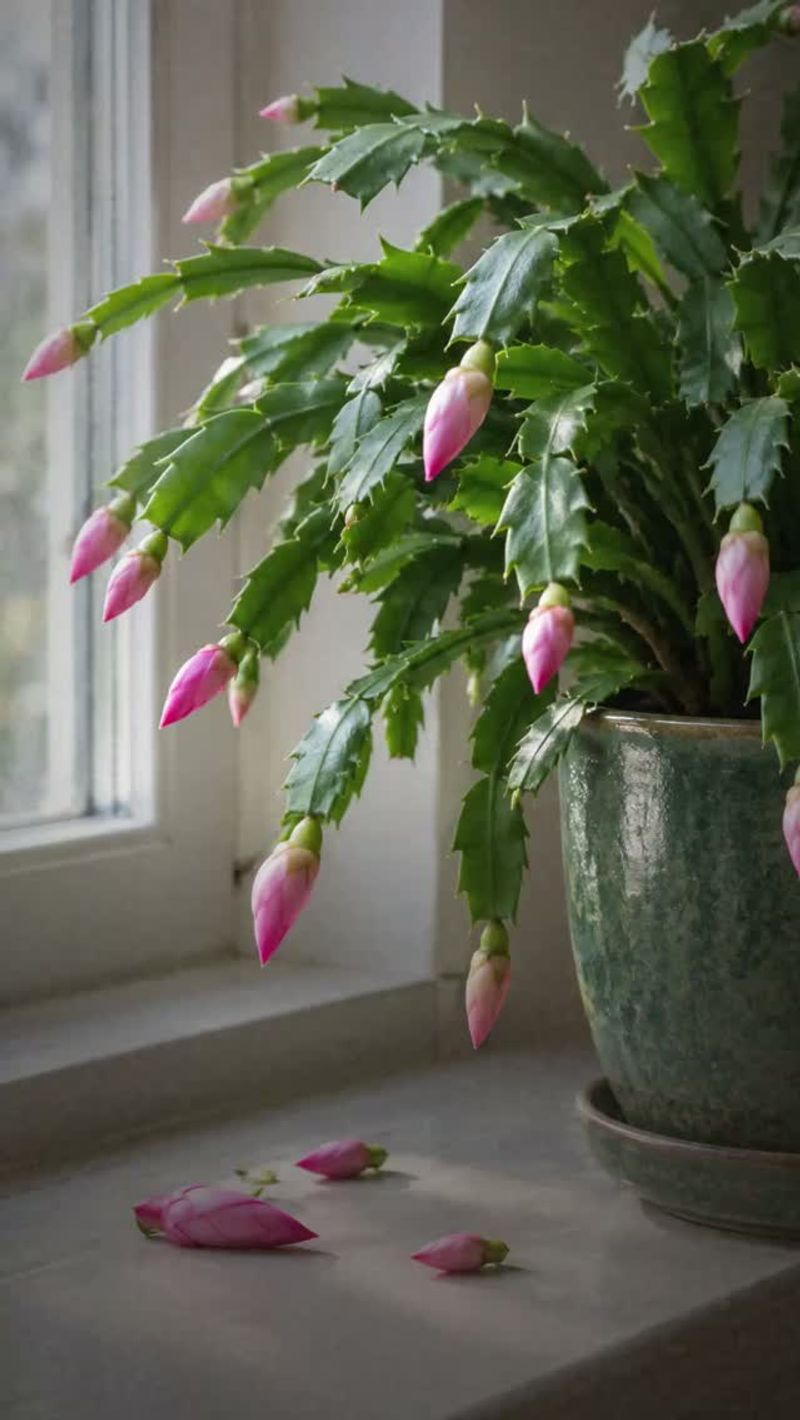
Picking up fallen buds is discouraging, but the drop itself does not name the culprit. A Christmas cactus may be reacting to changed conditions, and a recent move could be part of the story.
Still, the symptom alone cannot prove it.
Extension sources list several documented triggers. Clemson Cooperative Extension connects bud drop with sudden environmental changes, improper watering, too little light, and continuous high temperatures.
University of Minnesota Extension also points to disturbance and shifts in conditions as risks while buds are developing.
So instead of blaming one thing, treat this like a short checklist. Look at where the plant sits, how much light it gets, how warm that spot runs, and how the pot has been watered lately.
One of these may stand out, or a few may be adding up.
Your first action is simple: stop shuffling the plant around while you investigate. Steady conditions give the remaining buds the best chance, though no step can promise every bud will open.
Review what changed before the buds fell
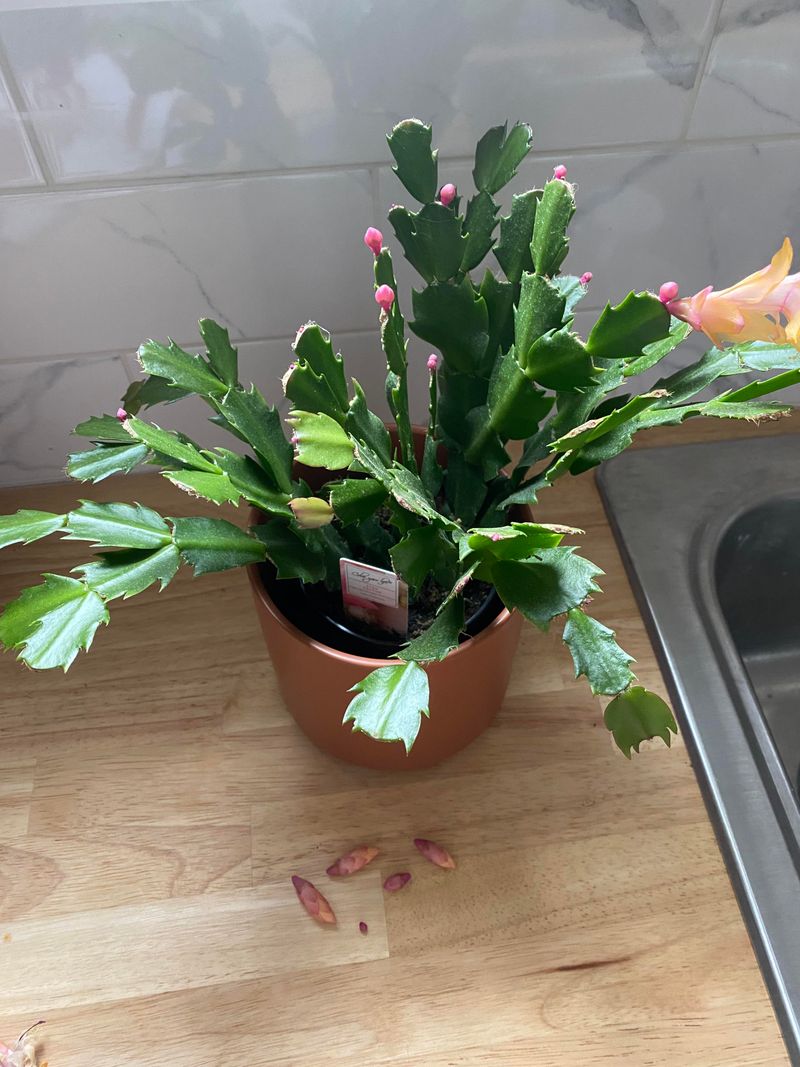
Think back over the last few weeks. Did the plant come in from a porch, move to a different room, or end up beside a new heater or a drafty door?
Did the light change, or did your watering habits shift?
Timing is a clue, not a verdict. A move matters when it brings a sudden shift in light, temperature, humidity, or drafts.
Sliding the pot between two similar, stable spots is a very different thing from carrying it from a cool porch into a warm living room.
The UF/IFAS Nassau County Extension describes a plant that lost buds after being brought inside from a porch, and it pointed to the temperature change. Minnesota Extension likewise links abrupt changes with bud loss.
Jot down what changed and when. If several things shifted at once, you will see why one answer is hard to name, and why steady care matters now.
Move it once if its current spot is harmful
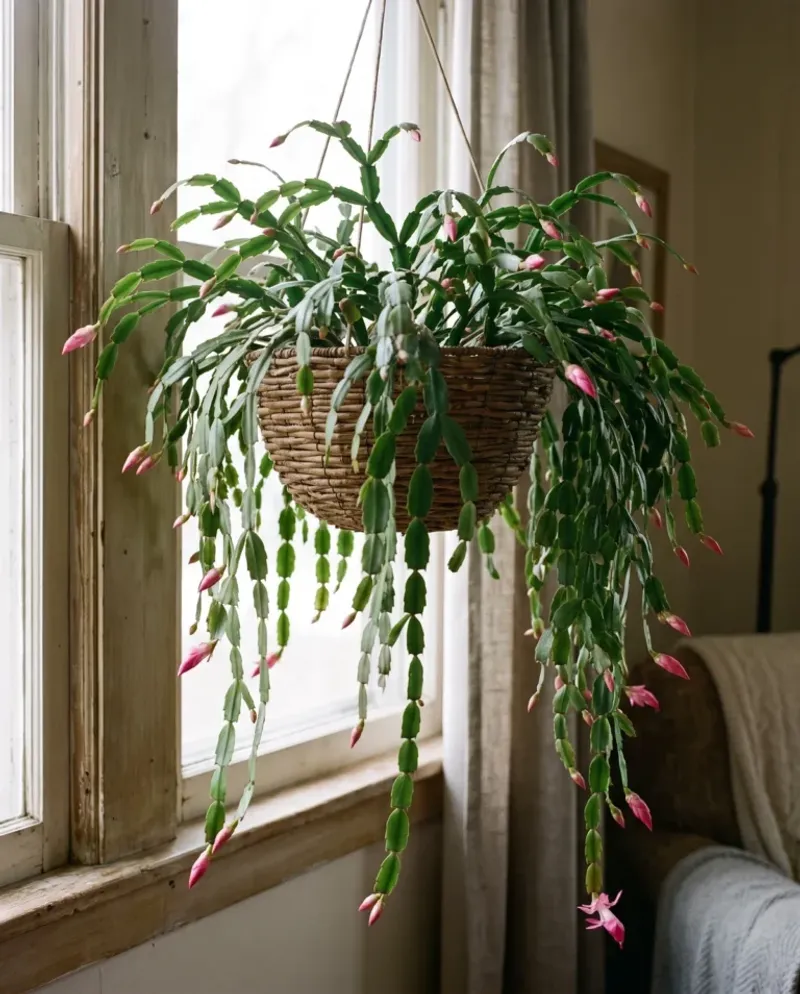
Leaving the plant alone is usually wise, but not if the spot is hurting it. A pot sitting beside a heating vent, in a cold draft, or in strong heat is a poor place to wait things out.
In that case, make one considered move. Pick a bright location with steady temperatures, away from vents, exterior doors, and hot windows.
Then leave the plant there.
The difference is between one correction and constant rearranging. Repeated relocation keeps throwing new conditions at the plant, while a single move out of a hazard ends the problem.
The UF/IFAS Extension guidance and the Nassau County advice both stress avoiding sudden changes, and Minnesota Extension agrees that disturbance during budding is best minimized. A better spot may help, but it cannot guarantee that more buds will not drop.
Provide steady light and shelter from drafts and heat
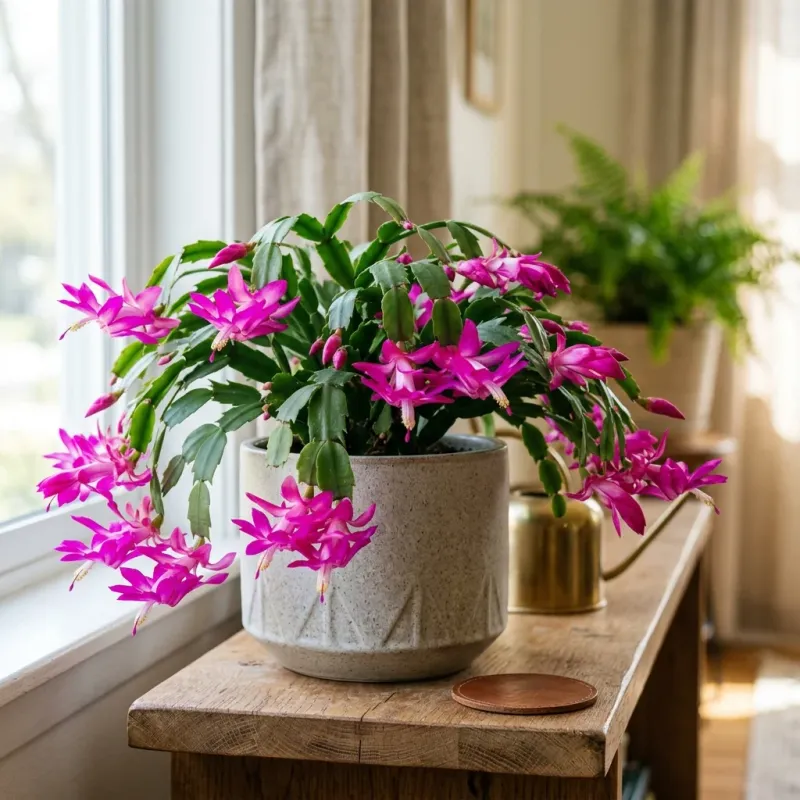
A good settled home is well lit, with bright, indirect light. Think of a spot near an east or filtered window, not a dark corner and not a scorching sill with hot afternoon sun pressing on the glass.
Keep the plant away from drafts and direct heat, such as vents, fireplaces, space heaters, and doors that open to the cold. University of Minnesota Extension recommends this kind of stable, bright location for holiday cacti.
Also avoid abrupt changes in how much light reaches the plant or from which direction. Turning the pot every few days, for instance, may sound harmless, but it changes what the buds face.
Temperatures can serve as reference points, not rules. Clemson says continuous temperatures above 90°F can cause bud drop and warns against going below 50°F, and gives 60 to 68°F as a fall range for bud development.
That is guidance written for South Carolina conditions, so treat it as a rough guide for your own home and plant.
Check the growing medium before adjusting water
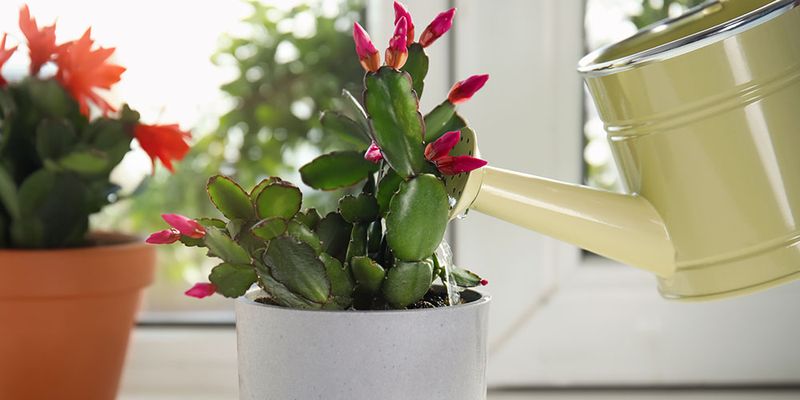
Watering mistakes can drop buds too, so skip the calendar and check the pot. Press a finger into the top inch of the mix.
UF/IFAS suggests watering when that layer feels dry, then letting the extra drain away.
Empty the saucer afterward. A pot sitting in standing water can leave roots soggy, and a waterlogged plant is a stressed plant.
Extension sources word their advice a little differently. UConn says the plant prefers the dry side during bud formation and bloom, while Iowa State recommends evenly moist soil, and Clemson describes moist but not wet conditions.
The shared message is to avoid extremes. Holiday cacti grow on trees in Brazilian forests, so they are not desert cacti, and they should not be left to dry out completely.
Keep conditions consistent while buds develop
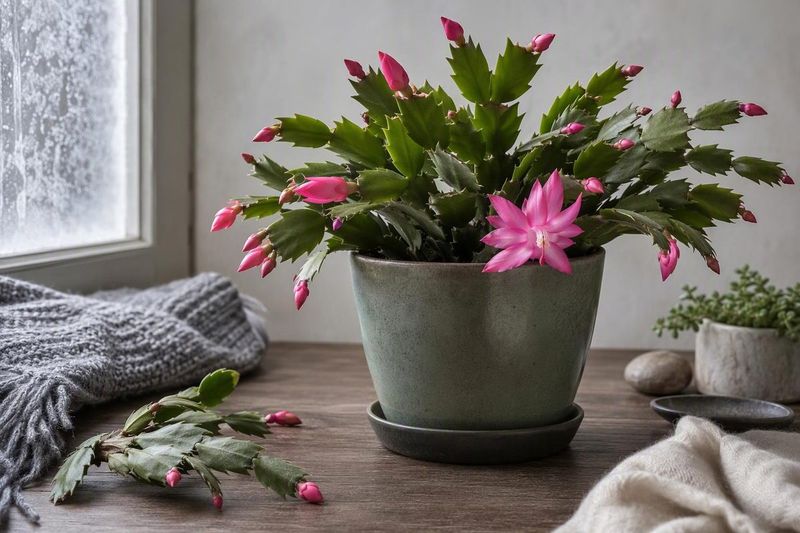
Here is the plan in order. Review what changed, fix any harmful location with one considered move, then hold light, temperature, and watering steady while the buds develop.
It helps to separate two jobs. Short days and long nights help start flowering in the first place, but Clemson notes that photoperiod does not affect flowering once buds are set.
So covering the plant or changing its light hours is not a quick fix for buds that already exist.
After that, the job is consistency. Keep the plant in the same bright spot, check the mix before watering, and watch for drafts as the heating season starts.
Some buds may still fall, especially if the plant carries a heavy load, and that does not always mean you did something wrong. A calm routine gives the rest a fair shot.
A budded Christmas cactus asks for very little, mostly to be left alone in a good place.