
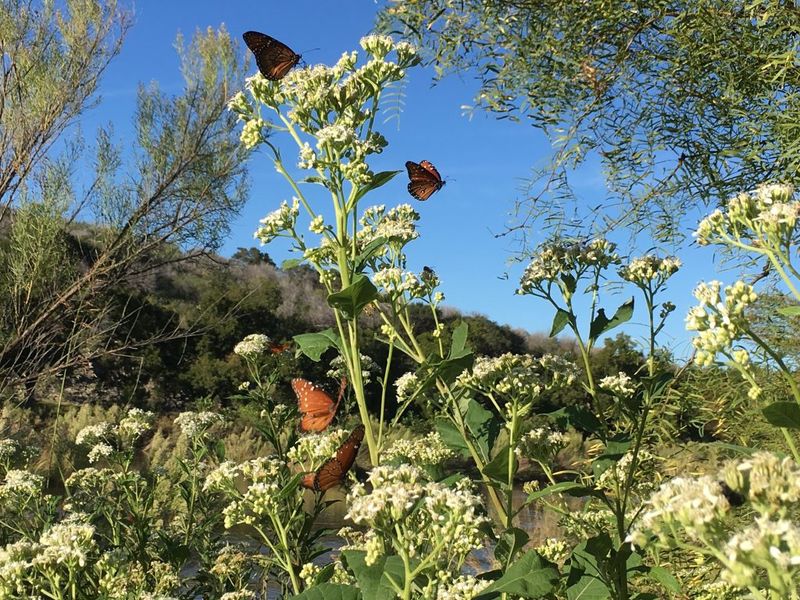
Late fall in Central Texas can look messy, and many gardeners feel the urge to tidy up. But a tall native wildflower called frostweed may be offering food to migrating monarchs just as the season winds down.
Keeping it standing while it blooms is a simple way to protect a possible nectar stop for butterflies passing nearby. It will not guarantee visitors, but it costs you nothing to try.
Frostweed bloom can overlap the fall migration
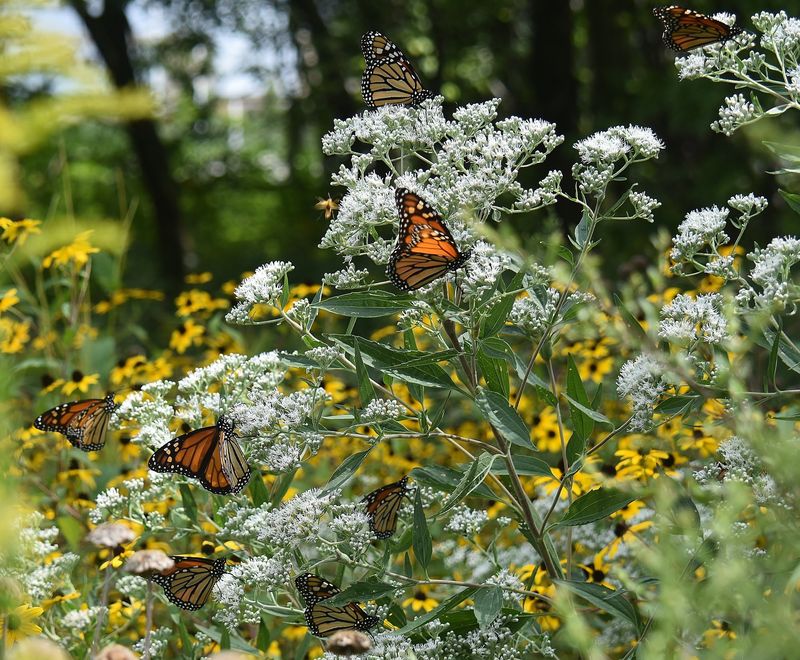
Timing is what makes frostweed interesting. According to the University of Texas at Austin wildflower database, frostweed (Verbesina virginica) flowers in Texas from August through November.
That long window reaches well into autumn, when many other wildflowers have faded.
Monarchs, meanwhile, move through Texas on their way to Mexico. Texas Parks and Wildlife Department describes a main fall route across the state that begins in late September, with most monarchs passing through by early November.
A separate coastal route generally runs from the third week of October to mid-November.
Put those dates side by side and late October can line up with frostweed in bloom. For a Central Texas yard, that means a flowering plant may be available when some monarchs are traveling through the region.
Still, the overlap is not a fixed schedule. Migration timing shifts with the route, the location, and the year, and weather can speed things up or slow them down.
Bloom time varies too, so a plant that is at its peak one October may be past it the next.
The takeaway is modest but useful. Frostweed offers a documented late-season food source, and seeing a monarch on it in your own yard depends on where the butterflies happen to travel.
Watch your plants in October and November, and you will learn how your own patch lines up.
A tall Texas native needs room to grow
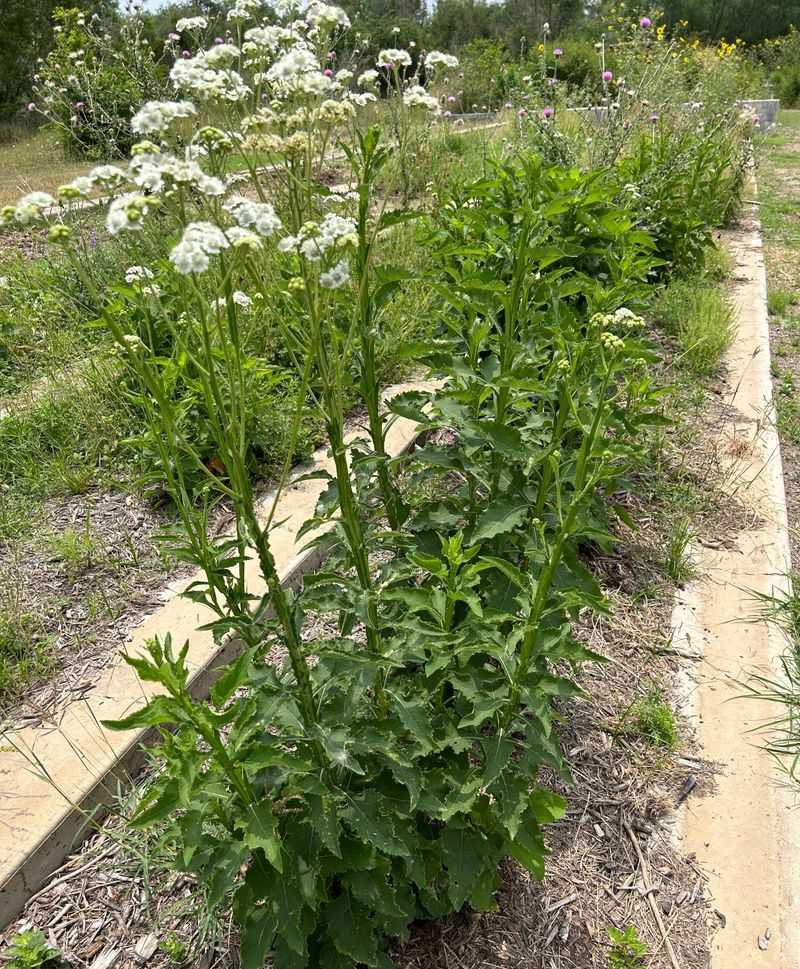
Frostweed is not a tiny border plant. Texas sources, including a Texas Parks and Wildlife plant profile, describe it as a native wildflower reaching roughly 3 to 6 feet.
It has upright stems topped with clusters of small white flowers in the fall.
Because of that height, it tends to look best where it can spread out a bit. A naturalized corner, a fence line, or a woodland edge often suits it better than a tidy, clipped bed by the front walk.
The Xerces Society’s Southern Plains nectar plant guide also points toward natural settings for this plant rather than formal ones.
Walk your property and look for a spot with some room. Part shade under trees, a back corner, or the edge of a wilder area can all work, depending on your soil and light.
A formal bed with neat edges, or a spot close to a walkway, may not be the right home.
Not every yard has a suitable place, and that is fine. If your space is small, tightly manicured, or governed by an HOA, frostweed may not be the right choice for you.
Placement here is a site-by-site call, since soil, shade, and neighborhood rules differ across Texas.
Frostweed offers nectar, not caterpillar food
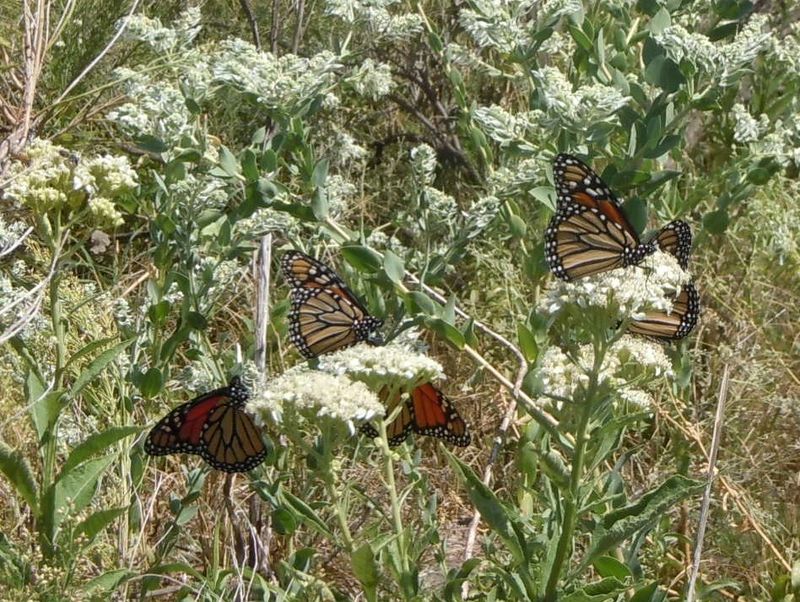
Gardeners sometimes lump all monarch plants together, but they do two different jobs. Frostweed feeds adult butterflies with nectar.
Texas A&M AgriLife’s article Beyond Milkweed lists it among several native fall nectar options for monarchs.
Caterpillars are another story. Monarch caterpillars eat milkweed, and frostweed does not replace it.
Think of nectar plants as fuel stations for traveling adults and milkweed as the nursery where the next generation grows.
The Monarch Joint Venture explains in its discussion of nectar and milkweed that migrating adults need fall nectar to power their long trip. That is the gap frostweed can help fill.
Frostweed is also one choice among many. The Xerces guide lists a range of nectar plants for the Southern Plains, and it does not single out any one species as a sure draw.
Even plants promoted as butterfly attractors may not bring butterflies to a particular site.
So treat frostweed as one piece of a habitat puzzle. It adds late nectar, but it will not stand in for milkweed, and it cannot promise a single monarch visit.
Leave flowering stems standing, then plan cleanup
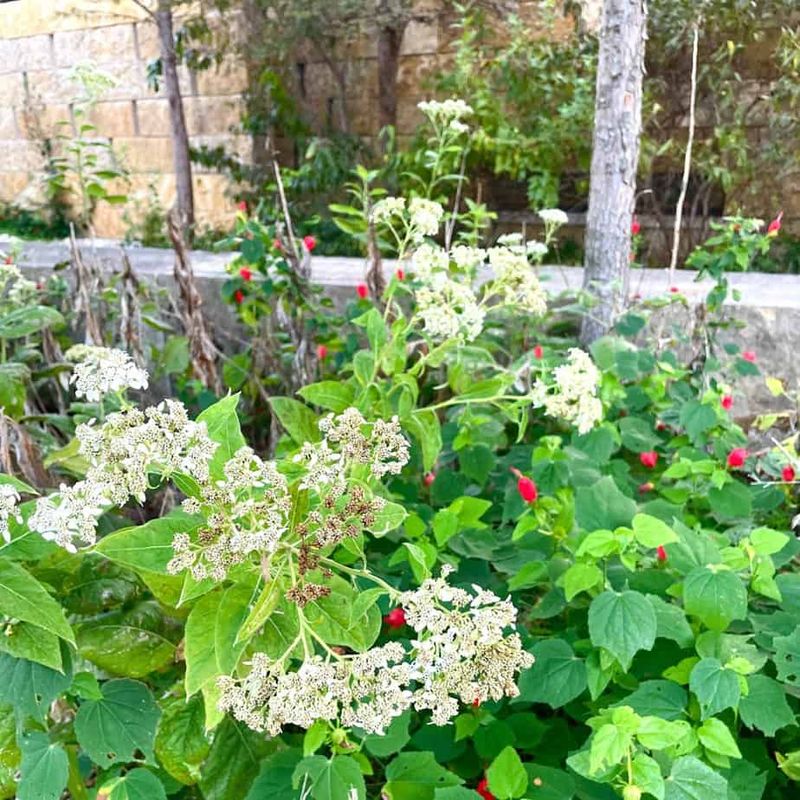
The core action is simple: when it is safe and suitable for your site, hold off on cutting frostweed while it blooms. Flowers are open from August through November, according to the UT Austin wildflower database.
Cutting early removes the nectar just when migrating butterflies might need it.
Safety comes first. If a stem is leaning over a path, blocking a sightline at a driveway, or crowding a structure, trim that part and leave the rest.
The goal is to keep blooms where they do not cause trouble.
After bloom, you do not have to rush. The Native Plant Society of Texas recommends leaving dead plant material through winter for its broader habitat benefits, then cutting plants back in late February or early March.
That is guidance, not a rule for every garden. If you have a small yard, a fire-risk concern, or neighbors who prefer a neat look, adjust the timing to fit.
Even a partial delay in fall cleanup is better than clearing everything at once.
A practical plan: mark a calendar reminder for late February, tidy up other beds in the meantime, and let the frostweed finish its season.
Build a varied, insecticide-aware fall planting
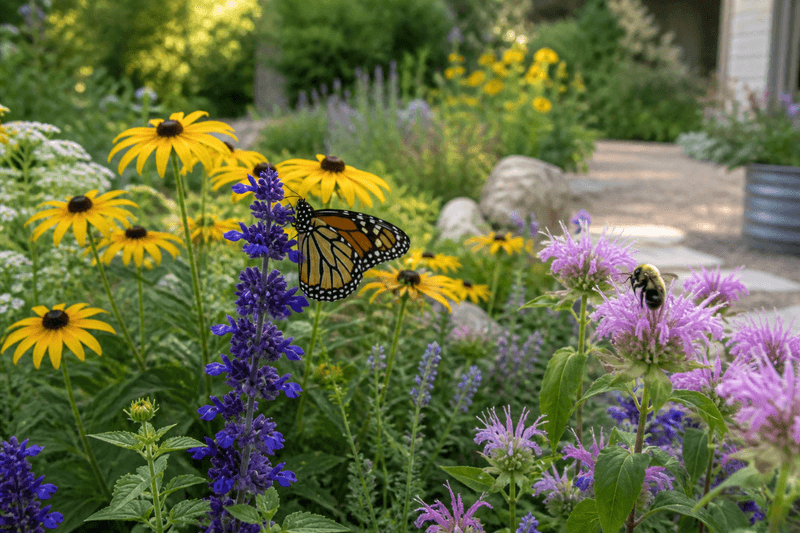
Frostweed works best as part of a team. A mix of locally appropriate plants with overlapping bloom times gives passing butterflies more than one place to feed.
Texas A&M AgriLife’s migratory oasis guidance describes several native fall nectar choices rather than relying on a single plant.
The Xerces Society Southern Plains guide is a handy place to find options suited to the region. Look for plants that bloom at different points from late summer into fall, and check which ones match your soil, sun, and water habits.
Other fall nectar plants can complement frostweed, but no mix guarantees monarch visits.
Pair that planting plan with caution about pesticides. Avoid spraying insecticides on or near blooming plants, since they can harm pollinators and monarchs.
If you must treat a pest problem, choose a different time and a more targeted approach, and keep products away from flowers.
Nursery shopping matters too. Ask whether the plants you are buying were treated with systemic insecticides, which can move through a plant’s tissues.
Staff may not always know, so ask early and consider buying from growers who can tell you how their plants were raised.
The Monarch Joint Venture, in its nectar and milkweed explainer, also reminds gardeners that milkweed still has its own role for caterpillars. A balanced yard includes both kinds of plants where they fit.
Start small if you like. Add one or two new nectar plants each season, watch what visits, and adjust over time.
Preserve a possible food source, not a promised visit
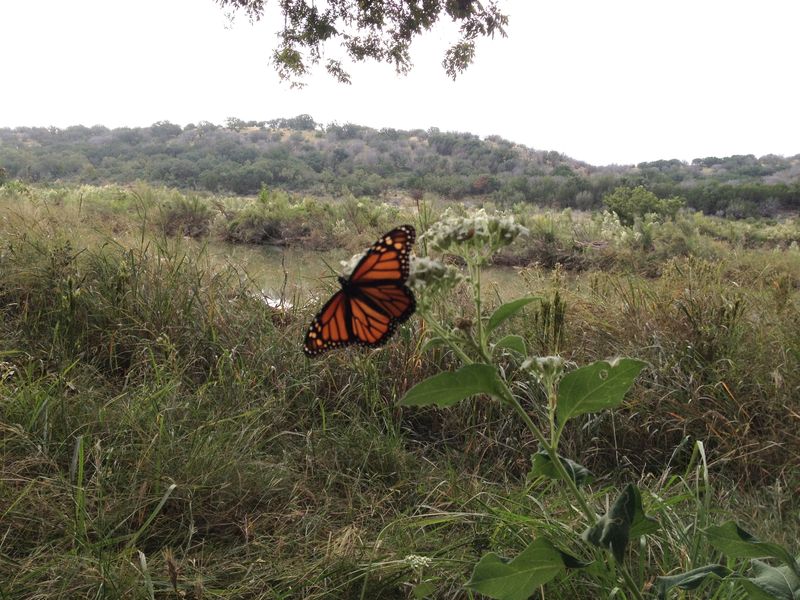
If frostweed suits your yard and can stay safely, let it stand through bloom and think about delaying fall cleanup. The Native Plant Society of Texas suggests waiting until late February or early March to cut back.
That keeps a possible food source available for monarchs passing nearby, though it cannot promise more visitors. Pair it with other nectar plants from the Xerces regional list and skip insecticides near blooms.
Some years the butterflies show up, and some years they pass you by.