
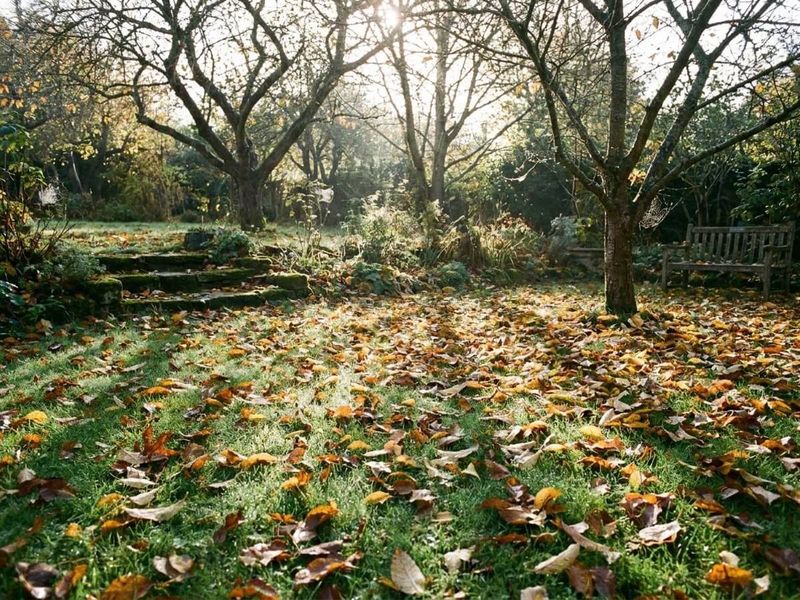
Those leaves piling up in your beds might be doing more work than you think. Instead of bagging every last one, you can pick the spots where leaves help soil, shelter small creatures, and shade out some weeds.
The trick is knowing where to leave them and where to rake. Here is how Southern gardeners can sort it out this fall.
Leaves build soil gradually
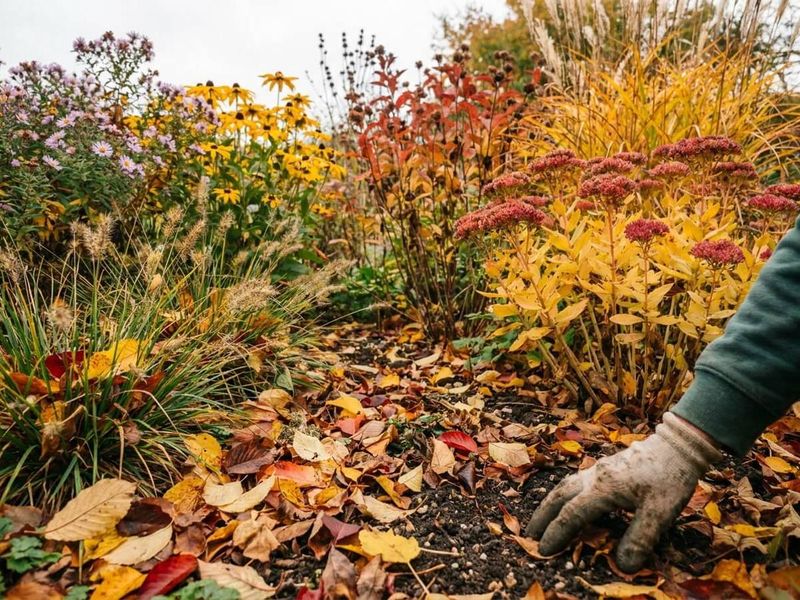
Fallen leaves are free organic material, and a bed is a good place for them to end up. As leaves break down, they add organic matter to the soil and release nutrients slowly.
UF/IFAS Extension lists added organic matter among the general benefits of mulch.
Notice the word slowly. Leaves are not a quick fertilizer boost, and you should not expect greener growth by March.
How fast they decompose depends on moisture, temperature, and leaf type, and UGA Extension’s fall gardening guide treats leaves as a resource to put to work rather than a waste to haul away.
Think of it as a long game. Each season of leaves left in the right places can add a little more organic matter.
That is why selective cleanup makes more sense than either stripping every bed bare or leaving leaves everywhere. The next few sections show how to choose the spots.
Leaf litter shelters wildlife through winter
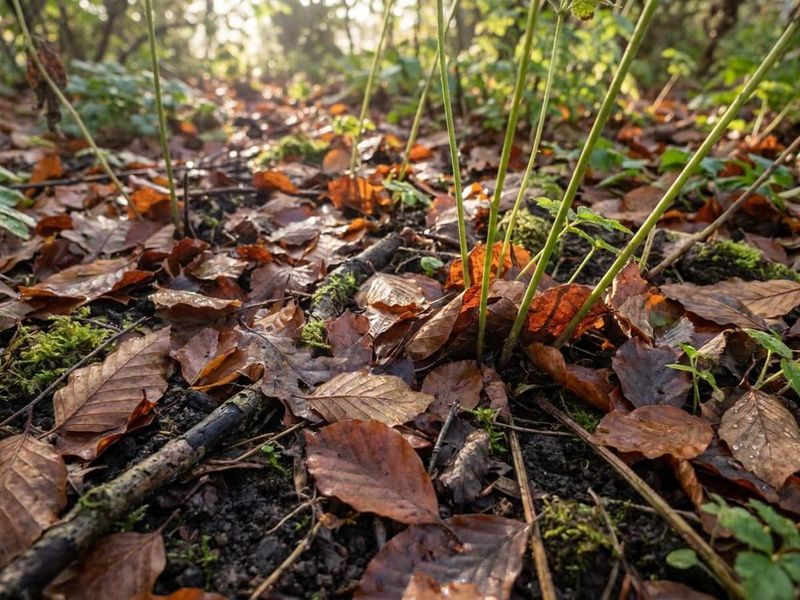
Under a layer of leaves, a surprising amount of life is waiting out the cold. Many insects, spiders, and other arthropods overwinter in leaf litter, and the Xerces Society encourages gardeners to leave it in place or move it to beds and designated areas when needed.
A 2025 study tested this in pesticide-free residential yards in Maryland. Removing leaves reduced spring arthropod emergence by 17% overall and moth and butterfly emergence by 45%.
Spider emergence dropped by as much as 67%.
Those numbers come from Maryland, so they do not tell us what would happen in Florida or Texas. The study also looked at many arthropod groups, so it shows habitat value, not guaranteed pollinator gains or pest control.
A practical step is to leave some intact leaves in a quiet bed or a back corner where they can sit undisturbed.
Leaf mulch can slow weeds and hold moisture
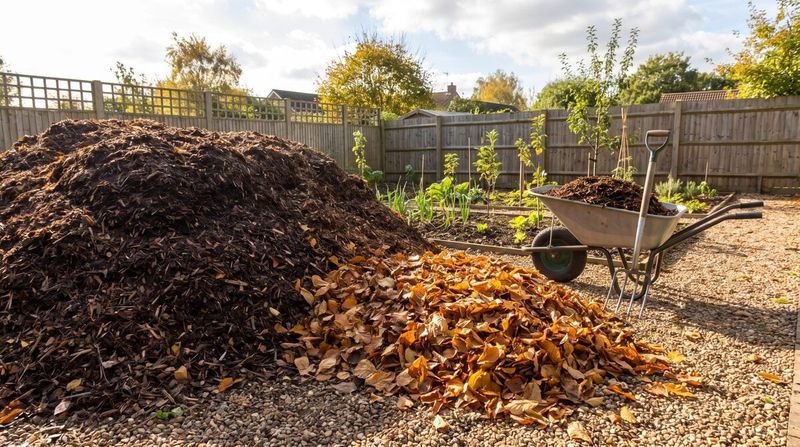
A leaf layer works like any other mulch. It can help inhibit weeds, conserve soil moisture, buffer soil temperature swings, reduce erosion, and add organic matter.
UF/IFAS describes these as general mulch benefits and recommends moving excess fallen leaves to garden and landscape beds.
Texas readers get the same advice. Texas A&M AgriLife recommends leaves as mulch around ornamental plantings and in vegetable gardens.
Keep expectations realistic. Mulch can reduce weed pressure, but it will not wipe weeds out, and a few persistent ones will still poke through.
Moisture savings also vary with rainfall, soil type, and how thick the layer is. Check a bed after a dry week, and you will see how much your leaves are helping.
Shred leaves when you need mulch to stay put
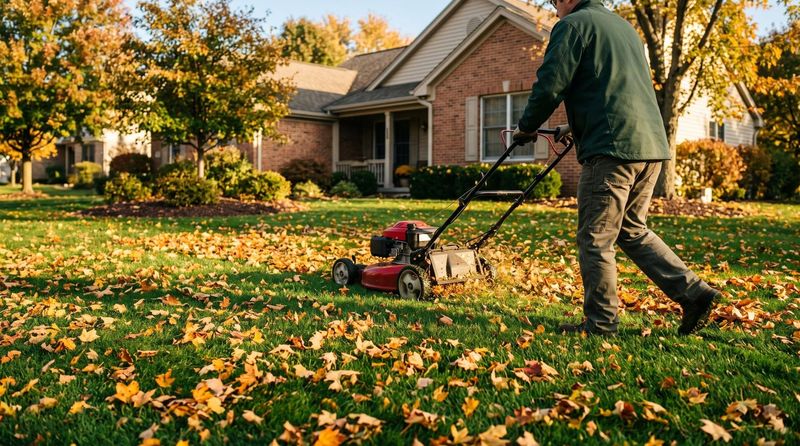
Whole leaves are great habitat, but they can blow around or mat down into a soggy sheet. Shredding fixes that.
Texas A&M AgriLife notes that shredded leaves stay in place better than whole ones.
That gives you two jobs for two kinds of spaces. Leave some intact litter in a quiet bed or corner for wildlife, as the Xerces Society suggests.
Use shredded leaves in beds where you want a tidier, steadier mulch. A mower pass over a pile does the shredding.
Depth advice differs by source. Texas A&M suggests about 2 to 3 inches in flower beds and 3 to 6 inches around trees and shrubs, while UGA Extension gives a 3 to 5 inch range around plants.
Treat these as starting points, not universal rules. Avoid very thick or matted layers, which can shed water instead of letting it soak in.
Some parts of the yard still need cleanup
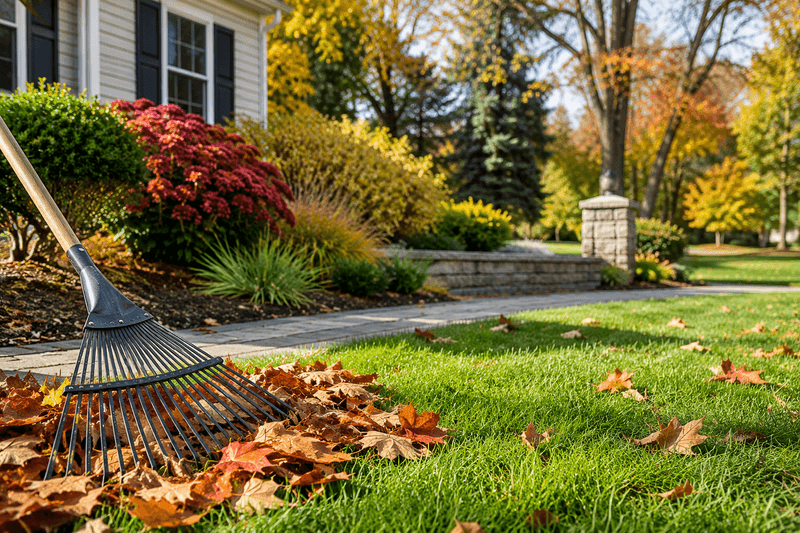
Leaves are not welcome everywhere. A thick blanket on the lawn can smother grass, so rake or bag those areas.
If you only have a light scattering, mowing can chop it into pieces small enough to settle between grass blades. The goal is that the grass still shows through, as Illinois Extension explains in its fall cleanup advice.
Vegetable beds deserve a closer look. If tomatoes, squash, or cucumbers had recurring pest or disease trouble, clear the diseased foliage and plant residue, because pathogens and pests can overwinter in debris.
Healthy beds with no such history can handle more leaf cover.
Watch where mulch touches plants. Keep it away from trunks and stems, and skip very thick layers.
Illinois Extension’s mulching guide warns that excess mulch can restrict water and oxygen and cause trouble at the trunk flare. Also leave a few patches of bare soil, since many native bees nest in the ground.
Make fall cleanup selective
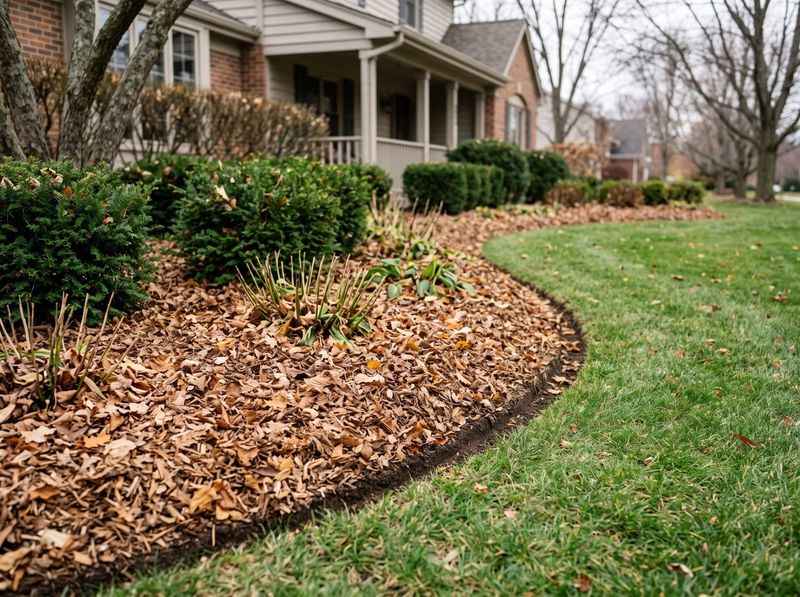
Pick three zones. Leave intact leaves in a quiet habitat corner, spread a moderate layer of shredded leaves where beds can use mulch, and clear the lawn and any diseased debris.
The Xerces Society and Illinois Extension both support this kind of balance.
Your rake still has a job, just a smaller one.