
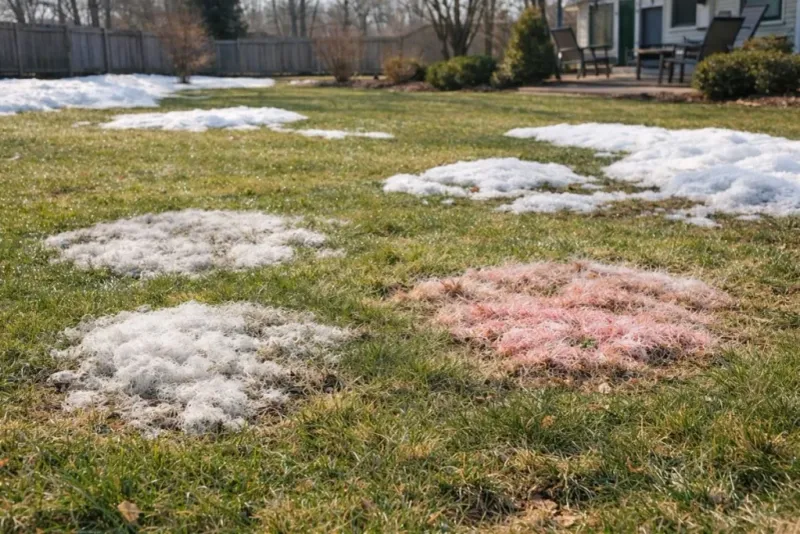
Snow melts, and your lawn looks like something flattened it in gray, crusty circles. Snow mold is one possible reason, and it is a common worry for homeowners in snowy parts of the country.
The good news is that a few simple fall chores can make your yard a less friendly place for it. Here is how to spot it, lower the odds, and care for the grass once the snow is gone.
Could those gray circles be snow mold?
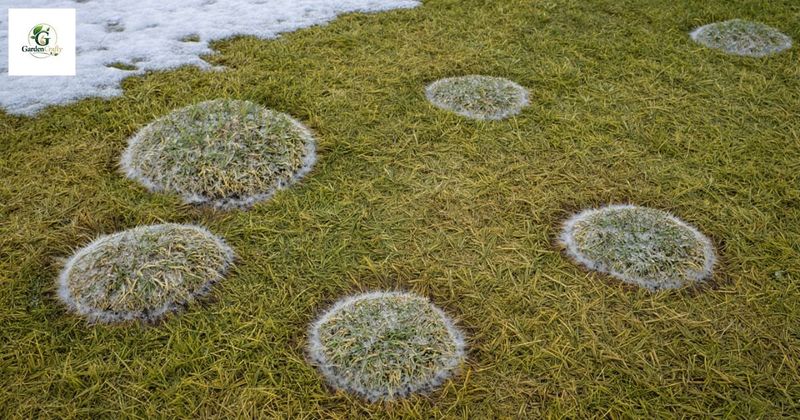
Right after the snow disappears, some lawns show round patches of flattened grass. The color can be gray, bleached straw, or gray-brown, and the blades often look stuck together in a crust.
Snow mold is one plausible cause of that look.
According to Iowa State University Extension, gray snow mold can show up as circular patches, sometimes with white-gray fungal growth on the surface. The patches vary in size, and neighboring ones can run together into larger damaged areas.
Here is the careful part. Looking like snow mold is not the same as being snow mold.
Other lawn problems can leave similar marks, so treat the color and shape as a clue rather than a final answer. If you are unsure, note where the patches are, how big they are, and whether the edges look unusual, since those details help later if you ask an expert.
What winter conditions favor snow mold?
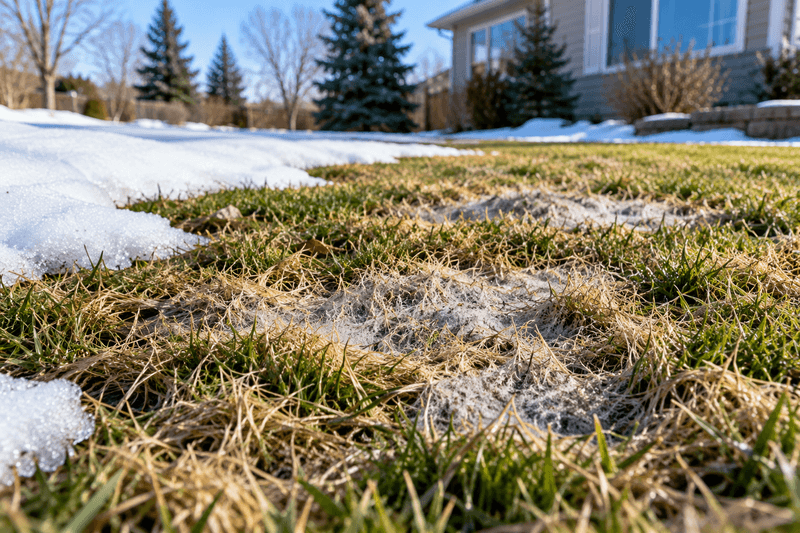
Picture a lawn tucked under a long blanket of snow while the soil underneath stays damp and not frozen. That cozy, moist setting is what gray snow mold tends to like.
Long snow cover is a big piece of the puzzle, but it is not the only one.
UMass Amherst Extension points to several things that can add to the risk: lots of moisture, temperatures hovering near freezing, matted grass, too much nitrogen, and leaf debris left sitting on the turf.
Your own yard matters too. Climate, the type of grass you grow, and local conditions all change how likely the problem is and how bad it gets.
A shaded corner where snow lingers may look rough while a sunny stretch of the same lawn comes through fine. That is why two neighbors can have very different spring results.
Fall cleanup can reduce risk, not guarantee prevention

Before winter settles in, a handful of chores can make conditions less welcoming. Clear thick layers of leaves and other debris, because a heavy mat holds moisture against the grass.
Keep mowing at your lawn’s recommended height for as long as it is still growing.
Go easy on nitrogen late in the season, since too much can raise the risk. Also think about where you pile shoveled snow.
Heaps dumped on vulnerable parts of the lawn can stay put long after the rest has melted. Iowa State University Extension lists these steps as ways to reduce snow mold trouble.
Think of them as lowering the odds, not locking the door. One late rake will not guarantee a clean lawn in spring, because weather and snow cover still play a large part.
Spreading the work over a few weeks, mowing and clearing as the grass slows down, gives you more chances to help than a single weekend effort.
How much leaf cover can a lawn tolerate?
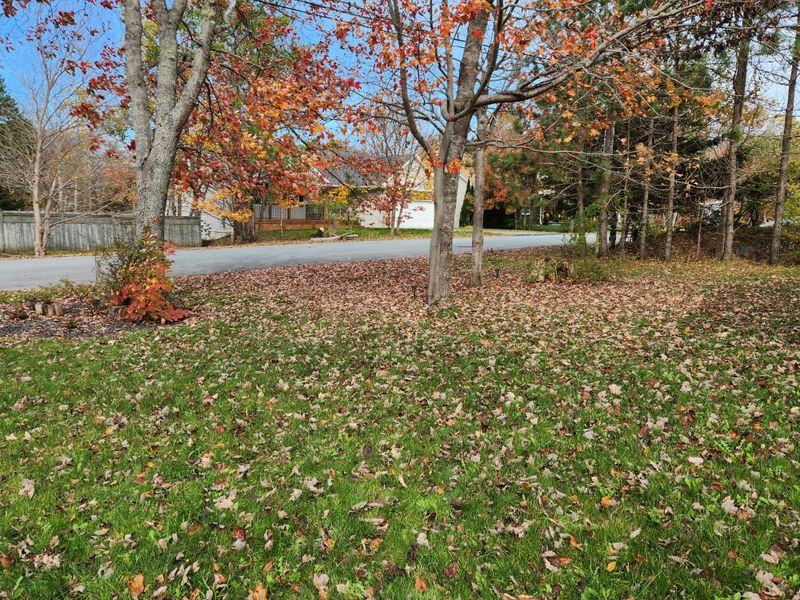
You do not need to chase down every single leaf. Light, scattered leaves are different from a thick, soggy blanket, and lawns handle them differently.
UW-Madison Extension shared preliminary study results suggesting that up to two inches of shredded leaves may be reasonable to leave over winter, while four inches is likely to cause damage. Because the findings are preliminary, treat those depths as a rough guide.
They may not fit every lawn the same way.
Wildlife is worth a thought as well. University of Maryland Extension notes that shredding leaves can reduce their value as shelter for animals that use leaf litter.
A good middle path is to clear thick drifts off the grass and move some leaves to garden beds, where they can still serve as cover.
Gently loosen affected grass after the thaw
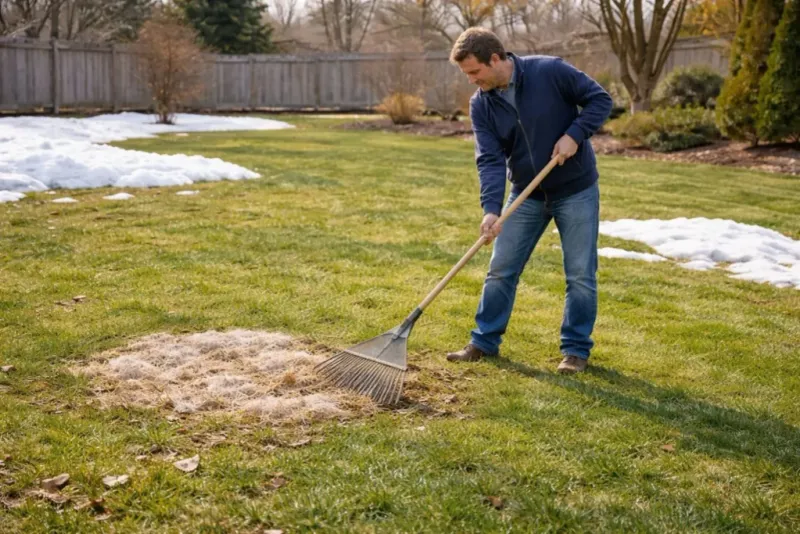
Once the snow is gone and you spot flattened patches, grab a rake and use a light touch. Gently raking the affected turf loosens the matted blades and lets air in, which encourages the area to dry out.
Iowa State University Extension recommends this simple step after snowmelt.
Keep in mind that this is care after the fact. Raking in spring helps the grass recover, but it cannot undo disease that has already developed.
Pulling hard can tear up tender crowns, so think fluffing rather than scraping.
Most mature lawns bounce back as the weather warms and new growth fills in. Give it a few weeks.
If bare spots stay empty, overseeding those areas may be needed, though no one can promise exactly how a particular lawn will recover.
Lookalikes make diagnosis and treatment less certain
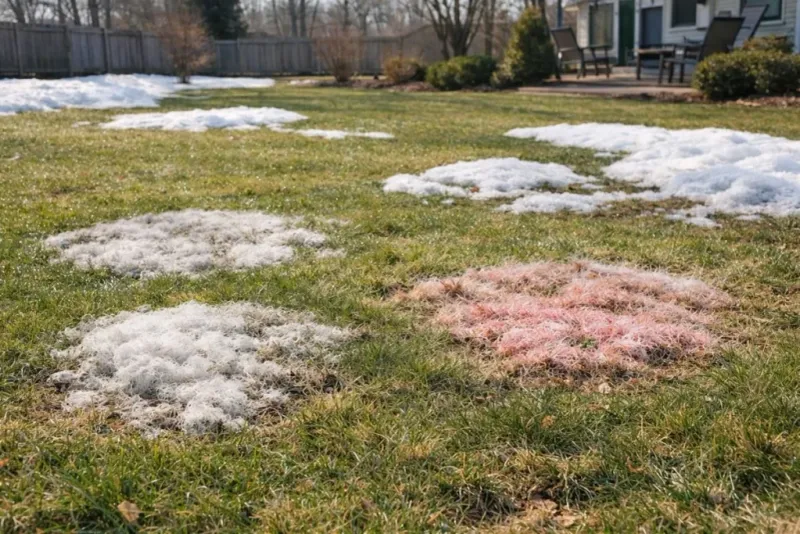
Not every pale circle is gray snow mold. Pink snow mold can form without any snow cover and may show pink or reddish margins.
The two diseases can also occur together, and other lawn problems can mimic both.
That is why color or even a photo may not settle the question. UMass Amherst Extension makes clear that several causes can lead to similar-looking damage, so a firm answer may take a closer look by a local expert or lab.
As for sprays, the Connecticut Agricultural Experiment Station says fungicides are generally not recommended for typical home lawns, since the damage is usually cosmetic. Spring applications are ineffective.
Patience, a rake, and a little seed usually do more than a bottle. A lawn that looks beaten in March often looks ordinary again by May.