
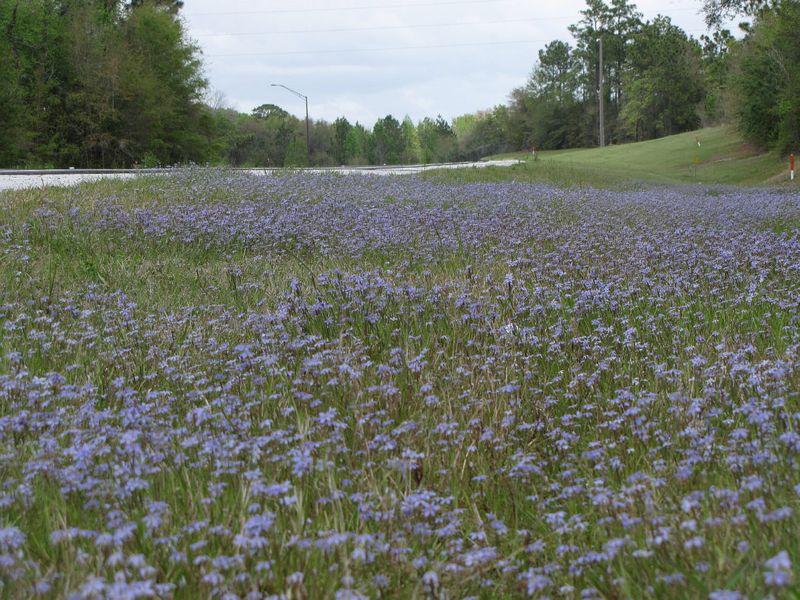
A patch of Mexican petunia can turn into a crowded bed before you notice its underground stems spreading. In frost-free parts of Florida, winter may do little to slow it down.
These seven native wildflowers offer better ways to bring color, cover, and pollinators back to your yard. Match them to your light and soil, and remember that winter flowers depend on your location and the weather.
1. Carolina Wild Petunia
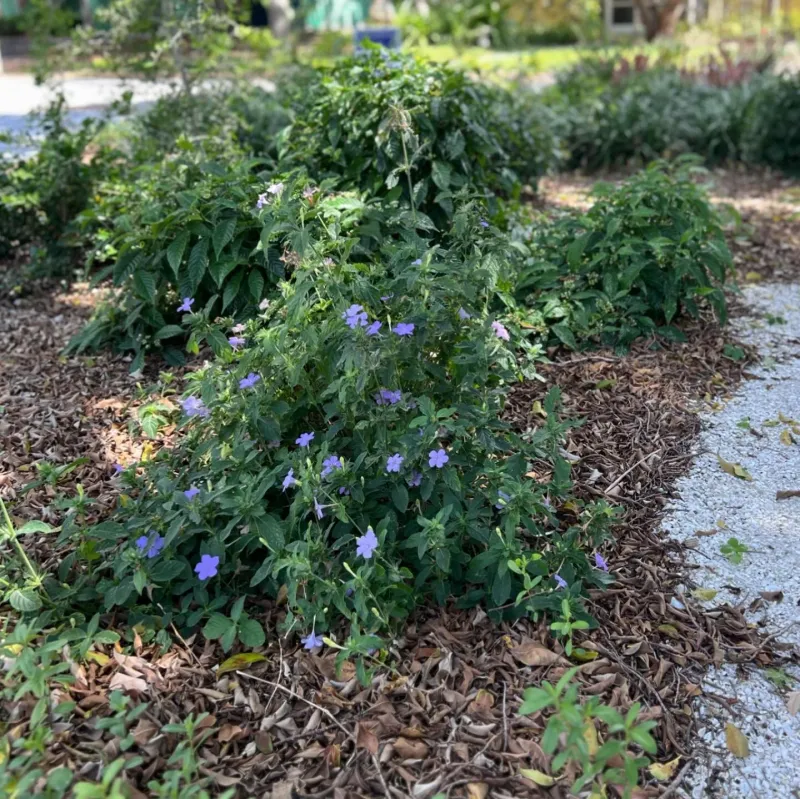
Lavender flowers do not have to come with a takeover. Carolina wild petunia, Ruellia caroliniensis, offers a familiar trumpet-shaped bloom on a smaller native plant, making it the closest visual swap on this list.
Plants generally reach about 1 to 2 feet tall and suit sunny to partly shaded beds. Well-drained sandy soil works well, and established plants handle dry spells better than many gardeners expect.
Use a loose group near a walkway or along the front of a mixed border. Leave roughly 12 to 18 inches between plants, then watch for seedlings rather than expecting a perfectly fixed clump.
Flowers mostly appear during the warmer months, so this is not a guaranteed winter bloomer. Cold weather can reduce its top growth, especially in North Florida, but its seasonal return makes it useful in a layered planting.
Check the botanical name before buying: native Ruellia caroliniensis is not invasive Mexican petunia, Ruellia simplex. Remove the old plant’s underground stems before replanting, and keep checking for regrowth so the replacement has room to settle.
2. Twinflower
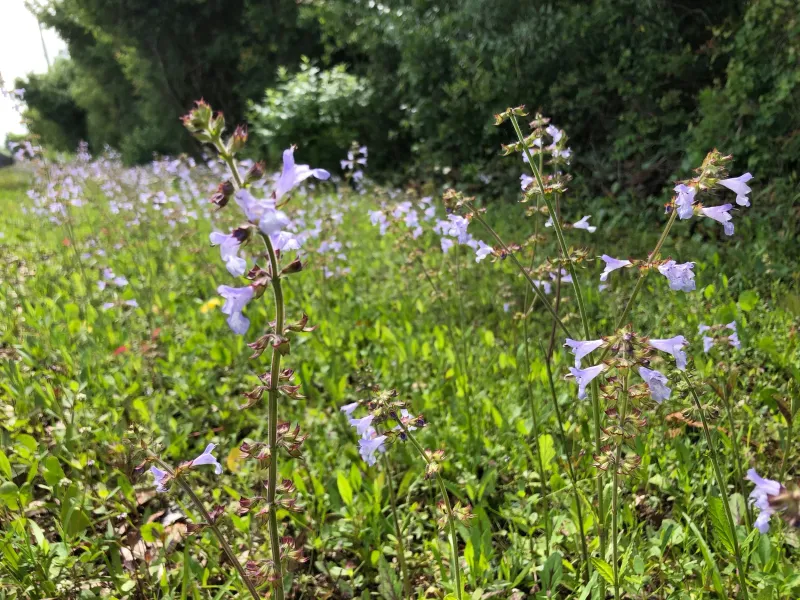
For the bare strip left along a path, think low and spreading rather than tall and bushy. Twinflower, Dyschoriste oblongifolia, knits small lavender flowers into a ground-hugging planting that softens bed edges.
Its main advantage is coverage. Usually staying under a foot tall, it spreads by underground stems and can help occupy soil that would otherwise invite weeds.
Give it sun to partial shade and well-drained soil. Water new plants through establishment, then adjust irrigation to rainfall instead of keeping the bed constantly damp.
Space small plants about 12 to 18 inches apart for an informal patch. Twinflower spreads too, so use a walkway or another clear boundary where you want a tidy edge, and trim wandering growth as needed.
Blooming is strongest in warmer weather, though flowers may continue during mild periods in warmer parts of Florida. It also serves as a host plant for common buckeye butterflies, giving the low border a wildlife role beyond its blooms.
Choose it for a soft, living edge, not for heavy foot traffic or a bed that stays flooded.
3. Leavenworth’s Tickseed
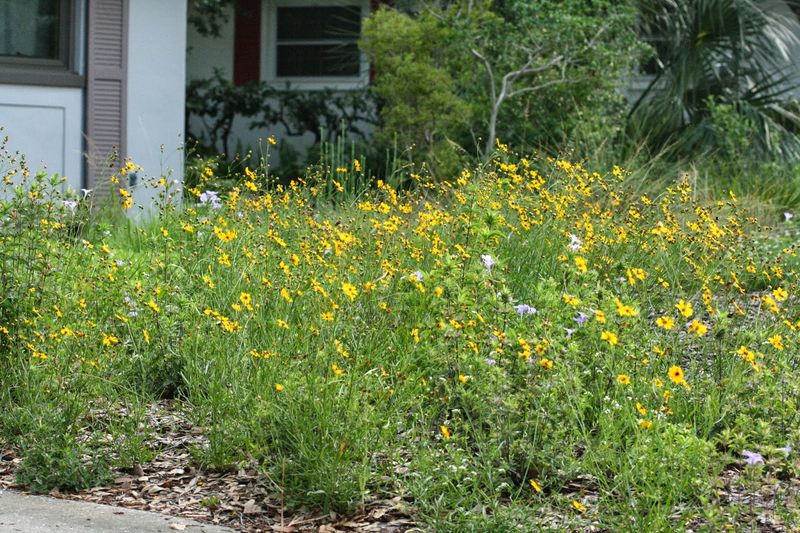
A sweep of yellow can make a cleared bed look planned instead of patched. Leavenworth’s tickseed, Coreopsis leavenworthii, supplies that bright meadow effect with slender stems and cheerful flowers.
Save this choice for a sunny bed with moisture available, such as a rain-garden edge or a lower spot that drains after storms. It is less suited to a baked, dry strip beside a driveway.
Plants often grow around 1 to 3 feet tall, depending on conditions. Place them behind a low border, where their airy stems can move without leaning across the sidewalk.
Much of its staying power comes from seed. Leave some spent flower heads to mature, and avoid burying the seedbed under thick mulch if you want another generation.
Flowering time varies across Florida, with a longer possible season in warmer areas. North Florida gardeners should expect a seasonal display rather than uninterrupted winter color.
Buy Florida-grown seed or plants when possible and ask about their origin. A locally suited seed source can help match the planting’s growth and flowering cycle to your part of the state.
4. Scarlet Sage
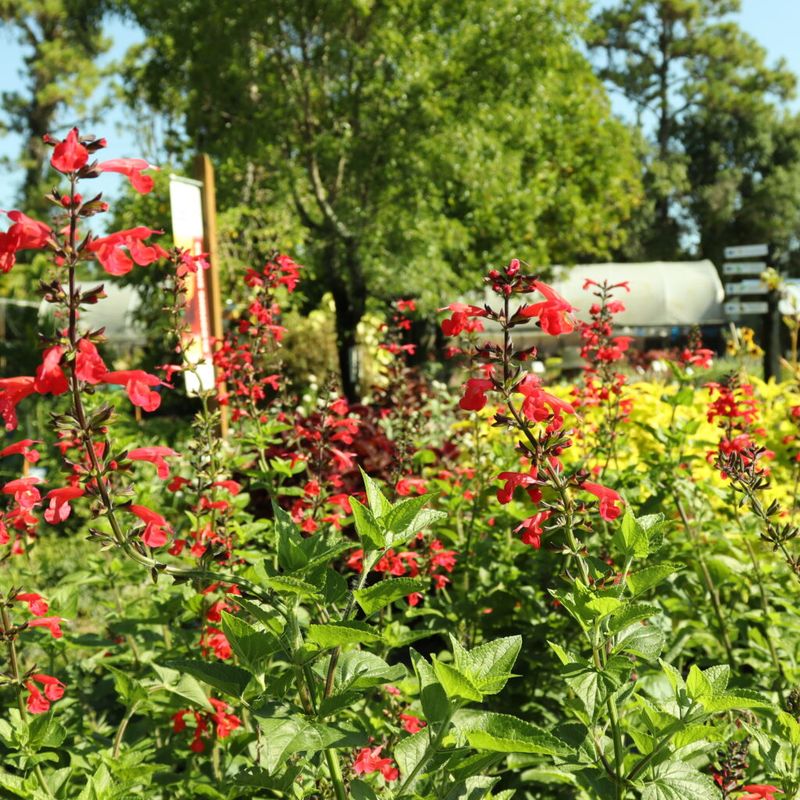
Red flower spikes bring movement to a bed even before a hummingbird arrives. Scarlet sage, Salvia coccinea, adds upright color without the dense wall of stems that Mexican petunia can create.
Expect plants roughly 1 to 3 feet tall, with size shaped by light, moisture, and growing conditions. Morning sun with some afternoon shade is useful in many Florida yards, though plants can also grow in full sun with suitable moisture.
Well-drained soil matters more than rich soil. Water during establishment, then avoid automatic daily soaking, especially during cooler weather.
In frost-free areas, flowering may continue through winter. Farther north, freezes can stop the show or kill plants, while dropped seed may bring new growth when conditions improve.
Pinch young stems for a fuller shape, and trim tired flower stalks to encourage fresh growth. Leave a few seed heads if you want volunteers, pulling extras while they are small.
This is a relaxed cottage-garden choice rather than a rigid edging plant. Put it where seedlings are welcome and where you can enjoy visiting pollinators from a porch or window.
5. Narrowleaf Blue-Eyed Grass
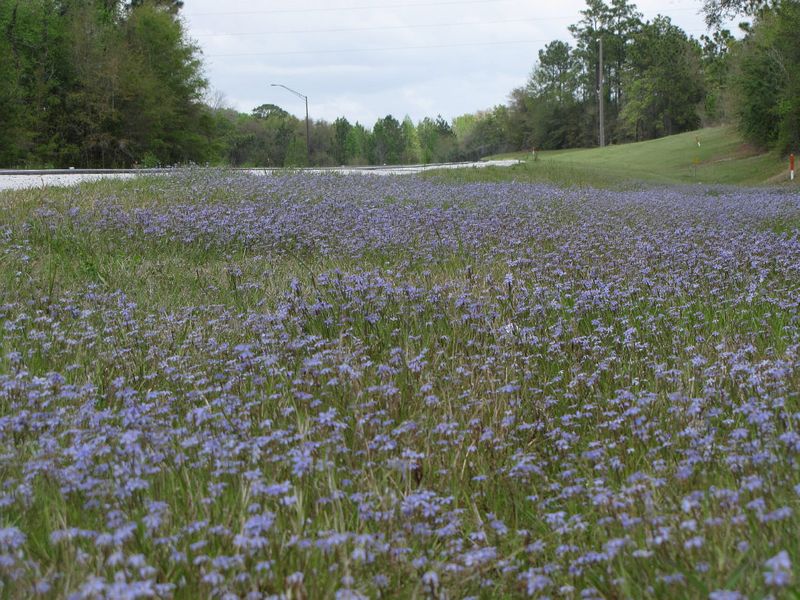
Not every open space needs a big splash of flowers. Narrowleaf blue-eyed grass, Sisyrinchium angustifolium, brings small blue-violet blooms and neat fans of foliage to places where a tall replacement would feel crowded.
Despite its name, it belongs to the iris family, not the grasses. Its compact shape makes it useful along steppingstones, at the front of a bed, or between larger native perennials.
Choose sun to light shade and soil that stays moderately moist but drains. A dry sandy ridge with no irrigation is a tougher assignment than a lightly watered border.
Plants commonly stand about 1 foot tall, sometimes taller in bloom. Set them in small groups so the fine leaves read as a deliberate planting rather than stray lawn grass.
Expect the main flower display in spring, not throughout winter. During the cooler months, surviving foliage can still give the bed structure, though appearance varies with weather and location.
Ask a native nursery whether this species suits your county, particularly in far South Florida. Divide established clumps when crowded, and keep mulch away from their crowns.
6. Narrowleaf Silkgrass
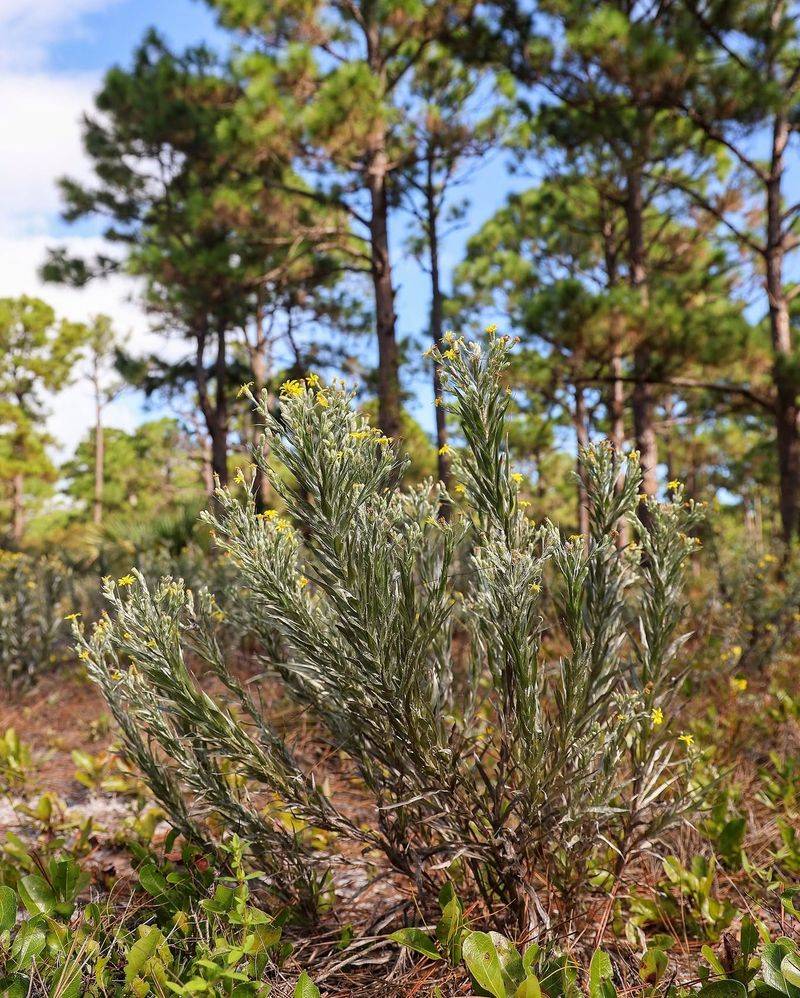
Silver leaves can carry a garden through weeks when flowers are scarce. Narrowleaf silkgrass, Pityopsis graminifolia, earns its place with fine, pale foliage and yellow blooms that usually arrive in late summer and fall.
Give it the sunny, sandy spot that leaves moisture-loving plants struggling. Once established, it tolerates drought and generally needs little feeding, making it useful in lean Florida beds.
The foliage stays relatively low, while flower stalks can rise roughly 1 to 3 feet. Place it where those seasonal stems can stand above neighboring groundcovers without blocking a walkway.
Be clear about its habit: silkgrass spreads by rhizomes and can form a colony. That is helpful in a broad dry bed, but less convenient beside tiny plants that need their own space.
Use a defined edge and thin the patch if it moves beyond its allotted area. Native does not automatically mean stationary or maintenance-free.
Winter value comes mainly from foliage rather than dependable flowers. Pair it with a spring bloomer for a longer season of interest, and skip wet sites where its roots remain soggy.
7. Stokes’ Aster
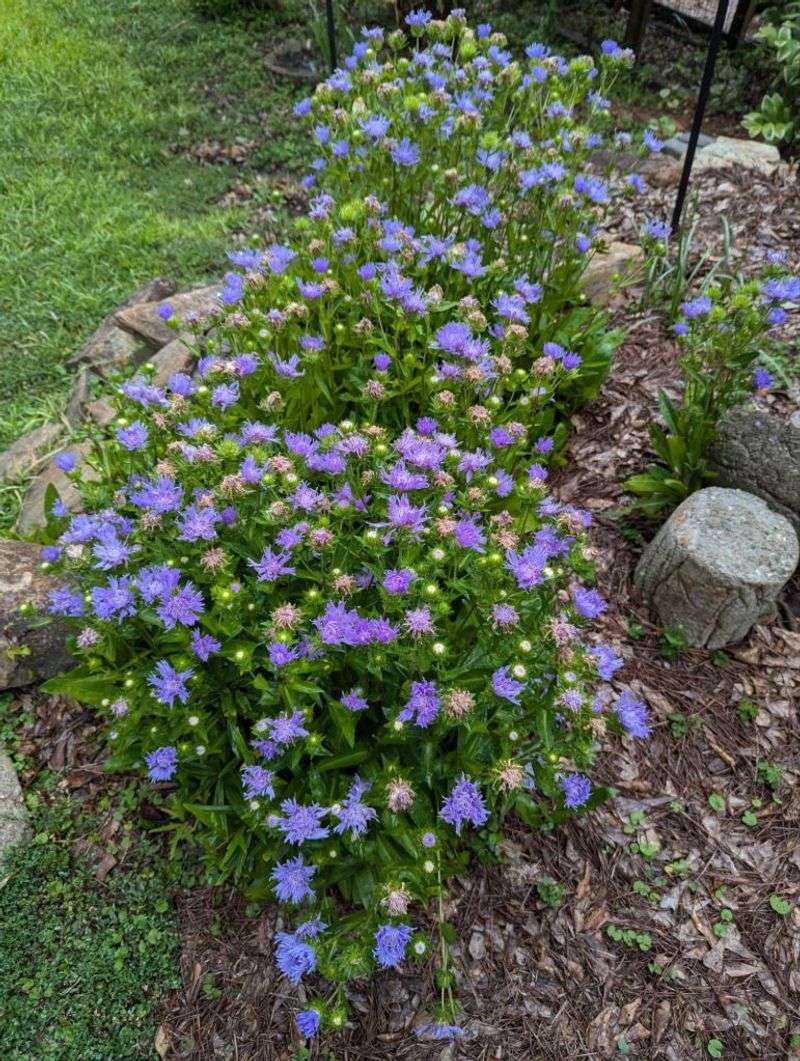
Large, fringed blue flowers offer a different kind of payoff: fewer blooms than a meadow planting, but each one stands out. Stokes’ aster, Stokesia laevis, is a strong candidate for gardeners in North Florida who want a clump-forming perennial.
Its native Florida range is limited to the Panhandle, so it is not a blanket recommendation for the whole state. Check local suitability before choosing it for a central or southern Florida yard.
Provide sun to partial shade and moist, well-drained soil. A site that receives regular water without staying waterlogged is more suitable than an extremely dry sand bed.
Flower stems commonly reach about 1 to 2 feet above a low leafy base. Group several plants near an entry or sitting area where their detailed blooms are easy to see.
The main display comes in late spring and summer, with possible repeat flowers after deadheading. Winter interest is mostly the basal foliage, which may remain green during mild weather.
Divide crowded clumps as needed and keep mulch off the crowns. For a smaller bed, its clumping habit offers a useful contrast to the running growth you are replacing.