
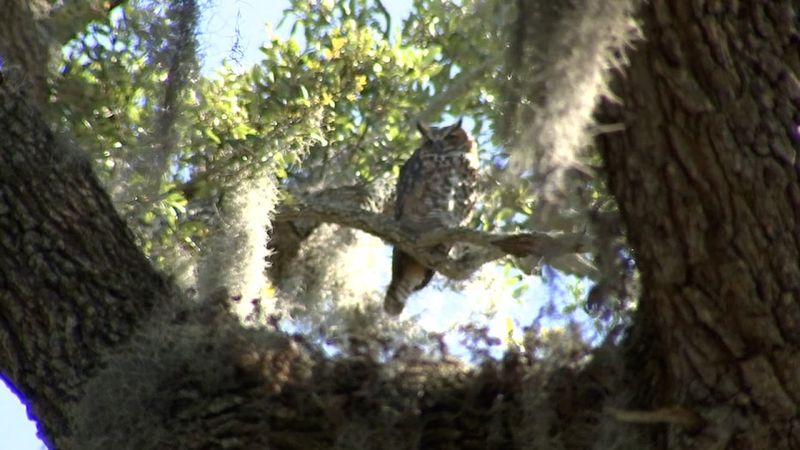
Spotting a great horned owl perched in your backyard live oak is one of those Florida moments that feels like a reward. These birds are real predators, and yes, rats are on their menu. But the idea that adding more owls automatically clears out a rat problem is a bigger leap than the science supports. Understanding what owls actually do, and what you still need to do yourself, is the key to making smart decisions for your property.
Great horned owls may help, but they do not replace rat control
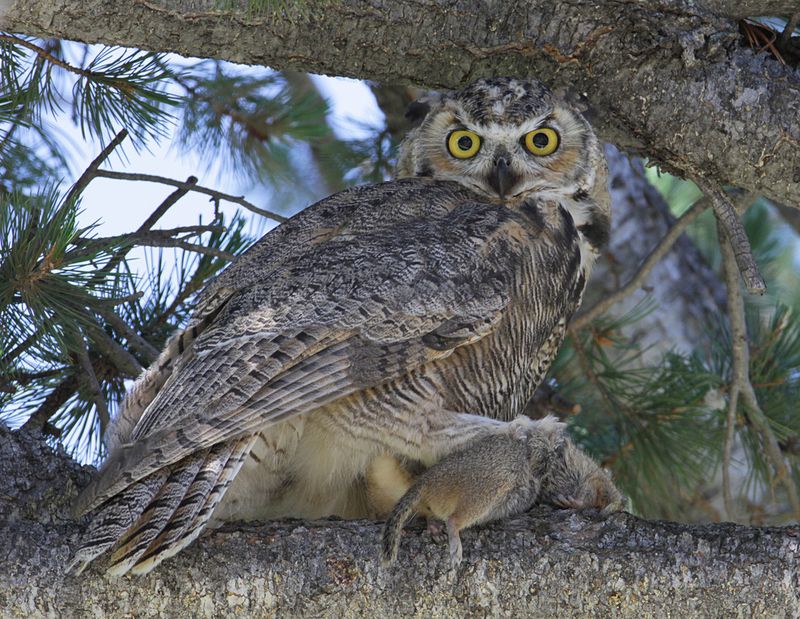
Somewhere along the way, the idea took hold that a resident great horned owl is basically a free, feathered exterminator. The reality is more complicated, and more interesting. No authoritative study has established a standard number of rats a great horned owl kills in a single night, and no published research directly compares one owl’s nightly output with what a household snap trap catches over a month. That comparison simply does not exist in the scientific record.
What researchers do know is that great horned owls are broad, opportunistic hunters. Cornell Lab of Ornithology describes their diet as one of the most varied among North American raptors, covering mammals, birds, reptiles, amphibians, insects, and fish. Rats may show up in pellets or prey remains near a roost, but that does not tell you how many came from your yard versus a neighbor’s property two streets over.
Great horned owls are territorial birds. A single pair typically holds a large home range, hunting across it on their own schedule and targeting whatever prey is most available that night. An owl seen sitting on your fence post is not necessarily focused on your rat problem. It may have just eaten a rabbit from the vacant lot nearby.
The defensible conclusion is narrower than the headline suggests: a resident great horned owl may add some predation pressure on local rodents, and that is genuinely worth appreciating. U.S. Forest Service species accounts confirm that rats and mice appear regularly in great horned owl diets, but prey composition shifts with location, season, and what happens to be abundant. Treat owl presence as a wildlife benefit layered on top of real rat control, not a substitute for it.
Florida provides habitat, prey, and territory—not a guaranteed owl service
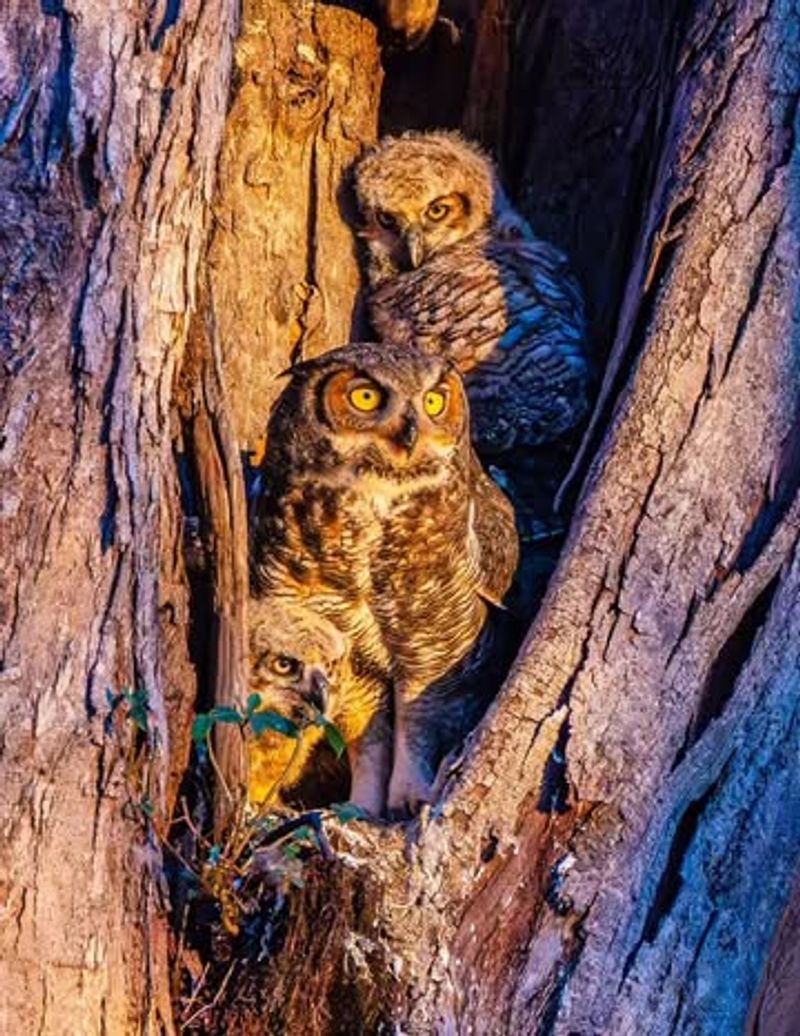
Florida is genuinely good great horned owl country. These birds are year-round residents across the state, comfortable in wooded suburbs, citrus orchards, pine flatwoods, cypress swamps, and open pasture edges near tree lines. You do not need a remote rural property to have one nearby. A neighborhood with mature oaks, scattered open ground, and a few large trees can fall well within a pair’s territory.
That said, occupancy is not something a homeowner controls directly. The National Park Service’s Florida owl account notes that great horned owls depend on a combination of suitable nest sites, adequate prey, and territory that is not already claimed by another pair. If a resident pair already holds the surrounding area, adding more habitat features to your yard will not produce a second pair. These birds do not stack up like barn swallows in a colony.
Here is a causal distinction worth keeping straight. A yard with a lot of rats may draw an owl because prey is abundant there. That does not mean the owl caused rat numbers to fall. Researchers studying predator-prey dynamics have specifically flagged this problem: owl presence can be a response to high rodent density rather than evidence of effective suppression.
Seeing an owl hunting near your compost bin tells you rats are around, not that they are disappearing.
Cornell’s life history account also points out that territory size, disturbance levels, and available perch and nest trees all shape whether a pair settles in a given area. Florida homeowners can make their properties more welcoming to wildlife, but they cannot manufacture an owl tenancy through any single product or action.
Barn-owl research cannot predict a great horned owl’s results
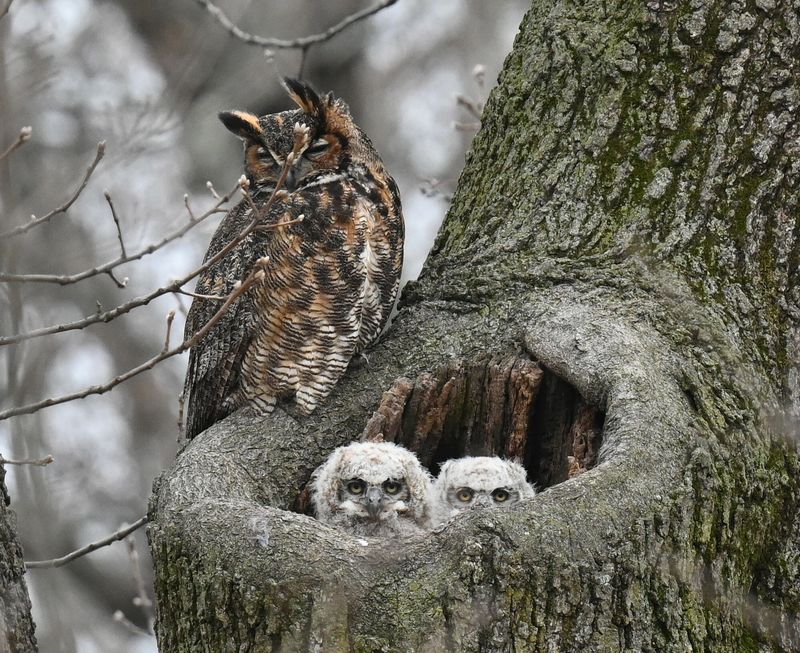
Much of the excitement around owls as rodent control comes from barn-owl research conducted in California vineyards and agricultural fields. One widely cited study estimated that a single barn-owl family removed roughly 3,466 rodents per year from the surrounding area. That number gets repeated often, sometimes without the context the authors included alongside it.
The original barn-owl study was conducted in an agricultural setting with specific prey communities and monitored nest boxes designed for barn owls. The authors were careful to note that the findings did not prove universal rodent population control, and that additional controlled research was needed before drawing broad conclusions. Applying that estimate to a great horned owl hunting a Florida residential yard skips over almost every relevant variable.
Barn owls and great horned owls are meaningfully different birds. Barn owls are smaller, more specialized, and heavily dependent on small rodents. They nest in enclosed cavities and have been the focus of organized nest-box programs precisely because they are consistent rodent hunters in the right habitat. Great horned owls are larger generalists that use open nests, hunt a much wider range of prey, and hold larger territories.
Cornell’s species account makes clear that their prey list spans everything from skunks and geese to beetles and frogs.
Later research on barn owls in agricultural settings found that predation may be insufficient during rodent population spikes, and that owl impact varied considerably across sites. A more recent review reinforced that stronger before-and-after studies with control sites are still needed to determine whether owl predation meaningfully reduces rodent populations in managed landscapes. Until that evidence exists for great horned owls in Florida residential settings, the barn-owl figure is an interesting data point from a different species in a different context, not a prediction you can apply to your backyard.
An open platform may support nesting when local habitat allows
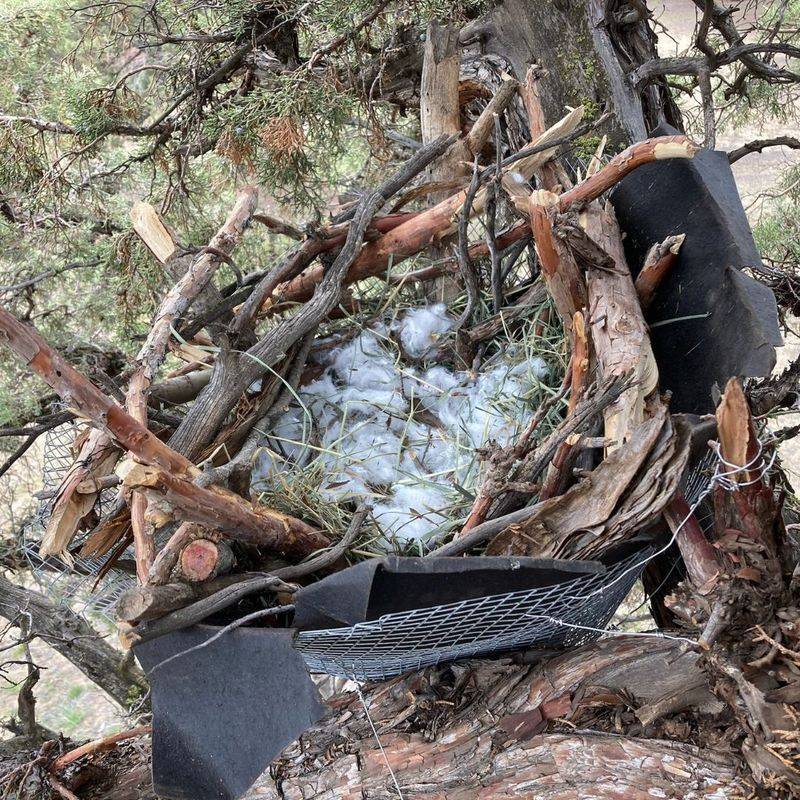
Walk into a garden center and you will find owl boxes shaped like birdhouses with a round hole in front. Those are designed for cavity-nesting species like screech-owls. Great horned owls do not use them. These birds typically reuse the abandoned open nests of red-tailed hawks, ospreys, crows, or squirrels, or they settle into broken-top snags and similar open structures in trees.
Handing them a wooden box with a hole is like offering a hammock to someone who prefers a platform bed.
Where natural nest sites are genuinely scarce, an open nesting platform can provide a suitable opportunity. USDA wildlife-habitat guidance from a South Carolina nesting-structures document describes placing great horned owl platforms in mature hardwood trees, roughly 15 to 50 feet above ground, in relatively quiet locations with nearby open foraging habitat and safe distance from power lines and high-traffic areas. Those are general parameters drawn from that specific document, not Florida-certified requirements, and local conditions vary considerably.
Before mounting anything in a tree, consult a qualified local wildlife or habitat professional. Florida’s hurricane exposure, soil conditions, and tree health all affect whether a given installation is structurally sound and safe over time. A platform placed in a stressed or shallow-rooted tree, or positioned near utility lines, creates hazards that outweigh any potential benefit.
Florida’s breeding season for great horned owls starts earlier than most people expect, with courtship typically beginning in November and breeding often underway by late December. Installing a platform before that window opens is a reasonable precaution if you want it in place before a pair begins evaluating sites, but there is no study confirming that timing installation to the season improves the odds of occupancy. Cornell’s nest-cam FAQ is direct on this point: territory, disturbance, prey, and surrounding habitat all shape whether any platform gets used, regardless of when it goes up.
Reduce rat food and shelter while preserving safe wildlife habitat
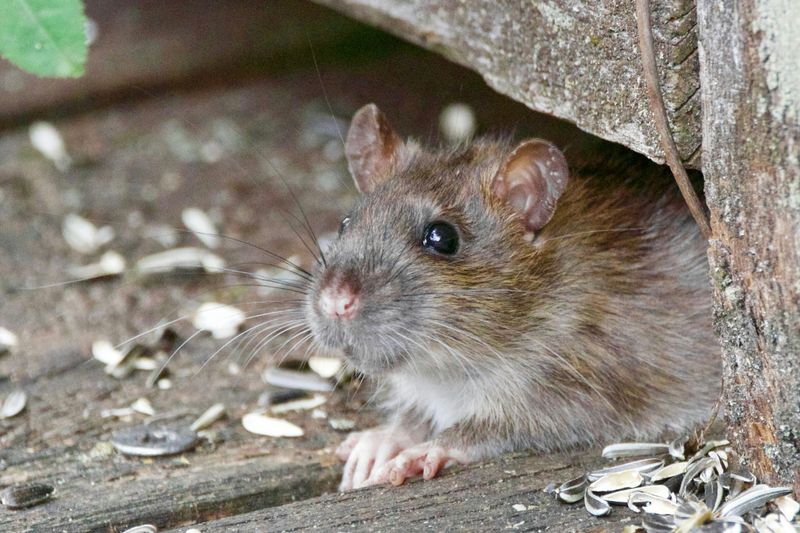
Feeding owls directly is not safe, not legal for wild raptors, and not necessary. The same goes for releasing rodents onto your property or deliberately leaving food out to build up a rat population so owls will visit. That approach increases disease risk, property damage, and the chance that rats move indoors looking for more food and water. No wildlife authority recommends it.
What actually supports both owl habitat and a lower-rat yard is removing the things that draw rats in the first place. CDC guidance on rodent control points to unsecured garbage, exposed compost, pet food left outdoors, and spilled birdseed as primary rat attractants. Metal or heavy-plastic bins with locking lids, bringing pet bowls inside at night, and switching to tube feeders with catch trays can remove a surprising amount of the food supply rats depend on near Florida homes.
Clutter and dense ground cover near your house give rats places to nest and hide from predators, including owls. Stacked lumber, old pots, and overgrown shrubs pressed against the foundation create exactly the kind of protected corridors rats prefer. UF/IFAS extension guidance on roof rats recommends keeping vegetation trimmed back from structures and eliminating ground-level harborage wherever possible.
After a hurricane or significant flooding, rat pressure often spikes as displaced animals search for food, water, and dry shelter. CDC post-disaster rodent guidance emphasizes fast cleanup of debris, securing all food and waste, and prioritizing exclusion and trapping in the days following a storm. UF/IFAS wildlife conflict resources reinforce that an owl is not a rapid-response tool for post-storm infestations. Sanitation and exclusion are.
These steps reduce rat incentives on your property without requiring you to control whether an owl ever shows up.
Seal entry points and use snap traps for active infestations
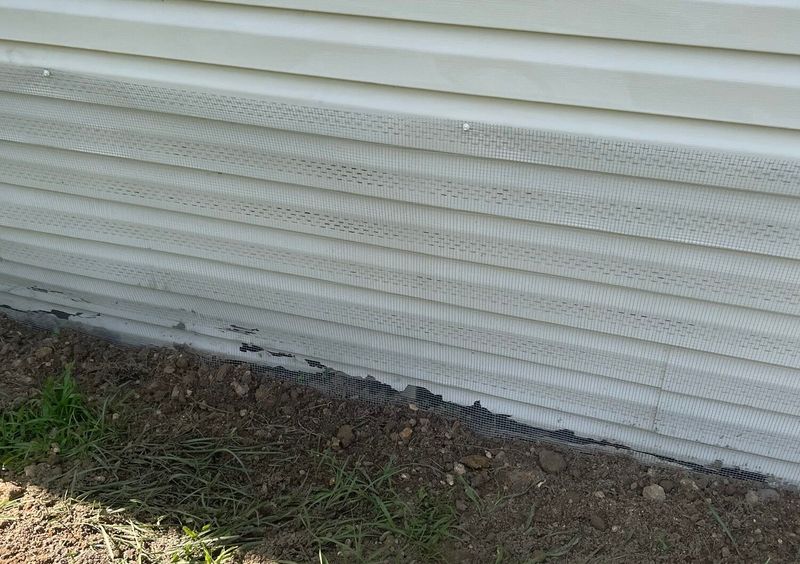
Rats do not need much space to get inside. Mice can squeeze through a hole about the width of a pencil, and roof rats, which are common throughout Florida, are agile climbers that find gaps around rooflines, eaves, and utility penetrations that most homeowners never notice. An owl hunting your yard at night cannot find or fix those entry points. You have to.
CDC’s seal-up guidance recommends a systematic inspection of gaps around roof edges, soffit vents, plumbing and wiring penetrations, foundation cracks, garage door seals, and any opening where two building materials meet. Materials that hold up against gnawing include galvanized hardware cloth, sheet metal flashing, copper mesh, and concrete patching compound. Caulk and foam alone are not enough where rats are actively working.
Once entry points are addressed, snap traps remain an evidence-based option for reducing the rats already inside or active on the property. CDC trap guidance recommends matching trap size to the rodent, placing traps perpendicular to walls along active runways, and checking them frequently. Peanut butter, nesting material, and dried fruit are effective baits for Florida’s roof rats.
CDC rodent-control recommendations are consistent on one point: trapping without fixing food access and entry points produces limited results because new rats move in to replace those removed. Snap traps work best as part of a coordinated approach that also covers sanitation and structural repair. No owl can seal a gap under a garage door or stop rats from reproducing inside a wall cavity, so exclusion is the step that no amount of predator activity can replace.
Rodenticide can expose owls and other predators to poison
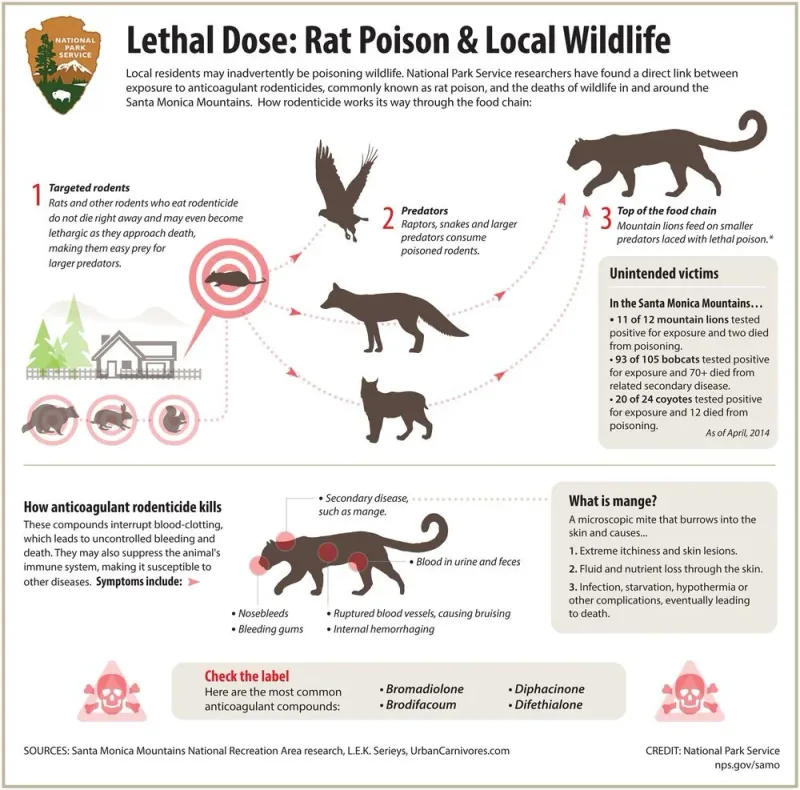
Rodenticide products are widely available and they do kill rats, but using them on a property where raptors, cats, dogs, or other wildlife are present creates a secondary poisoning risk that is serious enough to change the calculation. When an owl, hawk, or fox eats a rodent that has consumed anticoagulant bait, it ingests the residue still present in that animal’s body.
EPA’s pesticide safety review for rodenticides identifies second-generation anticoagulants, including brodifacoum and bromadiolone, as particularly concerning for predators and scavengers. Poisoned rodents can remain alive and mobile for several days after consuming a lethal dose, which means they are available for predators to catch during that window. The residue concentration in those animals can be high enough to cause internal bleeding in a bird that eats one.
UF/IFAS guidance on rodenticide safety warns that both direct and secondary exposure are documented in Florida raptors, and recommends exclusion, sanitation, and trapping as the primary approach wherever wildlife contact is possible. Additional UF/IFAS resources on wildlife conflicts reinforce that rodenticide should be a last resort rather than a first response.
When rats are inside walls, attics, garages, or living areas, or when activity continues after several weeks of exclusion and trapping, that is the point to bring in a qualified pest-management professional. UF/IFAS pest-management guidance recommends choosing a provider who diagnoses how pests entered and addresses prevention, rather than one who relies primarily on repeated chemical applications. Getting the entry points right protects both your home and the wildlife around it.
Protect pets and leave active nests to qualified professionals
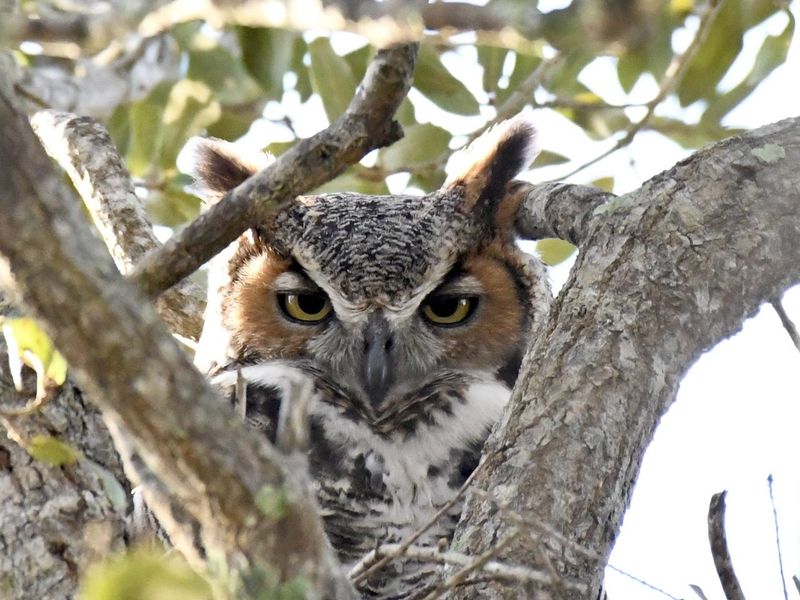
A nesting great horned owl is not a passive yard guest. Cornell’s species account documents defensive behaviors that include bill-clapping, hissing, screaming, wing-spreading, and striking with the talons when an active nest is approached. These birds are capable of injuring a person or a pet that wanders too close, and they do not distinguish between a perceived threat and a curious dog on a leash.
Small cats, toy-breed dogs, backyard poultry, and pet rabbits kept outdoors are all within the size range that great horned owls have been documented taking. The National Park Service’s Florida account notes that these owls are powerful enough to take prey considerably larger than a rat. Supervising small pets after dark and using covered outdoor enclosures for poultry and rabbits are practical steps during any period when a nesting pair is active nearby.
If an active nest creates a genuine conflict, the right move is to contact a qualified wildlife professional rather than attempt to handle, relocate, or disturb the nest yourself. U.S. Fish and Wildlife Service guidance on bird nests and the accompanying FWS nest-protection document cover the federal protections that apply to active nests, eggs, and young birds. Case-specific situations, including what options exist when a nest is in a dangerous or problematic location, require professional assessment rather than a general rule.
The practical balance looks like this: support suitable owl habitat if it fits your property and your goals, but manage household rats with exclusion, sanitation, monitoring, and trapping. An owl overhead is a sign of a healthy yard, not a pest-control contract. The work that actually keeps rats out still falls to you.