

Sunny, dry slopes in North Carolina can defeat almost every plant a homeowner tries. The soil is shallow, water drains fast, and the sun beats down without mercy. Moss phlox (Phlox subulata) is a low, spreading native that handles those exact conditions better than most groundcovers you will find at a typical nursery, and it bursts into color every spring while feeding pollinators in the process.
A dry slope demands the right kind of plant

Gardeners who try to green up a dry slope often reach for whatever looks good at the nursery, only to watch it wilt, wash out, or just sit there doing nothing. The problem is not effort or money. A dry slope is a specific site, and it needs a plant matched to that site’s actual conditions: full sun exposure, thin or rocky soil, rapid drainage, and the kind of drying heat that builds on a south- or west-facing bank through a long North Carolina summer.
Slope steepness matters too. The steeper the grade, the faster water moves across the surface, carrying loose soil with it before any roots have a chance to hold it in place. NC DEQ erosion and sediment control guidance notes that south- and west-facing slopes tend to be warmer and drier than other exposures, and that steeper slopes require more vigorous vegetative cover and more careful establishment practices. Aspect, soil depth, drainage, and slope angle all shape which plants have a realistic chance of succeeding.
This article focuses on a low, spreading groundcover for the face of a sunny, dry slope, not a universal fix for every bank or erosion problem. The plant being evaluated is moss phlox, a mat-forming perennial that NC State Extension describes as naturally found in dry rocky areas, ledges, slopes, clearings, and open woodlands. Understanding what the site demands before choosing a plant is what separates a planting that takes hold from one that fails by midsummer.
Moss phlox creates a low flowering mat
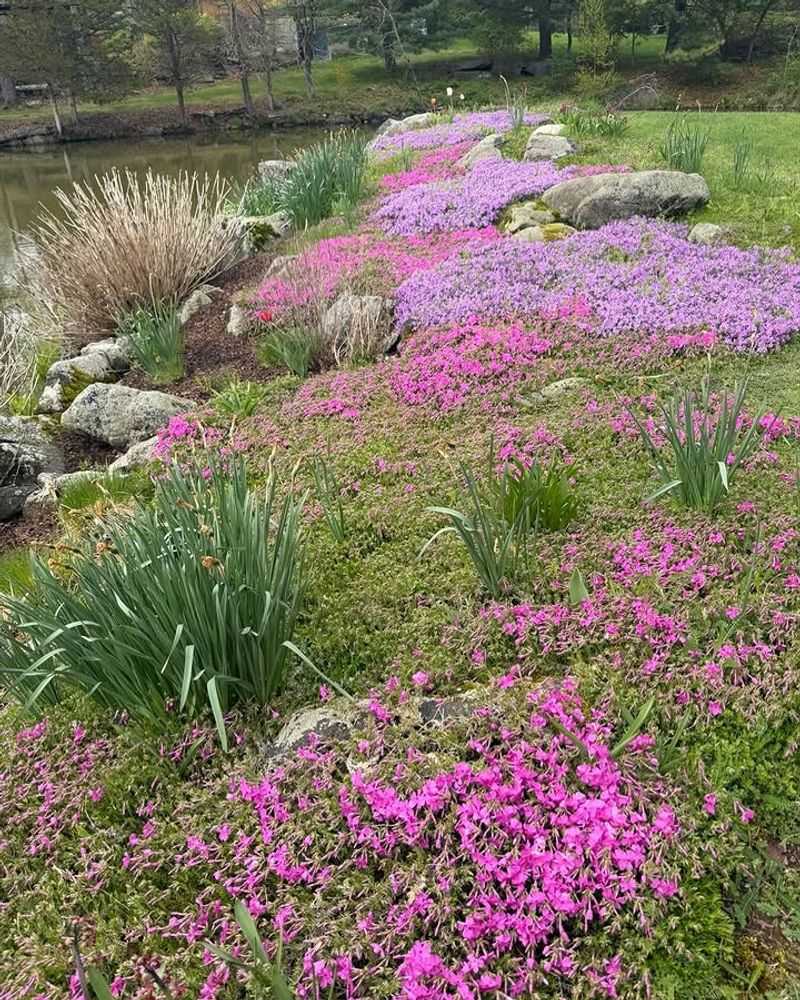
Moss phlox earns its place on a dry slope by doing exactly what that site demands: staying low, spreading steadily, and tolerating conditions that stress most ornamentals. NC State Extension’s profile for Phlox subulata describes it as a dense, mat-forming perennial that grows roughly 4 to 6 inches tall and spreads 2 to 3 feet wide. Those numbers matter: a plant that stays under half a foot high and fans out several feet in every direction can cover a surprising amount of exposed soil without the bulk of a shrub or the upright structure of a grass.
The species is naturally associated with dry rocky areas, ledges, slopes, clearings, and open woodlands, which is exactly the habitat profile of a sunny North Carolina slope with thin or gravelly soil. The NC State flowering moss profile confirms its tolerance of drought, poor soil, dry soil, erosion, salt, and pollution. That combination of traits is hard to find in a single, low-growing plant.
For homeowners who want coverage rather than height, moss phlox fits a specific visual goal. It will not block a view, overwhelm a path, or compete with taller shrubs for space. A connected planting across a slope face creates a nearly seamless mat that reads as finished and intentional, especially during the spring bloom period when flowers cover the foliage almost completely. That flowering display is a genuine reward for a tough site, not just a bonus.
The plant earns the space it occupies by solving a real problem while looking genuinely good doing it.
Groundcover helps exposed soil but cannot repair a failing slope
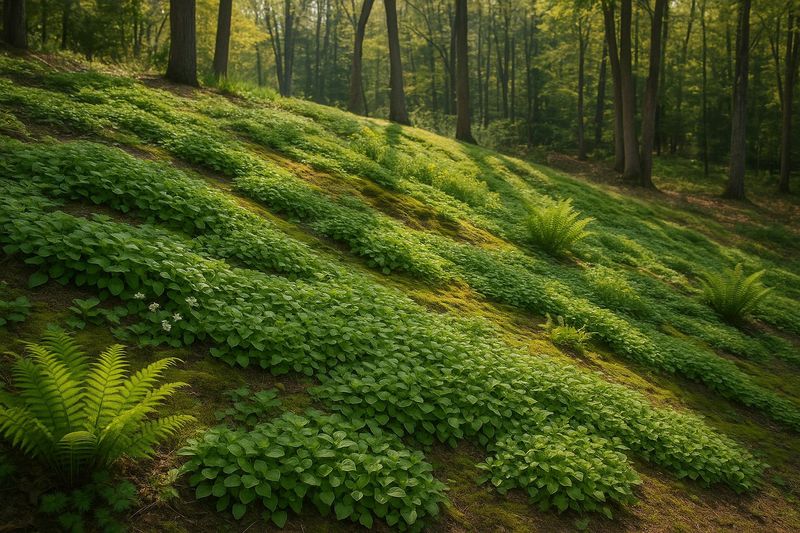
Moss phlox is listed as tolerant of erosion and dry soil, and a dense mat of it does cover exposed ground and can help slow surface water movement across a slope. Those are real benefits worth claiming. What the plant cannot do is correct a drainage problem, stop a failing bank, or substitute for engineering on an unstable hillside. Keeping those two categories separate protects both the homeowner and the planting.
NC State’s profile for Phlox subulata documents its tolerance of drought and poor soil conditions, but the source does not establish a specific, measurable runoff-control effect tied to this species alone. Groundcovers in general can contribute to surface-erosion control by intercepting rainfall, holding the top layer of soil with fine roots, and reducing bare-ground exposure. That contribution is real, but it applies at the surface. NC DEQ’s erosion and sediment control planning manual treats vegetation, mulching, slope drains, rolled erosion-control products, and structural measures as separate tools, each with its own appropriate application.
Plants are one layer of a broader system, not a replacement for the others.
A slope with active drainage problems, saturated soil, or visible movement needs more than planting. NC Geological Survey guidance on recognizing landslides identifies seepage, tension cracks, scarps, leaning trees, and active soil movement as warning signs that go beyond what ordinary planting can address. Moss phlox belongs on a stable, sunny, well-drained slope where the soil stays in place and the challenge is coverage and appearance, not structural failure. Trying to solve a serious drainage or stability problem with groundcover planting alone delays a fix that the site actually needs.
Test the site before you buy moss phlox
Before spending money on plants, walk the slope at midday on a clear summer afternoon. If the bank is in full sun for most of the day and the soil drains quickly after rain, moss phlox is a reasonable candidate. If the slope sits under tree canopy, stays damp for days after a storm, or funnels runoff from a driveway or roof downspout, the site does not match what this plant needs. Dry shade, persistently wet soil, and concentrated runoff channels are conditions where moss phlox typically struggles, and planting it there wastes time and money.
NC State Extension’s Phlox subulata profile specifies full sun and well-drained soil as the plant’s preferred conditions. Those are not flexible suggestions. A slope that loses sun by early afternoon or that holds moisture in heavy clay is likely to produce a struggling, sparse planting rather than the dense mat the species is capable of forming.
One more point worth knowing: moss phlox is a North Carolina native, but its natural distribution within the state is concentrated in the Appalachian Mountains. Gardeners in the Piedmont and Coastal Plain can certainly grow it, and it performs well in cultivation across a wider range, but it is not equally characteristic of every part of North Carolina the way some other natives are.
For homeowners who want taller, clumping, grass-like coverage across a broader range of NC regions, little bluestem (Schizachyrium scoparium) is a well-documented alternative. NC State lists it as tolerant of dry, infertile, clay, sandy, and shallow rocky soils, and it grows across the mountains, Piedmont, and Coastal Plain. It is a clumping grass, not a low mat, so it serves a different visual purpose. Knowing which plant fits your site and your goal saves a frustrating season of watching something fail to establish.
Establish coverage before you expect drought tolerance
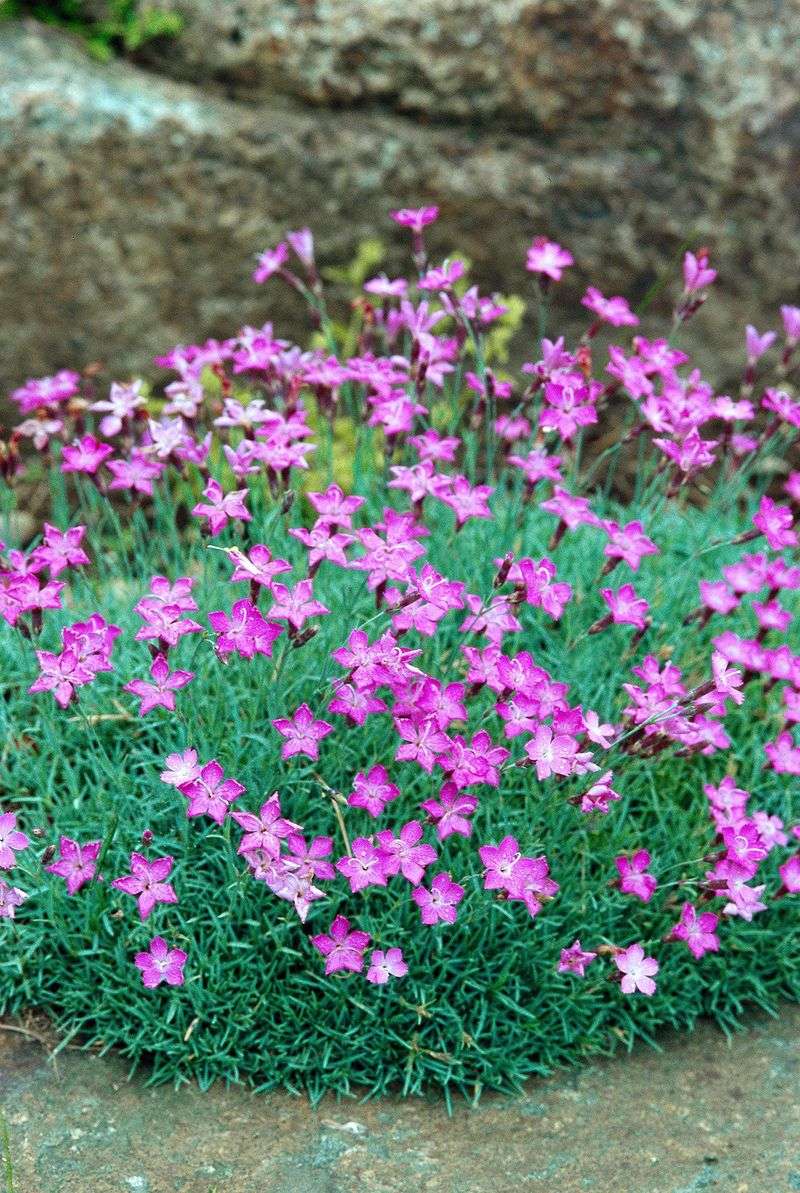
Drought tolerance is a trait that kicks in after a plant has developed a healthy root system, not on the day it goes into the ground. Newly planted moss phlox needs regular supplemental irrigation while its roots spread into the surrounding soil. Skipping that establishment watering is the most common reason drought-tolerant natives fail in the first summer, and it is an avoidable mistake. UGA Extension guidance on drought-tolerant natives is direct on this point: drought tolerance does not eliminate the need for watering while roots are becoming established.
Spacing plants across the full slope rather than clustering them in one spot gives you better coverage and a more connected mat as the plants fill in. A mass planting that covers the whole slope face works better than a few specimens scattered randomly, because bare soil between plants stays vulnerable to surface erosion until the groundcover closes in. UGA’s native plants guide supports mass planting as a strategy for achieving effective groundcover on a slope.
Mulch helps hold moisture in the soil between waterings and reduces the amount of bare ground exposed to rainfall impact. Apply a light layer between plants after installation, but keep it away from the crowns of the plants themselves. Piling mulch against the base of moss phlox can trap moisture around the stems and invite rot, which defeats the purpose of a well-drained site preference.
NC DEQ’s erosion design manual notes that south- and west-facing slopes are warmer and drier, which means they can stress new plantings more aggressively than a north-facing bank would. On those exposures, water new plants more frequently in the first season, and recognize that steeper slopes may need erosion-control matting or other measures in addition to vegetation while the planting fills in.
Plan for spring flowers and ordinary maintenance
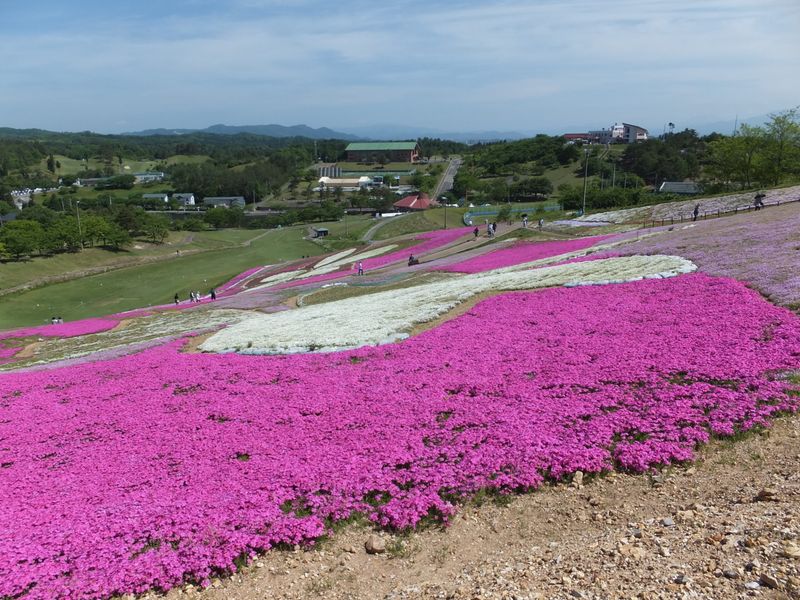
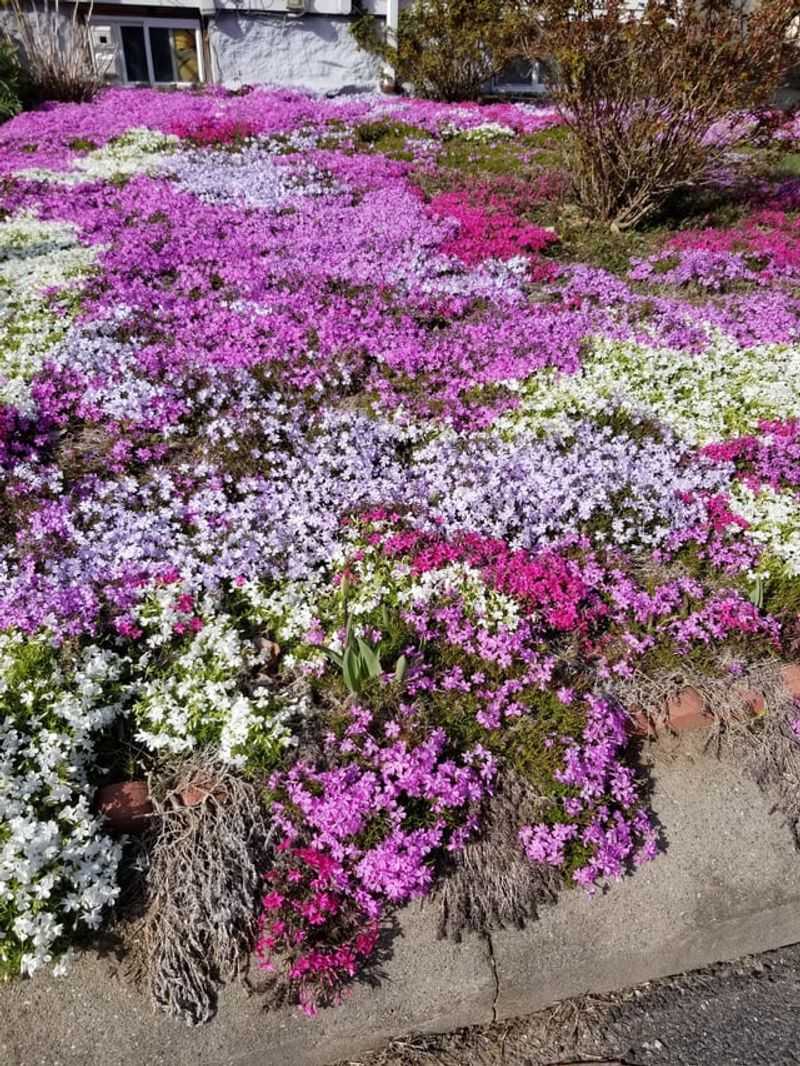
Moss phlox blooms in April and May, and the display can be striking. Depending on the form or cultivar, flowers come in pink, lavender, purple, red-purple, or white, and they tend to cover the foliage so completely that the plant looks more like a flowering carpet than a leafy groundcover. That spring color is one of the strongest reasons to choose this plant for a visible slope.
The bloom period also brings documented pollinator activity. NC State Extension confirms that moss phlox attracts bees, butterflies, skippers, and hummingbirds. For a homeowner who wants to support native wildlife while solving a slope problem, that is a meaningful bonus. Keep those wildlife claims grounded, though: the plant’s documented value is for pollinators and nectar-seeking visitors, not for reducing ticks, mosquitoes, or other household pests.
After flowering ends, cut the plant back by about one-half. NC State recommends this step to help maintain the plant’s compact shape and encourage denser regrowth. Skipping the post-bloom cutback can lead to a looser, more open habit over time, which is less effective as a groundcover. Older plantings sometimes thin in the center as new growth pushes outward, leaving a ring of healthy stems around a sparse middle.
Rejuvenation pruning or spot replacement handles that problem when it appears.
UGA Extension’s guidance on native plants is clear that native species are not automatically pest-free. Moss phlox can develop spider mites in hot, dry conditions and may experience nematode problems in wet or humid situations. Deer tend to leave it alone, but rabbits may browse the foliage. Treating this plant as low-maintenance rather than no-maintenance keeps expectations realistic and the planting healthier over time.
Recognize when planting is not enough

Some slopes look like a planting problem but are actually a structural problem wearing a planting problem’s clothes. Knowing the difference before you spend a season trying to establish groundcover can save real money and, in serious cases, protect property and personal safety.
NC Geological Survey guidance on recognizing landslides identifies specific warning signs that go beyond what any planting can address: seepage or water weeping from the slope face, tension cracks running across or along the bank, scarps or stepped breaks in the soil surface, trees that are leaning or tilting in ways they were not before, and visible active soil movement. Any one of those signs warrants a call to a geotechnical professional or your county’s erosion control office before you do anything else on that slope.
Active erosion, even without signs of deeper instability, may require a combination of approaches that goes beyond vegetation alone. NC DEQ’s erosion and sediment control planning manual includes separate standards for groundcovers, mulching, slope drains, rolled erosion-control products, terracing, and structural measures. Those tools exist because no single approach works for every slope condition. A steep bank with concentrated runoff from an uphill impervious surface may need a diversion drain and erosion-control matting before any plant has a reasonable chance of surviving.
Planting moss phlox into an actively failing or poorly drained slope does not fix the underlying problem; it just adds a plant to a site that cannot support one yet.
Choose moss phlox when the site matches its strengths
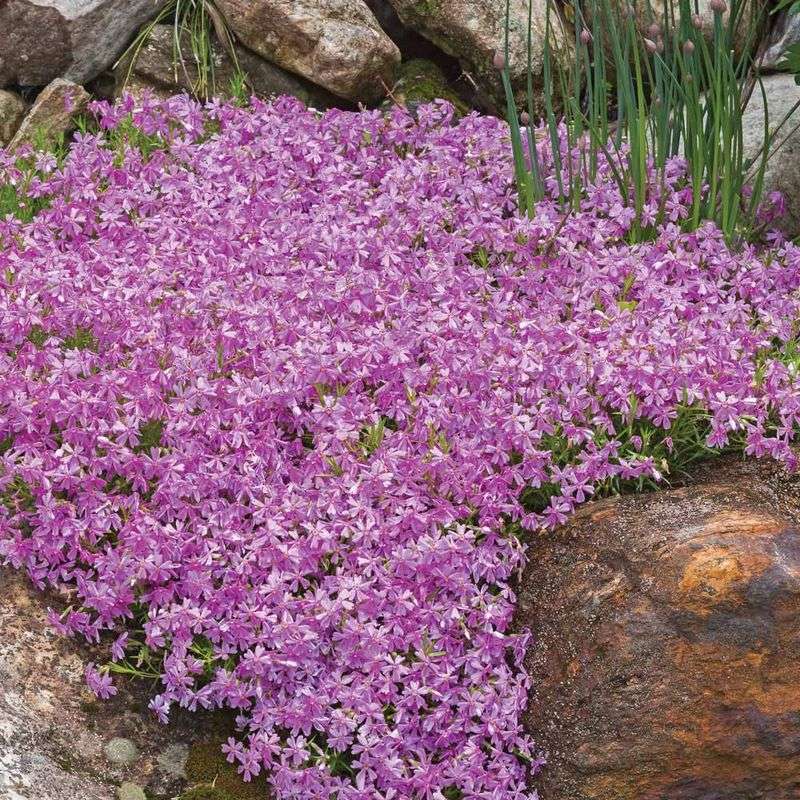
The decision rule for moss phlox is straightforward: sunny exposure, well-drained soil, dry or rocky conditions, and a homeowner who wants a low, spreading mat with genuine spring color and pollinator value. When those conditions line up, Phlox subulata is a well-supported choice that can cover exposed soil, reward spring visitors with flowers, and hold its own through a dry North Carolina summer once established.
When the slope is shaded, wet, or actively eroding, the site does not match the plant’s strengths. Reach for little bluestem when you need taller, clumping, grass-like coverage across a broader range of NC regions, or when the slope is too large for a low mat to read as intentional. Reach for professional evaluation when the slope shows any of the warning signs of instability that go beyond what any plant can solve.
The best plant for a dry slope is the one that fits the actual site, not the one with the most appealing label at the nursery. Moss phlox earns that fit on the right sunny bank, and a planting that matches its conditions will show you why.