
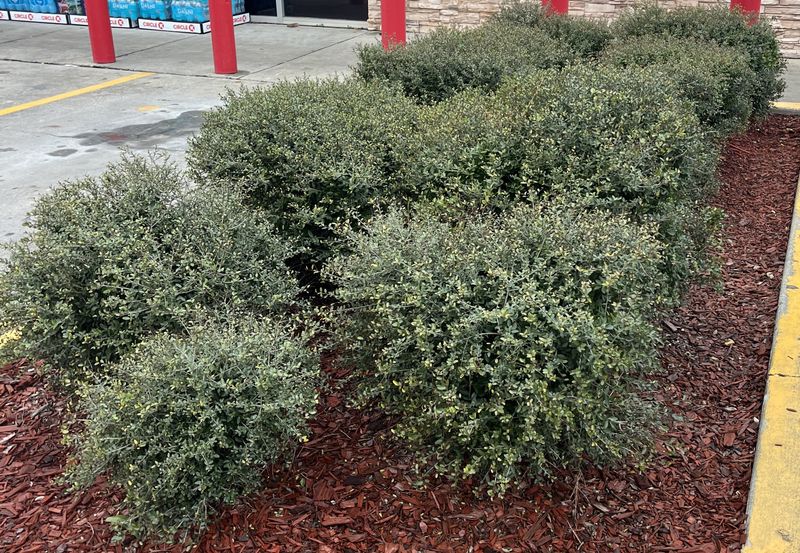
Many hollies grow male and female flowers on separate plants, and only the females make red fruit. A female usually needs pollen from a compatible male that blooms at the same time, so a lone shrub can stay bare.
Still, a bare holly is not always a male, and a few other clues can explain what is going on. Here is how to check your own plant before you spend money on another one.
The answer starts with spring flowers, not winter fruit
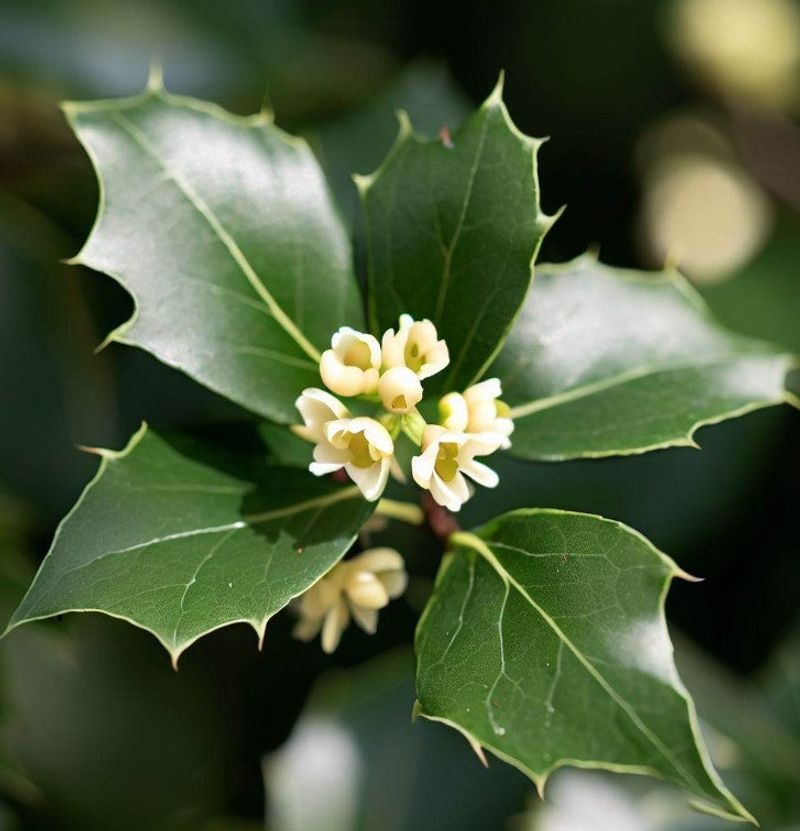
Spring is when a holly decides whether it will carry fruit, long before the first holiday wreath goes up. Most hollies have male and female flowers on separate plants, which botanists call dioecious.
Only the female plants can make the red fruit, and they usually need pollen from a compatible male to do it.
American holly is a handy example. According to the NC State Plant Toolbox entry for American holly, its flowers open in spring, roughly April through June, and its fruit shows up from fall into winter.
That timing belongs to American holly. Other hollies and cultivars can run on different schedules, so do not assume it fits every shrub in your yard.
Those red beads are what most of us call berries, but botanically they are drupes, a fleshy fruit around a hard seed. The name matters less than the timing.
Pollination happens months before anyone looks for color.
That is why a bare shrub in December tells you very little. You are looking at the result of a process that played out back in spring, or maybe at fruit that is already gone.
A leafy, fruitless holly could be a male, a female that missed out on pollen, or something else entirely.
Treat the bare branches as a question, not an answer. The next few sections show how to gather clues so you can sort out what your plant is actually doing.
Check the label and the spring flowers
Start with the easy clue: the tag. If you kept the nursery label or receipt, look for a cultivar name.
Many named hollies are sold as known females or males, and that name can tell you a lot.
No tag? Then the flowers are your best check.
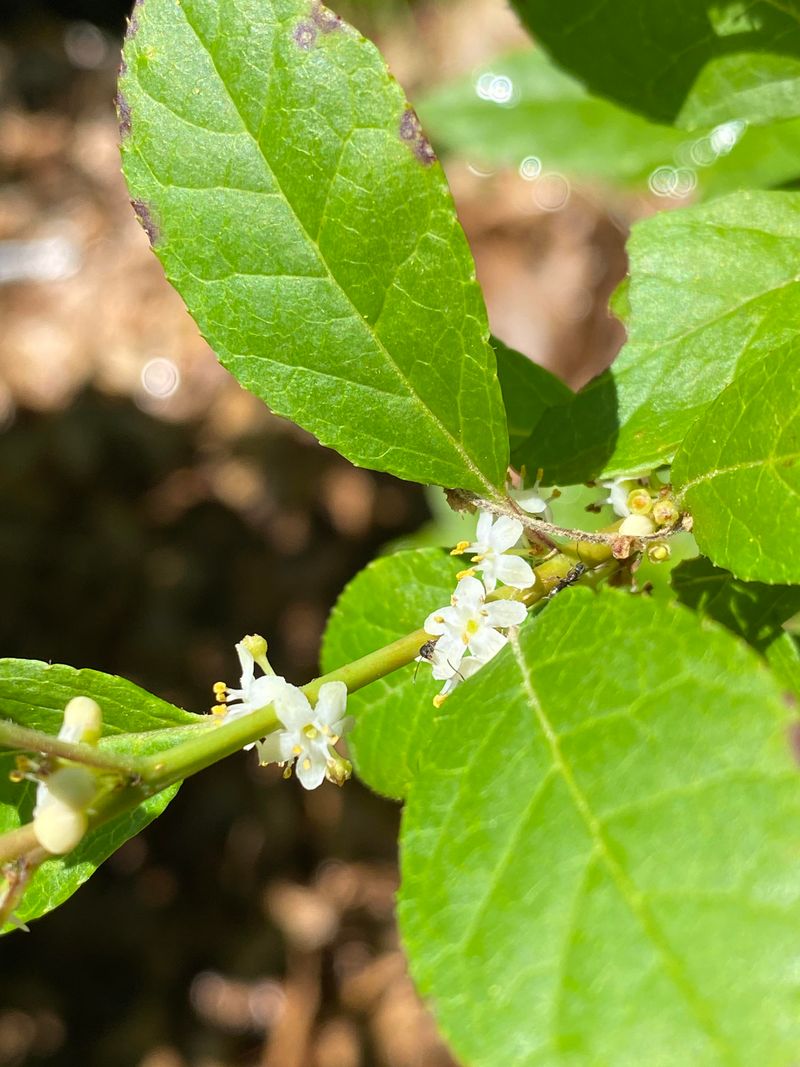
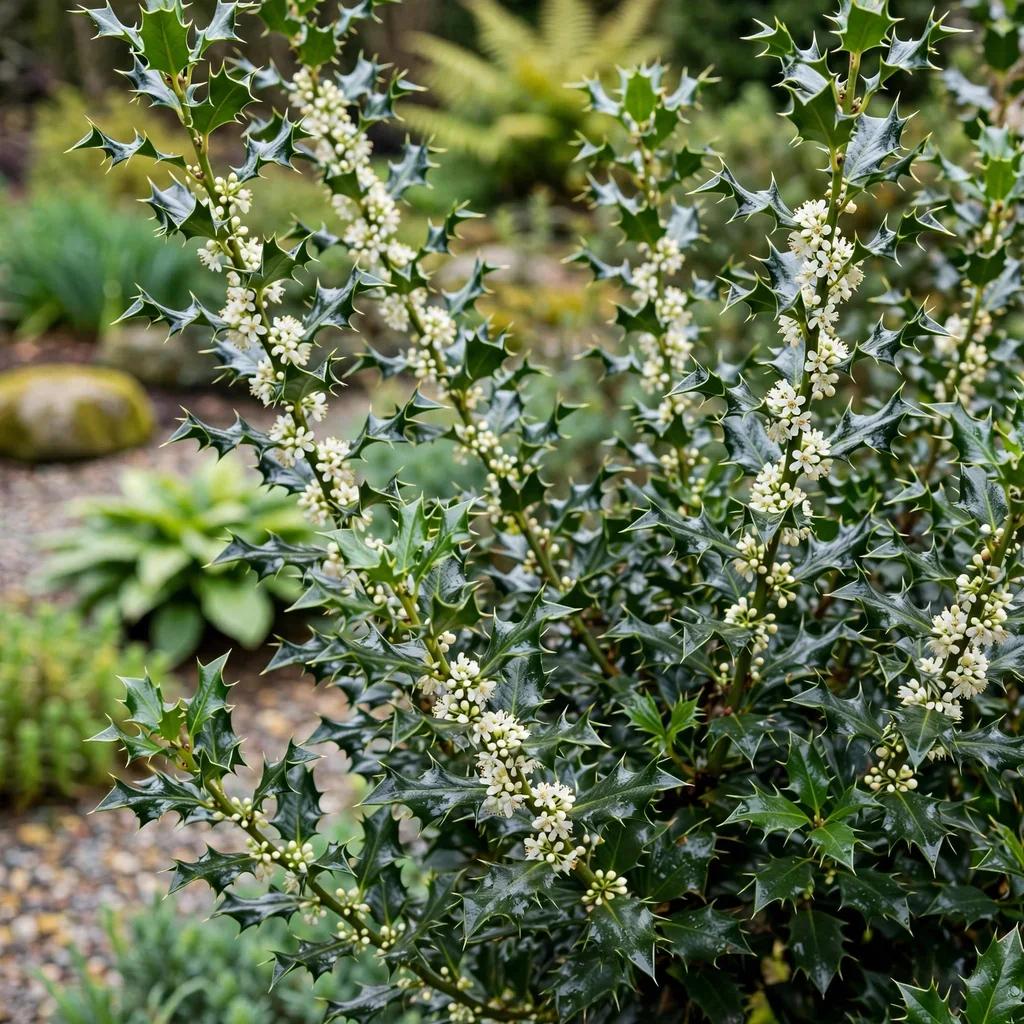
Wait for spring and look closely at the small blooms. Male flowers show visible stamens, the pollen-bearing parts, while female flowers have a rounded pistil in the center that often looks like a tiny green bump.
Flower inspection matters because labels are not perfect. Penn State Extension notes that nursery labeling can be wrong, so what the tag says and what the plant does may not always match.
A hand lens or your phone camera zoomed in can help a lot.
Take a few photos of the blooms and note the date. Pictures let you compare plants or send them to an Extension office for a second opinion.
Keep the goal simple here. You are identifying the plant, not diagnosing it from how it looks in winter.
A holly with no fruit might still be a female, and only the flowers can start to settle that.
A female needs compatible pollen at the right time
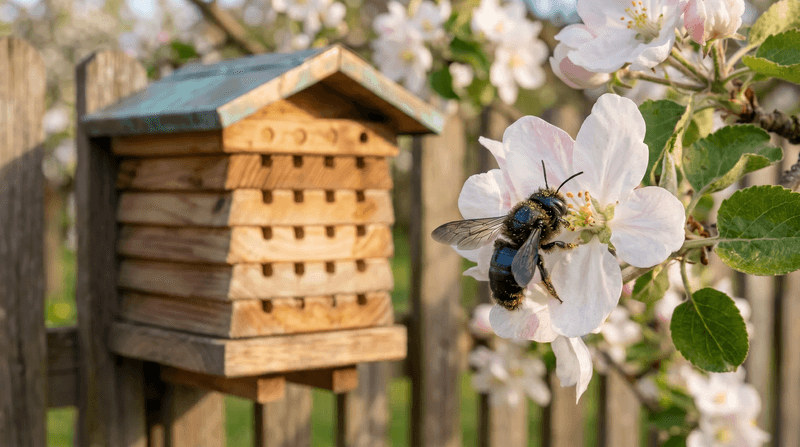
Once you know you have a female, the next question is where her pollen will come from. She usually needs a compatible male whose flowers open at about the same time as hers.
Bees do the delivery work, moving pollen from bloom to bloom, as described by NC State’s plant profile for ‘Nellie R. Stevens’.
Compatibility and overlapping bloom both count. A male that flowers three weeks earlier or later may not help much, and not every male is a good match for every female.
You may not need to plant anything. NC State’s landscape management guidance points out that nearby landscape plants may already supply pollen.
So walk the block in spring and see what is blooming in neighboring yards, parks, and along fence lines.
Distance is relevant, but it varies. Penn State gives a typical range, yet there is no single number that works everywhere, and a neighbor’s holly is not a guaranteed fix.
Holly is a big group. NC State lists many native species, introduced species, and hybrids, so confirm a suitable pollinizer for your specific plant before assuming anything.
‘Nellie R. Stevens’ is a limited exception
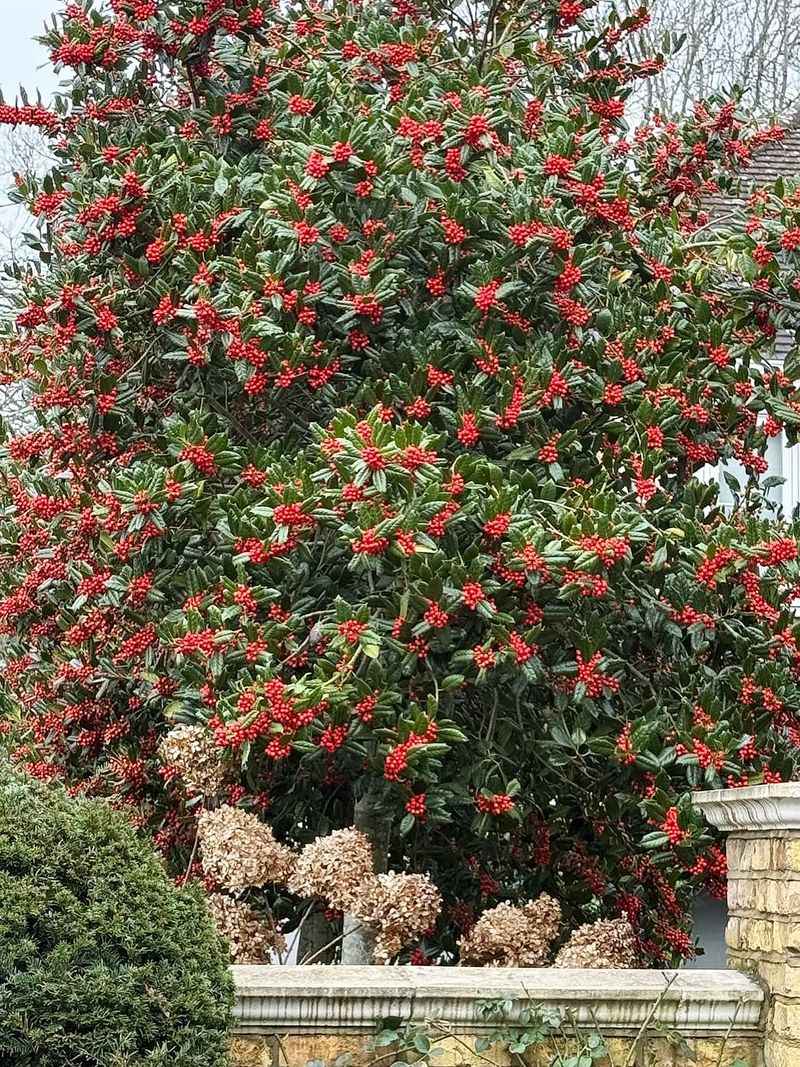
Here is the twist that keeps this from being a tidy rule. NC State describes ‘Nellie R.
Stevens’ as a female cultivar that can produce some fruit without a male pollinizer. It is a named, limited exception.
Notice the wording: some fruit. NC State also lists male hollies that make good pollinizers for it, so a nearby male can still be useful if you want heavier fruiting.
This does not mean hollies in general pollinate themselves. Most do not.
If your shrub is an American holly or another cultivar, the usual male-and-female pairing still applies.
The takeaway is to match the advice to the plant. The NC State Hollies page shows how many kinds of holly there are, and each can behave a little differently.
So before you decide your bare shrub needs a partner, find out exactly what it is.
Other problems can prevent fruit from forming
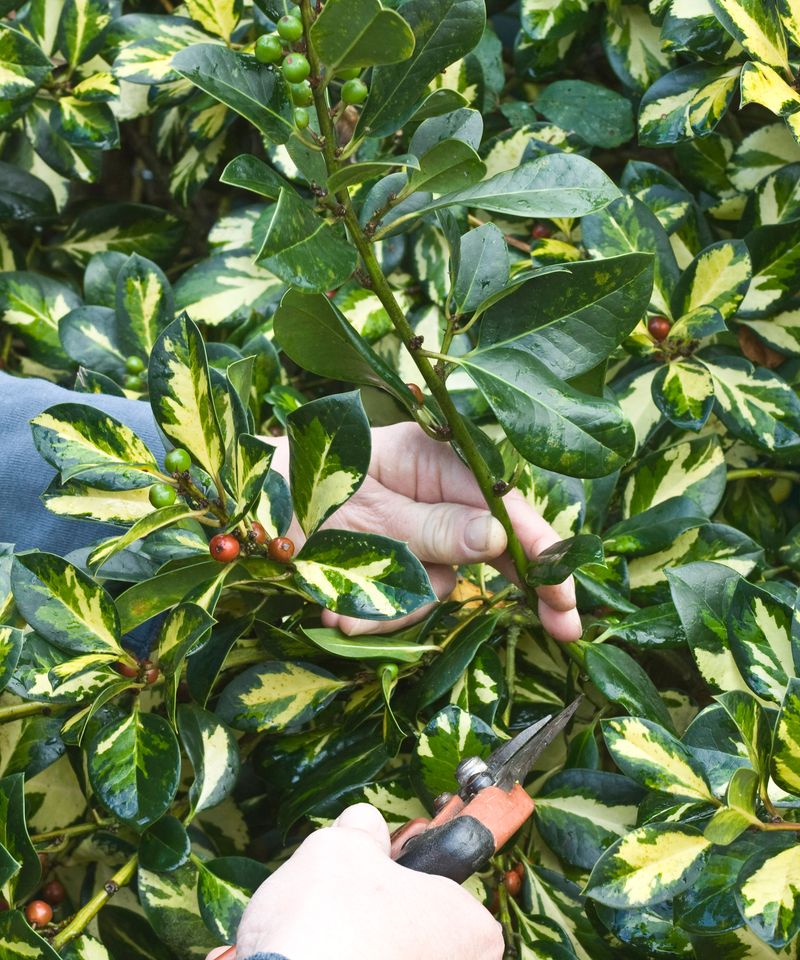
Sometimes a female holly blooms and still ends up without fruit. Penn State lists several possible reasons, and they are possibilities, not a diagnosis of your shrub.
Penn State’s guide to holly without berries mentions poor pollination, immaturity, severe weather, unsuitable growing conditions, and pruning.
Age is a common one. A young plant may simply not be ready to fruit yet, even when it looks full and healthy.
Pruning can quietly remove the next crop. If you trimmed in late winter or spring, you may have cut off the branches that carried flower buds.
Weather and conditions play a part too. A hard freeze or heavy rain during bloom can interfere with pollination, and a plant struggling in poor soil or the wrong light may put its energy elsewhere.
These problems are different from wildlife eating fruit that already formed. Think back: did your holly flower well in spring, and did you prune it?
Those two answers can narrow things down.
Wildlife may have eaten the fruit
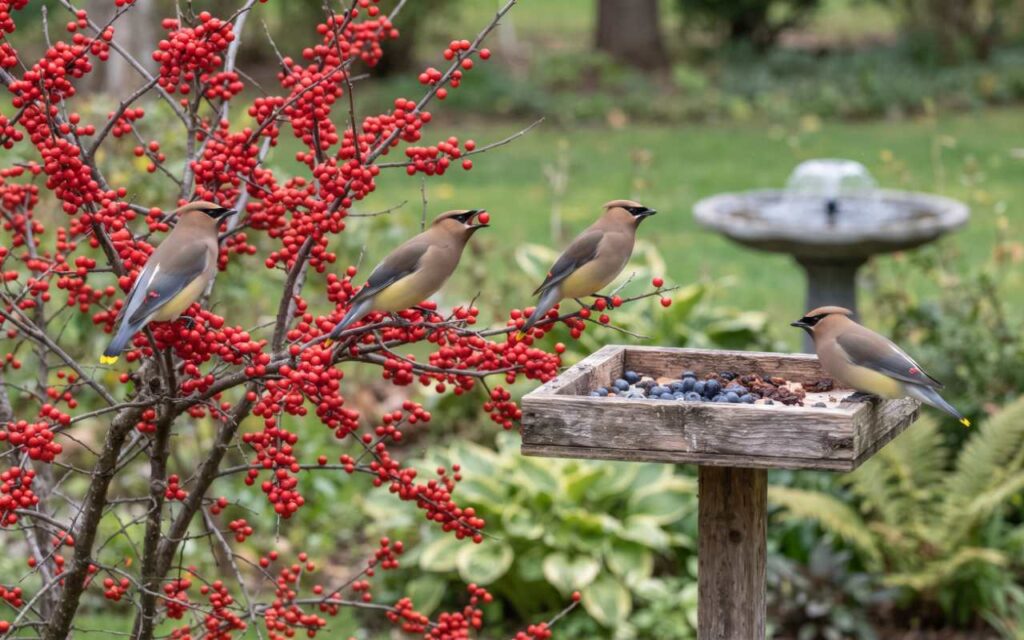
Picture a holly loaded with red in November and bare by January. Birds and other wildlife may have had a feast while you were not looking.
If you only glance at the shrub late in the season, you could miss the fact that it fruited at all.
How long fruit hangs on depends on who lives nearby. Illinois Extension says fruit persistence varies with local bird and squirrel activity, so one yard may keep its color for weeks while another is stripped fast.
Before you conclude your holly never made fruit, try some detective work. Check old phone photos from fall, ask family members if they remember seeing red, and look under the shrub for leftover fruit or bird droppings with seeds.
Also watch for a flurry of birds around the plant on cold mornings. That is often a sign the fruit is being eaten.
If you did see fruit earlier, pollination was probably not your problem at all.
Watch the flowers before buying another holly
Before you buy another shrub, slow down and work through a short checklist. First, find the label or cultivar name.
Second, watch the plant’s flowers next spring and take close-up photos. Third, look around the neighborhood for hollies that bloom at the same time as yours.
If your plant is an American holly, NC State identifies named female cultivars and says a male pollinizer is needed. Other kinds of holly may work differently.
Then ask for help. Bring your photos and cultivar details to a local Extension office or a knowledgeable nursery, and ask which male would be a compatible pollinizer.
That way you buy one plant with a purpose instead of guessing.
One safety note matters if you have kids or pets. Do not eat holly berries.
Poison Control advises contacting webPOISONCONTROL online or calling 1-800-222-1222 after a suspected ingestion, rather than trying to judge it by how many berries were eaten or what symptoms appear. For a pet, call your veterinarian.
A bare holly is a puzzle, not a failure, and spring will hand you the first clue.