
Fire ants have spread into portions or all of 81 North Carolina counties, and if you have ever stepped near a mound by accident, you know exactly why people want them gone. The instinct to reach for a spray can is understandable, but there is a smarter first move: building a native border that earns its keep in the landscape. Mountain mint is one of the most overlooked North Carolina natives for that job, though its real strengths are not what the rumors say they are.
A North Carolina native worth planting—but not as a fire-ant cure
Imported fire ants have settled into North Carolina in a serious way. The North Carolina Department of Agriculture and Consumer Services reports that portions or all of 81 of the state’s 100 counties are generally infested with one or more imported fire-ant species or hybrids. That reach covers Coastal Plain neighborhoods, Piedmont backyards, and mountain communities alike, and the stings are painful enough to send some people to urgent care.
Colonies are also wired for aggression when a mound is disturbed. A child playing near a raised dome of soil, a dog sniffing around a bed edge, or a gardener kneeling to weed can trigger a fast, swarming response. Those risks are real, and they explain why so many North Carolina homeowners want a solution that does not involve spraying chemicals near vegetable beds or play areas.
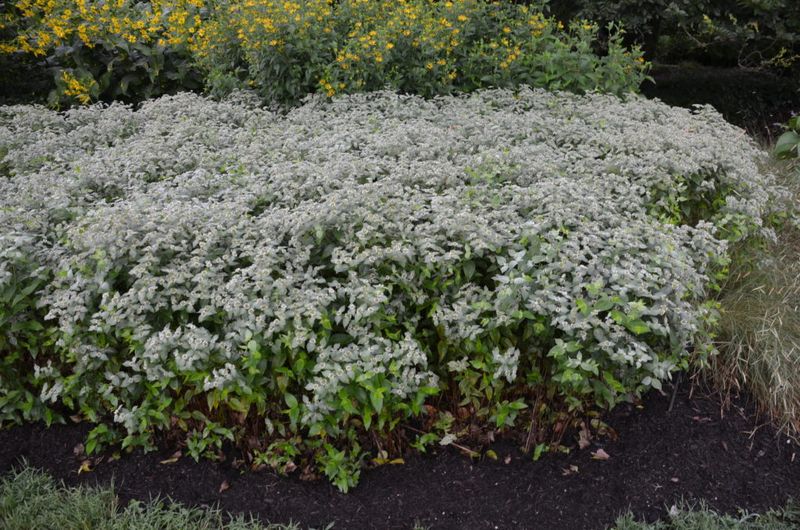
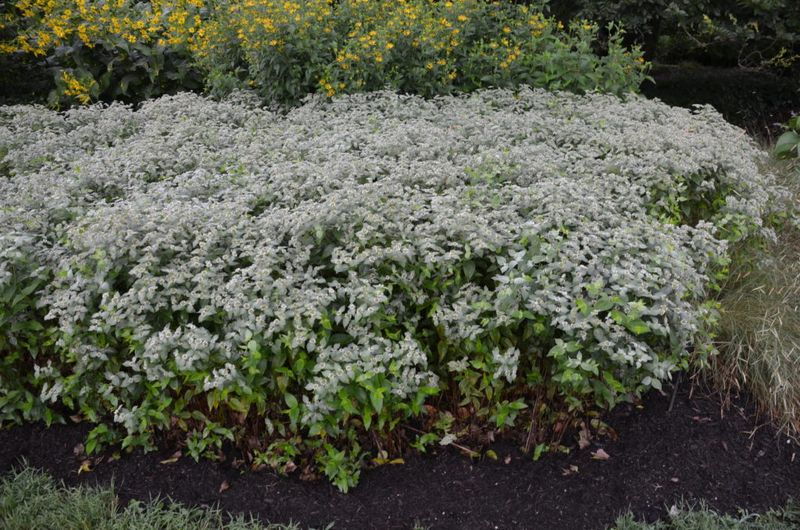
Mountain mint, especially the species Pycnanthemum tenuifolium documented by NC State Extension, is a genuinely worthwhile native plant for a low-effort garden border. It grows across the state, smells wonderful, requires minimal fuss, and draws in bees and butterflies through the warm season. Those are real reasons to plant it.
What mountain mint will not do is make established fire-ant colonies pack up and leave your beds. No field evidence supports that claim. A living mountain-mint border is a landscape asset, and it should be chosen for what it actually delivers rather than a promise it cannot keep. Fire-ant management still needs its own plan, and the rest of this article walks through both sides of that equation.
What mountain mint actually contributes to a garden

Pycnanthemum tenuifolium, commonly called narrow-leaf mountain mint, belongs to a genus of plants that earned their name honestly. Brush a leaf and the mint fragrance is immediate and sharp. The NC State Extension Gardener Plant Toolbox lists it as native to North Carolina, adapted across the Coastal Plain, Piedmont, and Mountain regions, and suitable for native, butterfly, and edible garden settings.
The plant handles a range of growing conditions without much coaxing. It tolerates full sun to part shade and adapts to average or even moderately dry soils once established. That flexibility matters in a state where a Coastal Plain gardener deals with sandy, fast-draining beds while a mountain homeowner might have heavier, cooler soils. Mountain mint asks for relatively little in return for reliable summer bloom.
Pollinators respond to it enthusiastically. Bees, native wasps, and butterflies work the small white flowers from midsummer into fall, making a mountain-mint border one of the more productive pollinator patches a North Carolina yard can offer. For homeowners trying to support declining native bee populations, that payoff is concrete and documented.
The fragrant leaves have also been noted in traditional use as a skin application against mosquitoes, and that ethnobotanical detail appears in the NC State plant profile. That note applies specifically to crushed leaves rubbed on skin and says nothing about fire ants. Fragrance, pollinator value, and mosquito folklore are separate topics, and none of them add up to evidence of fire-ant deterrence.
The NC State Extension profile for the Pycnanthemum genus supports mountain mint for native garden design, wildlife value, and low-maintenance performance. Those are the reasons to put it in the ground, and they are strong enough to stand on their own.
Why essential-oil studies do not prove a living border works
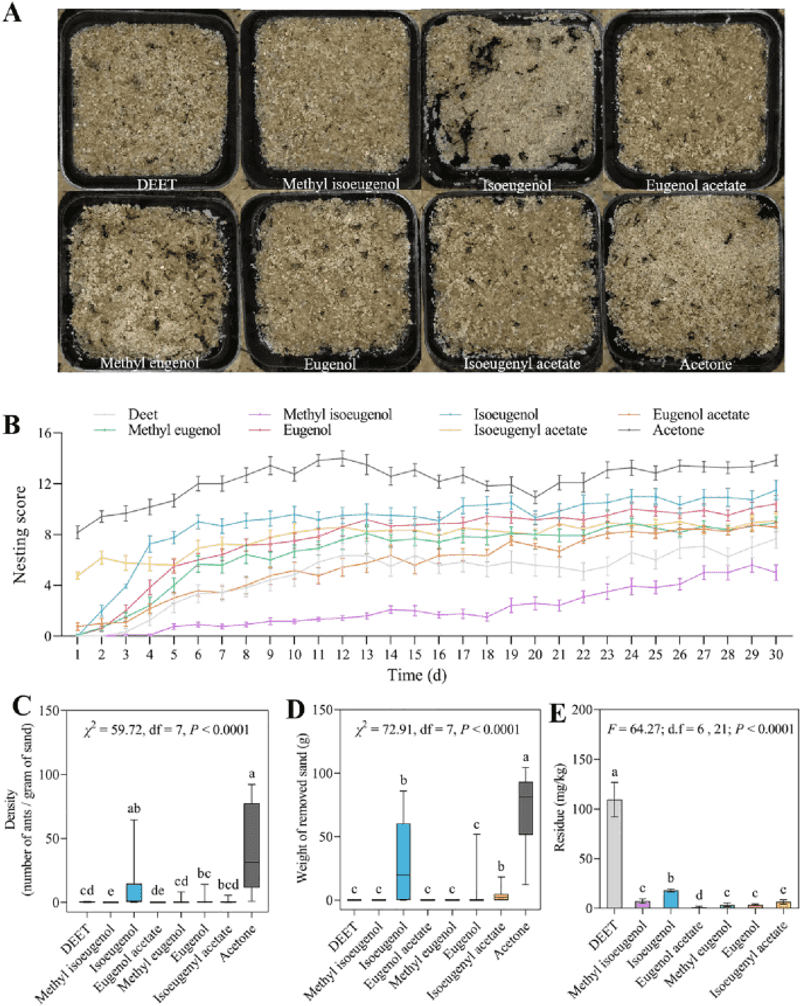
Some mint-family essential oils have shown repellent effects on fire ants in laboratory settings, and that research is worth understanding accurately. Compounds like carvacrol and thymol, extracted from plants in the mint family, have been tested in bioassays where ants are exposed to treated surfaces or concentrated doses. A peer-reviewed study on carvacrol, thymol, and their acetates found repellent activity against imported fire ants under those controlled conditions.
The gap between a laboratory bioassay and a garden border is wide. Extracted oils are applied at measured concentrations directly to surfaces where ants travel. A living plant releases volatile compounds into open air, where they disperse quickly, get diluted by wind, and never accumulate at the soil surface in the concentrations used in a lab test. Rain, heat, and soil chemistry further reduce any chemical presence around the plant’s root zone.
The ants in a garden are not navigating a treated barrier. They are foraging through soil that has incidental proximity to a fragrant plant above ground.
Colony behavior adds another layer of complexity. Repelling a handful of foraging workers at the surface is not the same as controlling a colony. UF/IFAS notes that effective colony control generally requires reaching the queen, or all queens in a multiple-queen colony. Multiple-queen colonies are common in North Carolina and are less territorial than single-queen ones.
Workers from those colonies move freely among mounds, making the idea of a plant border that holds them back particularly unreliable.
A 2024 ScienceDirect study on Solenopsis invicta behavioral preferences toward Lamiaceae essential oils found activity under test conditions but did not establish field efficacy. A broader 2026 review of fire-ant repellent research specifically flags that field validation remains limited across botanical repellent candidates. That is not a verdict that botanical compounds are useless. It means the step from promising lab result to proven outdoor performance has not been completed for living plant borders, including mountain mint.
Design the border around mountain mint’s real needs
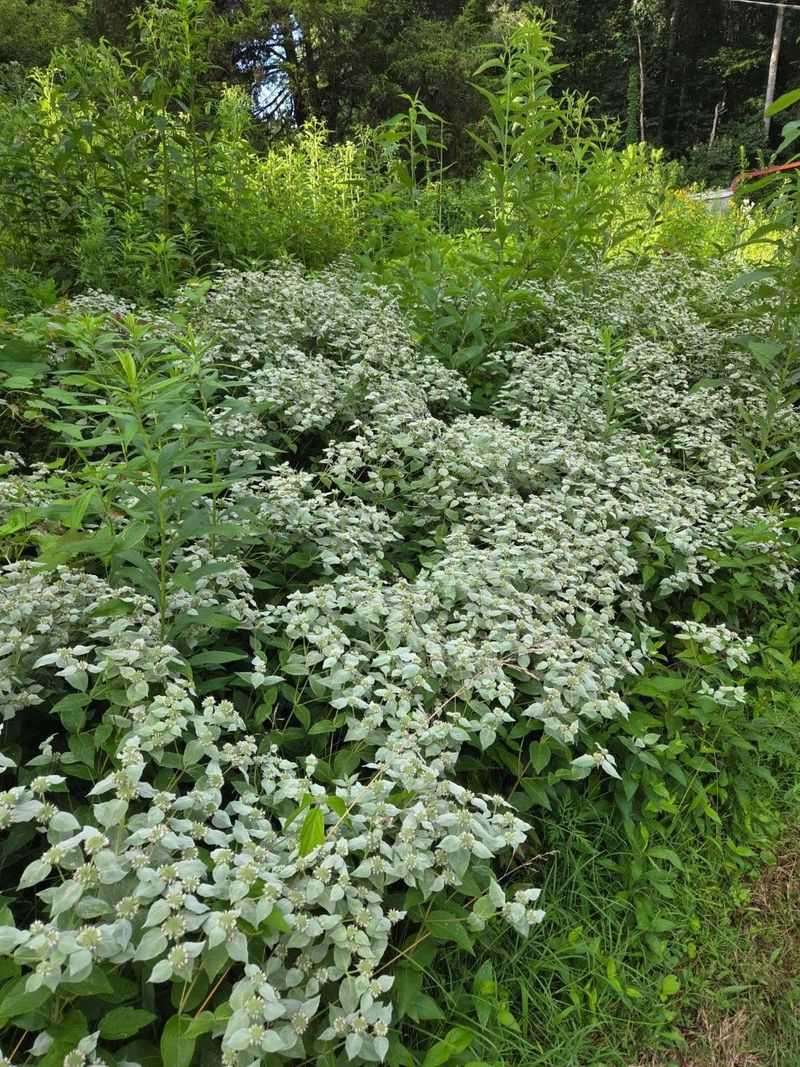
Placing mountain mint well starts with honest site assessment rather than pest-control wishful thinking. The plant performs best in full sun but tolerates part shade, and it adapts to average soil moisture without demanding amendments or irrigation once established. In the Coastal Plain, where sandy soils drain fast, a slightly lower spot with a bit more organic matter gives new plants a better start. In the Piedmont and Mountains, average garden soil in a sunny border works well, and the plant handles clay-influenced soils better than many natives.
Spread is the trait that catches gardeners off guard. Mountain mint spreads by rhizomes, and in a good site it will move outward each season. The NC State Extension Gardener Plant Toolbox notes that the plant can spread and recommends planning for containment. A buried edging strip at least four to six inches deep, a hardscape edge like a stone path or patio border, or a raised bed wall all work as physical barriers.
Without some form of containment, mountain mint will eventually cross into lawn or neighboring beds.
The practical payoff from a well-sited border is genuine. Summer bloom runs from roughly July through September, and during that window the plant draws a striking variety of native bees, honeybees, and butterflies. Pycnanthemum tenuifolium is specifically noted for exceptional pollinator value in the NC State plant profile. For a homeowner trying to support native wildlife while keeping a border low-maintenance, that combination of easy care and ecological payoff is a strong argument for the plant.
Frame the border as a pollinator corridor and a fragrant native planting. Those goals are achievable. A fire-ant barrier is not among them, and designing around the plant’s real strengths produces a better garden than chasing a claim the plant cannot deliver.
Check whether the mound is active before baiting
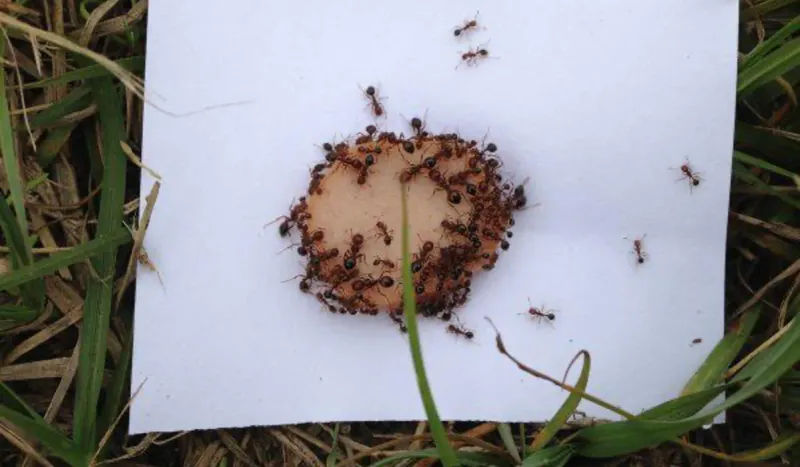
Before reaching for any treatment product, take two minutes to find out whether the mound is actually worth treating. Not every dome of disturbed soil in a garden bed is an active fire-ant colony. Colonies move, mounds get abandoned after heavy rain or soil disturbance, and treating an inactive mound wastes product and puts unnecessary chemistry in the garden.
NC State Extension recommends a simple activity check: place a small piece of potato chip near the mound and watch for foraging ants to find it within about 20 minutes. This works best when soil temperatures are between roughly 70 and 90 degrees Fahrenheit and conditions are dry. Hot midday sun in a North Carolina July can push surface temperatures above that range, so morning or late afternoon is usually a better time to run the test.
If ants find the chip, the colony is active and treatment is warranted when the mound is near a path, play area, pet run, vegetable bed, or anywhere people and animals spend time. If nothing shows up in 20 minutes under suitable conditions, skip treatment and check again in a few days. A mound that stays quiet across multiple checks is likely inactive.
This step matters more than it might seem. Targeted treatment on confirmed active mounds keeps products away from garden areas where they are not needed, reduces the total amount of insecticide applied, and avoids disrupting soil life around mounds that pose no immediate risk. The potato-chip test is not a workaround or a delay tactic. It is the recommended starting point before any bait or drench goes down, and it takes less time than mixing a treatment product.
Use targeted treatment to reduce unnecessary insecticide exposure

Once you have confirmed an active mound near a family area, the next decision is how to treat it with the least unnecessary chemical exposure. For a small number of problem mounds around beds, paths, or play areas, individual mound treatment is generally a better choice than broadcasting bait across the whole yard. NC State Extension notes that individual mound treatment typically uses less insecticide than broadcast application, which also reduces the chance of affecting beneficial ants and other non-target insects working nearby soil.
Bait placement matters. Fire ants forage from entrances around the mound’s outer edge, not from the top of the dome. Scatter bait in a ring around the perimeter rather than dumping it directly on the mound. NC State Extension advises using fresh, dry bait because foraging workers reject product that has gone stale or absorbed moisture.
Check the product’s age and store it in a sealed container between uses.
Bait works more slowly than a mound drench. Allow several days for workers to carry it into the colony before deciding whether follow-up is needed. Do not apply a mound drench at the same time as bait. Combining both at once can disrupt foraging behavior and prevent the bait from reaching the queen, which is the target that actually matters for colony control.
UF/IFAS notes that hot water achieves only about 20 to 60 percent elimination success, often requires repeated applications, can injure nearby plants, and presents a serious burn risk to the person carrying boiling water across a yard. It is not a reliable substitute for labeled products used correctly.
NC State’s 2025 fire-ant guidance confirms that essential oils are not an effective way to eliminate fire ants, so skip the home-remedy suggestions involving peppermint oil, dish soap, grits, club soda, or similar materials. Product labels are the controlling document for every treatment decision. A product registered for lawn use is not automatically cleared for vegetable gardens or edible crops. Read the label for site, crop, application rate, harvest interval, re-entry period, and directions for keeping children and pets away.
EPA guidance on protecting children from pesticides reinforces that label directions on re-entry and storage are not optional suggestions.
Pair the planting with monitoring, not promises
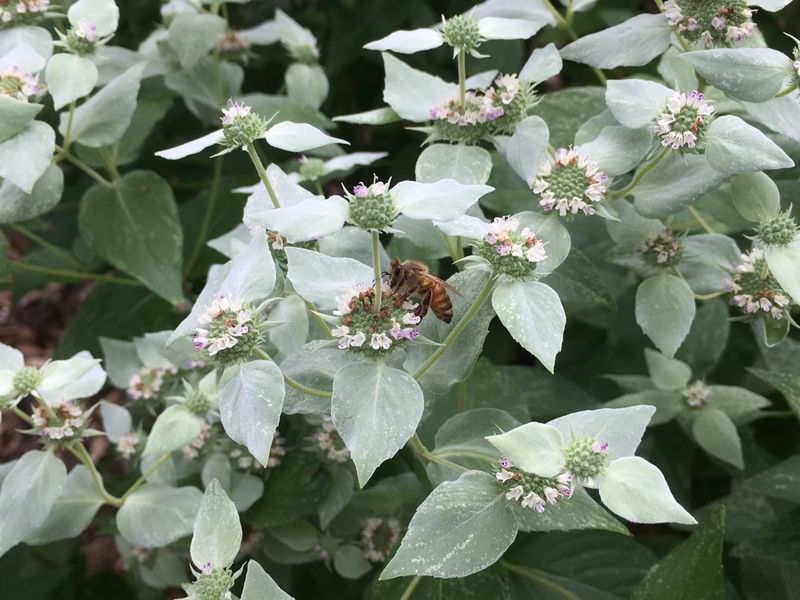
Mountain mint earns a place in a North Carolina yard on its own terms. NC State Extension documents it as a low-maintenance native with strong pollinator value across the Coastal Plain, Piedmont, and Mountains. Put it in a well-sited border, contain its spread with edging or hardscape, and let it do what it genuinely does well: feed native bees, support butterflies, and add fragrance to the garden through summer and into fall.
What the planting will not do is hold fire ants at bay. UF/IFAS is direct that treated areas can be reinfested and that no ordinary planting strategy prevents reinvasion. Multiple-queen colonies, which are common across North Carolina, can move workers freely among mounds, so even a successfully treated site can host new activity within weeks if queens or colonies are present nearby. A garden border made from a fragrant native plant does not change that dynamic.
The practical approach is straightforward. Walk your beds and borders periodically through the warm season, especially after rain when new mound construction is easy to spot. Run the potato-chip activity check on any suspicious mound before committing to treatment. When a confirmed active colony sits close enough to paths, play areas, pets, or food-growing space to pose a genuine risk, use a targeted, label-directed treatment and follow the label’s directions completely.
Mountain mint and a monitoring habit are not competing strategies. They work together well, each doing the job it is actually suited for. The plant brings wildlife value and a low-effort native aesthetic; the monitoring catches real problems before they become stinging emergencies. That combination is more honest, and more useful, than any promise a single plant could make.