
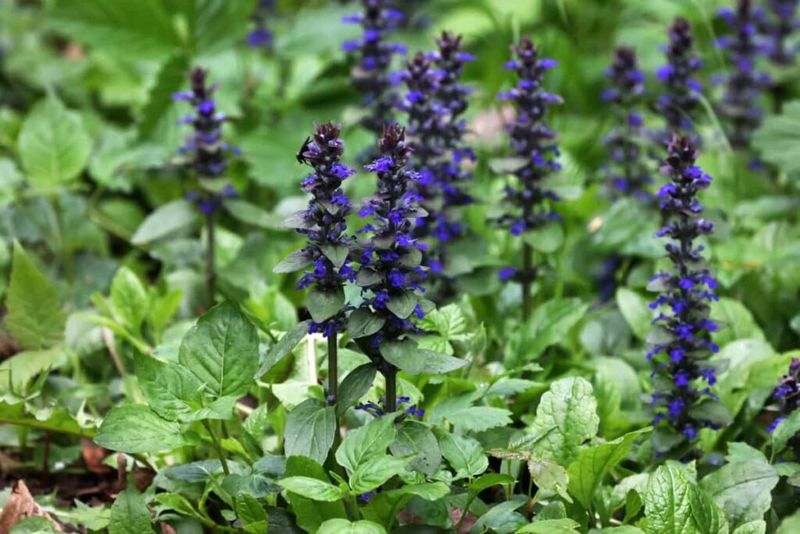
Every spring, a lot of North Carolina homeowners haul home bag after bag of mulch, only to watch weeds punch right through it by July. There is a smarter way that costs you once and works for years: native ground covers that spread across bare soil and choke out weeds all on their own. Better yet, these plants belong here, so they feed the pollinators, birds, and beneficial critters that help keep your yard’s pest problems in check. Here are nine tough native ground covers that can do the job your mulch keeps failing to finish.
1. Green and Gold (Chrysogonum virginianum)
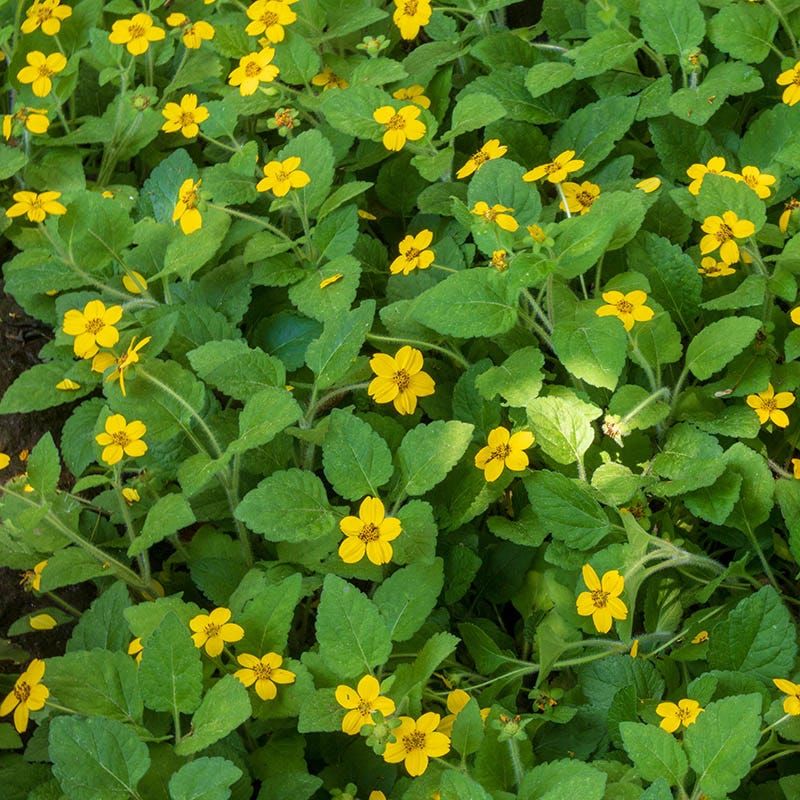
Picture a low mat of soft green leaves lit up with bright yellow, star-shaped flowers from early spring straight into fall. Green and gold is one of those plants that looks delicate but behaves like a workhorse, quietly knitting itself together across shady spots where mulch usually washes away.
Native right across the NC Piedmont and mountains, it thrives in the dappled light under trees where lawns give up. As it spreads by short runners, it forms a dense carpet that leaves weed seeds very little bare ground to grab onto. That thick coverage is what does the smothering for you, no rebuying required.
The long bloom season is the real gift here. Those cheerful flowers pull in native bees and small pollinators for months, which supports the wider web of beneficial insects that help keep a yard balanced. Plant it once in decent soil, water it through its first summer, and you have a self-renewing carpet that gets fuller every year instead of thinner.
2. Creeping Phlox (Phlox stolonifera)
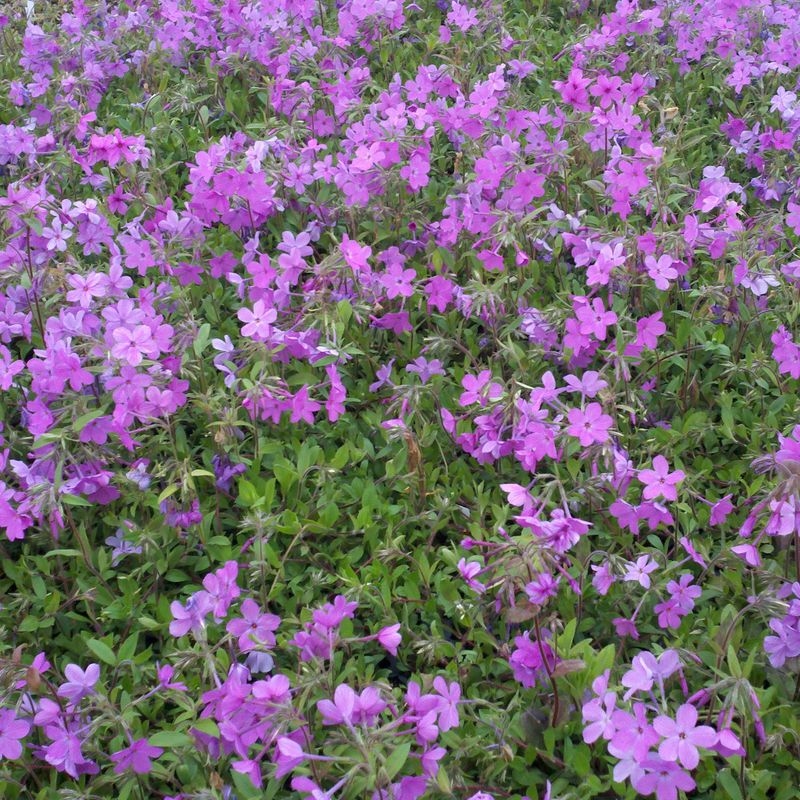
Come April, a patch of creeping phlox can look like someone spilled a bucket of pink, blue, and lavender paint across the ground. The color show is what gets people to plant it, but the way it blankets slopes and edges is what makes it earn its keep.
Found naturally in the moist woodlands of the NC mountains and Piedmont, this low creeper roots along its stems as it travels. That habit builds a tight living mat that shades the soil and keeps opportunistic weeds from ever getting started.
Once the flowers fade, the semi-evergreen foliage stays put and keeps working through the seasons. Early-spring blooms give hungry native pollinators an important first meal when few other flowers are open, which is a small but real win for the beneficial insects around your home. On a shady bank where you have fought erosion and weeds for years, this is the plant that finally settles the argument.
3. Allegheny Spurge (Pachysandra procumbens)
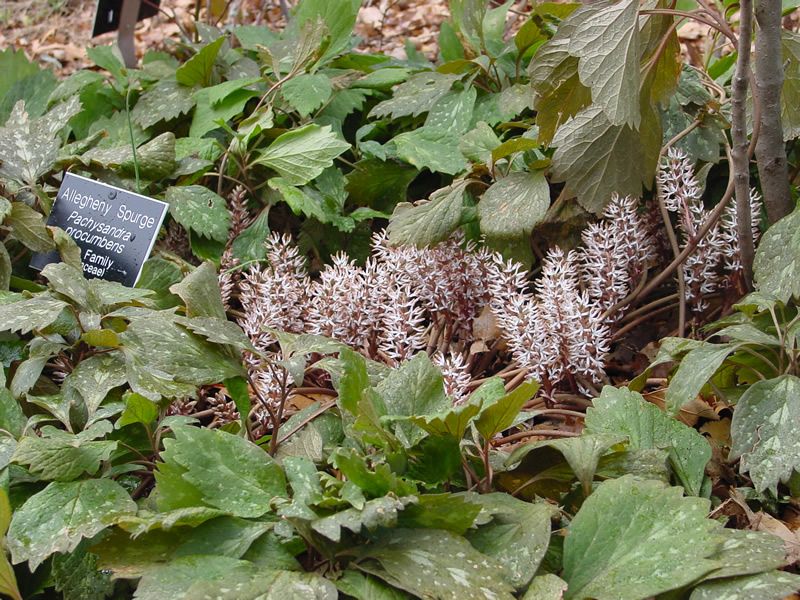
Most folks who ask for pachysandra get handed the invasive Japanese kind by mistake. Our native cousin, Allegheny spurge, is the one you actually want, and it is far better behaved in a NC landscape.
It grows in slow, handsome clumps of mottled bluish-green leaves that hold on through much of the year, especially in the milder parts of the state. In the deep, dry shade under big hardwoods where almost nothing else will cover the ground, this plant settles in and does exactly that.
The dense, layered foliage is what shuts weeds out. Little bottlebrush flowers appear low to the ground in early spring with a faint, sweet scent that early pollinators find long before showier plants wake up. Choosing this native over the imported version is a genuine swap that supports the local ecosystem instead of quietly crowding it out. For that problem corner where mulch just bakes and blows around, Allegheny spurge is the fix that stays.
4. Wild Ginger (Asarum canadense)
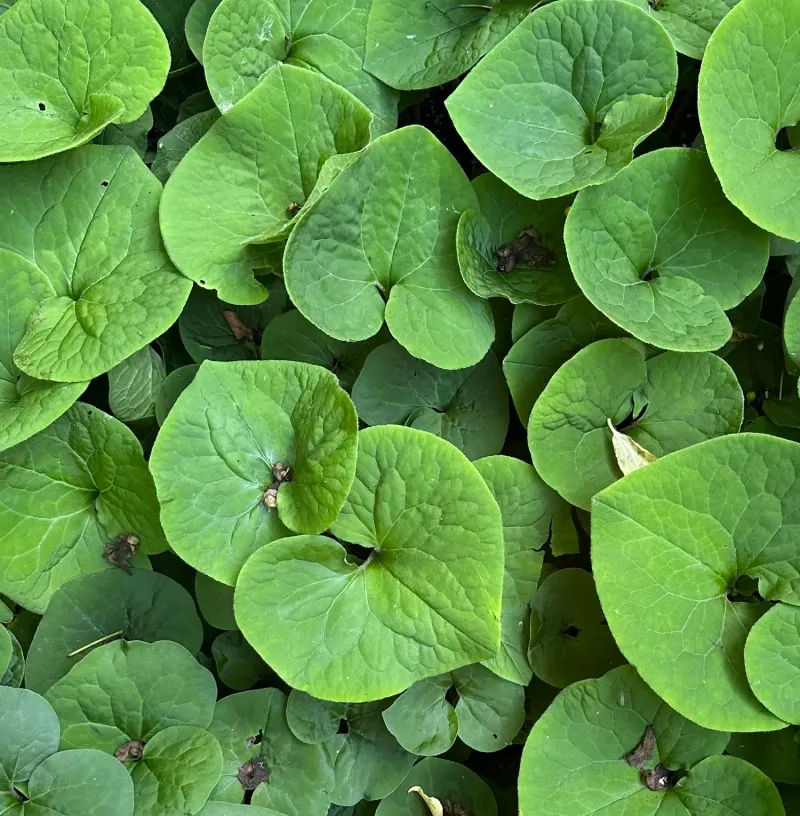
Brush against wild ginger on a warm day and you might catch the spicy scent that gave it its name, though it is no relation to the kitchen spice. What you will really notice is the lush blanket of heart-shaped leaves rolling out across the forest floor.
This eastern native loves the rich, moist, shaded soil found throughout much of North Carolina’s mountains and Piedmont. As the plants spread by underground stems, the big overlapping leaves lay down like green roof tiles, and weeds simply cannot muscle through that kind of overlap.
There is a quirky bit of magic hiding underneath, too. Wild ginger tucks its odd little maroon flowers down at soil level, where ground beetles and other crawling insects pollinate them. Feeding those overlooked ground-dwellers matters, since a yard rich in insect life supports the birds and creatures that help hold pest numbers down. For the deepest, dampest shade where your mulch just turns to mush, this is the lush answer.
5. Golden Ragwort (Packera aurea)
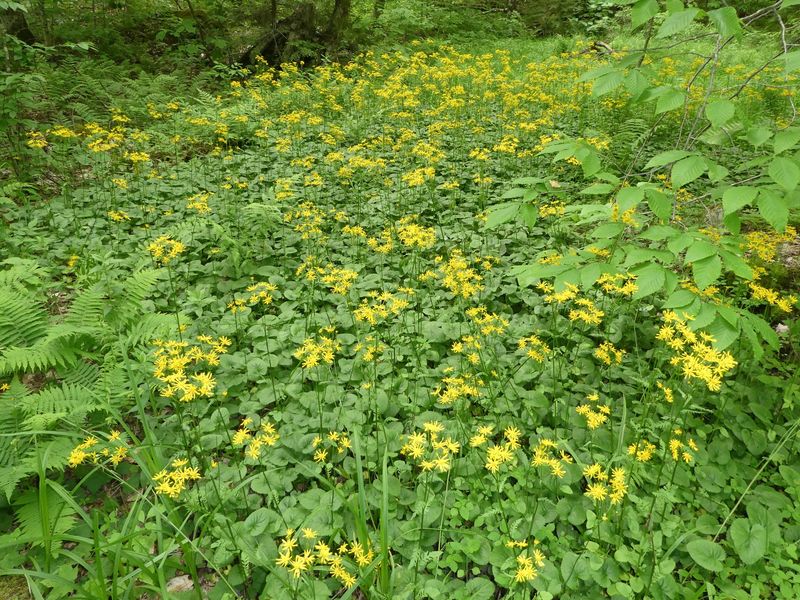
If you have a wet, low spot that swallows mulch and grows weeds like crazy, golden ragwort wants that exact job. This is the plant that thrives where others sulk.
Native across North Carolina, it forms a low rosette of rounded, semi-evergreen leaves that stay green and dense through most of the year. In spring it launches up cheerful clusters of small yellow daisy-like blooms that hover above the foliage on tall stems.
Here is why it beats mulch in a soggy area: the leafy rosettes fill in fast and thick, then the plant self-sows to patch any gaps, so you get complete coverage that keeps improving. Those spring flowers are an early nectar source for native bees and hoverflies, and hoverfly larvae happen to be hungry predators of garden aphids. Getting a wet, weedy trouble zone under control while feeding beneficial insects is a rare two-for-one, and golden ragwort pulls it off without complaint.
6. Woodland Stonecrop (Sedum ternatum)
Not every shady spot is soft and rich. Some are rocky, thin, and stubborn, and that is where woodland stonecrop earns a place on this list all by itself.
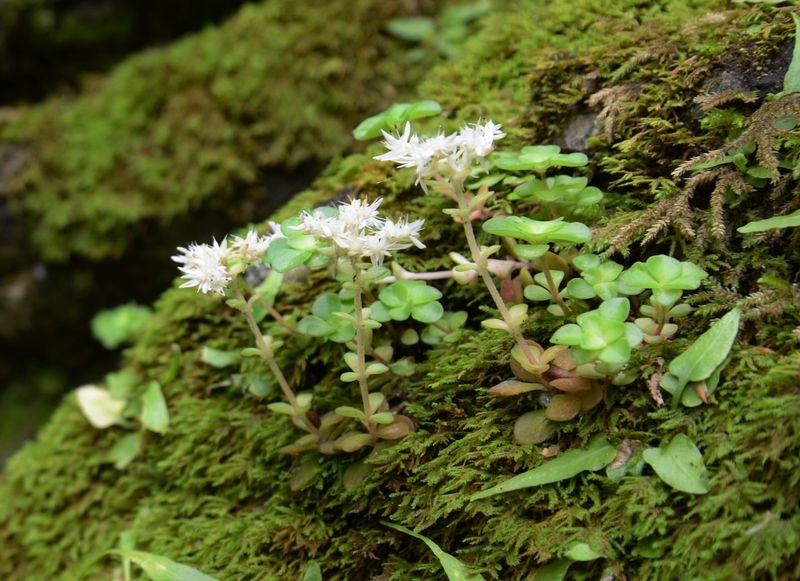
Unlike most of our other picks, this native succulent shrugs off dry, gravelly, and shallow soil, spilling its plump little green leaves over rocks, retaining walls, and the awkward edges of paths. It is one of the few natives happy in a shady spot that still drains fast and dries out.
Come late spring, it throws up airy sprays of tiny white star flowers that small native bees work eagerly. Because the succulent leaves hold their own moisture, the mat stays put and dense through dry spells that would leave bare mulch cracking and weedy. Where you have always struggled to keep anything alive between stones, this tough little spreader fills the cracks, blocks the weeds, and asks for almost nothing in return.
7. Green Sedge and Native Carex (Carex species)
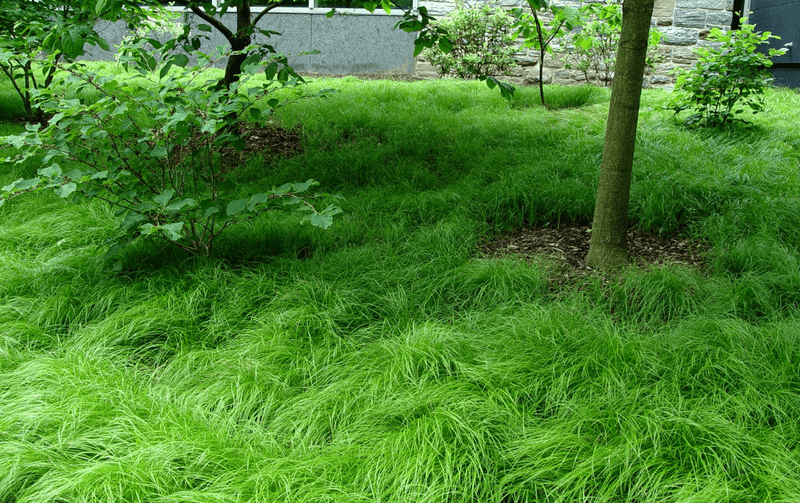
Ask a NC native-plant fan for a lawn alternative and Carex almost always comes up first. These grasslike sedges are the closest thing to a walkable, no-mow green carpet that actually belongs here.
North Carolina is home to dozens of native sedges, with species like Carex pensylvanica for dry shade and Carex flaccosperma for moister ground, so there is one suited to nearly any yard. Their fine, arching blades knit together into a soft turf-like layer that crowds weeds out at ground level.
What sets sedges apart is how they replace lawn without the endless mowing, watering, and chemicals a traditional lawn demands. They also serve as host plants for several native butterfly and skipper caterpillars, quietly feeding the next generation of pollinators. Swapping a thirsty patch of fescue for a native sedge lawn is exactly the kind of low-effort, high-payoff move that pays you back season after season, and you will not be dragging mulch bags to that spot ever again.
8. Barren Strawberry (Geum fragarioides)
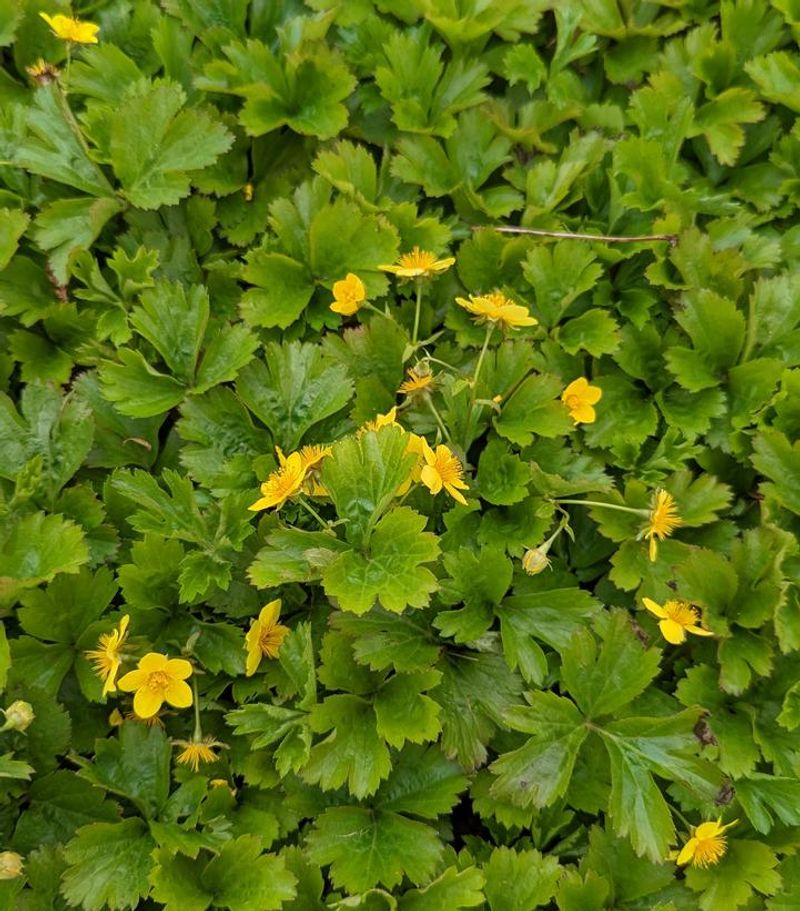
The name promises strawberries and then does not deliver fruit, which sounds like a letdown until you see what this plant does for the ground. Barren strawberry is all about coverage, not snacks.
A native of the eastern woodlands including parts of North Carolina, it grows glossy, strawberry-like leaves that stay green and low nearly year-round in our climate. Bright yellow five-petaled flowers pop up in spring, giving early bees something to visit before switching back to its main job of blanketing the soil.
Spreading steadily by runners, it builds an even, ankle-high mat that stays tidy without looking wild or weedy. That neatness is its edge over the others here, since it holds a clean, evergreen look in visible front-yard beds where you want polish. Instead of topping those beds with fresh mulch every single spring, you let barren strawberry fill in once and keep the weeds locked out while looking sharp doing it.
9. Partridgeberry (Mitchella repens)
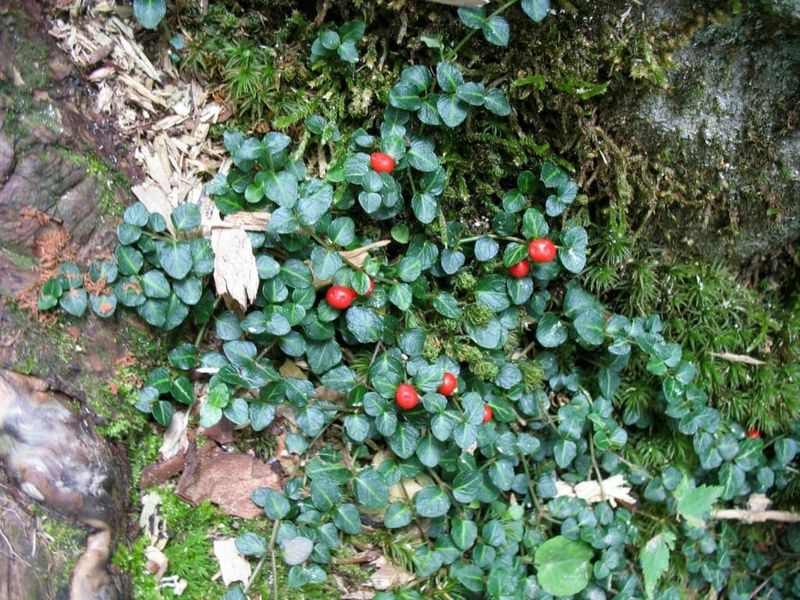
For the smallest, most delicate-looking plant to close out this list, partridgeberry sure knows how to hold its ground. This tiny trailing evergreen creeps flat along the forest floor, rooting as it goes and stitching a fine, glossy green tapestry over the soil.
Widespread in shaded NC woodlands, it stays low and quiet, weaving between larger plants and filling the fine gaps that bigger ground covers leave open. Twin white flowers in summer fuse into a single bright red berry that lingers all winter, adding a spark of color when the woods go gray.
Those berries are the standout story. Birds such as wild turkeys and grouse, along with other native wildlife, feed on them through the cold months when food runs scarce. Choosing partridgeberry means you are not just blocking weeds in the shadiest nooks, you are laying out a winter buffet for native creatures. It is the perfect finishing layer, the fine-print detail that turns a good native ground cover plan into a truly living carpet.