
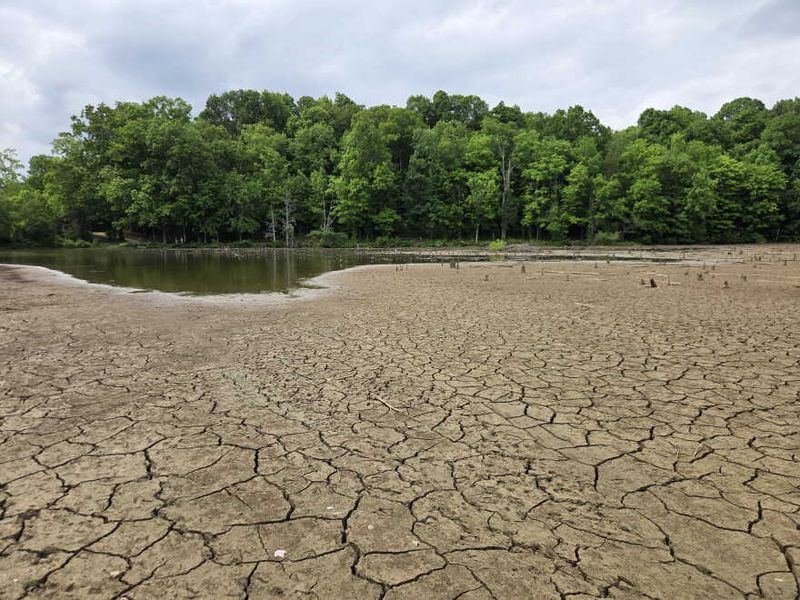
The sky finally opens up, the gutters overflow, and the yard looks soaked. It feels like the dry spell is over.
But a wet surface and wet roots are not always the same thing, and trees and shrubs head into winter with whatever water is in the soil. A few simple checks can tell you whether your plants got the drink they needed.
What can one fall rain actually restore?

A heavy rain can do real good. The U.S.
Geological Survey explains that a single soaking rain can provide lasting relief, yet several months of repeated soaking rains may be needed before broader drought conditions return to normal. Both things are true at once, and that is why one storm rarely settles the question.
It helps to separate two ideas that share the word drought. One is the water supply in the soil around your plant’s roots.
The other is a regional drought assessment, which looks at wider and longer-term conditions. The U.S.
Drought Monitor blends several kinds of data and shows conditions across different time scales, so a map color tells you about the region, not about the dirt beside your azalea.
That means a drought label can run behind a good rain, and a dramatic storm can look more helpful than it was. In the mountains, Piedmont, and coastal plain, soils and storm totals can differ a lot, even between neighboring yards.
A rain that fully wet one lot may have run off another.
You also should not assume the opposite. Plenty of yards soak up a downpour just fine, and not every tree or shrub needs extra water afterward.
The smart move is to treat your own yard as the evidence. Measure what fell, look at the soil near the plants you care about most, and decide from there.
The next sections show how.
Rainfall and root-zone moisture are not the same
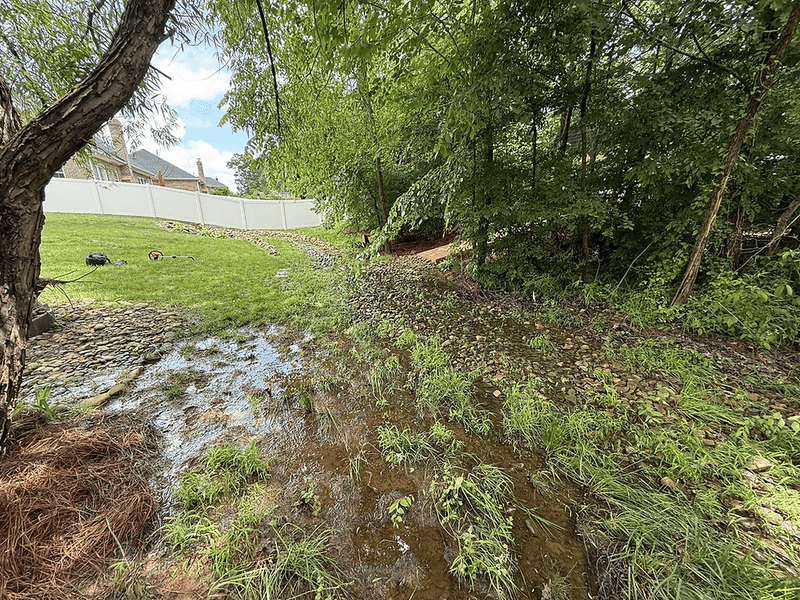
Two yards can get the same two inches of rain and end up with very different moisture where roots live. Soil type and condition, slope, plant cover, and how fast the rain falls all shape how much water soaks in and how much runs away.
A slow, steady rain gives soil time to absorb. A fast downpour on a hillside can mostly leave the property.
Surface looks can fool you, too. Puddles, damp mulch, and dark topsoil suggest a thorough soaking, but the water may reach only the top inch or so.
Roots of many trees and shrubs spend their time deeper than that.
A local account from N.C. Cooperative Extension in Beaufort County describes hard or crusted soil as one possible barrier that can keep rain from sinking in.
Treat that as a local observation written by a Master Gardener volunteer, not a rule for every North Carolina yard. Sandy coastal soils, loose Piedmont beds, and mulched borders may behave quite differently.
So a rain gauge answers only half the question. It tells you what fell, not what arrived at the roots.
Pairing the gauge reading with a quick look at the soil gives a far better picture than either one alone, and that is where the next step comes in.
Check soil before responding to lingering symptoms
Plants often lag behind the weather. Long dry stretches can damage fine roots and leaves, and later rain does not repair that damage right away.
The Beaufort County Extension account makes this point about stress that lingers after rain, so a droopy or scorched look a week after a storm does not always mean the yard is still dry.
It can mean the opposite. University of Maryland Extension notes that saturated soil can starve roots of oxygen and produce stress that looks much like drought.
Wilting alone is not proof of thirst, and extra water on soggy ground can make things worse.
Here is a simple post-rain routine. First, empty your rain gauge and write down the total.
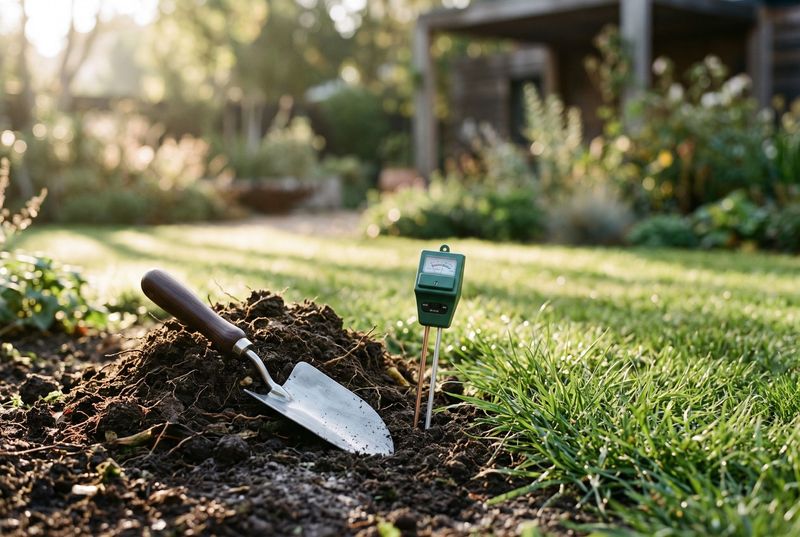
Next, pick a priority plant and probe the soil nearby. University of Maryland Extension suggests checking down to about 6 inches with a trowel, screwdriver, or soil probe.
If the soil there is dry, water thoroughly. If it is moist, hold off.
NC State also advises checking the soil first, since drought-like symptoms can have other causes. If a plant still looks poorly in moist soil, consider drainage, root injury, pests, or disease, and consider asking your county Extension office for help.
Give new and vulnerable plants closer attention
Walk the yard with a short list in mind. Trees and shrubs planted within roughly the past two years come first, because their root systems have not spread far enough to tap deeper moisture.
A sapling set in spring may still be working with a small root ball, and that small ball can dry out while the surrounding ground looks fine.
Evergreens deserve a look next. NC State Extension’s drought guidance points to evergreens and drought-sensitive plants as ones that may need particular attention during a long dry spell.
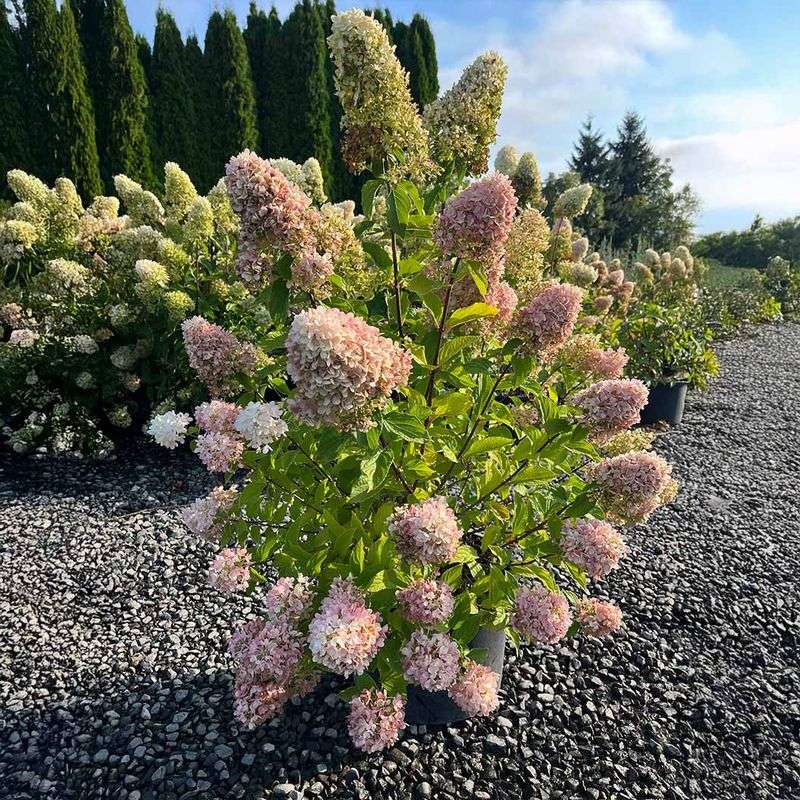
Hydrangeas, azaleas, Japanese maples, and dogwoods are the examples it names, and all are common in North Carolina landscapes.
Established, healthy trees sit lower on the list. The same guidance treats them as a lower priority than new plantings, which is not the same as never.
A mature oak with a deep, wide root system is not an automatic candidate for the hose after every storm. If it shows trouble and the soil under its canopy is dry, that changes the picture.
A practical approach is to make a quick map in your head or on paper: newest plants, evergreens, then sensitive favorites. After a rain, run your soil check on those first.
If they are fine, the rest of the yard probably has time.
Water slowly across the root zone
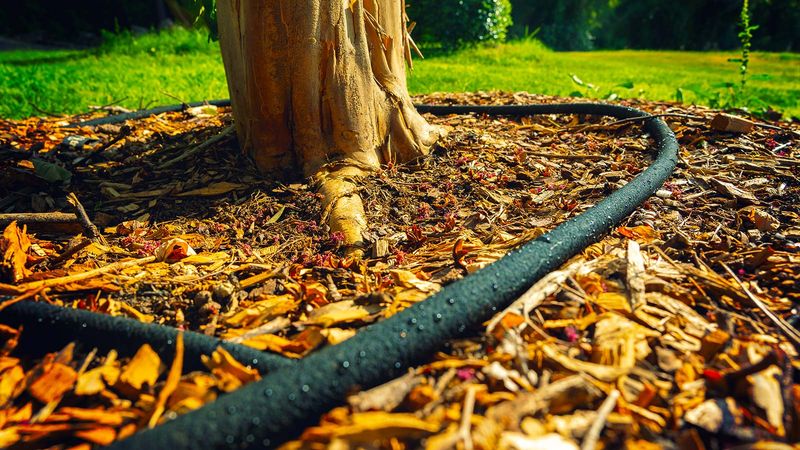
Once your probe comes up dry, how you water matters as much as whether you do. Aim for the ground, not the leaves, and spread the water across the root zone instead of parking it at the trunk.
Roots that take up water usually extend well past the base of the plant, so a wide, gentle soak reaches more of them.
NC State Extension recommends slow, deep, infrequent watering. A soaker hose, a drip line, or a hose turned down to a trickle all fit that idea.
Slow delivery gives soil time to absorb the water, which matters on slopes or in ground that sheds water quickly.
There is no single amount or calendar that works everywhere. Plant size, species, soil, drainage, and recent rain all change the answer.
Let the soil guide you: after watering, probe again later to see whether moisture has reached the depth you checked, and wait until the soil dries before repeating.
Mulch helps hold that moisture. NC State suggests keeping it about 2 inches deep and leaving a 6-inch gap between the mulch and the trunk.
Piling it against the bark invites trouble, while a tidy ring with breathing room protects the soil and the plant.
Keep checking during dry fall weather

Cooler weather does not mean plants stop needing water. The NC State Extension Gardener Handbook notes that roots can keep growing in cool weather, and evergreens keep losing water through their foliage all winter.
A dry November can quietly leave a holly or boxwood short on moisture.
So keep the habit going through fall. During a stretch without meaningful rain, check the soil around your priority plants every so often.
Timing varies across the state, with the mountains usually freezing earlier than the Piedmont and coastal plain, so watch your local forecast rather than a fixed date.
Water only while the soil is workable. NC State’s guidance covers fall and winter watering during dry periods, and frozen ground blocks roots from taking up water until it thaws.
Pouring water onto frozen soil does the plant little good.
The decision rule stays simple: measure the rain, check the soil around the plants that matter most, and water only when that soil is dry. A downpour is welcome news, but the soil has the final word.