
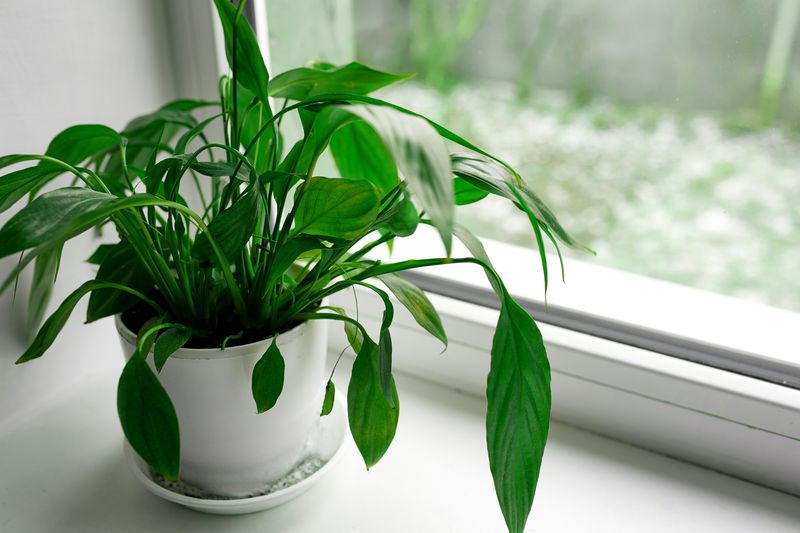
A peace lily that looked fine on the porch can flop within days of coming inside. The sight is alarming, but a droop is a clue, not a verdict.
Thirst, soggy roots, a chill, or a sudden change in light can all leave leaves hanging. A few quick checks can tell you which one you are dealing with before you reach for the watering can.
Drooping alone does not identify the cause
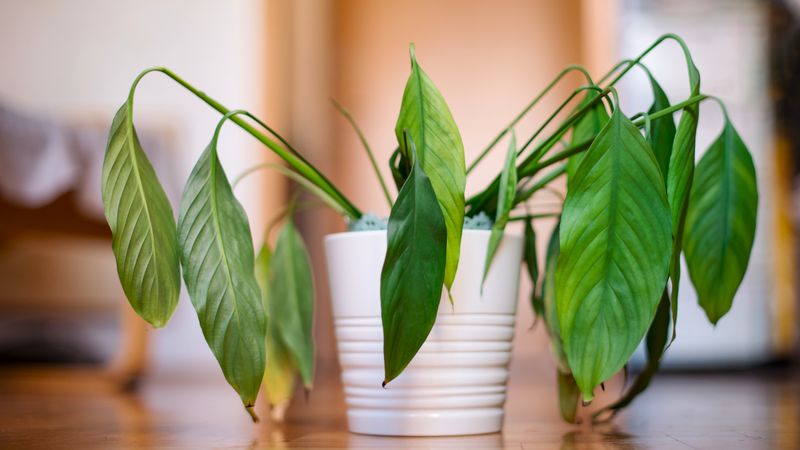
Peace lilies are famous for dramatic wilting, and a move from the porch to the living room is a common trigger. It is tempting to blame a cold, wet pot, especially if the leaves sag in the afternoon.
Neither the afternoon timing nor the droop itself proves that, though.
A thirsty plant can droop, and so can one with roots that are struggling. University of Maryland Extension notes that overwatering and underwatering can look alike on the leaves.
Wet soil does not rule out water stress either, because damaged roots may be unable to supply the leaves even when the mix is soaked, a point that comes up in an Illinois Extension answer about peace lilies.
So treat the droop as a symptom to investigate. Peace lilies generally like warm conditions and moist, well-drained mix, according to NC State Extension.
Start by checking the soil, the drainage, and where the plant is sitting, then pick a remedy.
Check below the surface before watering
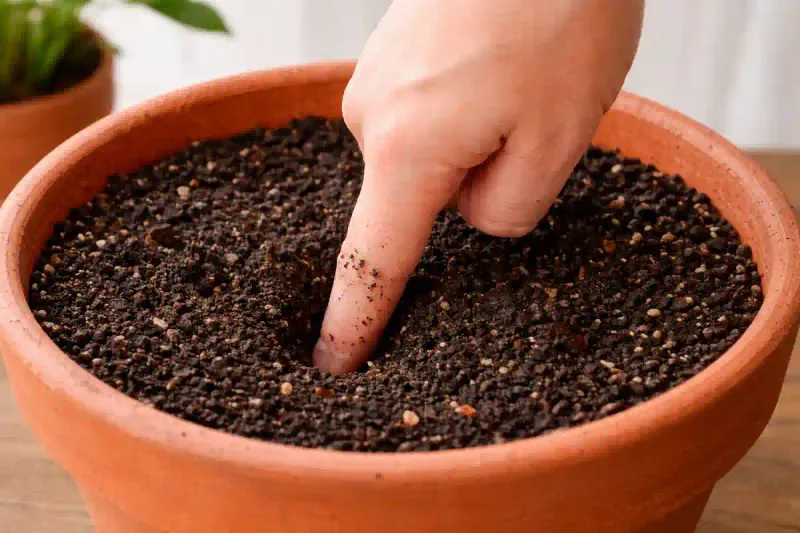
Surface soil can fool you. The top may look dry while the lower mix stays wet, or the top may look damp while the root zone is parched.
Push a finger about two inches into the mix, which is the depth Illinois Extension recommends for checking.
Other clues help. A pot that feels heavy usually holds a lot of water.
A wooden dowel pushed to the bottom and pulled out damp, with soil clinging to it, suggests the lower mix is still wet, as described in Maryland Extension guidance on overwatered plants.
Now make the call. If the mix is dry, water thoroughly and let the excess drain out.
If it is damp, hold off and check again later instead of adding water because the leaves look sad.
Wet mix can impair roots and leave leaves wilted
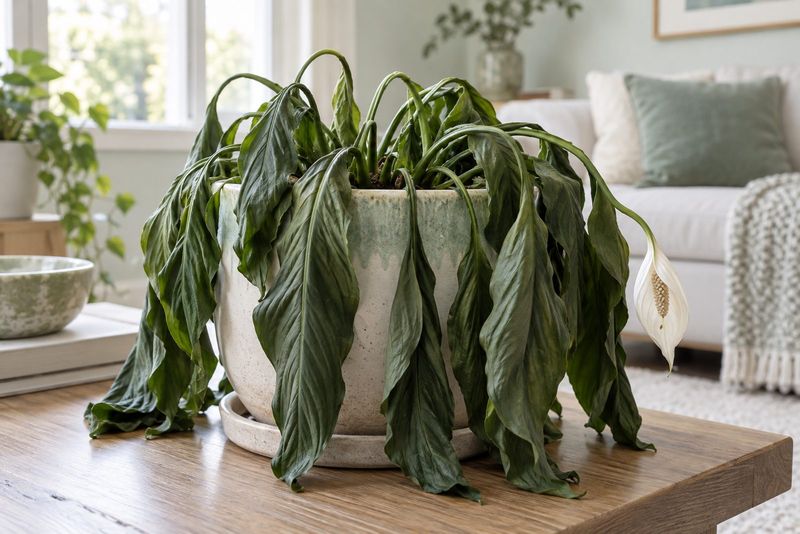
Roots need air as well as water. When mix stays saturated for a long stretch, oxygen around the roots can run short and the roots may begin to decline, as Clemson Extension explains.
Weakened roots then move less water upward, so leaves can wilt even though the soil is wet.
That is different from plain thirst, where the mix is dry and the plant perks up after a good drink. Still, a droop in wet mix does not confirm root rot.
It only tells you roots are worth a closer look if the wilting keeps coming back.
If you do check the roots, the warning sign is dark, soft tissue, which Maryland Extension links to rot. Healthy roots are usually firmer and lighter.
Save that inspection for plants that keep wilting while the mix stays wet.
Cold exposure and a sudden change indoors may add stress
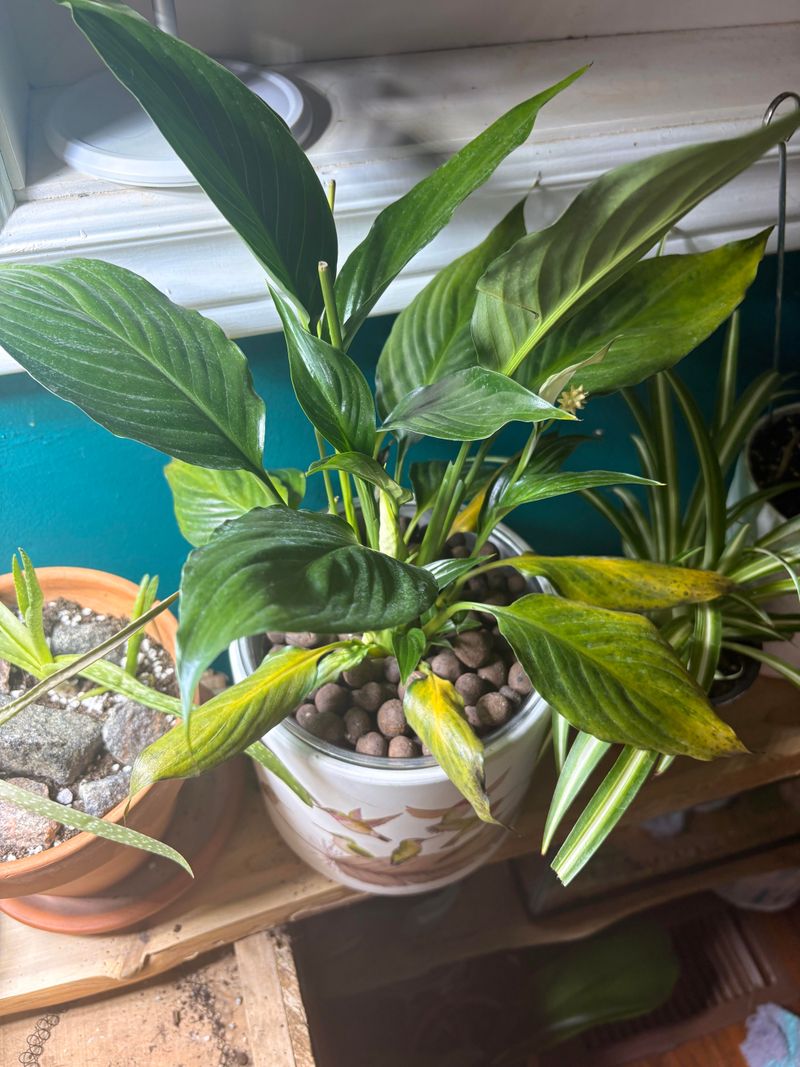
Peace lilies are tropical plants and favor warmth. NC State Extension gives a daytime preference of 68 to 85°F and warns that extended exposure below 40°F can damage leaves, stems, and roots.
UF/IFAS lists 75 to 85°F and reports reduced growth at or below 50°F.
Those numbers are source-specific, not a single injury line. Cultivar and how long the plant is exposed both matter.
A pot that merely feels cool does not prove cold damage, so tie any cold concern to real exposure, such as a night left outside or a spot by a cold draft.
Moving indoors also changes light and temperature all at once, and Maryland Extension notes plants can be stressed by abrupt changes. Afternoon drooping is not evidence of any of this, so look at the setting instead of the clock.
Match immediate care to what the soil check shows
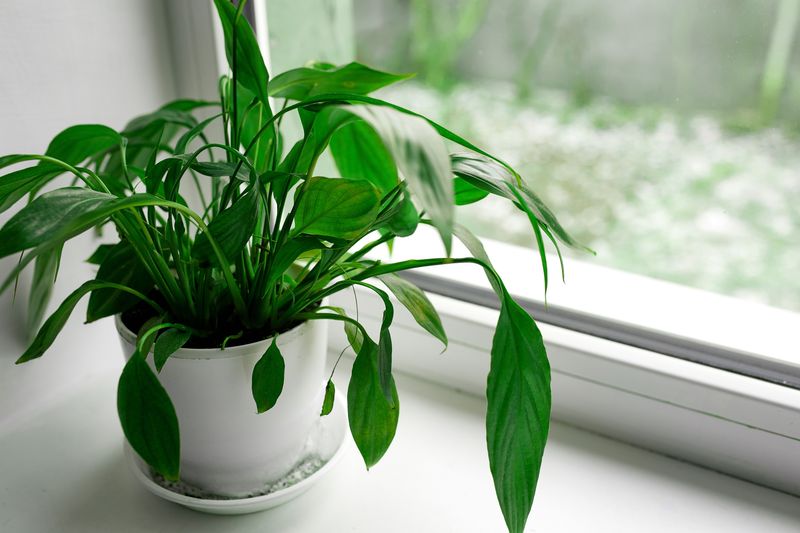
Let the soil check guide you. If the mix is wet, pause watering and empty any standing water from the saucer or cachepot.
Then move the plant to a warm spot with bright indirect light, away from drafts and heating or cooling vents, as UF/IFAS Gardening Solutions and Maryland Extension suggest for indoor plants.
If the mix is dry two inches down, water slowly until it runs from the drainage holes, then let it drain fully. The Illinois Extension watering guide describes this thorough approach.
Skip the extremes. Do not let the mix dry out completely, and do not set a fixed weekly routine, since Clemson Extension says frequency depends on conditions.
None of these steps guarantees recovery, but they give the plant a fair chance to settle.
Inspect roots if wilting persists while the mix stays wet
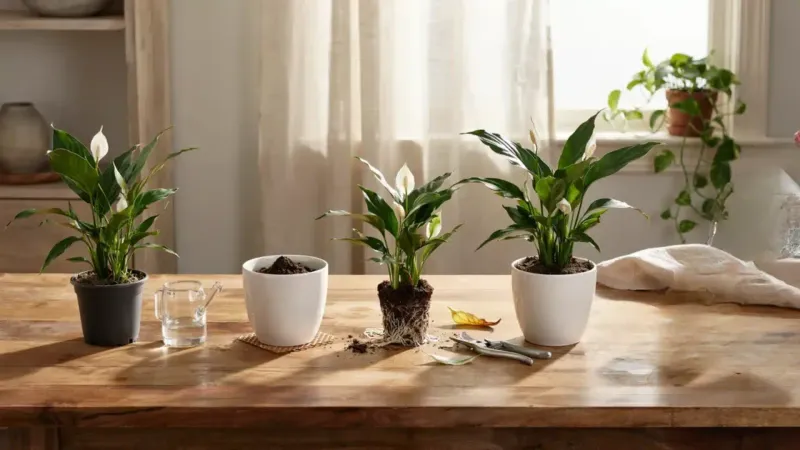
Some plants keep wilting for days while the mix stays wet, even after you have stopped watering and fixed the location. That is the point to look at the roots.
If the plant is perking up, leave it alone, because unnecessary root disturbance adds stress.
Slide the plant out of its pot and loosen the mix a little. Dark, soft roots are a warning sign of rot, according to Maryland Extension.
Firm, lighter roots are more likely to be healthy.
Trim away the rotten portions with clean scissors, then repot the surviving healthy roots in fresh, well-drained potting mix in a pot with drainage holes. Maryland Extension’s overwatering guidance describes this approach.
Water lightly afterward, keep the plant warm and out of direct sun, and expect that recovery is not guaranteed.
Use soil moisture, not a calendar, to guide future watering
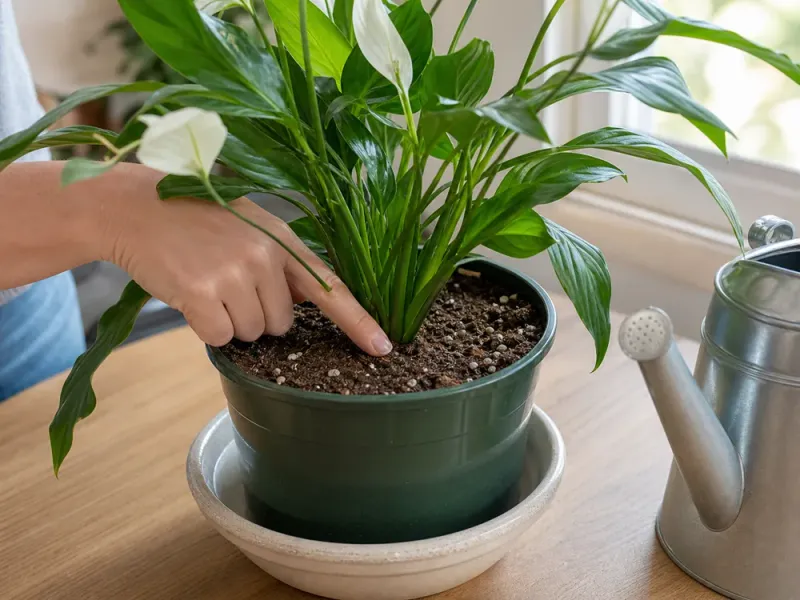
A simple routine beats a schedule. Aim for mix that is moist but not soggy, as NC State Extension describes.
Use a pot with drainage holes, empty the saucer after watering, and check the soil before every drink.
Indoor conditions change how fast the mix dries. A bright, warm room dries a pot faster than a dim, cool one, and the pot and mix matter too.
Clemson Extension advises following soil moisture instead of the calendar, and the two-inch check from Illinois Extension makes that easy.
Do not wait for a certain time of day or for the leaves to sag. Check, then water only when the mix says so.
A peace lily tells you something every time it droops, and the soil usually has the answer.