
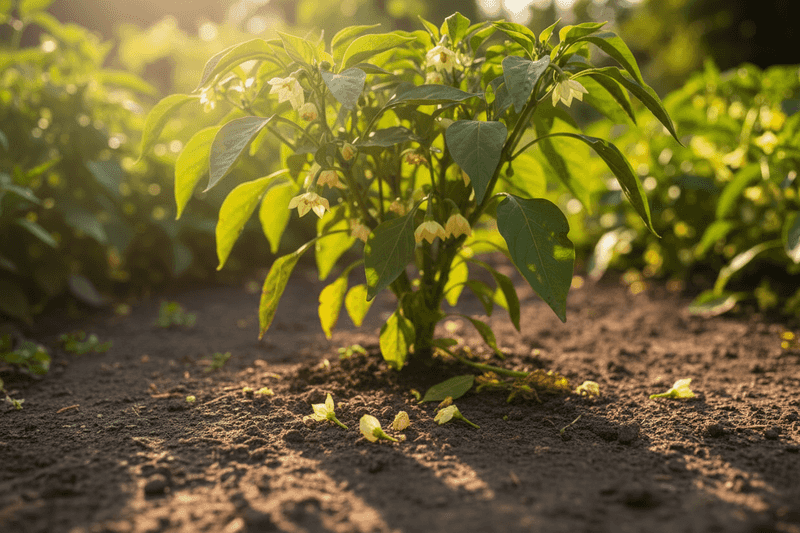
Pepper plants can be maddening in late summer: they bloom freely, but the flowers shrivel up and fall off before a single pepper forms. Many gardeners blame the bees or wonder if something is wrong with the plant itself, but the real culprit is often sitting right there in the overnight forecast.
Persistent warm nights combined with scorching days can interfere with the way peppers set fruit, and that pattern is especially common during prolonged heat stretches across the South. Understanding what is actually happening gives you a better shot at keeping your plants productive through the hottest part of the season.
Start with several nights of temperature checks
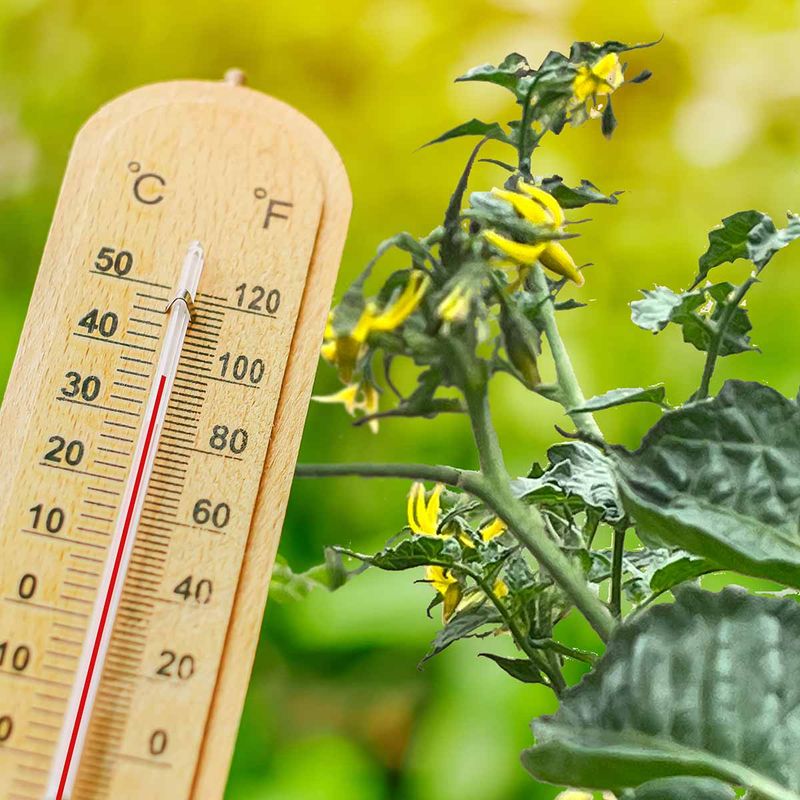
Watch your pepper plants long enough during a heat wave and you will notice the same cycle: buds form, flowers open, then the whole blossom shrivels and drops before anything resembling a pepper appears. Tiny fruit may start to develop and then abort just as quickly.
Before blaming soil, pests, or watering habits, pull out a min-max thermometer and track your overnight lows for several days in a row alongside the daytime highs.
When nights are regularly holding near or above roughly 75 degrees Fahrenheit while days push above about 90 degrees, heat-related poor fruit set becomes a strong possibility. Oklahoma State University Extension pepper production guidance and Texas A&M AgriLife Extension both identify that combination as a point where fruit set tends to decline.
The University of Maryland places the nighttime upper limit in a similar range, noting that pepper flower and small-fruit drop can occur when nights exceed about 75 degrees or days top 95 degrees.
Those numbers are practical diagnostic ranges, not hard biological cutoffs. Your specific cultivar, container versus in-ground setup, local wind exposure, and how long the heat has persisted all affect the outcome.
One unusually warm night is not enough to make the diagnosis. Look for a pattern of several consecutive nights where the temperature refuses to drop, because persistent heat matters far more than a single warm reading.
Heat can disrupt fruit set before a pepper forms
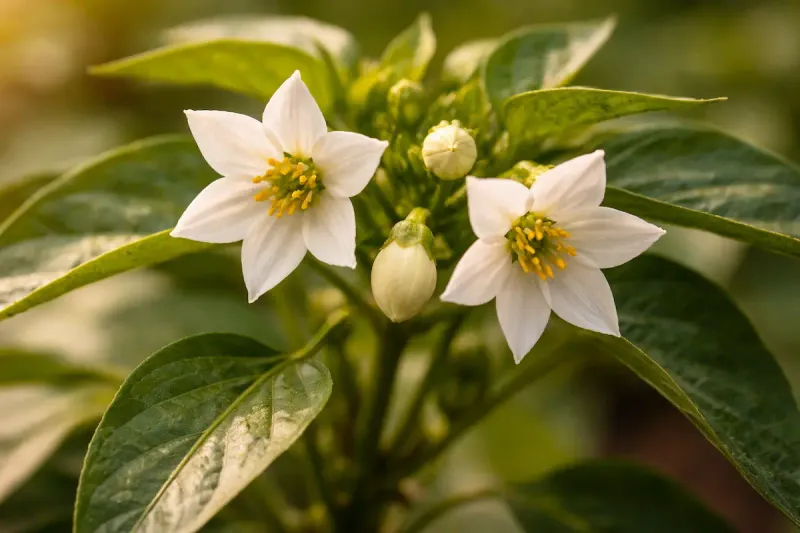
Peppers are generally self-pollinating, meaning each flower carries both male and female parts and can fertilize itself without a bee visiting. That fact trips up a lot of gardeners who assume missing pollinators are behind the empty stems.
Bees may help by vibrating the flower and releasing pollen, but their absence is not the default explanation when blossoms are falling in a heat wave.
Sustained high temperatures can damage the pollen itself or reduce how well it is released from the anther, and they can interfere with fertilization or the early stages of fruit development even when pollination technically occurs. Research by Erickson and Markhart in Plant, Cell and Environment found that exposing bell pepper flowers to temperatures around 33 degrees Celsius (roughly 91 degrees Fahrenheit) during sensitive developmental stages reduced pollen viability and fruit set.
Earlier bud stages were especially vulnerable, and heat applied after pollination also interfered with fertilization and early fruit growth.
Duration matters as much as peak temperature. Flowers exposed to that level of heat for 48 to 120 hours showed measurable reductions in fruit set, which means a multi-day heat event is more damaging than a single afternoon spike.
Separate research on Capsicum annuum identified pollen dispersal as a key factor in autonomous fruit set under high temperatures, reinforcing that the problem begins inside the flower before any fruit can form. Different flowers on the same plant may be at different developmental stages, so some blossoms may abort while others on the same stem manage to hold.
Check the plant for stress beyond temperature
High nighttime temperatures are a strong lead, but they are rarely the only possible explanation for blossom drop. Before settling on heat as the cause, take a few minutes to run through the other common stressors that produce the same symptom.
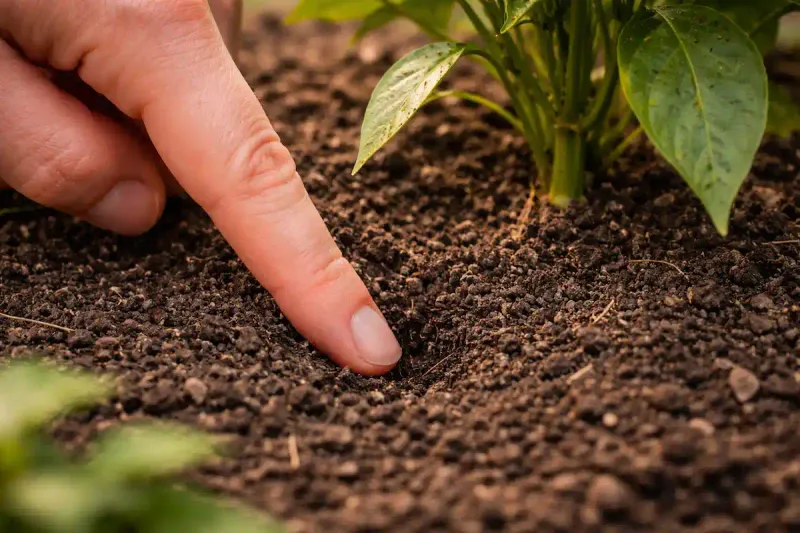
Dry soil is one of the most immediate triggers: when the root zone dries out severely, pepper plants will abort buds, flowers, and small fruit as a survival response. Check soil moisture a few inches below the surface rather than judging by the surface alone.
Waterlogged or poorly drained soil creates the opposite problem. Roots sitting in saturated ground can develop disease, which reduces the plant’s ability to take up water and nutrients even when both are present.
New Mexico State University’s guide to chile pepper disorders caused by environmental stress lists high relative humidity alongside dry conditions and hot dry wind as contributing factors, which is a useful reminder that atmospheric extremes in either direction can add stress. University of Maryland Extension also flags nutrient imbalance and salt injury as possible contributors to poor fruit set.
Look over the foliage for signs of insect feeding, disease lesions, or unusual discoloration. Pests that damage leaves reduce the plant’s photosynthetic capacity and can stress it enough to trigger flower drop.
Oregon State University Extension’s pepper growing guide notes that a range of environmental conditions can cause blossom drop, and heat may be compounding another stress that was already present rather than acting entirely on its own.
Keep moisture even through flowering and fruit set
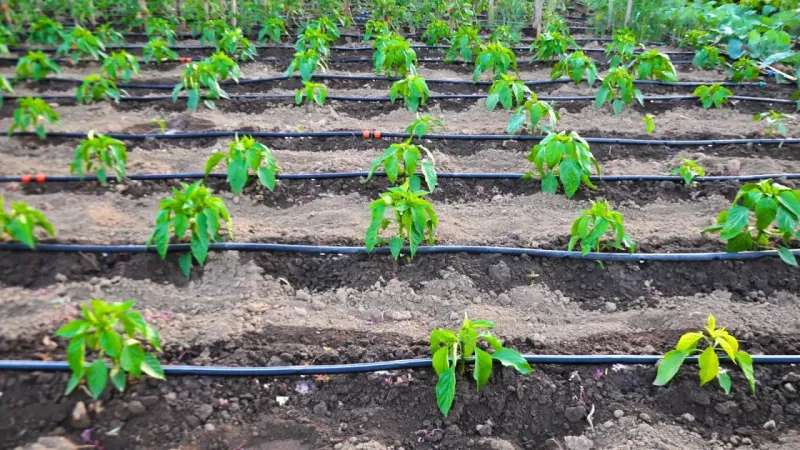
Consistent root-zone moisture is one of the most practical things you can do for a pepper plant that is struggling to hold its blossoms during a heat stretch. The goal is to avoid the cycle of letting the soil go bone dry and then flooding it to compensate.
Repeated severe dry-downs followed by heavy watering create stress spikes that can trigger flower and small-fruit abortion at each low point.
Oklahoma State University Extension specifically recommends maintaining uniform soil moisture during pepper production, and UC Agriculture and Natural Resources advises watering well during flowering and fruit set while noting that peppers have relatively shallow roots. A two-to-three inch layer of organic mulch over the root zone helps by slowing evaporation, keeping soil temperature more stable, and reducing the frequency of moisture swings.
Container-grown peppers dry out far faster than in-ground plants and may need water daily during extreme heat. Oregon State Extension points out that drainage also matters: a pot or bed that holds water after rain or irrigation can create root problems just as damaging as drought.
Check your drainage before assuming you need to water more. None of this guarantees every blossom will hold, but eliminating moisture stress removes one compounding factor and gives the plant a better chance of holding fruit once temperatures begin to ease.
Add temporary afternoon shade and protect the foliage
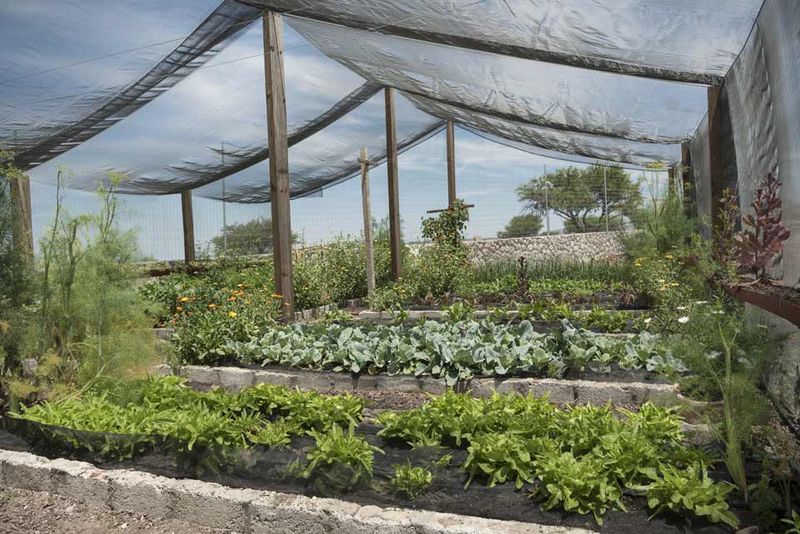
Afternoon shade is worth trying when daytime temperatures are running well above 90 degrees for extended periods. A simple shade cloth rigged up on stakes or a temporary frame can reduce the intensity of direct sun hitting your plants during the hottest hours without blocking the morning light that peppers need for healthy growth.
Even a patio umbrella or a piece of lightweight row cover positioned to block the western sun from about 1 p.m. onward can make a difference in how much heat the plants absorb.
University of Delaware Cooperative Extension guidance on protecting vegetables from heat stress supports the use of shade cloth for peppers during intense heat. A University of Delaware trial using 30 percent black shade cloth on bell peppers found that shade improved marketable yield and fruit size, but it did not increase the total number of peppers produced.
That distinction matters: shade may help protect fruit quality and reduce physiological stress without guaranteeing that more blossoms will stick.
Protecting the foliage is just as important as adding external shade. Healthy leaves naturally shade the developing fruit below them, and New Mexico State University notes that defoliation from disease, pests, or severe wilting can expose fruit to direct sun and increase sunscald damage.
If you are losing leaves to a fungal disease or insect pressure, address that problem separately rather than assuming shade cloth alone will compensate. University of Maryland Extension also recommends afternoon shade as a general stress-reduction measure during extreme heat periods.
Skip the tempting fixes that can add stress
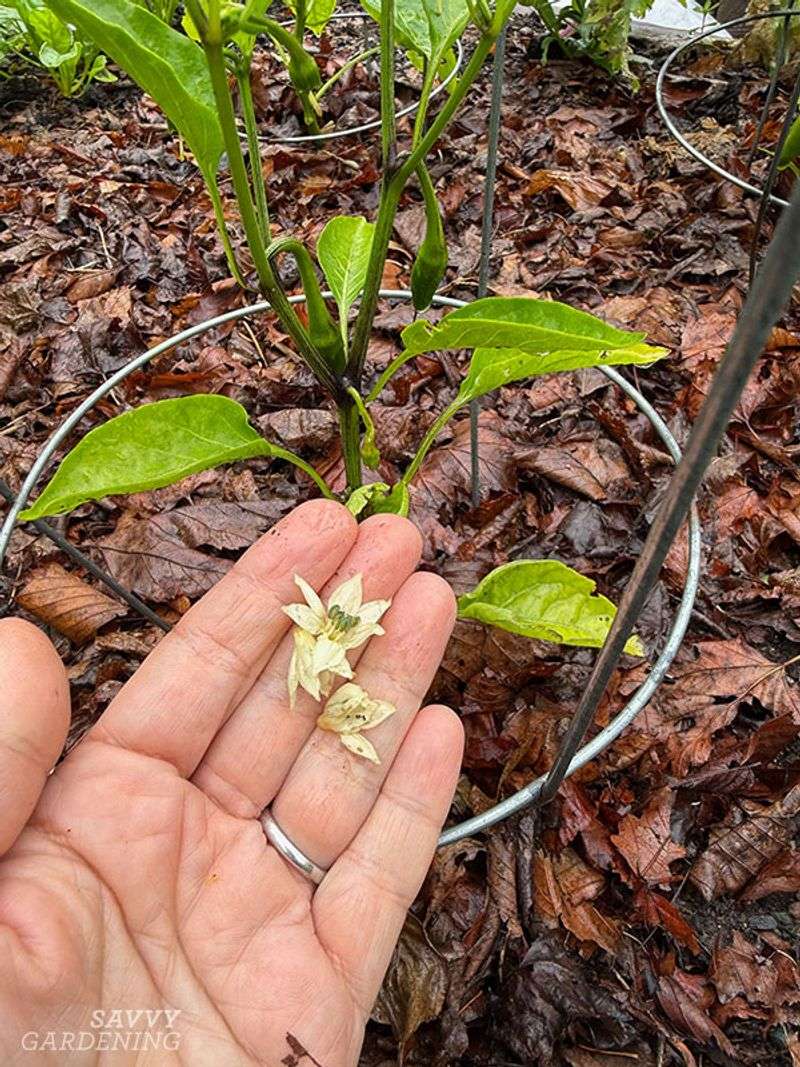
When blossoms are dropping and nothing seems to be working, it is tempting to reach for the fertilizer bag or start hand-pollinating every flower. Neither response is as reliable as it sounds, and both can make things worse if applied without a clear diagnosis.
Hand-pollinating peppers by shaking the flowers or brushing pollen from one blossom to another may help in protected greenhouse settings, but the research on heat-damaged bell pepper pollen shows that the pollen itself can be non-viable under sustained high temperatures. Moving damaged pollen from flower to flower does not restore its ability to fertilize.
Research on pollen dispersal in Capsicum annuum under high temperatures reinforces that the barrier is often inside the flower, not a lack of physical contact between pollen and stigma.
Adding fertilizer, especially a high-nitrogen product, carries its own risk. University of Maryland Extension and New Mexico State University both list excessive nitrogen as a possible contributor to poor blossom and fruit set, partly because it pushes vegetative growth at the expense of reproduction.
Oklahoma State University Extension recommends soil testing before adjusting any fertility plan. Routine overhead leaf-wetting is similarly unreliable as a universal fix: wetting foliage during humid Southern summers can encourage fungal disease, and root-zone irrigation is the better baseline approach.
Qualify any foliage-wetting only for hot, dry, low-humidity conditions where disease risk is minimal.
Expect a possible rebound, then identify the actual symptom
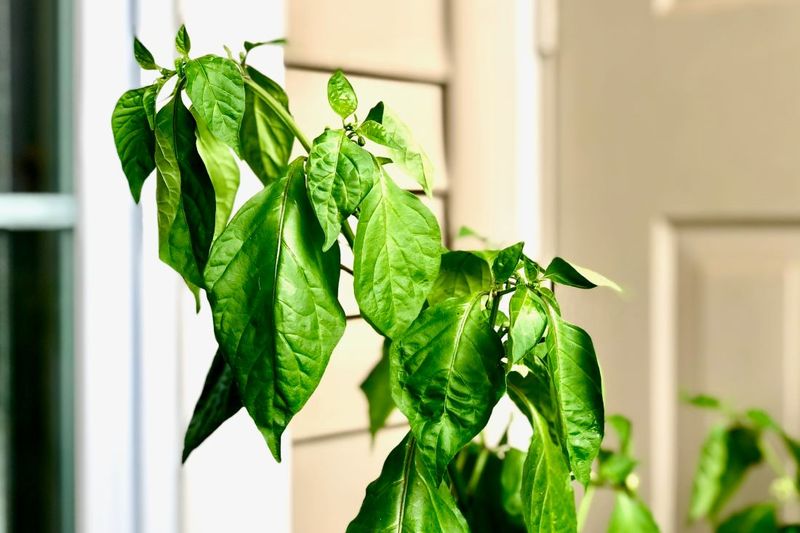
Pepper plants that have been well maintained through a heat stretch often surprise gardeners by resuming flowering and fruit production once temperatures start to moderate. University of Maryland Extension specifically notes that pepper production may pick back up in late summer or early fall after the hottest period passes.
That recovery is not guaranteed for every plant, especially those that have been weakened by disease, root problems, or compounding stresses, but it is a realistic outcome for plants that went into the heat in good condition.
Variety plays a real role in how well a plant weathers the worst weeks. Texas A&M AgriLife Extension notes that jalapeños and some other smaller-fruited hot peppers may continue producing through summer more reliably than certain sweet or bell-type peppers.
Oklahoma State University Extension echoes this, noting that small-fruited types can be more tolerant of high-temperature fruit-set challenges than large-fruited varieties. That does not mean every hot pepper will sail through unaffected, but it is worth factoring into your diagnosis if one variety in your garden is holding fruit while another is dropping everything.
Before treating your plants, make sure you are looking at the right symptom. Blossom drop means the flower or a tiny developing fruit falls off the plant before it matures.
Blossom-end rot is a different problem entirely: it appears as a dark, sunken, leathery area at the bottom tip of an already-developing pepper and is linked to water and calcium movement inside the fruit, as described in University of Georgia Cooperative Extension guidance on blossom-end rot and confirmed by UC Davis postharvest bell pepper research. Sunscald is different again: it shows up as a pale, soft, papery patch on the side of the fruit facing direct sun, as New Mexico State University describes.
Getting the symptom right before choosing a response is the step that saves the most time. A plant dropping flowers needs a temperature, moisture, and foliage check; a pepper with a blackened tip needs a different conversation about irrigation consistency and calcium uptake entirely.