
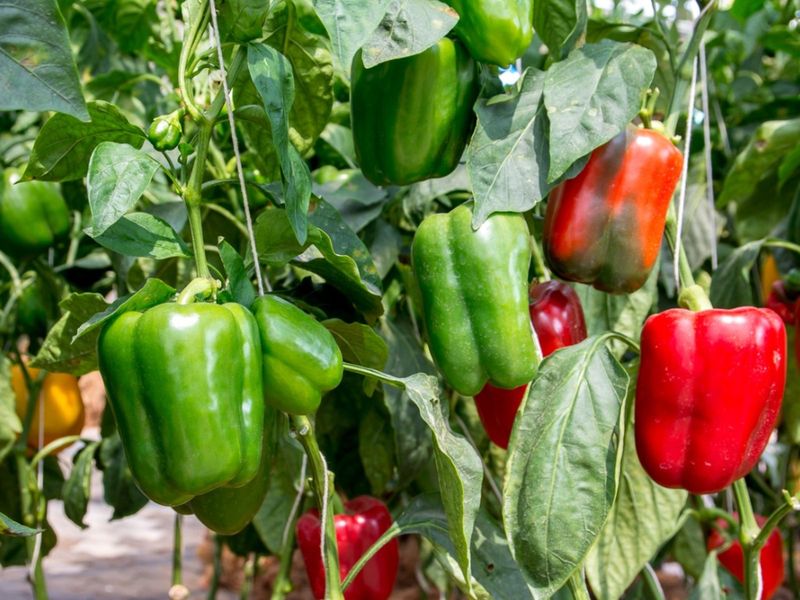
Watching your pepper plants bloom all summer while producing almost no fruit is one of the more frustrating problems in a Southern garden. The flowers appear, they look healthy, and then they simply fall off.
Most gardeners assume something is wrong with their fertilizer routine, but the real explanation is usually overhead, not underground. Peak summer heat is the most common reason pepper flowers fail to become peppers, and understanding that changes everything about how you respond.
Heat is the first condition to check
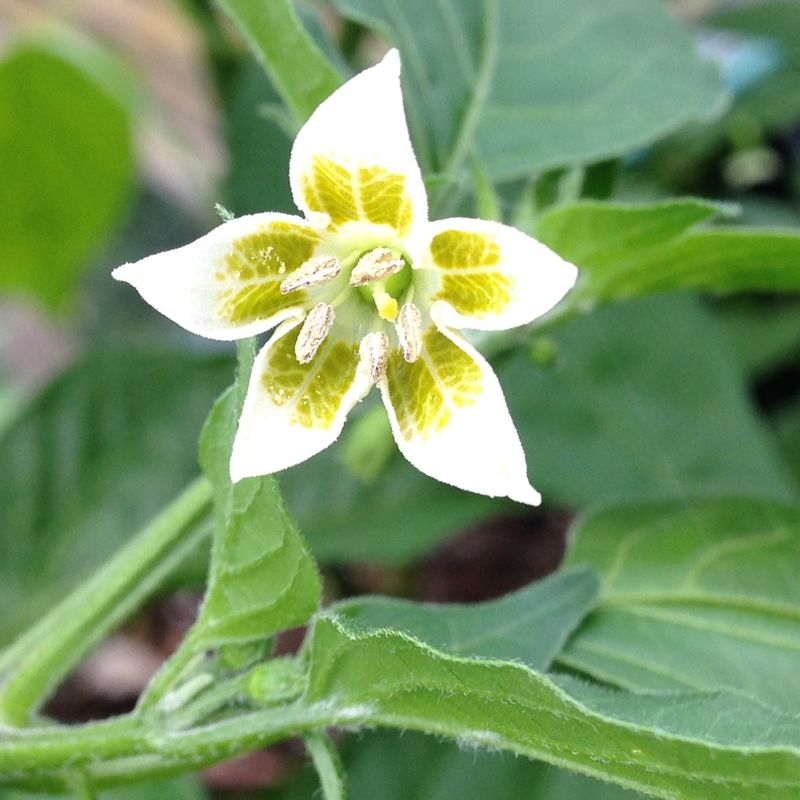
Before adjusting your fertilizer program, look up at the forecast. Illinois Extension’s 2025 review of pepper production problems cautions that heat is often the more likely culprit when flowers drop during Southern summers, and that overfertilization does not consistently explain missing pepper fruit.
The first question worth asking is whether sustained hot weather coincided with the period when your flowers started falling.
A pepper plant can look perfectly healthy, with deep green leaves and plenty of blooms, and still produce no fruit when temperatures stay too high for too long. That is not a sign that the plant is dying.
University of Maryland Extension notes that a healthy plant may temporarily stop setting fruit during the hottest part of summer and resume once conditions moderate. For Florida and Texas gardeners, that pause can stretch across several weeks.
Not all peppers respond the same way. Oklahoma State Extension notes that certain pungent, small-fruited hot pepper varieties tolerate high-temperature fruit-set problems better than bell types.
If your bell peppers are struggling while a nearby pequin or cayenne keeps setting fruit, variety sensitivity is part of the explanation, not just your care routine.
High temperatures can stop a flower before a pepper forms
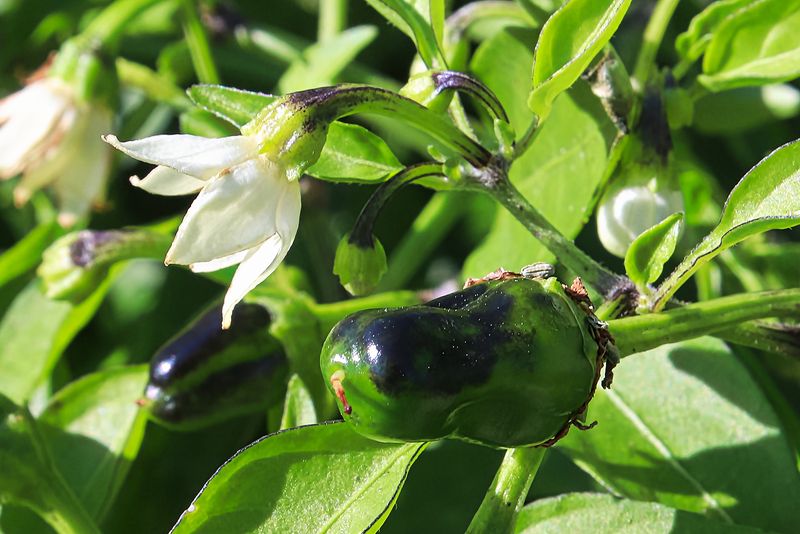
Pepper flowers are self-pollinating, which means they do not depend on bees the way squash does. A flower carries both male and female parts, and under normal conditions it fertilizes itself with little outside help.
The trouble during a Southern heat wave is that high temperatures can damage the pollen itself, making fertilization impossible even when the flower looks fine from the outside.
Research on bell pepper published in Plant, Cell and Environment found that exposure to temperatures around 33 degrees Celsius (approximately 91 degrees Fahrenheit) reduced fruit set, particularly during sensitive stages of flower development and around the time pollen is released. High heat can reduce pollen viability and interfere with the fertilization process even when the plant continues producing flowers.
The result is a plant that blooms persistently but never converts those blooms into fruit.
Oklahoma State Extension reports that very little fruit set occurs when daytime temperatures climb above roughly 90 to 95 degrees Fahrenheit or when nights stay above about 75 degrees Fahrenheit. These are approximate risk ranges rather than hard cutoffs.
Cultivar, humidity, sun exposure, and how long the heat persists all affect the outcome. What matters practically is recognizing that a stretch of very hot days and warm nights is enough to stall fruit set on its own, without any change in your fertilizer routine.
Use plant appearance to assess possible nitrogen excess
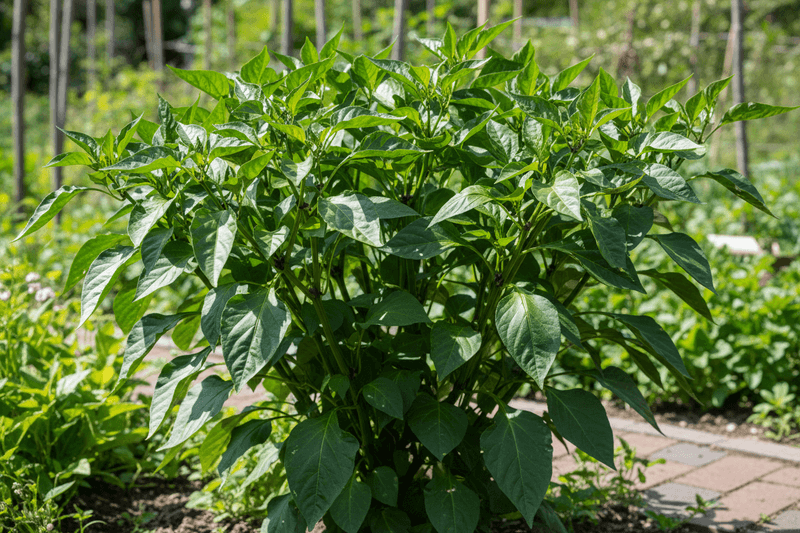
Once you have ruled out heat as a standalone cause, look at the plant itself. A pepper that is unusually large, very dark green, and packed with leaves but carrying few flowers or fruits is showing a pattern worth investigating.
Clemson Extension lists that growth pattern as an indication of nitrogen overfertilization. The plant is putting energy into building leaves and stems rather than setting fruit, which is a common response to excess available nitrogen.
Controlled research supports a cautious version of this concern. A bell pepper study published through the University of Illinois found that increasing nitrogen rates reduced fruit set and early harvests.
Repeated high-nitrogen applications, fresh manure added to already fertile soil, or feeding on a fixed schedule without checking soil conditions can all push a plant toward excessive vegetative growth and delay fruiting.
That said, the lush-but-fruitless appearance can also result from heat alone, so visual clues are a starting point rather than a firm diagnosis. Illinois Extension’s 2025 review emphasizes that overfertilization does not consistently explain missing pepper fruit across the board.
Excess nitrogen may independently delay fruiting or compound an already unproductive stretch, but the evidence does not establish that it worsens heat stress directly. Treat the visual clue as one data point, not a complete diagnosis on its own.
Let a soil test guide the next fertilizer application
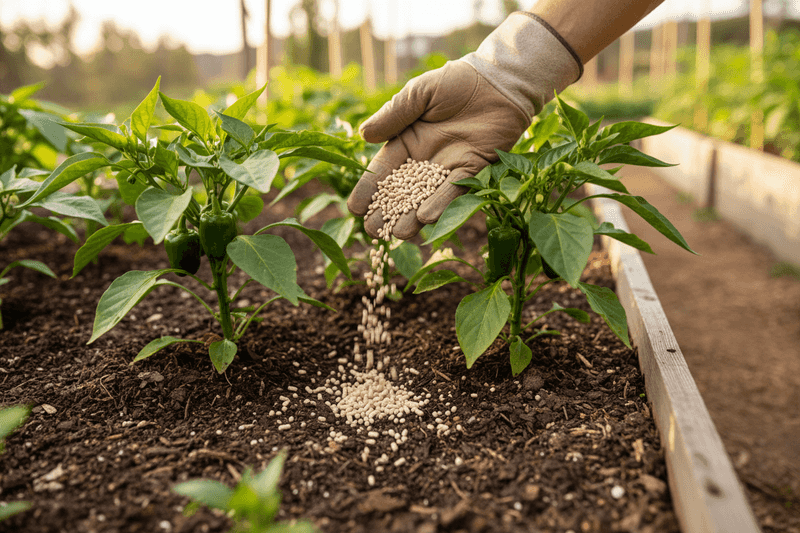
Stopping the fertilizer reflex during a heat wave is a smart first move. Oregon State Extension specifically advises against fertilizing while plants are under extreme-heat stress.
Adding nutrients when a plant is already struggling with high temperatures does not accelerate recovery and can make root conditions worse.
When you are ready to resume feeding, a soil test removes the guesswork. Oklahoma State Extension recommends soil testing and split nitrogen applications rather than applying fertilizer on a fixed schedule regardless of what the soil actually contains.
Your local Extension office can process a test and return a recommendation matched to your crop and soil type. That result, combined with the fertilizer product label and the stage of your plants, gives you a reliable basis for the next application.
A few specific habits are worth avoiding. Switching to a high-phosphorus fertilizer is not a reliable treatment for heat-induced flower drop, and excess phosphorus can cause environmental runoff without correcting the underlying problem.
New Mexico State University’s guide to chile pepper disorders notes that repeated unmeasured applications can contribute to salt buildup, root injury, and nutrient imbalance. The goal is measured, informed feeding, not eliminating fertilizer entirely.
Peppers need nitrogen during active growth and fruit production; the concern is with excess, not with normal soil-test-based applications.
Protect future flowers with even moisture and afternoon shade
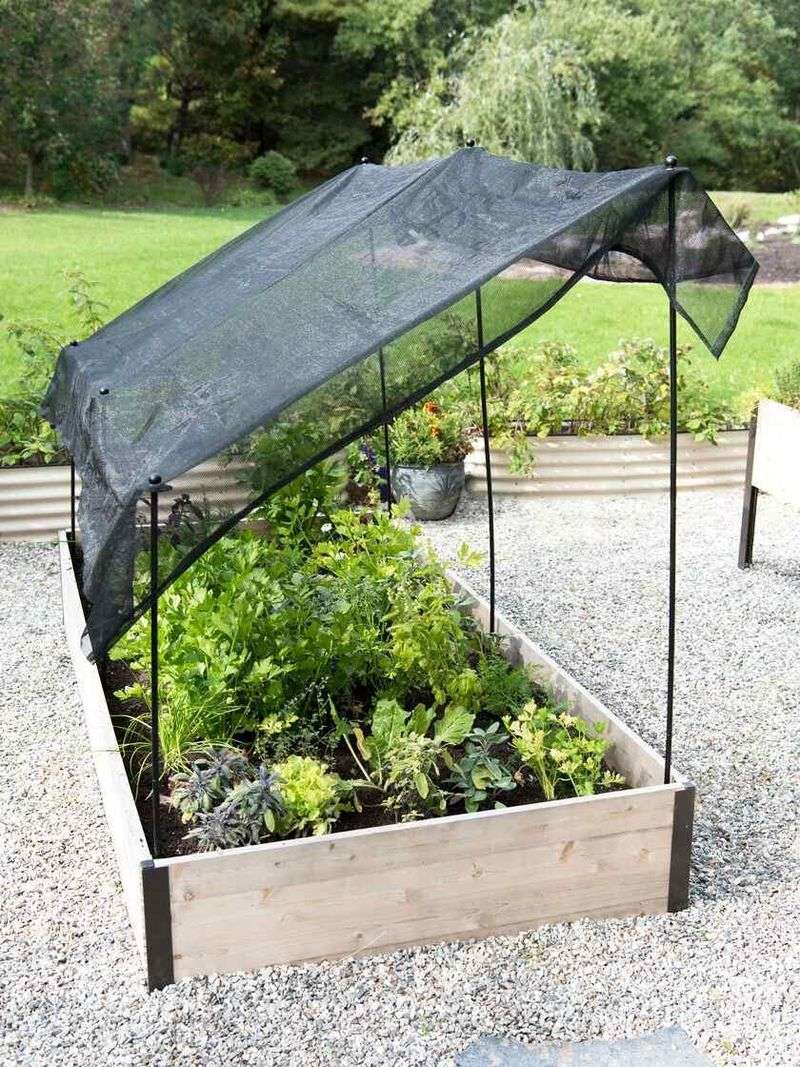
Managing water and temperature around your pepper plants during a heat wave gives future flowers the best chance of developing into fruit. Drought, hot dry wind, and uneven watering can each cause buds, open flowers, and small developing fruits to abort, sometimes even when heat is not extreme.
University of Maryland Extension identifies inconsistent moisture as a contributing factor to poor blossom and fruit set in vegetables, and peppers are no exception.
Deep, consistent root-zone watering is more effective than frequent shallow watering. Drip lines or soaker hoses deliver moisture directly to the root zone without wetting foliage, which is worth noting in the humid conditions common across the South.
A two- to three-inch layer of mulch over the bed helps the soil hold moisture between waterings, moderates root-zone temperature, and reduces stress on the plant overall.
University of Delaware Cooperative Extension recommends temporary afternoon shade as a practical tool for reducing heat stress on vegetable crops. Approximately 30 percent shade cloth is a common choice, but the cover must be supported on a frame above the plants so air can still circulate and heat does not become trapped underneath.
Oregon State’s pepper growing guide cautions against overhead watering as a routine cooling strategy, since wet foliage in humid Southern summers can increase disease pressure. Shade and root-zone irrigation are the more reliable combination for protecting pepper flowers during peak heat.
Rule out other causes of dropped flowers and young fruit
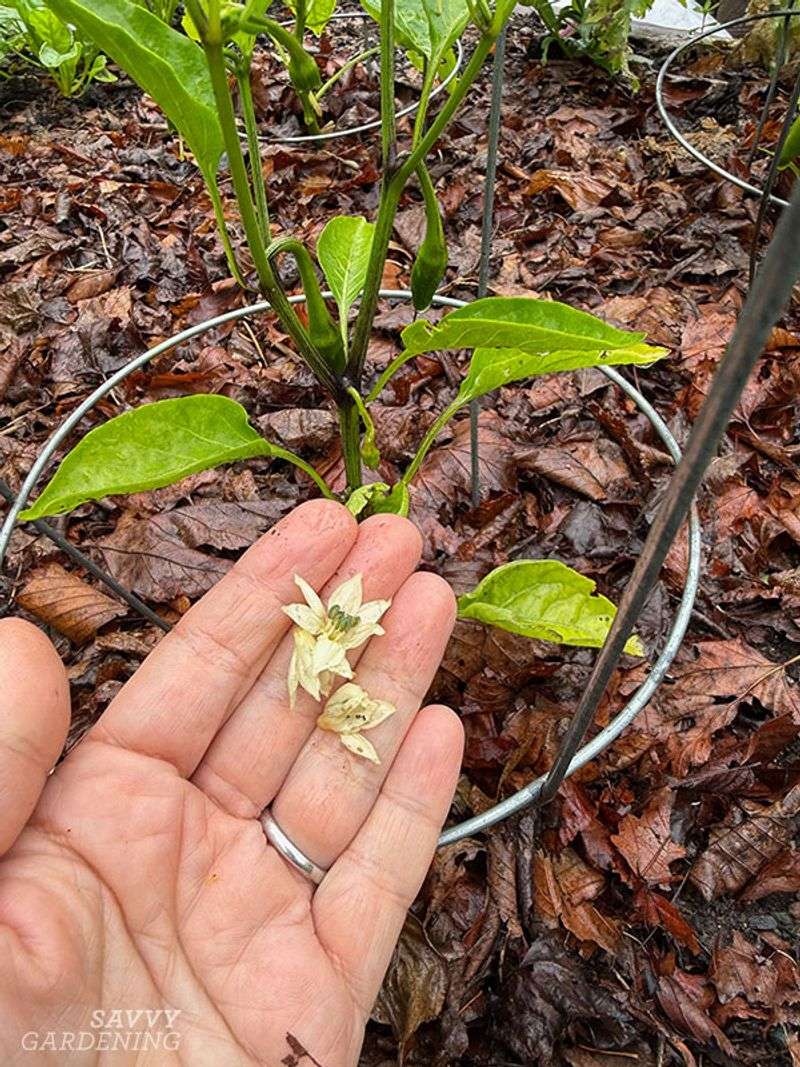
Heat and excess nitrogen are not the only reasons flowers and small fruits disappear from a pepper plant. Cool temperatures in spring or early fall can also prevent fruit set, as can drought, waterlogged soil, strong wind, and prolonged high humidity.
New Mexico State University’s guide to chile pepper disorders lists nutrient deficiency, nutrient toxicity, salt buildup, root injury, and insect damage as additional causes of flower and young-fruit loss. Pepper weevils, for example, can cause blossom buds and immature fruits to drop in ways that look similar to heat-related abortion.
One disorder that often gets confused with flower failure is blossom-end rot. These are two separate problems.
Blossom-end rot appears as a dark, sunken, leathery area on the bottom of a pepper that has already begun developing. It does not cause flowers to drop before a fruit forms.
Illinois Extension explains that blossom-end rot reflects disrupted calcium movement within the plant, most often tied to uneven water supply, root stress, or soil salinity rather than a simple calcium shortage in the soil.
Adding calcium products to the soil or spraying them on leaves will not correct heat-damaged pollination or ordinary flower abortion. If your peppers are dropping flowers before any fruit forms, blossom-end rot is not the diagnosis.
If the fruit is forming but developing a dark, collapsed tip, then water consistency and root health are the first things to address, not a calcium supplement added without a soil test. University of Maryland Extension reinforces that consistent moisture management addresses the root cause more reliably than targeted calcium applications alone.
Resume measured care when temperatures moderate
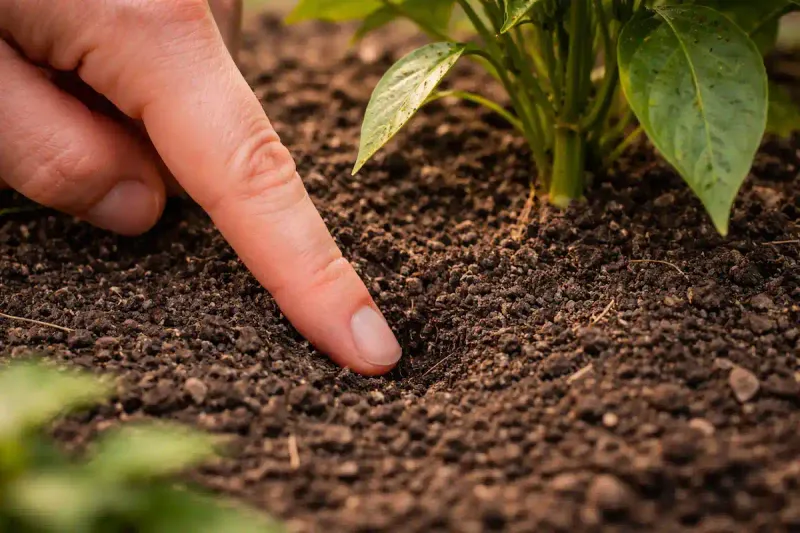
Once the worst heat passes, pepper plants often resume setting fruit on their own. New flowers that open during cooler conditions have a much better chance of developing fully, so maintaining even moisture and keeping shade cloth in place during any remaining hot spells continues to matter.
Oregon State Extension advises waiting until heat stress has passed before resuming any fertilizer program.
Peppers are self-pollinating outdoors, and hand-pollinating every flower is not a dependable workaround when high temperatures have already damaged pollen viability. University of Georgia Extension notes that gentle flower movement can assist pollination in protected settings, but outdoor plants in open beds generally do not need manual intervention once conditions normalize.
When you do resume feeding, use your soil test result, the product label, and your local Extension recommendation to set the rate. Oklahoma State Extension’s soil-test guidance for vegetable crops provides a straightforward framework for matching nutrient applications to actual crop needs.
The most useful habit shift is a simple sequence: manage heat and water first, let the plant tell you what it needs through its appearance and a soil test, then feed accordingly. A pepper plant that survives a Southern summer in good condition is already positioned to reward you once the nights cool down.