
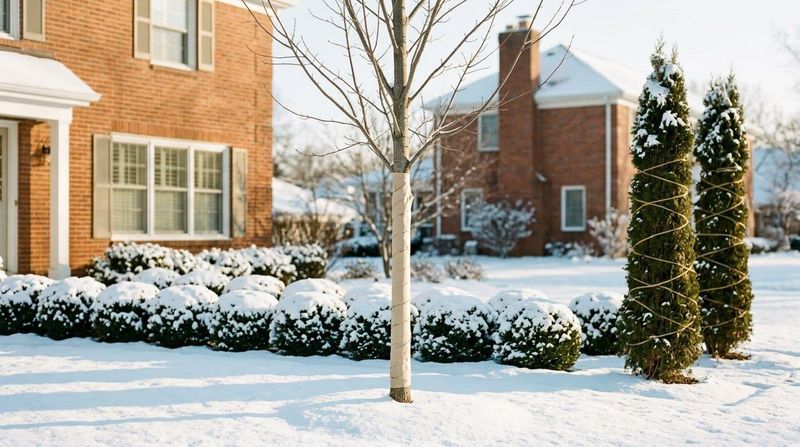
Walk out to your young apple tree after a snowy winter and you might find the bark stripped in a ring near the base. Rabbits and voles are often the culprits, and they work quietly while the ground is covered.
Deer cause trouble too, but in a different way, so one low wrap will not solve every problem. Here is how to protect your trees from each animal and what to do if damage shows up.
Winter bark feeding can girdle a young fruit tree
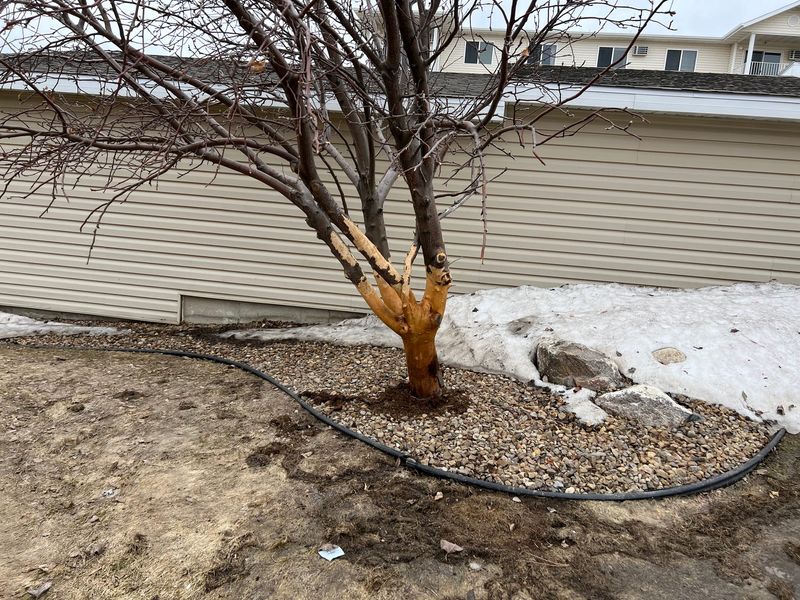
Rabbits, mice, and voles all chew bark when other food is scarce, and young trees with thin, tender bark make easy targets. Iowa State Extension notes that these animals can girdle trees, and rabbits commonly damage apple and pear.
Girdling means the bark has been removed all the way around the trunk. That bark layer carries sugars down to the roots and water-moving tissue just beneath it, so a complete ring of damage can kill the tree.
Voles are the quieter threat. University of New Hampshire Extension lists peach among the fruit trees attacked by meadow voles, and they often feed near the soil line, sometimes beneath snow where you cannot see them.
Not every chewed trunk is a lost cause. Damage that covers only part of the trunk may leave enough living bark for the tree to survive, which is why the size and depth of the wound matter more than the mere presence of teeth marks.
Deer need a different kind of protection
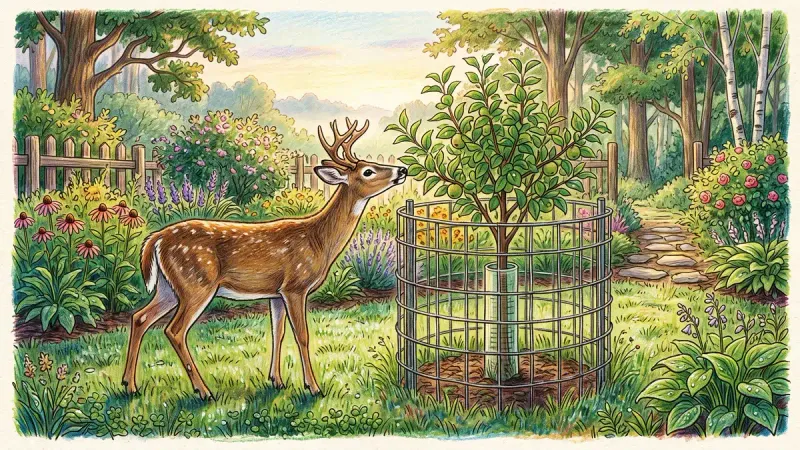
Deer are a separate problem from rabbits and voles. They do not gnaw the trunk the way small rodents do; instead they browse buds, twigs, and young stems, and bucks may rub trunks with their antlers.
A low trunk wrap leaves all the branches above it fully exposed.
Iowa State Extension says deer often browse up to about 6 feet, and higher when snow is deep, and recommends individual barriers at least 6 feet tall. That means a tall cylinder of sturdy wire or mesh set out from the tree, not a snug wrap.
Fencing a whole planting is another route, but fences generally need to be taller. Utah State University Extension describes area fencing 8 to 10 feet high as the most effective deer exclusion in its fruit-growing setting.
Those heights depend on local deer pressure and snow, so treat them as starting points. The UC Statewide IPM Program offers more detail on deer exclusion options.
Fit a loose hardware-cloth cylinder around the trunk
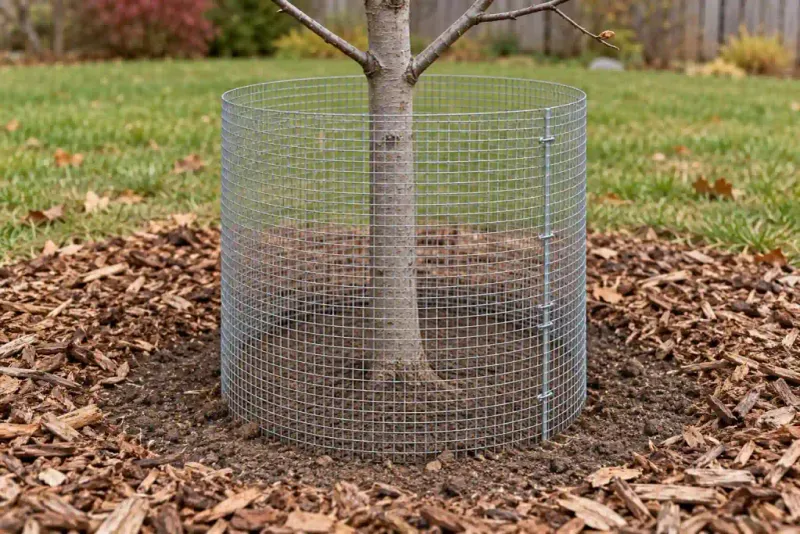
A trunk guard made from quarter-inch hardware cloth is a simple barrier for bark-feeding animals. Cut a piece tall enough for your conditions, roll it into a cylinder, and wire the seam closed.
Wear gloves, since cut edges are sharp.
The cylinder should be loose. Per University of Minnesota Extension, keep the mesh from pressing against the trunk and leave room for growth, so the trunk does not swell into the wire.
Voles will tunnel under a guard that sits on top of the soil. Iowa State Extension suggests burying the lower edge about 2 to 3 inches.
Do not confuse this mesh with paper or solid plastic tree wrap. Colorado State University Extension describes winter wrap as seasonal protection to be removed in early spring, so its purpose and care differ from a mesh cylinder.
Set guard height for local snow conditions
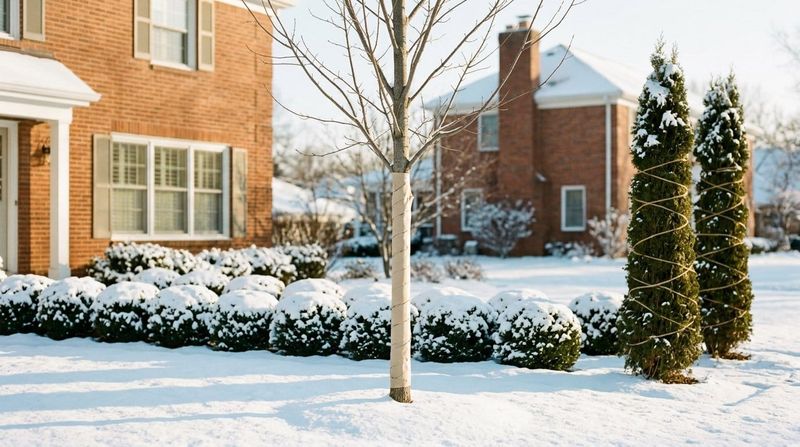
Snow changes the math. Voles can tunnel and feed beneath it, while rabbits standing on a snowpack can reach well above where they could in autumn.
A guard that looked tall in October may be barely above the drift in January.
Two extension sources give different numbers for different situations. University of Minnesota Extension advises extending rabbit protection 18 to 24 inches above anticipated snow.
Penn State Extension addresses voles in orchards and says guards should extend at least 4 inches above anticipated snow depth.
Neither figure is a universal rule. Look at how deep snow typically gets where you live, and whether rabbits are a regular visitor in your yard.
If rabbits are common and your winters are snowy, lean toward the taller number; if voles are the main worry and snow is modest, a shorter guard may do the job.
Install protection before winter and inspect it regularly
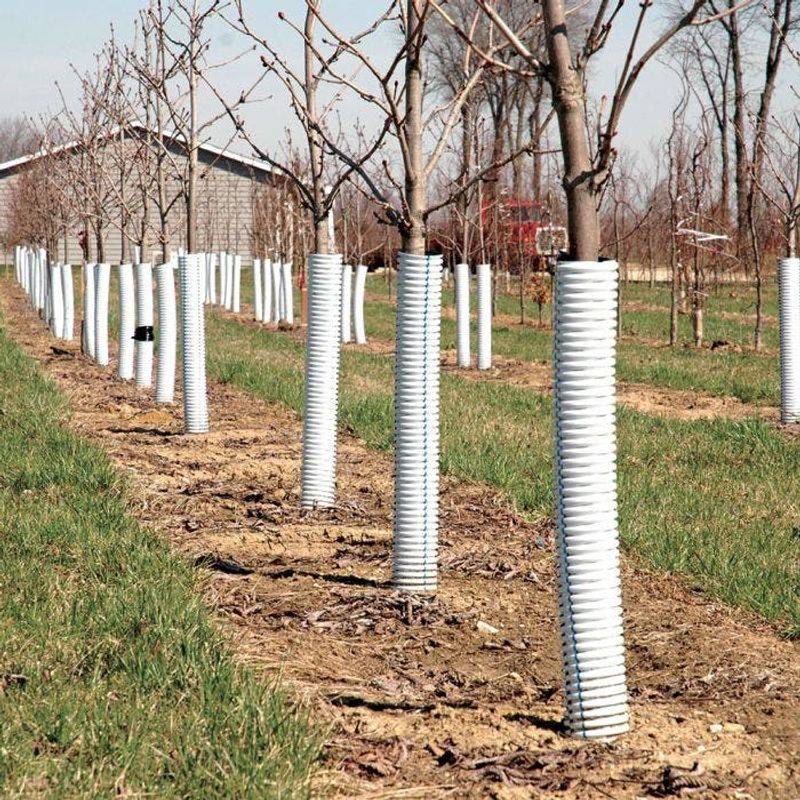
Timing matters because animals start feeding as soon as food gets scarce, and frozen ground and deep snow make late installation a chore. Get guards on before that happens.
For its region, Iowa State Extension recommends early to mid-November installation and typical April removal of seasonal guards. Those dates fit Iowa, not the whole country, so adjust for your own first hard freeze and last snow.
Some guidance lets a well-fitted hardware-cloth cylinder stay up year-round, as University of Minnesota Extension describes. Solid wrap-around plastic is different, and UNH Extension warns that pests can shelter beneath it, so take it off each spring.
Paper wraps are seasonal too, per Colorado State University Extension.
Check guards a few times a year. Look for gaps at the soil line, bent or damaged mesh, wire touching the trunk, and any sign the trunk is outgrowing the cylinder.
Reduce vole cover around young trees
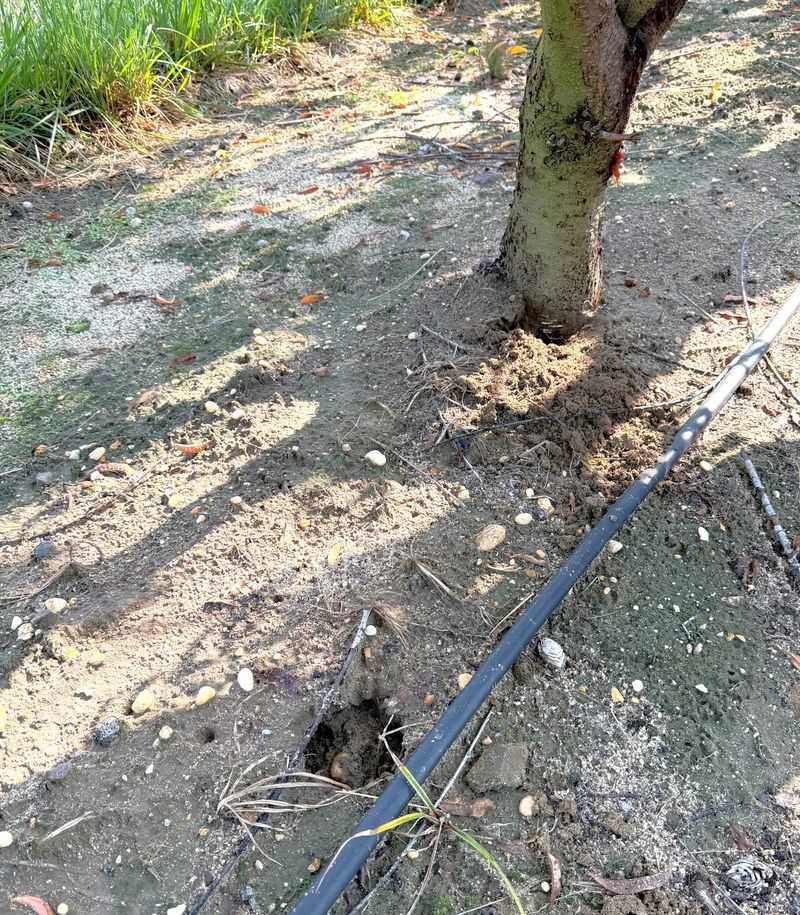
Tall grass and weeds make a cozy hiding place for voles. They like to travel under cover, so a thick mat of vegetation right at the base of a tree gives them a protected path to the trunk.
Clearing that cover is a helpful partner to a trunk guard. University of Minnesota Extension recommends cutting vegetation short within 2 feet of young trees.
Penn State Extension suggests a vegetation-free zone extending at least 2 feet from trunks in orchards.
Think of this as reducing hiding places, not as a guarantee. Voles can still show up where cover is limited, which is why the guard stays on the job.
Mow or trim in late fall, and pull back heavy mulch from the trunk so it does not become a nesting blanket.
Assess bark damage before deciding a tree is lost
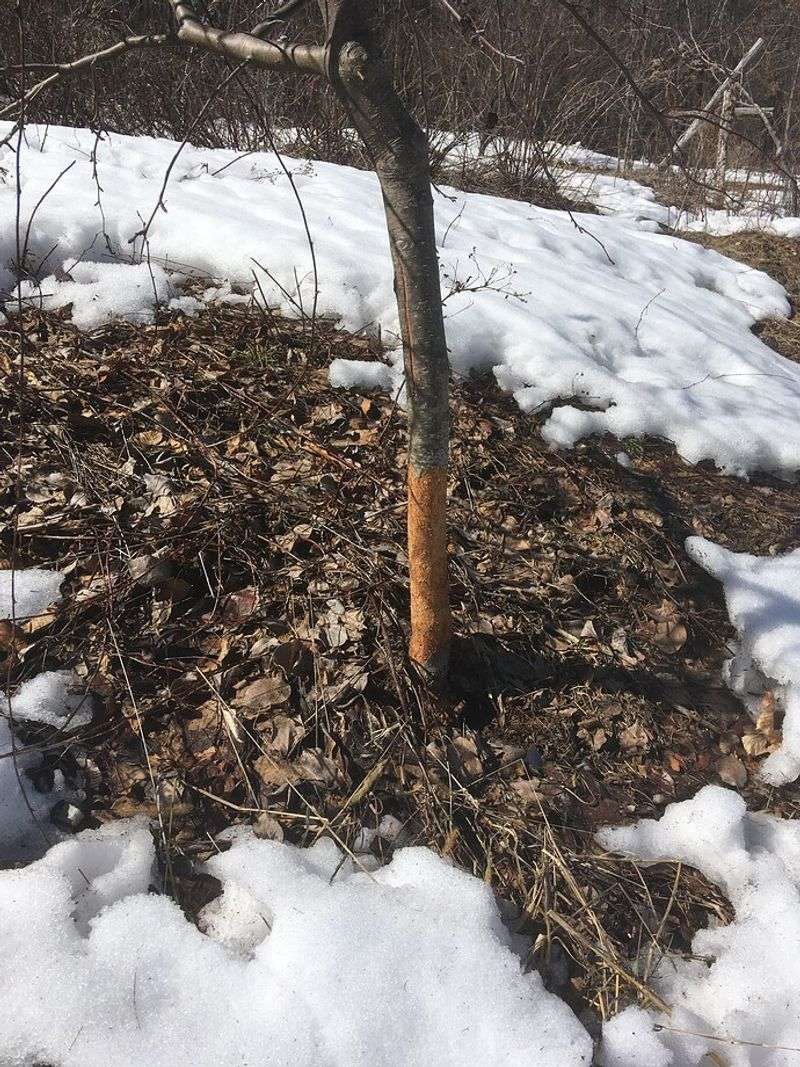
Damage often becomes clear only after the snow melts, so wait before making big decisions. Look closely at the trunk and measure how much of the circumference is stripped and how deep the wounds go.
Iowa State Extension says complete girdling can kill a tree, while trees with substantial bark remaining may survive. Watch for leaf-out in spring, since a tree with a gnawed trunk may still push growth.
Do not count on paint or wrap to fix serious injuries. Wound paint, latex paint, and tree wrap do not repair severe rabbit damage.
Iowa State describes bridge grafting as a possible but difficult option for some trees, with no promise it will work.
Vole feeding near the roots can be easy to miss, as UNH Extension explains, so check the base too. If baits tempt you, remember they pose risks to pets and children.
A tree is not lost until it stops growing.