
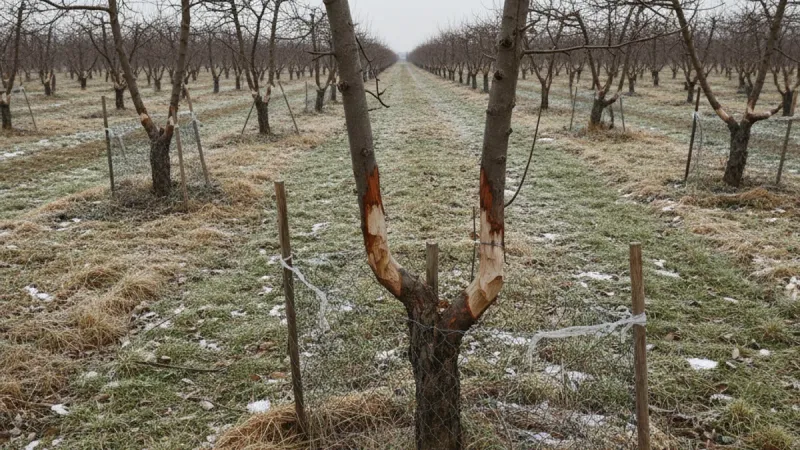
A young apple or pear tree can look fine in fall and then show pale, chewed wood after a snowy stretch. Rabbits often turn to bark when other food runs short, and the trunk is what keeps the whole tree alive.
The good news is that you can check the damage and put up a barrier before more harm is done. Here is how to tell what happened, protect the trunk, and decide what to do next.
Winter bark loss can threaten a young fruit tree
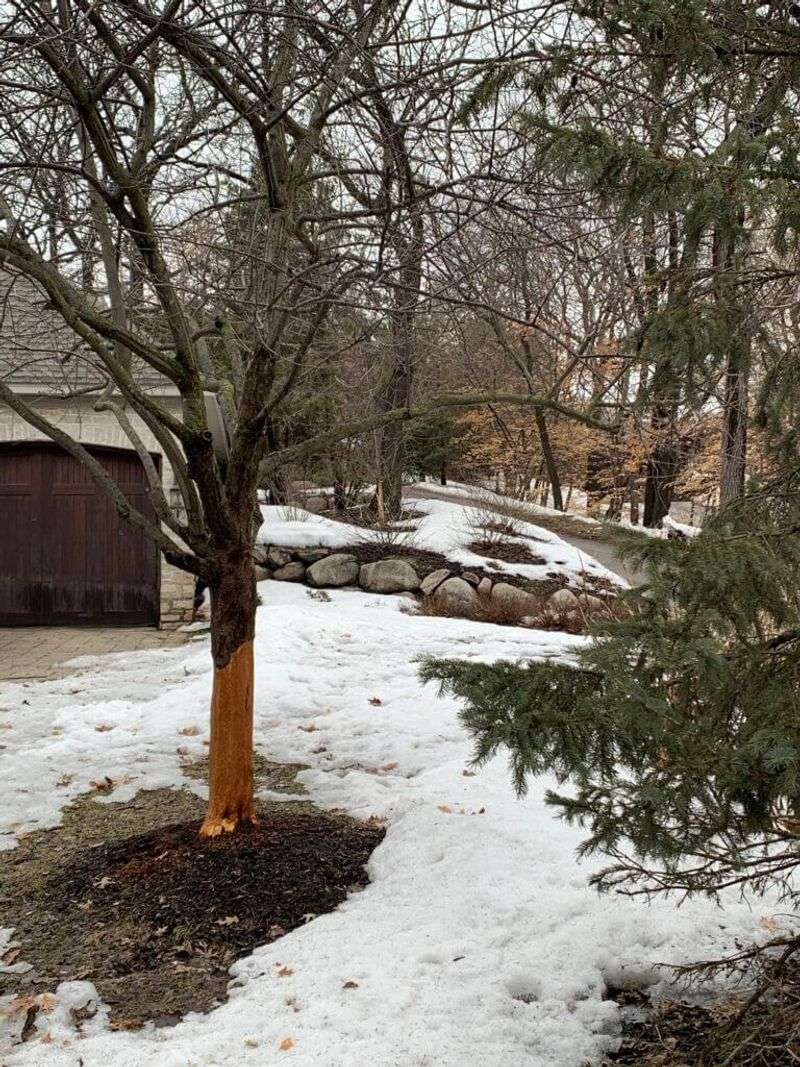
When snow covers grass and garden plants, rabbits look for other food. Young apple and pear trees have thin, tender bark, and winter or early spring is when it often gets chewed.
Iowa State Extension lists both apple and pear among the trees rabbits commonly damage.
The real danger is girdling, which means bark is removed completely around the trunk. Just under the bark, the tree moves water, nutrients, and sugars between roots and branches.
A full ring of missing bark cuts that route, and growth above the wound can eventually die.
A patch of missing bark is not the same thing. If the bark is still intact around part of the trunk, the tree may survive and recover.
How a damaged tree fares depends on how much bark is gone and where, so there is no fixed deadline you can count on. That is why looking closely at the wound matters more than assuming the worst.
Look for clues to identify the animal
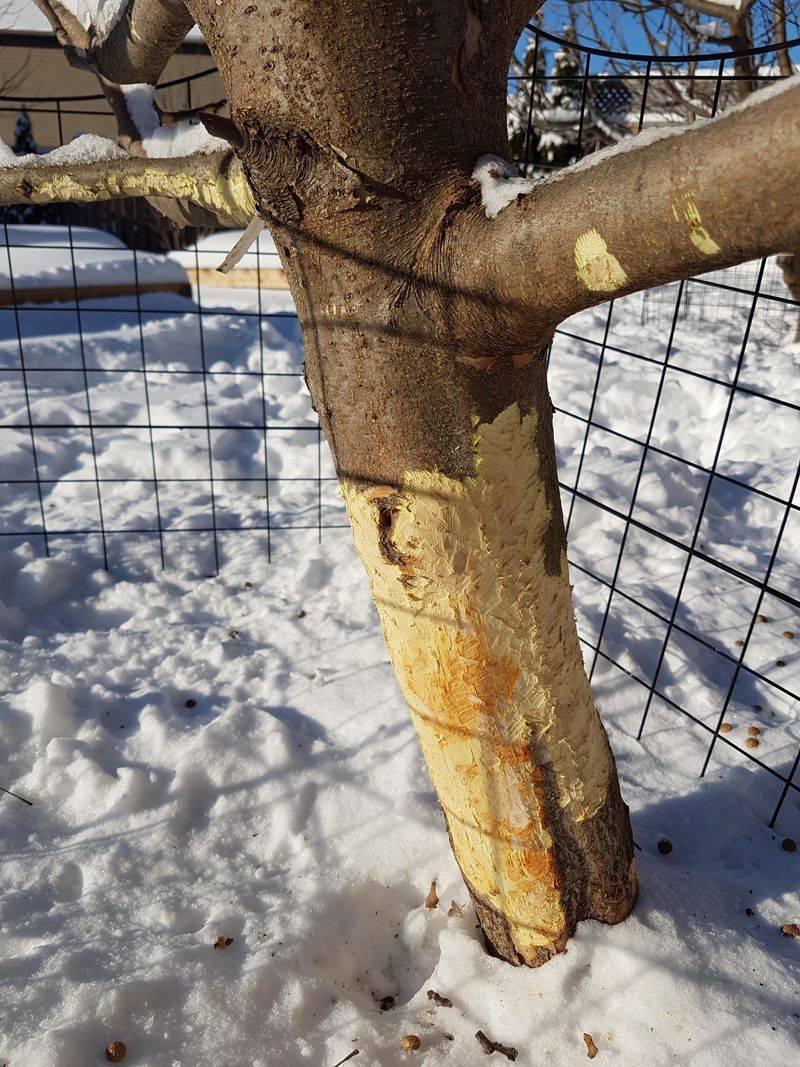
Before you pick a fix, take a slow walk around the tree. Check the trunk from the soil up, and scan the snow or ground nearby.
What you find are clues, not proof, but together they point you in the right direction.
According to UC IPM guidance, rabbit gnawing may leave larger tooth marks and sit higher on the trunk. Vole damage is often near the soil line or hidden beneath snow.
Rabbit droppings or tracks nearby can support a rabbit suspect.
Snow complicates the picture. A deep drift can lift a rabbit well above the ground, so damage that looks high now may have been reachable only from the snowpack.
Voles and other animals can also strip bark, and a tree may have been hit by more than one. For a second reference on telling bark damage apart, see the University of Minnesota diagnostic page.
If damage shows up at more than one height, plan protection that covers both.
Choose mesh and height for local conditions
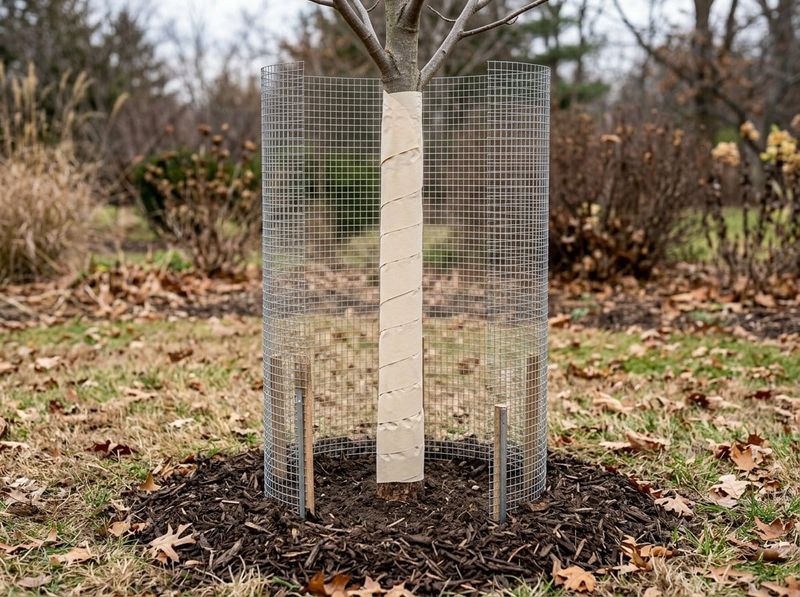
A good guard is a wire-mesh cylinder, and the right size depends on your yard. Think about which animals you are dealing with, how much the trunk will grow, how deep snow usually gets, and how high local rabbits can reach.
Extension height advice varies, so treat these numbers as examples. Minnesota Extension suggests 18 to 24 inches above anticipated snow.
Iowa State recommends a cylinder reaching 10 to 12 inches above expected snow depth. Utah State says 3 feet is sufficient in its high mountain valley guidance.
UC IPM advises at least 2.5 feet where jackrabbits could reach foliage and limbs.
If voles or mice are also a worry, choose fine mesh and deal with ground-level access. Minnesota Extension suggests extending the cylinder 2 to 3 inches below ground for mice and leaving no gaps at the soil.
Check your local extension office for numbers that fit your area.
Install the cylinder without leaving a way around it
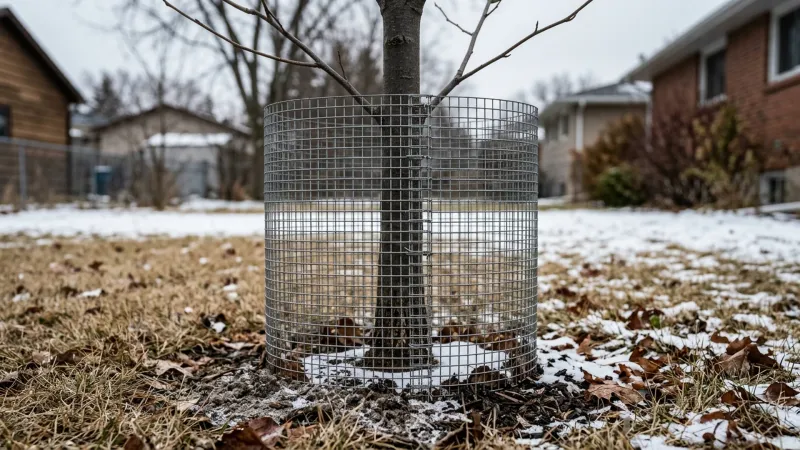
Start by rolling the mesh into a cylinder that is wider than the trunk, leaving room for it to thicken. Secure the seam with wire or sturdy ties so the cylinder holds its shape and a rabbit cannot pry it open.
Next, close the bottom. The mesh should not be something an animal can push or pull away from the ground.
Iowa State suggests setting the cylinder 1 to 2 inches from the trunk with the bottom buried about 2 inches. Minnesota Extension describes about 6 inches of clearance and quarter-inch mesh.
Those clearances differ, so follow the guidance for your area. What matters most is that rabbits cannot reach through the mesh or slip around the base, while the trunk still has space to grow.
After setting it, walk around the tree and look for any spot where a nose or paw could get in.
Inspect the guard as snow and the tree change
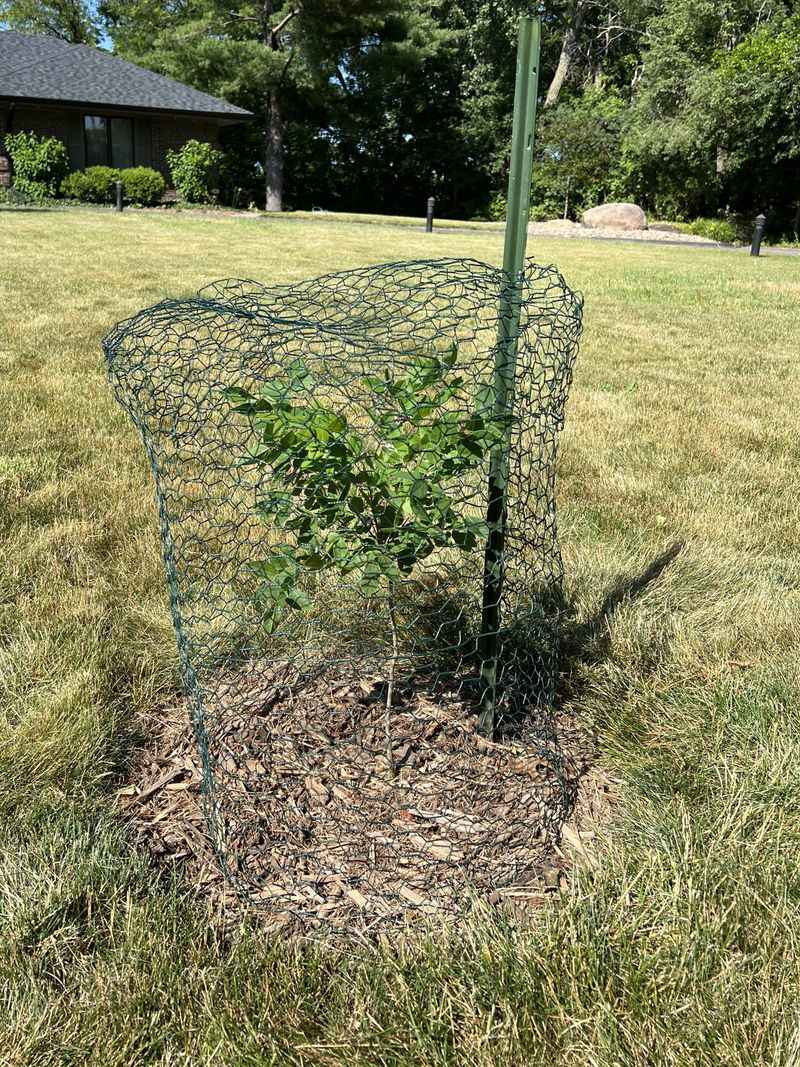
A guard that fit perfectly in November can fall short after a big storm. Snow raises the effective reach of rabbits, so check the cylinder after heavy snowfall.
Iowa State advises removing snow from protections when needed.
While you are there, look for gaps, bent or loose mesh, and any spot where the bottom has lifted. Also check that the cylinder is not rubbing the bark or squeezing the trunk as it grows.
Advice on keeping guards in place differs by region. Minnesota Extension says its hardware-cloth cylinders can stay year-round, while Iowa State recommends seasonal guards removed in spring, typically April.
Check your local extension recommendations, and keep inspecting either way.
Assess the wound before deciding what to do
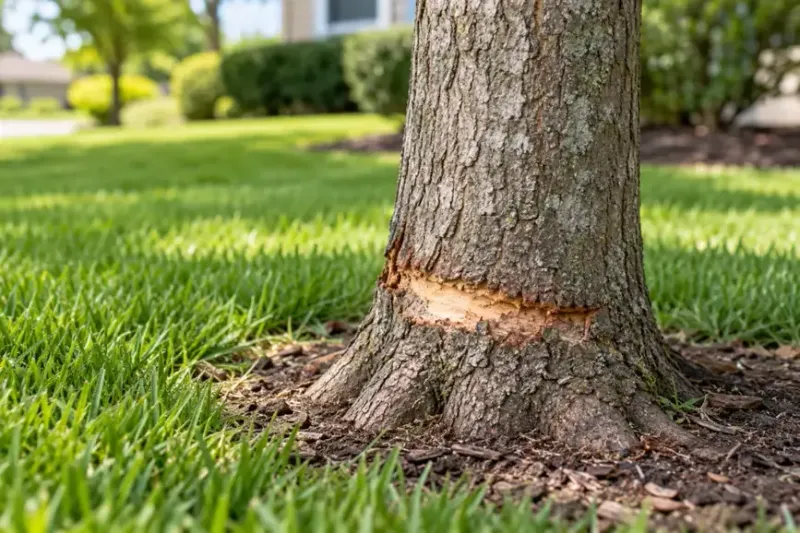
Walk all the way around the trunk and see whether the missing bark forms a complete ring. If a strip of healthy bark remains, the injury is partial.
Iowa State notes that substantially intact bark may let a tree survive and recover, while a completely girdled tree is generally considered destroyed.
Paint, wound dressing, and wraps do not rescue a severely girdled tree. A completely girdled fruit tree may need replacement, or you can ask a local extension office or arborist for help.
Iowa State also has a page on saving rabbit-damaged trees and shrubs.
If shoots appear after damage, check where they start. Many fruit trees are grafted, and shoots below the graft union may not produce the variety you wanted.
A tree that is protected before the snow flies has the best odds.