
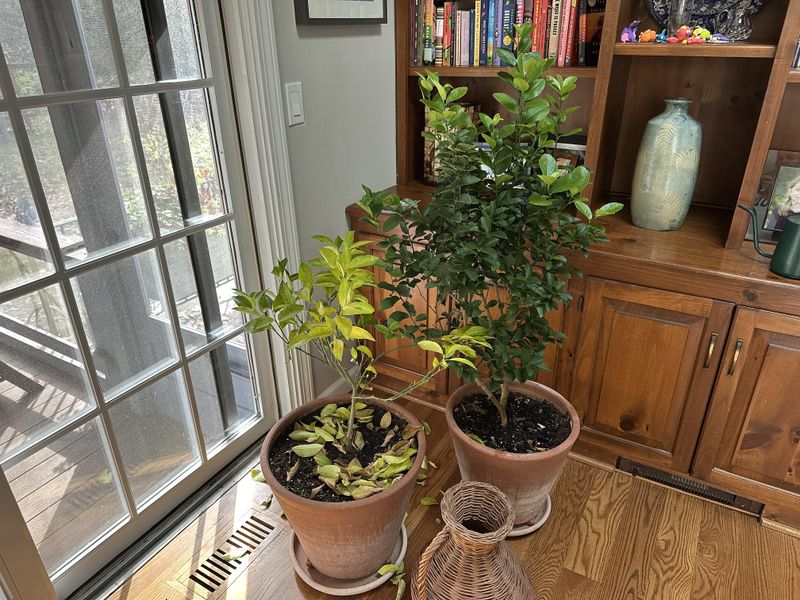
A gardener carries a healthy Meyer lemon inside for winter, and soon leaves start piling up on the floor. It looks alarming, especially when the tree was green and full just days before.
Leaf drop after a move is common enough that many Southern growers have seen it. Knowing what may be going on, and what to do before and after the move, can help you keep the stress down.
Leaf drop is a clue, not a diagnosis
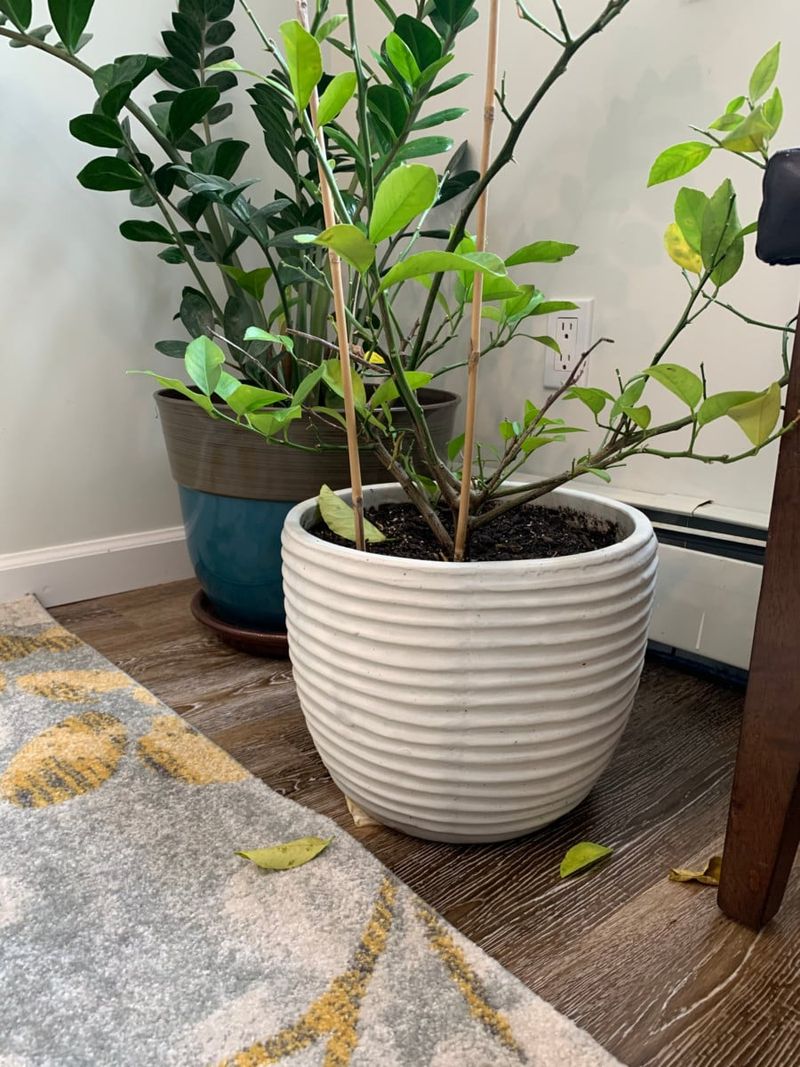
Seeing leaves on the floor can make your stomach drop, but losing some leaves does not mean your Meyer lemon is dying. Many trees shed foliage and still push out new growth later.
Moving a tree from the yard into a house can change a lot at once. Light is usually much dimmer indoors, temperatures are steadier or different, and the air can be drier or more humid than outside.
UC IPM lists sudden changes in light, temperature, or humidity among the reasons houseplants drop leaves, and Wisconsin Extension notes that drastic environmental changes can cause leaf, flower, and young fruit drop in citrus.
Still, timing alone does not prove the move was the culprit. A reader may see leaves fall soon after coming indoors, yet the real trouble could be soggy soil, a pot that drains poorly, damaged roots, a cold night outside, or pests.
Think of the leaf drop as a clue that tells you where to start looking, not as a final answer.
Use local cold risk to choose when to bring the tree in
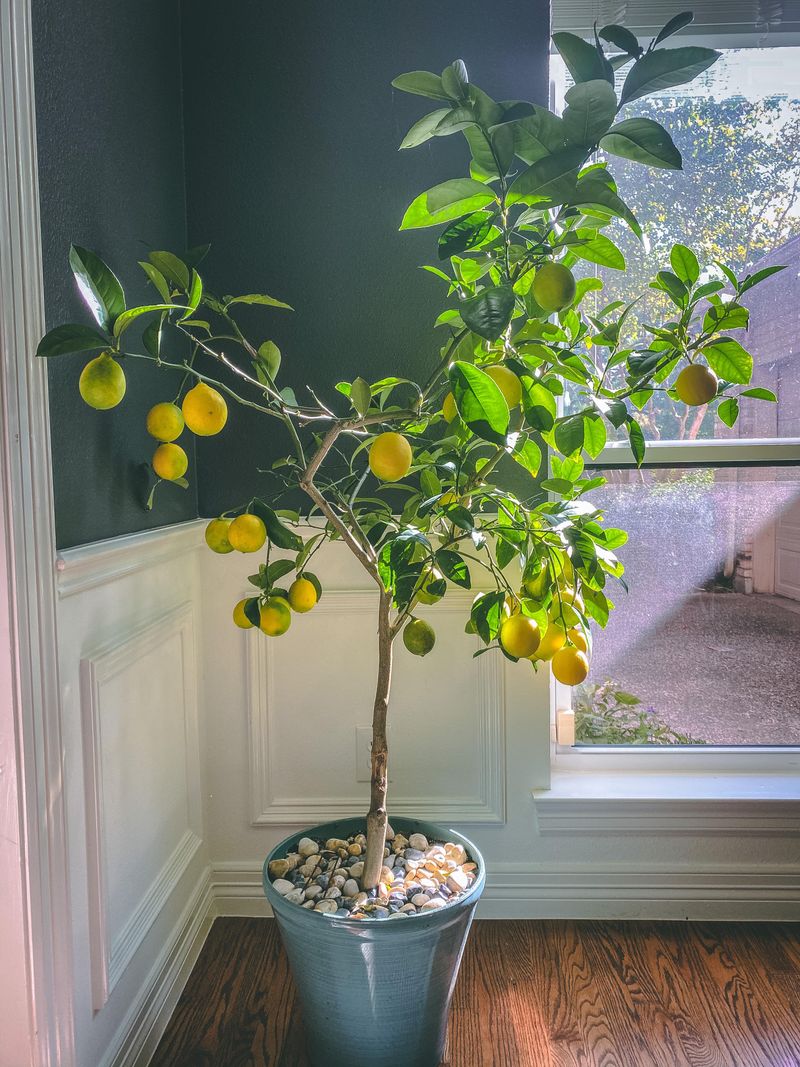
Nobody in Miami gardens on the same calendar as someone in Dallas, so a single date will not work. Timing depends on where you live, how your yard holds heat, and what the forecast says.
One often-quoted number comes from the north. Iowa State advises bringing citrus indoors when nighttime temperatures drop below 50°F.
That is regional advice, and it is not a rule every Southern grower must follow.
Texas guidance puts the focus on freezes. Texas A&M AgriLife stresses freeze protection for container citrus, because roots in a pot have less insulation than roots in the ground.
Be careful with Florida landscape advice, too. UF/IFAS says Meyer lemons in Florida landscapes need protection when temperatures fall below 20°F, but that describes trees planted in the ground.
It does not tell you a safe outdoor temperature for a potted tree. Check your local Extension office and watch your own forecast.
Reduce outdoor light gradually before the move
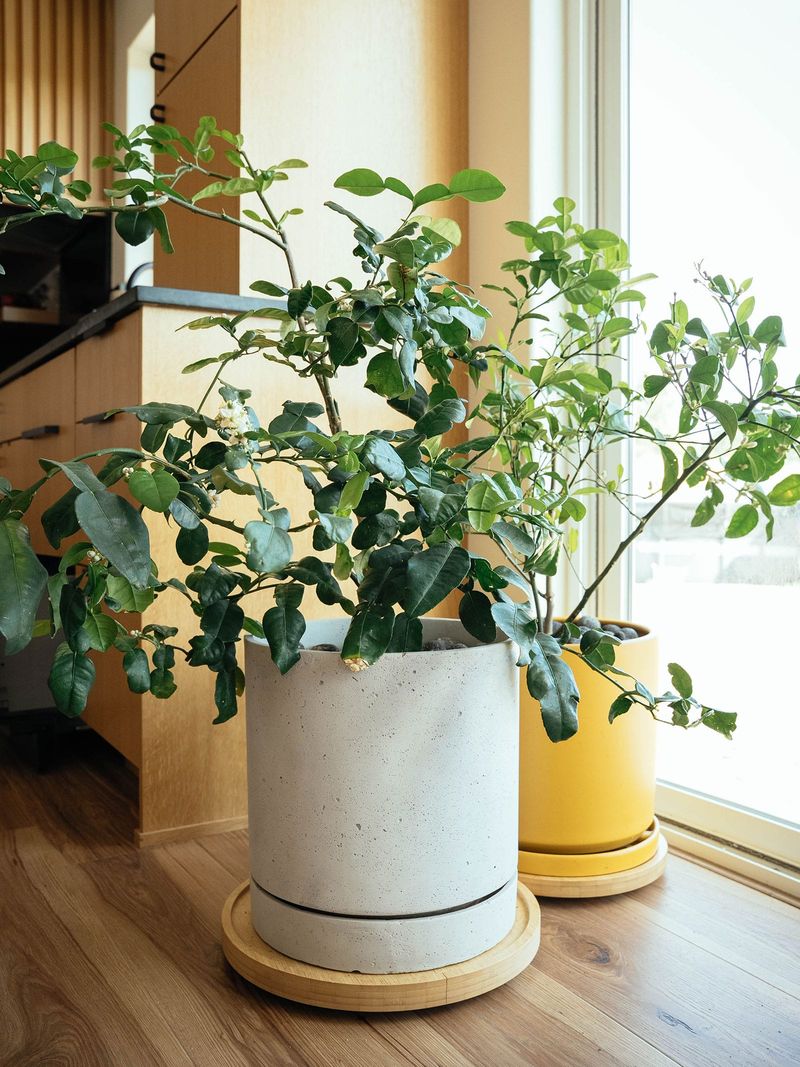
Here is the step that is easy to get backward: the slow change happens before the tree comes inside, and it means less light, not more. Outdoors in full sun, a lemon tree is used to far brighter conditions than any room offers.
Texas A&M AgriLife recommends gradually reducing the light a citrus tree receives for 2 to 4 weeks before it moves indoors for winter. The goal is to help prevent excessive leaf drop.
A simple plan is to shift the pot from full sun to a spot with morning sun and afternoon shade, then to a bright porch or lightly shaded area, and finally inside. Each step can last several days.
Treat this as a way to ease the transition. It may reduce stress, but it cannot promise that no leaves will fall.
Inspect for pests before the tree joins your indoor plants
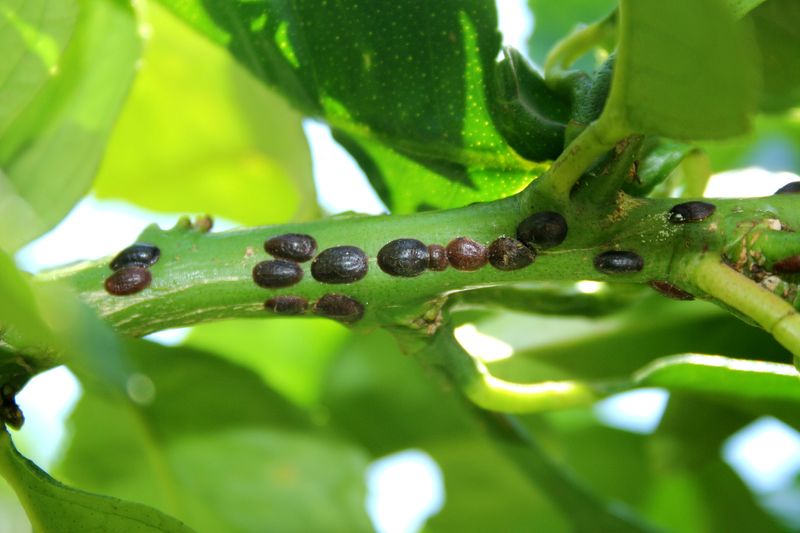
Anything hiding on your lemon tree will come inside with it, and a warm house can be a comfortable place for pests to multiply. A few minutes of checking before the move protects your other houseplants too.
Look under leaves, along stems, and where branches meet the trunk. UC IPM recommends checking plants you move indoors for pests such as scale and spider mites, and continuing to monitor them afterward.
Iowa State also names spider mites, whiteflies, and scale as common citrus pests.
Watch for sticky residue, tiny webbing, small bumps on stems, or little white insects that flutter when you shake a branch. Finding pests does not prove they caused the leaf drop, and finding none does not rule them out.
Keep checking every week or so through winter.
Choose the brightest suitable indoor location
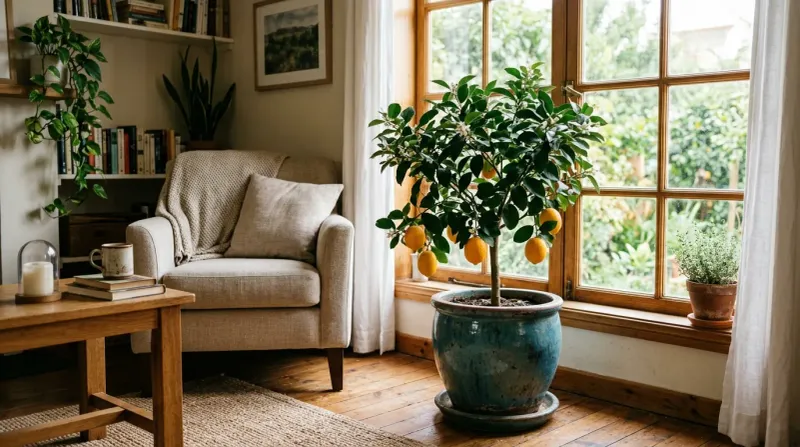
Once the tree is inside, the advice flips: give it as much good light as your home can offer. That is a separate step from the gradual dimming you did outdoors.
Iowa State says a west- or south-facing window with 6 to 8 hours of direct sun is often required, and supplemental light may be needed. If your best window is shaded by a porch roof or a neighbor’s oak, a grow light could fill the gap.
Wisconsin Extension recommends the brightest available location and notes that low light makes flowering and fruiting unlikely.
A bright spot does not promise blossoms or lemons, and extra light will not fix every cause of leaf drop. It simply removes one common stress from the list.
Adjust watering to slower indoor growth
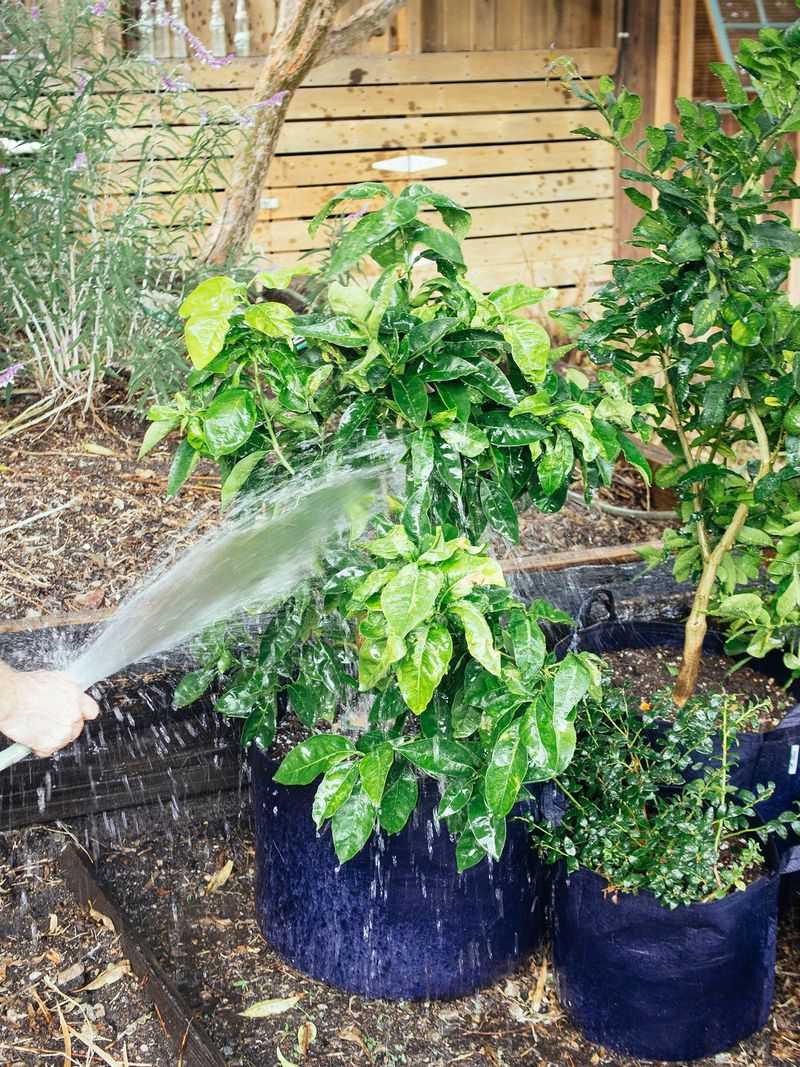
Indoors, a lemon tree usually grows more slowly in cool months, so it drinks less. Keeping up a summer watering habit can leave roots sitting in wet mix, which is a common way to add a second problem on top of the move.
Texas A&M AgriLife says overwatering is a common cause of poor performance in container citrus. Its advice is to let the upper inch of potting medium dry before watering, let the excess drain away, and water less often as cool-season growth slows.
Use your finger as the gauge. Push it into the top inch of mix, and if it feels damp, wait.
When you do water, empty the saucer so the pot is not standing in runoff.
There is no fixed schedule that fits every home, pot size, or window. Let the mix tell you.
Reassess if leaf loss continues
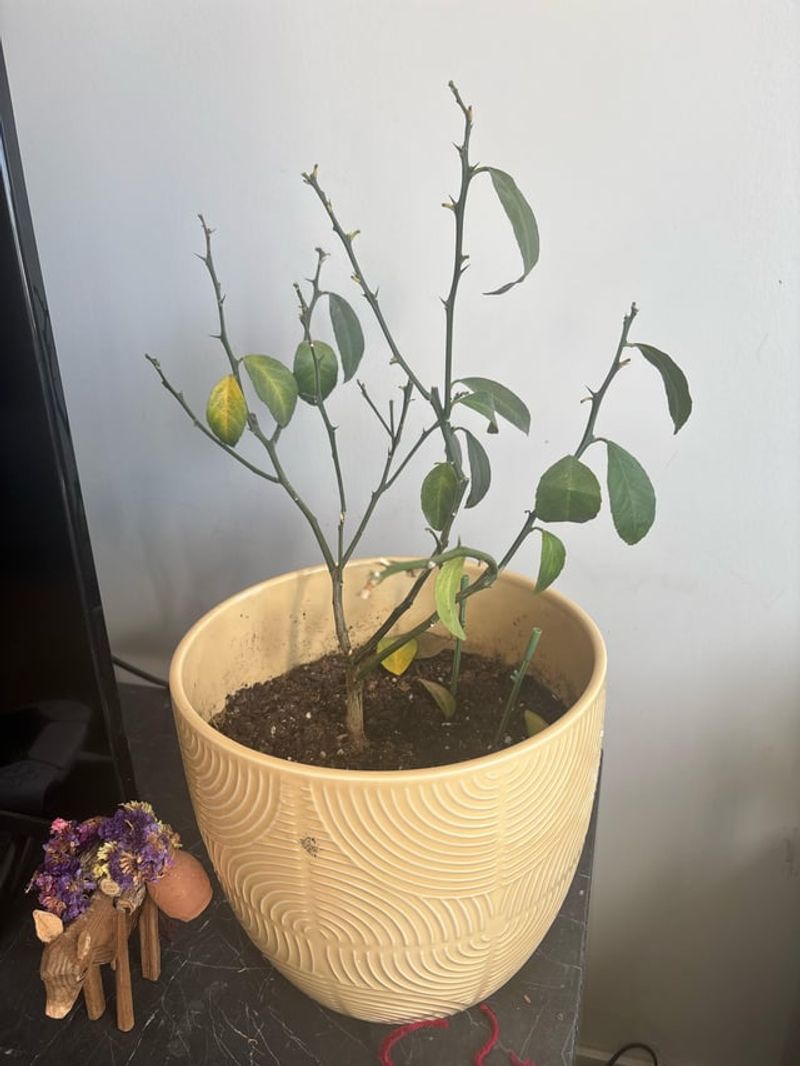
The routine is simple to repeat: dim the outdoor light over 2 to 4 weeks, check for pests, find the brightest indoor spot, and water only when the top inch of mix has dried. Even then, a few leaves may still fall, and that alone is not a reason to panic.
If leaves keep dropping week after week, widen the search. Ask whether the pot drains freely, whether the mix stays wet, whether the roots look healthy, and whether the tree sits near a cold draft or heating vent.
UC IPM lists overwatering, underwatering, poor drainage, root problems, and pests alongside sudden environmental changes as possible causes.
Recheck the light too, since Iowa State notes that supplemental light may be needed, and review the Texas A&M citrus guidance for watering.
A lemon tree rarely explains itself in one day, but its leaves keep giving clues.