

Salty runoff from treated driveways and walks can burn the roots of nearby boxwoods, and salt spray can scorch their leaves. The risk comes from deicer put on pavement, and it is easy to miss because the damage shows up weeks later.
Boxwoods sit right beside many North Carolina driveways, so they are often in the splash zone. A few small changes in how you clear ice can cut down the exposure.
How pavement deicer reaches boxwood roots and foliage
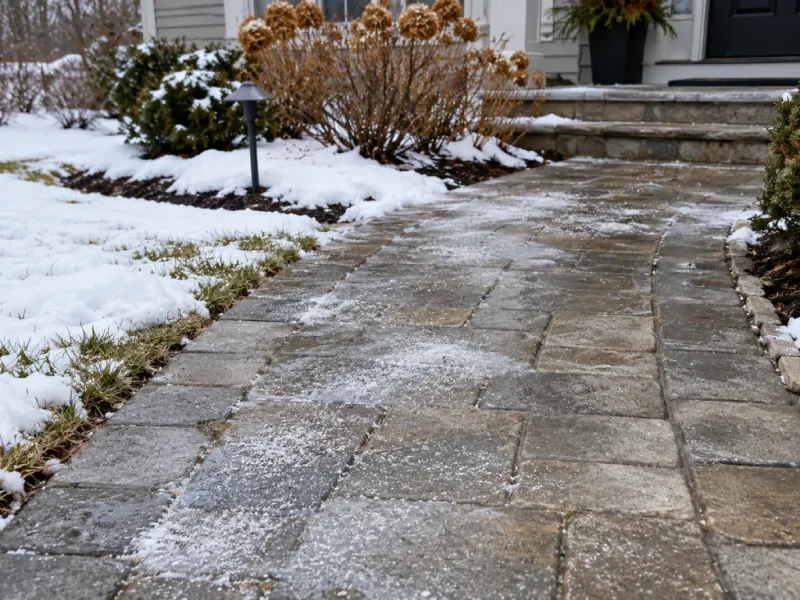
When deicer is spread on a driveway or walk, it dissolves into meltwater. That salty water runs downhill, and if a boxwood sits along the edge, the water can soak into the soil around its roots.
NC State Extension lists boxwood among salt-sensitive plants and describes both pathways: runoff into the root zone and salt spray onto leaves.
Spray is the second route. Cars driving over treated pavement and shovels flinging slush can throw salty droplets onto evergreen foliage.
Boxwood leaves stay on the plant all winter, so they have more time to collect it.
Why does salt hurt? University of Minnesota Extension explains that salt in the soil makes it harder for roots to take up water.
The plant can end up browning, losing branches, or dying in severe cases.
NC State points to an area within about 30 feet of treated pavement as a zone of potential concern. Think of that as a reminder to look around, not a line that separates safe from unsafe.
Which way the water runs, how much deicer was applied, wind direction, and the slope and soil of your yard all change how much salt a shrub actually gets.
Windshield products and pavement salt are different
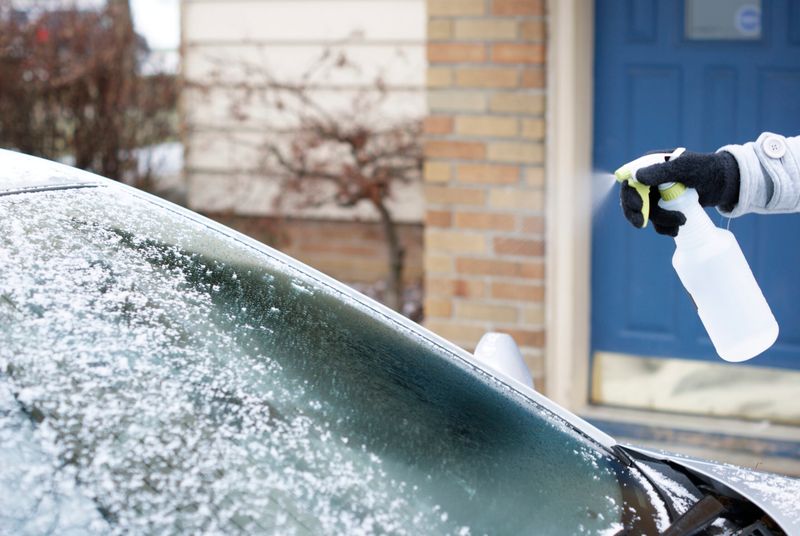
Scraping frost off your glass does not, by itself, send salt into the garden. The documented hazard for boxwoods is deicer applied to pavement, plus the spray it creates.
That is the part of the winter routine worth changing.
Some people spray a product on the windshield and wonder if it counts. Not necessarily.
One manufacturer’s windshield deicer product sheet lists methanol and propellants, not sodium chloride. That is a single product example, and it says nothing about what other windshield sprays contain or how any of them affect shrubs.
The practical step is simple: read the label on whatever you use. If you are unsure, spray it where runoff will not flow into a planting bed, or scrape instead.
Rock salt on the driveway is a different story. NC State’s guidance focuses on deicers used on pavement and on salt spray, so that is where to put your attention when protecting boxwoods near the car.
Keep treated snow and runoff away from the shrubs

Start with the shovel. Iowa State Extension advises removing as much snow and ice as practical before applying any deicer.
Less ice left behind means less product needed.
Next, use only enough to loosen what remains, and follow the directions on the bag. A heavy hand does not melt faster, it just puts more salt into the runoff.
Where you pile the snow matters too. Snow scraped off a salted driveway carries that salt with it, so a pile against the boxwoods becomes a slow-release source as it melts.
Choose a spot on the lawn or a spot where meltwater runs toward the street instead of the beds.
Take a quick look at your slope. If water from the driveway naturally drains toward the shrubs, consider keeping the deicer on the far side of the pavement, or use a shovel on that edge.
Reducing salt near the plants is the goal, and NC State also advises keeping deicers away from landscape plants.
None of these moves guarantees a boxwood will escape injury. They lower the amount of salt it is likely to meet.
Choose traction or deicer carefully
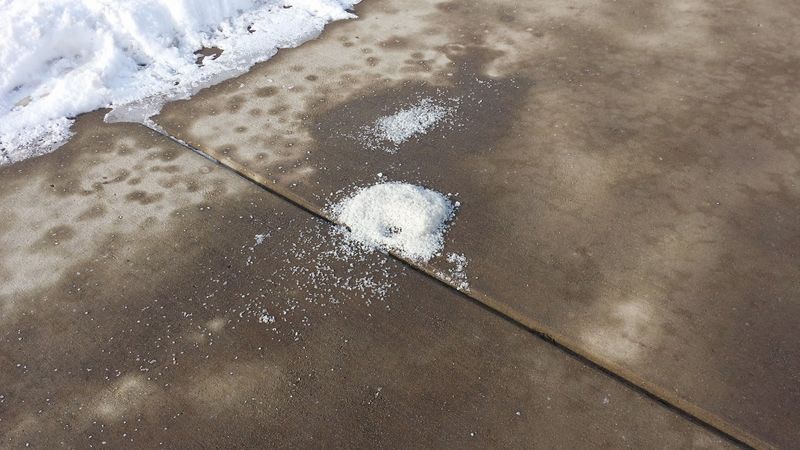
Sometimes you need grip, not melting. NC State recommends coarse sand or sawdust for traction.
Both give shoes and tires something to bite into, but neither melts ice, so they work best on thin ice or packed snow you can clear later.
When melting is truly needed, products differ. NC State says potassium chloride, calcium chloride, and calcium magnesium acetate are less likely to damage plants when properly used.
Notice the wording: less likely, not harmless.
Minnesota’s stormwater guidance on deicing chemicals still rates calcium chloride and magnesium chloride as high risk for foliage damage and root stress. It rates calcium magnesium acetate lower for plant impacts, though lower is not zero.
So a bag labeled as gentler is not a free pass. Chloride-based alternatives can still injure plants, especially if heavy applications wash toward the root zone.
A handy rule: pick sand for traction, pick a deicer only when ice must melt, and apply the smallest amount that works near shrubs.
Rinse foliage and leach soil only when conditions allow
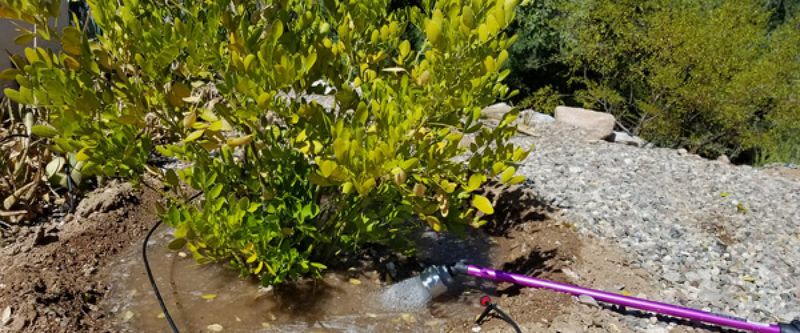
Salt on leaves and salt in soil call for different responses. For foliage, NC State advises rinsing splashed evergreen leaves with plain water, but only when temperatures are above freezing.
Rinsing in freezing weather can just leave ice on the plant.
For salt that has soaked into the soil, NC State suggests watering the affected area slowly for two to three hours. This is called leaching, and it pushes salt down below the roots.
Leaching only works where water can drain through the soil. Virginia Tech Extension says to apply water slowly and stop if runoff occurs.
If water pools or streams away, the soil is not taking it in.
Heavy clay, common in the Piedmont, can be a problem. UC IPM notes that poor drainage may need attention before leaching will help, and that soil testing comes before using amendments on sodic soils.
That also means gypsum is not a cure-all. It has a limited, specific role, and a soil test is the way to find out if it applies to you.
Check other causes before blaming salt
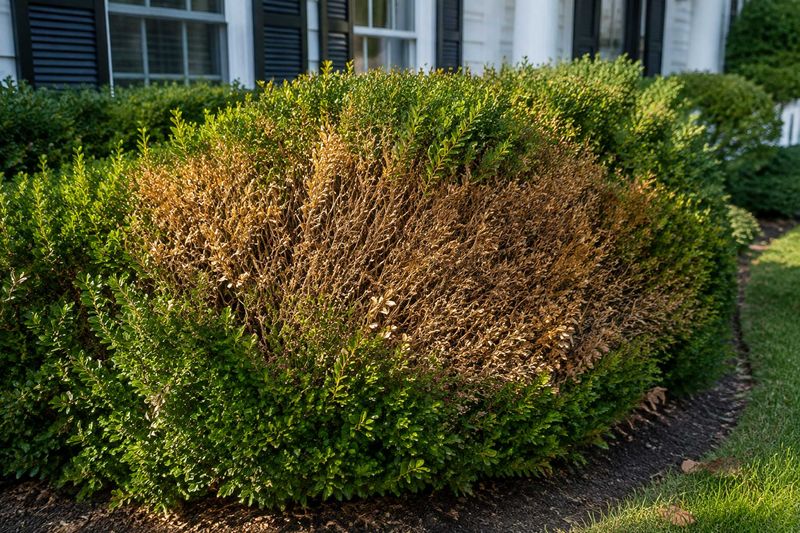
Brown boxwoods make everyone suspicious of the salt bag, but color alone cannot settle it. Salt injury is one possible cause among several.
NC State’s Extension Gardener Handbook on diseases and disorders covers how weather and site problems can mimic one another. Its woody ornamentals chapter documents cold injury to boxwood.
Winter drying can also scorch evergreens when frozen soil keeps roots from supplying water to leaves on windy, sunny days.
So look for clues. Is the browning on the side facing the pavement or the street, or is it spread evenly across the whole plant?
Did you spread deicer nearby, and could runoff or spray have reached that spot? Are plants far from any treated surface showing the same color?
Patterns near treated pavement raise the odds that salt played a part, but they are hints, not proof. If the shrubs are valuable or the damage is spreading, your county Extension office can help sort out the cause.
A practical routine for the next storm
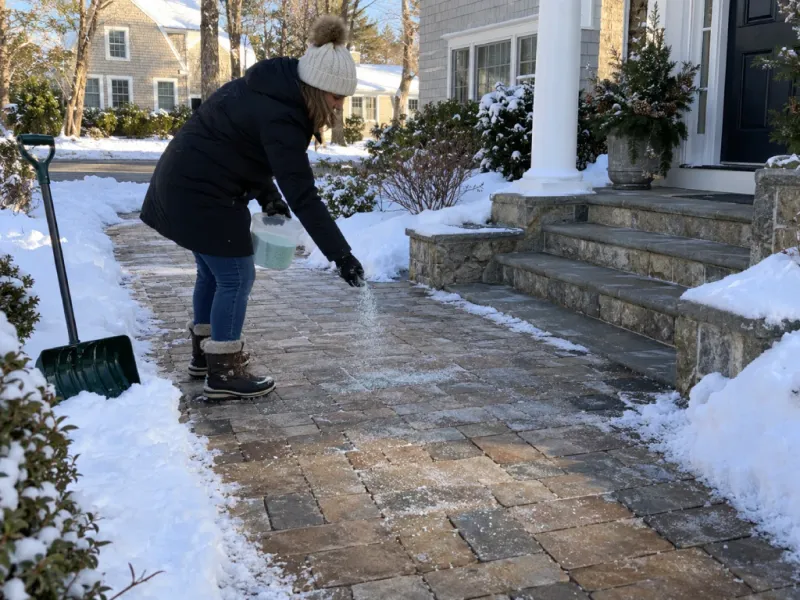
Before the next freeze, run through a short sequence. Shovel first, then use only the deicer needed to loosen what is left, as Iowa State Extension advises.
Pile treated snow away from the boxwoods, and steer meltwater elsewhere if you can. Reach for sand or sawdust when you only need grip, as NC State suggests.
These habits reduce exposure, and they cannot promise a shrub will stay unharmed. Still, the driveway chore and the hedge can share the same winter.