
That sweet-smelling vine crawling up your fence might be doing more harm than good in your North Carolina yard. Japanese honeysuckle is one of the most aggressive invasive plants in the state, capable of smothering native plants and taking over entire fence lines before most gardeners realize what happened.
The good news is that a beautiful native alternative, coral honeysuckle, gives you a vigorous fence vine, real wildlife value, and far less ecological damage. Knowing which plant you have, and which one to choose next, makes all the difference.
Identify the honeysuckle before you replace it
Not every vine called honeysuckle belongs on your removal list. “Honeysuckle” is a broad common name that covers dozens of species, and some of them are native, valuable, and worth keeping. The one North Carolina gardeners need to watch for on their fence lines is Japanese honeysuckle, botanically known as Lonicera japonica.
NC State Extension identifies Japanese honeysuckle as highly invasive in North Carolina, where it outcompetes native plants and spreads aggressively across landscapes.
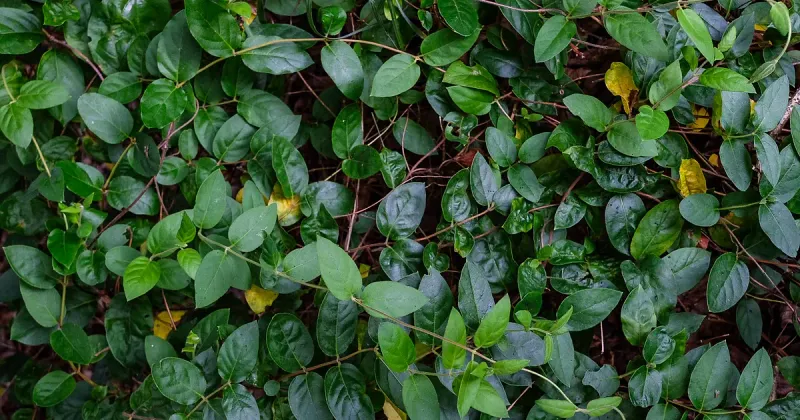
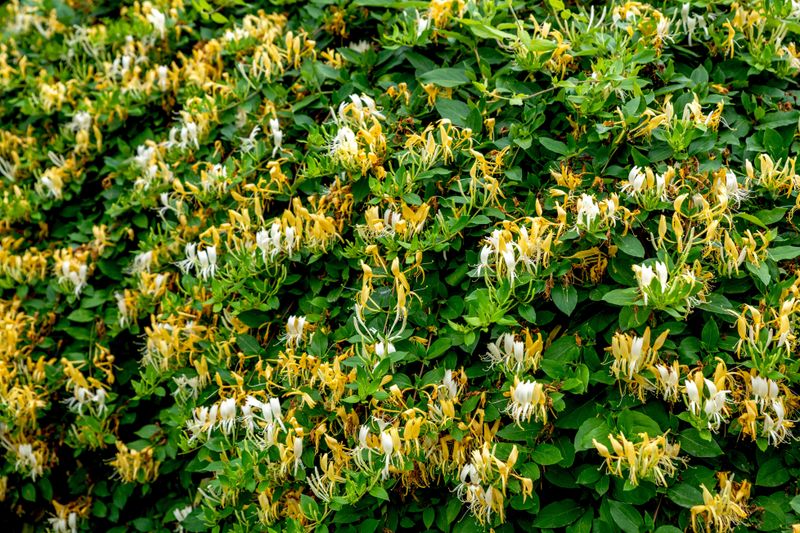
Japanese honeysuckle typically shows paired oval leaves, white to pale yellow tubular flowers with a noticeable sweet scent, and small black berries that ripen in fall. It climbs readily and can also sprawl as a groundcover.
The plant is semi-evergreen in milder parts of the state, which means it can keep growing and spreading even during mild North Carolina winters when other plants slow down.
Before pulling anything out, confirm the species you are dealing with. Several other nonnative honeysuckles are also problematic in North Carolina.
Amur honeysuckle is a shrubby invasive that can crowd out understory plants. Fragrant honeysuckle and Tatarian honeysuckle are also flagged as nonnative and potentially problematic.
Knowing the scientific name before you act prevents accidentally removing a native species that belongs in your landscape.
Why Japanese honeysuckle becomes a fence-line problem
Japanese honeysuckle does not just grow along your fence. It takes it over, and then keeps going.
The plant spreads through multiple pathways at once: underground rhizomes that push outward beneath the soil, above-ground runners that root wherever they touch ground, and seeds that birds and mammals carry into new areas after eating the berries. That three-pronged spread is why a single vine can become a dense tangle covering a large section of fence in just a few seasons.
Once it gains a foothold, Japanese honeysuckle can climb over and smother surrounding plants, blocking sunlight and competing with native vegetation for water and soil nutrients. Shrubs, small trees, and native wildflowers growing near an infested fence line often lose that competition.
The vine’s semi-evergreen growth in North Carolina means it continues to shade out neighbors even in winter months when most native plants are dormant and most vulnerable.
It is fair to acknowledge that Japanese honeysuckle does attract some wildlife. Its flowers can draw hummingbirds and insects looking for nectar, and birds and mammals do eat and disperse its fruit.
The problem is not that the plant has zero value but that its invasive growth pattern causes real ecological harm to the native plant communities North Carolina depends on. That trade-off, widespread disruption of native vegetation in exchange for some wildlife visits, is what makes it a poor landscape choice for a North Carolina fence line, regardless of how familiar or fragrant it feels.
Choose coral honeysuckle as the native alternative
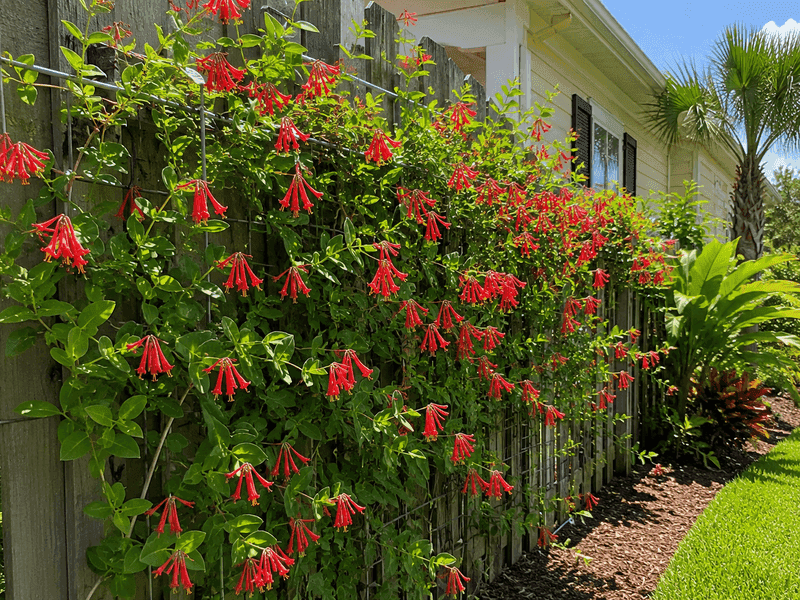
Coral honeysuckle, known scientifically as Lonicera sempervirens and sometimes called trumpet honeysuckle, is native to the eastern United States and specifically to North Carolina. NC State Extension recommends coral honeysuckle for trellises, arbors, and fences, making it a natural structural fit for the same spots where Japanese honeysuckle tends to take hold.
Its tubular red-to-orange flowers bloom from spring through summer, and in some years flowering continues into fall, giving your fence color across a long season.
The vine is a twining grower, reaching roughly 10 to 20 feet at maturity. That vigorous size means it will genuinely cover a fence, but it also means gardeners should plan for a structure that can support the plant’s weight and spread over time.
The North Carolina Native Plant Society lists coral honeysuckle as a recommended native species suited to full sun or part sun, confirming it belongs in the state’s landscape rather than simply tolerating it.
Coral honeysuckle is a better ecological fit for a North Carolina fence than Japanese honeysuckle, but calling it maintenance-free would be misleading. University of Florida Extension describes coral honeysuckle as generally low-maintenance once established, not as a plant that manages itself without any attention.
It grows vigorously, and without periodic training and pruning it can still overwhelm a small space. The key difference from Japanese honeysuckle is not that coral honeysuckle requires zero effort, but that it does not spread invasively through rhizomes and bird-dispersed seed the way its nonnative cousin does, making it a genuinely manageable native choice.
Match the wildlife benefits to what the plant actually provides
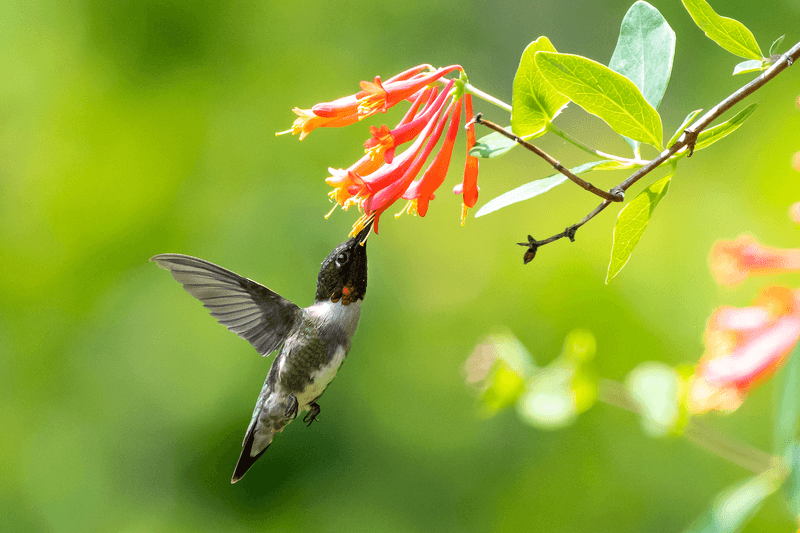
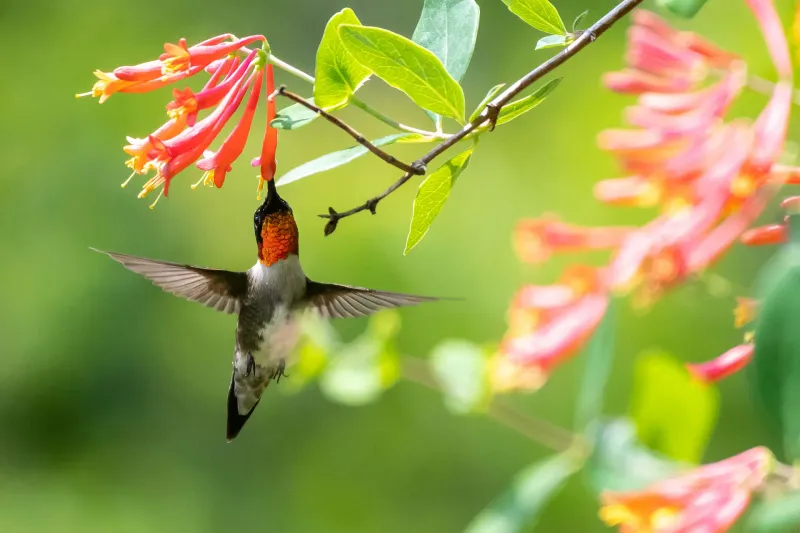
Coral honeysuckle earns its reputation as a wildlife plant through specific, documented relationships rather than a general claim that it feeds all pollinators. NC State Extension identifies ruby-throated hummingbirds as primary nectar users of the vine’s tubular flowers, along with other flower visitors including bees and butterflies.
The long, narrow flower shape is particularly well suited to hummingbird bills, which is why the plant consistently draws these birds when it is in bloom near a fence or trellis.
Beyond nectar, coral honeysuckle produces small red berries that songbirds eat in fall and winter. The vine also serves as a documented larval host for the spring azure butterfly and the snowberry clearwing moth, meaning adult females lay eggs on the foliage and the resulting caterpillars use the plant as food.
North Carolina’s coastal landscaping guide also notes coral honeysuckle as a larval host for the hummingbird clearwing moth, adding another documented insect relationship to the plant’s profile.
These benefits are real and worth planting for, but they come with an honest scope. Research on native plant value consistently shows that species-specific and regional differences matter, and studies on native versus nonnative plants and pollinator use find that context, including which pollinators are present and what else is nearby, shapes outcomes significantly.
Planting one coral honeysuckle vine on your fence contributes real habitat value. It does not replace a diverse native garden, and it will not single-handedly reverse pollinator decline.
Think of it as one well-chosen piece of a larger native planting strategy rather than a complete solution on its own.
Build the right fence-side growing conditions
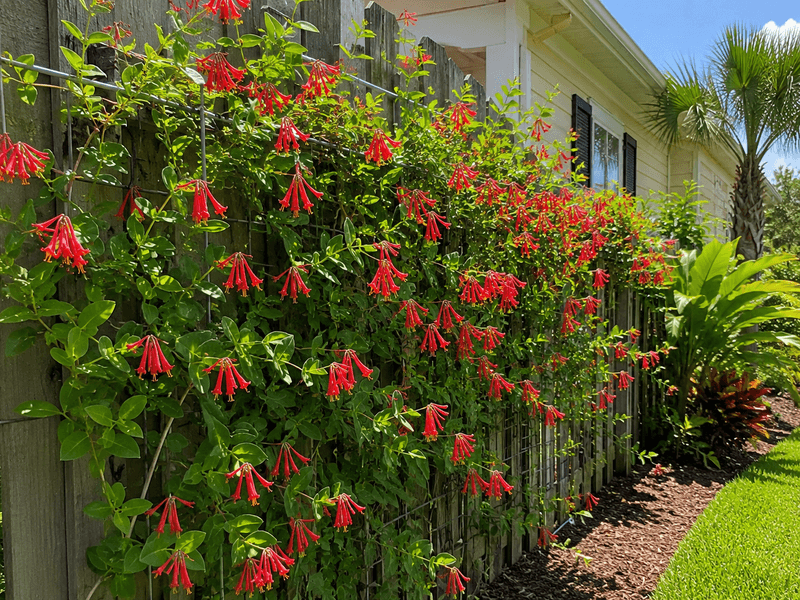
Getting coral honeysuckle established on a fence starts with picking the right spot. The vine flowers most heavily in full sun, so a fence that receives six or more hours of direct sunlight each day will give you the best bloom display and the most hummingbird activity.
Partial shade is tolerable, and the plant will still grow and flower with fewer hours of sun, but expect noticeably fewer blooms than you would see in a fully sunny location.
NC State recommends medium-moisture, well-drained soil for coral honeysuckle, which suits most North Carolina Piedmont and coastal plain garden beds without amendment. The vine does not demand rich or heavily fertilized soil, and excess nitrogen can actually push the plant toward leafy growth at the expense of flowers.
University of Florida Extension notes that coral honeysuckle tolerates a range of soil conditions but does not perform well in dry sands, a useful caution for gardeners in the sandier portions of North Carolina’s coastal plain.
Because coral honeysuckle is a twining vine, it wraps its stems around a support structure rather than clinging with adhesive rootlets. Florida Extension guidance on vines notes that twining species need wire, lattice, a trellis, or comparable support and that young stems should be guided into the structure at planting time.
A fence with horizontal wires spaced every eight to twelve inches, or a lattice panel attached to a fence face, gives the vine what it needs to climb steadily without flopping. Plan your support before you plant, since retrofitting a structure around an already-growing vine is considerably more difficult.
Train and prune the vine before it outgrows its space

A coral honeysuckle left to grow straight upward will produce a tall, narrow column of stems rather than the broad, even fence coverage most gardeners are after. The fix is straightforward: as new shoots extend, weave them sideways through the fence wires or trellis openings rather than letting every stem reach for the top.
Florida Extension guidance on training vines recommends weaving new growth laterally to encourage fuller, more even coverage across the support structure.
Pruning keeps the vine within its intended space and prevents the kind of dense buildup that can weigh down a fence or shade out nearby plantings. NC State Extension recommends waiting until after flowering to prune coral honeysuckle because the vine blooms on new growth.
Cutting stems before the flowering period ends removes the buds that would have opened next. Timing your pruning for late spring or early summer, once the main flush of flowers has finished, protects that season’s bloom while still giving you time to shape the plant before it puts on its next round of growth.
Fertilizer choices also affect the balance between foliage and flowers. Excess nitrogen pushes the vine toward producing more leaves and fewer blooms, so skip the high-nitrogen lawn fertilizers near your honeysuckle planting.
University of Florida Extension describes established coral honeysuckle as generally low-maintenance, which holds true when the vine has the right support and receives light, timely pruning rather than hard annual cutbacks or fertilizer overload. A well-trained vine on a solid fence structure should stay manageable with one or two pruning sessions per year.
Remove Japanese honeysuckle with a follow-up plan
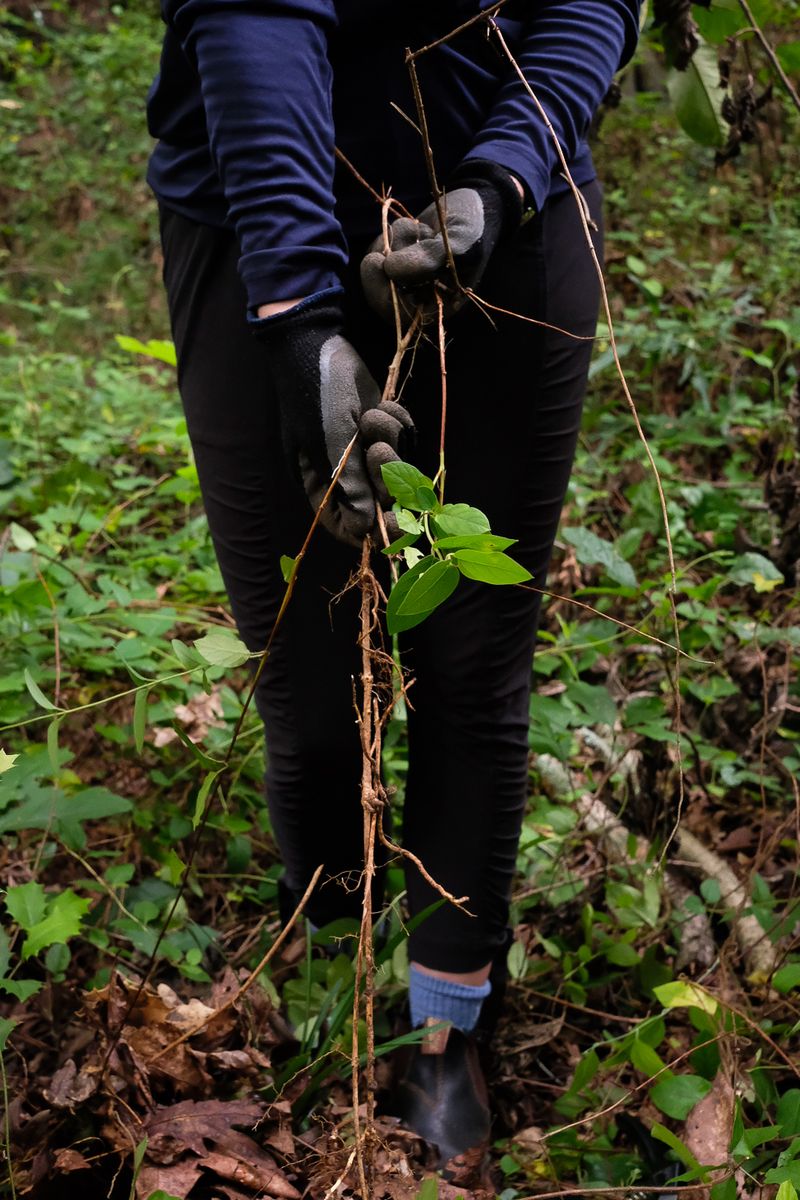
Cutting Japanese honeysuckle back to the ground feels satisfying, but it rarely ends the problem. The plant stores energy in its root system and rhizomes, and new shoots typically emerge from the cut base within weeks.
For small, recently established patches on a fence line, cutting stems to ground level in late summer and then watching closely for regrowth is a reasonable starting point. Repeated cutting over one or more growing seasons can gradually exhaust the plant’s root reserves, but only if you stay consistent and remove new growth before it has time to photosynthesize and rebuild energy.
Larger or long-established infestations are harder to clear with cutting alone. NC State Extension’s gardener handbook covers targeted treatment options for persistent invasive vines, including cut-stump approaches where a product is applied directly to freshly cut stem ends to prevent regrowth.
This method reduces the risk of harming nearby desirable plants compared to broadcast spraying. North Carolina DEQ’s exotic plant guidelines outline management strategies for invasive species removal in the state, and they consistently emphasize site-specific decision making over one-size-fits-all formulas.
Do not apply any herbicide product without reading the label fully first. Product labels carry legal weight and specify rates, timing, protective equipment, and restrictions near water or desirable plants.
Madison County Cooperative Extension’s guide on Japanese honeysuckle recommends consulting your local NC Cooperative Extension office for guidance on difficult infestations, particularly where the vine is intertwined with plants you want to keep. After removal, monitor the cleared area through at least one full growing season before planting coral honeysuckle.
Rhizome fragments left in the soil can sprout, and installing a new vine into an area with active regrowth only complicates the transition.
Make the swap with realistic safety expectations
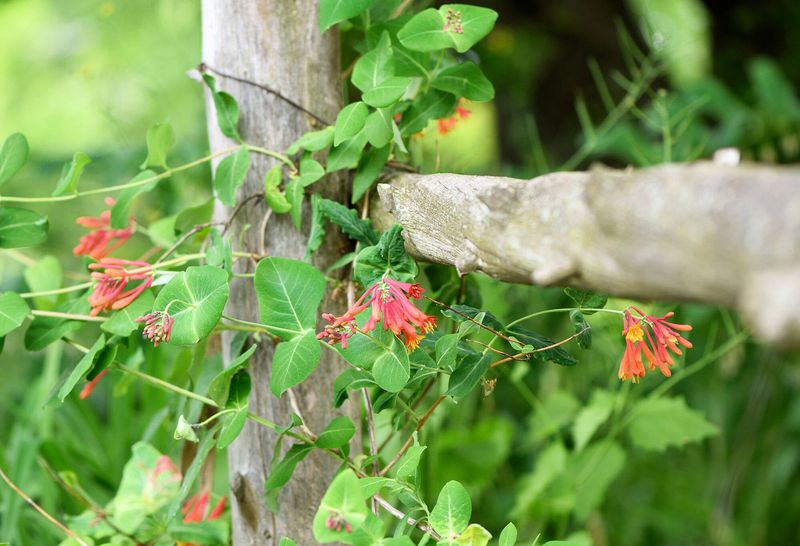
Coral honeysuckle is a strong choice for a supported, sunny-to-partly-shaded fence in a North Carolina yard where you can give it a wire or lattice structure and occasional pruning. It delivers real wildlife benefits through nectar, berries, and documented larval-host relationships, and it does so without the invasive spread that makes Japanese honeysuckle a landscape liability.
That said, placement matters in ways that go beyond sunlight and soil.
NC State Extension rates coral honeysuckle as highly flammable, which means it should not be planted immediately beside a home’s exterior wall or within a defensible-space planting where fire risk is a concern. A fence that runs along a property boundary away from the house is a far safer location than a trellis attached directly to siding or a wooden deck railing.
University of Florida Extension also notes that the plant is not evergreen everywhere, so do not count on year-round fence screening across all of North Carolina. Coastal and southern Piedmont gardeners may see leaves persist through mild winters, while mountain and upper Piedmont gardeners should expect a deciduous vine that drops foliage in cold months.
Go into this swap with clear expectations: a vigorous native vine that earns its place through wildlife value and ecological fit, not a zero-effort, all-season screen. A fence full of coral honeysuckle in bloom, with hummingbirds working the flowers on a July morning, is a fair trade for a season or two of removal work and the modest upkeep that follows.
That kind of yard is worth tending.