
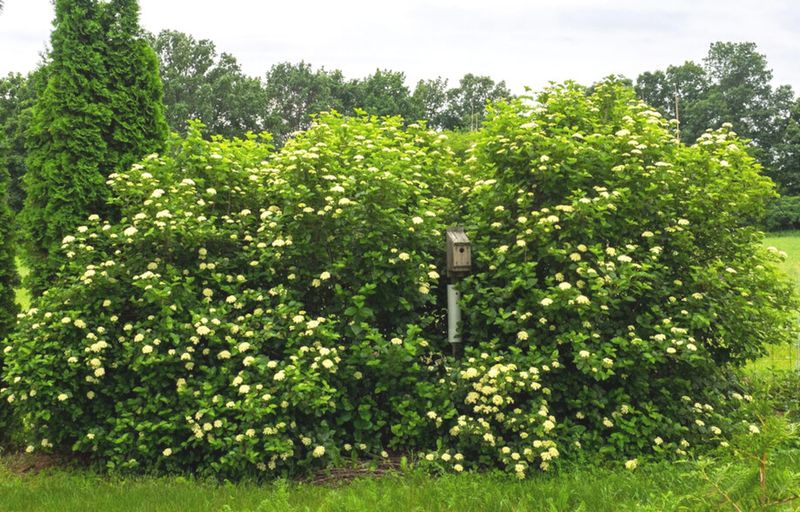
Boxwood hedges are neat and evergreen, but they never put on a fall color show, and they do nothing for North Carolina’s wildlife. Southern arrowwood viburnum, a native shrub found across the Coastal Plain, Piedmont, and Mountains, offers spring flowers, wildlife-friendly fruit, and fall foliage that can shift from yellow all the way to orange and red. For homeowners who want a living screen that actually belongs in the NC landscape, arrowwood is worth a serious look, especially when it is paired with a few simple yard-edge habits that may help reduce tick exposure.
Choose Southern arrowwood for an informal native screen, not a clipped border
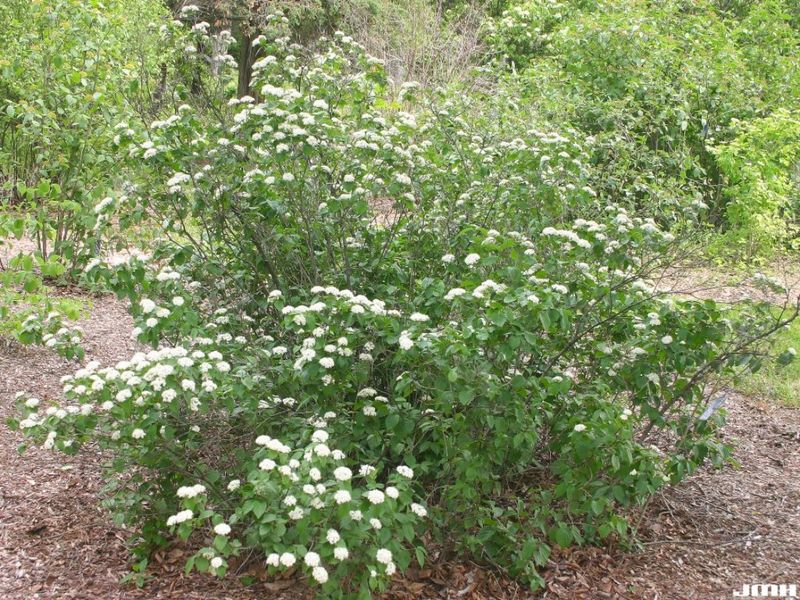
Southern arrowwood viburnum (Viburnum dentatum) is a sturdy, upright, multi-stemmed shrub native to North Carolina’s Coastal Plain, Piedmont, and Mountain regions. NC State Extension describes it as vigorous, deer-resistant, and well-suited for use as a hedge or screen, with seasonal interest across three seasons and wildlife value that boxwood simply cannot match. That combination makes it a compelling choice for homeowners who want a native planting that does real ecological work.
The comparison with boxwood is fair but not a simple swap. Boxwood, including the widely planted common boxwood, is native to Europe and Asia and is valued for its year-round evergreen foliage and its ability to hold a crisp, formal shape under regular shearing. It is a legitimate choice where a compact, clipped, always-green border is the design goal. Arrowwood does not do that job.
What arrowwood does instead is grow into a loose, layered screen that reaches roughly 5 to 10 feet tall with a spread of 6 to 10 feet. It leafs out in spring, blooms with flat-topped clusters of white flowers, feeds birds and pollinators through summer and fall, and then closes the season with foliage color that boxwood never attempts. Homeowners who want a larger, informal native screen along a property edge, fence line, or woodland border will find arrowwood far better suited to that role than a sheared boxwood row.
Choosing arrowwood means accepting its natural form. It will not stay tidy without occasional pruning, and it will spread wider than most people expect a hedge plant to grow. For the right space and the right design intent, though, that generous, wildlife-friendly growth is exactly the point.
Expect possible orange-to-red foliage, not guaranteed fiery color
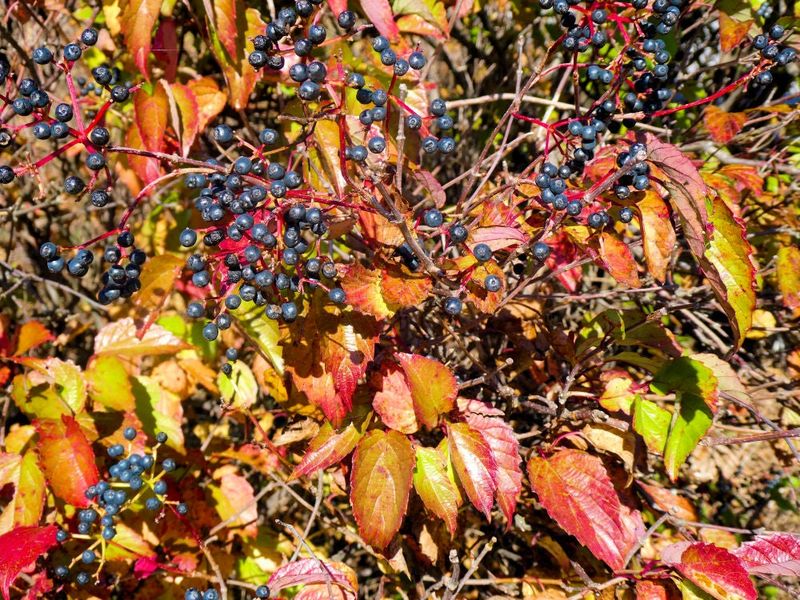
One of arrowwood’s most appealing seasonal moments is its fall foliage, but that display is genuinely variable. NC State Extension notes that fall color ranges from drab yellow to orange and red, depending on the individual plant, the site, and the weather that season. Some plants in some years will deliver a vivid orange-red show; others will turn a quiet butter-yellow and drop without much fanfare. Treat the richer colors as a welcome possibility, not a reliable annual guarantee.
The rest of the seasonal calendar is more consistent. Arrowwood opens spring with flat-topped clusters of creamy white flowers that attract native bees and other pollinators. By late summer into early fall, those flowers give way to small blue-black drupes that songbirds, wild turkeys, grouse, and squirrels actively seek out. The fruit and flowers together make arrowwood a three-season plant, even in years when the fall color lands closer to yellow than red.
If stronger, more predictable fall color is the primary goal, rusty blackhaw (Viburnum rufidulum) is worth considering as a comparison. NC State Extension describes rusty blackhaw as having excellent red, purple, and orange fall color, and it is also native to North Carolina and deer-resistant. The trade-off is size: rusty blackhaw can reach 10 to 20 feet tall and wide, making it more of a large hedge or small tree than a mid-sized screen. For most residential lots, arrowwood’s more moderate scale is the practical choice, with the understanding that its fall color is a seasonal bonus rather than a scripted performance.
Boxwood, by contrast, offers no fall color at all. Its value is the opposite: consistent, evergreen foliage that holds its appearance through winter. The two plants serve different aesthetic goals, and arrowwood’s variable fall display is part of what makes it feel alive and connected to the natural season.
The shrub does not repel ticks
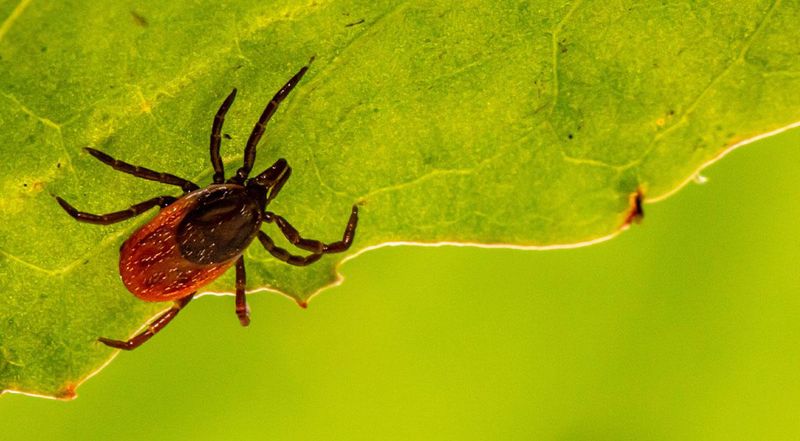
Here is the part that needs to be said plainly: no planted shrub repels ticks. Extension guidance from University of Maryland found no scientific studies demonstrating that growing a particular plant in a landscape effectively repels ticks or prevents them from entering a yard. Botanical compounds may show repellent activity when extracted and applied at tested concentrations in laboratory settings, but growing the source plant in your yard does not reproduce those conditions. Arrowwood is not a tick deterrent.
The connection between arrowwood and tick exposure is narrower and more indirect. Because arrowwood is deer-resistant, it may be less likely to attract deer browsing along your property edge. Deer are important hosts for adult blacklegged ticks, and the University of Rhode Island’s TickEncounter program recommends deer-resistant plants as part of a broader yard strategy aimed at discouraging deer from entering the property. That is a reasonable supporting role for arrowwood, but it is not the same as the shrub repelling ticks.
Deer-resistant also does not mean deer-proof. Under heavy pressure, during drought, or in winter when food is scarce, deer will browse plants they normally avoid. Even when deer are deterred, ticks can still arrive on mice, voles, birds, dogs, cats, and people. CDC guidance on ticks and pets makes clear that pets moving between outdoor areas and the home are a common tick transport pathway.
Reducing deer traffic addresses one route, not all of them.
Southern arrowwood earns its place in the landscape for its native range, its ecological value, and its suitability as an informal screen. Its possible role in a tick-exposure reduction plan is real but modest: it is one plant in a broader strategy, not a living barrier. The sections that follow explain what the broader strategy actually looks like.
Build a maintained edge around the planting
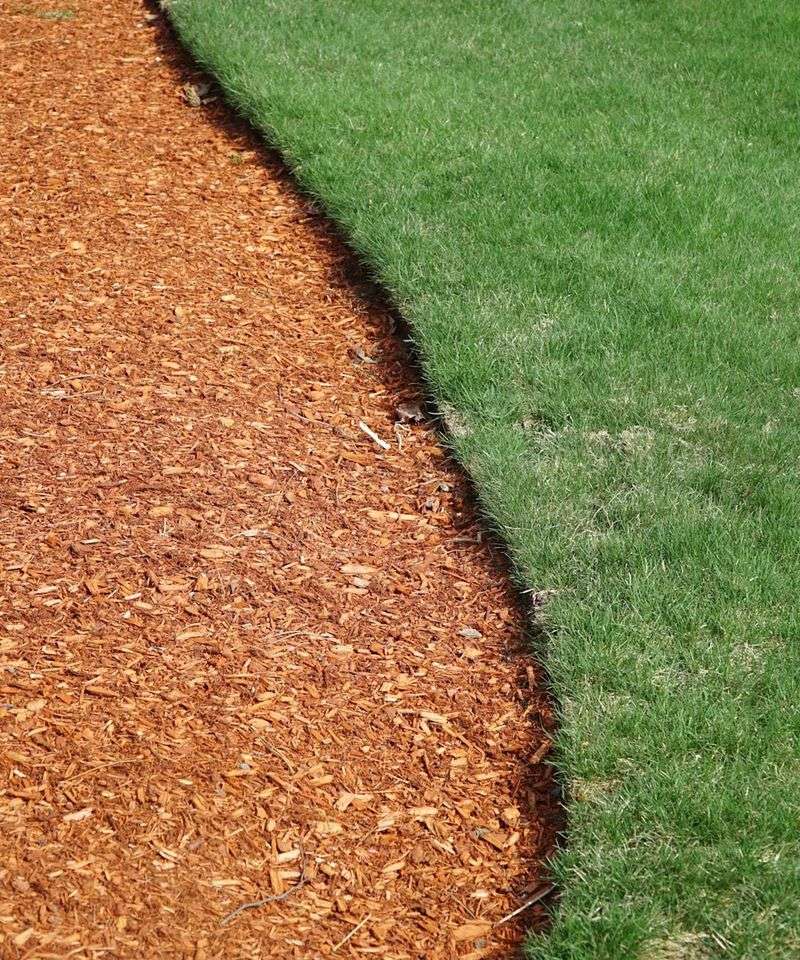
Planting arrowwood is only one piece of a yard-edge design that actually reduces tick exposure. The shrub needs to be surrounded by maintained landscape practices, or it can quietly create the opposite of what homeowners want. An overgrown arrowwood hedge left unpruned, sitting beside unmanaged brush and deep leaf litter, creates shaded, humid, densely covered ground – exactly the habitat conditions that favor tick activity. The planting itself is not the problem; neglect is.
CDC guidance on tick prevention recommends mowing the lawn regularly, removing leaf litter, clearing tall grass and brush, and trimming vegetation around frequently used areas to increase sunlight and reduce humidity at ground level. These steps matter whether or not you have native shrubs on the property edge. They address the conditions ticks need to survive and find hosts, rather than trying to stop ticks at the perimeter.
The most practical separation tool is a maintained three-foot-wide strip of wood chips, mulch, or gravel placed between the lawn and the wooded or brushy habitat beyond. University of Maine Extension tick management guidance includes this barrier among its core landscape recommendations, alongside clearing brush and improving sunlight in high-use areas. The strip creates a dry, open zone that ticks are reluctant to cross, separating the managed lawn from the habitat edge where tick activity is higher.
That barrier is a useful tool, not an impenetrable wall. Its performance depends on how well it is maintained, how much shade falls on it, how dense the adjacent vegetation is, and the local tick population. Think of it as a separation device that reduces contact opportunity, not a guarantee of exclusion.
CDC guidance on Lyme disease prevention also recommends keeping play equipment, decks, and patios away from brushy or wooded edges. Locating family-use areas in sunny, open, well-mowed parts of the yard – away from the shrub edge – is a straightforward way to reduce the time people spend in higher-exposure zones. The TickEncounter program at the University of Rhode Island similarly emphasizes that ticks concentrate near wooded edges, shaded plantings, leaf litter, stonewalls, and woodpiles, so design choices that keep those features away from play and seating areas matter.
Give Southern arrowwood room to reach its mature size
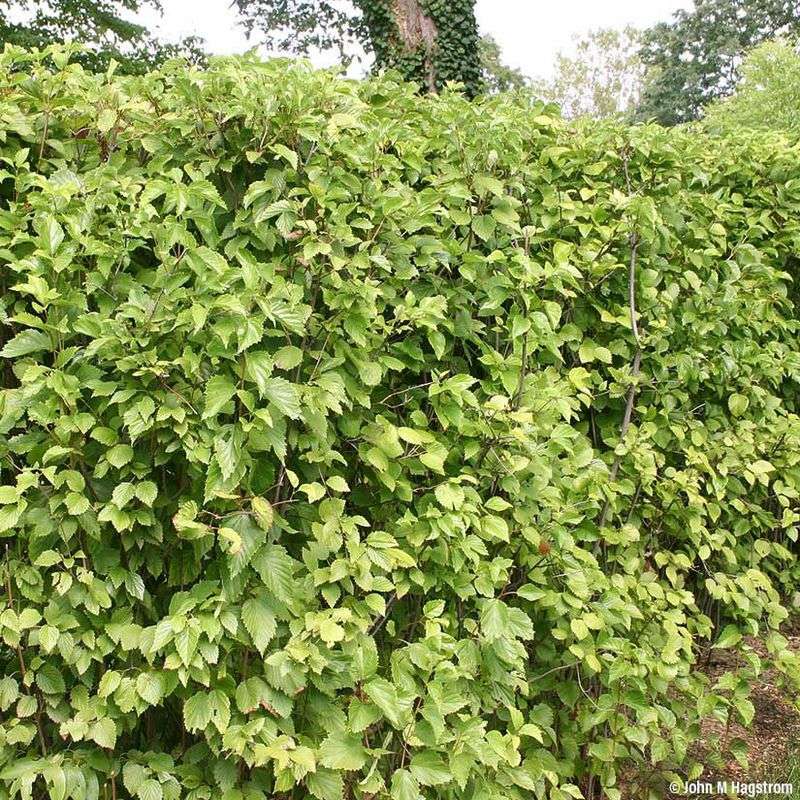
Before ordering plants, measure the space. Southern arrowwood generally reaches about 5 to 10 feet tall and 6 to 10 feet wide at maturity, and that spread is not optional. NC State Extension’s plant profile confirms this size range and describes the shrub as appropriate for use as a hedge or screen, which implies a planting with room to fill in naturally over several years. Trying to squeeze it into a 24-inch foundation bed or force it to stay narrow through heavy pruning will produce a stressed, unattractive plant that loses much of its wildlife value.
Arrowwood tolerates full sun to partial shade, which gives it flexibility across most North Carolina yards. It performs in a range of soil types and conditions, though moist, well-drained soil supports the healthiest growth. Sites with consistently wet or very dry soils will produce weaker plants, and plants in deep shade tend to grow loosely and flower less reliably. A location with at least a few hours of direct sun each day, reasonable drainage, and enough horizontal space for the mature canopy will give the shrub its best start.
The relationship between the shrub’s mature spread and the adjacent three-foot buffer also matters. If arrowwood is planted too close to the mulch or gravel strip, its canopy will eventually shade and encroach on the buffer, reducing its effectiveness and creating the humid, leaf-littered ground conditions that favor ticks. Allow enough setback from the buffer’s inner edge so that the shrub can reach full width without overhanging or shading the separation zone.
Spacing between plants in a hedge row should account for the full mature width. Planting at six-foot centers will produce a connected screen faster than wider spacing, but plants will still need occasional pruning as they mature to prevent crowding, poor airflow, and dense interior growth that holds moisture and debris.
Prune for a healthy boundary without erasing its natural form
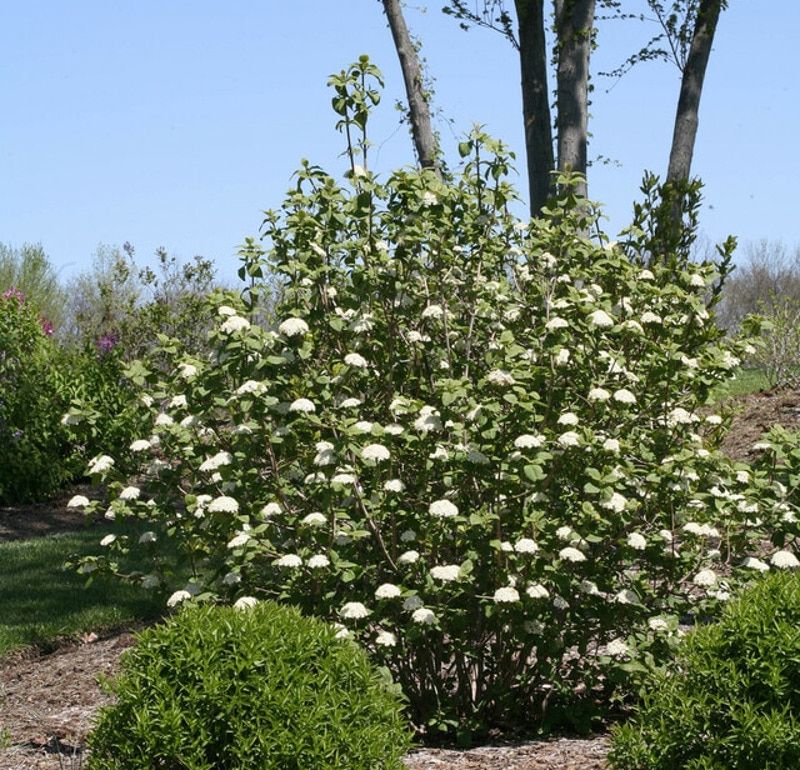
Arrowwood is not a high-maintenance shrub, but it does need periodic attention to stay healthy and compatible with a managed yard edge. Over time, the plant can sucker from the base, gradually widening its footprint beyond what was originally planned. NC State Extension notes that rejuvenation pruning may be needed as the shrub matures, which typically means cutting older, crowded canes to the ground every few years to encourage fresh, vigorous growth from the base. This keeps the plant open, productive, and appropriately sized for its location.
The pruning approach matters. Shearing arrowwood into a tight, boxy shape – the way you might trim a boxwood – removes the branch tips where flowers and fruit form and turns the plant into a dense, uniform mass with poor interior airflow. A better method is selective thinning: remove the oldest and most crowded canes at ground level, clear any branches that are growing back toward the lawn or across the buffer strip, and lift the canopy’s lower edge enough to maintain visibility and airflow near the ground. University of Maine Extension recommends keeping vegetation trimmed and reducing dense low cover near high-use areas, and that principle applies directly to how arrowwood is pruned at a managed yard edge.
Leaf litter beneath the shrub deserves attention too. TickEncounter guidance identifies accumulated leaf litter as a key tick habitat feature. Raking out debris from beneath the canopy and keeping it out of the adjacent buffer reduces the moisture and cover that ticks seek.
Arrowwood’s ecological contributions – its spring flowers for native bees, its fruit for songbirds and turkeys, and its role as a larval host for the Spring Azure butterfly – are tied to its natural branching structure. Responsible pruning preserves those benefits while keeping the planting compatible with a maintained, lower-exposure yard edge. The goal is a living boundary that works for both wildlife and the people who use the yard.
Match the viburnum to the property’s scale and conditions
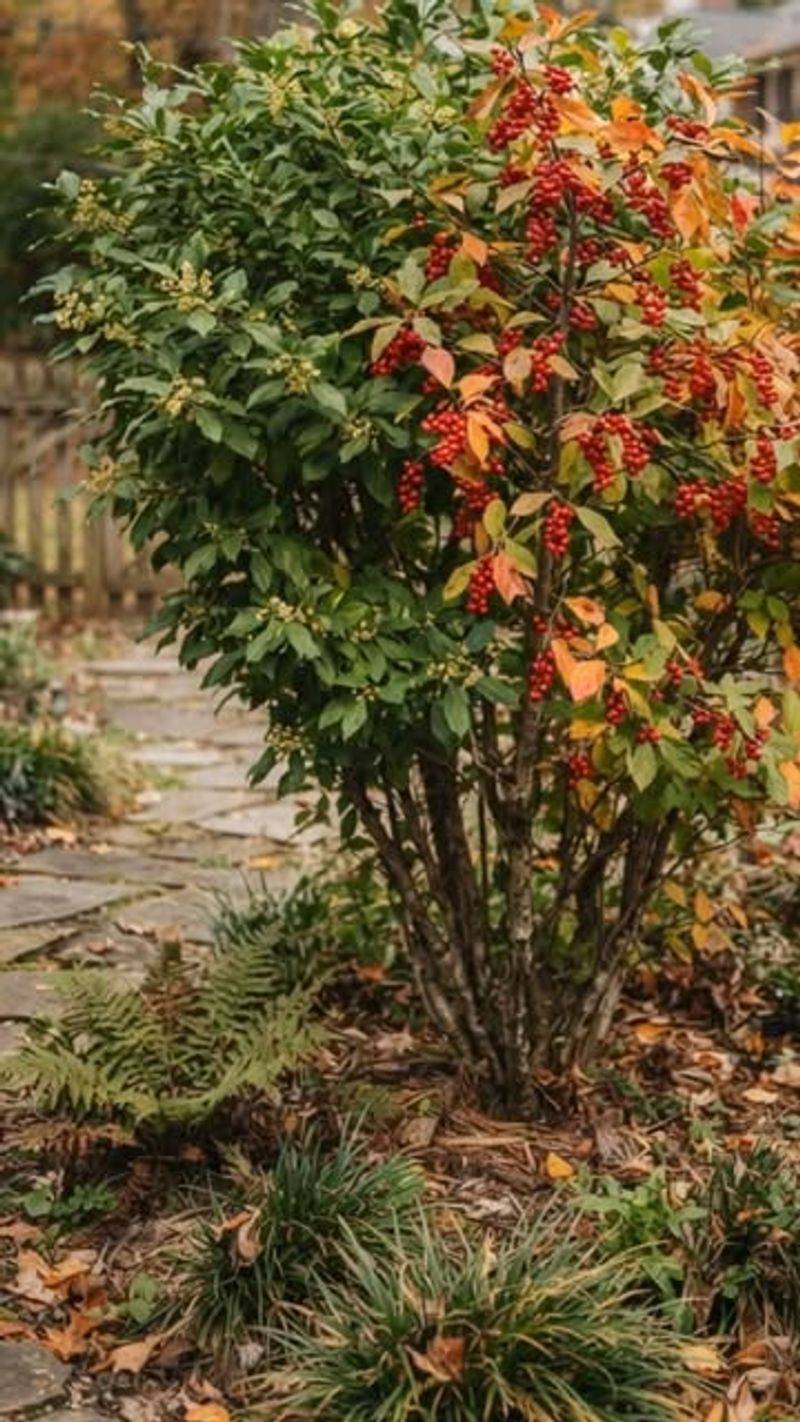
Not every yard calls for the same plant, and arrowwood is not a universal answer. For a mid-sized property edge where a 6- to 10-foot-wide informal screen fits comfortably, Southern arrowwood is a strong, practical choice across all three of North Carolina’s major regions. It adapts to a range of soils and light conditions, establishes without significant fuss, and delivers consistent ecological value year after year.
For larger or drier properties, rusty blackhaw offers a useful comparison. NC State Extension describes rusty blackhaw as drought-tolerant once established and notes its excellent red, purple, and orange fall color – a more reliably vivid display than arrowwood typically delivers. Its white spring flowers and blue fruit also attract pollinators, birds, squirrels, and chipmunks. The catch is size: at 10 to 20 feet tall and wide, rusty blackhaw is more of a large hedge or small tree, and it can overwhelm a narrow property edge or modest foundation bed quickly.
At the other end of the scale, homeowners with a small, formal border who genuinely need a compact, evergreen, clippable plant should not try to force either viburnum into that role. Boxwood, including common boxwood, remains the practical choice for a tight, year-round evergreen edge. There is no native shrub that replicates boxwood’s exact combination of small scale, dense evergreen foliage, and tolerance for frequent shearing – and pretending otherwise leads to a planting that satisfies no one.
The honest question to ask before buying is: what job does this planting actually need to do? If the answer is a sizable, wildlife-friendly native screen with seasonal interest and deer-resistant qualities, arrowwood fits well. If the answer is a 12-inch-tall clipped green border that looks the same in January as it does in July, a viburnum is the wrong tool.
Use the native hedge as one part of a safer yard edge
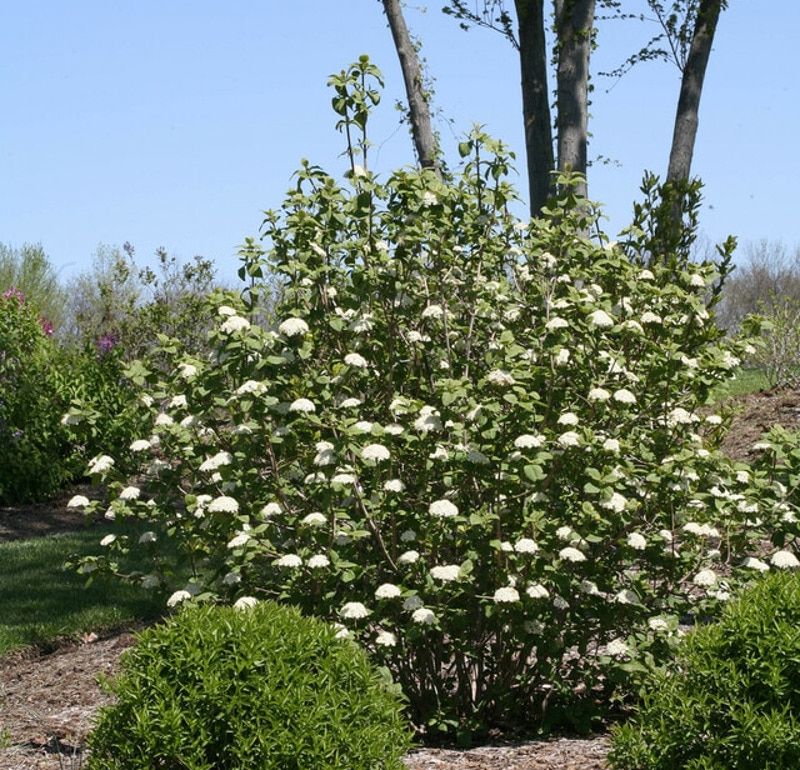
Southern arrowwood viburnum earns its place in a North Carolina yard on its own terms: a native, deer-resistant shrub that provides spring flowers, late-season fruit for birds and wildlife, and fall foliage that can run from soft yellow to genuine orange and red. NC State Extension confirms its statewide native range and its value as a hedge, screen, and wildlife plant. Those qualities are real and sufficient reasons to grow it.
Its connection to tick exposure is narrower. Arrowwood does not repel ticks, block their movement, or eliminate risk. What it can do is support a yard-edge design that zones the property thoughtfully: family-use areas kept sunny, open, and mowed; a maintained three-foot mulch or gravel buffer separating lawn from brushy habitat; and shrub plantings managed so they do not become the shaded, leaf-littered, humid cover that ticks prefer. CDC tick prevention guidance and University of Maine Extension landscape management recommendations both point to this kind of habitat zoning as the most practical approach available to homeowners.
The goal is not a tick-free yard – that is not a realistic promise from any plant or landscape practice. The goal is a yard that works harder for the people and wildlife who use it: open where families gather, managed at the edges, and planted with native species that belong in the NC landscape. Arrowwood, maintained well and placed thoughtfully, is a genuine contribution to that kind of yard.