
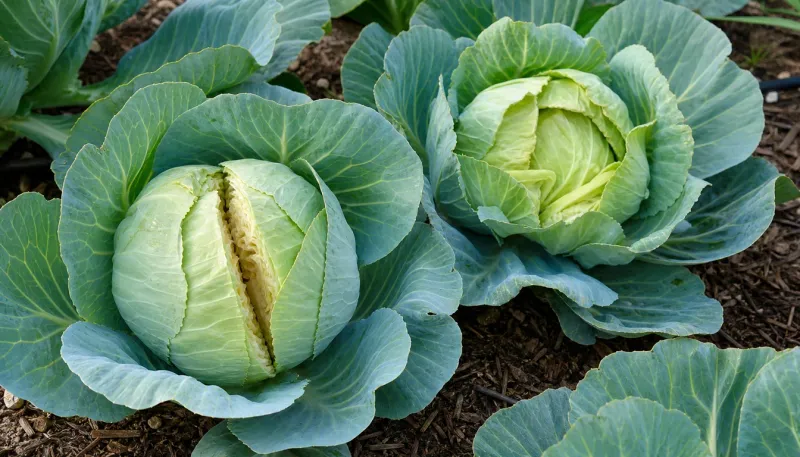
You walk out to the garden after a soggy night and find a cabbage head burst open like a overstuffed suitcase. It can feel like the whole row is ruined, but a split head is common and usually easy to sort out.
Knowing why it happens helps you decide what to pick today and what can wait. Here is a calm, practical plan for Texas and Florida beds.
Mature heads can split after a sudden surge of water
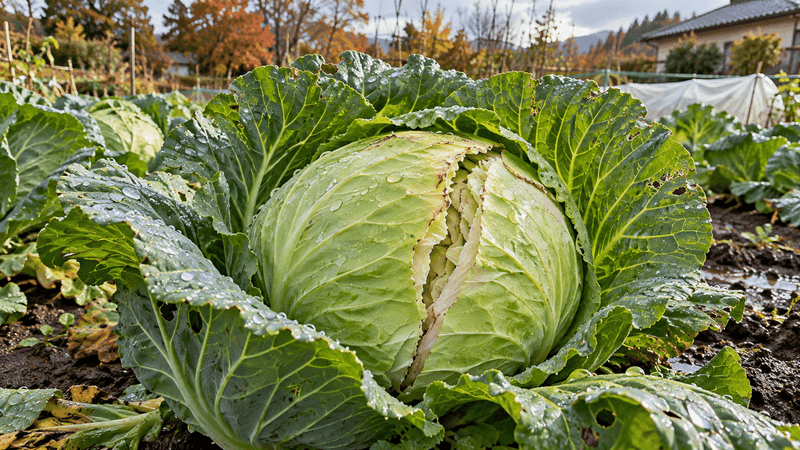
Cabbage heads are most likely to crack when they are close to mature. At that stage the leaves are packed tightly, and there is little room left to grow.
When heavy rain or a long soaking from the hose arrives, especially after the soil has dried out, the roots can pull in a lot of water quickly. Utah State University Extension describes this rapid water uptake as building pressure inside a mature head until it breaks open.
You may notice the crack after a warm, wet spell, but the better-supported trigger is the sudden water, not the warmth itself. Warm weather is not required for splitting to happen.
Texas gardeners will find the same point in Texas A&M harvesting guidance, which treats splitting as a risk near maturity. The takeaway is simple: heads that are nearly ready deserve the closest watch after a big rain.
Choose firm heads for harvest
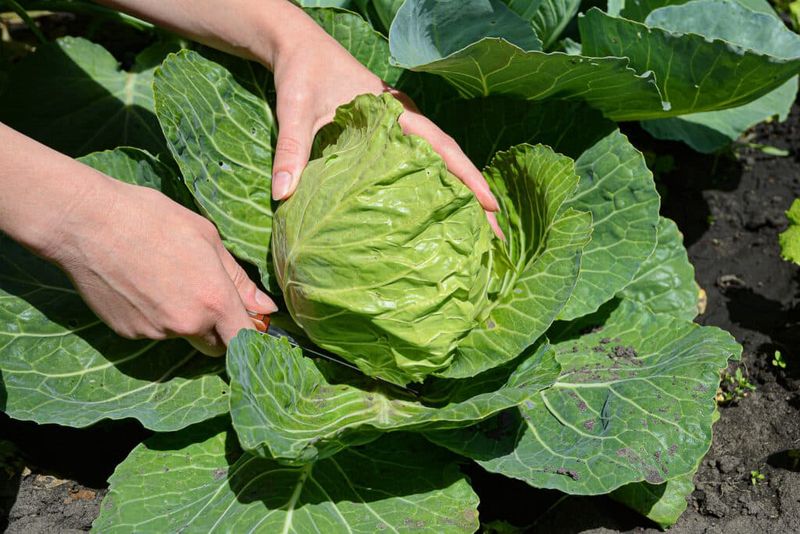
Walk the row and squeeze each head gently. A head that feels solid and dense, with no hollow give, is a good candidate for the kitchen, and it is best picked before it cracks.
Size is a poor guide on its own. Varieties differ, and soil, weather, and spacing all change how big a ready head gets, so a small firm head can be just as finished as a large one.
The Texas A&M fall vegetable guide points gardeners toward harvesting solid heads, and Iowa State Extension likewise treats firmness as the cue to cut.
Cut at the base with a sharp knife, and leave the lower stem in place if you like, since some plants may send up small side sprouts afterward.
Harvest a split head promptly
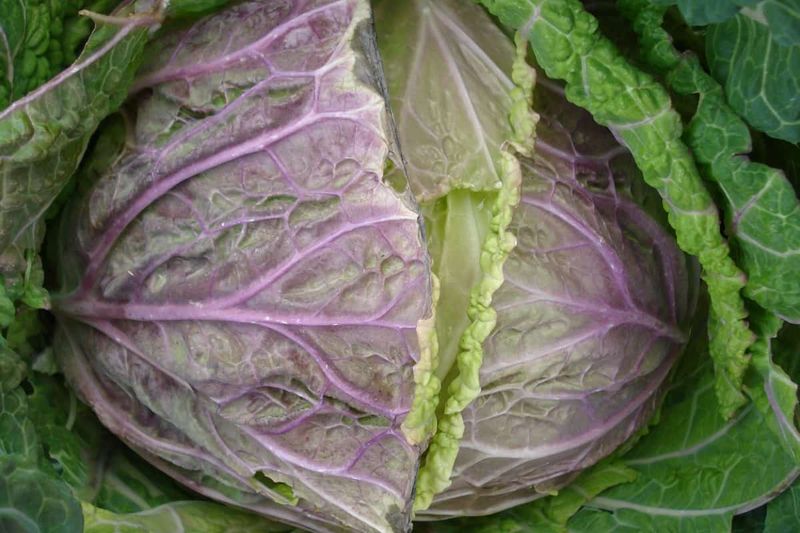
A cracked head cannot heal, and the open gap lets moisture and insects in. Cutting it soon limits the damage and gives you the most usable cabbage.
Whether to eat it comes down to how it looks. The crack alone does not make cabbage safe or unsafe, so judge the head itself.
The FDA advice on produce is to wash it under running water, cut away damaged areas, and throw out anything that looks rotten.
If you have more than you can use, shredded cabbage can be turned into sauerkraut, as in this University of California guide. Trim off any soft, slimy, or discolored parts first.
A gentle twist may buy time, but it cannot mend a crack
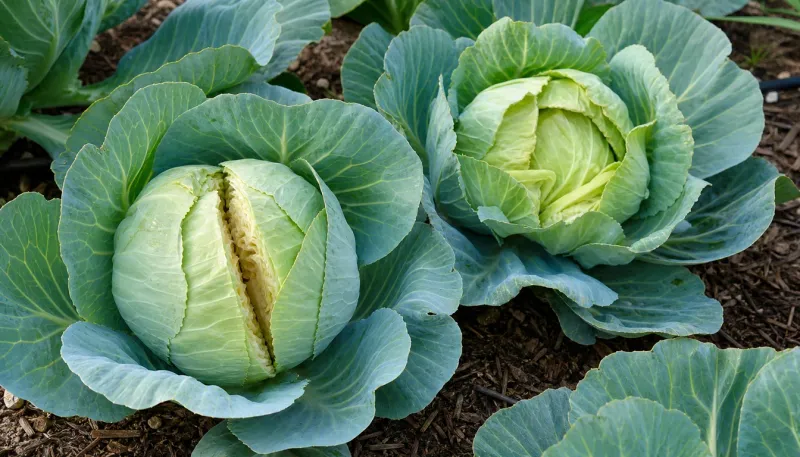
Sometimes a firm head is not quite ready for the kitchen, and more rain is on the way. In that case, you can grip the intact, mature head and give it a gentle quarter turn.
The twist snaps some of the roots, which can reduce how much water the plant takes up for a short while. Iowa State Extension describes this trick for heads that must stay put a little longer.
Keep the limits in mind. Breaking roots injures the plant, it cannot close a crack that has already opened, and it does not protect the rest of the row.
Missouri Extension, in its vegetable questions guide, advises harvesting fairly soon after.
Think of it as a few extra days, not a fix. The Texas A&M guide also says to harvest heads once they have cracked.
Keep soil moisture reasonably even
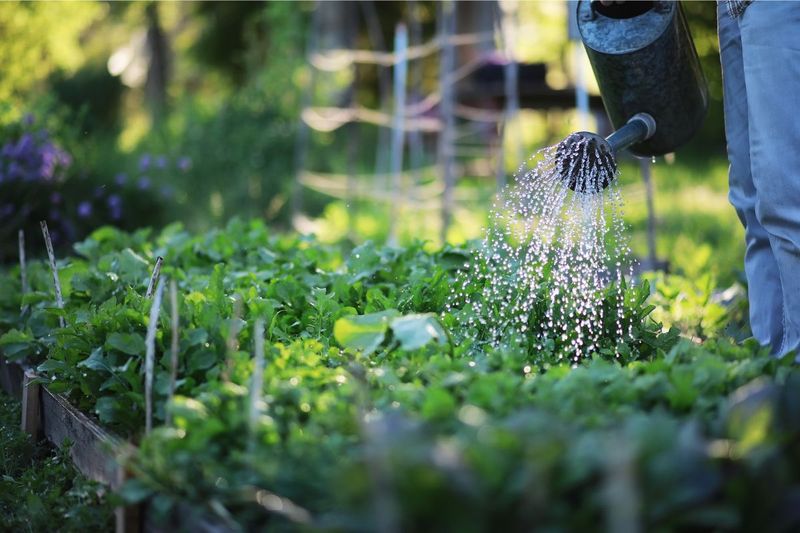
Big swings between bone-dry soil and a sudden flood are what set up the water surge. The goal is steadier moisture, not a dry bed.
Cabbage still needs regular water. Letting the bed dry out on purpose to avoid splitting can stress plants and cause other problems.
Florida’s UF/IFAS cabbage profile notes that an even water supply helps prevent head cracking. Its figure of about an inch a week comes from commercial production, so treat it as a rough reference, not a rule for your bed.
Check the soil with your finger, adjust for recent rain and your soil type, and consider mulch to slow drying. University of Minnesota Extension also stresses consistent moisture for home cabbage.
Check each head; timing varies by garden
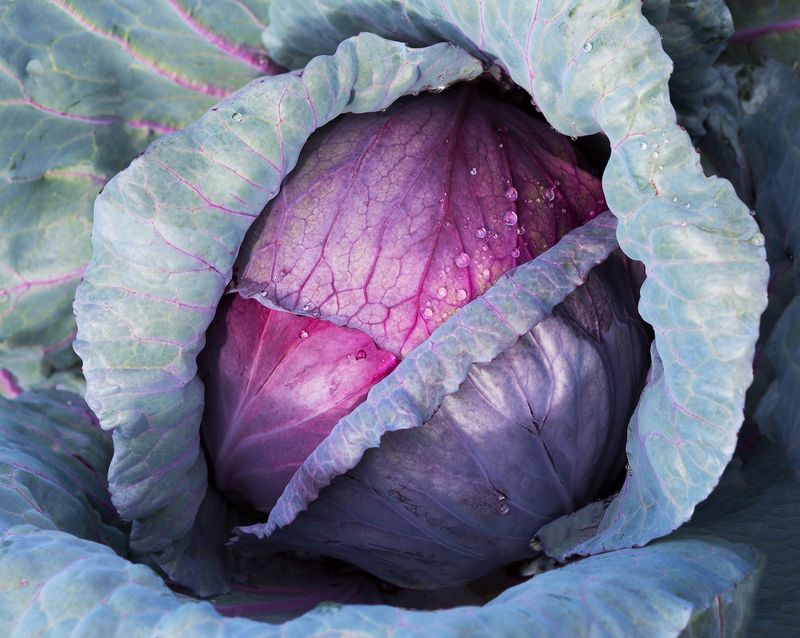
One split head does not tell you the whole row is about to go. Cultivars differ in how well they hold in the field, as University of Minnesota Extension explains, so plants in the same bed can behave differently.
Timing also varies. UF/IFAS lists Florida planting dates running from August into March depending on region, and Texas A&M has its own guidance, so your calendar may not match a neighbor’s.
After rain, squeeze each head, cut the cracked ones and any firm, ready ones, and look again in a day or two. If one is nearly there, a quarter turn can buy a little time.
Cabbage rarely gives a second warning, so a quick daily glance is cheap insurance.