
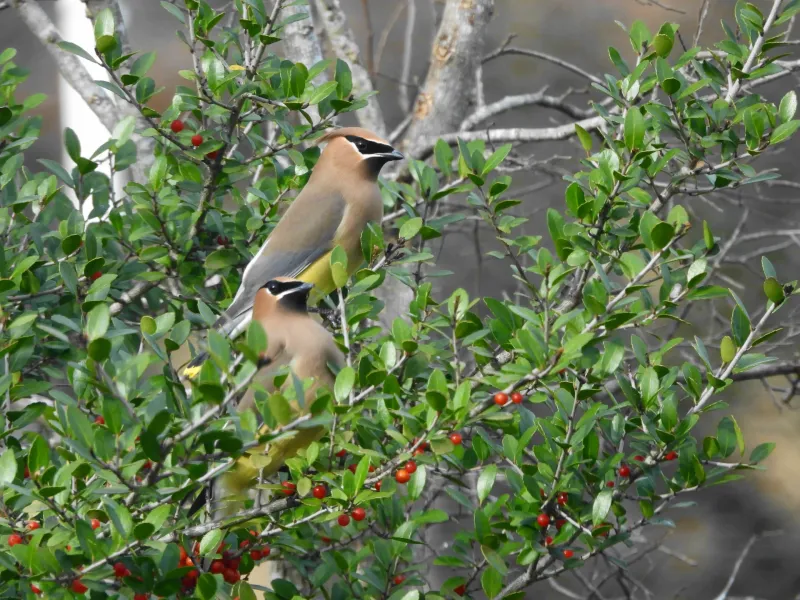
One cold morning a flock of sleek, masked birds drops into your yaupon and the red fruit starts disappearing fast. It is a thrilling sight, and many Texas gardeners wonder what it means.
The flock tells you something useful, but not quite what the saying claims. Here is how to read the visit and how to give your yaupon the best shot at fruiting.
What does a sudden feeding flock actually tell you?
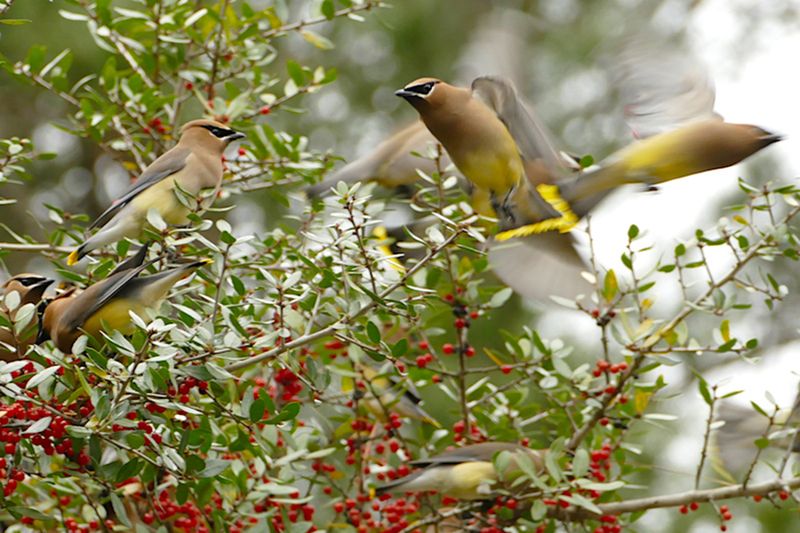
Picture a gray-brown flock with black masks and yellow-tipped tails swarming your shrub. Cedar waxwings feeding at a yaupon have found fruit they are willing to eat.
That is the solid takeaway, and it is a good one.
The popular idea is that the flock shows the berries just turned sweet. Nobody can read that from a bird visit.
The birds do not announce a sweetness switch, and they cannot tell you the day the fruit crossed some line. A feeding flock only shows that food was available and acceptable.
You will also see the word mobbing used for this scene. Mobbing describes birds harassing a predator, and that is not what is happening here.
These birds are flocking and feeding, often passing fruit along a branch and moving as a tight group. Calling it a feeding flock keeps the picture accurate.
Yaupon is a recognized food plant for wildlife, and Texas Parks and Wildlife lists cedar waxwings among the birds that eat its fruit. So the visit fits what we already know about the plant.
The more useful question for a gardener is not what the flock proves, but how to keep fruit on the shrub. The next sections cover timing, plant selection, site, pruning, and safety.
Late-fall fruit does not prove a sudden sweetness change
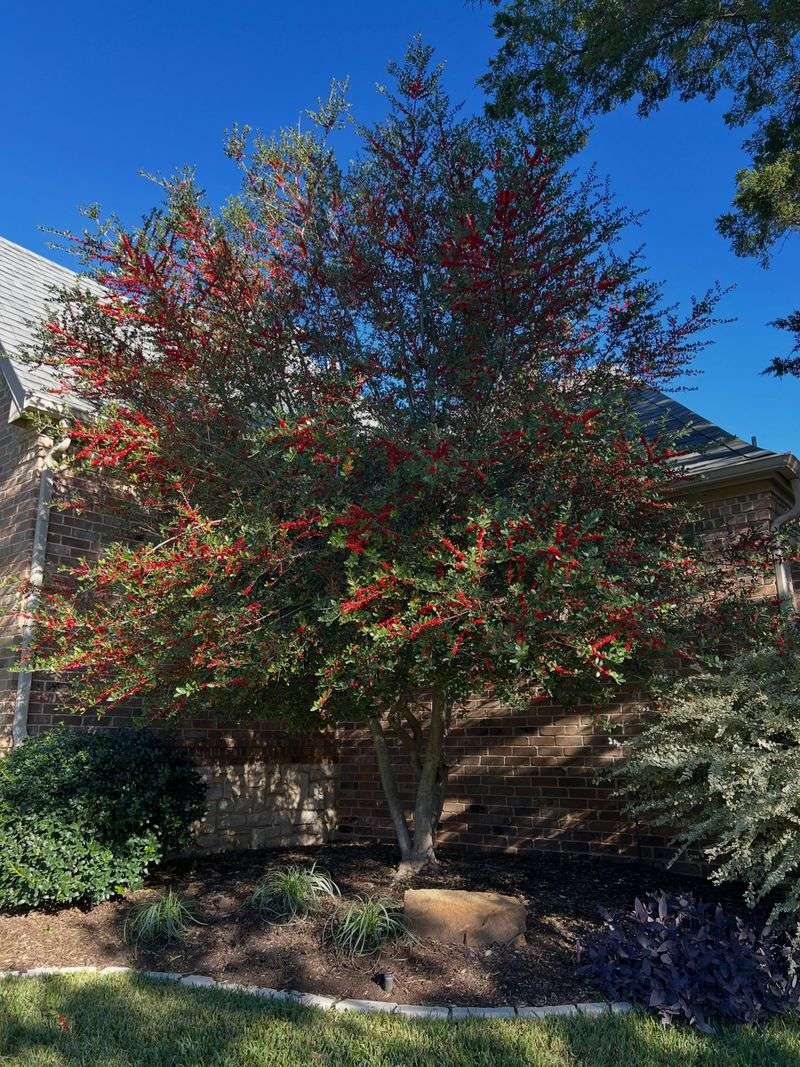
Yaupon carries red, berry-like fruit that ripens in late fall, according to the Texas A&M Forest Service. Only female plants produce it.
By the time winter flocks show up, the fruit may have been hanging there for weeks.
Bright red color and fall timing let us call the fruit ripe or mature. They do not tell us that the fruit suddenly became sweeter last Tuesday.
Nothing in the research points to a sweetness threshold that waxwings detect and respond to.
A small botanical note: despite the common name, the fruit is a drupe, a fleshy fruit with a hard seed inside, according to Texas A&M AgriLife’s Plants of Texas Rangelands. You will still hear everyone say berries, and that is fine for backyard talk.
For your own yard, a handy check is simple. Look at the shrub in November and December.
If it is already red with fruit before any birds appear, you have seen the ripening timeline yourself, and the flock is just a later chapter.
Waxwings follow food, not a fixed calendar
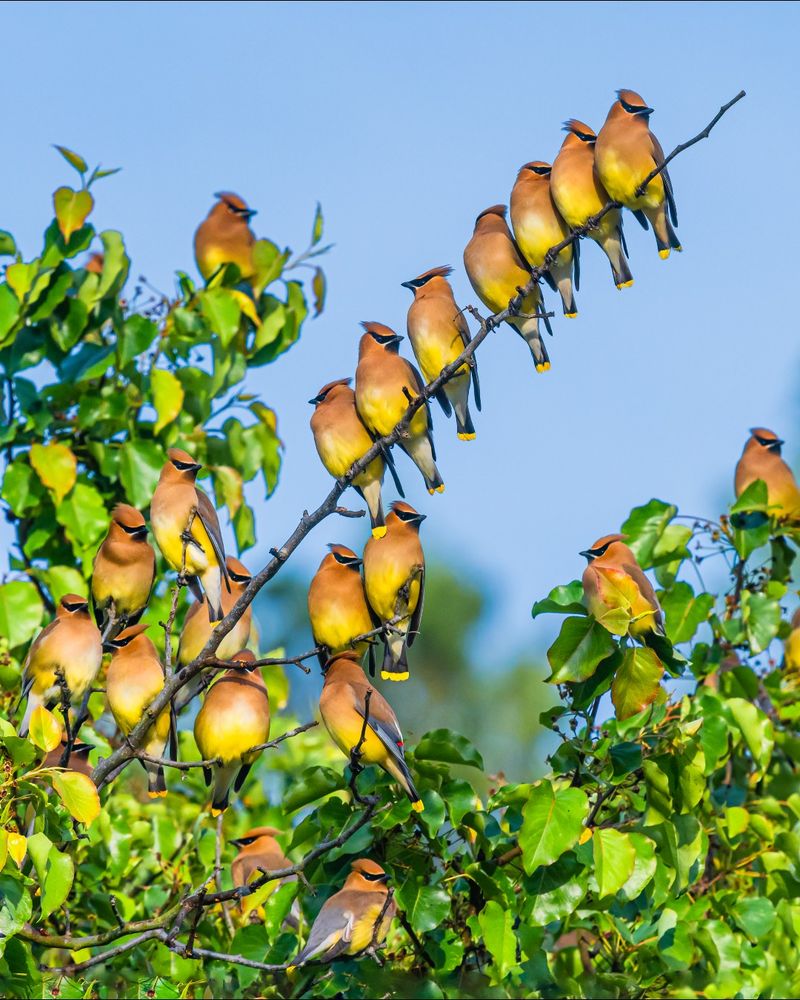
Cedar waxwings are wanderers. They roam in groups, searching for fruit, and settle where they find it.
A peer-reviewed case report on waxwing feeding behavior describes them as nomadic and responsive to food supplies.
That habit explains why a flock can seem to appear out of nowhere. Fruit may have sat untouched for a while, then a group passing through spotted it.
To you it looks like a sudden event. To the birds it was just the next stop on a food search.
It also means one visit is not a schedule. A flock in January this year says little about next January.
Weather farther north, fruit crops in other neighborhoods, and the movements of other groups all play a part, and none of that is visible from your porch.
Here is a practical way to use the idea. Keep a simple note each winter: date the flock arrived, how much fruit was left, and what the weather was like.
After a few seasons you may see patterns in your own yard, but treat them as observations, not promises.
Finally, remember that waxwings give no proof of exact ripeness or sweetness. They tell you fruit was there and good enough to eat.
Fruit starts with the right pair of plants
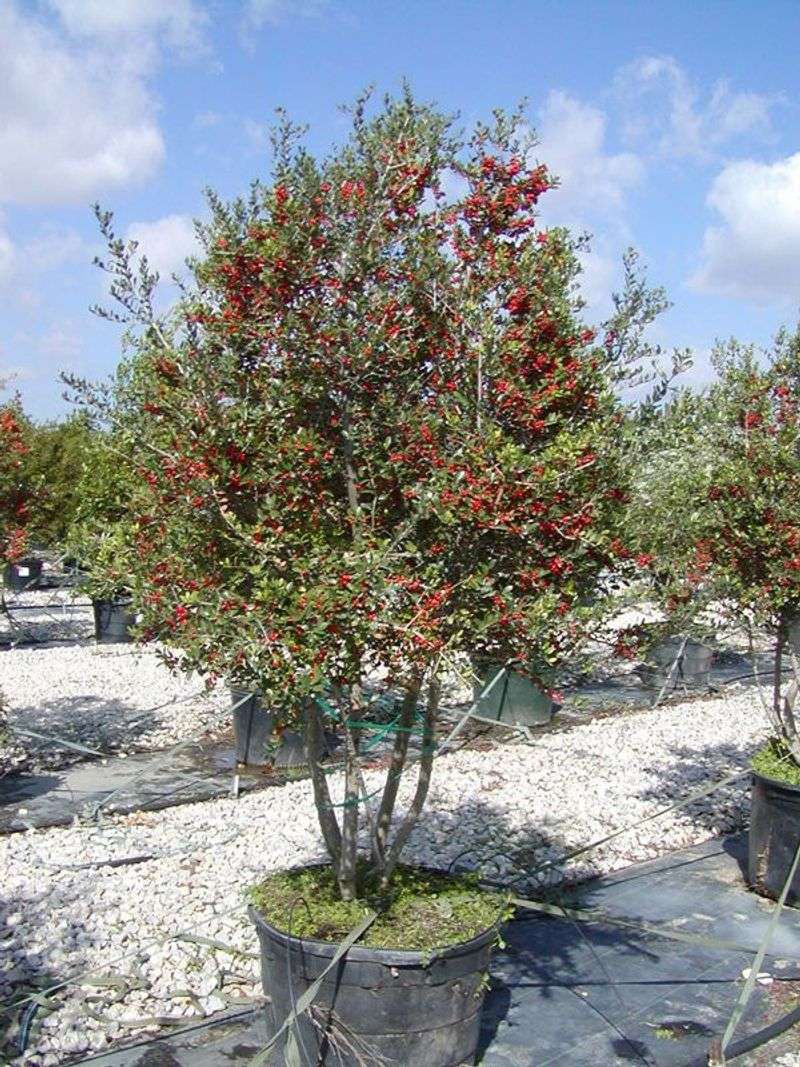
Yaupon plants are either male or female. According to Texas A&M AgriLife, male and female flowers grow on separate plants.
Only the females bear fruit, and they need pollen from a male to do it.
That means planting a random yaupon is a gamble. A male will never make berries, and a female alone may set little or no fruit if no male is around.
University of Florida guidance on yaupon, Ilex vomitoria points to the same two-sex setup.
So shop smart. Choose a known female, ideally one that is already carrying fruit when you buy it.
In fall, that is easy to spot at the nursery because the red fruit is right there on the branches.
Next, make sure a male yaupon is within pollinating range. Your own yard may already have one, or a neighbor’s plant or a nearby wild yaupon may do the job.
No source gives a fixed distance or a perfect planting ratio, so do not trust anyone who claims one.
If you are unsure, ask the nursery staff how the plants were sold and look around the block for mature yaupons. Even then, a crop is not guaranteed, but pairing sexes gives you the best foundation.
Choose a suitable site, but do not expect a guaranteed crop
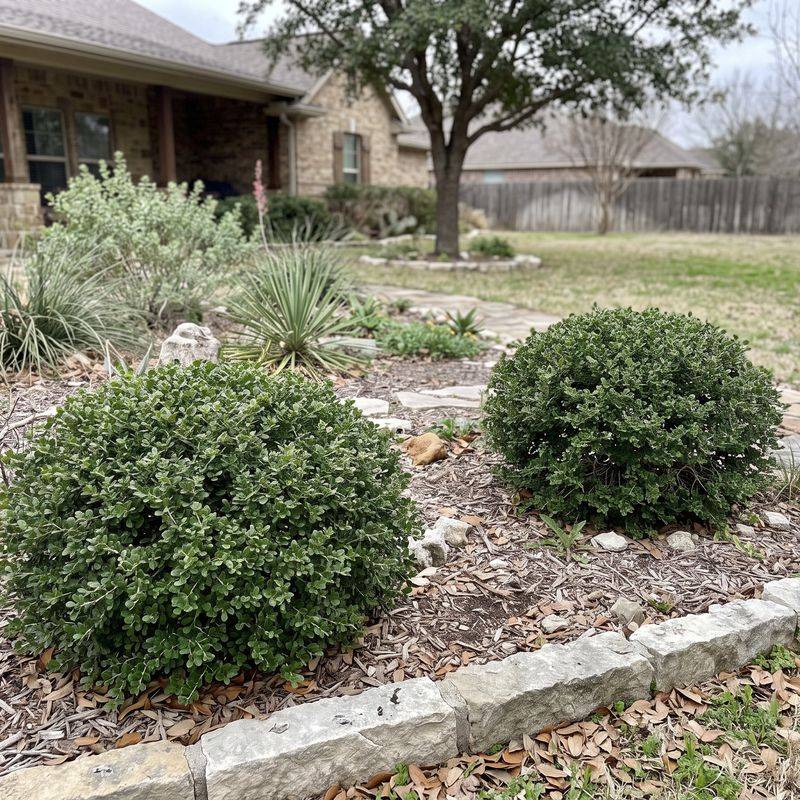
Yaupon is a Texas native, and the Texas A&M rangeland guide notes it grows across several ecological regions, including the Edwards Plateau. That is good news for Central Texas gardeners looking for a plant that belongs here.
It also adapts to a range of light. The Texas A&M Tree Selector describes it as tolerant of sun and shade and of drought, with moderate water needs.
In practice, that means a young plant still wants regular water while it settles in, and a long dry spell can stress even a tough shrub.
Adaptable does not mean maintenance-free. A site that suits the plant gives a female shrub the energy to flower and set fruit.
Choose a spot with room for its mature size and where you can watch the birds from a window.
Consider the pollination setup as part of the site. A female planted far from any male may stay fruitless however healthy it looks.
Yaupon will not fruit in every yard under every condition, so think of site choice as stacking the odds, not buying a sure thing.
Pruning can remove potential berries
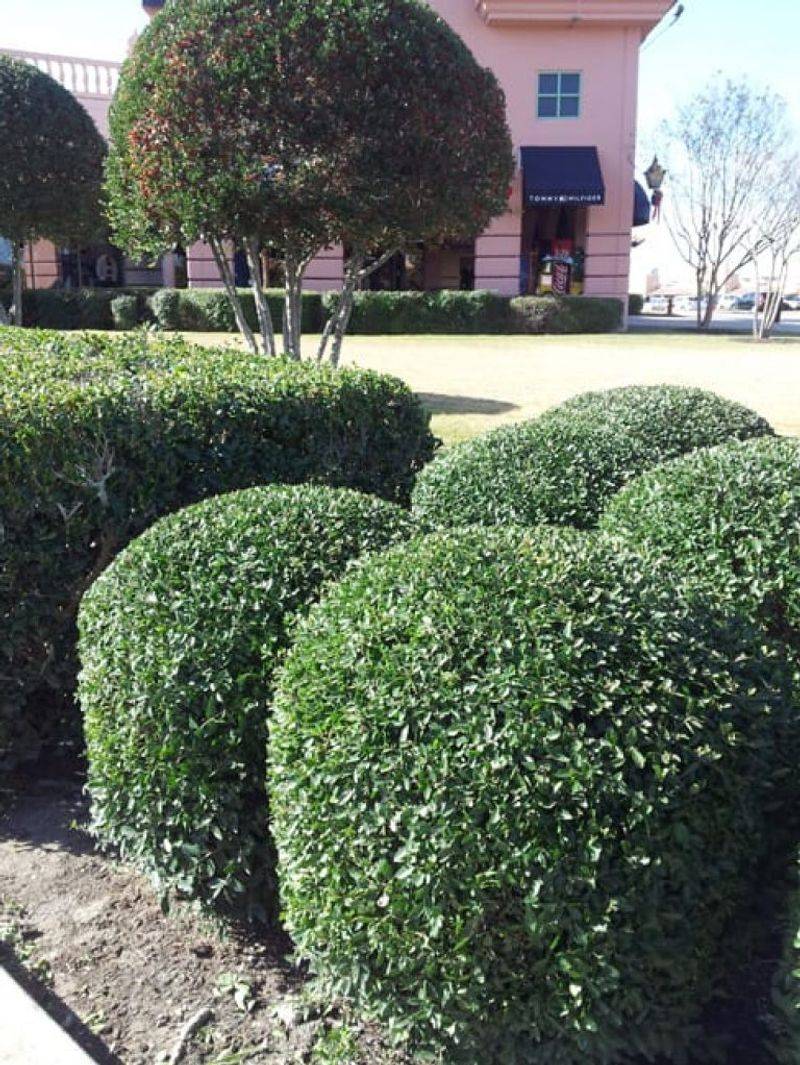
Berries form on growth that flowers first. If you shear that growth off, you remove the fruit before it exists.
An Ask Extension answer on yaupon fruiting notes that pruning after flowering removes potential berries.
So if your goal is a fruit crop, go easy on flowering and fruit-bearing branches. Hold back on heavy shaping, and take out only what is dead, crossing, or in the way.
Light touches keep more fruit in place for the birds.
You may find specific timing advice online, including in the University of Florida’s yaupon holly fact sheet. Such calendars often come from other regions, so do not treat them as a Texas-wide schedule.
Watch your own shrub instead and notice when it flowers and when fruit sets.
A good habit is to walk the shrub in spring and again in fall before picking up the shears. If you see flowers or fruit on a branch you planned to cut, leave it for now.
Keep the fruit for birds, not a taste test
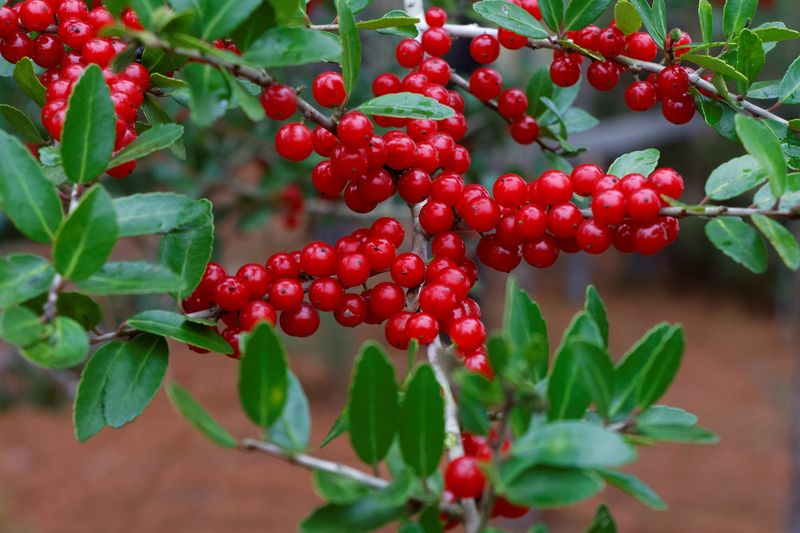
Leave the sampling to the birds. The USDA NRCS plant guide for yaupon warns that the fruit can cause nausea, vomiting, and diarrhea in people.
That matters most for kids and curious visitors who see bright red fruit and assume it is a snack. A quick family rule helps: look and photograph, never taste.
This warning is about people, and it stands on its own. Reports of waxwing poisoning tied to nandina berries do not mean yaupon causes the same problem for birds.
A food source is not a return guarantee
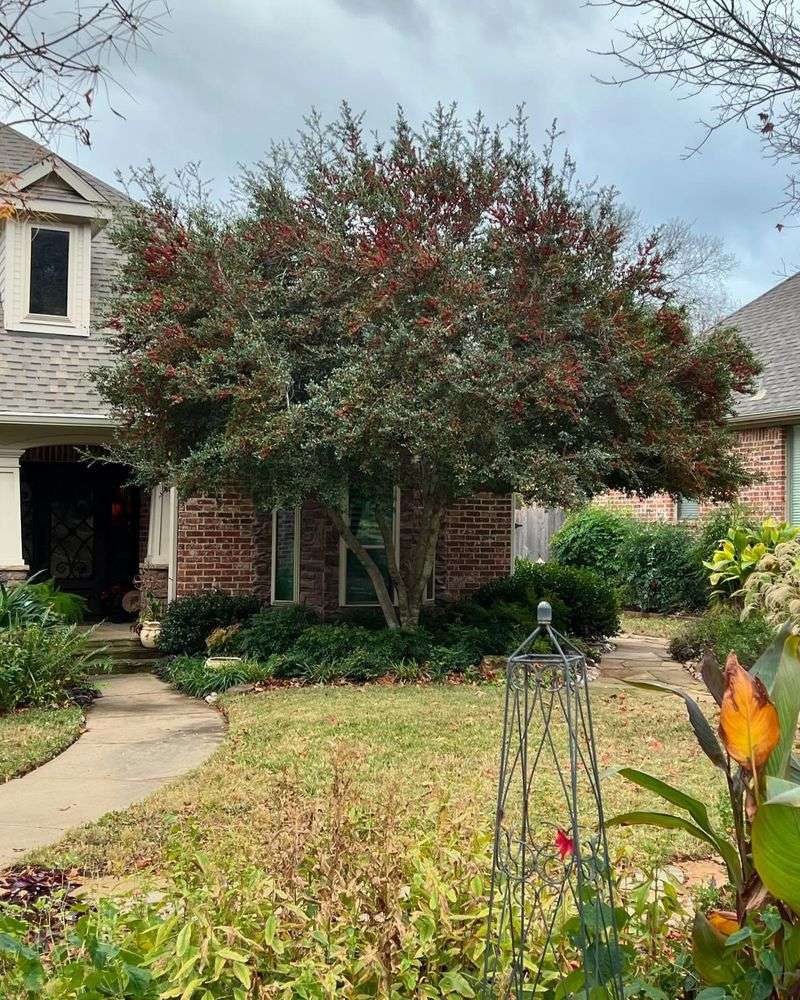
A healthy female yaupon with a male nearby can offer waxwings a winter meal. What it cannot do is order the flock to show up.
Because these birds are nomadic and track food supplies, as the peer-reviewed waxwing report describes, their timing stays unpredictable.
So aim for what you control: the right plants, a suitable site, and gentle pruning. Then let the birds decide.
Some winters the flock may skip your street entirely. Other years it may drop in without warning, and you will be glad the table was set.