
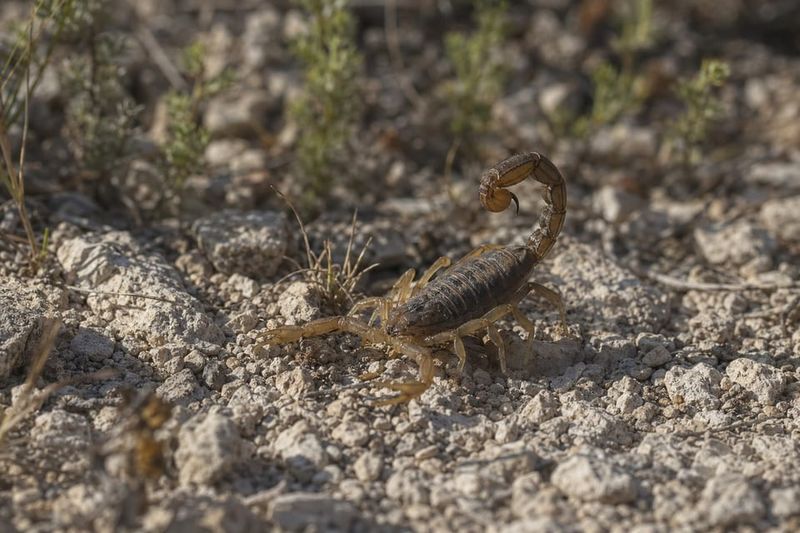
You reach under a pile of debris, feel a sharp jab, and spot a small, tan creature scurrying away. Many North Carolina gardeners are surprised to learn the state has a native scorpion.
Knowing what to do in the first few minutes can keep a scary moment calm and manageable. Here are the steps to take, the warning signs to watch for, and a few habits for safer yard work.
Wash the sting and call Poison Control

Move away from the spot where it happened, then wash the sting site gently with soap and water. Try to stay calm.
Panic raises your heart rate and makes everything feel worse than it needs to.
Next, call Poison Control at 1-800-222-1222. The line is free and staffed around the clock, and the specialists can give advice based on your age, health, symptoms, and what you saw.
Poison Control’s scorpion guidance lists washing the site, calling for help, and using a cold pack for pain as the basic first steps.
For local pain, hold a cold pack against the area. Wrap it in a thin cloth first so it never touches bare skin directly.
CDC guidance for outdoor workers also advises applying ice without submerging the area in ice water, and contacting a healthcare provider or poison center.
These steps are a starting point, not a replacement for professional advice. Some people have mild, short-lived pain, while others, such as young children or people with venom allergies or other health conditions, may need closer attention.
Let the Poison Control specialist help you decide what comes next.
Keep your phone close while you wait for the call to connect. If you are working alone in the yard, go inside and sit down.
Having someone nearby is a good idea in case symptoms change.
Which symptoms mean you should call 911?

Local pain is one thing. Whole-body symptoms are another, and they need emergency help right away.
Call 911 if you have trouble breathing, muscle rigidity, dizziness, or confusion.
The 2024 American Heart Association and American Red Cross first aid guidelines name these symptoms as reasons to use emergency services. Do not wait to see if they pass, and do not drive yourself if you feel unsteady.
Other situations call for medical care even if they are not 911 emergencies. Get medical care if the pain is severe and over-the-counter medicine does not control it, if pain spreads beyond the sting site, or if an open wound develops.
Poison Control can help you sort out how urgent your situation is, and its scorpion article also points to emergency care for uncontrolled pain or body-wide effects.
That does not mean every sting needs an emergency room visit. Many stings stay local, with pain at the site, and a call to Poison Control may be all the guidance you need.
The goal is to match your response to what your body is doing.
If you are unsure, treat the uncertainty as a reason to call. Tell the specialist or dispatcher when the sting happened and how your symptoms have changed since.
Take a photo only if it is safe
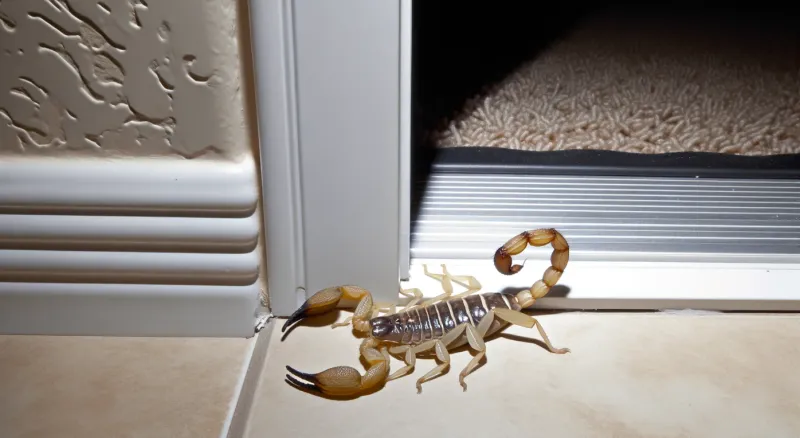
A clear picture can help a medical professional or Poison Control specialist understand what stung you. If the scorpion is still in view and you can snap a photo from a distance, go ahead.
MedlinePlus suggests a photo for identification when it is safe, and warns against risking another sting.
Do not try to catch it, pin it, or pick it up. Skip the bare-handed grab entirely.
A second sting is a bigger problem than a missing photo.
Keep expectations realistic. A blurry phone picture may not settle the question, and where you were standing does not prove which scorpion it was.
NC State Extension notes that a native species lives in the state and that other species have been accidentally introduced with transported items.
If the scorpion has already vanished under the leaves, let it go. Your own symptoms matter more than the identification.
North Carolina has a native scorpion
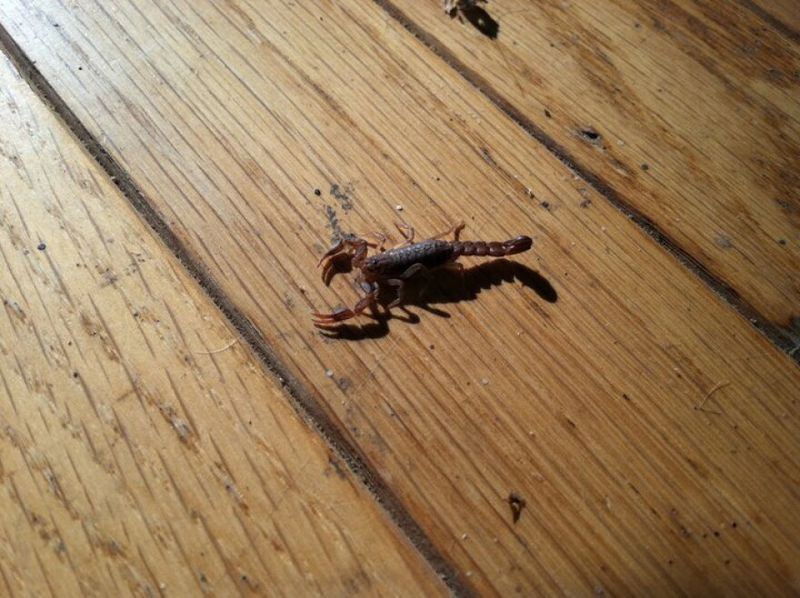
Yes, North Carolina has scorpions of its own. The southern unstriped scorpion, also called the southern devil scorpion, is native to the state.
According to NC State Extension, it lives mostly in western North Carolina and has been reported in other parts of the state too.
Adults are about an inch long, so this is a small animal that is easy to miss in a pile of debris. It can sting.
NC State Extension does not consider it a public-health threat. The same source notes possible concern for people with arthropod-venom allergies or other health issues.
In plain terms, most people may have a painful but local reaction, while some people need to be more careful.
Not every scorpion found in the state is the native one. NC State also notes that other species have arrived by accident in transported items.
That is why a sighting alone cannot tell you which species you met.
If you live in the Piedmont or on the coastal plain, you may think scorpions are not your problem. Reports outside the mountains mean it is still worth knowing what to do.
A cleanup sting is plausible, but not a proven fall pattern
Scorpions like to tuck into tight, sheltered spots. NC State Extension describes them sheltering under bark, logs, stones, and debris, and around woodpiles.
Those are the same places you may lift, drag, or reach into during yard cleanup. Moving a log, shifting a stone border, or clearing old debris can bring your hand close to a hiding animal.
That is how a sting while working near the ground becomes plausible.
Here is the honest limit. There is no good evidence that raking leaves commonly leads to scorpion stings, and nothing shows that fall raises the risk.
Leaf piles are not known to attract scorpions either.
So think of it as a matter of where you put your hands. Surface raking with a tool is different from pulling apart a stack of wood.
If you spend an afternoon clearing the woodpile, the edge of a rock wall, or a heap of old bark, that is where a little extra care makes sense.
Look before reaching beneath debris
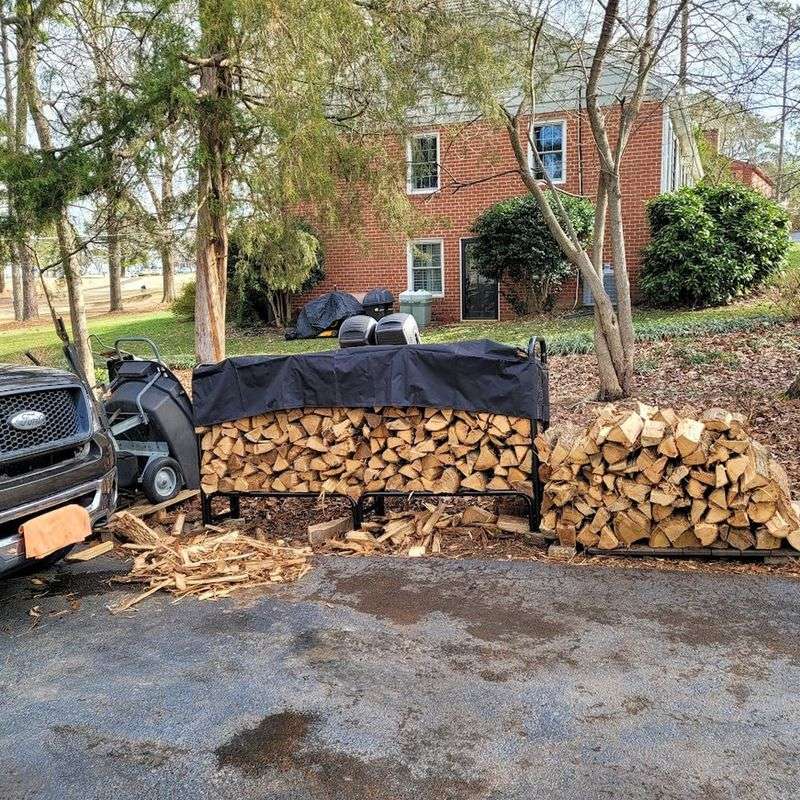
Gloves are the easy first habit. NC State Extension advises wearing them when handling firewood or clearing debris.
Choose sturdy ones and shake them out if they have been sitting in a shed or garage.
Then look before you reach. Use a rake, a stick, or a shovel to nudge a board, flip a stone, or lift a pile, and glance at what is underneath before your fingers go in.
Lift away from your body so anything that scurries has room to run the other way.
Stack firewood off to the side rather than against the house, and handle each piece with gloves on. Check bark and the gaps between logs as you go.
None of this guarantees you will never be stung. It simply cuts down on surprise contact, which is how most bad moments in the yard begin.
A few extra seconds of looking is a small price for finishing the job without a trip to the phone.