
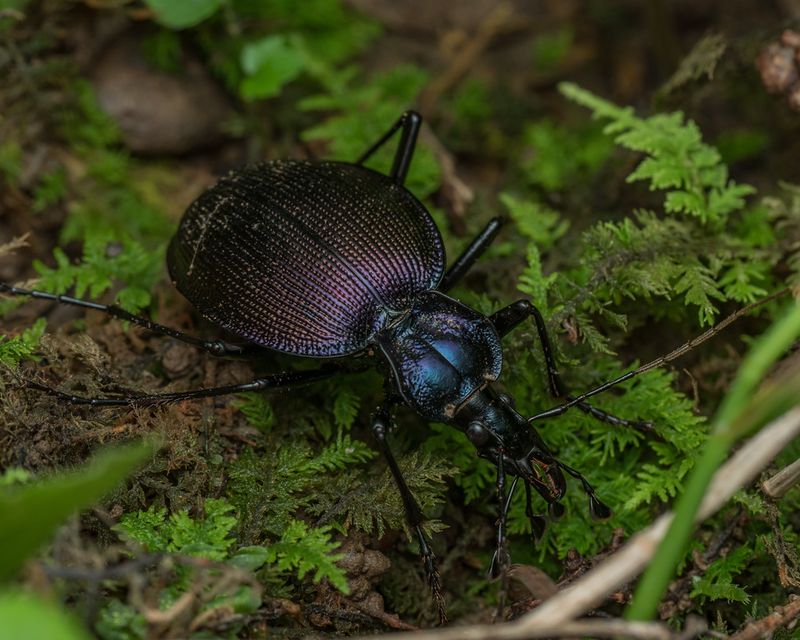
Yes, some shiny dark beetles hiding under your patio pots really do eat snails and slugs. They come out at night, hunt along the soil, and slip back under cover before sunrise.
That means the beetle you were about to squash might be on your side. Here is how to tell, and how to keep helpful ones around through the wet season.
How to recognize a possible ground beetle
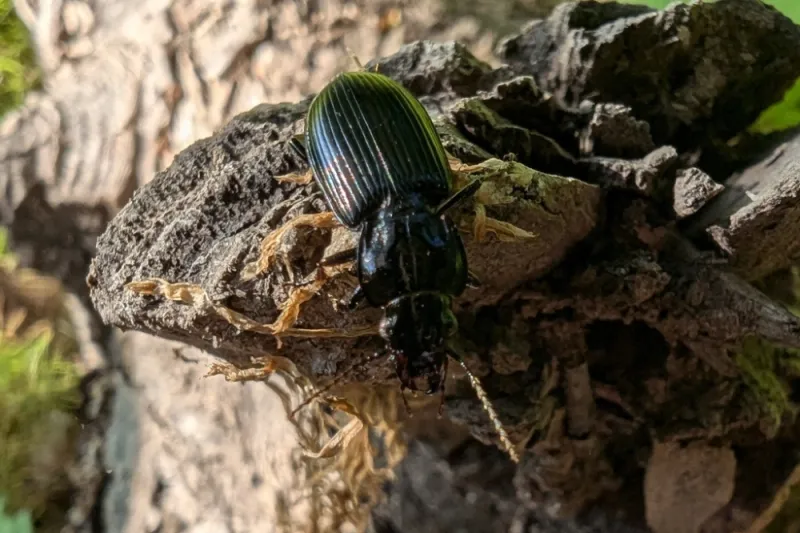
Picture a beetle that bolts the moment you lift a pot. Ground beetles are generally fast-running, long-legged insects with shiny, often dark bodies.
UC IPM notes that California has at least 800 species of predatory ground beetles, so there is a lot of variety under that one description.
Adults are mostly active at night. By day, they tuck themselves into leaf litter, mulch, compost, or under objects resting on the soil, which makes the underside of a patio pot a very natural hiding spot.
Here is the catch. Color and location alone do not tell you what you have found.
Plant-feeding darkling beetles can look a lot like ground beetles, and UC IPM’s darkling beetle page points to features such as the enlarged basal segments of a ground beetle’s hind legs as one way to separate them. Darkling beetles can chew seedlings, so a shiny black beetle is not automatically a friend.
Before you act, watch. Check the legs and the way it moves, and look at what is happening to the plants nearby.
If the beetle sprints for cover and your seedlings are fine, leave it alone. If you see leaves or stems being chewed with the beetle right there, take a closer look before assuming it is a helper or a pest.
Some ground beetles hunt snails at night
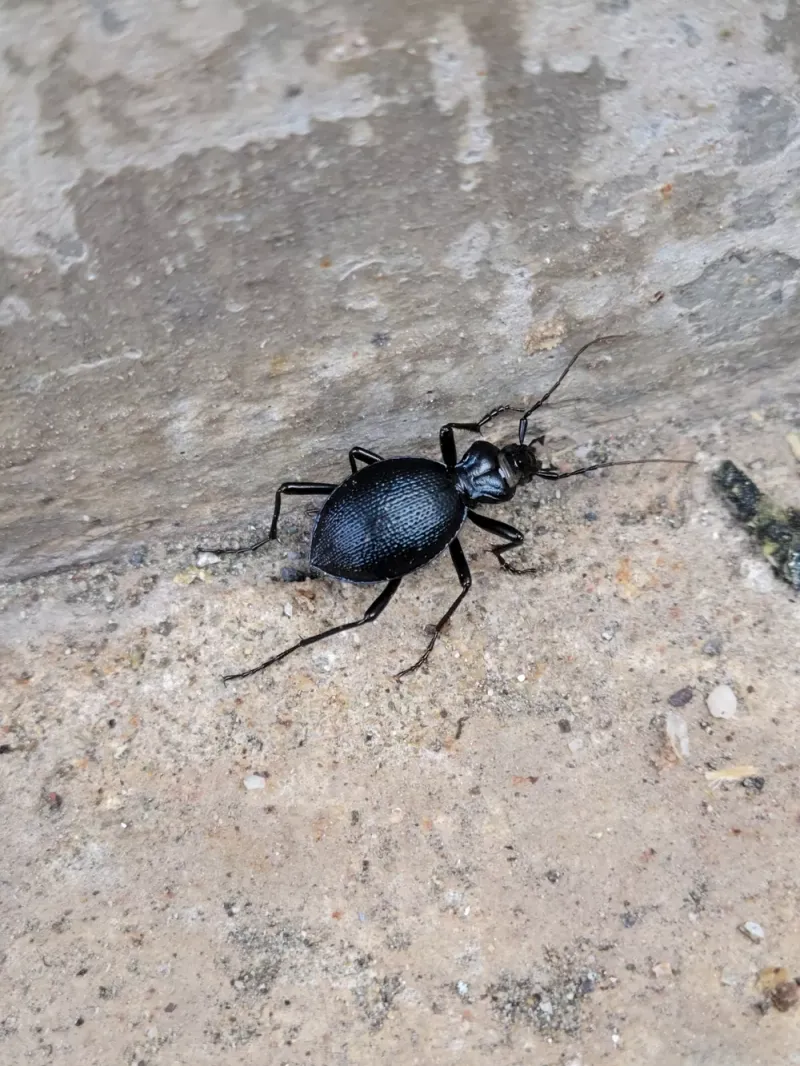
After dark, your patio turns into a different place. Some ground beetles prowl the soil surface looking for ground-dwelling prey, and UC IPM says that prey includes slugs and snails.
Because they are mostly night-active and spend the day hidden, you rarely catch them at work.
Pots, stones, boards, and mulch give them the shaded, cool daytime cover they like. That is why you may find one when you tip a planter.
Snails and slugs love the same kind of spot, so the two can end up sharing the same neighborhood.
One group makes the idea easy to picture. Scaphinotus, sometimes called snail eaters, have a narrow head that is built for reaching into snail shells.
Not every ground beetle has that tool, and many eat other soil-dwelling prey.
So how should you read your discovery? Finding a beetle under a pot tells you it found shelter.
It does not prove the beetle is a snail hunter, and it does not show what it ate last night. Think of it as a possible helper that deserves a little patience, not a guaranteed guard for your seedlings.
Check for signs of slugs before blaming them
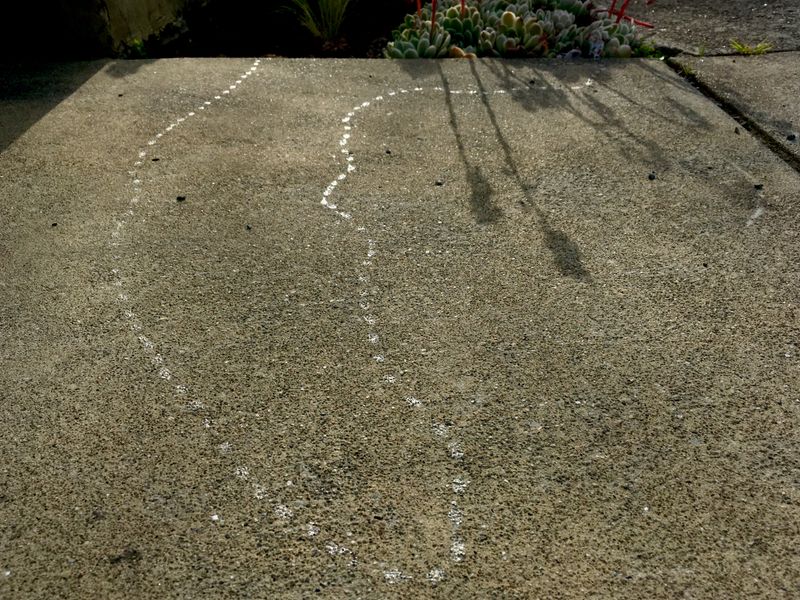
A seedling cut off at the base is a puzzle, and slugs are only one suspect. Snails and slugs can clip tender young plants, but UC IPM advises looking for silvery slime trails because their damage can resemble that of other chewing pests.
Go out early in the morning or after a rain, when trails are easiest to see. Check the soil, the pot rims, the nearby fence, and the leaves around the damaged plant.
A shiny trail that dries to a silvery line is a strong clue.
No slime? Then look for other signs.
Chewed leaves with no trail, missing seedlings, or tiny droppings may point to a different culprit, and treating the wrong one wastes time.
A flashlight visit an hour after dark is also useful. You may spot slugs feeding, or you may find nothing at all, and both results tell you something.
Keep a quick note of where damage appears and what moisture is nearby. Damage that lines up with damp spots and slime trails makes slugs and snails the likely cause.
Ground beetles can help, but they are not slug control
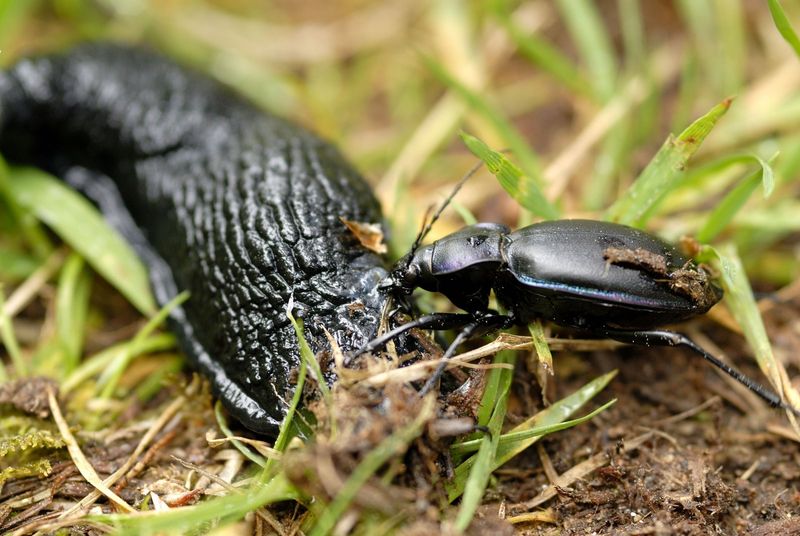
Helpful does not mean dependable. UC IPM says natural enemies rarely provide satisfactory slug control in gardens, so beetles should be treated as a bonus on top of your own monitoring.
Some research does point in a promising direction. A 2023 study in 41 Virginia corn and soybean fields found that slug activity declined as ground beetle activity rose.
That is a pattern across farm fields, not a measurement of how much protection a California patio gets.
A separate agricultural study in Italy, published in Insects in 2020, did not observe direct slug predation during its monitoring. It also reported that ground beetles may favor slug eggs and juveniles over large adults.
Put together, these studies show why ground beetles are worth encouraging. They also show why a few beetles will not guard a tray of seedlings by themselves.
Big, mature slugs may be left alone, and farm conditions are very different from a pot-filled patio.
So keep the beetles, and keep checking your plants. Treat them as one small part of a larger plan.
Keep some shelter, but manage damp spots near seedlings
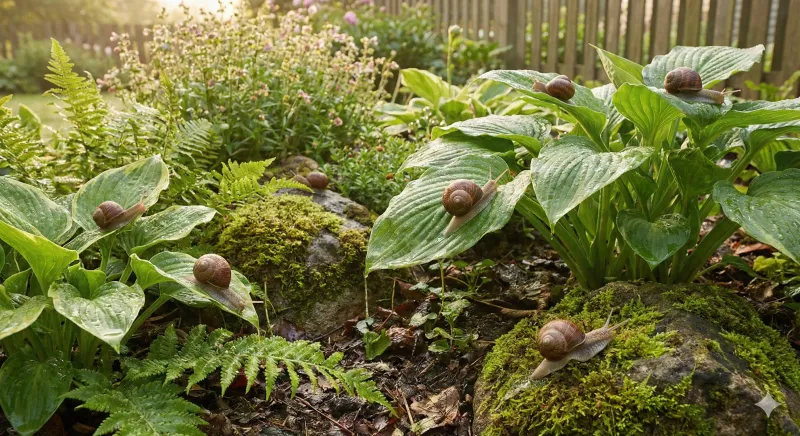
Shelter is a two-way street. As UC IPM describes, ground beetles use litter, mulch, and objects as daytime cover.
Slugs and snails favor the same moist, sheltered conditions, so a cozy hiding place can help both sides.
The answer is to be selective. Leave a small refuge, such as a corner with leaf litter or a few stones, away from your most vulnerable seedlings.
Do not pile damp mulch or boards right up against young plants.
Then check. Lift pots and boards regularly and look underneath.
If you find clusters of slugs or snails, you can remove them by hand, and you will also see who else is living there.
Watering matters too. UC IPM recommends drip irrigation rather than sprinklers, and watering early in the day so surfaces dry before evening.
During the wet season, raise seedling trays onto a bench or shelf, improve drainage, and avoid beds that stay soggy for days. Winter rain already supplies plenty of moisture, so there is little reason to add more.
Protect predators when choosing pest controls
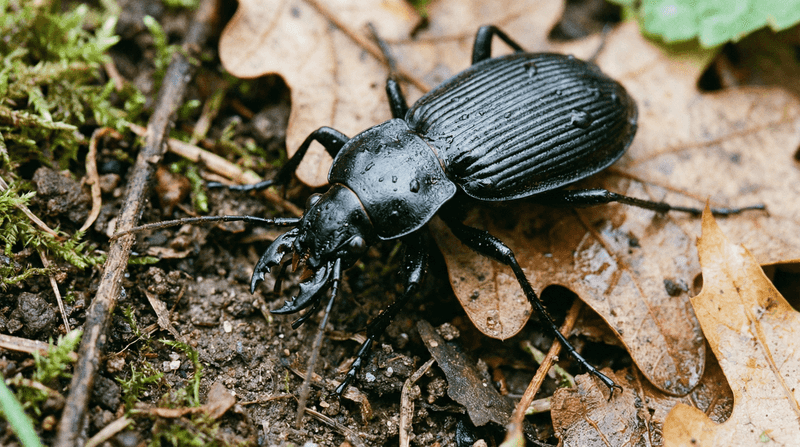
If you want beetles to stick around, go easy on the soil and the sprays. UC IPM suggests avoiding unnecessary soil disturbance and insecticide use for ground beetles.
Its guidance on protecting natural enemies also advises choosing pesticides with their effects on those helpers in mind.
Cutworms are a separate and limited point. Predaceous beetles are one factor in cutworm biological control, but UC guidance for grapes names parasitic wasps as the most important natural-enemy group.
That guidance does not justify promising that ground beetles will control cutworms in your garden.
For slugs, hands-on steps still do the heavy lifting. Handpick at dusk, keep seedling areas drier, and watch the damage you find.
Reach for a broad insecticide only when you truly need it, since it can also harm the beetles you hoped to keep.
The decision rule is simple: observe the beetle, check for slug evidence, keep a selective shelter, and keep monitoring your seedlings.
A beetle under a pot is a clue, not a verdict.