
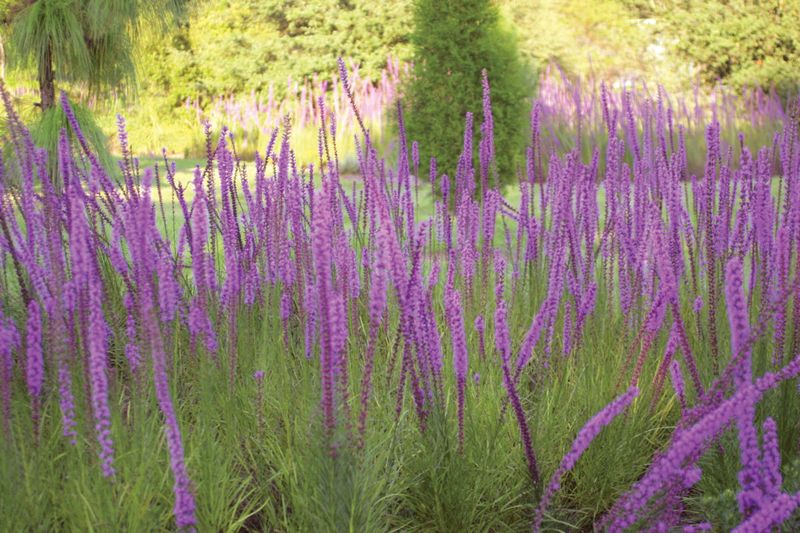
A Florida yard can feel alive after sunset and at breakfast time if the right native plants are waiting there. Hummingbirds come for nectar, while luna moths need certain trees and shrubs for their caterpillars. The best choices work with Florida sand, heat, rain, and storms instead of fighting them. Here are seven native plants that can help one yard support both tiny wingbeats and pale green nighttime visitors.
1. Coral Honeysuckle
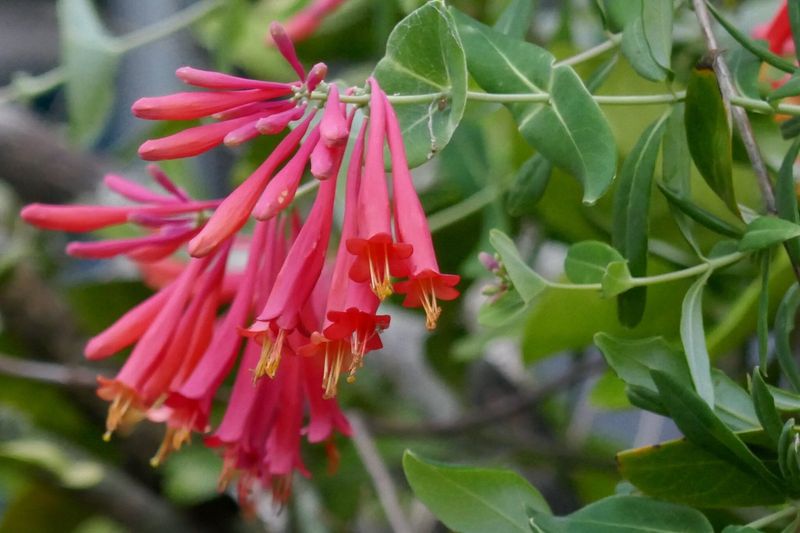
Bright red trumpets on a fence can turn a quiet side yard into the hummingbird version of a roadside diner. Coral honeysuckle is one of Florida’s most useful native vines because it offers nectar without the aggressive spread of invasive Japanese honeysuckle.
Ruby-throated hummingbirds are especially drawn to its long, tubular blooms, which fit their bills and reward repeated visits. In many Florida gardens, it flowers hardest in spring, then keeps offering scattered blooms into warmer months if it has enough sun.
Luna moths are not visiting coral honeysuckle as a main caterpillar host, but the vine earns its place because it builds the nectar layer that keeps the yard active by day. Pair it near moth host trees like sweetgum or persimmon, and you create a fuller habitat instead of a one-plant snack station.
Give coral honeysuckle a trellis, arbor, or fence so storms do not whip loose stems around. Once established, it handles Florida’s sandy, fast-draining soil better than many showier vines, especially with mulch and occasional watering during long dry spells.
2. Wild Azalea
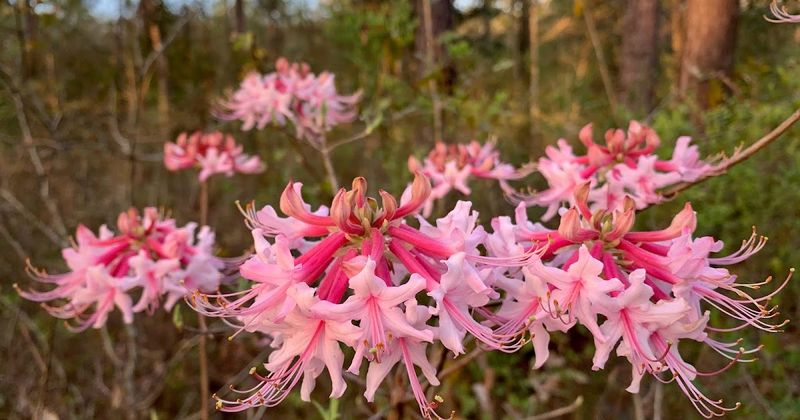
Walk past a blooming wild azalea on a mild spring evening, and the scent may stop you before the flowers do. Florida’s native azaleas bring fragrance, soft color, and a woodland feel that makes them very different from the tougher, sun-loving plants on this list.
Hummingbirds notice the funnel-shaped blooms, especially when shrubs are planted where they can browse along a shaded edge. The flowers are not just pretty porch-view material, they help bridge the season when migrants and local ruby-throats are searching for dependable nectar.
For luna moths, wild azalea is more of a supporting actor than a larval nursery. Its real value is in building a layered native planting with shrubs under trees, which gives adult moths safer cover and helps soften the harsh open-yard conditions common in Florida subdivisions.
Wild azalea prefers acidic soil, light shade, and steady moisture, so it is not the best pick for a blazing driveway strip. Tuck it under high pine shade or near other moisture-loving natives, then mulch with pine needles or leaves to mimic the forest floor it came from.
3. Firebush
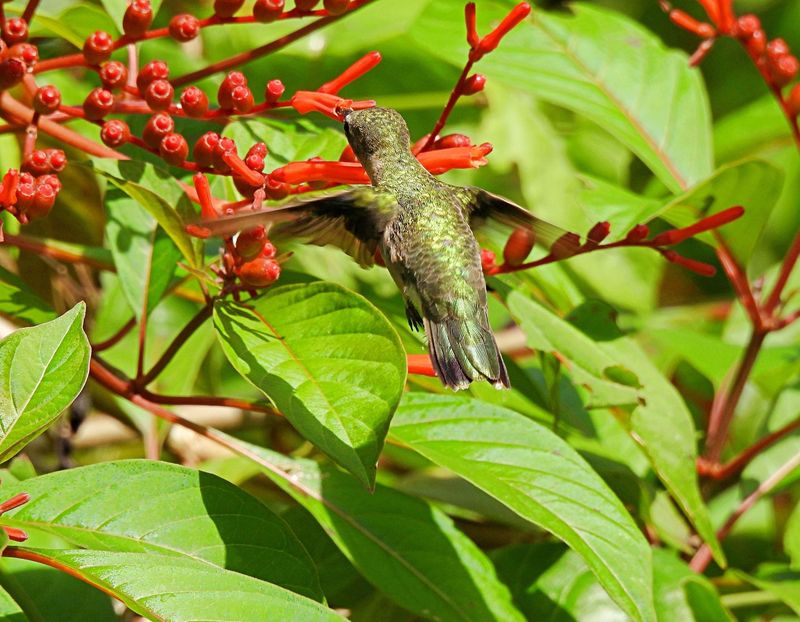
Some plants look like they were made for Florida heat, and firebush is one of them. When many garden flowers start to sulk, this native shrub keeps pushing out orange-red tubes that hummingbirds can spot from across the yard.
Firebush is a practical choice for gardeners who want big wildlife payoff without constant fussing. It tolerates sun, sandy soil, and humid summers once established, and it can bounce back from pruning if a storm breaks a few branches.
Its difference is season-long energy. While spring bloomers get the garden started, firebush can keep nectar coming through the hot months and into fall in warmer parts of Florida, which helps hummingbirds during busy feeding periods.
Luna moths do not rely on firebush as a caterpillar host, so think of it as the daytime magnet in a larger wildlife plan. Plant it near host trees such as sweetgum, hickory, or persimmon, and the same yard can serve hummingbirds at noon and moths after dark.
In North Florida, frost may knock firebush back, but roots often return if the plant is well placed and mulched. Choose the Florida native form, not a look-alike ornamental, when buying from a nursery.
4. Red Buckeye
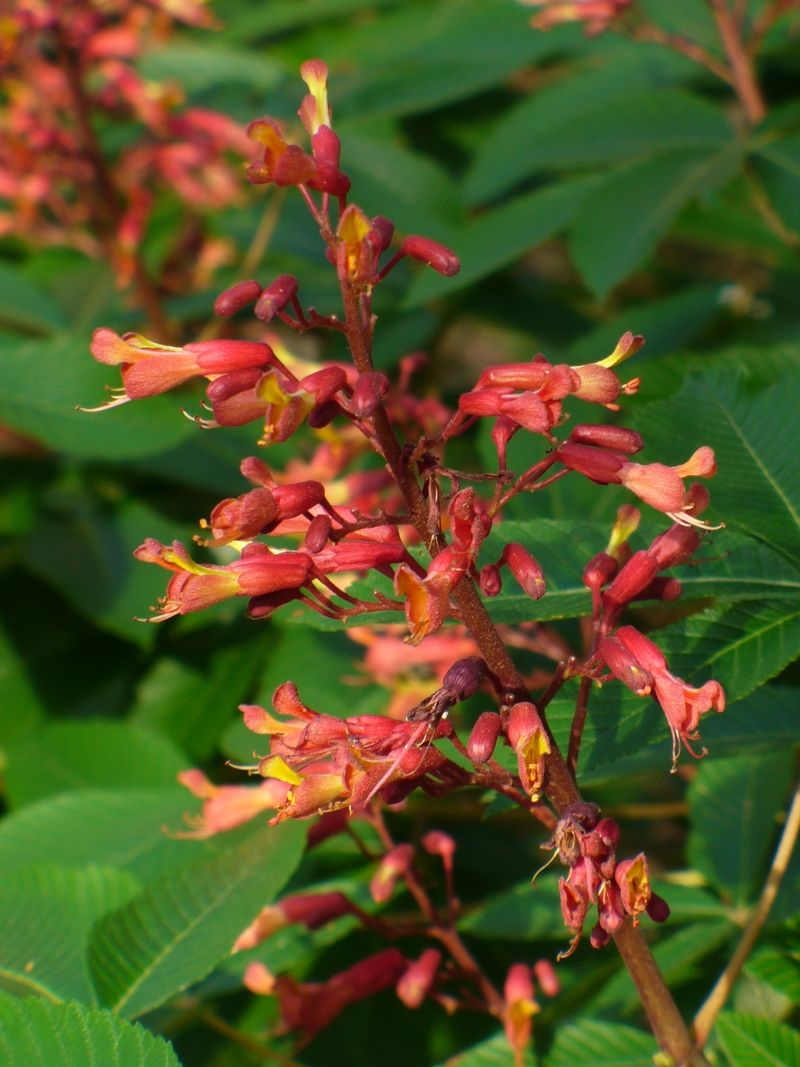
Before many yards feel fully awake in spring, red buckeye lifts bright flower spikes like little signal flags. That early timing is what makes it so valuable, especially in North and Central Florida gardens where hummingbirds may be arriving hungry.
The red blooms are shaped for birds that can hover and sip, and they stand out clearly against the fresh green leaves. A small tree or large shrub, red buckeye fits into yards that do not have room for another giant canopy tree.
Luna moths benefit from the structure red buckeye adds, even though it is not one of their classic host plants. Its branches create a shaded middle layer, which matters because moth-friendly yards are rarely flat, empty lawns with one flower bed at the edge.
Red buckeye likes part shade and moisture but does not want to sit in soggy soil for long periods. In sandy Florida soil, a ring of leaf mulch helps protect roots, cool the ground, and hold water between rains.
One caution for family yards: the seeds are toxic if eaten. Plant it where children and pets are not likely to treat fallen seeds like toys, and enjoy it as a spring wildlife tree rather than a snack plant.
5. Sweetgum
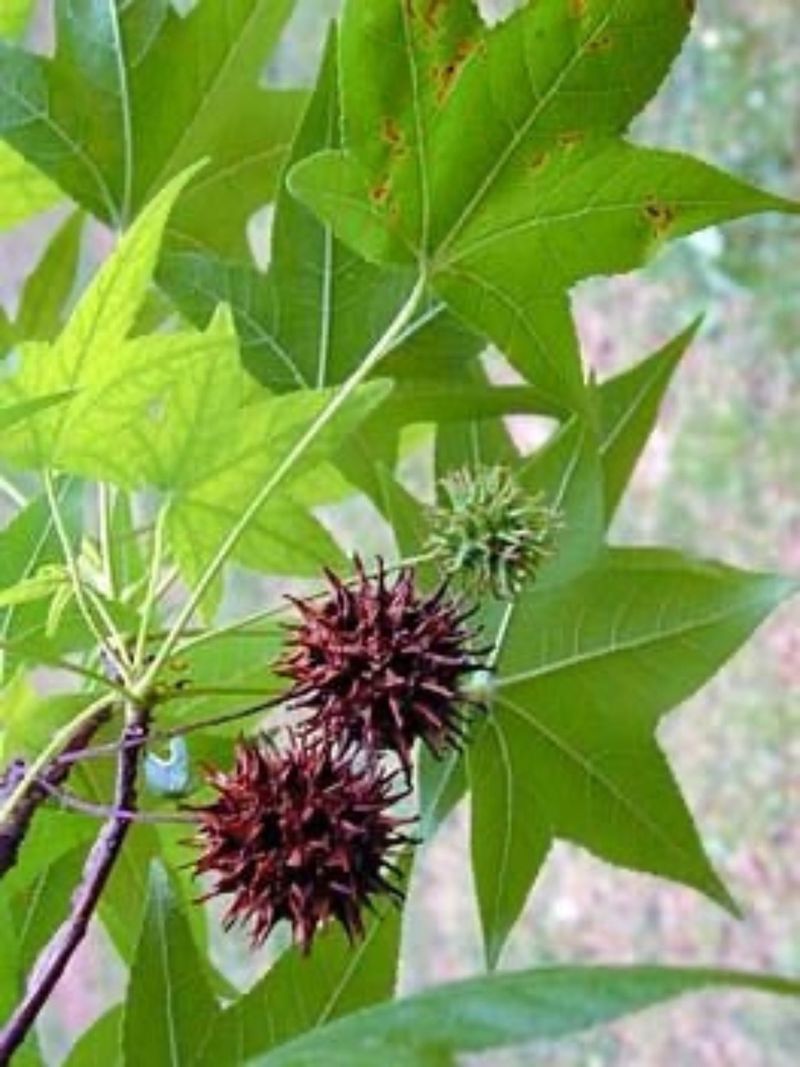
Love them or grumble about the spiky seed balls, sweetgums have a secret wildlife value many Florida gardeners miss. They are one of the host trees used by luna moth caterpillars, which means they can support the moth long before anyone sees the glowing green adult.
Luna moths live a short adult life, so the caterpillar food plant is not optional. Without suitable host trees nearby, adult moths may pass through, but they have fewer reasons to lay eggs and continue the next generation in your yard.
Sweetgum is also sturdy in the right location, with a native range that includes much of Florida. It can handle moist areas better than many trees, which makes it useful near low spots that collect rain after summer downpours.
Hummingbirds will not come to sweetgum for showy nectar flowers, but the tree still supports the kind of insect life that makes a yard healthier overall. Small insects also help feed nesting birds, and the canopy gives hummingbirds safe perches between flower visits.
Plant sweetgum where the seed balls will not annoy bare feet, mower blades, or patios. A back corner, rain garden edge, or naturalized strip is a better fit than the middle of a tiny front lawn.
6. Persimmon
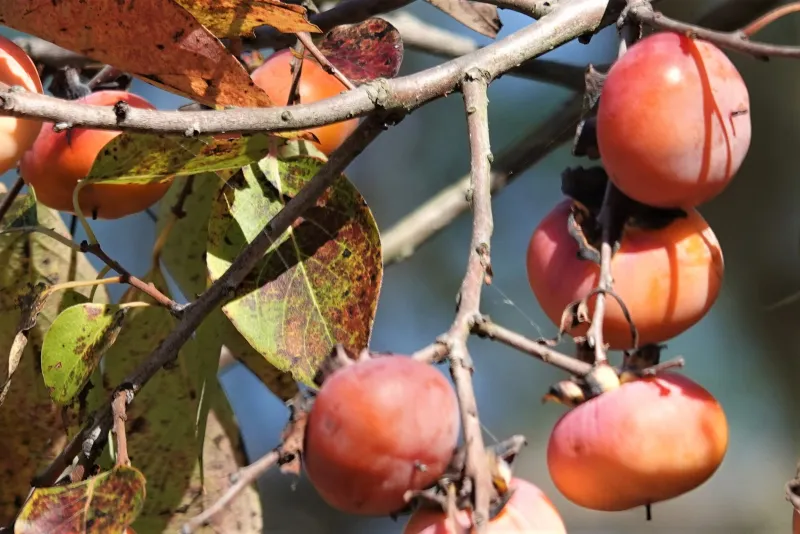
A persimmon tree feels old-fashioned in the best way, the kind of plant that makes a yard seem rooted instead of decorated. Florida’s native persimmons offer wildlife value through leaves, fruit, shelter, and the quiet support they give moths.
Persimmon is listed among plants that luna moth caterpillars may use, so it adds real nursery value to a moth-friendly landscape. That matters because adult luna moths do not feed, they are focused on mating and laying eggs during their brief time above ground.
Hummingbirds are not coming for the fruit, but they still use small native trees as lookout posts and resting spots. Place nectar plants like coral honeysuckle, firebush, or red buckeye nearby, and persimmon becomes part of the same wildlife circuit.
Florida gardeners also get a tree that handles sandy soil once established and can fit into a more natural, lower-maintenance yard. It is a better match for a wildlife corner than a fussy exotic fruit tree that needs constant spraying.
Female trees can produce fruit that feeds birds and mammals, though fallen fruit may be messy near walkways. Give persimmon room, mulch it well during establishment, and let leaf litter stay under the canopy when possible.
7. Pignut Hickory
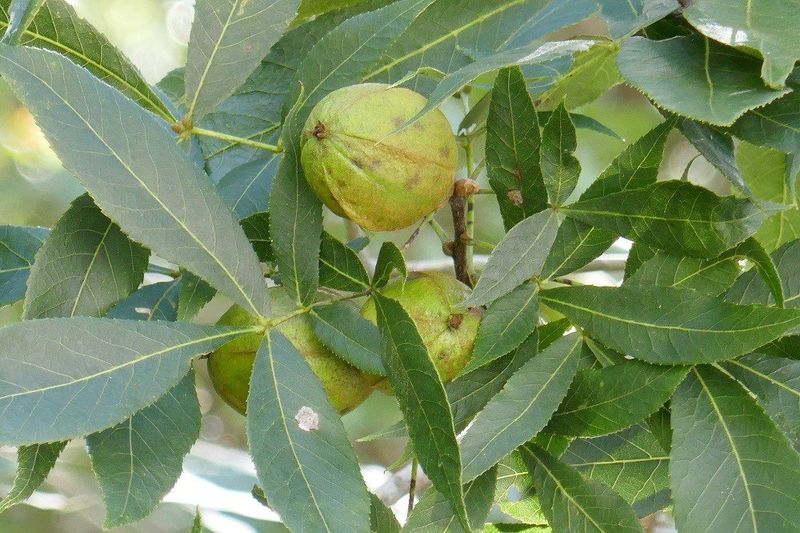
Not every wildlife plant wins people over with flashy flowers, and pignut hickory proves the point. Its strength is quieter: it is a native tree that helps feed luna moth caterpillars and supports a whole web of insects, birds, and small wildlife.
Hickories are among the important host trees for luna moths, giving females a suitable place to lay eggs. If your goal is to actually invite luna moths into the life cycle of the yard, not just hope one drifts by a porch light, host trees are the backbone.
Hummingbirds benefit indirectly from hickory’s height and shelter. They may perch in the canopy, rest between nectar stops, and use the layered cover that makes a Florida yard feel safer than open turf.
Pignut hickory is best for gardeners with space and patience, since it is a tree for the long game. It can handle well-drained sites, but young trees need care during dry spells while roots are getting established in sandy soil.
Keep it away from tight foundations, overhead lines, and places where storm cleanup would be risky. Underplant with firebush, coral honeysuckle on a nearby support, or native azalea along a shaded edge, and one corner of the yard can serve both hummingbird hunger and luna moth survival.