
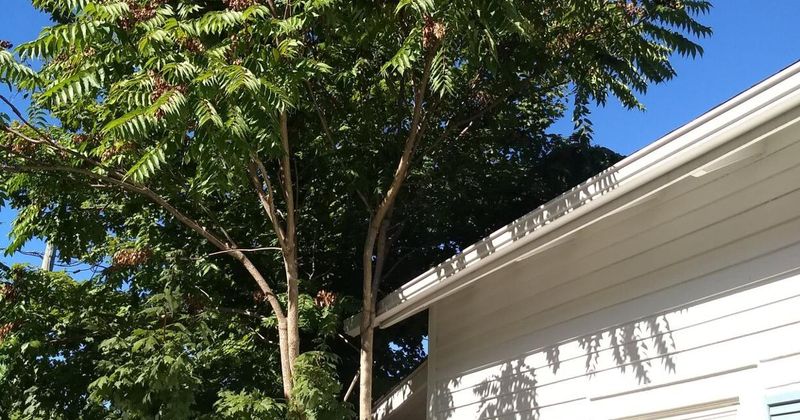
A weedy, fast-growing tree that most North Carolina homeowners mistake for a native is quietly making their yards more welcoming to one of the country’s most-watched invasive insects. That tree is tree-of-heaven, and the insect is spotted lanternfly, a piercing-sucking pest already confirmed in seven North Carolina counties as of early 2026. Knowing how to identify both, what removal can and cannot accomplish, and how to report a sighting puts homeowners ahead of the problem. The steps below are practical, grounded in state and university guidance, and designed to keep your response safe for your yard, your family, and the native landscape around you.
Tree-of-heaven is the invasive host to identify first
Tree-of-heaven, known by its scientific name Ailanthus altissima, is not a tree most North Carolina homeowners would flag as a problem on first glance. It grows fast, sometimes several feet in a single season, and it shows up in places where native trees have not had a chance to establish: roadsides, fence lines, disturbed lots, woodland edges, and the margins of utility corridors. Walk the edges of your property and you may find it already there, blending in with everything else.
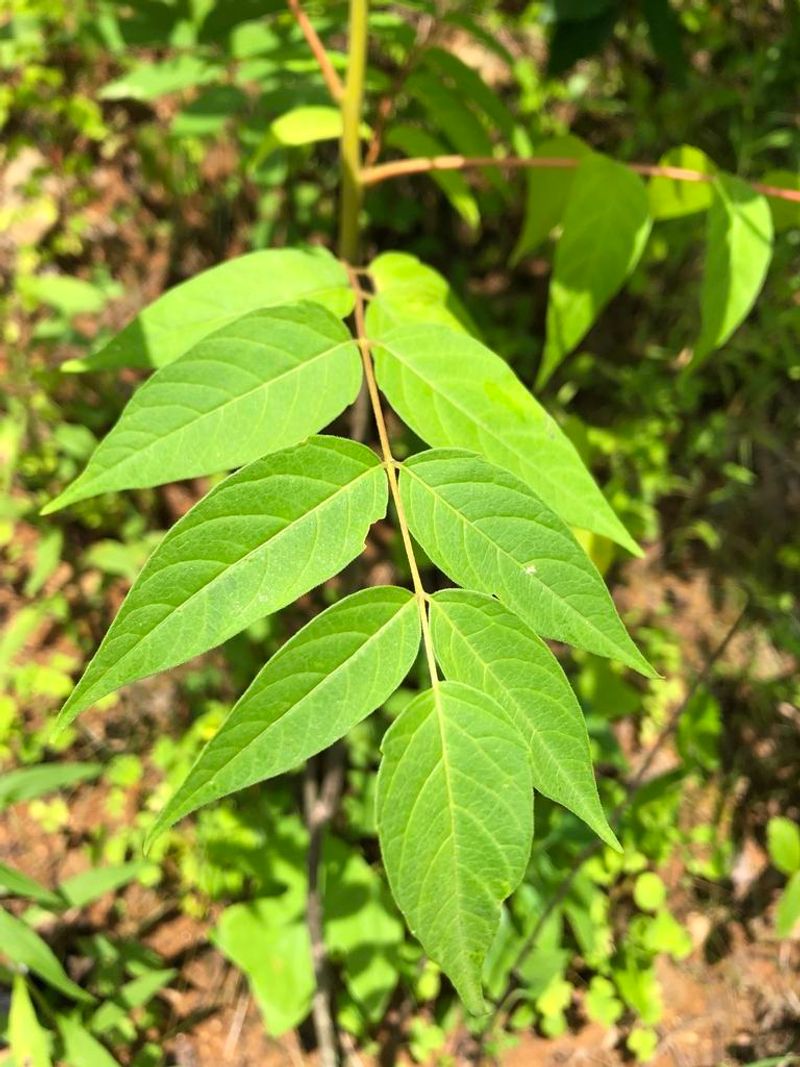
The leaves are the starting point for identification. Each leaf is compound, meaning it is made up of many individual leaflets arranged along a central stalk, and those leaflets have smooth edges rather than toothed or lobed ones. Older leaflets may have one or two small rounded bumps near the base, a detail that sets tree-of-heaven apart from several native lookalikes. Crushed leaves or broken twigs release a strong, unpleasant smell that many people describe as rancid peanut butter or burned rubber.
That odor alone is a useful field test when you are trying to sort out what you are looking at.
Beyond its leaves, tree-of-heaven spreads aggressively. It produces large clusters of papery, winged seeds that travel on the wind, and it sends up root suckers from an expanding underground system. A single tree can seed a wide area and regenerate from its roots even after the trunk is cut, which is why identification must come before any cutting or digging.
Several native North Carolina trees share similar compound leaves, including sumacs, black walnut, ash, and elderberry. Removing the wrong tree wastes effort, harms the native landscape, and does nothing to address the invasive plant. NC State Extension’s tree-of-heaven profile walks through the key identification features in detail, and the NCDA&CS spotted-lanternfly look-alike guide shows side-by-side comparisons of both the tree and the insect against common natives. Use both before you pick up a chainsaw or a spray bottle.
A preferred host is not the insect’s only host
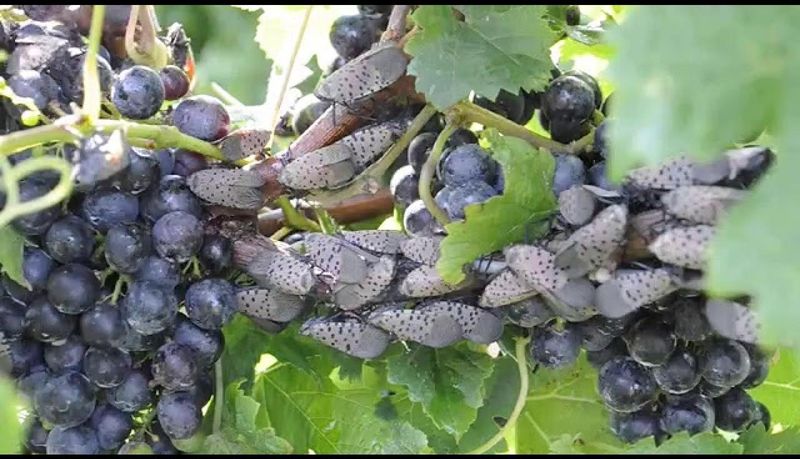
Spotted lanternfly has a well-documented preference for tree-of-heaven, particularly once nymphs reach their later stages and adults begin feeding in earnest during late summer and fall. The preference is real, and a yard with mature tree-of-heaven can draw higher concentrations of the insect than a yard without it. However, preference is not the same as dependency.
Research published in peer-reviewed journals shows that spotted lanternfly can complete its development and reproduce on a range of plants without ever touching tree-of-heaven. A study on spotted lanternfly performance among common woody ornamentals confirmed that the insect can survive and develop on multiple host species, though performance varies. The practical takeaway is that grapes, fruit trees, maples, walnuts, willows, and many ornamental shrubs and trees can all serve as feeding sites. A yard without tree-of-heaven is not a yard the insect will automatically skip.
Feeding produces honeydew, a sticky, sugary liquid that drops onto whatever is below: leaves, decks, vehicles, patio furniture, and outdoor equipment. That honeydew becomes a food source for ants and wasps, which can make outdoor spaces uncomfortable. Over time, a black fungus called sooty mold colonizes the honeydew deposits, leaving dark, grimy coatings on plant surfaces and hard structures alike. The mold does not infect the plant directly, but heavy coverage can block sunlight and reduce a plant’s ability to photosynthesize effectively.
According to NCDA&CS spotted-lanternfly guidance, the insect does not bite or sting people, so the harm in residential landscapes is primarily nuisance-related: the mess, the insects clustering on surfaces, and the stress that heavy feeding can place on certain plants. Grapevines and some young trees may suffer more significant damage under sustained pressure, but spotted lanternfly is not the tree-killing force that some coverage implies.
Removing the host may help locally, but it will not erase the pest
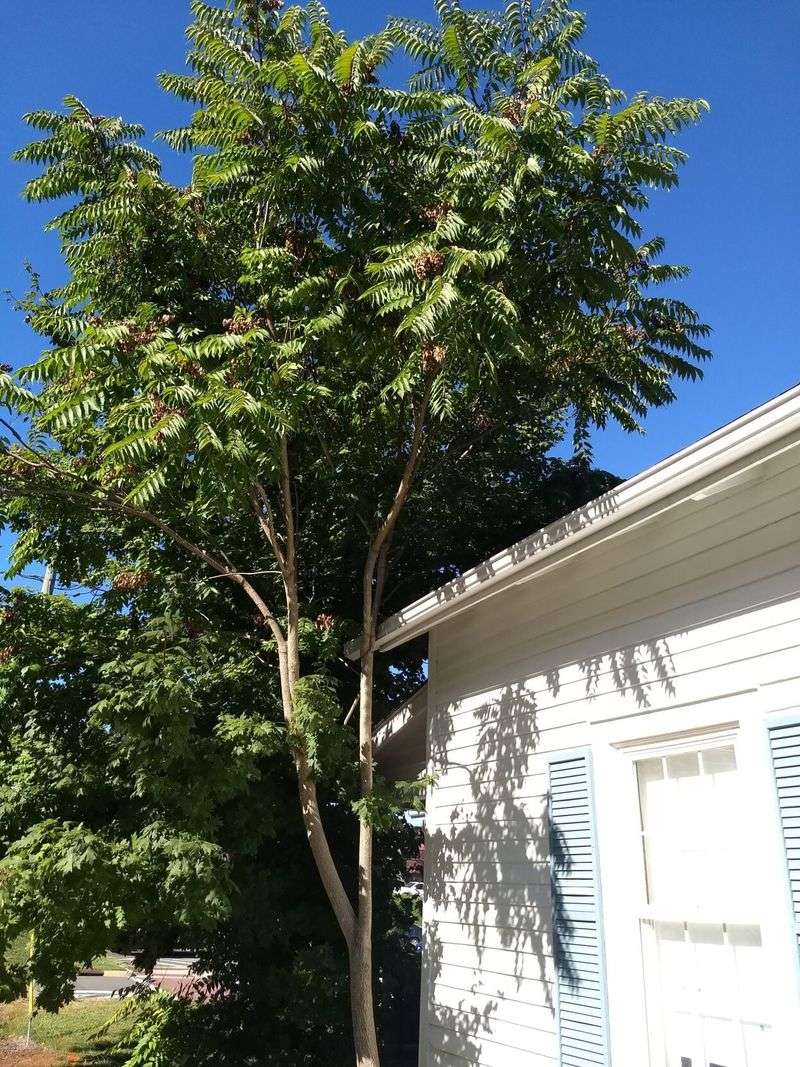
Getting rid of a confirmed tree-of-heaven on your property accomplishes two things at once: it removes an invasive plant that degrades native habitat, and it may reduce the local feeding opportunities that make your yard particularly attractive to spotted lanternfly during peak activity periods. Both outcomes have value. Fewer honeydew deposits, less sooty mold, and one fewer invasive plant competing with native species are all legitimate wins.
What removal cannot do is guarantee that spotted lanternfly will leave or stop appearing on your property. Adults are mobile insects that fly and walk between sites. Egg masses can arrive on vehicles, firewood, lawn equipment, outdoor furniture, and any other surface that moves through an infested area. Other suitable hosts, including maples, walnuts, willows, and ornamental trees, may remain on your property or on neighboring land, along roadsides, or in unmanaged green spaces nearby.
The science on this point is clear. Penn State Extension’s guidance for landscape professionals states that preferred-host removal has not been specifically evaluated as a spotted-lanternfly management strategy and is unlikely to consistently reduce insect numbers on its own. That does not mean removal is pointless, but it does mean that homeowners should not expect one tree to be the turning point in a regional pest problem.
A realistic framing is this: removing a confirmed tree-of-heaven eliminates an invasive plant, may reduce the concentration of feeding on your property during the seasons when spotted lanternfly most heavily uses that host, and supports the broader goal of reducing tree-of-heaven’s footprint across the landscape. It is a reasonable action as part of a larger management plan. It is not, by itself, a solution to an established infestation. Peer-reviewed research on spotted lanternfly host use supports the conclusion that the insect’s broad diet and mobility make single-host removal an incomplete response.
Confirm and report a suspected sighting before taking action
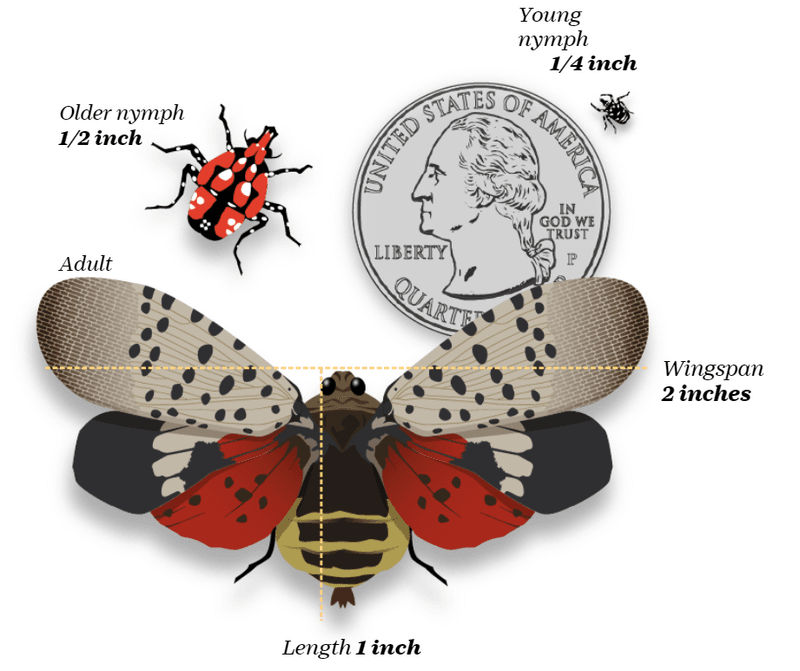
Seeing an unfamiliar insect or a strange gray smear on a tree trunk is worth investigating, but it is not a signal to immediately cut anything down or spray anything. The first move is documentation. Photograph the insect or suspected egg mass clearly, and place a coin or another familiar object next to it so the size is obvious in the image. A sharp photo taken from multiple angles gives state officials something useful to work with.
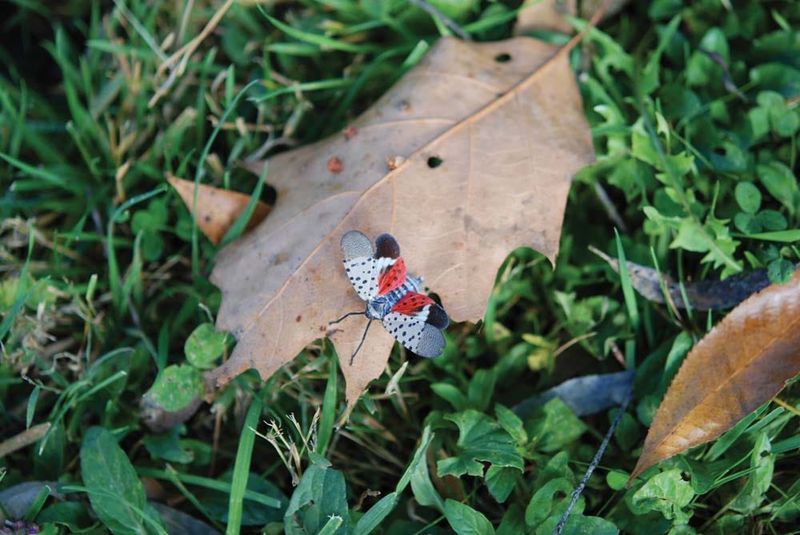
Once you have a photo, compare what you saw with official identification materials before drawing conclusions. Spotted lanternfly has lookalikes among native moths, beetles, and other insects, and misidentification leads to wasted effort and unnecessary alarm. The NCDA&CS look-alike guide covers the most common cases of mistaken identity in North Carolina and is available as a free download.
After comparing your photo with identification resources, report a suspected sighting through the NCDA&CS spotted-lanternfly reporting system. Reports from outside known infested areas are especially valuable because they help state officials track where the insect is moving. A single adult spotted outside an established county is not proof that your neighborhood is infested; it may represent a hitchhiker that arrived on a vehicle, a piece of furniture, or firewood from another area.
As of the NCDA&CS February 10, 2026 announcement, established spotted-lanternfly populations had been confirmed in seven North Carolina counties: Forsyth, Guilford, Rockingham, Caldwell, Caswell, Davidson, and Rowan. Residents in those counties have the highest reason to stay alert, but anyone in the state should report a suspected sighting rather than assume the insect is either definitely present or definitely absent. The reporting system is how the state builds an accurate picture of where the insect is actually established versus where it has simply passed through.
Established trees need a management plan, not a quick cut
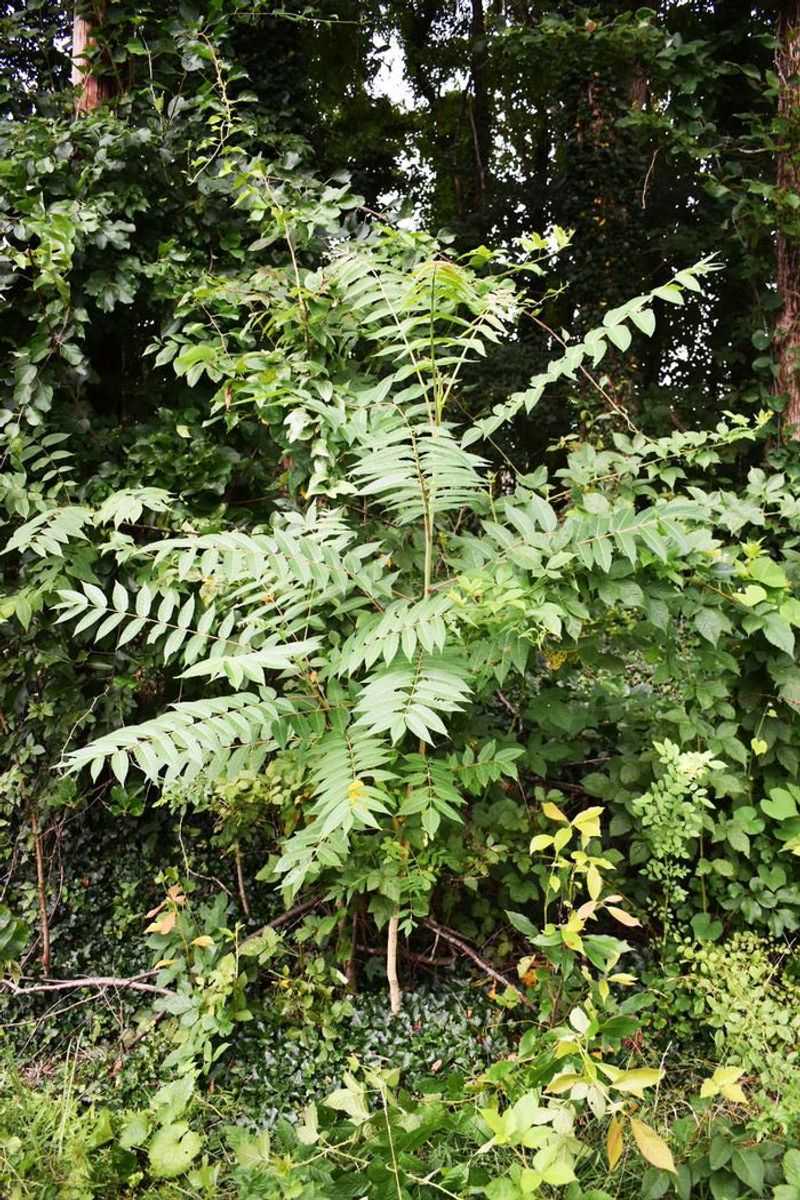
Young tree-of-heaven seedlings, the ones that sprouted this season with roots still shallow enough to pull by hand, can sometimes be removed manually if the entire root system comes out cleanly. Miss even a short section of root and the plant will regrow. For anything larger than a first-year seedling, hand-pulling is not a realistic option.
Cutting an established tree-of-heaven without a follow-up treatment plan often makes the problem worse in the short term. The stump and the extensive root system respond to cutting by pushing out new sprouts, sometimes dozens of them, and those sprouts can grow faster than the original trunk did. A single cut can turn one stem into a thicket. That biological reality is why NC State Extension’s tree-of-heaven management guidance emphasizes root-targeting herbicide strategies rather than simple felling.
How those herbicide strategies are applied matters enormously, and the details are not one-size-fits-all. NC State and Penn State guidance describe different approaches to timing and application method, and Penn State’s tree-of-heaven control strategies resource explains that treating the standing tree before cutting, rather than painting the stump after, is often more effective at reaching the root system. Their cut-stump herbicide treatment guide notes that ordinary stump painting does not reliably kill tree-of-heaven roots, and Penn State’s broader tree-of-heaven overview reinforces that follow-up monitoring and repeated treatment are typically necessary regardless of method.
Chainsaw work near structures, utility lines, and neighboring property introduces safety and liability questions that go beyond plant management. Herbicide use near water, wells, edible gardens, or areas where children and pets spend time adds another layer of complexity. These are exactly the situations where calling your county Cooperative Extension office, a qualified arborist, or a licensed pesticide professional is the right move, not a sign of over-caution. Specialized programs also exist in which selected male trees are retained as treated trap trees to attract and then kill spotted lanternfly, but Penn State’s landscape professional guidance is clear that this is a professionally managed strategy, not a casual homeowner project.
Inspect plants and outdoor items after managing the tree
Managing or removing a tree-of-heaven is a meaningful step, but it does not replace the habit of looking around your property for spotted lanternfly activity. The insect uses a wide range of hosts, and your grapes, fruit trees, maples, walnuts, willows, and ornamental shrubs can all attract feeding insects even after the preferred host is gone. Get in the habit of checking those plants during late summer and fall, the period when adults are most active, and look for clusters of insects on stems and trunks, sticky honeydew residue on leaves or surfaces below, and the dark patches of sooty mold that follow.
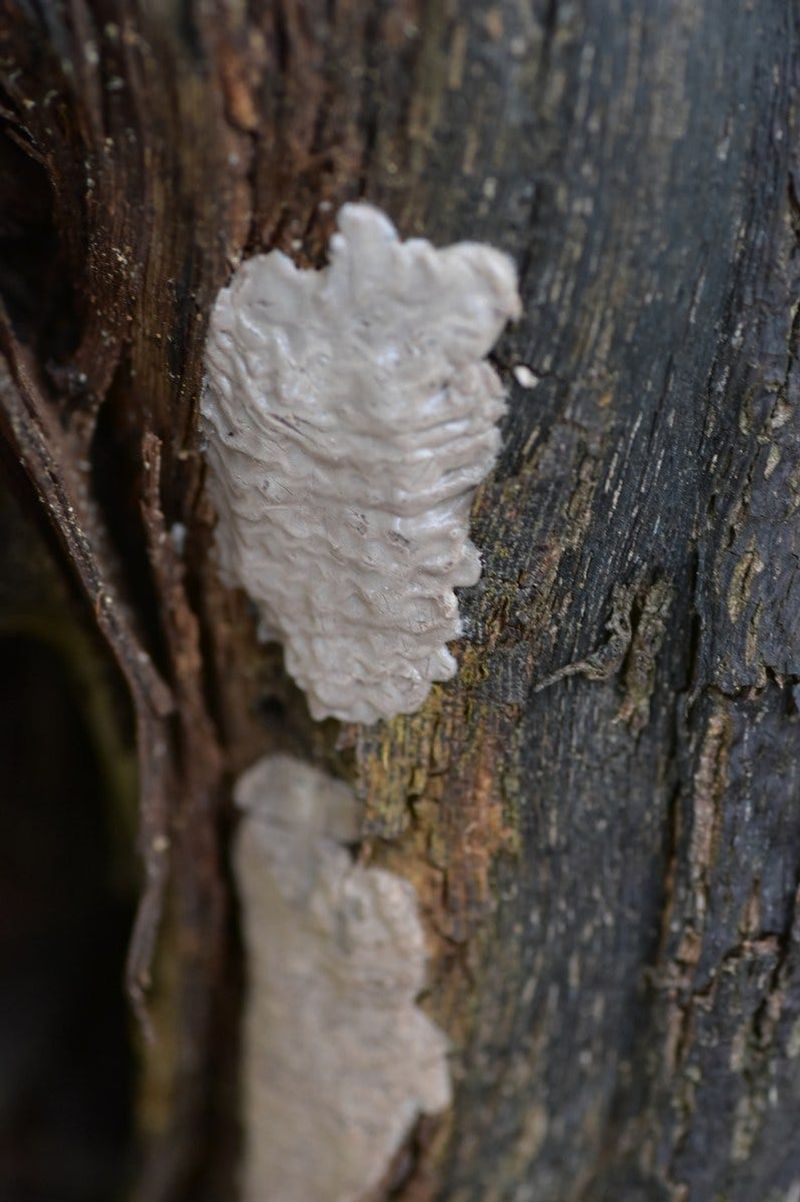
Egg masses deserve equal attention, and they show up in places that catch many homeowners off guard. According to NCDA&CS spotted-lanternfly guidance, females lay eggs on tree bark, smooth rocks, outdoor furniture, vehicles, trailers, lawn equipment, and firewood. The masses look like dried mud smears, gray-brown and about an inch long, and they blend into rough surfaces easily. Check the undersides of vehicle bumpers, wheel wells, and trailer frames before moving anything out of an area where spotted lanternfly has been confirmed.
When you find live insects, squashing them or placing them in a container of rubbing alcohol are both practical and state-supported responses. Scrape suspected egg masses into a sealed bag or container with rubbing alcohol and dispose of them according to current NCDA&CS instructions. These hands-on steps are useful for keeping numbers manageable on your own property, though they do not substitute for reporting confirmed sightings to the state.
The Penn State spotted-lanternfly management guide reinforces that thorough inspection of outdoor items before transport is one of the most direct ways individual homeowners can slow the insect’s movement to new areas. Firewood in particular is a common carrier, so buying local and burning what you bring is a practical rule worth following year-round.
Avoid shortcuts that can harm people, plants, or the landscape
A few patterns reliably make spotted-lanternfly and tree-of-heaven situations worse, and each one comes from understandable impatience. Removing a tree before confirming its identity is one of them. Native sumacs, black walnuts, ash, and other compound-leaved trees look similar enough to tree-of-heaven that cutting the wrong one is a genuine risk, especially early in the growing season before flowers or fruit develop. Confirm the species first, using the resources already described, before any physical work begins.
Home remedies are another category to avoid entirely. Penn State Extension’s guidance on home remedies for spotted lanternfly reports that no homemade treatments, including milkweed, essential oils, dish soap, and similar products, have been approved or shown to work against spotted lanternfly. Some improvised sprays can harm the plants you are trying to protect, and applying any pesticide in a manner inconsistent with its label is illegal under federal law.
That label rule applies to every product, whether it is a commercial systemic herbicide for tree-of-heaven or an insecticide for spotted lanternfly. The EPA’s guidance on reading pesticide labels is direct: the label is a legal document, and it governs product choice, application method, personal protective equipment, re-entry intervals, and environmental precautions. Do not apply any pesticide near desirable plants, edible crops, ponds, streams, wells, children, or pets unless the label specifically addresses those situations and permits the use.
The responsible path forward is not complicated, even if it requires patience. Confirm what you have, report it to NCDA&CS, get qualified guidance on managing tree-of-heaven from Extension or a professional, monitor for resprouts and returning insects, and check outdoor items before moving them. Spotted lanternfly is a mobile pest with a broad appetite, and the homeowners who slow it down most effectively are the ones who stay systematic rather than reactive. The most useful thing you can carry into this situation is not a chainsaw or a spray bottle, but an accurate identification and a phone number for your county Extension office.