
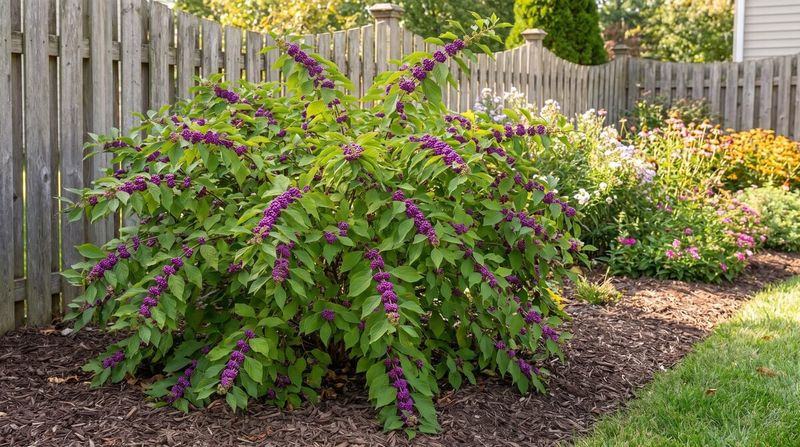
Walk past most North Carolina yards in late August or September and the color story has quieted down considerably. Annuals are tired, many perennials have already peaked, and the lawn can look more straw than green after a dry stretch. That is exactly the moment when American beautyberry steps forward with clusters of vivid purple fruit that are genuinely hard to ignore. For homeowners across the Piedmont, Coastal Plain, and Mountains who want a native shrub that earns its space with almost no fuss, this one is worth a serious look.
A late-summer focal point, not a universal backyard winner
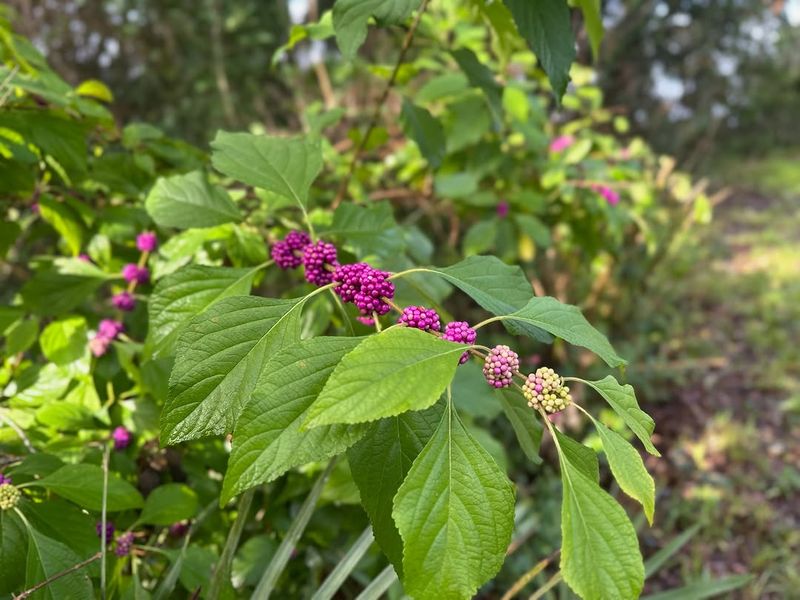
The title of this article makes a bold claim, and it is worth being honest about what the evidence actually supports. No study has measured every North Carolina landscape plant in September and declared American beautyberry the winner. What the evidence does support is a narrower but still genuinely useful finding: beautyberry is a strong native shrub for homeowners who want conspicuous late-summer interest, wildlife value, and manageable care on a suitable site.
The useful question is not which shrub beats all others in some objective ranking. The more practical question is: when flowers become less prominent in late summer, which native shrub can still give a yard a vivid focal point? American beautyberry, known scientifically as Callicarpa americana, answers that question with fruit rather than flowers. Its purple-to-blue berry clusters develop from August through October and can persist into early winter, providing color and wildlife food at a time when many homeowners feel their yards have gone quiet.
That distinction matters. Beautyberry does flower, producing small clusters in late spring and early summer, generally from June through July. By September its flowers are long finished. NC State Extension’s plant profile for Callicarpa americana makes this clear: the September impact comes from the fruit display, not a second round of blooms.
Calling it a September-blooming shrub would be inaccurate. Calling it a shrub that delivers vivid late-summer and fall color through its berries is well supported.
Keeping that distinction in mind makes the recommendation more honest and more useful. A homeowner who plants beautyberry expecting September flowers will be disappointed. A homeowner who plants it for its fruit display, wildlife draw, and regional adaptability will likely find it earns its place in the yard.
American beautyberry builds its display from August into fall
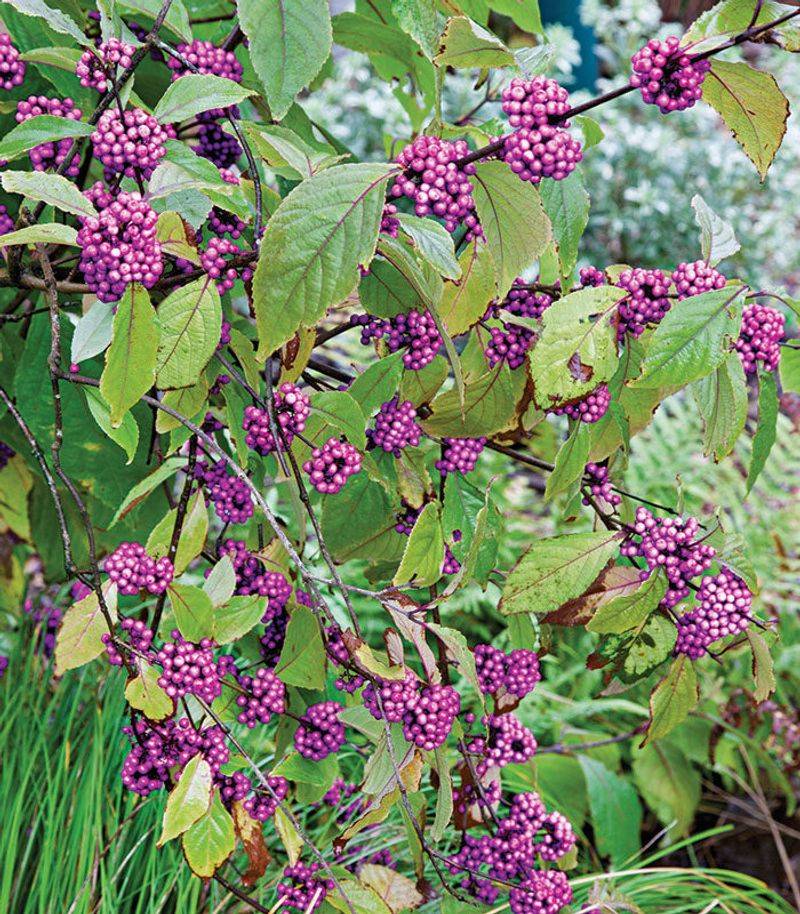
American beautyberry is native across all three of North Carolina’s major physiographic regions: the Coastal Plain, the Piedmont, and the Mountains. That broad native presence means a homeowner in Wilmington, Greensboro, or Asheville is working with a plant that evolved in conditions similar to their own yard, not one imported from a distant climate and coaxed to survive.
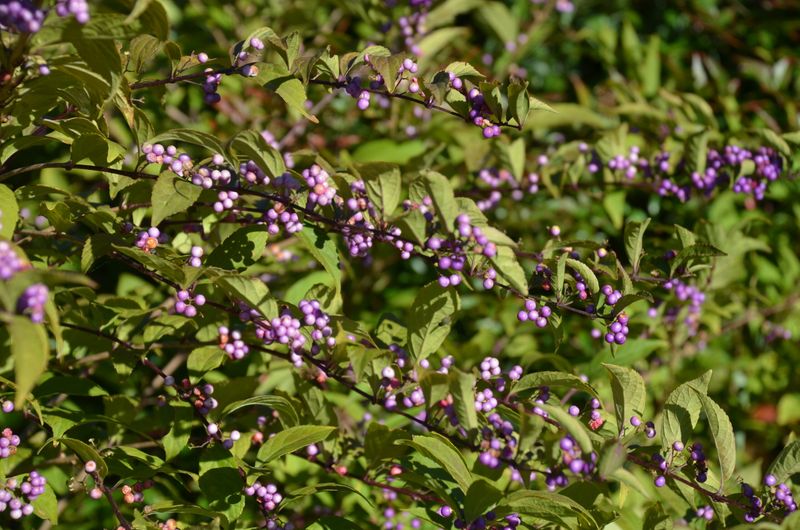
At maturity the shrub typically reaches 3 to 8 feet tall and 3 to 6 feet wide, with arching stems that give it a relaxed, open form. NC State Extension’s Callicarpa americana profile describes it as tolerating full sun to partial shade, with adaptability to clay, loam, and sandy soils across a range of pH levels. Deep shade, however, can reduce both fruit production and overall vigor, so a location that receives at least a few hours of direct sun each day tends to produce a better display.
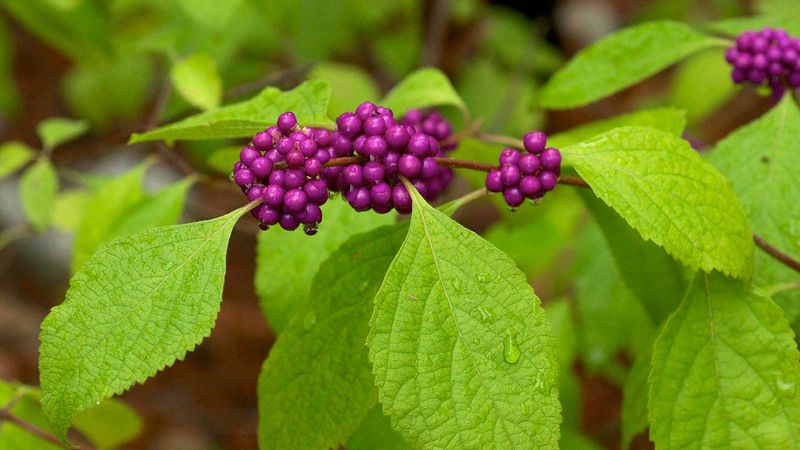
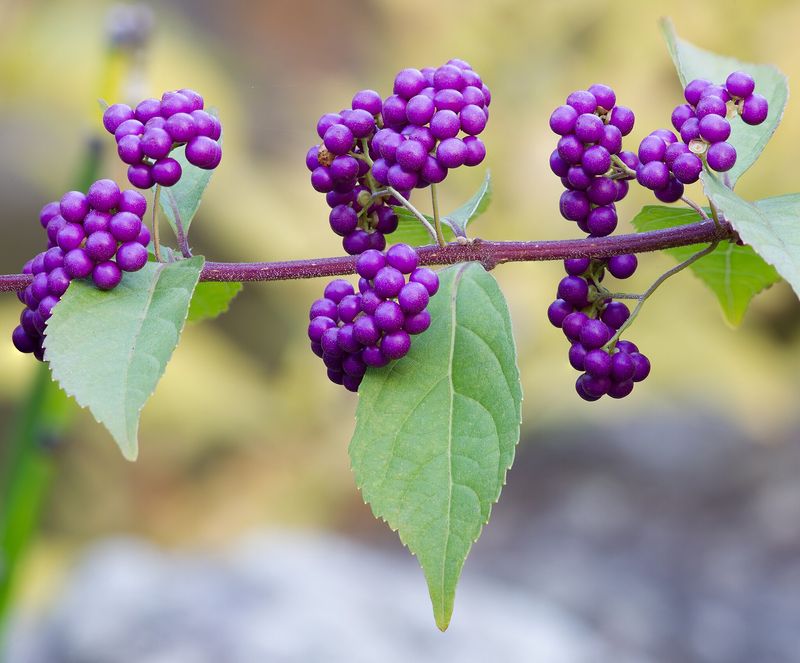
The berry clusters are the main event. They appear tightly packed around the stems, turning a striking purple-to-blue color that stands out against the late-season landscape. Fruit typically develops beginning in August, carries through October, and may hang on into early winter before birds and mammals work through it. That timing is typical rather than guaranteed: soil quality, microclimate, rainfall, and regional conditions all influence how early or fully a particular shrub performs in any given year.
Good drainage is not optional. Beautyberry is adaptable to several soil types, but it does not thrive in permanently wet or waterlogged conditions. A site that stays soggy after rain is better matched to a different native shrub. For a well-drained spot with adequate light, however, beautyberry’s combination of regional nativity, manageable size, and late-season fruit display makes it a strong candidate across much of North Carolina.
Match the shrub to the site before calling it low maintenance
“Low maintenance” is one of the most misunderstood phrases in gardening. For American beautyberry, it accurately describes what the plant asks of you after it has settled in. Getting to that point requires a few weeks of attentive care, and skipping those steps is the most common reason a promising native shrub underperforms.
Before planting, assess the site honestly. How many hours of direct sun does it receive? Does water drain away within a day of heavy rain, or does it pool? Is the soil compacted clay, loose loam, or sandy?
Beautyberry handles a range of soil types, but it needs good drainage and at least partial sun to produce a strong fruit display. Native status does not make a plant drought-proof, and it does not make a plant suitable for chronically wet ground. Matching the right shrub to the right conditions is where low maintenance actually begins.
When you are ready to plant, NC State Extension’s woody ornamentals guidance recommends setting the shrub at the same depth as its container root ball, neither too deep nor too high. Water thoroughly at planting, and continue irrigating regularly while roots establish over the following weeks and months. How long that establishment period lasts depends on soil, rainfall, and season, but a newly planted shrub in a dry stretch will need supplemental water even if the species is broadly drought-tolerant once mature.
Apply a 2- to 3-inch layer of mulch around the base to conserve moisture and suppress weeds, but keep it several inches away from the trunk and crown. Mulch piled against the stem traps moisture and can promote rot or pest problems. NC State’s native plants handbook emphasizes that even regionally native species need this kind of establishment attention before they can deliver the hands-off performance their reputation promises. The Extension Gardener Handbook’s establishment guidance reinforces that consistent early irrigation is one of the most important factors in long-term plant success.
The berries offer wildlife value when flowers are no longer the story
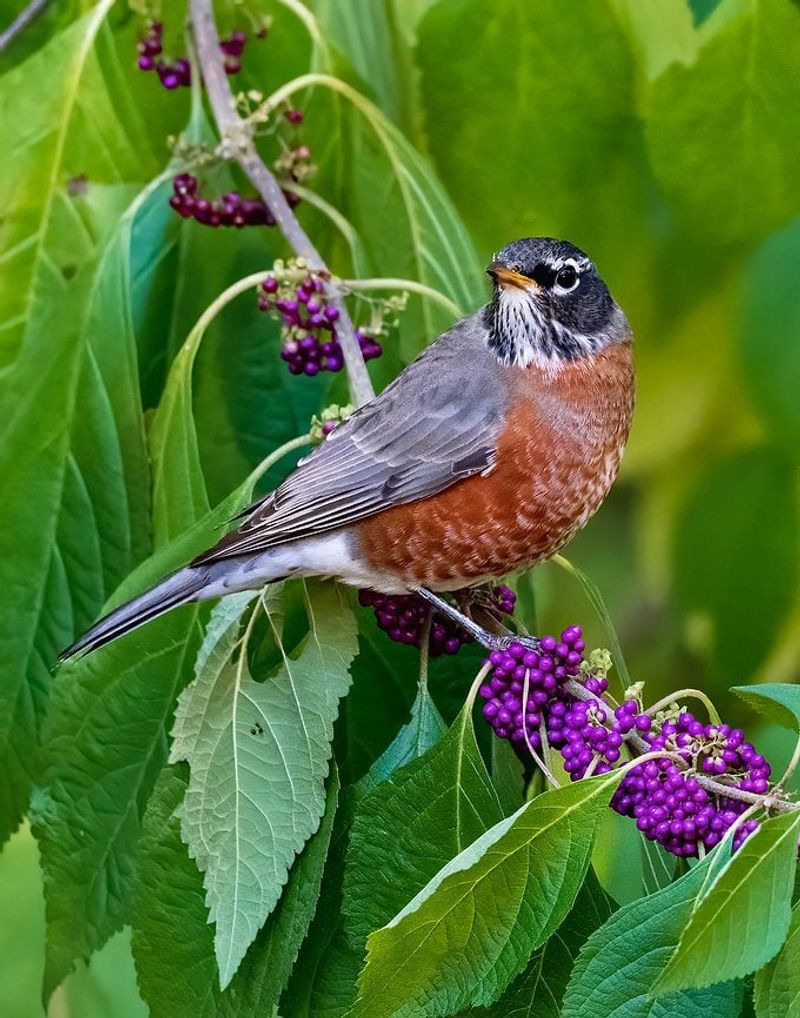
By the time August arrives, beautyberry’s small June and July flowers are finished. What takes over is the fruit, and that is where the shrub’s ecological contribution becomes most visible. The clustered purple berries provide food for a range of birds and small mammals at a point in the season when other food sources are shifting.
NC State Extension’s landscaping-for-wildlife resource lists American beautyberry primarily as a fruit- and seed-producing shrub, and the NC State plant profile notes that berries are eaten by songbirds, small mammals, and larger mammals including opossums, raccoons, foxes, squirrels, and deer. The Audubon Society’s native plant database entry for American beautyberry identifies cardinals, thrashers, chickadees, jays, and other bird groups as potential visitors. No planting guarantees a specific roster of wildlife, since local habitat, regional bird populations, and nearby food competition all factor in, but the fruit is a genuine resource during the late-season period when many yards offer less.
What beautyberry does not provide in September is significant nectar. Its flowers, which are the nectar-bearing structures, bloomed months earlier. Framing it as a major late-season pollinator plant would be inaccurate. Its autumn contribution is fruit and seed, not pollen or nectar.
That distinction points toward a broader principle. A single shrub, however well chosen, supports wildlife more narrowly than a mixed planting. Audubon’s native plant guidance and NC State Extension both recommend selecting multiple native species with staggered flowering and fruiting across spring, summer, and fall. Beautyberry fills the late-summer-to-fall fruit slot well.
Pairing it with earlier-flowering natives covers the nectar gap and gives birds, pollinators, and other wildlife more continuous resources across the entire growing season.
Leaf-compound research does not make a mosquito-proof yard
American beautyberry has a documented research history that goes beyond ornamental appeal. USDA Agricultural Research Service scientists isolated compounds from its leaves, including one called callicarpenal, and found bite-deterrent activity against mosquitoes in laboratory and simulated-skin tests. A peer-reviewed study published in the Journal of Agricultural and Food Chemistry reported on these findings, and USDA ARS published related research on callicarpenal and intermedeol as part of the same investigation. A subsequent USDA ARS news release described follow-up work examining activity against ticks under similar controlled conditions.
Those findings are real, but they describe what happened in a lab with extracted or crushed leaf compounds, not what happens when you grow a beautyberry shrub in your yard. Planting beautyberry will not reduce mosquito biting across your property, will not control tick populations, will not prevent Lyme disease, and will not protect your family from vector-borne illness. The gap between a laboratory extract study and a yard-wide pest reduction is large, and no research has closed it.
Rubbing crushed beautyberry leaves on skin, children, pets, or clothing is not a substitute for registered repellents. The effectiveness of unregistered natural repellents is not established to the standard that EPA-registered products must meet, and applying plant material directly to skin carries its own risks that the lab research did not evaluate for safety.
For real bite protection, CDC guidance on preventing mosquito and tick bites outlines the measures that work: use EPA-registered repellents with active ingredients such as DEET, picaridin, or IR3535; wear long sleeves and pants when in tick habitat; treat clothing and gear with 0.5% permethrin where appropriate; do thorough tick checks after time outdoors; eliminate standing water around the yard to reduce mosquito breeding sites; and use screens or air conditioning to limit indoor exposure. The CDC Yellow Book’s section on mosquitoes, ticks, and repellents is specific about the evidence limits of non-registered products. Plant beautyberry for its fruit display and wildlife value. Handle bite protection separately with tools that have a demonstrated track record.
Simple winter care preserves the next season’s display
Once established, American beautyberry asks relatively little. The most important recurring task is pruning, and the timing of that pruning determines whether the shrub produces a strong berry display the following year. Because beautyberry flowers and fruits on new growth produced in the current season, pruning in late winter, before new growth begins, is the right window. Cut back in fall or early summer and you remove the stems that would have carried this year’s berries.
NC State Extension’s woody ornamentals handbook covers this principle for shrubs that bloom on new wood: late-winter pruning allows the plant to push vigorous new stems in spring, and those stems carry the season’s flowers and fruit. If the shrub has grown larger than you want, late winter is the time to cut it back hard. Beautyberry tolerates aggressive pruning and typically rebounds with strong new growth.
Beyond pruning, ongoing care includes periodic mulch refreshing, weed management around the base, and occasional watering during dry stretches even after the plant is established. “Established” does not mean the shrub is immune to drought stress; it means the root system is developed enough to handle normal dry periods without constant intervention. Extended drought in summer may still call for supplemental water.
One buying safeguard deserves attention. Not every plant sold under the label “beautyberry” is American beautyberry. Japanese beautyberry (Callicarpa japonica) and Chinese beautyberry are sometimes sold under the same common name and are not native to North Carolina. The North Carolina Vascular Plants database confirms Callicarpa americana as the native species.
When buying, ask for the scientific name and verify it reads Callicarpa americana before purchasing.
Choose another native shrub when the site asks for it
A well-drained spot with partial to full sun is where American beautyberry performs best. Change those conditions and a different native shrub may serve the homeowner better. Matching plant to site is not a concession; it is how low-maintenance native gardening actually works.
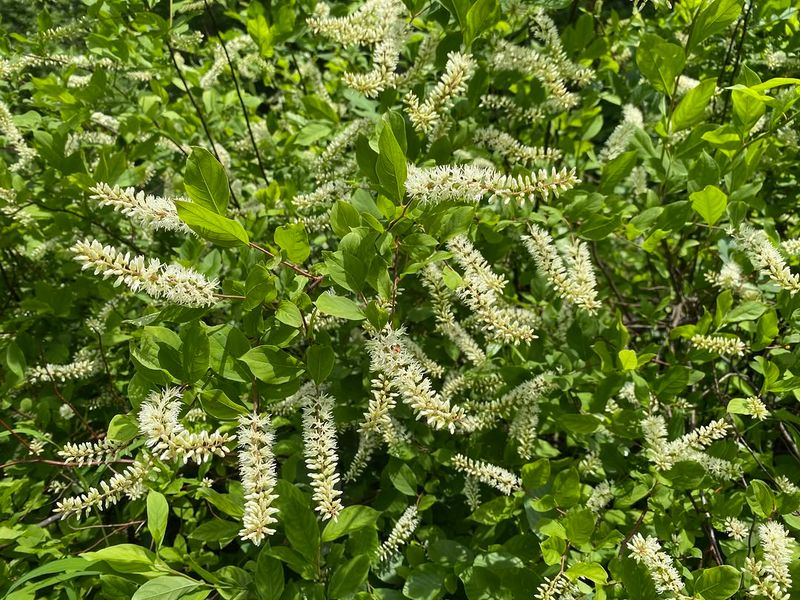
Sweet pepperbush (Clethra alnifolia) is worth considering for moist, acidic, partly shaded sites where beautyberry would struggle. It blooms with fragrant white flower spikes in mid-to-late summer, which makes it genuinely useful as a late-season nectar source at a moment when relatively few shrubs are flowering. NC State Extension’s sweet pepperbush profile notes that it is native primarily to the eastern Piedmont and Coastal Plain, not the entire state, so Mountain homeowners should check regional suitability before planting. Its preference for consistently moist, acidic soil makes it a poor fit for dry suburban yards, but for a shaded, wet-leaning bed it can outperform beautyberry on every measure.
Buttonbush (Cephalanthus occidentalis) belongs in a different conversation entirely. NC State’s buttonbush profile describes it as a wet-site or rain-garden shrub that flowers from June into September with globe-shaped blooms that attract pollinators and waterbirds. It is an excellent choice for a rain garden, a consistently wet low spot, or a pond margin. Plant it in dry soil or shade and flowering drops off sharply.
The NC State native plants handbook reinforces the principle that site conditions should drive species selection rather than any single plant’s general reputation.
Virginia sweetspire (Itea virginica) offers vivid fall foliage color and late-summer-to-fall seed capsules, but its showiest flowers arrive in May and June, well before the late-summer window. NC State’s Virginia sweetspire profile also notes that it can spread by suckering and may become weedy in some landscapes. Each of these shrubs solves a specific site or seasonal problem. None is universally best, and the right answer depends on what the yard actually offers.
The practical September verdict
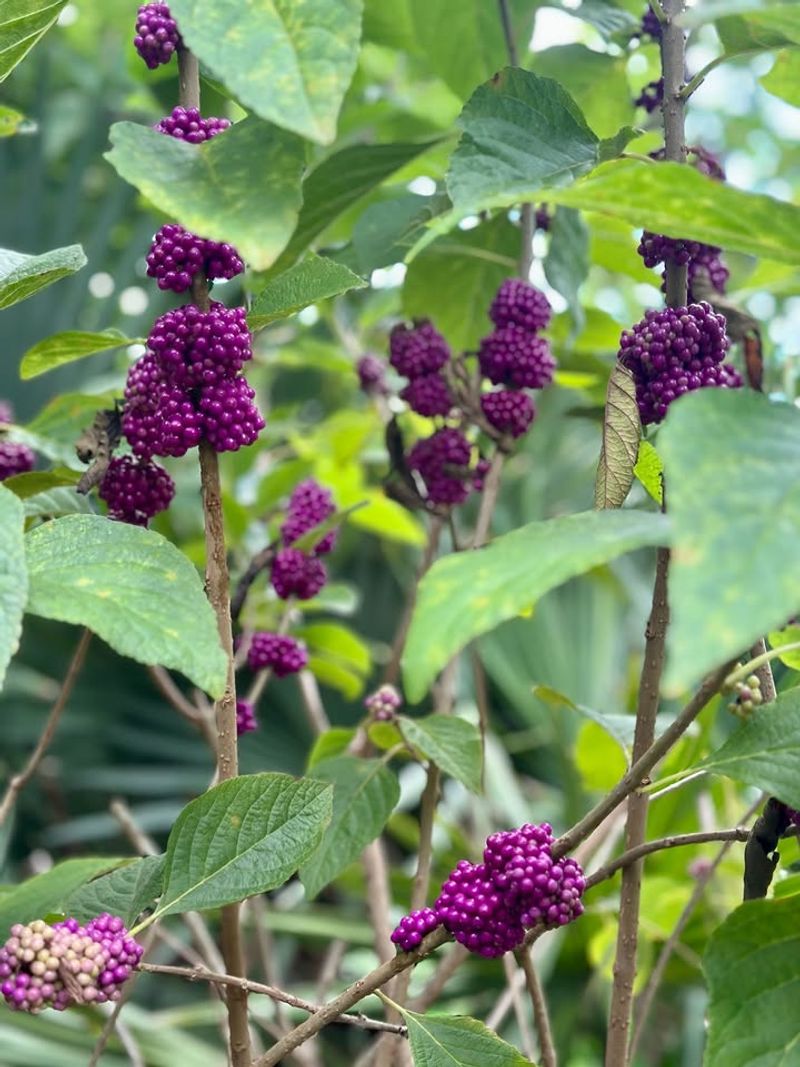
For many North Carolina homeowners with a well-drained, adequately lit yard and an interest in late-summer color, American beautyberry is a strong choice. NC State Extension’s Callicarpa americana profile confirms its native presence across the Coastal Plain, Piedmont, and Mountains, its adaptability to several soil types, and its fruit display from August through October that may persist into early winter. That combination of regional nativity, wildlife value, and manageable size is hard to match for the specific goal of late-season interest.
Performance varies by region, microclimate, and site. A shrub in the Mountains may behave differently than one in the Coastal Plain. Establishment care, including regular watering in the first season, is required regardless of the plant’s eventual low-maintenance reputation. The seasonal payoff comes from fruit, not September flowers, and a homeowner who understands that distinction will set realistic expectations.
NC State’s native plants handbook remains the most practical local reference for matching species to site conditions across the state.
Mosquito and tick protection is a separate matter entirely. Plant beautyberry for what it genuinely delivers: color, wildlife food, and a sense of doing right by the local landscape. For bite prevention, follow CDC guidance on EPA-registered repellents and protective measures. A yard that includes beautyberry alongside a thoughtful mix of other native plants, combined with sound bite-prevention habits, is the most honest version of the low-effort, wildlife-friendly, family-protective backyard the title promises.
The shrub earns its reputation through fruit and persistence, not superlatives.