
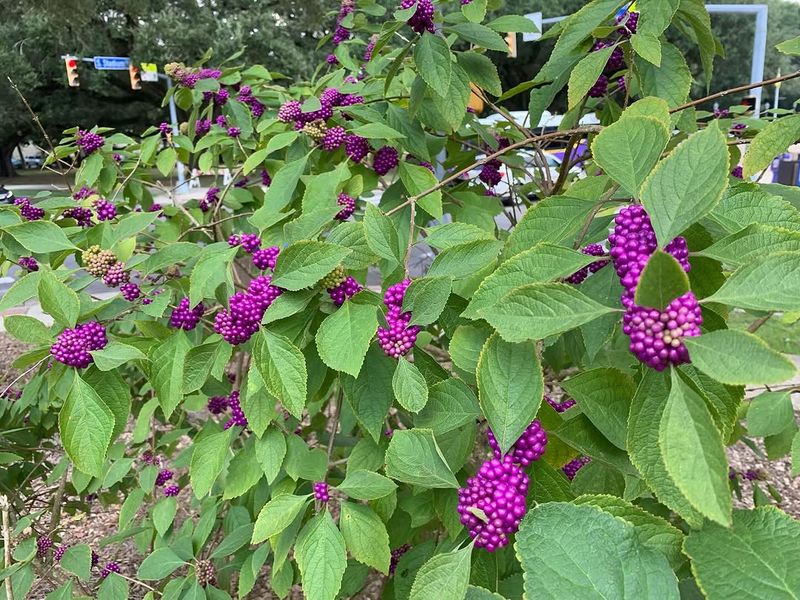
American beautyberry is a North Carolina native shrub that most homeowners walk right past at the garden center, yet it produces some of the most vivid purple berries you will find in any yard come late summer. Planting it will not guarantee a box turtle shows up, and it will not solve your slug or tick problem on its own, but it can make your yard a more welcoming place for the wildlife already moving through your neighborhood. Understanding what this shrub can realistically offer, and what it cannot, is the first step toward building a yard that works for both your family and the creatures that call North Carolina home.
Why American beautyberry deserves a closer look
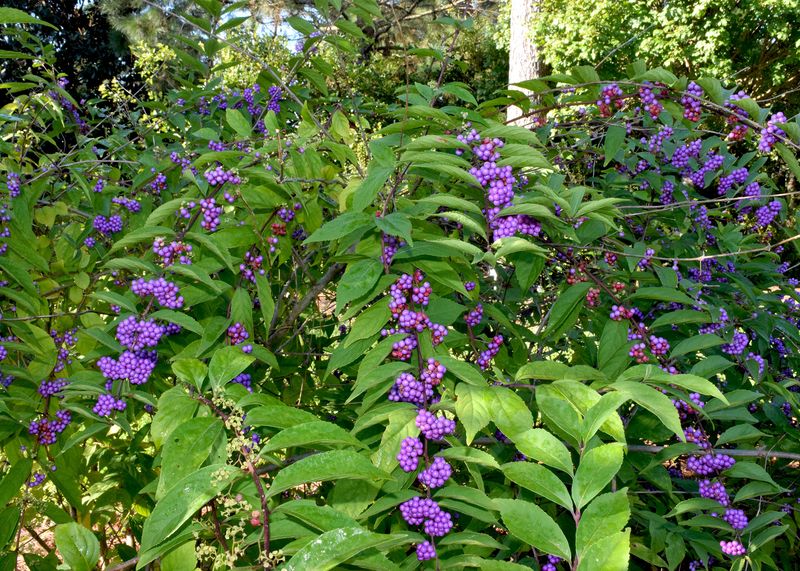
American beautyberry, known botanically as Callicarpa americana, is a deciduous shrub native to North Carolina that earns its name every August when its stems become lined with tight clusters of bright purple-to-magenta berries. Most garden centers stock it quietly beside showier imports, and it rarely gets the attention it deserves from homeowners who want both beauty and wildlife value in the same plant. Calling it the single most underrated native shrub is subjective, but the case for giving it a serious look is easy to make.
One thing worth knowing upfront: American beautyberry is not Japanese beautyberry. NC State Extension identifies Japanese beautyberry (Callicarpa japonica) as an East Asian introduction, a separate species that looks similar but lacks the ecological relationships American beautyberry has built with native wildlife over thousands of years. When you are shopping, confirm the label reads Callicarpa americana before you buy.
The native species grows in meadows, thickets, and woodland edges across the state, reaching a mature size of roughly 3 to 8 feet tall and 3 to 6 feet wide with a graceful, arching form that sits comfortably in a mixed border or naturalized edge planting. NC State Extension documents the shrub’s purple berry clusters maturing from August through October, sometimes persisting into early winter, which fills a gap when many other fruiting plants have finished for the season.
That berry timing and the shrub’s low, branchy structure are the two qualities that make it interesting from a wildlife standpoint. Whether you are hoping songbirds will stop by, small mammals will forage nearby, or a box turtle passing through your yard will find something worth pausing for, American beautyberry adds real habitat value. The key word, though, is “may.” Planting it can improve your yard’s suitability for wildlife, but it is not a guaranteed lure for any particular species.
What beautyberry can offer box turtles
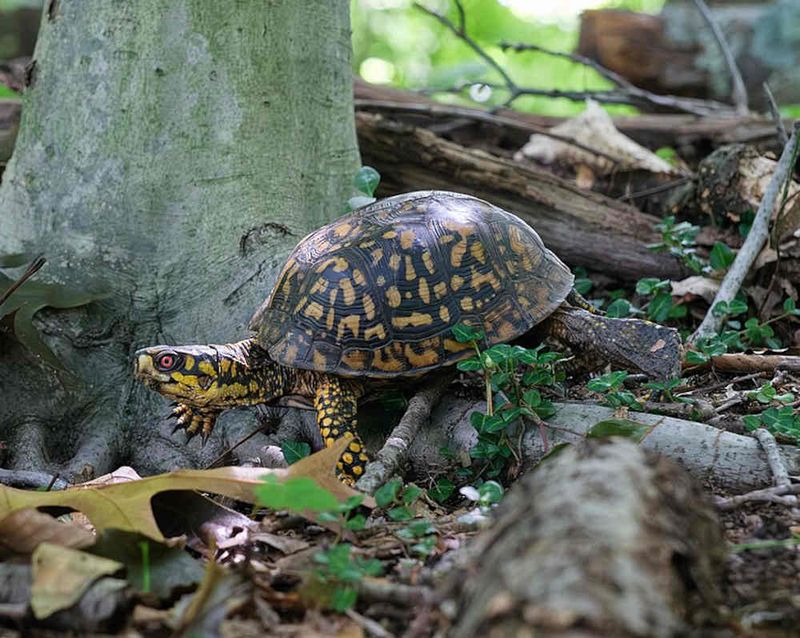
Eastern box turtles are opportunistic foragers, and their diet is remarkably varied. North Carolina Wildlife Resources Commission documents that box turtles eat berries, fruit, fungi, slugs, snails, earthworms, insects, and other small animals, shifting between plant and animal foods depending on the season. That wide range means a yard with ripe berries in late summer is, at least in theory, a yard that fits something a box turtle is already looking for.
American beautyberry’s August-through-October fruiting window lines up with the period when box turtles are actively foraging before cooler temperatures slow them down. The shrub’s low, arching branches also create shaded ground space beneath them, which suits a turtle’s preference for damp, sheltered spots. North Carolina Parks confirms that eastern box turtles use moist woodland edges, thickets, and areas with dense ground cover, habitats that resemble the edges where beautyberry naturally grows.
Here is where honesty matters: no published research found for this article shows that box turtles specifically seek out beautyberry, prefer its berries over other fruit sources, or visit yards more frequently after homeowners plant it. The connection is ecologically plausible, not proven. NC State’s guide on reptiles and amphibians in your backyard recommends native plants, shrubs, leaf litter, and downed logs as habitat elements, not any single species as a guaranteed attractant.
Think of beautyberry as one piece of a larger puzzle. It adds berries that fit a turtle’s documented diet and cover that fits its documented shelter needs, and that is genuinely useful. A turtle already ranging through your neighborhood might pause and forage. One that has never used your yard before may or may not ever appear, regardless of what you plant.
Managing that expectation honestly is what separates good habitat gardening from wishful thinking.
Build habitat around the shrub
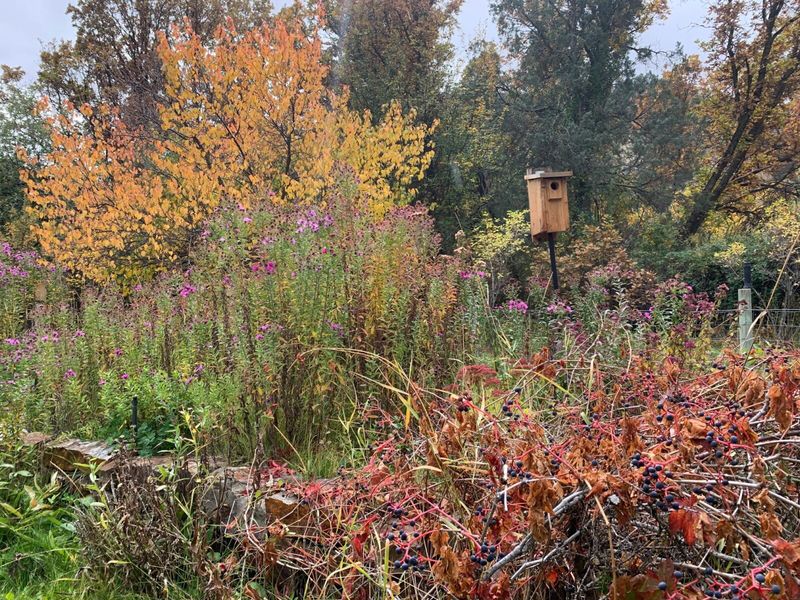
A single beautyberry planted in an otherwise bare lawn will not do much for any turtle. The shrub works best when it anchors a small habitat cluster, and building that cluster takes only a few deliberate choices about what to leave in place and what to add nearby.
Start by keeping a layer of leaves under and around the shrub rather than raking everything bare. NC State’s reptile and amphibian backyard guide recommends leaf litter, downed logs, and snags as shelter elements that reptiles rely on for temperature regulation and hiding cover. A small log or brush pile set a few feet from the shrub adds the kind of shaded, slightly moist microhabitat where a box turtle might rest during the heat of the day. You do not need a large pile, just something low and stable that will not be disturbed by routine yard work.
Nearby moisture helps too. Box turtles seek damp areas, especially during dry spells, so placing the habitat cluster near a natural low spot, a rain garden, or even a shallow dish kept filled with fresh water gives the area an extra draw. North Carolina Wildlife documents that box turtles use wetland margins and moist upland areas, so replicating that moisture gradient on a small scale is a reasonable goal. Avoid soggy, permanently waterlogged ground, which beautyberry itself will not tolerate.
Connectivity to surrounding natural areas matters more than most homeowners realize. A USGS study on urban box turtle movement found that turtles in green spaces selected deciduous forest patches and faced meaningful risks from roads and developed areas. If your yard backs up to a wooded buffer, a creek corridor, or even a neighbor’s naturalized edge, turtles are far more likely to pass through than if your property is isolated by pavement. A turtle sighting is a sign that habitat connectivity still exists in your area, and protecting that corridor is more valuable than any single planting.
Choose a site with sun, drainage, and safe spacing
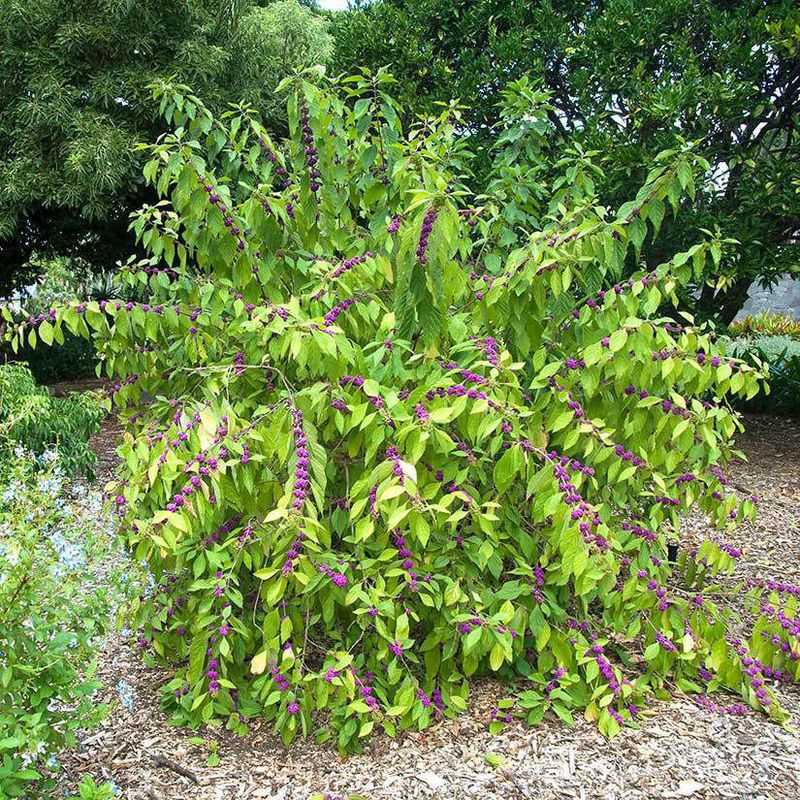
Getting the site right is the most important decision you will make for American beautyberry, and the plant is not shy about what it needs. NC State Extension specifies that American beautyberry performs best in full sun to part shade and does poorly in deep shade, so a spot under a dense canopy where sunlight barely reaches the ground is not a good fit. A woodland edge, a fence line that gets morning sun, or a mixed shrub border with afternoon light are all solid candidates.
Drainage is equally non-negotiable. The shrub wants moist, well-drained soil and will struggle in areas that stay waterlogged after rain. North Carolina’s Piedmont clay can hold water longer than the plant prefers, so amending the planting hole and choosing a spot with slight natural drainage is worth the extra effort. In the coastal plain, sandy soils drain quickly and may need organic matter added to retain enough moisture, while mountain sites with good natural drainage are often ideal.
Plan for the mature size. At 3 to 8 feet tall and 3 to 6 feet wide, beautyberry develops a relaxed, arching shape that needs room to spread without crowding neighboring plants or structures. Give it at least 4 feet of clearance from walkways and a full 6 feet from foundation walls where air circulation matters.
Now for the safety spacing that the article’s title implies but does not always explain clearly. Dense vegetation, leaf litter, and brush piles are exactly what wildlife needs, and they are also the conditions that CDC tick prevention guidance identifies as associated with tick activity. Planting beautyberry with a habitat cluster right beside a children’s play set, a patio seating area, or a frequently used lawn edge creates a tension between wildlife support and family safety that is hard to resolve simply by wishing it away. The practical answer is to place your habitat planting at the yard’s perimeter or along a back fence line, and keep a mowed, open buffer between it and the spaces where your family spends the most time outdoors.
Prune and group plants for better berry production
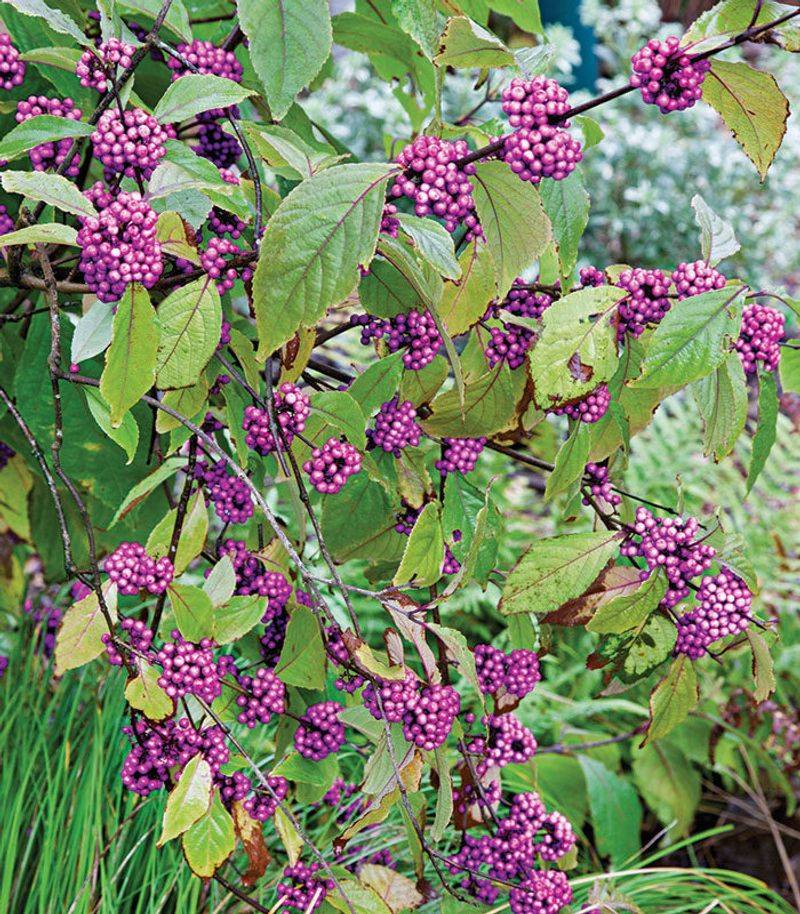
American beautyberry has a quirk that surprises first-time growers: the harder you prune it in late winter, the better it tends to perform come berry season. Flowers and fruit develop on new growth, so stems that were left from the previous year contribute very little to the show. NC State Extension recommends cutting beautyberry back to about 1 foot in late winter, which sounds severe but produces a flush of vigorous new shoots that carry the season’s berry clusters.
February or early March works well for most of North Carolina before new growth pushes. Use clean, sharp loppers and cut each stem at a consistent height rather than selectively thinning, since the goal is to stimulate as many new shoots as possible. The shrub will look stark for a few weeks, then grow quickly once warm weather arrives. By August it will have filled back out and the berry clusters will be developing along the new stems.
Grouping multiple plants nearby can improve the overall berry display. NC State Extension notes that several plants of the same type planted near one another may produce more fruit, though this is a possible improvement rather than a certainty. Two or three beautyberries spaced 5 to 6 feet apart along a fence line or woodland edge create a more generous foraging area than a single specimen, and the visual impact of the berry clusters multiplied across several plants is genuinely striking in late summer.
Resist the urge to deadhead spent berries before winter. Birds, small mammals, and any foraging turtle passing through will work through the fruit well into the colder months, and leaving the berries in place extends the habitat value of the planting beyond the main fall season. Maintenance for wildlife function, rather than ornamental tidiness, is the right frame for managing this shrub.
Do not mistake occasional turtle feeding for pest control
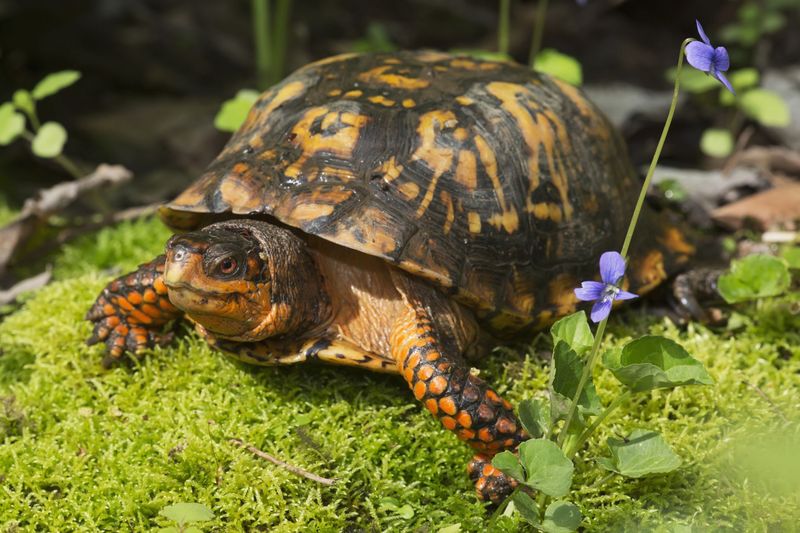
Box turtles do eat garden pests. An individual turtle foraging through a bed will pick up slugs, snails, beetles, and other invertebrates along with whatever fruit or fungi it finds. That is a real and welcome behavior, and there is nothing wrong with appreciating it. The problem comes when “a turtle eats some slugs” gets stretched into “turtles control garden pests,” because the evidence does not support that leap.
North Carolina Wildlife’s box turtle profile confirms the species’ varied omnivorous diet, which includes slugs, snails, insects, earthworms, berries, and fungi. The USDA Forest Service’s species review for eastern box turtles similarly documents broad dietary flexibility. What neither source establishes is that a residential turtle or small group of turtles will reduce pest populations to a level a homeowner would notice. One turtle moving through a quarter-acre yard on its own schedule is not a pest-management program.
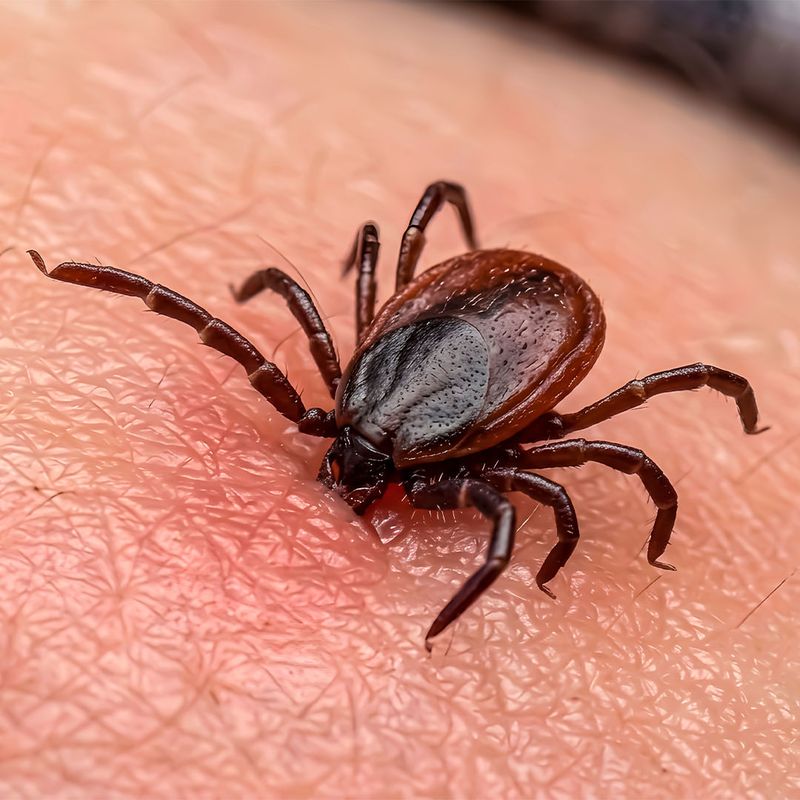
Tick control is a separate matter entirely, and the connection is even weaker. Box turtles are not documented tick-control agents, and planting beautyberry will not reduce the tick population in your yard.
Beautyberry does contain compounds that showed repellent activity in laboratory testing, and that research gets cited frequently in gardening media. USDA Agricultural Research Service work on beautyberry compounds found repellency against blacklegged tick nymphs under laboratory conditions, but results against lone star tick nymphs, which are especially common in the Southeast, were considerably weaker. Laboratory assays test isolated chemical compounds under controlled conditions, not intact shrubs growing in a yard. There is no evidence that a beautyberry growing in your garden bed creates a tick-free zone around it.
Crushing leaves and rubbing them on your skin is not a recommended substitute for a registered repellent. EPA’s guidance on skin-applied repellents covers the registration and safety-testing process that approved products go through, a process that homemade plant extracts have not completed. Stick with what has been tested for both safety and efficacy.
Protect turtles without abandoning tick precautions
Creating habitat for box turtles and keeping your family safe from ticks are not opposing goals, but they do require separate strategies. Treating them as the same problem leads to shortcuts that undermine both.
Start with the shrub’s immediate surroundings. Routine broad-spectrum insecticide use around a beautyberry planting undercuts the habitat you are trying to build. NC State’s reptile and amphibian guide notes that insecticides reduce the insect prey available to reptiles and amphibians, and EPA guidance on reducing pesticide impacts on wildlife recommends avoiding unnecessary applications near natural areas. Spot-treat specific pest problems with targeted products rather than blanket-spraying the yard.
Check your garden beds before mowing, string-trimming, or using any power equipment near the habitat area. Box turtles rest in leaf litter and low vegetation, and a slow-moving turtle partially hidden in a bed is easy to miss. Walking the area before you start equipment is a straightforward precaution that takes less than a minute and can prevent a serious injury to a turtle that may have been using that spot for years.
If you find a turtle in immediate danger, such as in the path of a mower or at the edge of a road, move it only a short distance out of harm’s way, ideally less than 50 feet, and always in the direction it was already traveling. North Carolina Wildlife Resources Commission is clear that wild turtles should not be taken home, purchased, or relocated to a different area. Box turtles have strong site fidelity and can spend their entire lives within a small home range; moving one far from where it was found causes serious harm.
For your family’s tick protection, stay with the methods that work. CDC tick prevention guidance recommends EPA-registered repellents containing DEET, picaridin, IR3535, oil of lemon eucalyptus, PMD, or 2-undecanone, along with full-body tick checks after time outdoors, prompt tick removal, and yard practices such as clearing leaf litter near play areas and installing a 3-foot wood-chip or gravel barrier between lawn and woodland edges. These measures work regardless of what you have planted.
Plant beautyberry for habitat, not guaranteed results
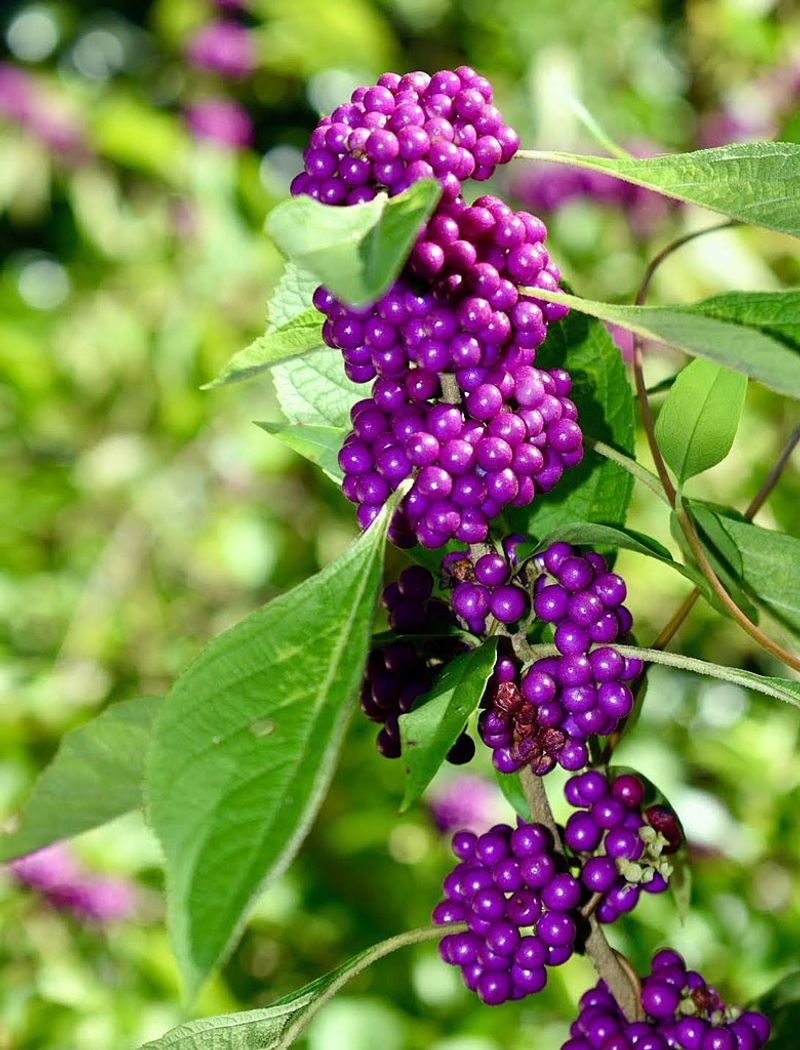
American beautyberry is a practical, low-maintenance native shrub that adds late-season berries and ground-level cover to a North Carolina yard. NC State Extension confirms its value as a native fruiting shrub with documented wildlife appeal, and that is a genuinely useful thing to plant. What it cannot do is guarantee a box turtle will appear, eliminate pests, or replace the tick-prevention steps your family should already be taking.
Box turtles depend on connected habitat, safe travel corridors, and freedom from the hazards that fragment their home ranges: roads, pets, pesticides, and disturbance. If a turtle already uses your yard or the land nearby, protecting its route and the shelter it relies on matters far more than any single plant addition. CDC-supported tick precautions remain the foundation of family safety regardless of what grows in your beds.
Plant beautyberry because it belongs here, because its berries are genuinely beautiful in September, and because a yard with native cover is a better yard than one without it. The wildlife will sort out the rest on its own schedule.