
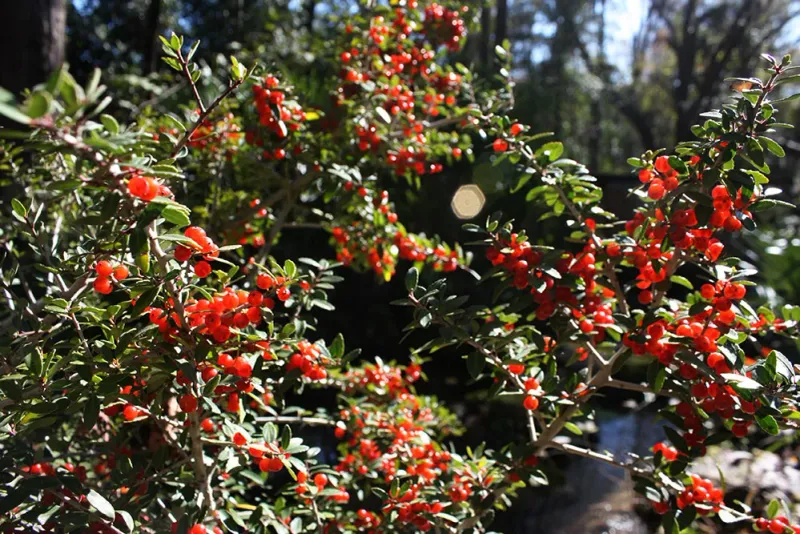
Most North Carolina homeowners walk right past yaupon holly at the nursery without giving it a second look. That oversight costs them one of the Coastal Plain and Piedmont’s most adaptable native shrubs, a plant that offers early spring flowers for bees and butterflies and then loads female plants with red berries that can carry birds through late fall and into winter. Yaupon holly, known botanically as Ilex vomitoria, earns a closer look, though it comes with real limits that are worth understanding before you buy.
Yaupon’s two-season value starts with where it belongs
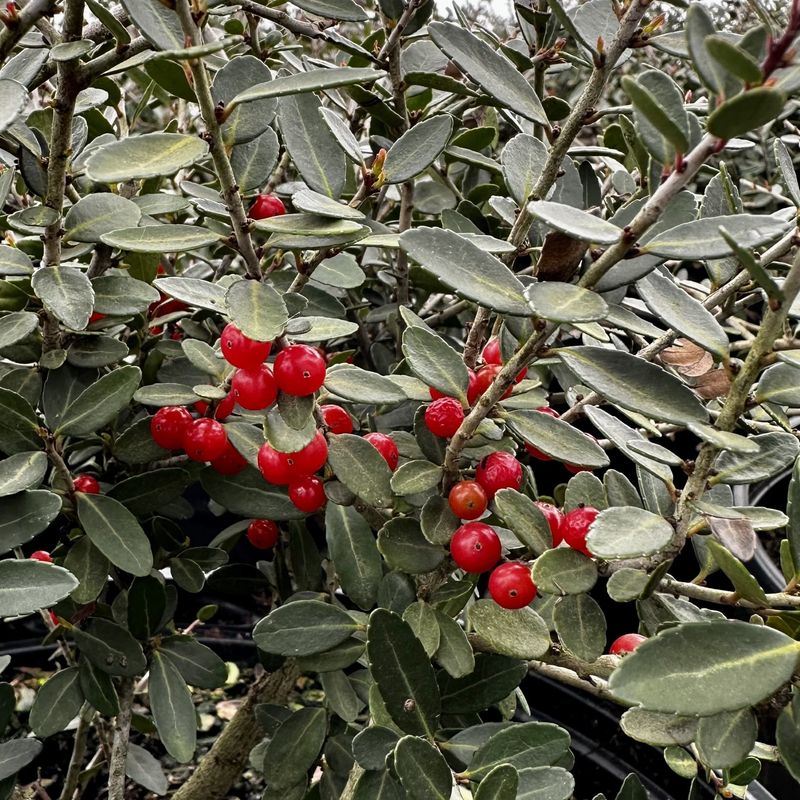
Ilex vomitoria is a broadleaf evergreen shrub or small tree in the holly family, and in North Carolina it belongs specifically to the Coastal Plain and Piedmont. NC State Extension’s plant profile for yaupon holly places it firmly in those two regions, and the state’s native-plant handbook echoes that geographic fit. Mountain gardeners in western North Carolina should not treat yaupon as a local native, because it is not well documented as native or equally adapted at higher elevations.
That regional clarity matters before anything else. Choosing a plant that genuinely belongs in your county’s ecology gives it a better chance of thriving with less intervention, and it means the wildlife benefits you are aiming for, pollinators in spring and birds in fall and winter, are built on a realistic foundation rather than wishful thinking.
Yaupon’s two-season value is the core reason it earns attention as an overlooked native option for Coastal Plain and Piedmont yards. In spring, both male and female plants produce small flowers that attract bees, butterflies, and other pollinators during a seasonal bloom window. Later in the year, female plants that have been properly pollinated can develop red fruit that matures in fall and may persist into winter, offering food and the shrub’s dense evergreen canopy as cover for small birds. Neither benefit is guaranteed by simply putting one plant in the ground, but the potential for both, from a single species that tolerates a wide range of site conditions, is what makes yaupon worth reconsidering.
The quiet spring flowers give bees a seasonal resource
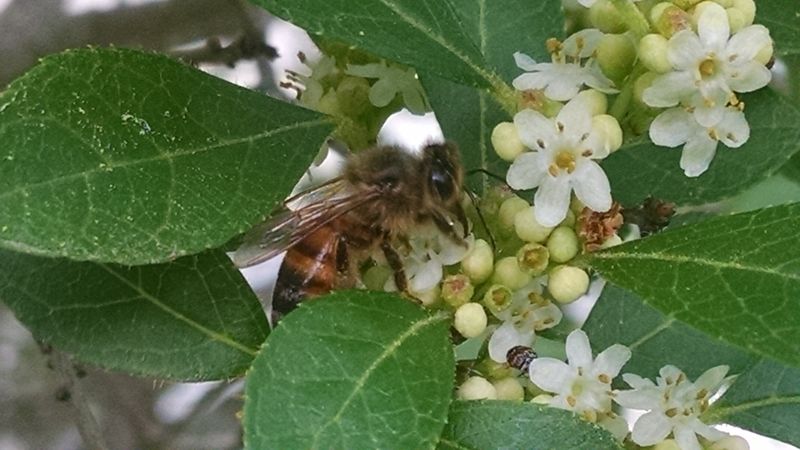
Yaupon’s flowers are easy to miss. They are small, fragrant, and greenish-white, clustered along the stems of both male and female plants, and they do not put on the showy display that many gardeners expect from a pollinator plant. What they lack in visual drama, though, they make up for in timing. NC State’s yaupon profile lists the bloom period as March through May, with April as the principal flowering month in North Carolina, a window when many native bees are actively foraging and when consistent floral resources are still building toward summer.
Bees, butterflies, and other pollinators visit those small flowers during that seasonal stretch. UGA Cooperative Extension’s pollinator planting guidance describes yaupon flowers as attracting pollinators, and NC State identifies the specialized native bee Colletes banksi as associated with the Ilex genus. That specialist connection is a meaningful piece of ecological context: a plant that supports specialist bees is contributing something that a generic ornamental cannot easily replicate.
Still, the claim deserves a clear boundary. Yaupon flowers are relatively inconspicuous, and the bloom period is seasonal rather than continuous. Adding yaupon to your yard gives pollinators a useful spring resource, but it does not sustain bee populations on its own. Pollinators need a sequence of flowering plants across the growing season, along with nesting habitat, water, and limited pesticide exposure.
Think of yaupon’s spring bloom as one valuable link in that chain, not the whole chain itself. That honest framing actually makes the case for planting it stronger, because it fits naturally into a layered native planting rather than competing with one.
What happens after flowering determines the bird payoff
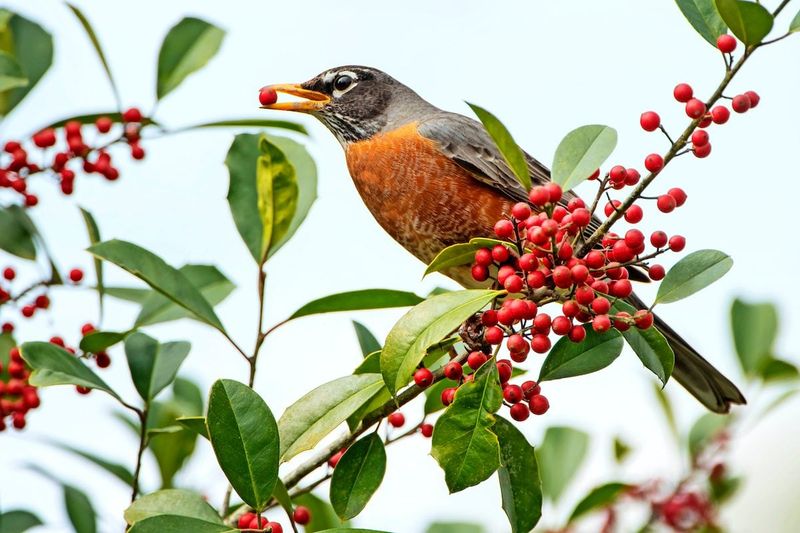
Once the flowers fade, the shrub’s second wildlife phase begins, but only on female plants. Male yaupons contribute pollen and then stand down; the red drupes that attract birds form exclusively on female plants that received compatible pollen during the bloom window. NC State’s plant record describes those fruits as maturing in fall and persisting into winter, with songbirds and small mammals listed as consumers. That persistence is one of yaupon’s genuine advantages over deciduous fruiting shrubs: the evergreen canopy keeps berries visible and accessible even after leaves have dropped from surrounding plants.
Audubon’s native plant profile for yaupon notes that the dense evergreen growth shelters small birds and that the berries often attract bird activity in late winter, when other food sources are thin. Species that may visit include thrushes, mockingbirds, cedar waxwings, and other fruit-eating songbirds that move through or winter in the Coastal Plain and Piedmont. The cover value matters independently of the berries: a thick, year-round canopy gives small birds a place to roost, hide from predators, and wait out cold weather.
The honest qualification is that neither the berries nor the birds come with a guarantee. Fruit persistence depends on how thoroughly birds work the plant, which varies by local bird populations, competing food sources, and how abundant the berry crop was to begin with. A heavy crop might linger well into February; a light one could disappear before the new year. Yaupon can provide winter food and shelter for birds, but framing it as a plant that keeps songbirds in your yard throughout all of winter overstates what any single shrub can deliver.
Pair it with other native fruiting plants so that when one crop runs out, another is ready.
A berry crop requires the right male-and-female pairing
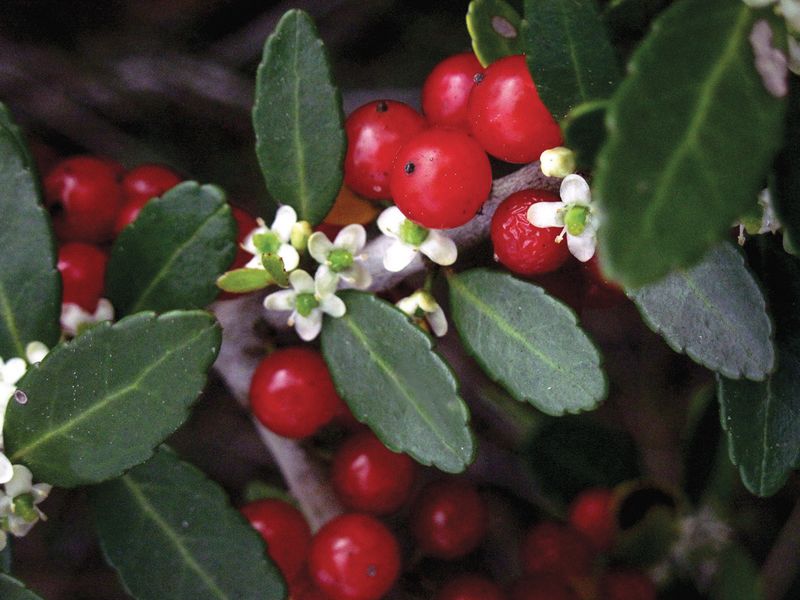
Buying a yaupon holly without checking the sex label is the single most common reason homeowners end up with a fruitless plant. Female plants produce the red berries, but they need pollen from a male yaupon that is blooming at roughly the same time. Without that overlap, pollination does not happen, and the female plant will carry little to no fruit that season. Extension Ask an Expert guidance on yaupon fruiting confirms that a compatible male is generally required for a reliable berry crop and that bloom-time overlap between the two plants is the key variable.
At the nursery, look for plants labeled specifically as female Ilex vomitoria. If a nursery sells named cultivars, ask whether the cultivar is male or female, because some cultivar names do not make the sex obvious. A male yaupon does not need to be planted immediately beside the female; nearby male plants, whether in your yard or a neighboring one, can supply adequate pollen as long as the bloom periods align. Additional Extension guidance on holly pollination suggests confirming cultivar-specific compatibility with your local nursery, because different cultivars can have slightly different bloom windows.
One practical note: avoid substituting a different holly species as the male pollinator. Ilex vomitoria should be pollinated by another Ilex vomitoria, not by a Chinese holly or an American holly, which have different bloom schedules and genetics. When in doubt, buy one confirmed female and one confirmed male of the same species from the same source, and plant them within reasonable proximity. That pairing is the foundation of the berry crop, and getting it right at purchase is far easier than troubleshooting a non-fruiting plant two or three years later.
Plant it for habitat, not as a maintenance-free foundation shrub
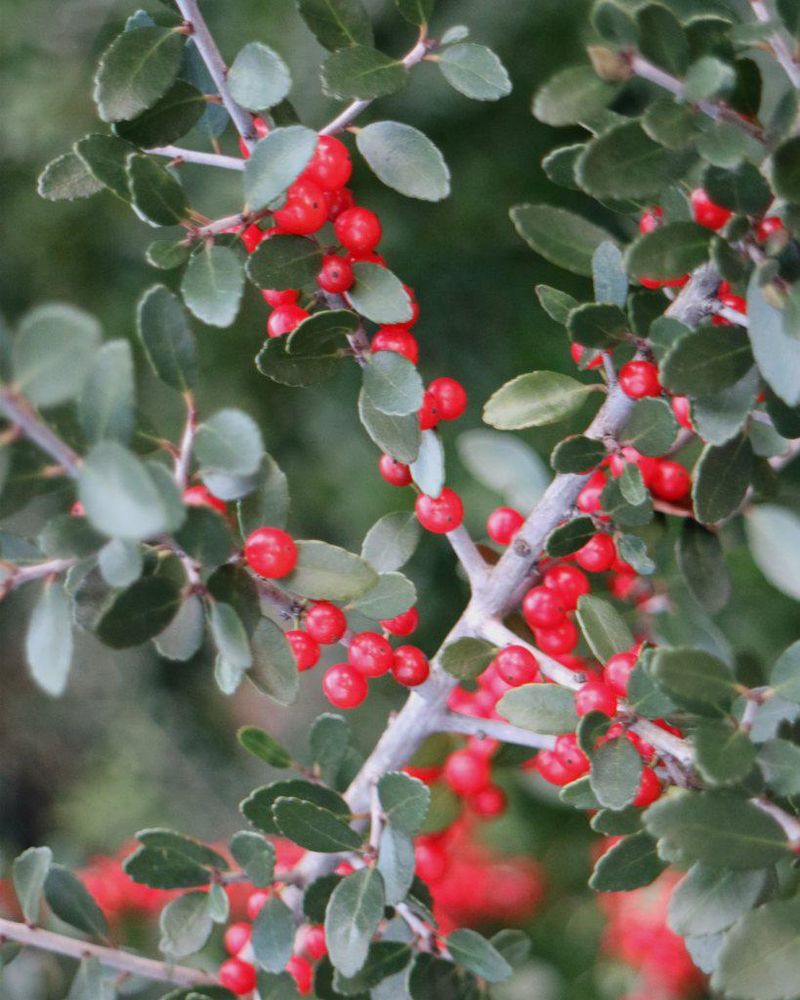
Yaupon’s adaptability is real and worth celebrating. NC State’s full plant profile documents its tolerance of full sun and partial shade, a wide range of soil textures, occasional flooding, drought, wet conditions, salt spray, and wind. For a Coastal Plain or Piedmont homeowner dealing with sandy soil, clay, or a low-lying corner of the yard, that combination of tolerances is genuinely useful. Few native shrubs can move between those conditions without skipping a beat.
Where the maintenance-free label falls apart is size. A typical yaupon holly grows approximately 10 to 20 feet tall and 8 to 12 feet wide at maturity, and it can spread further through suckering if the root sprouts are not removed. Planting one too close to a walkway, window, or utility line creates a pruning burden that compounds every year. Cultivars do exist in dwarf, weeping, and compact forms, so choosing by mature size rather than by what looks manageable at the nursery is the smarter move.
Read the cultivar tag carefully, and if the tag does not list a mature size, ask before you buy.
Pruning timing is a point that catches many gardeners off guard. Extension pruning guidance recommends pruning before new spring growth when berry production is a priority. Pruning after the plant has flowered can remove the developing fruit set and reduce or eliminate that year’s berry crop. If you need to do corrective pruning in summer or fall, accept that the berry display may be lighter that season and plan to return to the pre-growth window in future years.
Yaupon rewards a little planning at planting time far more than it rewards reactive trimming later.
The regional and safety limits matter before you plant
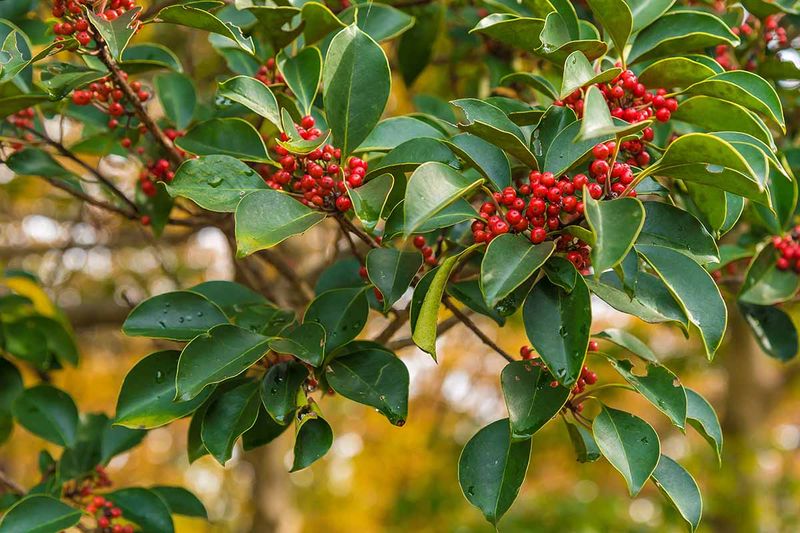
Gardeners in the North Carolina mountains should not treat yaupon as a local native option. NC State’s native-plant handbook places yaupon in the Coastal Plain rather than the mountains, and choosing plants that genuinely belong to your local flora gives you better ecological results and a more resilient landscape. Winterberry (Ilex verticillata), which is native across the Mountains, Piedmont, and Coastal Plain, can be a strong alternative where site conditions and regional fit call for it. Possumhaw is another Coastal Plain and Piedmont option with persistent orange-red berries, though both deciduous alternatives have their own soil preferences and male-pollinator requirements.
Placement near the house deserves careful thought. NC State’s yaupon profile assigns the shrub a high flammability rating. That does not mean you cannot grow it, but it does mean yaupon should not be the plant you tuck immediately against siding or under eaves, particularly in areas where wildfire or structure-fire risk is a concern. Position it with defensible space in mind, and check your local fire-safety guidelines if you are uncertain about what that means for your specific lot.
Berry safety is the third limit to address directly. Holly berries can cause nausea, vomiting, and diarrhea when people ingest them. Poison Control’s guidance on holly berries advises contacting Poison Control if a child ingests them. Keep young children away from the plant when berries are present, and if a pet eats holly berries, contact a veterinarian or an animal poison-control service rather than waiting to see what happens.
Finally, yaupon does not repel ticks, control mosquitoes, or substitute for integrated pest management. Audubon’s broader yard-habitat guidance reinforces that a single shrub cannot replace a diverse, layered native planting when it comes to supporting wildlife or managing a yard responsibly.
Yaupon works best as one link in a year-round yard
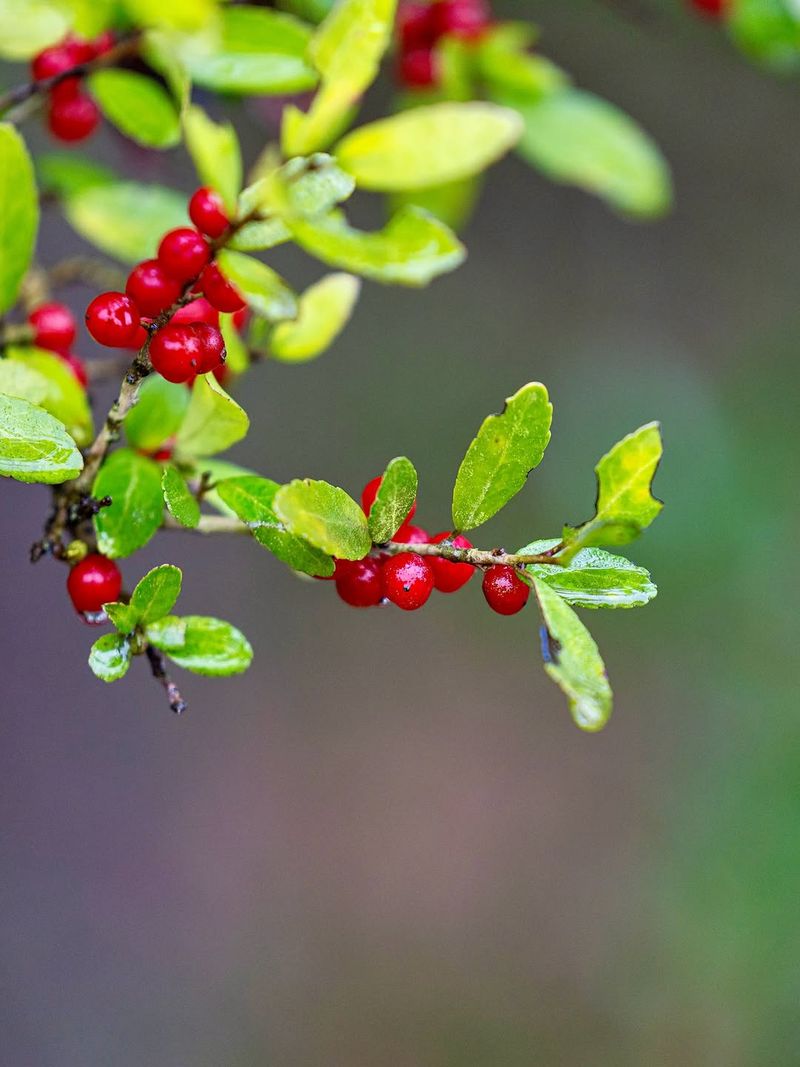
For Coastal Plain and Piedmont homeowners, a correctly chosen yaupon holly can connect early spring pollinator activity with fall-to-winter fruit and year-round evergreen cover for birds. That two-season arc, from bees in April to cedar waxwings in January, is a genuine return on a single planting decision, provided you select the right sex pairing, plan for mature size, and site the shrub away from structures where its flammability rating matters.
Audubon’s yard-habitat guidance recommends combining berry-producing plants with other natives that extend flowers, insects, seeds, and fruit across the full calendar year. Yaupon fits that layered approach well, but it works best when surrounded by plants that fill in the gaps it cannot cover. NC State’s plant record gives you the cultivar and site details to confirm regional fit before you buy.
The practical checklist before planting is short: confirm you are in the Coastal Plain or Piedmont, buy a labeled female and a compatible male, account for the 10-to-20-foot mature height in your spacing plan, and keep the shrub out of immediate foundation-planting positions. A yard that includes yaupon alongside other thoughtfully chosen natives does not just look lived-in. It actually is.