
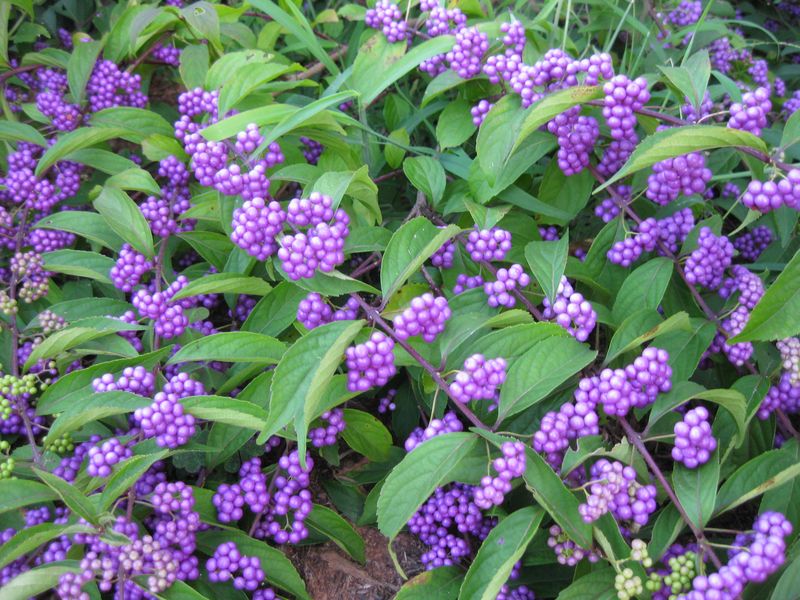
Every October, a lot of North Carolina yards sit bare and brown while neighbors wonder what went wrong with their fall garden. There is one native shrub that turns that problem around by covering its stems with clusters of vivid purple berries right when everything else has gone quiet. American beautyberry, Callicarpa americana, grows across the Coastal Plain, Piedmont, and Mountains, and it brings real seasonal color along with genuine wildlife value. Getting the most from it means understanding what kind of bed it actually fits, when the berries arrive, and why the birds may show up later than you expect.
American beautyberry suits the right kind of North Carolina bed
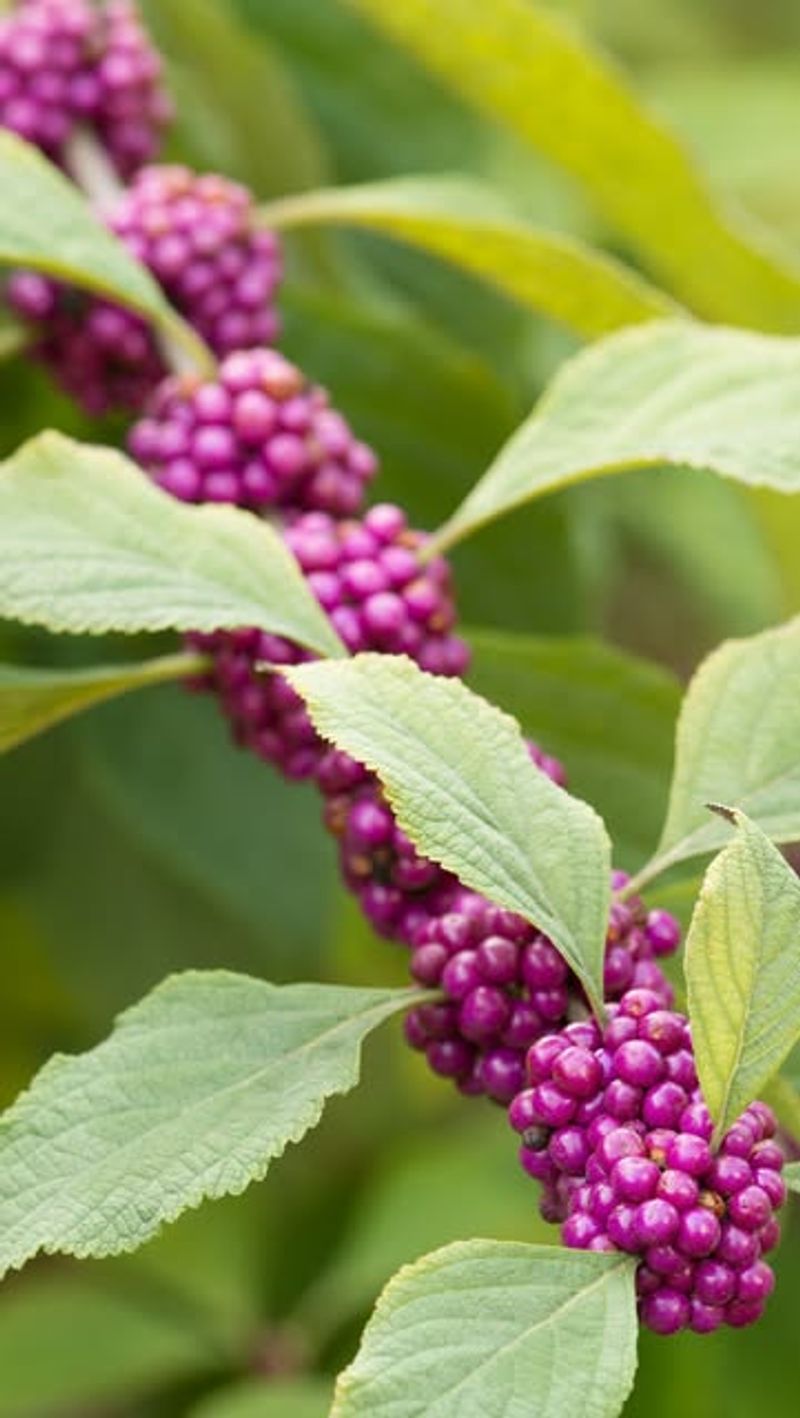
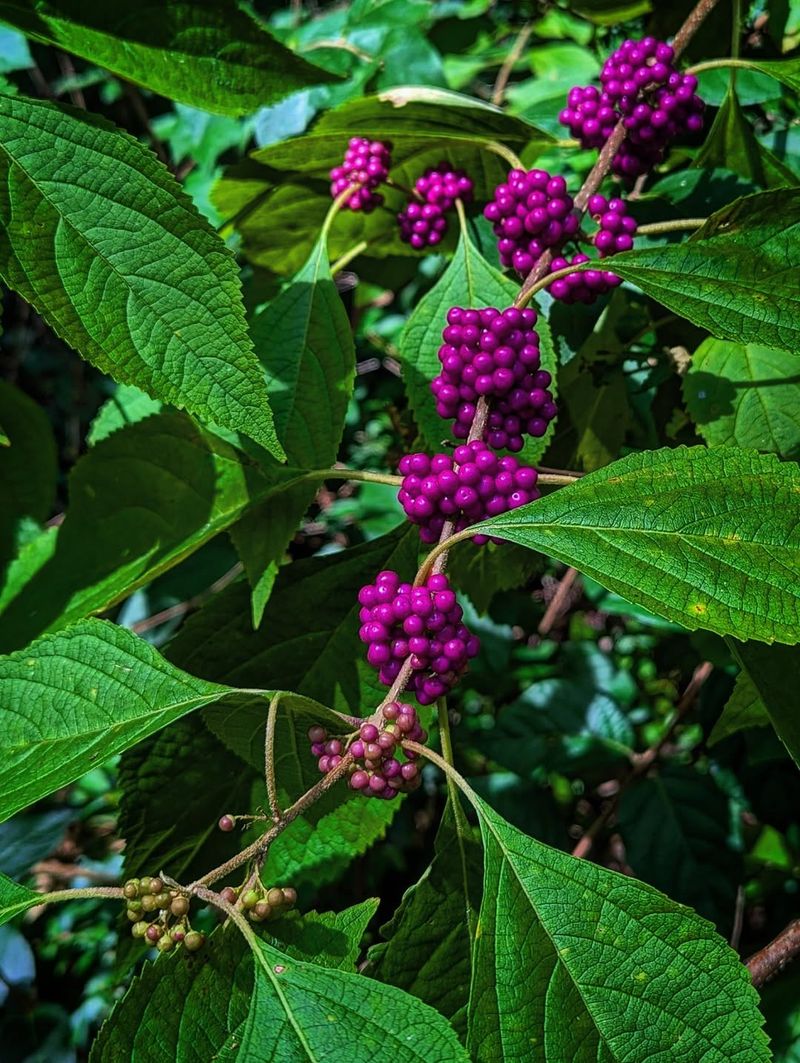
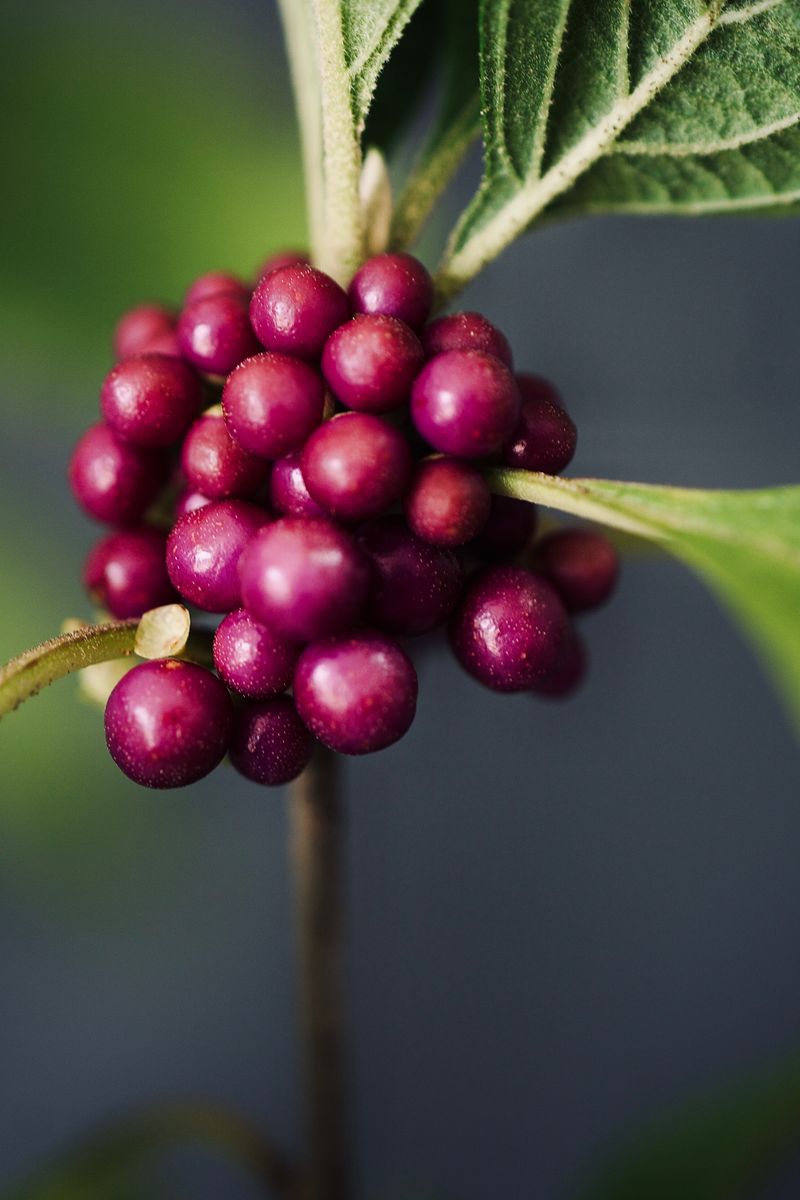
Walk past a mature American beautyberry in October and the color stops you cold. The berries are not scattered loosely across the plant the way you might expect from a typical fruiting shrub. Instead, they form tight, jewel-like clusters that wrap completely around the stem at each leaf node, giving the whole branch a beaded, almost otherworldly look. That stem-encircling arrangement is one of the plant’s most useful identification features, and it is part of what makes the fall display so striking against bare soil and fallen leaves.
Callicarpa americana grows natively across all three of North Carolina’s major regions. NC State Extension’s plant profile lists it as native to the Coastal Plain, Piedmont, and Mountains, which means most North Carolina homeowners are working within its natural range. That broad distribution matters because it signals genuine adaptability, not just nursery tolerance.
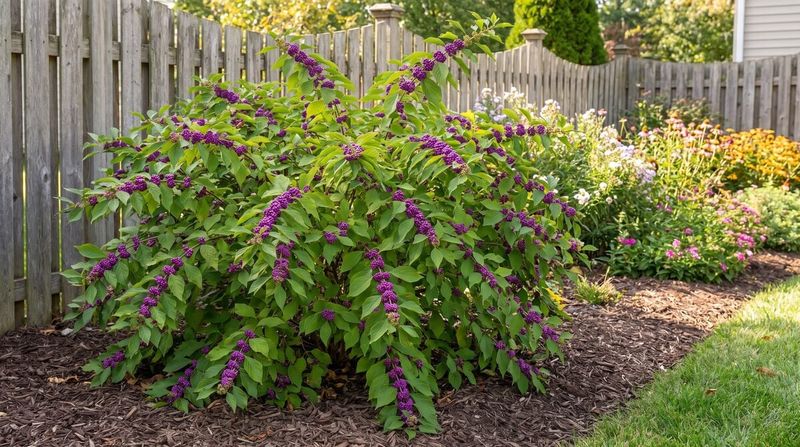
Where the plant fits best is the more important conversation. American beautyberry is a medium-sized, arching shrub with a relaxed, somewhat open form before the fruit arrives. It suits a naturalized border, a woodland edge, or a mass planting where its spread can be appreciated rather than fought. Audubon North Carolina’s planting guidance echoes this, framing it as a shrub for the kind of informal space where seasonal drama is welcome.
A narrow foundation bed or a tightly clipped formal design is a harder match. The plant’s arching canes and eventual width mean it needs room to express itself, and a cramped spot will either restrict the display or require constant pruning that works against the natural form. Think of it as a border plant or a naturalized edge specimen, not a quick filler for a small, tidy bed. Given the right space, though, the fall berry display is genuinely hard to beat among North Carolina natives.
Follow the fruit from flowers to winter food
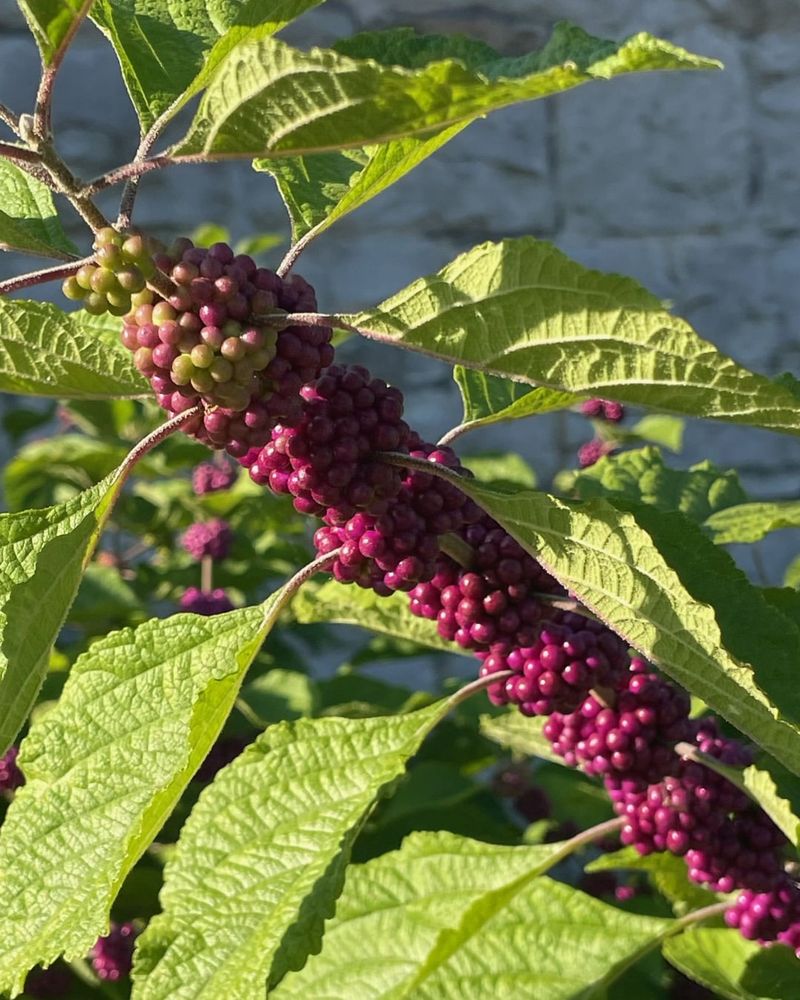
The beautyberry’s seasonal calendar starts quietly. In late spring and into early summer, small clusters of pale pink to lavender flowers open along the stems. They are modest enough that many people walk past without noticing them. What matters is that these flowers appear on new growth, which has a practical consequence for anyone thinking about pruning the plant.
Because the fruiting cycle begins on fresh shoots, a late-winter cutback does not sacrifice the coming season’s berries.
Fruit color develops through summer and becomes fully vivid by August. NC State Extension notes that the purple or bluish fruit generally runs from August through October, with some fruit occasionally persisting into early winter depending on the year and location. That window gives North Carolina gardeners a meaningful stretch of fall color when most other shrubs have already dropped their leaves and gone gray.
Bird timing is where expectations need adjusting. A yard full of beautyberry fruit in September can look untouched for weeks while the birds seem to ignore it entirely. NC State Extension’s seasonal wildlife notes explain that birds often leave ripe fall beautyberries alone and come back to consume more of them in winter, when competing food sources have dried up. That pattern means the berries can serve as a stored food reserve rather than an immediate autumn feast.
Audubon’s native plant guidance reinforces this idea, framing late-persisting berries as a critical winter resource for birds that stay in the region through cold months. Some yards do see berries disappear quickly in fall, likely due to local bird populations and competing food availability. But counting on that rapid turnover as a reliable outcome sets up a disappointment. The more useful expectation is a sustained display that attracts wildlife on its own schedule.
Confirm Callicarpa americana before you buy
Not every plant sold as beautyberry at a North Carolina nursery is the same species. The tag might simply say “beautyberry” without specifying whether the plant is Callicarpa americana, Callicarpa japonica, or one of several other species or cultivars. That distinction matters more than it might seem, because native status, wildlife value, and performance in a North Carolina yard are not identical across the genus.
Missouri Department of Conservation’s field guide to American beautyberry highlights the stem-encircling berry clusters as a useful identification feature. In Callicarpa americana, the fruit wraps tightly around the stem at each node, creating that distinctive beaded look. Some nonnative species carry their berries differently, in smaller or more loosely arranged groups, so the cluster pattern gives a practical visual checkpoint before you buy.
Japanese beautyberry, listed separately by NC State Extension, can look similar on a nursery bench and may even carry similar purple fruit. It is not a North Carolina native, and assuming it performs identically to Callicarpa americana for wildlife support is not a safe assumption. NC State Extension’s Callicarpa americana profile is worth bookmarking before a nursery visit, so you have the correct scientific name ready to confirm on the label or ask about directly.
White-berried cultivars add another layer of complexity. Some ornamental selections produce cream or white fruit rather than the typical purple, and while they can be attractive in a garden setting, there is not strong evidence that every cultivated variety delivers the same wildlife value as the straight species. When the goal is a native planting that genuinely supports North Carolina birds and mammals, the safest path is to confirm the species name, Callicarpa americana, rather than trusting a common name alone.
Measure the bed for a shrub, not a quick filler
Before any planting decision, the bed itself needs an honest measurement. American beautyberry is not a compact perennial or a low-growing ground cover that slides easily into a tight space. NC State Extension’s profile gives a typical mature size of roughly 3 to 8 feet tall and 3 to 6 feet wide, with an arching, somewhat spreading habit. A plant at the larger end of that range can fill a substantial section of a border on its own.
Light requirements are equally specific. The shrub performs well in full sun to partial shade, but NC State is direct about one limit: it does not tolerate deep shade. A bed tucked under a dense canopy of mature trees, or pressed against a north-facing wall that never sees direct sun, is not a good match. Partial shade from filtered or dappled light is workable.
Heavy, persistent shade pushes the plant toward poor fruiting and a weaker overall form.
Drainage is the third variable to assess before digging. Beautyberry benefits from good drainage and is not well suited to spots that hold standing water after rain. A soggy low point in the yard, or a bed with heavy clay that stays wet for days, will stress the plant over time and reduce its performance. If the site drains reasonably after a typical rain event, beautyberry is a solid candidate.
If water pools regularly, the site needs amendment or a different plant.
For a foundation bed that measures less than four feet deep, or a formal planting where the design calls for compact, predictable shapes, beautyberry will likely feel out of scale or require constant management to keep it contained. The shrub’s natural arching form is part of its appeal in a border or naturalized edge, but that same form can overwhelm a narrow or highly structured space. Measure first, then plant with confidence in what the site can actually support.
Use late-winter pruning as an optional renewal practice
One of the more useful things to know about beautyberry is that pruning does not cost you next year’s fruit. The plant flowers and sets fruit on new growth produced each season, so a late-winter cutback does not remove the stems that would have carried this year’s berries. Those stems have not grown yet. By the time the plant is flowering in late spring and early summer, it will be working from fresh growth that emerged after the pruning.
NC State Extension recommends cutting the shrub back to roughly 1 foot above the ground if a hard renewal prune is desired. That is a significant reduction, and it can feel aggressive the first time you do it. The result is a plant that pushes out vigorous new canes in spring, which typically carry good fruit clusters by late summer. Late winter, before new growth begins, is the right window for this kind of work.
Pruning is not required every year, and skipping it does not prevent fruiting. A well-sited beautyberry that has enough room to spread naturally can produce a strong berry display without any intervention. The renewal option is most useful when a shrub has grown larger than its space allows, when the canes have become woody and sparse, or when the overall form has gotten ragged and needs resetting. Think of it as a tool available to you rather than an annual obligation.
Planting several beautyberry shrubs near one another is worth considering if fruit production is a priority. NC State Extension notes that grouping plants may improve fruit set, likely because cross-pollination opportunities increase with multiple shrubs in proximity. That outcome is possible rather than guaranteed, but a cluster of three or more plants in a border or naturalized area generally makes a stronger visual statement as well as a more productive wildlife planting.
Let local conditions determine when birds arrive
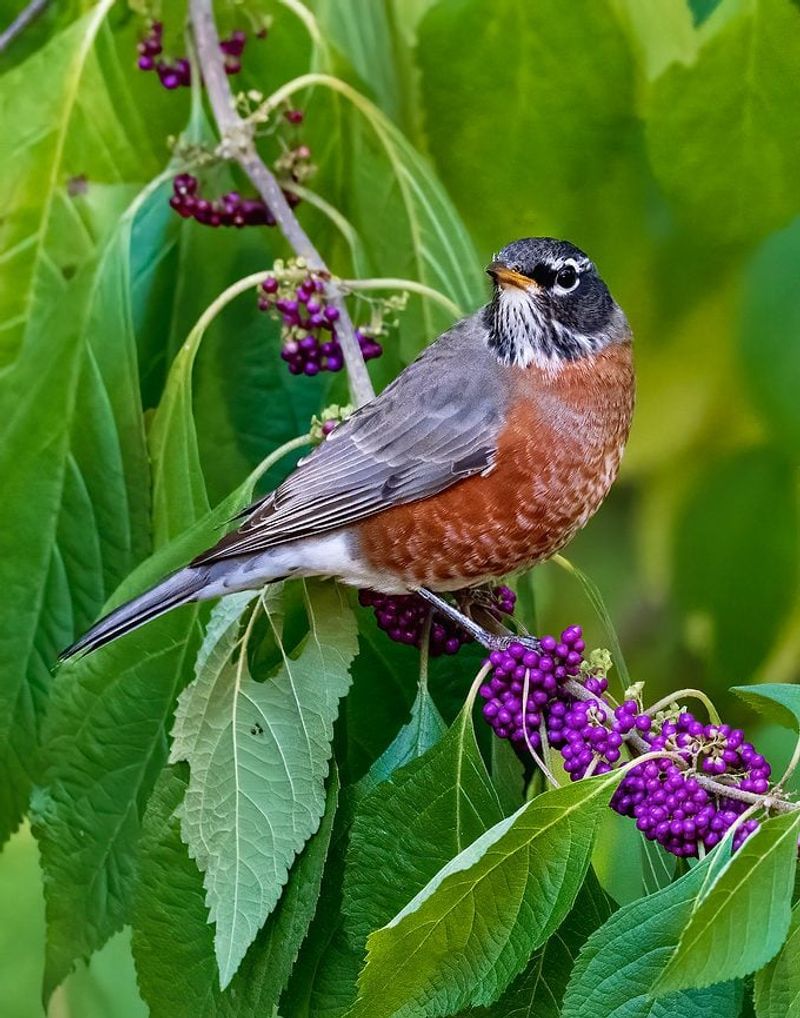
A well-fruited beautyberry in a North Carolina yard can attract a solid list of native birds, but the timing and intensity of that activity varies more than most planting guides admit. NC State Extension’s species profile names American robins, brown thrashers, purple finches, and eastern towhees among the songbirds that eat the fruit. That is a meaningful group of birds, and several of them are year-round or winter residents in North Carolina, which helps explain why the berries often get heavier use as the season progresses rather than at peak ripeness.
Mammals use the plant too. The USDA NRCS fact sheet on Callicarpa americana notes that foxes, raccoons, opossums, squirrels, and deer all consume the fruit. For a homeowner interested in supporting a broad range of native wildlife, that mammal list adds value beyond the bird appeal, particularly in yards that back up to wooded areas or green corridors.
What no reliable source supports is a fixed, predictable timeline for when the berries will disappear. NC State Extension’s wildlife notes are specific on this point: birds often leave ripe fall beautyberries untouched and return to consume them more heavily in winter. One yard may see berries vanish in a week if a flock of robins moves through. Another yard with the same plant may hold fruit into January.
Local bird population density, the presence of competing fruit from other plants, weather conditions, shrub size, and how exposed or sheltered the planting is all shape the outcome. A single small beautyberry in a yard surrounded by other fruiting shrubs may see modest bird use. A mass planting along a woodland edge, with no competing food sources nearby, is more likely to draw consistent and visible wildlife activity. Plant for the conditions you have, and let the birds set the schedule.
Treat beautyberry research as chemistry, not yard protection
Beautyberry has a folk history as a mosquito repellent, and that tradition caught the attention of researchers. Scientists at the USDA identified specific compounds in the plant’s leaves, including callicarpenal and intermedeol, that showed mosquito-repellent activity in laboratory conditions. Published USDA research documented these findings, and a follow-up study examined whether the same compounds might affect ticks.
USDA news coverage of that tick research noted promising early results, and a peer-reviewed study on beautyberry leaf compounds confirmed repellent activity against mosquitoes under controlled conditions. These are real findings, and they explain why the plant keeps appearing in articles about natural pest control.
What they do not establish is that planting beautyberry shrubs in your yard will protect your family from tick bites or reduce mosquito activity around your home. Laboratory findings on isolated compounds do not translate directly into whole-yard protection from a living plant. The leaves are not releasing concentrated repellent compounds into the surrounding air at levels that would create a meaningful barrier.
Applying crushed beautyberry leaves to skin, children, or pets as a homemade repellent is not a safe or recommended practice. The presence of active compounds in research does not establish safe topical dosage, duration, or protection against disease-carrying insects outside controlled settings. For real protection, CDC mosquito prevention guidance points to EPA-registered repellents, protective clothing, and removal of standing water as the proven measures. CDC Yellow Book recommendations on arthropod repellents also include permethrin-treated clothing or gear for tick protection in high-exposure situations.
Beautyberry is worth planting for its berries and wildlife value. Pest protection requires a different set of tools.
Compare winterberry by pollination and site conditions
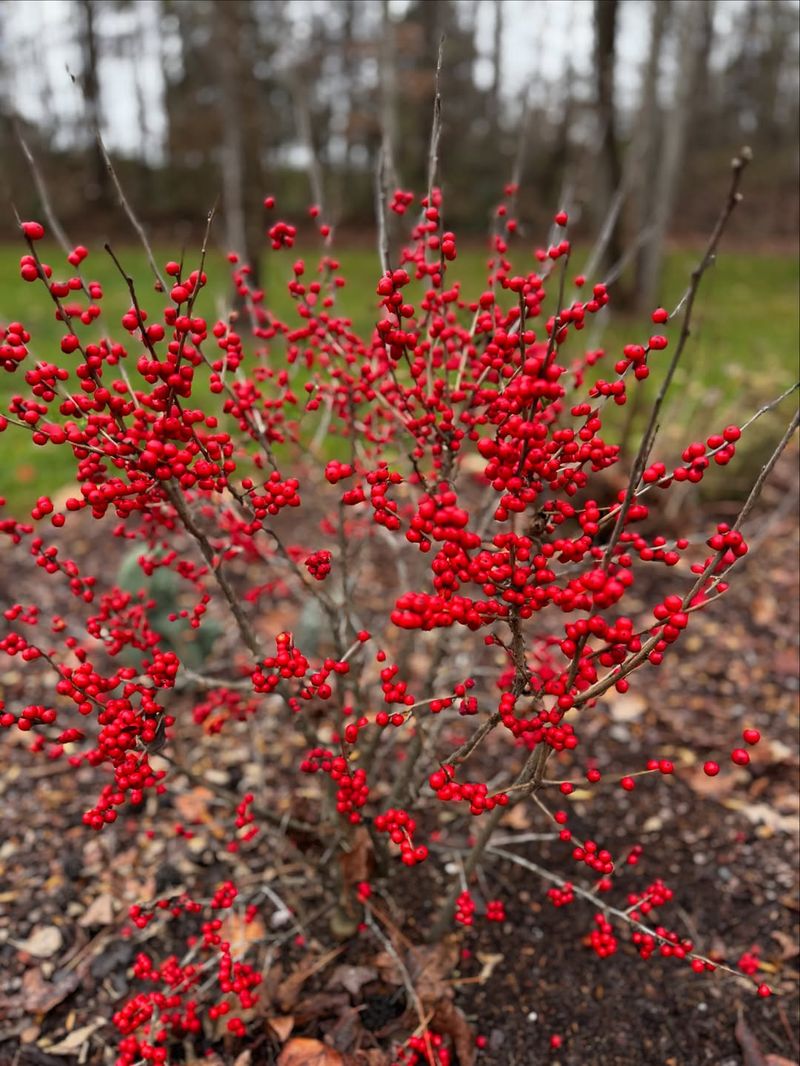
Common winterberry, Ilex verticillata, is another North Carolina native shrub with a strong fall and winter berry display, and it comes up naturally in any conversation about native alternatives for wildlife plantings. Its bright red berries on bare branches can be visually striking through December and into January, well after beautyberry fruit has been consumed or dropped. For a yard that needs winter color specifically, winterberry has a real advantage in timing.
The practical requirements for winterberry are more specific than they might appear on a nursery tag. NC State Extension’s winterberry profile explains that female plants require a compatible male pollinator to set fruit. Without a male plant nearby, the female produces no berries at all. NC State recommends matching bloom times between male and female plants and placing one male within approximately 50 feet of 10 to 20 female shrubs.
That is a real planning requirement, not a detail that can be skipped.
Winterberry generally prefers moist, acidic, well-drained soil, though NC State notes some tolerance of heat, drought, and compaction. Dry conditions can reduce fruit set, and a site that drains too aggressively or has alkaline soil will stress the plant over time. Beautyberry, by comparison, needs good drainage and enough light, but its soil requirements are less demanding on the moisture side.
Neither shrub is universally easier. The better choice depends on what the site actually offers. A moist, acidic spot with room for multiple plants suits winterberry well, provided the male-female pairing is handled correctly. A drier, sunny border with good drainage and room for a medium arching shrub is a better match for beautyberry.
One safety note worth adding: Poison Control reports that holly berries, including winterberry, can cause nausea, vomiting, and diarrhea in people and pets if eaten. That is relevant for any yard where young children or animals spend time near the plant.
Make the planting decision from the site outward
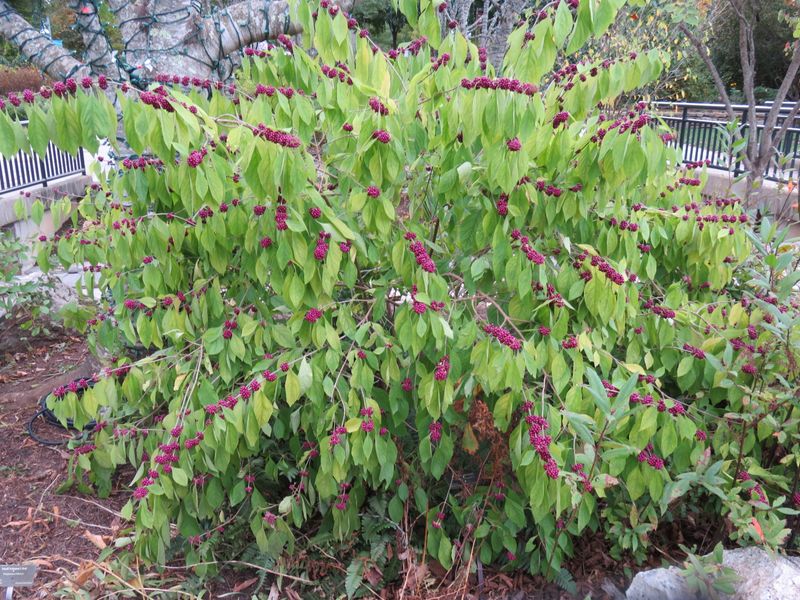
The clearest way to decide whether American beautyberry belongs in a specific bed is to start with the site rather than the plant. If the space receives at least a few hours of direct sun, drains reasonably well after a normal rain, and can accommodate a shrub that may reach 5 or 6 feet in both height and spread, beautyberry is a strong candidate. NC State Extension confirms that correctly identified Callicarpa americana is native across North Carolina’s regions and suited to those kinds of conditions.
The payoff for a well-matched planting is genuine. Purple fruit clusters encircling the stems from August into fall create a display that is hard to replicate with other native shrubs of similar size. NC State Extension’s wildlife notes make clear that the fruit feeds birds and mammals on their own timeline, which in many yards means the real wildlife activity comes in winter rather than at peak color. That delayed payoff is not a flaw.
A shrub that holds food through the lean months is doing something genuinely useful for the local ecosystem.
Beautyberry is not a solution for every bare fall bed, and it is not a substitute for proven tick and mosquito precautions. What it offers is a native, low-maintenance shrub with a vivid seasonal display and real wildlife value, provided the bed has room, light, and drainage to support it. A yard that gives it those conditions gets something worth keeping for years. The berries that linger into winter, slowly disappearing as birds work through them on cold mornings, are the quiet reward for getting the site right from the start.