
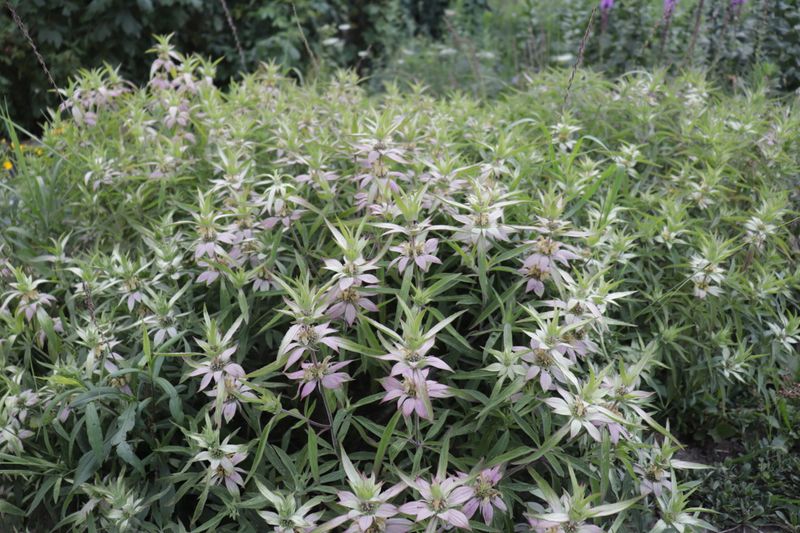
Most North Carolina gardeners know coneflowers and black-eyed Susans, but there is one native plant that quietly earns its keep through the hottest stretch of summer while those familiar faces start to fade. Spotted beebalm, also called eastern horsemint, is a less-familiar wildflower native to all three regions of North Carolina that can keep color and pollinator activity going well into fall. This article treats it as a promising, underappreciated option by editorial judgment, not as a proven popularity ranking, and it will give you the honest picture of what this plant can and cannot do for your yard.
Meet the spotted beebalm most gardens overlook
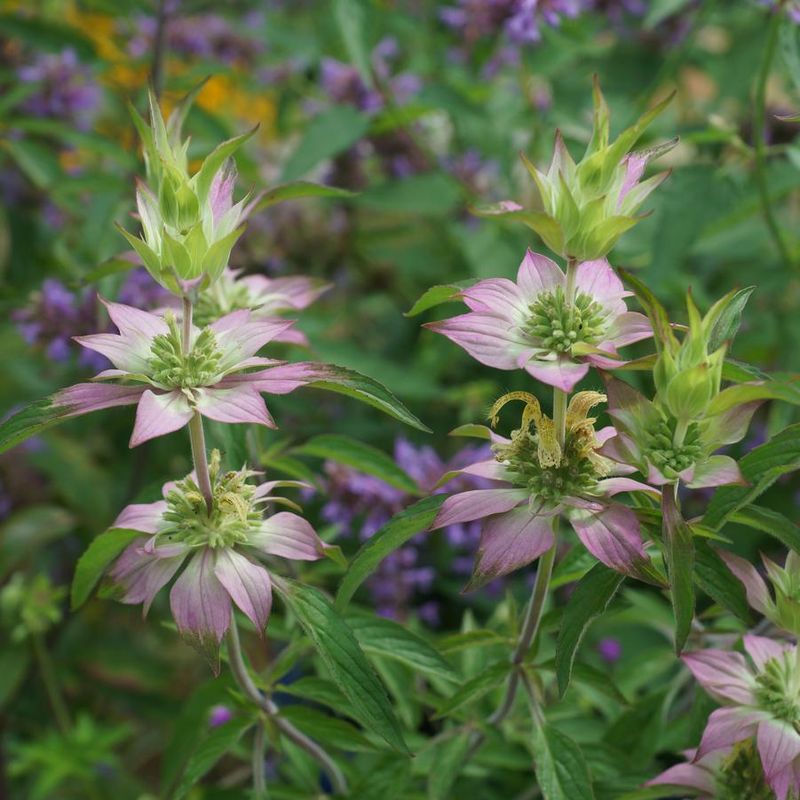
Spotted beebalm carries three common names that show up in NC plant references: spotted beebalm, eastern horsemint, and spotted horsemint. Its scientific name is Monarda punctata, and it belongs to the mint family, which explains the square stems and aromatic foliage you will notice when you brush against it. NC State Extension lists it as native throughout North Carolina’s Mountains, Piedmont, and Coastal Plain, making it one of the few Monarda species documented for all three major regions of the state.
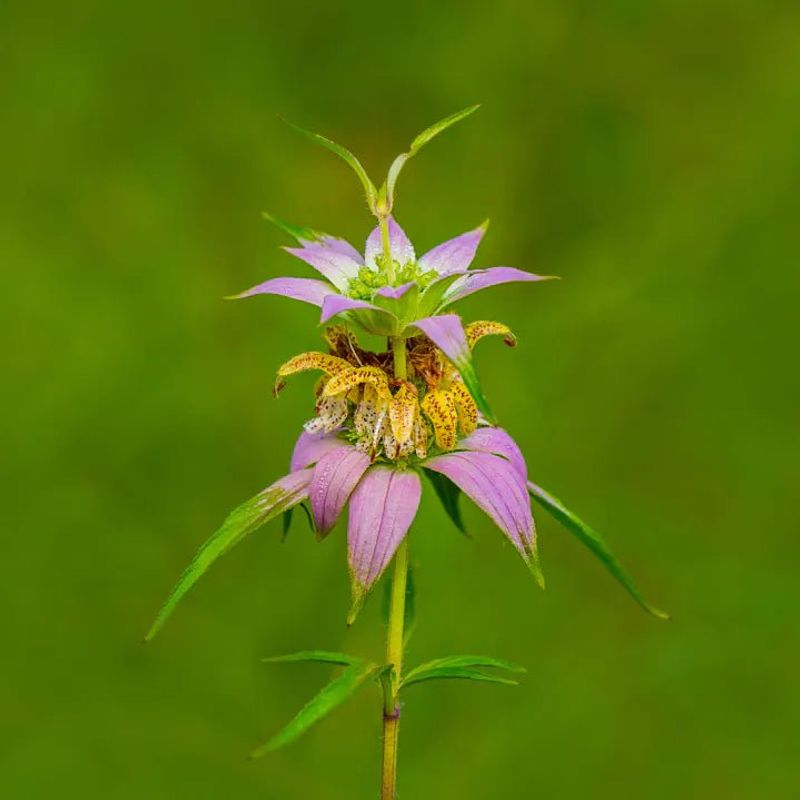
The flowers themselves are what stop people in their tracks. Each bloom is pale yellow or cream with distinct violet spotting, arranged in tight whorled clusters up the stem. Beneath those clusters sit colorful bracts, typically pink to lavender, that extend the plant’s visual appeal well beyond the small flowers themselves. At maturity, spotted beebalm generally reaches about 1.5 to 2 feet tall, which fits comfortably into a mixed border or a naturalized meadow planting without overwhelming neighboring plants.
Calling this plant underrated is an editorial impression, not a measured nursery-sales ranking. Compared with cultivated red bee balm, Monarda didyma, which shows up in garden centers across the state in bold red and pink selections, spotted beebalm gets far less shelf space. Red bee balm and spotted beebalm are distinct species with different preferred growing conditions: NC State’s profile for Monarda didyma describes it as preferring moist, rich soils, while spotted beebalm handles leaner, drier conditions far better. That difference matters a great deal when you are choosing a plant for a sunny, well-drained North Carolina site.
Its August value is a summer-to-fall bloom window
The title of this article makes a bold claim, and fairness requires a correction right up front. Spotted beebalm does not literally own August or bloom after every other flower has quit. North Carolina has a rich roster of native late-summer and fall bloomers, including mountain mint, coneflowers, cardinal flower, goldenrod, asters, and blazing star. What spotted beebalm does offer is a reliable presence during the summer-to-fall window, which is genuinely useful when some of the showier early-summer plants have finished their peak and the garden needs a refresh.
NC State Extension describes the bloom period as summer to fall. The North Carolina Wildlife Federation’s bloom calendar includes spotted beebalm among plants active in the late-summer sequence, and Pollinator Partnership places the flowering window at May through September for the eastern broadleaf forest region. The safest way to think about it is as a late-summer and early-fall contributor rather than a guaranteed single-month peak.
Exact timing shifts with elevation, region, weather, and site conditions. A plant growing in a warm, sandy Coastal Plain bed may begin flowering earlier and hold on longer than one tucked into a cooler mountain microclimate. Partial shade can delay bloom or reduce flower density compared with a full-sun location. Setting those expectations honestly makes spotted beebalm a better fit for your planning, because you are choosing it for a seasonal role it can reliably fill, not for a performance it cannot guarantee.
The NC State Extension Gardener Handbook reinforces this by recommending that gardeners select multiple native species with staggered bloom periods rather than counting on any single plant to cover the whole season.
Match the plant to your corner of North Carolina
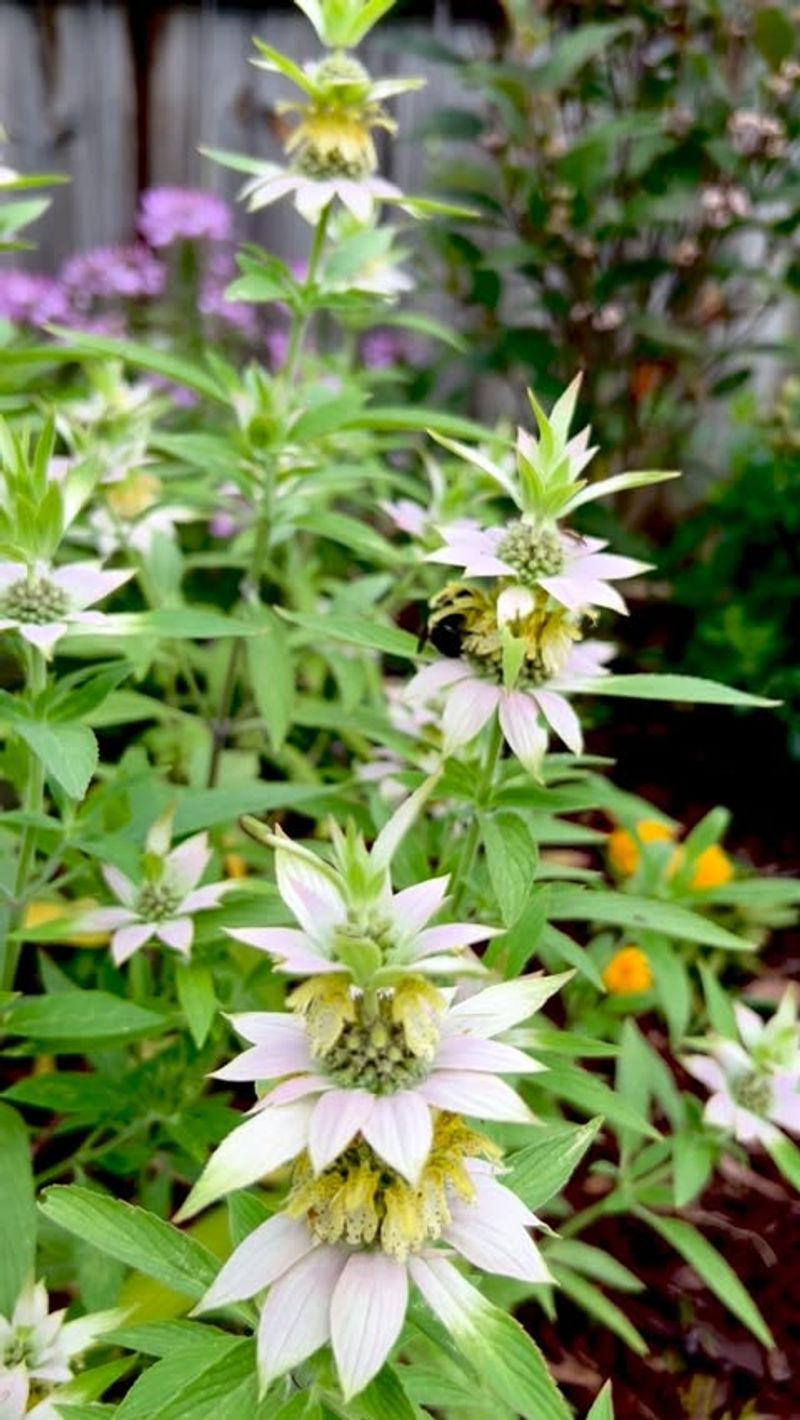
Being native to North Carolina statewide is not the same as thriving equally in every yard across the state. Spotted beebalm naturally colonizes prairies, sandy areas, rocky woodlands, and coastal plain habitats. Those origin environments share one consistent feature: good drainage. A wet, compacted Piedmont clay bed or a heavily shaded mountain slope is a harder assignment for this plant than a sunny, sandy Coastal Plain site or a raised border with amended loam.
Full sun gives spotted beebalm its best flowering performance. NC State lists it as tolerating partial shade, but reduced light generally means fewer blooms and more open, leggy growth. Soil texture matters as much as light: loam or sand with reliable drainage suits the plant well, while heavy clay that holds water after rain creates conditions that encourage the root diseases and fungal problems that can cut a planting short. If your site drains slowly, amending with coarse sand or planting in a raised bed is a smarter starting point than hoping the plant adapts.
Gardeners in the Mountains face a different set of variables. Cooler temperatures can compress the bloom window, and elevations above 3,000 feet may push flowering later into the season or reduce overall flower output compared with lower-elevation sites. Piedmont gardeners dealing with heavy clay and reflected heat from paved surfaces should prioritize drainage above all else and consider a spot away from south-facing hardscape that traps moisture at the root zone. On the Coastal Plain, sandy soils and strong sun are close to ideal conditions, but the same drought stress that sandy soils invite can increase disease pressure if the plant goes too long without any moisture during establishment.
Available space is the last variable to check before you plant. Spotted beebalm spreads by rhizomes and forms expanding clumps, though NC State does not describe it as excessively aggressive. Allowing roughly 12 inches to 3 feet per plant, depending on how dense a mass you want, gives each clump room to develop without crowding out neighbors or reducing the airflow that keeps foliage healthy through late summer.
The wildlife payoff goes beyond an unusual flower display
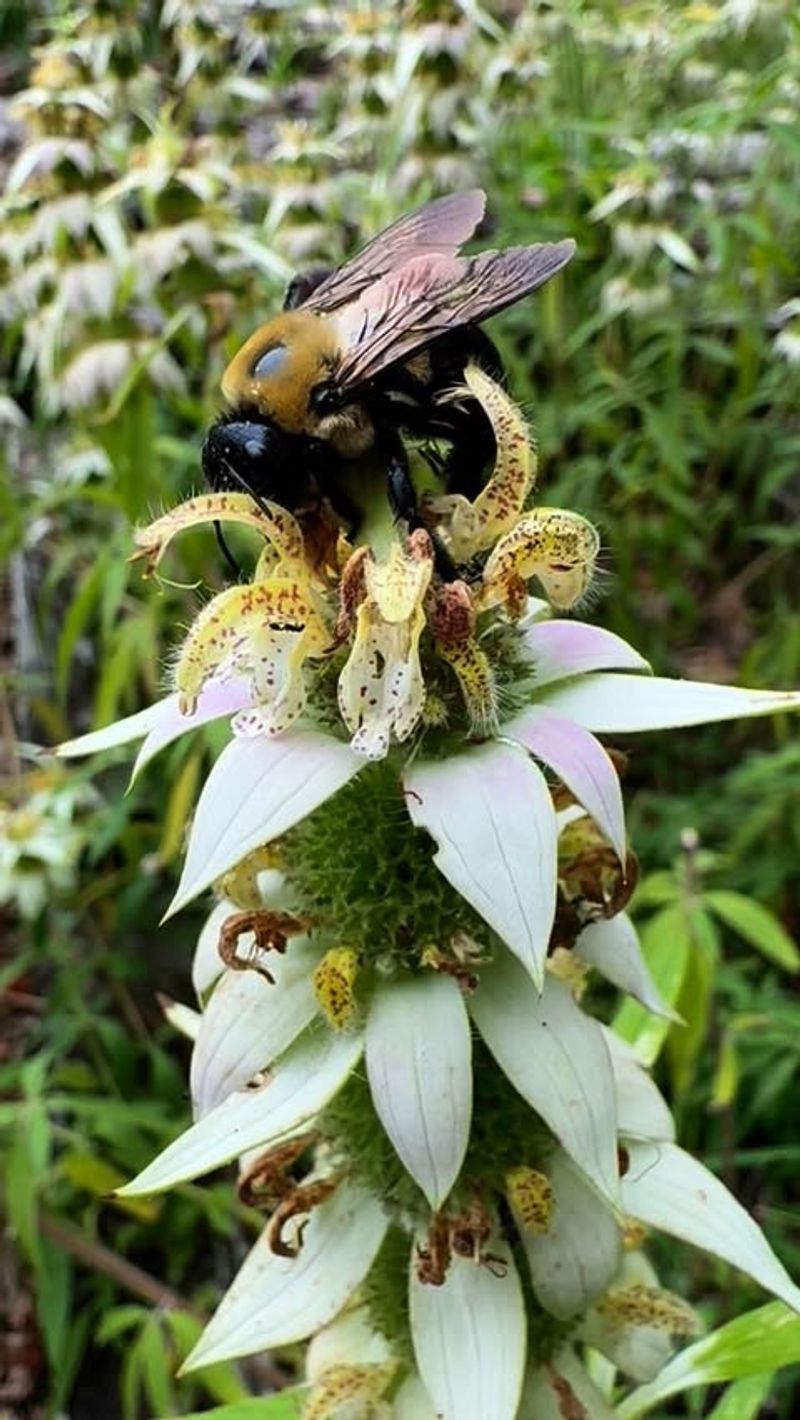
Spotted beebalm earns its place in a wildlife-supporting yard through a documented list of visitors that most ornamental plants cannot match. NC State Extension records bees, butterflies, wasps, moths, and hummingbirds as regular flower visitors. Beyond those generalist pollinators, the plant supports specialized native bees associated specifically with Monarda, which means it provides resources that many common garden flowers simply cannot substitute. It also serves as a larval host for the gray marvel moth and snout moths, adding a food-web role that extends well past the bloom season.
That ecological value is genuine and worth celebrating. Where the line needs to be drawn clearly is at pest control. Spotted beebalm does not reliably repel, kill, or control ticks or mosquitoes. The plant literature documents pollinator attraction, drought tolerance, deer resistance, and moth host relationships.
It does not establish any proven vector-suppression effect. University of Minnesota Extension notes that popular lists of insect-repelling plants are frequently not backed by research, and the same caution applies here.
For tick protection, your most reliable tools remain regular tick checks after time outdoors, wearing permethrin-treated clothing, and reducing leaf litter and brush where ticks shelter near the home. For mosquitoes, eliminating standing water where they breed is far more effective than any planting. Mosquito-smart gardening guidance consistently points to source reduction and EPA-registered repellents as the proven approaches, not aromatic plants. Growing spotted beebalm for its pollinator value and late-season color is a sound decision.
Growing it as a substitute for proven personal protection is not.
Plant it for survival, not just the bloom photo
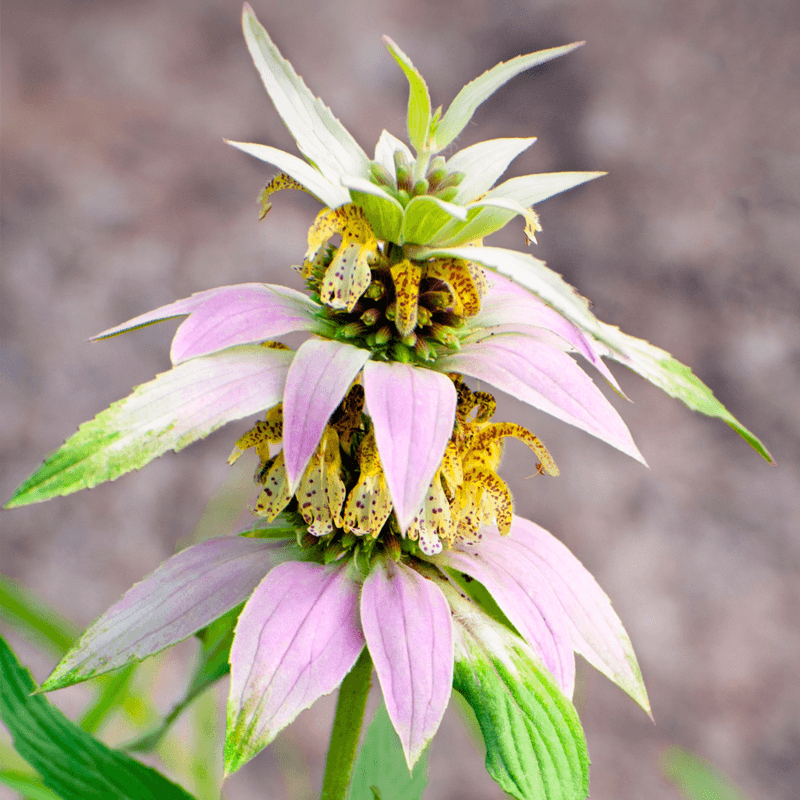
Choosing the right spot matters more than any other decision you make with spotted beebalm. The sunniest, best-drained location available in your yard gives the plant the foundation it needs to establish roots before it has to face summer heat. Avoid areas where water pools after rain, where neighboring shrubs cast shade for more than half the day, or where heavy foot traffic compacts the soil around the root zone.
Spacing deserves real attention at planting time, not as an afterthought once the plants are in the ground. NC State supports a range of roughly 12 inches to 3 feet per plant depending on the intended mass and the neighboring plants. Tighter spacing fills in faster but can restrict airflow as the clumps expand, which becomes a problem later in the season when humidity rises and fungal diseases become more likely. A slightly more generous spacing at the start pays dividends in late-summer plant health.
New plants need consistent moisture while their roots establish, even though the species is described as drought-tolerant once it matures. Treating a freshly planted spotted beebalm as maintenance-free from day one is a common mistake. Water regularly during the first growing season, especially during dry spells or prolonged heat, and ease off supplemental irrigation only after the plant shows strong new growth and has clearly anchored itself in the soil.
Established plants can handle occasional dryness, but NC State cautions that drought stress increases disease susceptibility. During a severe dry stretch, even a well-rooted plant benefits from a deep watering to keep foliage healthy through the peak bloom period. The plant spreads by rhizomes and forms expanding clumps, which NC State does not classify as excessively aggressive, so monitoring the edges of each clump each spring and pulling any growth that has crept beyond the intended footprint keeps the planting tidy without major effort.
Use airflow to protect the late-season display
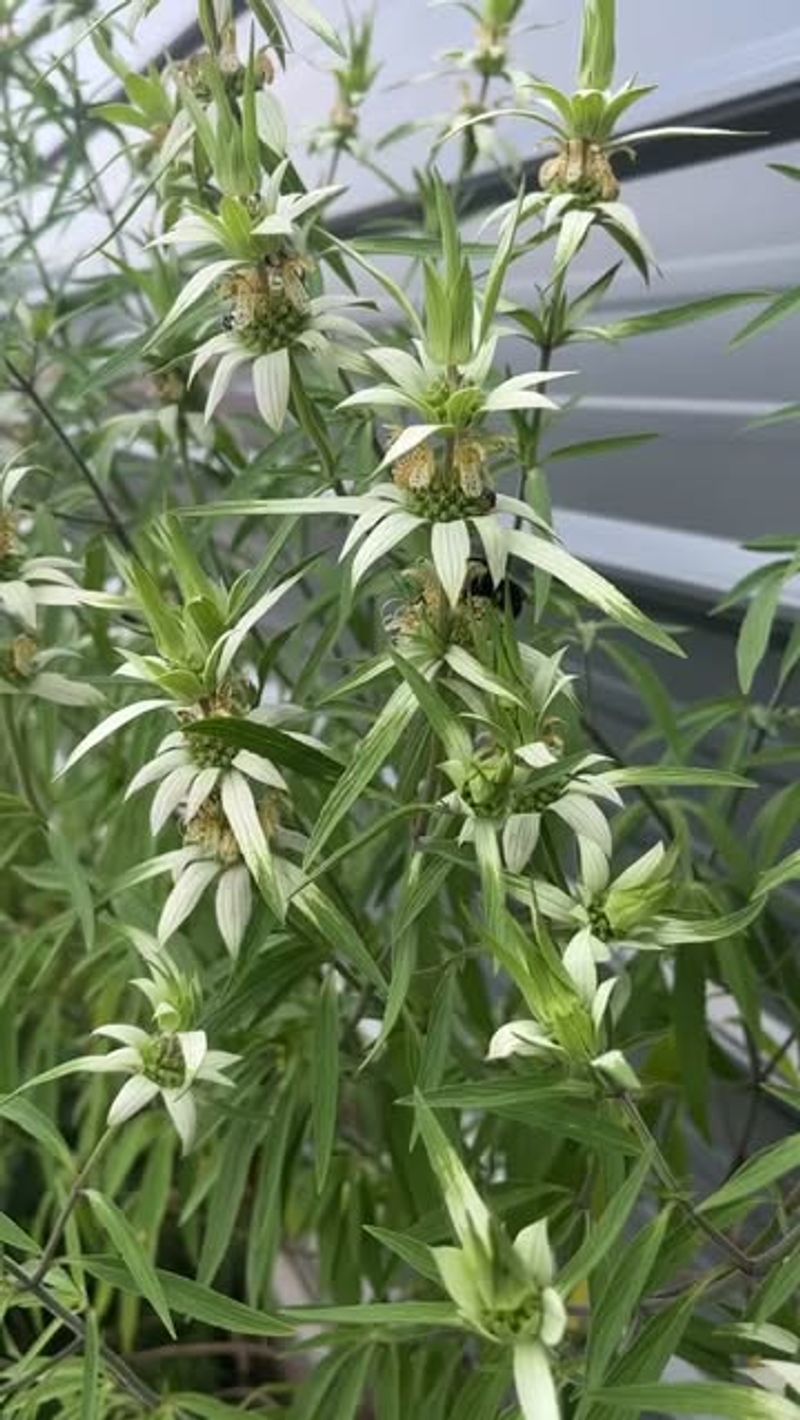
Once spotted beebalm is established, its care routine is genuinely light compared with many ornamental plants. The two tasks that protect the late-season display most effectively are deadheading spent flowers and managing plant density to maintain airflow through the clumps. Removing spent flower heads can improve the planting’s appearance and may extend the overall flowering period by encouraging the plant to produce additional blooms rather than directing energy into seed development.
Powdery mildew and rust are the two fungal problems that most commonly affect Monarda species in North Carolina gardens. Both become more likely when plants are crowded, when humidity is high, and when drought stress has already weakened foliage. NC State’s plant profile notes these disease risks and links them to growing conditions. Pruning or thinning stems in mid-season to open up the interior of each clump gives air a path through the foliage and reduces the damp microclimate where fungal spores thrive.
Spotted beebalm is generally more resistant to powdery mildew than red bee balm, but the risk is real enough to plan around rather than ignore.
Short-lived is the honest description for this plant’s lifespan. Spotted beebalm typically behaves as a short-lived perennial, meaning individual plants may decline after two or three years even with good care. Allowing some seed heads to mature and drop at the end of the season encourages natural reseeding, which can fill gaps left by older plants. Alternatively, dividing vigorous clumps every few years or replacing declining plants with new transplants keeps the planting productive over the long term.
One placement consideration that often gets skipped in native plant discussions is flammability. NC State assigns spotted beebalm a medium flammability rating. That rating matters if you are siting it near a structure, against a fence, in a fire-prone landscape, or next to dry mulch. NC State’s fire-resistant landscaping guidance recommends keeping medium-flammability plants farther from buildings and using well-irrigated or low-flammability species in the zone immediately adjacent to structures.
Give spotted beebalm a role, not the whole garden
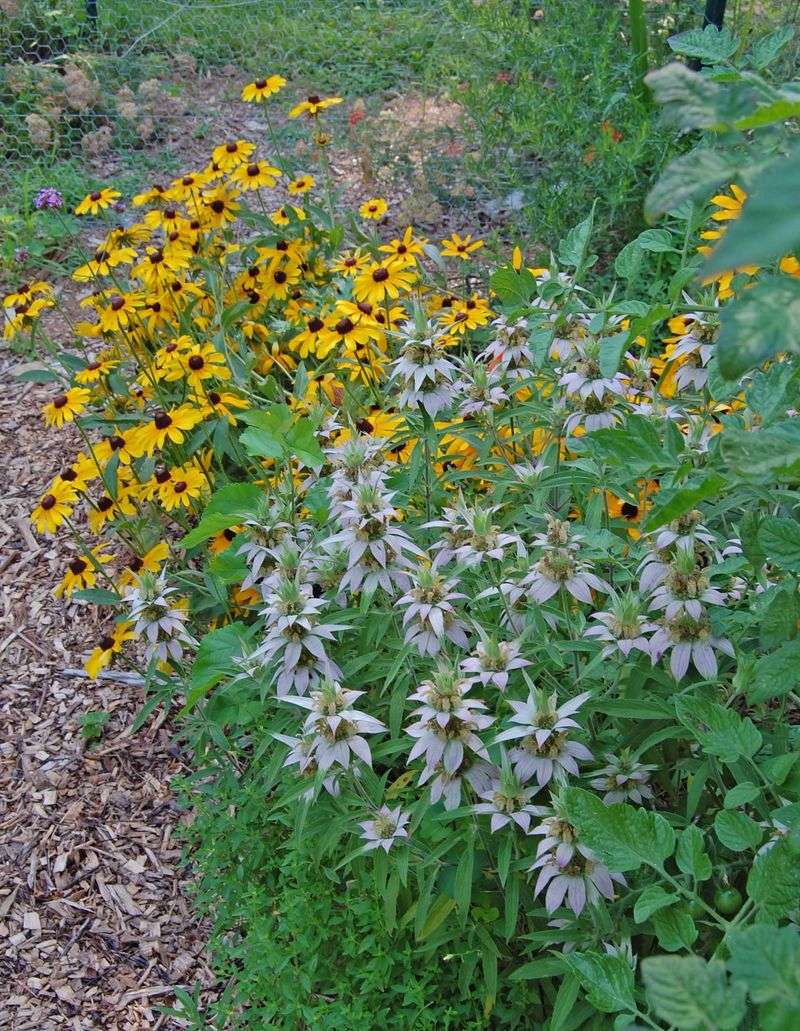
Spotted beebalm earns its spot as a late-summer component in a broader native planting, not as a one-plant solution for color, wildlife support, or pest management. Its seasonal role is real and useful, but a yard that relies on a single species for any of those goals is going to have gaps. The most resilient native plantings combine species with staggered bloom periods so that something is always in flower from early spring through hard frost, giving pollinators a continuous food source and giving the yard visual interest across the full growing season.
NC State Extension recommends selecting at least three native species for each growing season to provide that continuity. Pairing spotted beebalm with earlier-blooming natives like coneflowers and summer phlox, then following it with fall asters and goldenrod, creates the kind of layered sequence that benefits both the wildlife in your yard and the seasonal look you are working toward. Every plant in that mix should be matched to its specific site conditions, not just dropped in and hoped for.
Spotted beebalm is a strong candidate for North Carolina gardeners who want a less-familiar native with genuine late-summer and early-fall value, manageable care requirements, and real ecological connections to bees, moths, and butterflies. Judge it by those honest terms and it will deliver. A plant that knows its season and keeps its promises is worth more than any flower that claims to do everything.