
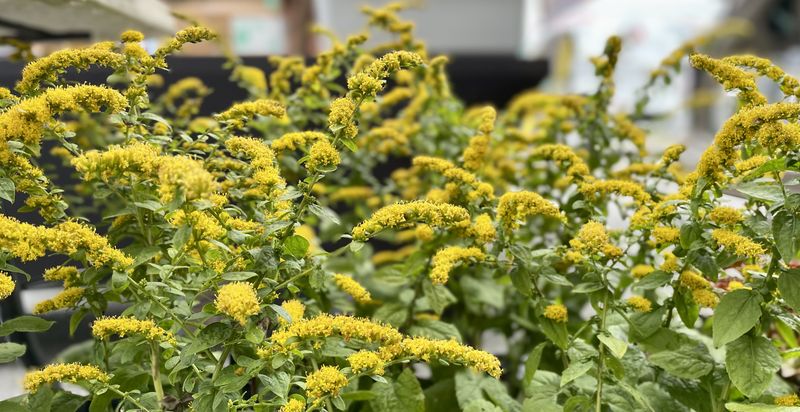
By late August, a lot of North Carolina gardens hit a wall. The zinnias are looking ragged, the coneflowers have gone to seed, and that burst of summer color starts to feel like a distant memory. Wrinkleleaf goldenrod, a native perennial that grows from the Coastal Plain to the Mountains, is one of the most overlooked answers to that September slump. This article makes the case for it, honestly, with the bloom-timing details, wildlife benefits, and real-world limitations you need before you plant.
A strong September native does not need a superlative
Calling any single plant the most underrated native in North Carolina is a tough claim to back up. The state has dozens of native species that bloom in late summer and fall, and many gardens, especially those already planted with a mix of natives, may not experience much of a September color gap at all. The more useful question is: if you want one well-supported native that hits its stride in September and works across a range of common garden conditions in this state, what does the evidence actually point to?
The answer this article keeps returning to is wrinkleleaf goldenrod, Solidago rugosa. NC State Extension’s plant toolbox lists it as a native perennial found in the Coastal Plain, Piedmont, and Mountains, with flowers generally appearing from August through October and a seed display that runs from September through November. Those are documented traits, not marketing copy, and they make it a strong candidate for the seasonal role this article describes.
That said, the word “underrated” is used here in a general sense. No ranking puts wrinkleleaf goldenrod above every other overlooked native in the state. What can be said with confidence is that it tends to fly under the radar while delivering real value during a stretch of the calendar when many gardeners are ready to give up on color. NC State’s native plants handbook documents numerous fall-blooming choices, so this article treats goldenrod as the best single fit for the September-blooming premise, not as a statewide winner over every alternative.
Subsequent sections cover the bloom window, wildlife value, design considerations, care expectations, and a few alternatives worth knowing.
Wrinkleleaf goldenrod brings late-summer color into September
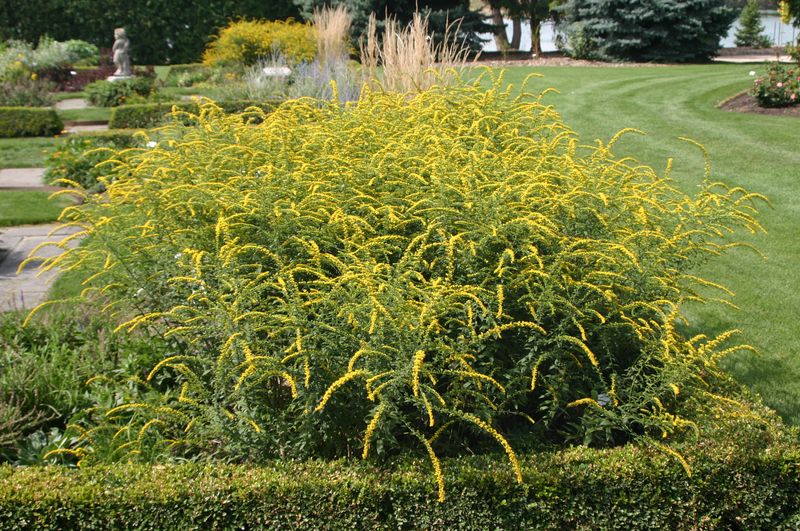
Solidago rugosa is a perennial goldenrod native to eastern North America, and it grows naturally across all three of North Carolina’s major regions. Its common name comes from the noticeably wrinkled, or rugose, texture of its leaves, which helps distinguish it from the many other goldenrod species you might encounter. The cultivar ‘Fireworks’ is an ornamental selection of the species, chosen for its showy arching flower stems that spray outward in a fountain-like form rather than growing stiffly upright.
On the bloom timing question, NC State Extension records the species’ flowering period as August through October, with seed display from September through November. September sits squarely in the middle of that window, which is exactly why this plant fits the article’s premise. However, “August through October” describes the general range across documented observations, not a promise that your specific plant will open on a fixed date. Coastal Plain gardens tend to run warmer and may see earlier color; mountain gardens can run cooler and shift the peak later.
A plant that was installed this spring and is still establishing will often bloom less reliably in its first fall than one that has been in the ground for two or three seasons.
Drought, unusual heat, and soil quality also influence the display. A well-established plant in a good site will generally perform better than one that has been stressed through a dry summer. Matching the plant to conditions it can actually handle, rather than simply trusting the species’ broad adaptability, is what separates a strong September display from a disappointing one. The species’ documented suitability for the Coastal Plain, Piedmont, and Mountains means it has a wide potential range in North Carolina, but that range does not guarantee uniform performance at every address in the state.
Goldenrod supports wildlife—and carries an unfair allergy reputation

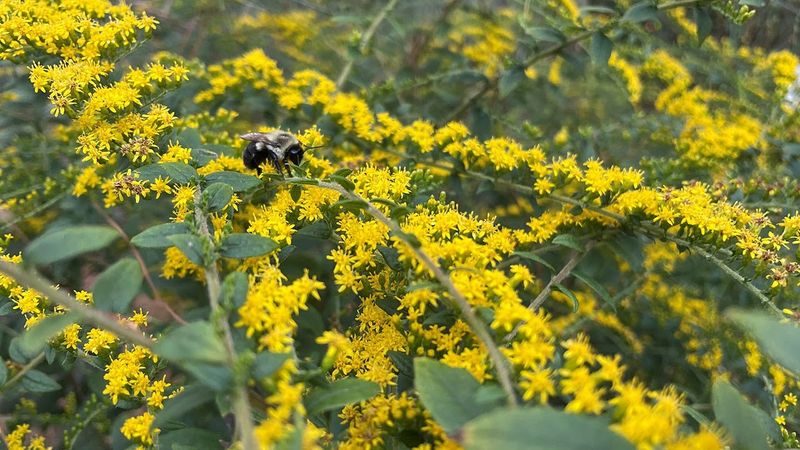
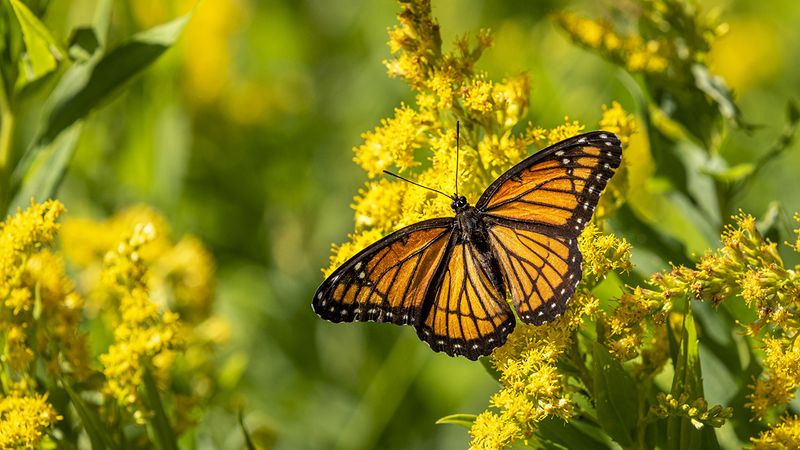
Few native plants pull their weight for wildlife the way wrinkleleaf goldenrod does in late summer and fall. The flowers attract bees, butterflies, and a wide range of other pollinators during a period when many other nectar sources have already shut down. Specialized native bees that evolved alongside goldenrod species are particularly well served, since these bees depend on goldenrod pollen as a primary food source during late-season brood rearing. NC State Extension notes that the plant also supports wavy-lined emerald caterpillars, and its seed heads provide food for songbirds from September through November, well after the flowers have finished.
Those are real, documented benefits. What goldenrod does not do is reduce tick populations, repel mosquitoes, or lower household pest pressure in any way supported by current evidence. The connection between pollinators and pest control is a popular idea, but attracting bees and butterflies does not translate into meaningful reduction of ticks or mosquitoes. Plant goldenrod for the pollinators and the birds; do not expect it to act as a pest barrier.
The allergy reputation is a separate issue and one that goldenrod has carried unfairly for a long time. The timing is the problem: goldenrod blooms at the same time as ragweed, and ragweed is the plant actually responsible for most of the sneezing and watery eyes that North Carolinians experience in September. Ragweed releases huge quantities of lightweight, windborne pollen that travels easily and reaches the nasal passages without any help from insects. NC Cooperative Extension explains that goldenrod pollen is comparatively heavy and sticky, designed to cling to visiting insects rather than drift through the air.
That difference in pollen dispersal strategy is why goldenrod rarely drives widespread hay fever. That said, direct handling of goldenrod or close contact in unusual quantities could still bother a person with specific sensitivities, so the claim is not that goldenrod is entirely allergy-proof for every individual.
Choose ‘Fireworks’ when you want a more deliberate border form
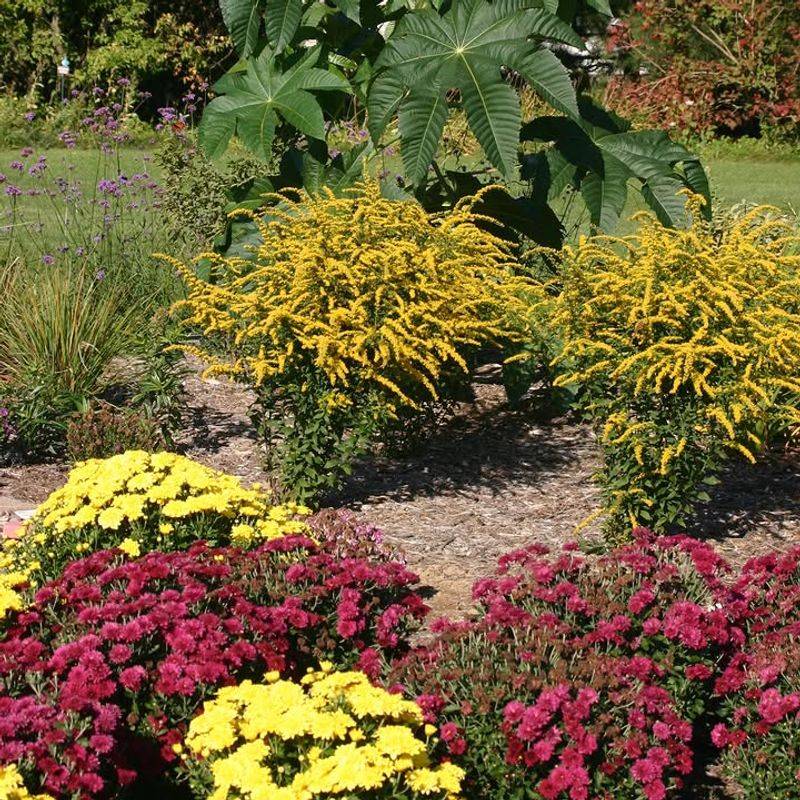
Picking the right form of wrinkleleaf goldenrod matters as much as picking the species itself. The straight species can reach anywhere from 2 to 5 feet tall depending on site conditions, which means it belongs toward the middle or back of a mixed border rather than at the front edge where shorter plants are typically placed. Tucking a 4-foot goldenrod behind knee-high companions gives it room to develop without crowding out smaller neighbors or blocking sightlines across the bed.
‘Fireworks’ was selected specifically for its arching, fountain-like flower stems, which give it a more intentional garden appearance than the species in its wild form. NC State Extension’s profile describes the species as low-maintenance and suitable for loam, sandy soils, shallow rocky soils, and moist conditions. Those tolerances make it adaptable, but adaptable is not the same as universally forgiving. A plant dropped into poorly drained clay with no amendments and left to fend for itself through a dry August will not perform the same way as one placed in a well-prepared spot with reasonable moisture retention.
Match the specific form you buy to the actual conditions in your yard rather than relying on the species’ broad tolerance list as a guarantee.
For flowering output, full sun is where wrinkleleaf goldenrod does its best work. The plant tolerates partial shade, but expect fewer flowers and a slightly looser form in lower-light situations. If your September border is working with morning sun and afternoon shade, goldenrod will still grow, but a more shade-tolerant native might serve that spot better. When full sun is available, though, wrinkleleaf goldenrod in a well-drained to moderately moist site is a strong candidate for the kind of September display that stops people on the sidewalk.
Low maintenance still means managing space and spread
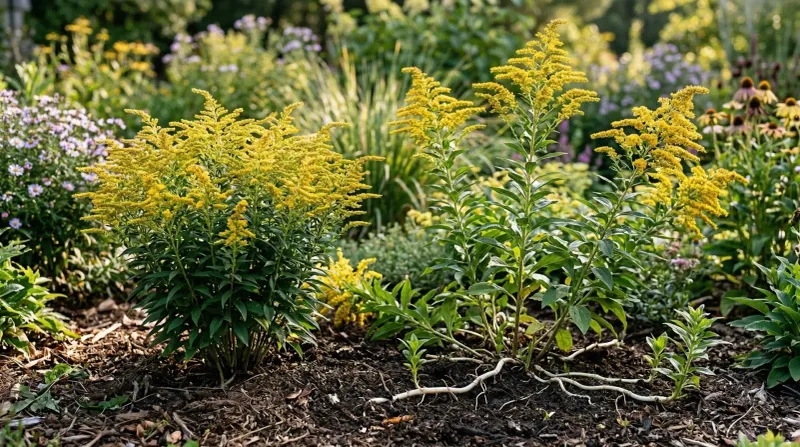
NC State classifies wrinkleleaf goldenrod as low-maintenance, and that classification is accurate in the sense that the plant does not need staking, frequent fertilizing, or fussy soil preparation once it is established. Where the label can mislead is in suggesting that goldenrod simply takes care of itself indefinitely without any attention. Some goldenrod species and cultivars spread through rhizomes underground and can also self-seed, meaning a single plant can quietly expand its footprint over several seasons. NC State’s broader goldenrod genus page notes that some species in the group can become aggressive, which is a useful reminder that not all goldenrods behave the same way in a garden setting.
Practical containment is straightforward if you stay ahead of it. Give plants enough room at installation, roughly accounting for the mature spread of the form you chose, so they do not immediately crowd their neighbors. Watch the perimeter of the clump in subsequent seasons, and if rhizomatous spread starts pushing into areas where you do not want it, dig and divide the outer edges. NC State recommends dividing goldenrod every few years when spread becomes excessive, and that division also rejuvenates the plant’s vigor and flowering.
Deadheading after bloom can reduce self-seeding if that is a concern in your specific planting.
Fall cleanup is worth thinking through carefully rather than treating as automatic. Cutting every stem to the ground immediately after flowering removes the seed heads that songbirds are actively using from September into November. Leaving some of that late-season structure standing, even just the strongest stems, gives birds a food source and provides habitat texture through the early winter months. A selective, staged approach to fall cleanup tends to serve both the garden’s appearance and its wildlife value better than a single hard cutback.
Match the September native to the site you actually have
Wrinkleleaf goldenrod is a strong option for many ordinary mixed borders in North Carolina, but it is not the right fit for every site or every design goal. Three other native fall-bloomers come up consistently in this conversation, and each one has a specific set of conditions where it outperforms goldenrod or simply suits the gardener’s needs better.
Aromatic aster (Symphyotrichum oblongifolium) is the better choice when you want a lower, rounded plant covered in small lavender-blue flowers from late summer through first frost. It handles drought, tolerates deer browsing, and performs well in well-drained soils in full sun, including coastal conditions where salt tolerance is an asset. If the front of a sunny border needs something that stays compact and does not require division to stay tidy, aromatic aster often fits that role more naturally than goldenrod.
Swamp sunflower (Helianthus angustifolius) is the call when you want a tall, bold, late-season statement and have the space to accommodate it. This plant can reach 5 to 8 feet and spread aggressively, so it rewards gardeners who have room for a naturalistic mass planting or a back-of-border anchor rather than a tidy suburban bed.
Hollow Joe-Pye weed (Eutrochium fistulosum) excels in moist to wet ground and larger spaces where its typical 4 to 7 feet of height can be an asset rather than a challenge. Its rosy-purple flower clusters are excellent for pollinators, but its moisture requirements and scale make it less suitable for a standard suburban border with average drainage.
Wrinkleleaf goldenrod may be the more versatile option for many conventional garden beds, but that assessment depends entirely on the site you have and the effect you are after. No single plant is the right answer for every North Carolina yard, and the NC State plant profile reinforces the importance of matching species to actual site conditions rather than relying on broad regional suitability alone.
Use goldenrod as one part of a longer native-plant season
Adding wrinkleleaf goldenrod to a North Carolina garden is a practical, well-supported move for anyone who wants more September color and a stronger late-season resource for pollinators and birds. Before you buy, source your plant from a reputable native-plant nursery and confirm the species identity at purchase. Native status refers to the plant’s natural range, not necessarily the genetic provenance of every nursery-grown specimen, so asking where the stock originates matters if local provenance is a priority for you.
At planting, account for the mature size of the form you chose, position it in full sun if possible, and give it soil moisture conditions that match its needs rather than assuming the species’ broad tolerances cover every scenario. Plan for the plant to spread modestly over time, and build division into your routine every few years to keep it performing well and staying within its intended space. NC State’s wrinkleleaf goldenrod profile supports leaving some seed heads standing through fall and early winter rather than cutting everything down at once, a small adjustment that pays off for the songbirds working your garden.
One plant, even a productive one, does not create a complete habitat. NC State’s native plants guidance recommends building a succession of bloom across spring, summer, and fall using multiple native species so that pollinators and wildlife have resources throughout the season rather than just during one peak. Wrinkleleaf goldenrod fills a specific and often neglected slot in that succession. The most resilient native gardens are the ones that treat September as the middle of the story, not the end of it.