
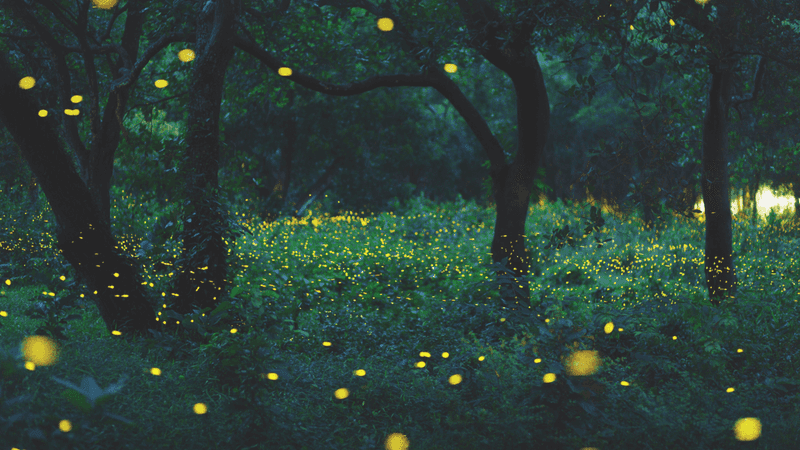
Fireflies turning a Florida backyard into a summer light show feel like magic, but most yards are quietly missing the conditions those beetles actually need to survive. No single overlooked native plant carries every Florida firefly through every stage of its life, and chasing that idea can lead gardeners away from what really works. What the research does support is a manageable habitat approach, one grounded in local plants, natural leaf litter, suitable moisture, and a few smart choices about light and chemicals.
Build firefly habitat instead of searching for a miracle plant
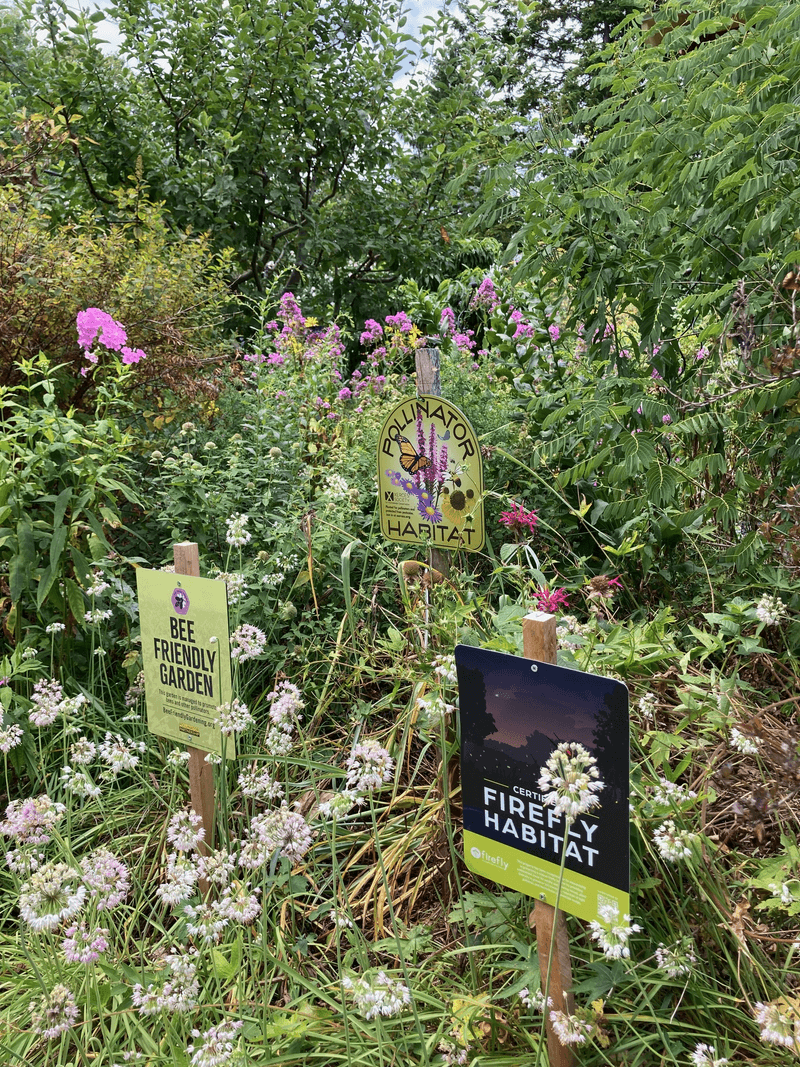
The idea of one overlooked Florida native plant that shepherds fireflies through every life stage is genuinely appealing, but no reliable evidence supports it. UF/IFAS Gardening Solutions identifies 56 firefly species in Florida, occupying habitats that range from upland woods and open grasslands to wetlands, mangroves, salt marshes, and tidal mudflats. A single plant species cannot serve as a universal provider for that kind of biological variety.
Calling any plant a firefly “host plant” also imports the wrong mental model. Host plant usually means a plant whose leaves feed insect larvae, the way milkweed feeds monarch caterpillars. Most firefly larvae are predators, not leaf-eaters, so the relationship between plants and fireflies works through habitat support rather than direct feeding.
What the evidence does point toward is habitat. A peer-reviewed review of firefly threats and conservation strategies describes habitat loss, drying soils, pesticide exposure, and light pollution as compounding pressures on firefly populations. Those pressures suggest a practical checklist rather than a plant shopping list.
Florida yards that struggle to attract fireflies tend to share a few common problems: soil that dries out too fast in the heat, surfaces kept too clean and tidy for larvae to shelter in, too much artificial light at night, and chemical treatments that reduce the prey firefly larvae depend on. Firefly Atlas confirms that Florida’s species have genuinely different habitat associations, which means the actionable answer is building a suitable local habitat pocket rather than hunting for a single miracle specimen.
What fireflies need at each life stage
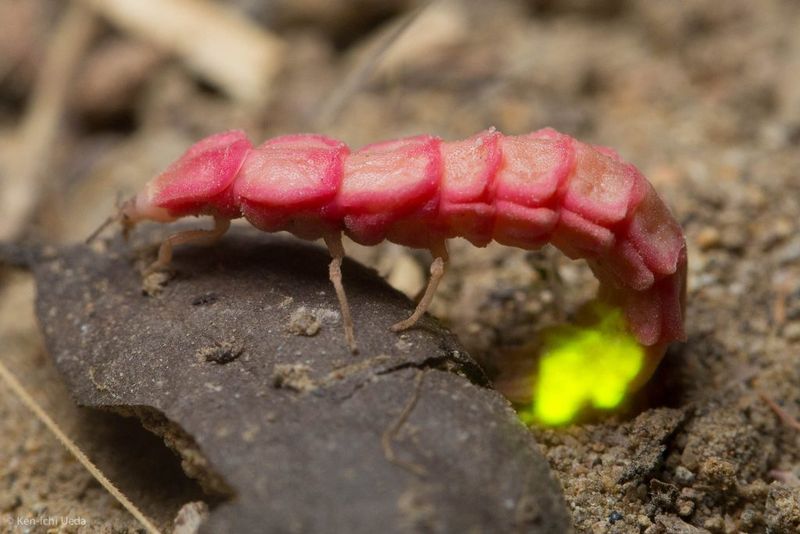
Fireflies are beetles, and like all beetles they pass through four stages: egg, larva, pupa, and adult. Each stage has its own environmental requirements, and understanding those requirements makes it clear why habitat matters more than any one plant.
Female fireflies deposit eggs in or on the ground, often in moist soil, damp leaf litter, or at the base of low vegetation. UF/IFAS notes that many larvae develop in soil, leaf litter, damp mud, or similarly sheltered settings. The soil cannot be bone-dry Florida sand with nothing living in it; eggs need some retained moisture and physical cover to survive.
Larvae are where the predator biology becomes important. Most firefly larvae hunt soft-bodied prey, including snails, slugs, earthworms, and other small invertebrates. Oklahoma State University Extension’s firefly fact sheet describes larvae injecting a paralyzing fluid into their prey before consuming it. A Florida yard without a functioning invertebrate community in the soil and litter layers is effectively a food desert for firefly larvae, regardless of what plants grow above ground.
Pupation usually happens in soil or litter, and the pupa stage is similarly dependent on the right microclimate: not waterlogged, not baked dry, and sheltered from disturbance. Adults emerge with a short window to find mates, and that search depends on vegetation for perching and resting, plus darkness for their flashing signals to be visible.
Requirements vary considerably across species. Wetland fireflies need different conditions than upland grassland species, and a Florida garden cannot realistically replicate every habitat type. The realistic goal is creating one suitable microhabitat that serves the species already present or likely to move through the area, rather than trying to attract every firefly Florida hosts.
Plants help by shaping the food web and microclimate
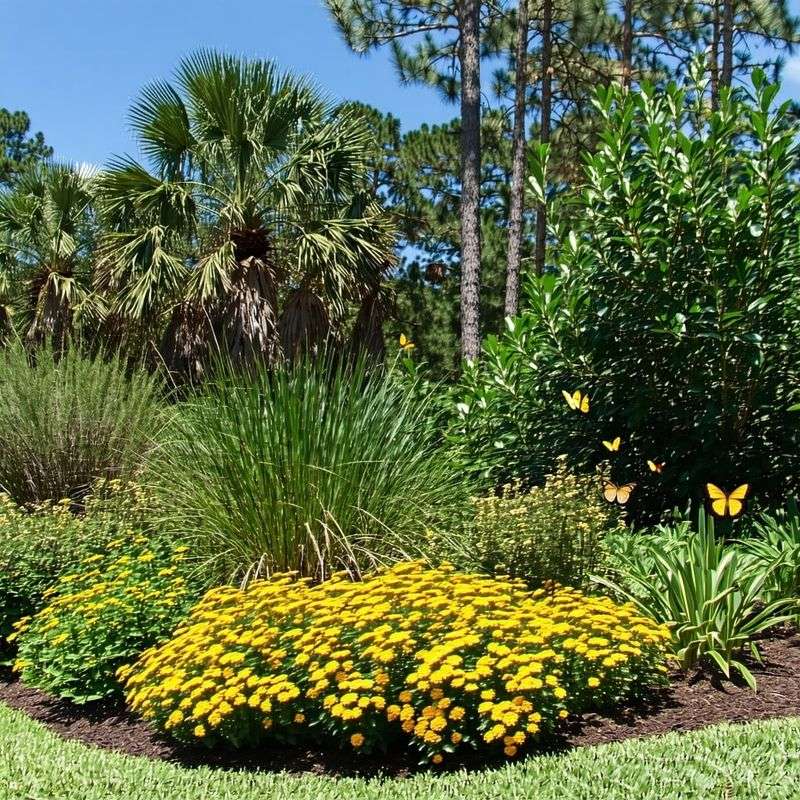
Gardening writers sometimes describe a plant as a firefly host plant, borrowing the term from butterfly gardening where it means a plant that feeds caterpillars. For fireflies, that framing is almost always wrong. Firefly larvae eat prey, not plant tissue, so no native plant is feeding them in the way milkweed feeds a monarch larva.
What plants do for fireflies is indirect and genuinely useful. Shade from a canopy shrub or small tree slows soil moisture loss, which matters enormously in Florida’s fast-draining sandy soils. Groundcovers and native grasses trap fallen leaves, building up the organic layer that larvae shelter in and that supports the snails, slugs, and worms larvae eat. Roots and stems create physical structure in the soil that small invertebrates use.
UF/IFAS guidance on attracting fireflies emphasizes vegetation that shades and protects soil rather than a single specimen plant.
UF/IFAS native plant resources support choosing a layered mix of local plants rather than a single specimen, because different layers address different habitat needs at once. A native sedge holds moisture and provides cover at ground level. A mid-story shrub shades the soil and contributes leaf litter. A canopy tree creates the deeper shade that helps a damp microclimate persist through Florida’s hottest months.
Firefly Conservation and Research’s plant guidance similarly points toward plant communities rather than individual species, noting that vegetation supporting local invertebrate life is more valuable than any single plant chosen for symbolic reasons. A layered native planting addresses moisture, cover, litter accumulation, and prey habitat simultaneously, which is exactly what the firefly life cycle requires from its environment.
Match native plants to the Florida site
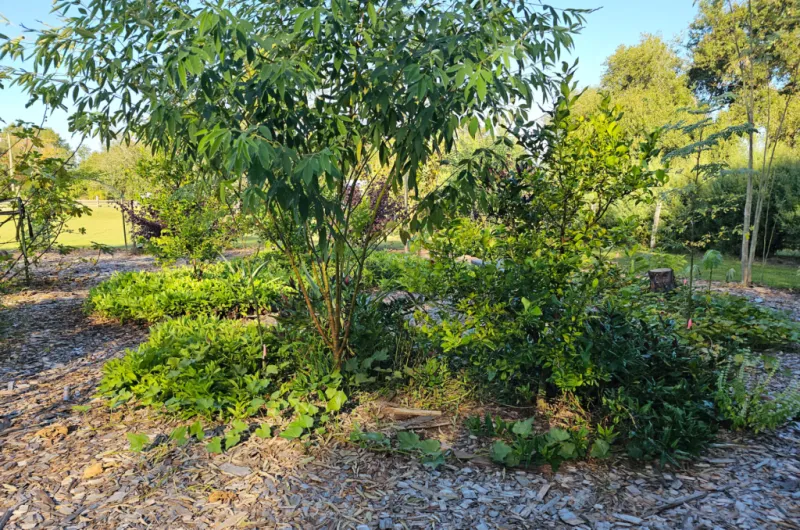
Native status is a starting point, not a guarantee. A Florida native planted in the wrong spot can struggle through drought stress, need constant irrigation, or grow too sparsely to provide meaningful cover or litter. UF/IFAS native plant guidance is clear that even regionally native species need to be matched to local light, soil moisture, and drainage conditions to thrive without extra inputs.
Florida’s ecological range is wide enough that this matching step is genuinely important. A wetland sedge suited to a low, seasonally flooded backyard in north Florida is not the right choice for a dry, sandy ridge in central Florida. Conversely, a drought-tolerant native grass that performs well in upland conditions will not create the moist, organic-rich microhabitat that many firefly species prefer. Firefly Atlas documents the range of Florida firefly habitats, from dry upland forests to tidal mudflats, which reflects how much site conditions vary across the state.
For most Florida homeowners, the practical approach is a small habitat corner rather than a full-yard transformation. Pick a spot that already receives some shade, holds a little more moisture than the rest of the yard, or sits along a property edge where mowing is less frequent. UF/IFAS Extension resources on north Florida native plants can help with species selection by region, and county Extension offices can offer site-specific guidance for uncertain choices.
Native plants correctly sited in Florida can be lower-maintenance than non-native alternatives once established, but they are not maintenance-free. Establishment watering during dry spells, occasional pruning, and some storm recovery may still be necessary. The payoff is a planting that fits the site well enough to build the moisture, cover, and invertebrate community firefly larvae need without constant intervention.
Leave leaf litter and accessible soil beneath the plants
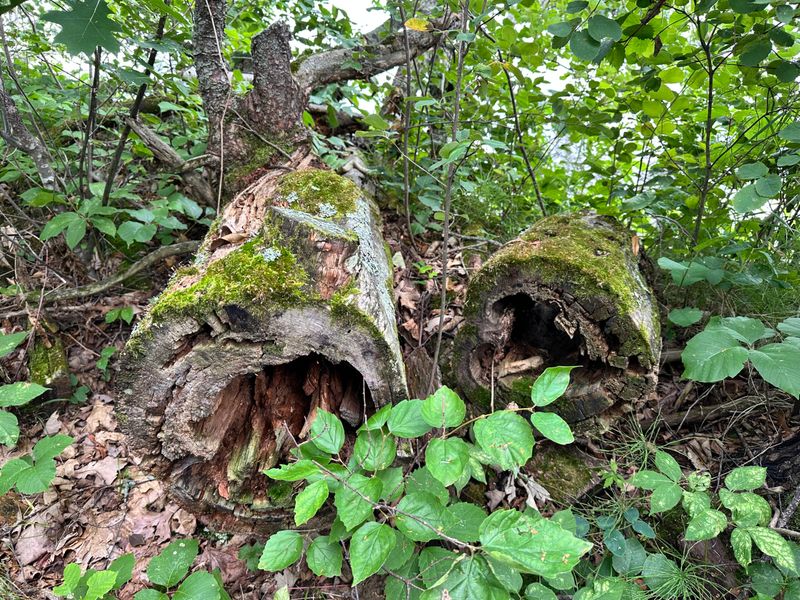
Ground-level management is where many Florida yards quietly fail fireflies even when the plants above are doing everything right. A tidy cleanup habit that removes all fallen leaves and covers every soil surface with thick landscape mulch eliminates exactly the conditions larvae need to survive.
National Wildlife Federation firefly habitat guidance recommends retaining natural leaf litter beneath shrubs and trees as one of the most direct things a homeowner can do. Fallen leaves hold moisture, buffer soil temperature, provide physical cover for larvae and pupae, and support the snails, slugs, worms, and other soft-bodied invertebrates that firefly larvae eat. A small “leave-the-leaves” zone beneath a native shrub is more evidence-based than a perfectly raked bed.
Accessible soil matters too. University of New Hampshire Extension’s firefly support guide notes that female fireflies need to deposit eggs in or on the ground, which means some exposed or lightly covered soil should remain available. Bare sand with no organic matter is too dry and too nutritionally empty; compacted, heavily trafficked soil is similarly inhospitable. The target is somewhere between: loose, partly shaded soil with a natural litter layer above it.
Thick commercial mulch applied in a deep blanket can actually work against firefly egg-laying and larval access to soil. Firefly Conservation and Research and their habitat certification guide specifically caution against deep mulch blankets in firefly habitat areas. A natural litter layer that builds up organically from the plants above is preferable to bagged mulch spread over the entire bed.
One important boundary: do not introduce snails, slugs, earthworms, or other prey organisms into the yard to speed up the process. UF/IFAS firefly guidance supports letting the local invertebrate community develop naturally. Imported organisms may be non-native, invasive, diseased, or ecologically disruptive. The habitat corner should invite local prey populations to establish on their own, which happens when the soil, litter, and moisture conditions are right.
Reduce artificial light and broad-spectrum pesticides
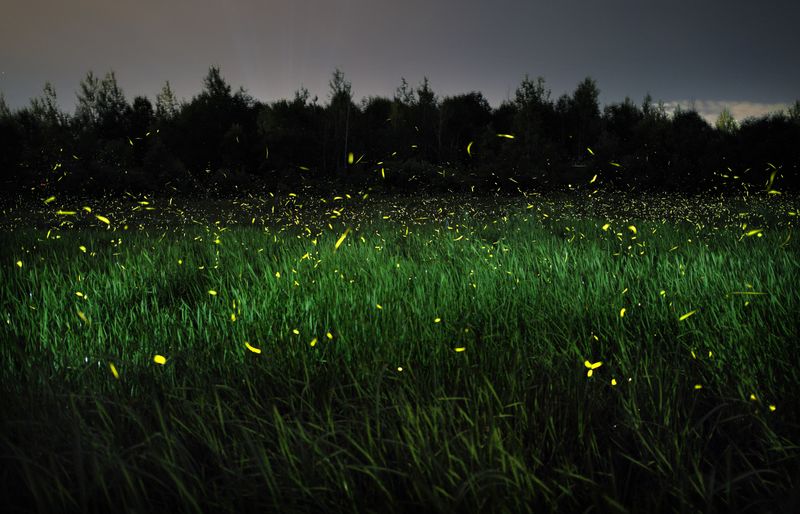
A habitat corner planted with locally suited natives and a healthy litter layer can still fail to support fireflies if the surrounding yard stays brightly lit at night and regularly treated with broad-spectrum insecticides. Those two factors work against fireflies at different life stages and are worth addressing directly alongside any planting work.
Adult fireflies use species-specific flash patterns to find mates, and artificial light interferes with that signaling. UF/IFAS recommends turning off unnecessary outdoor lighting, including porch lights, garage lights, floodlights, and landscape uplighting, during firefly activity periods, which in Florida typically run from late spring through summer evenings. Motion-activated lights that stay off when not triggered are a practical middle ground for security concerns.
Pesticides create a different problem. UF/IFAS Panhandle Extension specifically warns that broad-spectrum lawn insecticides negatively affect soil-dwelling firefly larvae. Those products do not distinguish between pest insects and the firefly larvae developing in the litter and soil below. They can also reduce or contaminate the snails, slugs, and worms that larvae depend on for food, compounding the harm beyond the direct kill.
Peer-reviewed firefly conservation research lists pesticide exposure alongside habitat loss and light pollution as documented threats to firefly populations. Minimizing or eliminating broad-spectrum insecticide use in and around the habitat corner is one of the more direct actions a homeowner can take. Targeted treatments for specific pest problems, applied away from the habitat zone, are less disruptive than routine broadcast applications across the whole yard.
These changes address real pressures, but they cannot guarantee a population rebound. Weather, regional species composition, surrounding land use, and the distance to established firefly populations all affect whether adults will find and use the habitat. The goal is removing barriers, not promising a specific outcome.
Set up one realistic firefly habitat corner
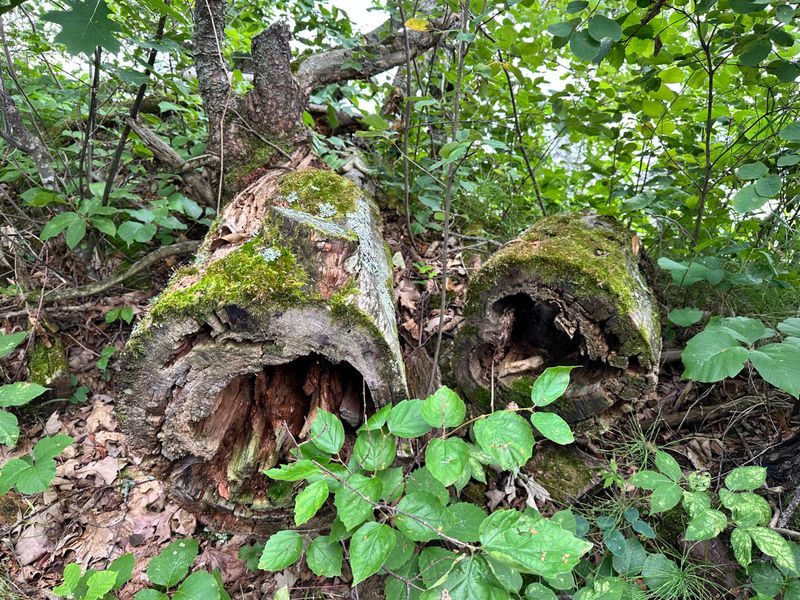
Pulling the habitat approach into practice does not require a full-yard renovation. A single well-chosen corner, maybe the shadier edge of the property or a spot beneath an existing tree, can address several firefly needs at once without major disruption to the rest of the yard.
Start by selecting locally appropriate native vegetation for that corner: a mix of groundcovers, native grasses or sedges, and at least one shrub that fits the site’s actual light and moisture conditions. Let leaves accumulate naturally beneath the plants rather than raking them out. Leave some accessible soil at the edge of the litter layer. Stop applying broad-spectrum insecticides in that zone and turn off any direct nighttime lighting that hits the area during summer evenings.
UF/IFAS Gardening Solutions and National Wildlife Federation firefly habitat guidance both converge on this combination of steps as the most practical foundation.
Set expectations honestly. Sightings depend on the firefly species already present in the region, the season, recent weather, drought or flooding conditions, and the quality of surrounding habitat beyond the property line. Documented firefly research shows that population pressures vary by species and region, and a single yard improvement cannot reverse broad landscape changes. A homeowner may do everything right and still see modest results in a heavily developed area with little nearby natural habitat.
What the habitat corner does offer is a grounded, evidence-based contribution: suitable conditions for the species that are present, without the false promise of a miracle plant. One quiet, litter-covered, dark corner of a Florida yard is worth far more to local fireflies than the perfect specimen planted in the wrong place for the wrong reasons.