
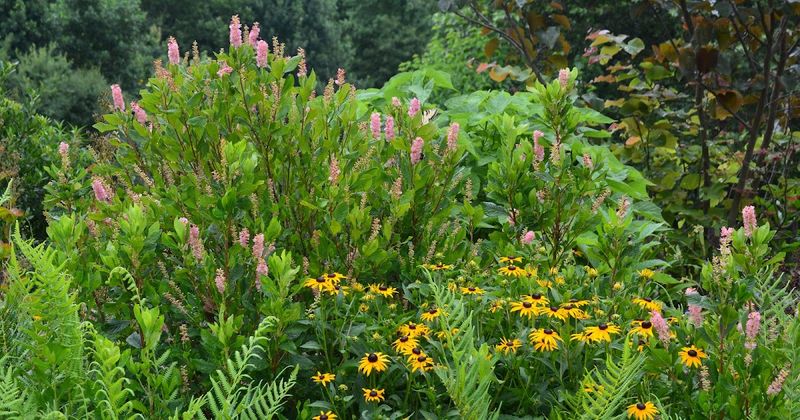
Every summer, North Carolina gardeners walk outside to find their rose bushes looking like lace curtains, stripped of green by Japanese beetles. That damage can leave a border looking bare right when the garden should be at its best. Summersweet (Clethra alnifolia), a native shrub found across the state, keeps blooming and buzzing with pollinators during that same stretch, giving your yard something to look at even when the roses are struggling. It will not chase beetles away, but it will keep your border alive with color, fragrance, and wildlife all summer long.
Choose summersweet for a more useful summer border
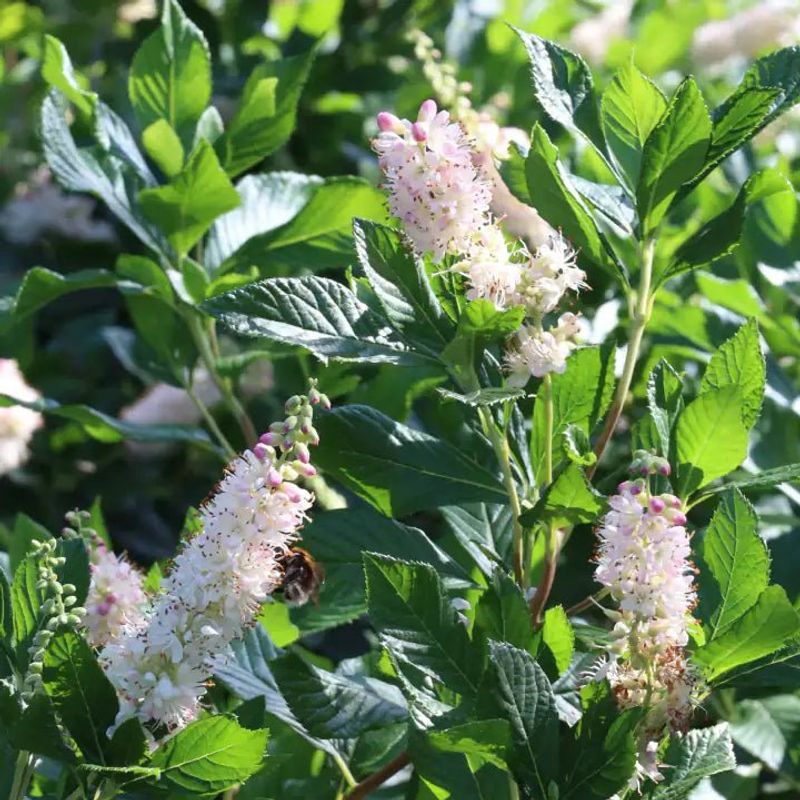
Summersweet (Clethra alnifolia), sometimes called coastal sweet pepperbush, is one promising native North Carolina option worth adding to any rose border. Before getting into what it does well, one thing needs to be said plainly: Japanese beetles do not skeletonize roses in every North Carolina garden every August. Beetle pressure varies from yard to yard and year to year, so the calendar is a rough guide, not a guarantee.
What summersweet actually offers is a way to keep the border functional when beetle damage does occur. It brings fragrant flower spikes, attractive summer foliage, and reliable structure at the same time of year when beetle feeding tends to peak on roses. NC State Extension’s Plant Toolbox documents summersweet as generally resistant to insect pests and notes its value for pollinators, birds, and small mammals. That combination of ornamental and ecological value is exactly what a damaged rose border needs during summer.
Framing matters here. Summersweet works best as a companion or a thoughtful partial replacement in the border, not as a guaranteed beetle-resistant plant and not as a way to protect nearby roses from feeding. University of Minnesota Extension’s Japanese beetle guidance confirms that beetles feed on more than 300 plant species, and no single planting decision will stop adults from flying into your yard. What summersweet can do is keep your border looking purposeful and alive with wildlife even when rose foliage turns to lace.
Understand why Japanese beetles skeletonize roses
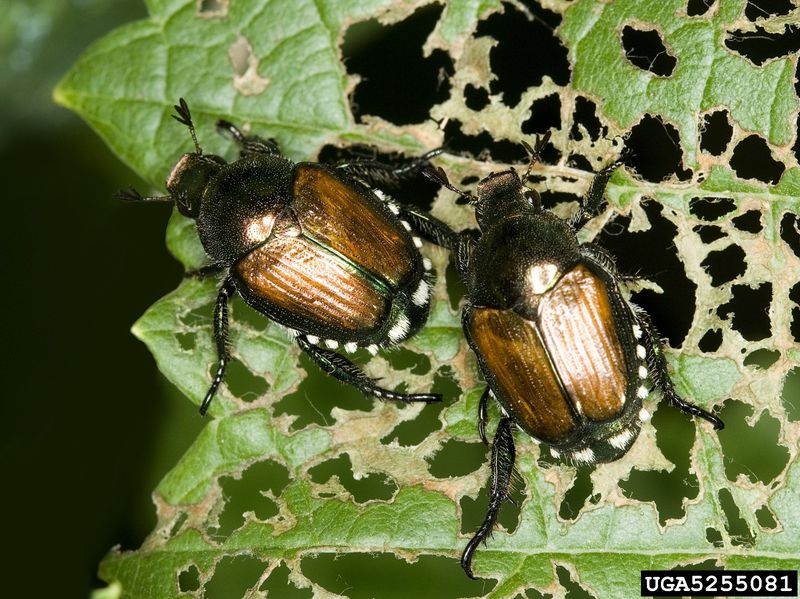
Roses sit near the top of every Japanese beetle’s preferred menu. Adult beetles chew the soft tissue between leaf veins while leaving the veins themselves behind, which produces the familiar lace-like or skeletonized look that gardeners dread. A heavily fed plant can look stripped within days when beetle numbers are high, though the plant itself usually survives if it was healthy going into the season.
Timing in North Carolina follows a general pattern, but not a rigid one. Adults commonly emerge in late spring or early summer, feed for several weeks, and NC Cooperative Extension in Henderson County notes that activity may continue into July and August before populations generally taper off by mid- to late August. The USDA APHIS Japanese Beetle Program Manual also documents that adult emergence timing shifts with temperature, soil conditions, and geography, so the window can arrive earlier or later depending on the year.
Pressure also varies considerably among yards. A garden surrounded by large turf areas, fruit trees, or other preferred hosts may see far heavier feeding than a neighbor’s yard a street away. NC State Extension’s guide to rose pests describes the skeletonizing pattern clearly and places roses among the most frequently targeted ornamentals. Use the mid-summer window as a planning cue rather than a fixed date, and watch your own yard each season to learn when pressure actually peaks near your roses.
See what summersweet contributes when rose foliage suffers
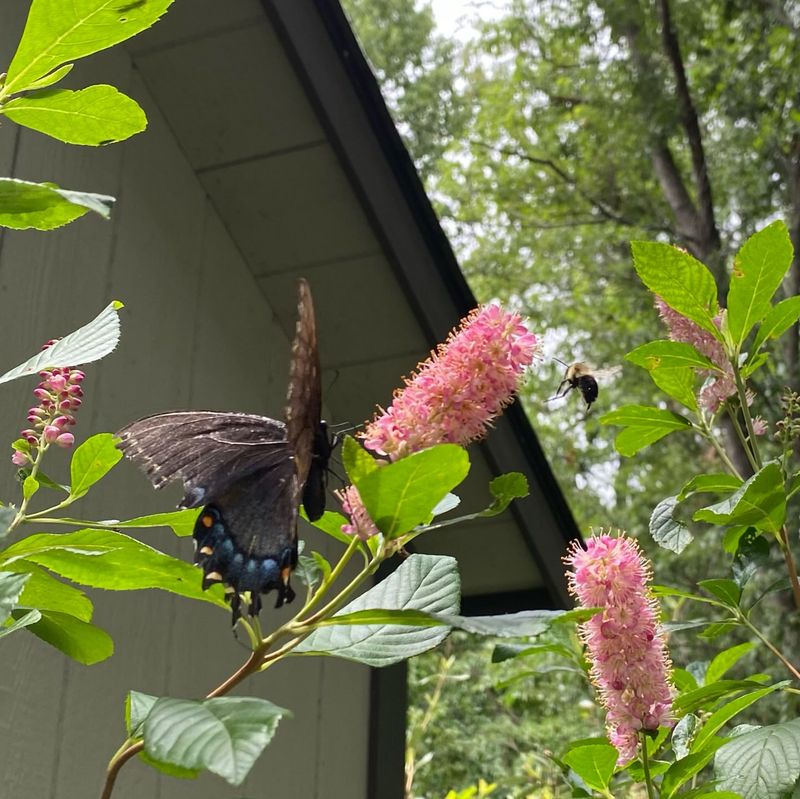
Summersweet earns its place in a summer border through a combination of things that roses cannot provide when beetles are active. The shrub produces upright flower spikes, typically white or soft pink, on the current season’s growth. Those spikes carry a sweet, noticeable fragrance that carries through warm evenings and draws bees, butterflies, and hummingbirds reliably during the season.
According to the NC State Extension Plant Toolbox entry for Clethra alnifolia, flowering runs from June through August, though the exact timing and duration shift with cultivar choice, rainfall, heat, and elevation. A plant in the mountains may bloom a bit later than one near the coast, and a dry summer can shorten the show. Glossy, dark green foliage holds its appearance through the summer heat, so even between bloom flushes the shrub keeps the border looking tidy rather than bare.
When the flowers finish, small brown seed capsules develop and often persist well into fall and winter. Birds and small mammals use those fruits, which extends the shrub’s wildlife value past the growing season. One important seasonal note: summersweet is deciduous, not evergreen. It contributes real ornamental and ecological value through late summer and fall, but once the leaves drop it will not provide screening or winter foliage.
Its dried capsules add some structural interest through the cold months, but gardeners expecting year-round greenery will need to plan accordingly with other plantings.
Match summersweet to moisture, light, and location
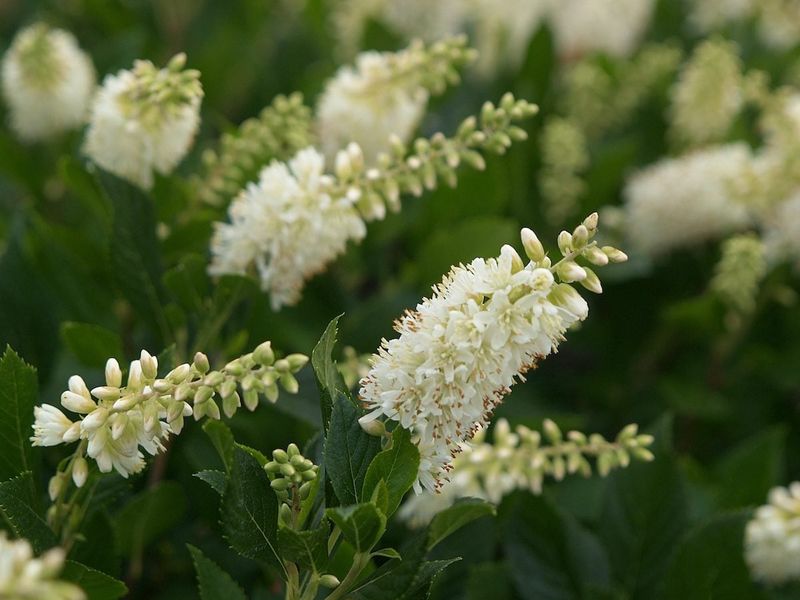
Before adding any shrub to a rose border, a quick site check saves a lot of frustration later. Summersweet accepts full sun to partial shade and performs best in moist, organically enriched soil. The NC State Extension Plant Toolbox confirms that it tolerates clay, loam, and sand, which covers most of what North Carolina gardens throw at it. That soil flexibility is genuinely useful in a state where soil type can change dramatically from one county to the next.
Suitable spots include rain-garden edges, pond margins, woodland borders, cottage gardens, pollinator gardens, and mixed shrub borders where the soil stays reasonably moist. Afternoon shade and consistent moisture become especially relevant in hot, open sites. A summersweet planted in full summer sun in a dry, unamended bed will struggle, particularly during establishment, and may not perform the way gardeners expect based on its reputation.
Regional differences in North Carolina matter, but they are best understood site by site rather than by region alone. A moist coastal site with sandy soil that stays damp may need little supplemental watering once the shrub is established. A Piedmont garden with heavy clay that dries out between rains, or a mountain site with thin, fast-draining soil, may need irrigation during establishment and during dry stretches in summer. The plant’s documented preference for moist soil is the deciding factor, not the zip code.
Before planting, check your actual drainage, observe how quickly the bed dries after rain, and plan for supplemental watering during the first one to two growing seasons at minimum. A site that cannot provide reasonable moisture either naturally or with irrigation is not the right spot for summersweet, regardless of what region it falls in.
Give the shrub room to reach its mature size
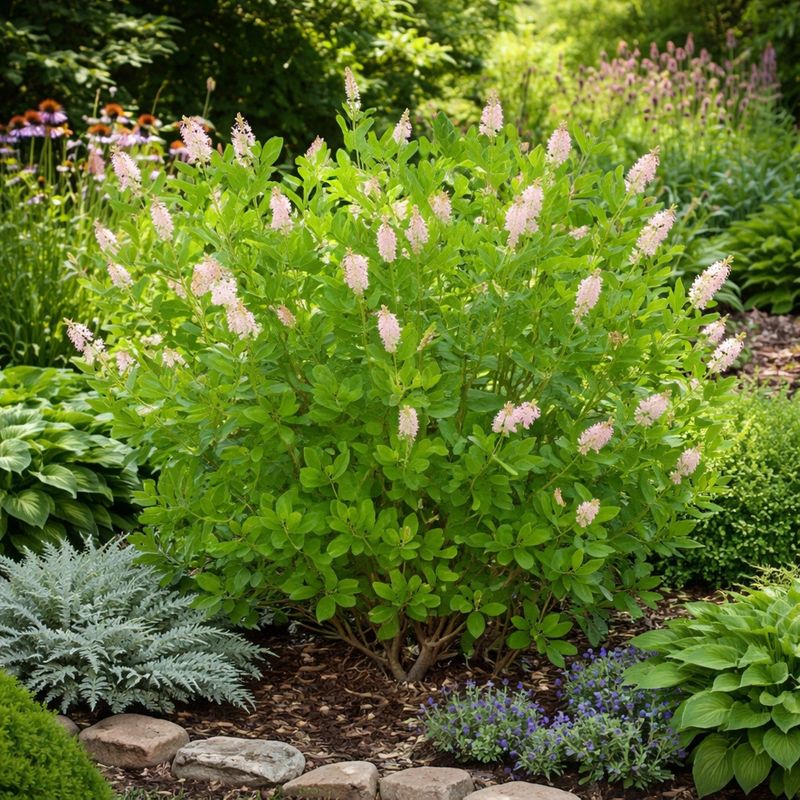
Mature size is one of the most overlooked factors when adding a new shrub to an existing rose border. Summersweet typically reaches about 5 to 10 feet tall and 4 to 6 feet wide at maturity, according to the NC State Extension Plant Toolbox. That is a substantial plant, and it will need room to develop without crowding roses, blocking windows, or overhanging paths.
Gardeners with limited space should look into compact cultivars rather than assuming the species will stay small on its own. NC State documents several named selections, including ‘Hummingbird,’ ‘Ruby Spice,’ and ‘Sixteen Candles,’ each with somewhat different mature dimensions and bloom characteristics. Before purchasing any cultivar, verify its expected size and local performance with the nursery or a reliable extension source. Compact cultivars vary in how small they actually stay, and a plant labeled “dwarf” at the nursery can still reach four feet wide in a good site.
Spacing for eventual form, not current size, is the practical rule. A summersweet planted too close to an established rose will compete for light, air circulation, and soil moisture over time. Place it where its mature canopy will complement the border structure rather than overwhelm it. Used well, the shrub’s upright form and summer foliage can bridge the visual gap left by skeletonized rose canes, giving the eye something substantial to rest on while the roses recover.
Plan the spacing now so the shrub can fulfill that role in two or three seasons without requiring a difficult move later.
Pair summersweet with sensible beetle management
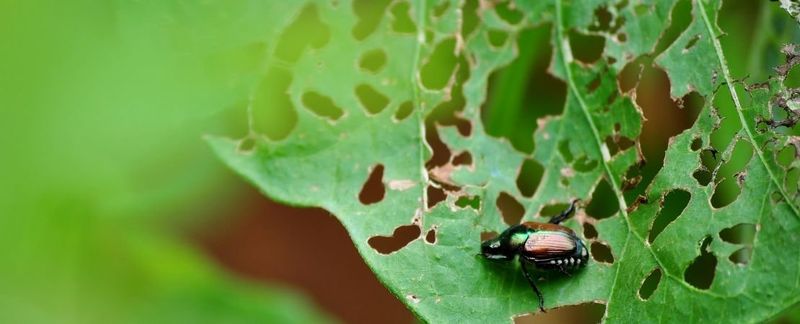
Adding summersweet to a rose border diversifies the planting and keeps the space looking alive during beetle season, but it does not control Japanese beetles or shield nearby roses from feeding. That distinction matters for setting realistic expectations. Some feeding on summersweet itself remains possible, particularly when local beetle populations are high or when nearby preferred hosts are abundant. NC State lists summersweet as generally insect resistant, but that broad designation does not mean beetles will leave every plant untouched under all conditions.
Feeding damage is often cosmetic on established, healthy shrubs. A few chewed leaves on a vigorous plant rarely threatens its long-term health. Young or stressed plants are a different situation. Newly planted summersweet during its first summer, or any plant dealing with drought stress or poor establishment, can be more vulnerable to setback from feeding.
Keep new plantings well-watered and monitor them closely during peak beetle activity.
For the roses themselves, University of Minnesota Extension’s beetle management guidance recommends starting management when adults first appear. Hand-picking beetles in the early morning or evening, when they are slower and less likely to drop and fly, is a low-impact option that works well for smaller infestations. Drop collected beetles into soapy water to prevent escape.
Two common approaches are worth avoiding. Japanese beetle traps are not recommended near roses or summersweet because extension guidance indicates they can attract more beetles into the area than they actually capture, potentially increasing damage to nearby plants. Treating lawn grubs as a way to protect ornamentals is also unreliable, since adult beetles can fly in from untreated turf well beyond your property line. Grub treatments should be reserved for documented turf damage, not used as a primary strategy for protecting garden plants.
If chemical controls become necessary, defer to NC State Extension’s rose pest guidance, current North Carolina recommendations, and the product label, with full attention to pollinator safety and application timing.
Set a realistic expectation for the late-summer gap
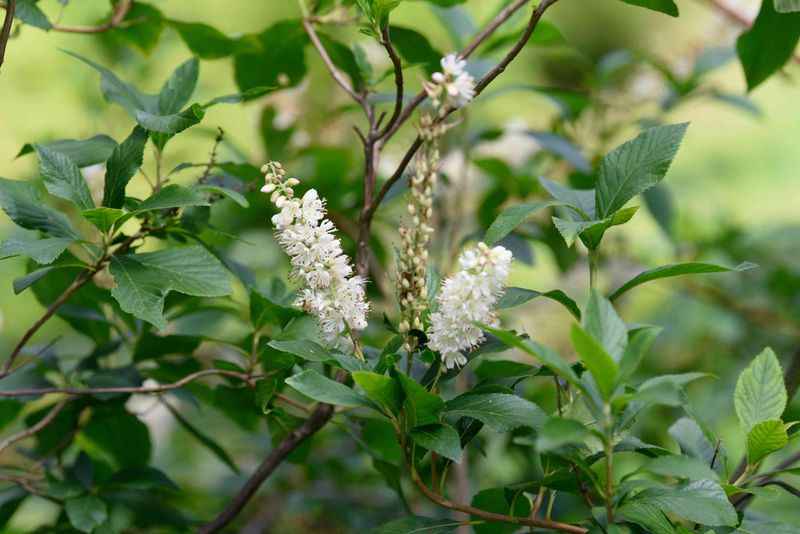
Summersweet can genuinely help a North Carolina border hold together when Japanese beetles skeletonize rose foliage during summer. That statement holds, provided the site offers suitable moisture, the gardener plans for the shrub’s mature size, and the planting is treated as a long-term companion rather than a quick fix.
Its value comes from seasonal structure, fragrance, flower spikes, glossy foliage, and wildlife support during the same weeks when rose leaves are most likely to suffer. The USDA APHIS resistant-plant list does not specifically include Clethra alnifolia, and USDA notes that the list is incomplete, so summersweet should be described as a promising native option rather than a documented beetle-proof choice. It does not provide evergreen cover through winter, and it will not prevent beetles from reaching your roses.
The most useful framing is this: use summersweet to diversify the planting so the border never depends entirely on rose foliage to look presentable. Pair or replace the most vulnerable roses thoughtfully, continue proportionate and low-impact beetle management through the season, and assess your specific site honestly before planting. NC State Extension’s profile of Clethra alnifolia remains the most reliable resource for confirming site suitability, cultivar options, and regional performance before you buy. A border that includes summersweet alongside well-chosen roses will have more to offer in late summer, not because beetles will avoid it, but because something beautiful will still be blooming when they arrive.