
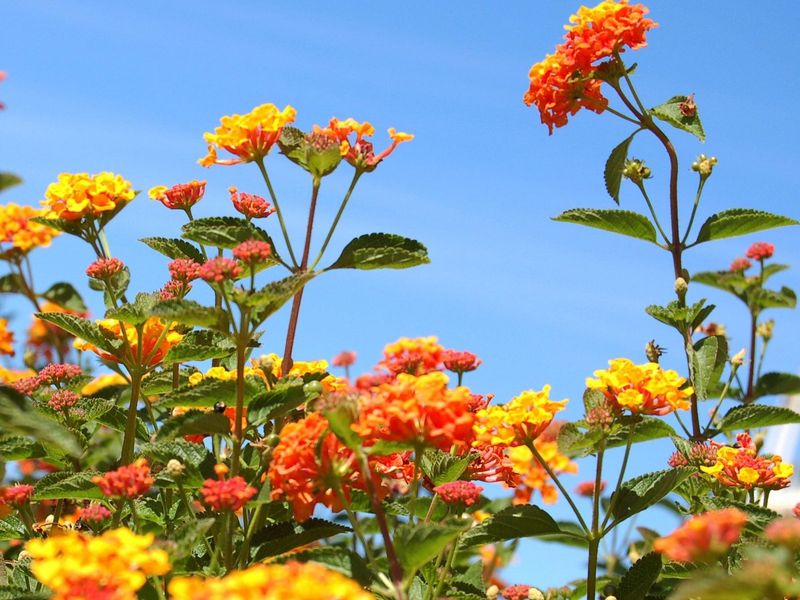
Lantana is one of the toughest, most colorful plants you can grow in a North Carolina summer, but by late August many plants start looking tired, leggy, and less floriferous than they did in June. A simple, well-timed light trim can give older seed-setting plants a real shot at another flush of color before the first frost arrives.
Whether that trim makes a big difference depends on your cultivar, your site, and how much growing season you have left, so read on before you reach for the shears.
Late August Offers an Opportunity, Not a Deadline
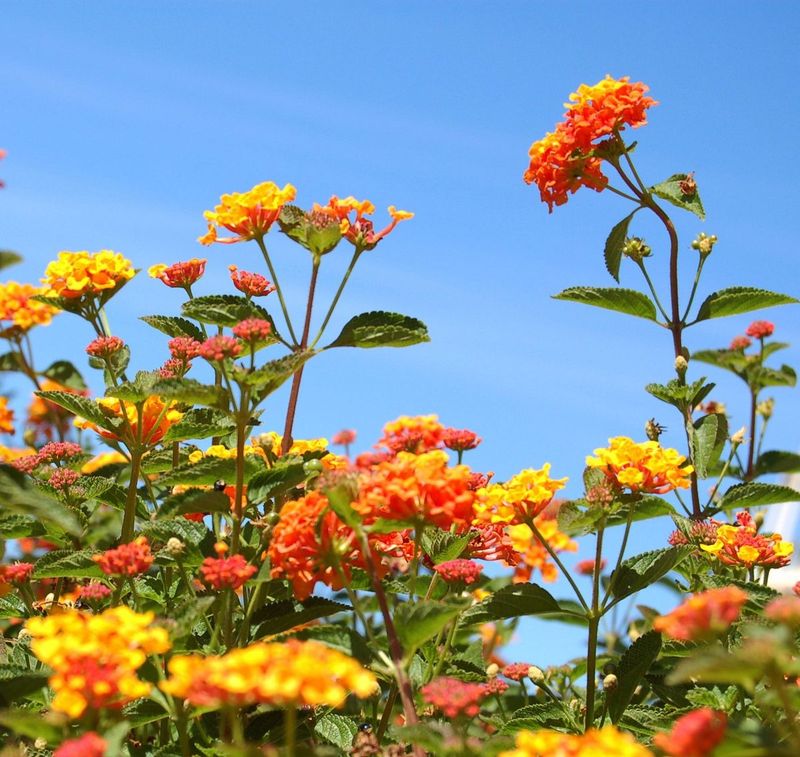
Plenty of gardeners read advice like this and feel a sudden pressure to run outside with pruners. Slow down.
Late August is genuinely a useful moment to assess lantana in most parts of North Carolina, but it is an opportunity to act thoughtfully, not a hard deadline that applies equally to every yard in the state.
Lantana generally flowers from midsummer until the first frost, which means there can still be meaningful growing time ahead, depending on where you live. According to NC State Extension’s plant profile for lantana, the plant performs as a frost-tender perennial or annual across the state, with cold hardiness varying by cultivar and location.
That frost timing matters a great deal when you are deciding whether a late trim is worth the effort.
North Carolina is not a single climate. Mountain gardeners in Asheville or Boone can see first frosts arrive weeks earlier than gardeners along the coast near Wilmington or New Bern.
The Piedmont sits somewhere in between, and even within any region, a sheltered south-facing slope or an exposed hilltop can shift your personal frost date noticeably. The NC State Climate Office Freeze Explorer lets you look up historical freeze probabilities for your specific county, which is far more useful than any statewide average.
Before you trim, check your local forecast and look up your area’s typical first-freeze date. A gardener in the mountains with three or four weeks left has a different calculation than a coastal gardener who may have eight or ten weeks of warm weather remaining.
The trim is the same action either way, but knowing your window helps you decide whether the expected payoff is worth the effort for your particular plant and place.
Check the Plant Before You Reach for the Pruners
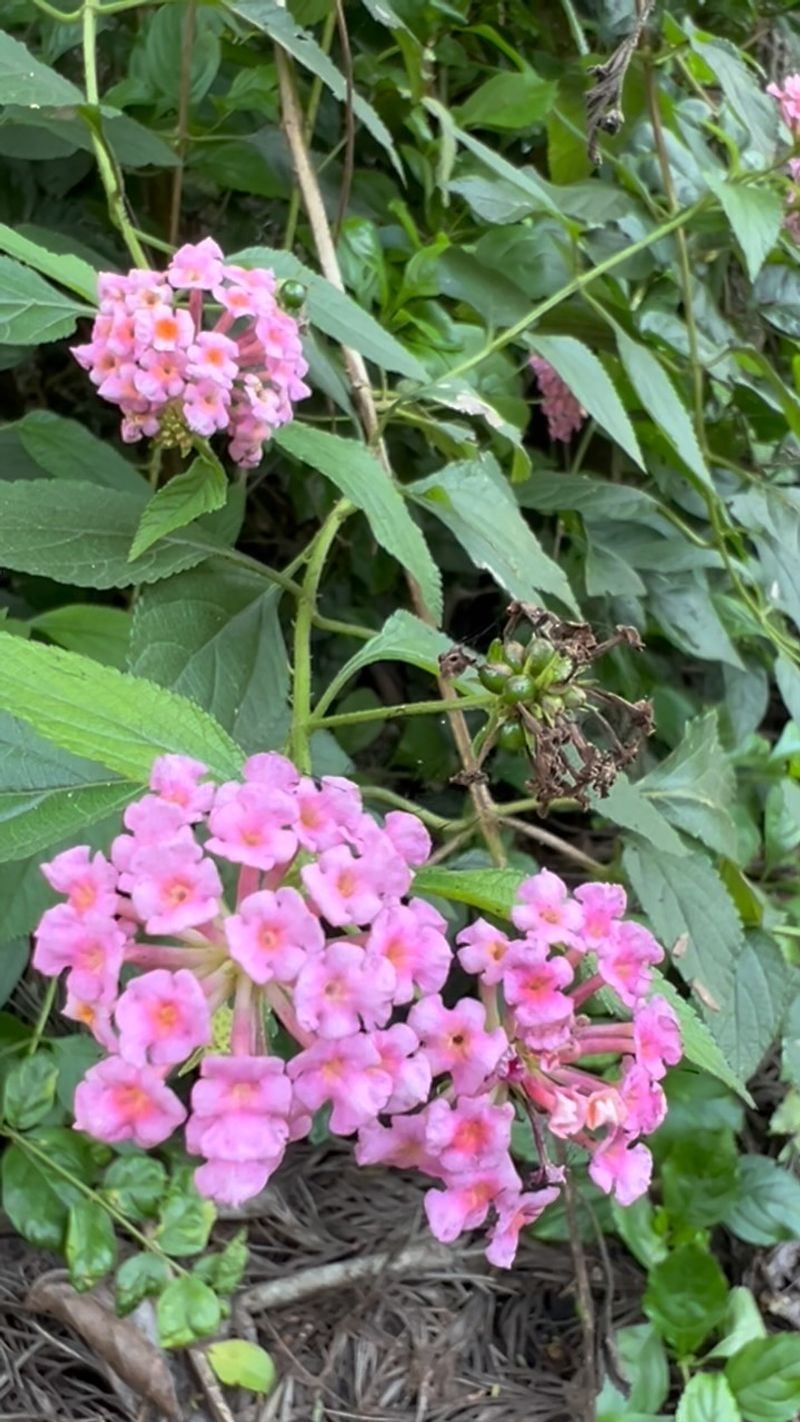
Before trimming anything, spend two minutes looking at the plant. The decision to deadhead or lightly shear should come from what you see on the stems, not from the date on the calendar.
A few clear signs suggest that a light trim will help. Faded flower clusters that have turned from bright color to a dull tan or brown are the most obvious cue.
If you see small, round, dark green or black seed heads forming where flowers used to be, that is a signal worth acting on, because University of Arkansas Extension notes that older lantana types may reduce flowering while seeds are developing. Leggy stems that have stretched out with long gaps between leaves, a sprawling shape that has lost its compact form, or a plant that pushed a strong first flush in June and July but has slowed since are all reasonable reasons to pick up the pruners.
On the other hand, if your lantana is covered in fresh, open flowers right now with no visible seed heads and the shape still looks full and tidy, a trim may not add much. Some newer cultivars are described as self-cleaning, meaning spent flowers drop without forming significant seed heads.
For those plants, repeated removal of every faded cluster may provide little practical benefit over what the plant is already doing on its own.
Clemson Extension’s lantana fact sheet recommends lightly shearing tip growth during summer to encourage repeat blooming, but the starting point is always the plant’s actual condition. A plant that looks good and is actively flowering does not need intervention just because late August has arrived.
Snip Spent Flowers and a Short Section of Stem
When the plant tells you it needs attention, the technique is straightforward. Find each faded flower cluster, the one that has gone dull or started forming a seed head, and make a clean cut just below it.
You are removing the spent cluster and a short section of stem, not stripping the whole branch back to bare wood.
Work your way around the plant, cutting each spent cluster individually if you have the patience for it. A clean, sharp pair of hand pruners or scissors makes the job faster and leaves a tidier cut than tearing or pinching, which can shred the stem tissue.
University of Arkansas Extension recommends deadheading by removing faded clusters before or as seed heads develop, which is the core action here.
For a plant that has gone leggy, meaning it has long bare stems with sparse foliage and a few tired flowers at the tips, individual deadheading may not be enough to improve the shape. In that case, lightly shearing the growing tips is the next step up.
Work across the plant, cutting back the longest stems by a few inches to just above a healthy leaf node or set of leaves. You are not sculpting a formal hedge; you are nudging the plant to redirect energy from the tips into fresh lateral growth lower on the stem.
Keep each cut modest. Removing the tip and a few inches of stem is appropriate for most late-summer shearing.
Clemson Extension allows reduction of plants that have outgrown their space by up to one-third of their height and spread, but that is the upper limit for a plant that has genuinely overgrown its spot, not the starting point for a routine midsummer tidy. Start conservative, step back, and assess before cutting more.
Know the Difference Between a Light Trim and a Hard Cut
Three different pruning actions get lumped together in garden advice, and confusing them can lead to real problems with lantana in late summer. Understanding what each one does helps you choose the right tool for the job.
Deadheading is the most targeted action. You remove only the spent flower cluster, leaving the stem and foliage intact below the cut.
The goal is to prevent seed set and signal the plant to produce another bud. No significant reshaping happens, and the plant’s overall size stays roughly the same.
A light shearing goes one step further. You remove the spent flower plus a short section of stem beneath it, which slightly reshapes the plant and encourages fresh growth from nodes lower on the stem.
Clemson Extension specifically recommends lightly shearing lantana’s tip growth during summer to encourage repeat blooming, and notes that plants that have outgrown their space can be reduced by up to one-third. That one-third figure is the ceiling for a plant with a real size problem, not a routine starting point.
Hard pruning, sometimes called a rejuvenation cut, takes the plant back severely, often to a few inches above the ground or to the main woody framework. This is appropriate for some perennial lantanas in early spring, before new growth begins, to clean out winter-killed wood and stimulate fresh stems from the base.
It is not the right move in late August.
NC State Extension’s general pruning guidance cautions that excessive or poorly timed pruning can stimulate tender new growth that has little time to harden before cold weather arrives. Cutting lantana to the ground in late summer pushes the plant to spend its remaining energy on soft new stems that are vulnerable to the first frost, rather than on flowers.
Stick with deadheading or a light shear, and save any hard structural work for late winter or early spring.
Water the Roots and Skip the Heavy Feeding
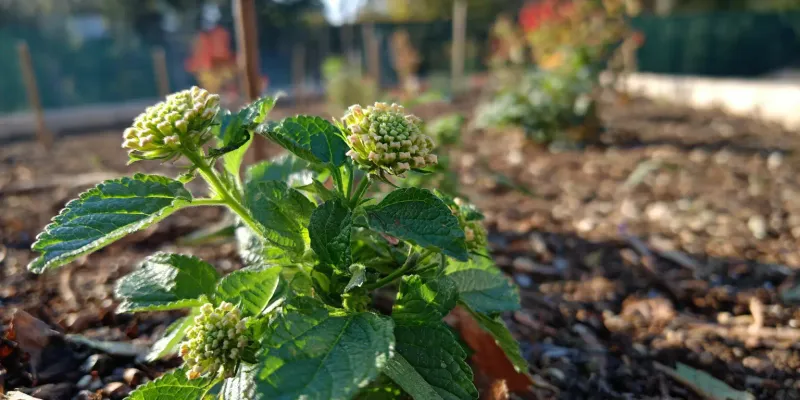
After a more substantial light trim, the most useful thing you can do for the plant is water it well. A good, thorough soaking at the root zone helps the plant recover from the cut and supports the new growth it will push from the trimmed stems.
Established lantana is drought-tolerant, but tolerating drought is not the same as thriving in it. Prolonged dryness slows growth and can reduce flowering even on a healthy, well-shaped plant.
Clemson Extension recommends thorough weekly watering during bloom when the plant receives less than about one inch of rain, and advises watering at the root zone rather than overhead. Overhead watering wets the foliage, which can encourage foliar disease and does less to address actual root moisture needs.
On the fertilizer question, restraint is the right instinct. Lantana generally needs little fertilizer, and heavy feeding can actually reduce flowering by pushing the plant into lush leafy growth at the expense of blooms.
UC IPM’s lantana guidance reinforces that excess fertilizer can limit flower production. If you feel the plant needs a boost after a more significant trim and it is actively growing and adequately hydrated, a light application of a balanced fertilizer is the most that extension guidance supports.
Heavy feeding to force flowers is not the answer and may make the situation worse.
Skip fertilizer entirely if the plant is drought-stressed, recently transplanted, or already showing signs of pest or disease pressure. Address the underlying condition first, then consider whether any feeding is warranted once the plant is stable and actively growing again.
A Self-Cleaning Cultivar May Need Little Deadheading

Not every lantana behaves the same way when flowers fade, and cultivar differences are one of the strongest reasons to avoid a one-size-fits-all trim mandate. Newer breeding has produced lantanas that are described as self-cleaning, meaning spent flowers drop cleanly without forming significant seed heads.
For these plants, the main argument for routine deadheading, which is preventing seed set that slows reblooming, largely disappears.
University of Arkansas Extension notes that many newer lantana varieties produce few or no seeds and may not need routine deadheading. If you are growing one of these cultivars and it is flowering consistently without forming visible seed heads, repeatedly removing every faded cluster is extra work with little payoff.
The plant is already doing the job on its own.
Contrast that with older, seed-setting types. University of Wisconsin Extension’s lantana overview describes how plants allowed to set seed may put energy into seed development rather than producing new flower buds, which is where deadheading provides a real benefit for those older cultivars.
If your plant is reliably forming dark seed clusters after each flush, removing them before they mature is a practical way to encourage the next round of blooms.
The practical takeaway is to judge your specific plant rather than applying blanket advice. Look at whether seed heads are forming, observe whether the plant is cycling through new blooms without intervention, and adjust your effort accordingly.
Some plants need regular attention; others just need sun, water, and room to grow.
Diagnose Stress or Lace Bugs Before Blaming the Trim
When a lantana is not flowering well, the temptation is to assume it needs a trim. Sometimes that is true.
Other times, pruning a stressed or pest-damaged plant adds one more burden to a plant that is already struggling, and the real problem goes unaddressed.
Start with the basics before picking up the pruners. Lantana needs full sun, meaning at least six hours of direct sunlight daily.
A plant growing in too much shade will flower poorly no matter how often you deadhead it. Check whether nearby trees or structures have grown to block light that the plant used to receive.
Drought stress can also shut down flowering even on a heat-tolerant plant, while excessive water or poorly drained soil creates the opposite problem. Clemson Extension notes that lantana performs best in well-drained soil and that both prolonged dryness and excessive moisture can limit growth and bloom.
Overfertilization is another common culprit. A plant that has been fed heavily with nitrogen-rich fertilizer may push lush, dark green foliage with very few flowers.
UC IPM’s lantana resource confirms that excess fertilizer can reduce flowering, so if the plant looks leafy and green but refuses to bloom, hold off on any additional feeding before investigating further.
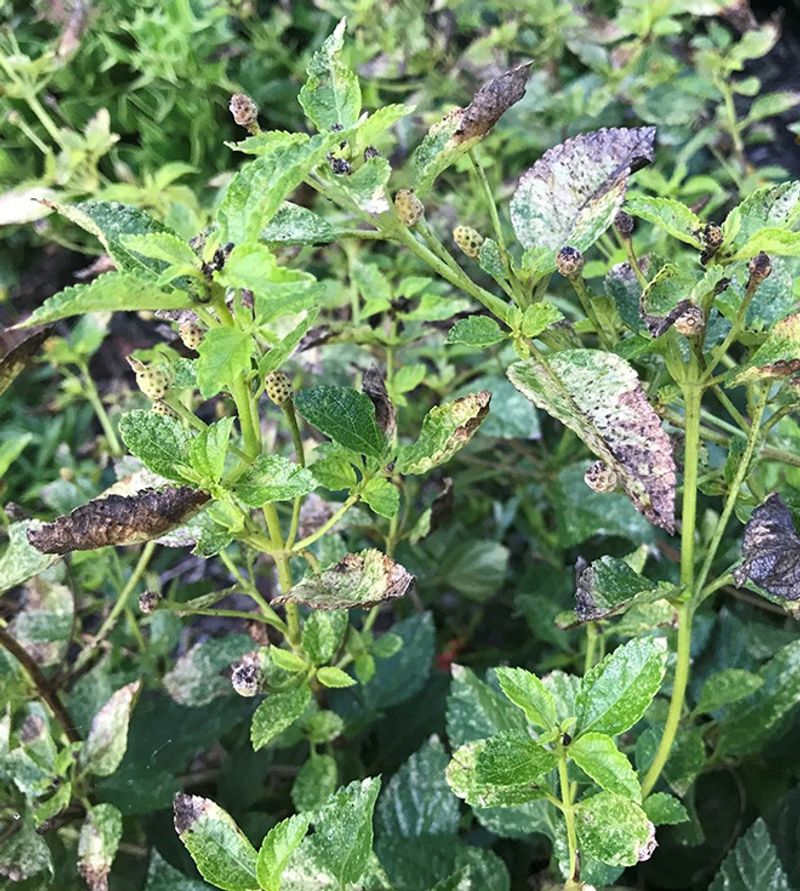
Lantana lace bugs deserve special attention because their damage can look like general decline rather than a pest problem. Flip a few leaves over and look at the undersides.
NC State Extension’s lantana lace bug page describes the telltale signs: pale stippling on the upper leaf surface, dark fecal spots on the undersides, shed cast skins, and small spiny nymphs clustered along the veins. Severe infestations can shut down blooming entirely.
If you find lace bugs, University of Georgia Extension’s lantana guide recommends monitoring the infestation level before deciding on treatment. Nonchemical measures, such as a strong spray of water to dislodge nymphs or removing heavily infested leaves, are worth trying first.
A light trim cannot restore flowering while an active lace bug population or underlying site stress continues uncorrected.
Handle Lantana Carefully and Protect Pollinators
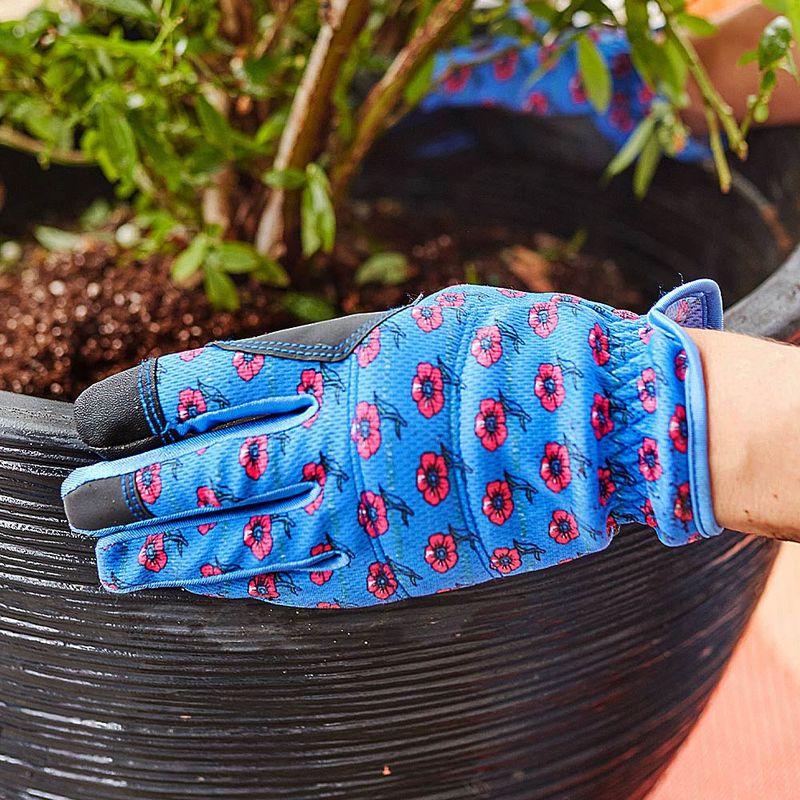
Lantana is not a plant to handle bare-handed, and the reason goes beyond personal preference. The stems, leaves, and foliage contain compounds that can irritate skin on contact.
Wear gloves and long sleeves when deadheading or shearing, and wash your hands and tools thoroughly afterward. This is a contact irritation concern, separate from any question of ingestion.
On the ingestion side, the risk is documented and specific. NC State Extension’s lantana plant profile identifies common lantana as having medium-severity poisonous characteristics, and Craven County Cooperative Extension notes that the plant is toxic to livestock.
Keep that documented livestock risk in mind if you grow lantana near grazing animals. Avoid extending that warning beyond what the cited sources specifically address.
Pollinators are a real consideration when deciding whether and how to manage pests on lantana. The plant attracts butterflies, bees, and other beneficial insects throughout the bloom season, which makes indiscriminate pesticide application especially problematic.
University of Georgia Extension recommends monitoring pest pressure carefully and considering nonchemical measures first. If a pesticide becomes necessary, read every label for pollinator-protection requirements and avoid applying during bloom or when pollinators are actively foraging.
On the broader wildlife question, lantana does provide nectar and attracts adult pollinators, which is genuinely valuable. At the same time, NC State Extension’s native plants chapter explains that native plants generally provide stronger local wildlife benefits because they co-evolved with local insects, birds, and other animals.
Lantana is a useful garden plant, but it is not a substitute for native species when supporting the full range of local wildlife is the goal.
Give the Right Plant a Light Reset
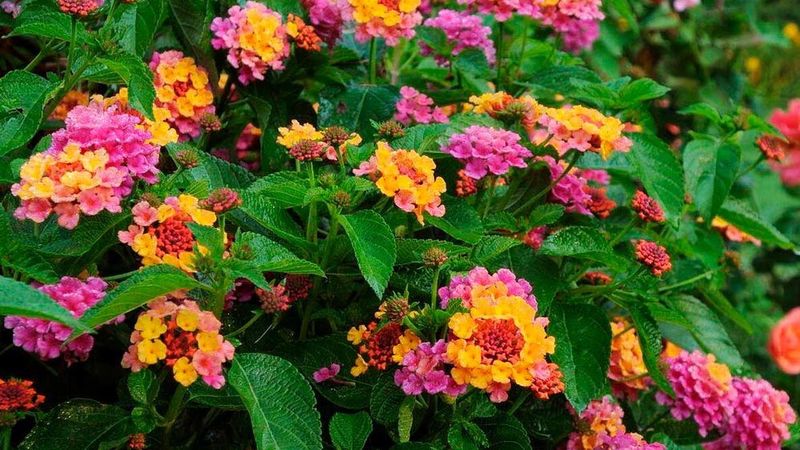
For the right plant in the right situation, a late-August light trim is a practical and low-effort way to encourage continued flowering through the remaining warm weeks. The sequence is simple: remove spent clusters and a short section of stem beneath them, lightly shear the tips if the plant is leggy or sprawling, water thoroughly at the root zone after any more substantial cut, and avoid heavy fertilizer that could push leafy growth at the expense of blooms.
What you should not do is cut the plant to the ground, feed it heavily, or assume that trimming will fix poor flowering caused by shade, drought, pest pressure, or overfertilization. Those problems need their own solutions first.
Clemson Extension and University of Arkansas Extension both support the light-shearing approach for summer maintenance, while steering clear of hard pruning as a late-season default.
The outcome depends on cultivar, available sunlight, soil moisture, pest pressure, and how much frost-free time remains at your specific location. Check the NC State Freeze Explorer for your county’s historical freeze dates to calibrate your expectations honestly.
A light trim gives older seed-setting plants a supported opportunity to push another flush of color, and sometimes that is exactly enough to carry a tired plant through to a genuinely satisfying end of season.