
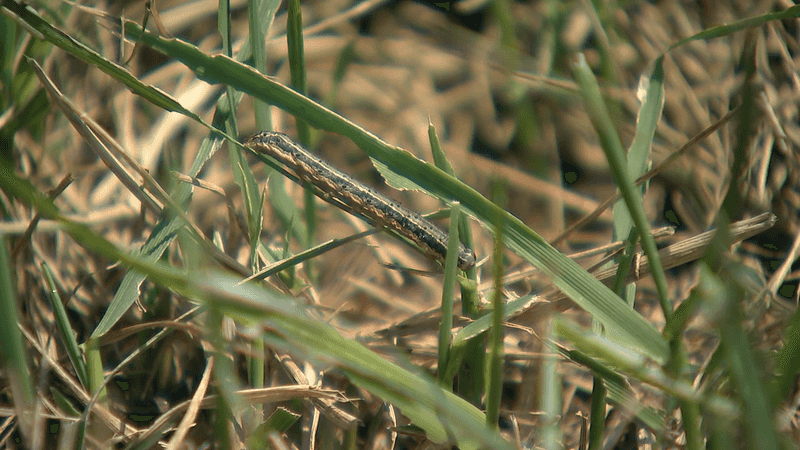
A patch of ragged, browning grass can send a North Carolina homeowner straight to the garden center, but grabbing a spray bottle before knowing what is actually in the turf can waste money and harm the yard’s natural allies. Fall armyworms are real, they move fast, and late summer outbreaks can strip a lawn in days when populations are high. The single most important thing to do on day one is not to spray, but to get down on your knees, look closely, and confirm whether live caterpillars are actually feeding in your grass.
Inspect the Damage and Check for Live Larvae
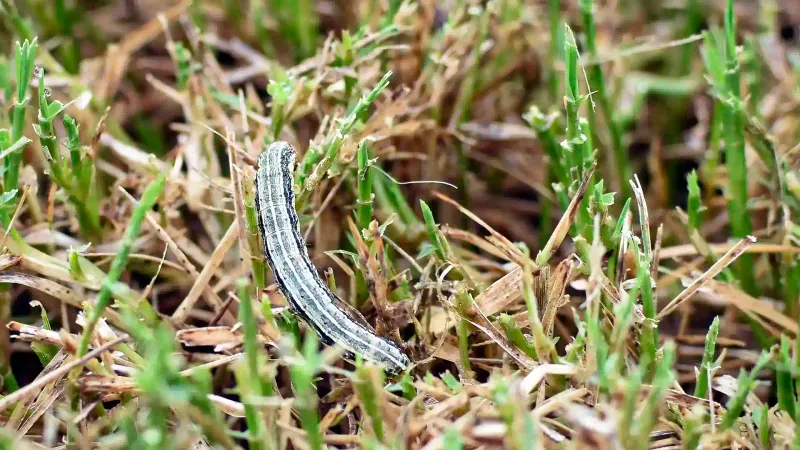
Browning turf is easy to misread. Drought, disease, chinch bugs, sod webworms, and even mowing problems can all produce patches that look alarming, and none of them call for the same response as a fall armyworm outbreak. Before you reach for any product, spend five minutes walking the damaged area and parting the grass with your hand or a screwdriver. Look for ragged leaf blades, small pellets of green or brown frass sitting on the soil surface, and any movement in the thatch layer.
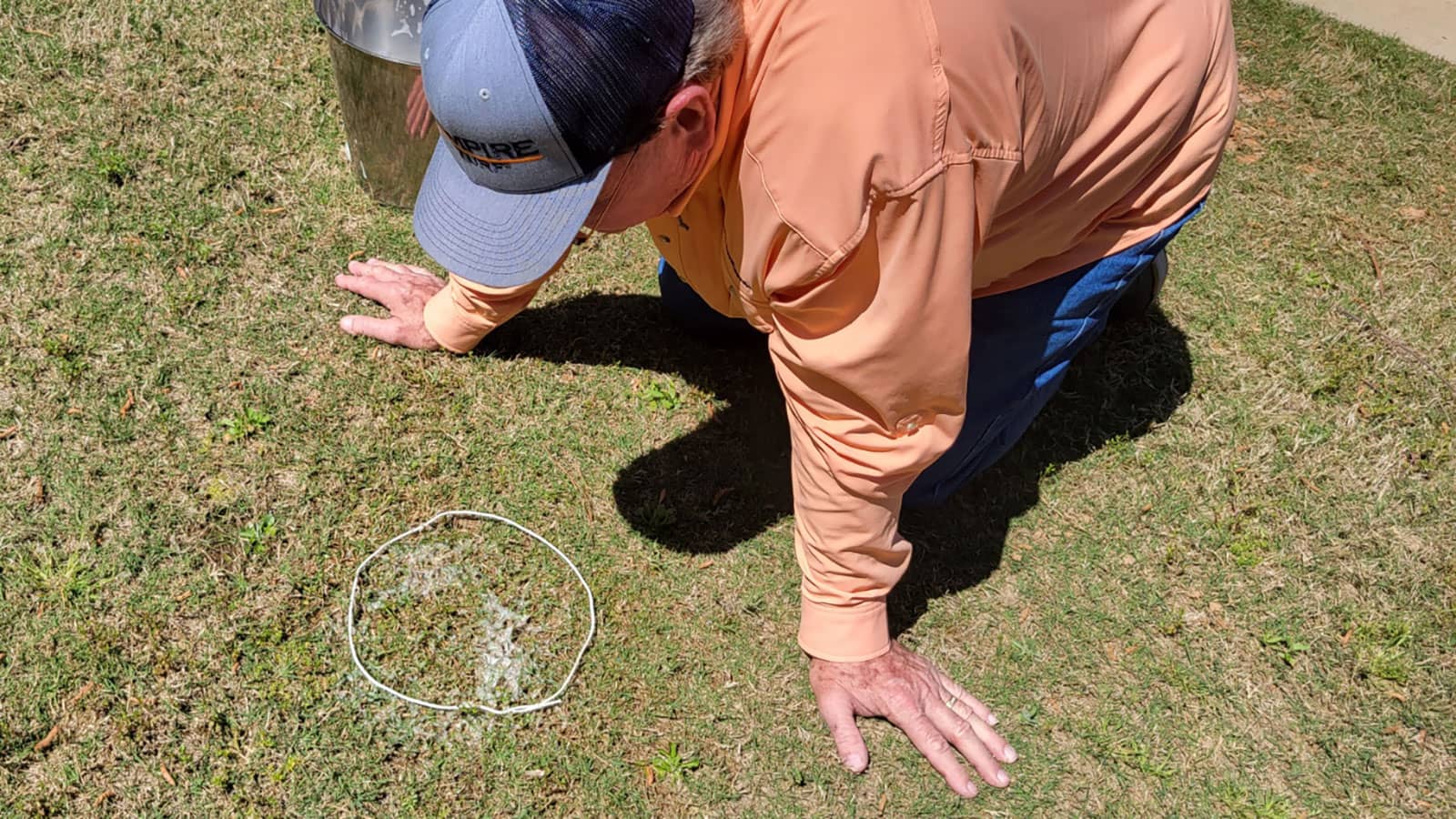
If you find something that might be a caterpillar, a soap flush is the next step. Mix approximately two tablespoons of liquid dish soap into one gallon of water and pour it evenly over roughly one to two square feet of turf at the edge of the damaged zone, where larvae are most likely to be actively feeding. NC State Extension integrated pest management guidance recommends this kind of targeted scouting approach before any treatment decision. Watch the treated spot for five to ten minutes.
Larvae irritated by the soapy water will crawl up out of the thatch or soil and become visible on the surface.
Counting what emerges matters, but so does knowing its limits. University of Georgia Cooperative Extension guidance on fall armyworm in turfgrass notes that a soap flush confirms live larvae are present in the sampled area; it does not tell you the species, prove those larvae caused the browning, or automatically mean insecticide is the right call. The flush is evidence, not a verdict. Carry that distinction into every decision that follows.
Use More Than Brown Grass to Identify the Pest
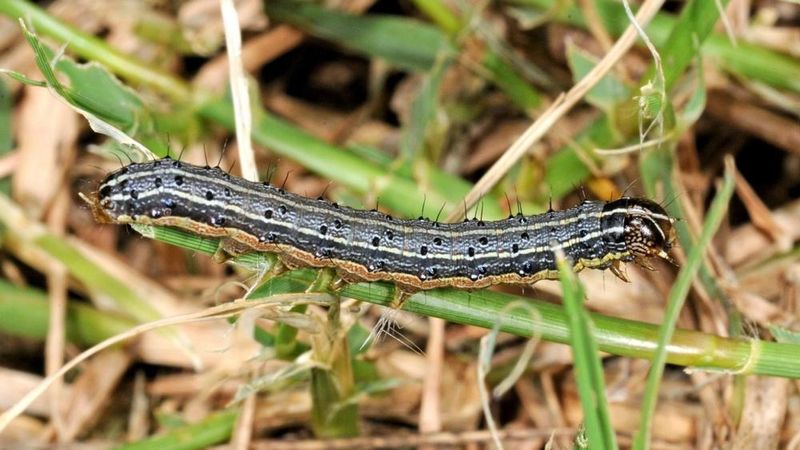
A single brown patch is not a diagnosis. Fall armyworms leave a recognizable pattern of clues, and reading several of them together is far more reliable than reacting to color alone. Start with the grass blades themselves. Fall armyworms feed by scraping leaf tissue, leaving behind a translucent, papery window effect on the blade before the grass turns tan and collapses.
NC State Extension’s fall armyworm in turf resource describes this windowpaning as one of the earliest visible signs of active feeding.
Other clues worth checking: green or brown frass scattered on the soil surface, a sharp boundary between damaged and healthy turf that seems to advance noticeably from one day to the next, and birds, especially starlings, grackles, or robins, concentrating in one section of the yard. Birds hunting caterpillars tend to cluster where feeding is heaviest, so a flock working a single strip of lawn is worth investigating on foot.
Egg masses are another piece of the puzzle, but they require careful interpretation. Alabama Cooperative Extension’s armyworm management guidance cautions that the presence of adult moths or fuzzy egg masses on walls, gutters, or fence posts does not by itself establish a damaging larval infestation. Moths can lay eggs without larvae ever reaching damaging numbers.
Once you have larvae in hand, identification still requires care. NC State’s arthropod pest guide for turf and UC IPM’s lawn insect resource both note that cutworms, sod webworms, and true armyworms can cause similar injury but may need different management. Fall armyworms typically show a pale inverted Y on the front of the head capsule and four dark spots arranged in a square near the rear of the body. If you are not confident in the identification, contact your local NC Cooperative Extension office or send a sample to a diagnostic clinic before choosing a treatment path.
Act Promptly When Feeding Damage Is Confirmed
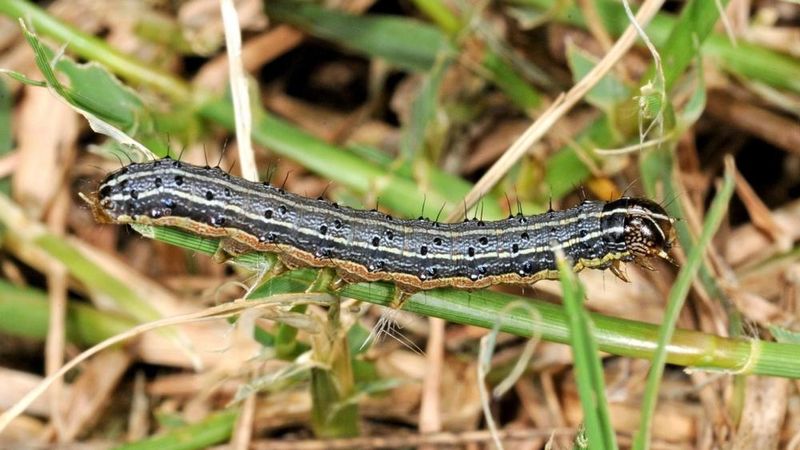
Timing shifts the outcome more than almost any other factor once you have confirmed fall armyworms are feeding and the damage is significant enough to justify control. NC State Extension reports that moths migrate into North Carolina during spring and summer, eggs can hatch in as few as two days or as many as ten, larvae feed for roughly two to three weeks, and several generations can occur across the state in a single season. That compressed timeline means a population can go from newly hatched to nearly finished feeding before a homeowner realizes what is happening.
Larval size is the practical detail that determines how much runway you have. Young caterpillars in their first and second instars are small, feed closer to the surface, and are generally more vulnerable to contact insecticides and biological controls. Older, larger larvae consume far more tissue per day, are harder to reach with products, and may be only days away from burrowing into the soil to pupate. Once they pupate, feeding stops on its own, but the foliage they removed does not come back overnight.
UGA Cooperative Extension’s turfgrass management bulletin notes that heavy infestations can strip most of the above-ground foliage from a lawn, and that established turf stands a better chance of recovery when damage is caught and addressed early. Acting promptly after confirmation is not about panic; it is about catching the population while control is still practical and before the caterpillars finish their work on their own schedule. Waiting even two or three days after you see rapid expansion of browning can mean treating a larger, older, harder-to-kill cohort.
Prepare the Turf for a Targeted Application
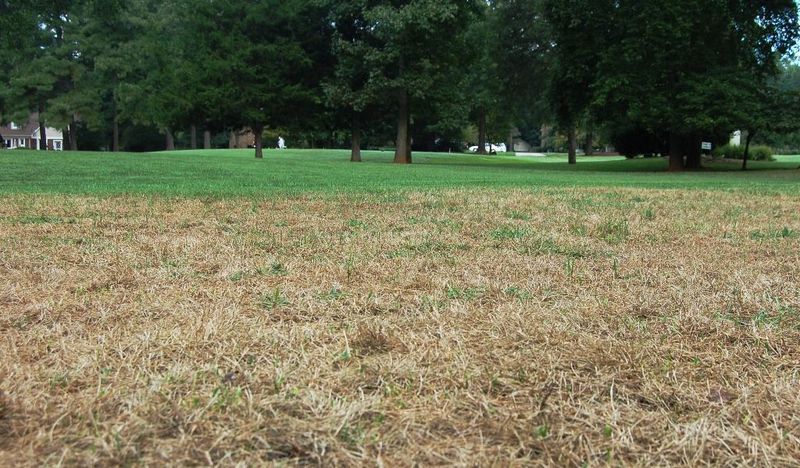
Once the identification is solid and the decision to treat is made, a short preparation sequence can improve how well the application works. Start by mowing the turf if it is due for a cut. Shorter grass reduces the canopy that larvae can hide in and allows a spray to reach the thatch layer and soil surface more effectively. Alabama Cooperative Extension’s fall armyworm control guidance explains that mowing before treatment can improve spray coverage, but it is important to be clear about what mowing does and does not accomplish on its own: mowing alone is not a dependable method for killing armyworms, and presenting it that way overstates its value.
Light irrigation before application is another step that some extension sources recommend, but the specifics depend entirely on the product you are using. Some formulations require moist soil to activate; others specify dry conditions or a post-application watering window. Read the label before you irrigate, because irrigating at the wrong time relative to application can dilute or wash away the product. NC State Extension’s fall armyworm resource notes that application details are governed by the specific product label and should not be assumed from general advice.
Timing the application to coincide with active larval feeding also matters. Fall armyworms tend to feed most actively in the early morning and again in the late afternoon or early evening, retreating into the thatch during the heat of the day. Applying when larvae are moving on the surface gives the product the best chance of contact. Plan around those windows, check the weather forecast for wind or rain that could interfere, and keep children and pets off the treated area until the label’s re-entry or drying interval has passed.
Let the Label Govern Product Choice and Safety
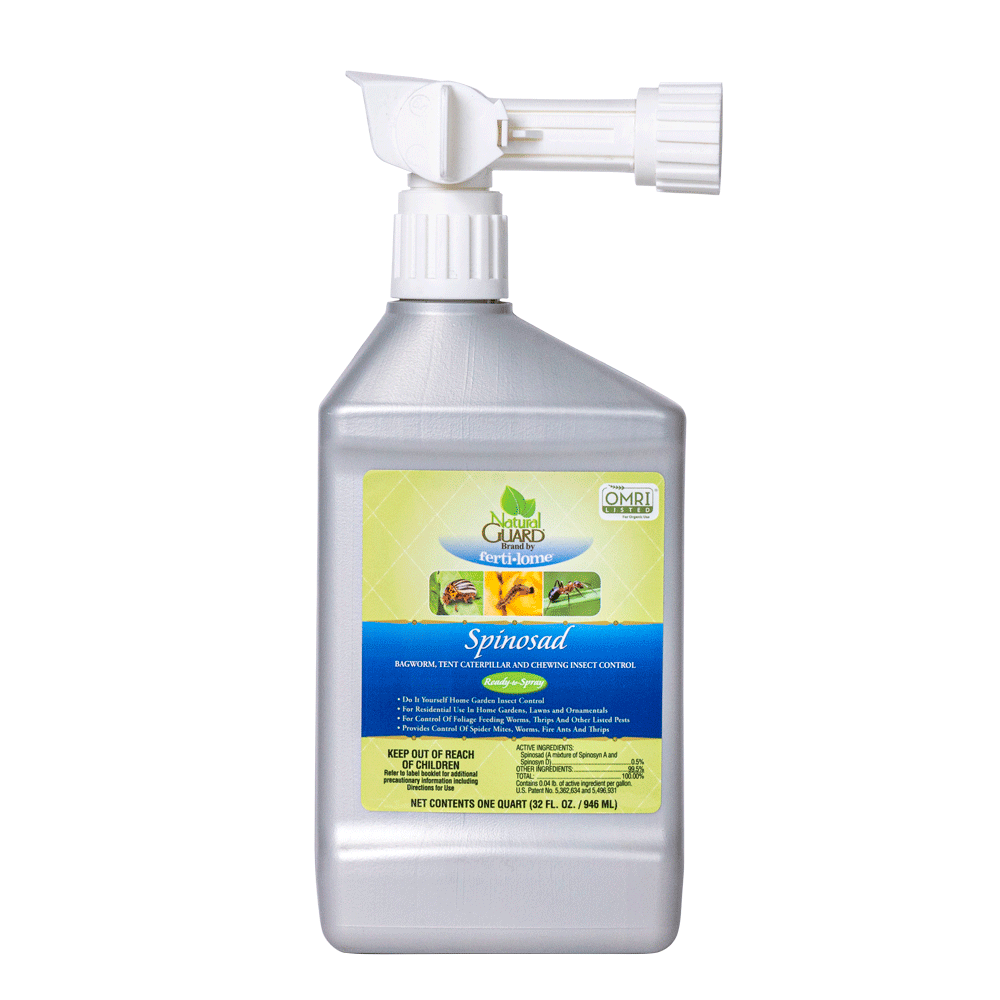
Choosing a product is not simply a matter of recognizing a familiar active ingredient on the shelf. Two products that list the same chemical can have different permitted use sites, application rates, irrigation requirements, weather restrictions, re-entry intervals, and warnings about pollinators, water, children, and pets. EPA guidance on pesticide labels makes clear that the label is a legally enforceable document, and using a product in a way that contradicts its label is illegal regardless of the active ingredient involved.
For North Carolina homeowners, a useful starting reference is the 2026 North Carolina Agricultural Chemicals Manual, which lists active ingredients and formulations evaluated for turf pest management. The insect control chapter of that manual covers options by pest category. Even after consulting this reference, verify that the specific residential product you purchase is currently labeled for your turf type and for fall armyworm or the caterpillar pest you have confirmed.
Biological options deserve the same scrutiny. Bacillus thuringiensis var. kurstaki, commonly called Btk, is a naturally occurring bacterium that disrupts caterpillar digestion. UC IPM’s turfgrass pest guidance notes Btk is most effective against small, early-instar larvae and becomes less reliable as caterpillars grow. Spinosad is another option sometimes labeled for turf caterpillars, but both Btk and spinosad are regulated pesticides with label requirements of their own.
UGA Extension’s fall armyworm alert reinforces that biological products are not automatically harmless and must be applied according to label directions.
Practical safety steps apply to every product in this category. Do not spray while children or pets are in the yard. Avoid applications during wind or before rain. Never exceed the label rate.
Follow the label’s instructions on irrigation timing after application, and observe the re-entry interval before allowing family members or animals back onto the treated turf. EPA pesticide safety guidance covers these precautions in plain language and is worth reviewing before any application.
Match the Treatment Area to the Infestation
A whole-yard spray is not automatically the right response to fall armyworm damage, especially when the infestation and injury are still concentrated in one part of the lawn. Fall armyworm moths often lay egg masses near light-colored structures, buildings, fence posts, and gutters, which means early larval populations can be clustered close to those sites before spreading outward. UGA Cooperative Extension’s turfgrass bulletin specifically discusses monitoring patterns and, where the product label permits, applying a band treatment near structures rather than covering the entire yard.
Targeting the affected zone rather than the whole lawn has a practical benefit beyond saving product and time: it preserves the beneficial organisms already working in the undamaged turf. Birds, paper wasps, ground beetles, ants, earwigs, parasitoid wasps, and tachinid flies all prey on or parasitize armyworm larvae to varying degrees. Alabama Cooperative Extension’s armyworm guidance acknowledges these natural enemies as part of the suppression picture, while NC State Extension notes that natural enemies may not be sufficient to stop a large outbreak on their own. Broad pesticide coverage can reduce these beneficial populations and leave future generations of larvae with fewer natural checks.
The connection to pollinators is also worth considering. EPA pollinator protection resources explain how pesticide choices and application methods affect bees and other beneficial insects. Any band or targeted application still has to comply fully with the product label; a label that does not authorize band applications cannot be used that way regardless of intent. Scout the full lawn carefully, map where active feeding is occurring, and let that evidence guide how much area actually needs treatment.
Judge Recovery by Turf Condition, Not the Calendar
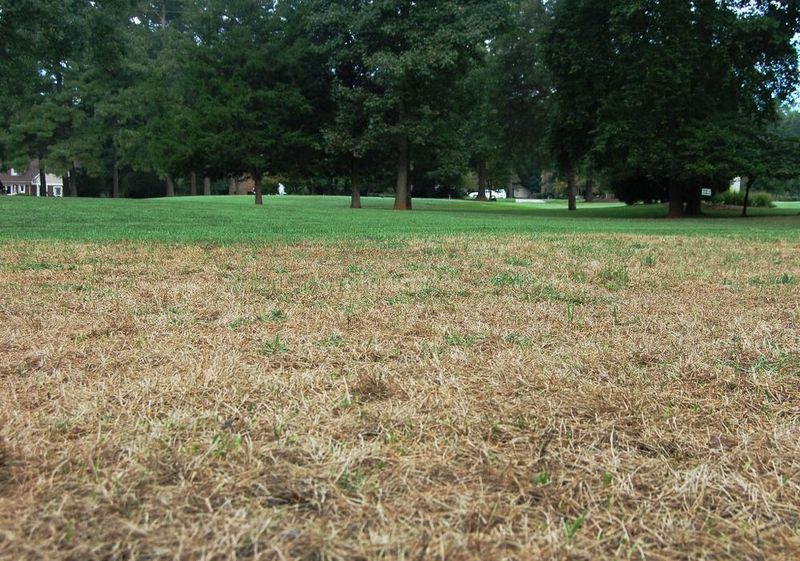
Recovery from fall armyworm feeding does not follow a single predictable schedule, and expecting three to four weeks of regrowth in every situation sets up disappointment. That general timeframe applies to established turf under favorable conditions, meaning adequate soil moisture, reasonable temperatures, and grass that was in decent shape before the outbreak. UGA Cooperative Extension’s fall armyworm bulletin notes that mild to moderate foliar feeding can allow recovery in roughly that window, while severe feeding that reaches stolons or crowns may require resodding or renovation rather than waiting for regrowth.
The distinction between leaf loss and crown or stolon damage is the most important variable. Fall armyworms primarily feed on leaf tissue above the soil surface, and warm-season grasses like bermudagrass and zoysiagrass can push new growth from surviving stolons relatively quickly when feeding stops. Cool-season turf like tall fescue is more sensitive to late-summer stress and may need more time and care. Turf that was already thin, drought-stressed, or dealing with another problem before armyworms arrived is at greater risk of permanent damage and slower to respond even after feeding stops.
New sod deserves special attention. NC State Extension specifically identifies newly installed sod as especially attractive and vulnerable to fall armyworm feeding, partly because it lacks the established root system and thatch that can buffer some damage. If armyworms hit recently laid sod heavily, the chances of needing replacement are higher than for a mature lawn of the same grass species. Supporting recovery with appropriate irrigation and avoiding excess nitrogen fertilizer, which can push lush growth that attracts future feeding, gives the turf its best opportunity to fill back in on its own timeline.
Next Season Requires New Scouting
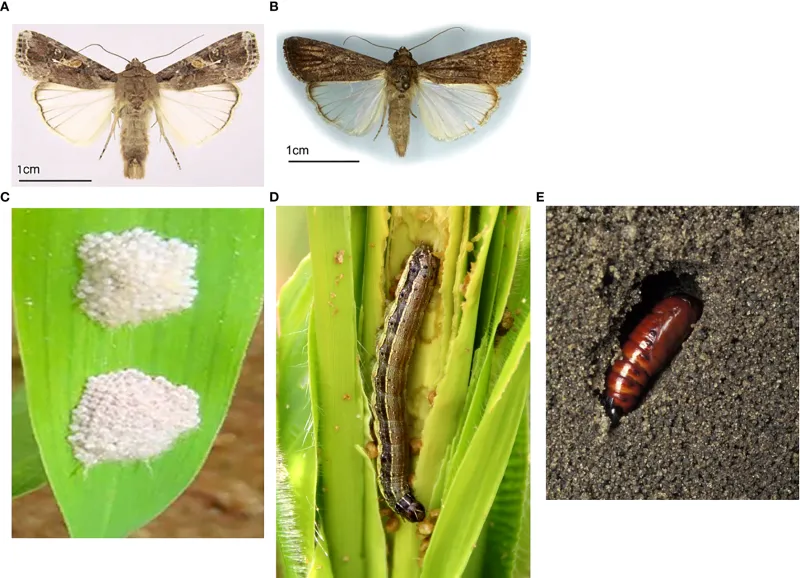
One of the most persistent misconceptions about fall armyworms in North Carolina is that an untreated infestation overwinters in the soil and returns worse the following year. NC State Extension’s fall armyworm resource explains the biology clearly: these insects generally cannot survive North Carolina winters. The moths that arrive in late summer and early fall migrate north from populations that overwinter in southern Florida and other warm areas. Treating this year’s outbreak can reduce current damage, but it has no meaningful effect on whether moths will migrate into your yard next season.
The NC State Turfgrass Pest Management Manual and Alabama Cooperative Extension’s armyworm guidance both point to successive seasonal generations and annual migration as the driver of recurring outbreaks, not carryover from local soil populations. Outbreak timing also varies considerably across the state. The Coastal Plain often sees activity earlier in the season than the Piedmont, and the mountain counties may experience different pressure entirely depending on migration patterns and weather in any given year.
What this means practically is that next season’s defense starts with scouting, not with whatever you did or did not apply this year. Watch for the same early clues: windowpaned blades, green frass, birds working a single section of turf, and egg masses near structures. Run a soap flush if something looks wrong, identify what you find, assess whether feeding is causing meaningful damage, and make a treatment decision based on current evidence rather than memory of last year. The sequence that limits damage is the same every time: inspect, flush, identify, assess, and treat only when the specific situation calls for it.
A lawn that recovers well this fall is a lawn that gets watched closely when summer rolls back around.