
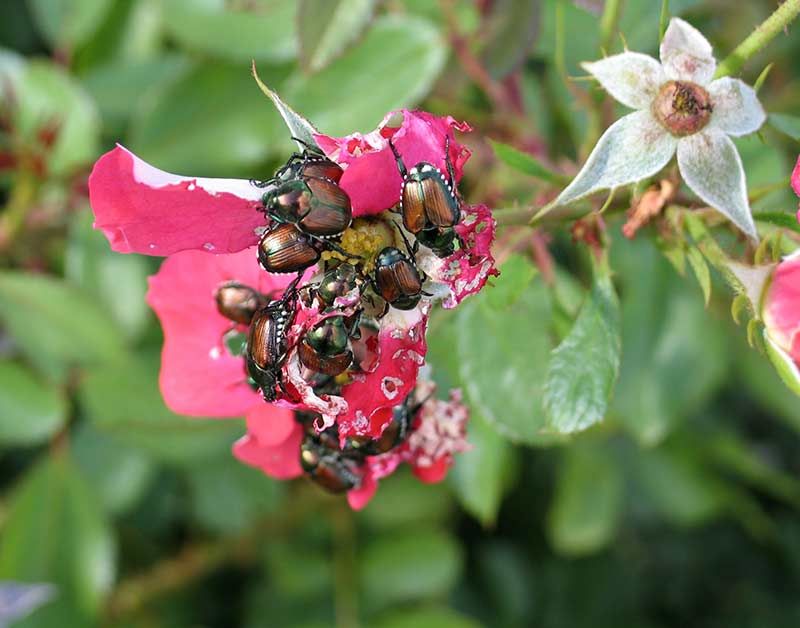
Right now, across North Carolina yards, metallic beetles are showing up on roses and making a mess of leaves and blooms almost overnight. Most of the time, those beetles are Japanese beetles, and the instinct to grab a spray can is understandable. But the best first move is simpler, safer, and easier on your garden than you might expect. Knowing what you are actually dealing with, and what really works, makes all the difference this summer.
First confirm that the swarm is Japanese beetles
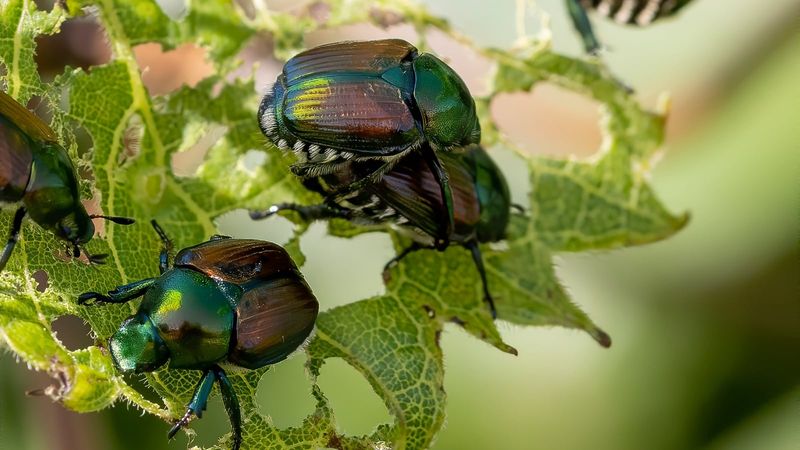
Before reaching for any product or strategy, take a close look at the beetles covering your roses. The Japanese beetle (Popillia japonica) is about half an inch long and has a few distinctive markings that set it apart from other beetles you might see in a North Carolina yard. NC State Extension’s Japanese beetle profile describes the adult as having a metallic green body, copper-brown wing covers, and a row of small white hair tufts running along each side of the abdomen. Those tufts are one of the most reliable field marks, so look for them before assuming anything.
On roses specifically, Japanese beetles feed on leaves, flowers, and buds. Their signature damage is skeletonization: the soft tissue between leaf veins gets eaten away, leaving a lacy, dried-out skeleton behind. Flowers and buds may be chewed down to bare stems. NC State’s guide to shrub pests confirms this pattern and notes that Japanese beetles are one of the more common rose pests gardeners encounter.
In North Carolina, adult beetles typically emerge and peak around July, with activity generally declining as August progresses. That window matters because management steps are most useful while adults are actively feeding. Other beetles, including rose chafers and Fuller rose beetles, can also show up on roses and may look somewhat similar at a quick glance. Each of those can require a different response, so confirming the metallic green body, copper wing covers, and white side tufts before acting is worth the extra thirty seconds.
No single action controls next year’s beetle population
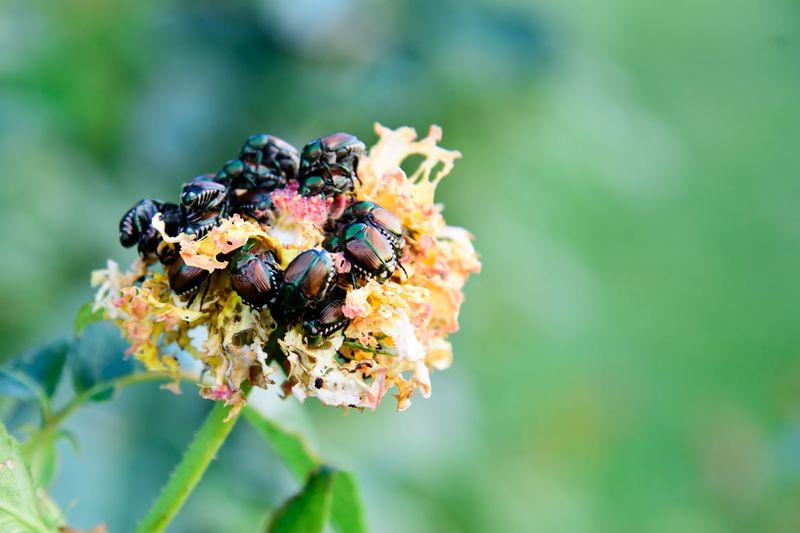
One of the most common pieces of advice floating around garden centers and social media goes something like this: spray now or the beetles will come back worse next year. University of Minnesota Extension’s Japanese beetle resource makes clear that no reliable evidence supports this causal claim. Beetle abundance the following season is shaped by adult immigration from surrounding areas, weather patterns, soil moisture, regional population cycles, and turf conditions across a wide landscape, not by one homeowner’s choice on a single rose bed.
Adult Japanese beetles are strong fliers. They can travel from untreated lawns, neighboring properties, and green spaces well beyond your fence line. That means even a perfectly managed yard can receive a fresh wave of beetles every morning during peak season. Removing beetles from your roses, or choosing not to spray, does not seal off your garden from the regional population.
It also helps to separate two different parts of the beetle’s life cycle. Adults feed on roses and other ornamentals above ground. Larvae, commonly called grubs, feed on grass roots below ground. These are distinct problems that call for distinct responses.
NC State’s Japanese beetle overview confirms this separation and supports the idea of targeted management rather than reflexive spraying. Treating your rose bed does not address the lawn, and treating the lawn does not stop adult beetles from flying in from elsewhere. Starting with the simplest, most targeted action, rather than a broad chemical response driven by fear of next year, is the approach that holds up under scrutiny.
Knock the adults into soapy water in the morning
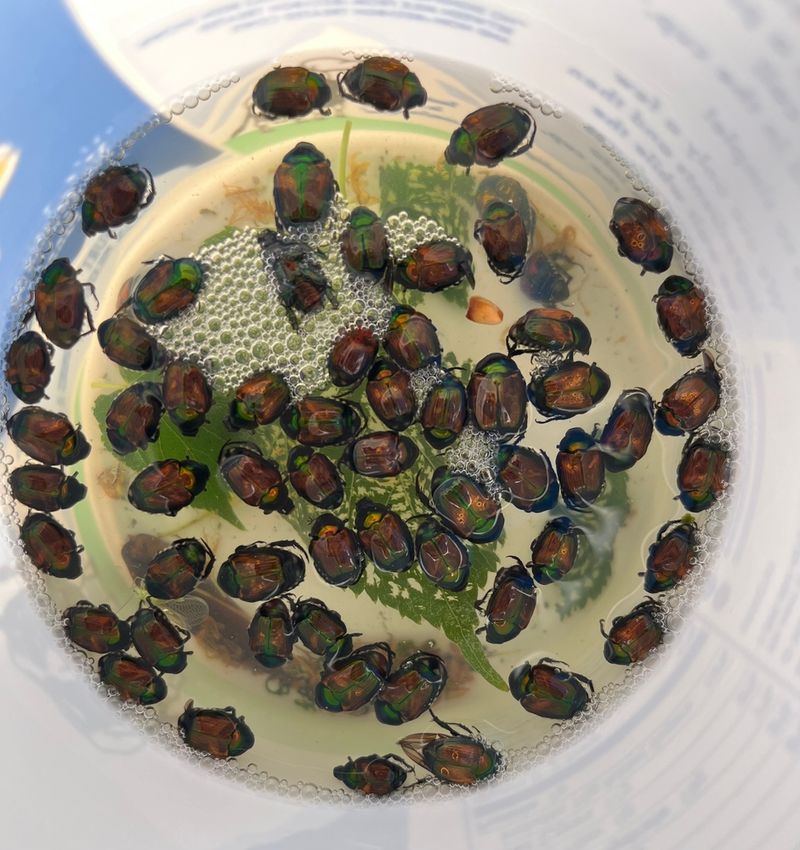
Morning is the best time to act. Japanese beetles are less active in cooler early-morning temperatures, which makes them easier to dislodge before they fly off. NC State Extension’s turf and Japanese beetle guidance specifically recommends shaking plants in the morning and dropping beetles into soapy water as a practical first-line response.
The process is straightforward. Grab a wide-mouth jar, bucket, or any container you have on hand and fill it with water mixed with a small amount of dish soap. Hold the container directly beneath a branch where beetles are clustered, then tap or shake the branch firmly. Beetles that are sluggish from the morning cool will drop straight into the liquid.
You can also pick them off individually if a branch is too delicate to shake. The soapy water prevents the beetles from escaping. Seal or discard the container when you are finished.
Repeat the process daily while beetles are actively gathering. University of Maryland Extension’s Japanese beetle resource supports this approach as a targeted way to remove visible adults from individual plants without broadly coating blooms or the surrounding yard with insecticide. That distinction matters if you have bees visiting nearby flowers, children or pets in the yard, or simply want to avoid unnecessary chemical exposure.
Keep expectations grounded. Hand removal reduces the number of beetles feeding on your rose right now, but it does not create a beetle-free yard. New beetles may arrive from neighboring properties throughout the season. The goal is to reduce current feeding on the plants you care about most, and on that narrower measure, a daily jar and a few minutes in the morning delivers real results.
Set the goal at protecting the rose, not erasing every beetle
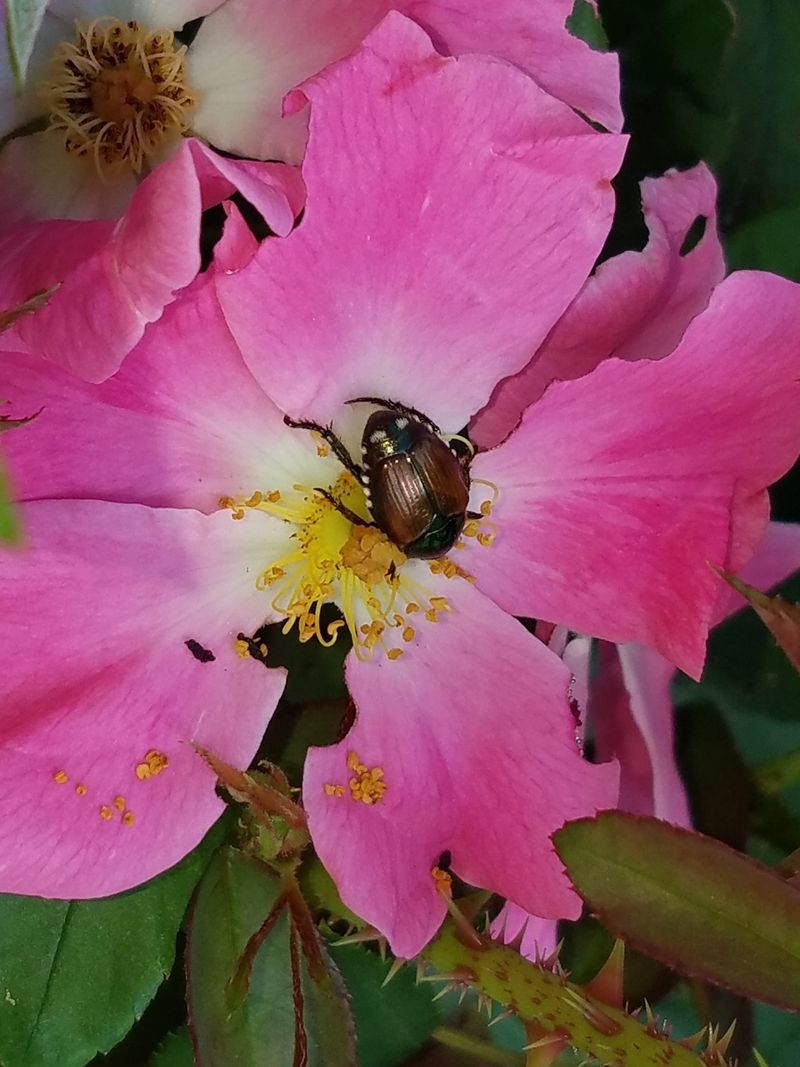
After a few mornings of removal, it helps to recalibrate what success actually looks like. NC State’s shrub pest guide notes that Japanese beetles are capable of causing significant cosmetic damage to roses, but that does not automatically mean the plant is in danger. Healthy, established roses can often survive adult feeding even when flowers become severely disfigured during the peak of beetle season.
Beetles may continue arriving from surrounding properties throughout July, and EPA-cited research on rose beetle management found that removing adults or damaged blooms produced only modest control under sustained beetle pressure. That is not a reason to give up on hand removal, but it is a reason to be honest about its limits. Your rose is not likely to die from a beetle swarm, and the plant’s survival is a separate question from protecting this week’s flush of flowers.
Thinking through your actual goal helps. Keeping the plant alive through the season is the lowest bar, and most established roses clear it without any intervention. Limiting further leaf damage is a mid-range goal that daily hand removal supports reasonably well. Preserving a specific set of blooms for a garden event or a cut arrangement is a higher bar that may require a physical barrier in addition to removal.
University of Minnesota Extension frames the intervention decision this way: consider whether the goal is plant survival, appearance, or protecting a particular flush of blooms, and match the effort to that goal. Removing badly damaged blooms is an optional step that can improve the look of the plant and eliminate some of the feeding cues that draw more beetles, but it is an appearance decision, not a cure.
Keep Japanese beetle traps away from susceptible roses
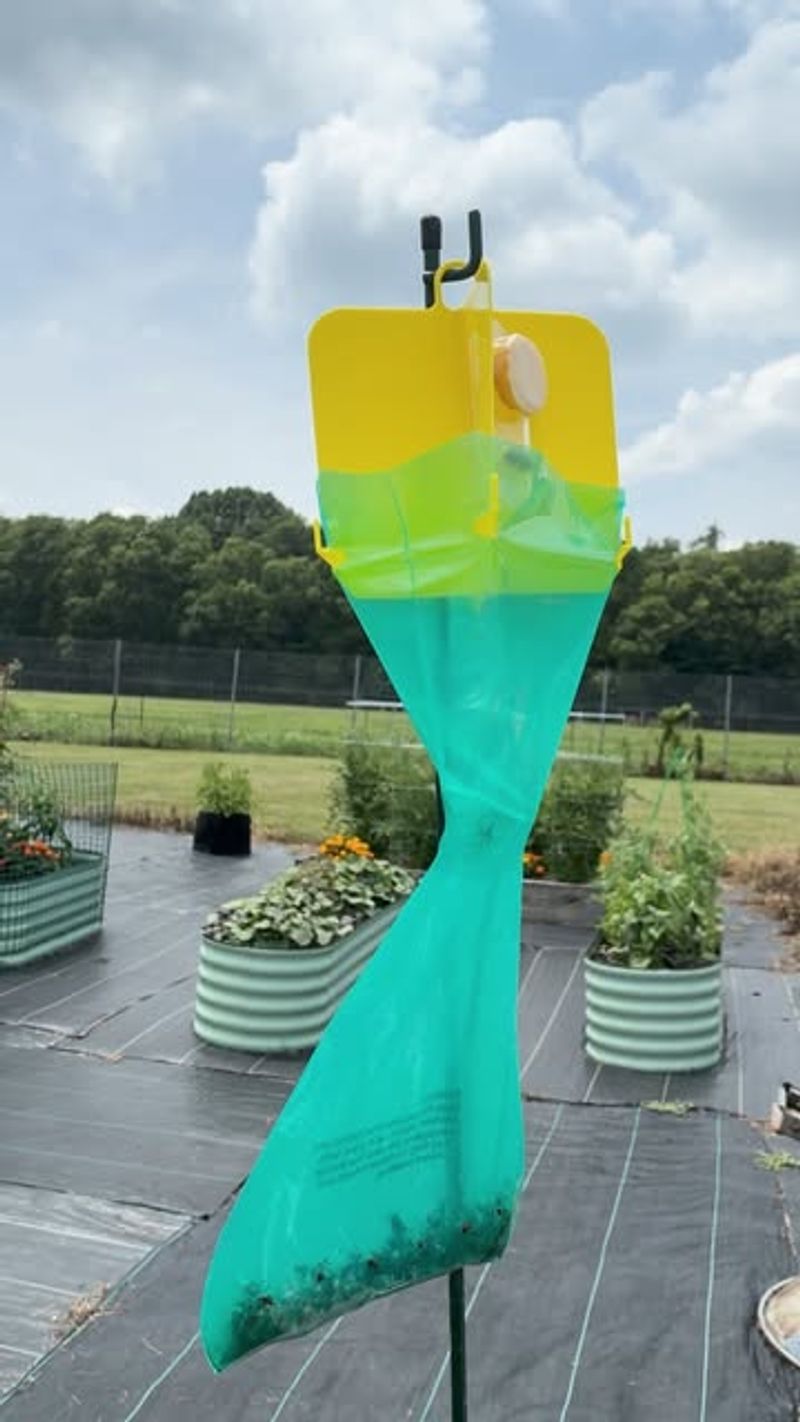
Commercial Japanese beetle traps are widely available and look like a logical solution when beetles are everywhere. The traps use a combination of a floral feeding attractant and a sex pheromone to lure beetles inside. The problem is that those same attractants can draw beetles toward your garden from a wider area than would have found it on their own.
University of Maryland Extension’s Japanese beetle resource cites research showing a 31 to 40 percent increase in damage to plants growing adjacent to traps compared with untreated controls. That finding applies specifically to plants placed near the traps in those studies, not to every possible trap placement, but the practical takeaway is consistent with what other university extension programs advise: placing a trap beside or near your roses is likely to concentrate beetle activity rather than relieve it.
If you want to use a trap at all, site it well away from your roses and other susceptible ornamentals, and accept that it will need frequent emptying to stay functional. Even then, the trap captures only a portion of the beetles it attracts, so some will land on nearby plants before reaching the lure.
A more reliable physical option for protecting a small number of prized plants is fine mesh or cheesecloth draped over individual roses or specific blooms during the adult flight period. NC State’s rose pest guide mentions row cover or mesh as a practical barrier approach. This works best when you have a few roses you especially want to protect, such as a newly planted specimen or a variety that is just coming into bloom. Covering an entire landscape planting with mesh is not realistic, but shielding one or two focal plants for a few weeks during peak beetle activity is manageable.
Inspect the lawn before considering grub treatment
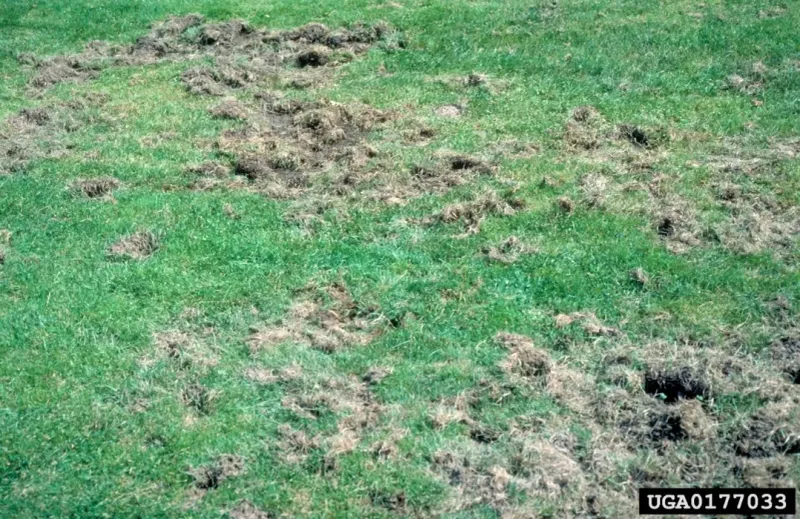
Beetles on your roses and grubs in your lawn are related problems, but they call for separate decisions. Japanese beetle larvae are white, C-shaped grubs that feed on grass roots underground. When grub populations are high enough, they can sever roots faster than the turf can recover, resulting in brown or spongy patches that lift away from the soil like loose carpet.
The catch is that brown or thinning turf has many possible causes. Drought stress, soil compaction, fungal disease, and other turf insects can produce nearly identical symptoms. University of Minnesota Extension recommends inspecting suspected damaged patches before applying any grub product. To check, cut three sides of a one-foot square of turf in a damaged area, fold it back, and count the grubs in the top few inches of soil.
A threshold of around ten or more grubs per square foot is commonly cited as a level that may justify treatment, though the right threshold can vary by turf type and condition.
Beetles feeding on your roses do not automatically mean your lawn has a damaging grub population. Adults can fly in from untreated properties, so the presence of beetles above ground is not a reliable indicator of what is happening below ground in your specific yard. NC State’s turf pest guide separates adult and larval management windows: adult control is concentrated roughly in May through July, while larval management extends roughly from June through October depending on the product and the pest stage.
The 2025 North Carolina Agricultural Chemicals Manual is the authoritative reference for current product choices and timing in this state. Milky spore, sometimes promoted as a natural grub solution, has not shown consistent results in recent university trials and should not be treated as a reliable standalone strategy.
Use insecticide only for confirmed, unacceptable damage
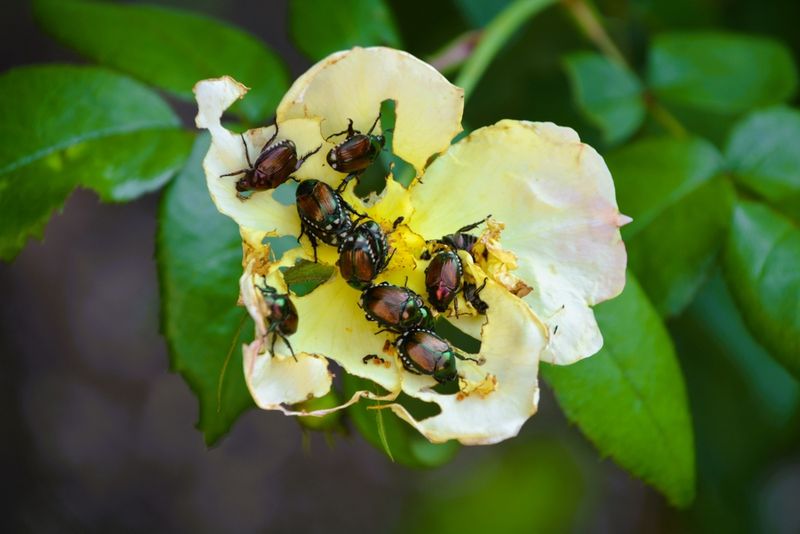
Hand removal handles most situations, but there are cases where the beetle pressure on a specific rose is severe enough that a chemical option becomes worth considering. Before going that route, work through a short checklist. First, confirm that the pest is actually a Japanese beetle using the markings described earlier. Second, decide honestly whether the damage is at a level you cannot accept, not just that it exists.
Third, choose a product that is specifically labeled for use on roses and for control of Japanese beetles.
EPA guidance on reading pesticide labels is direct on this point: the label is the law, and using more product than the label directs is both illegal and counterproductive. EPA’s pesticide safety documentation reinforces that label compliance covers the application rate, protective equipment, reentry intervals, weather conditions at the time of application, and proper storage and disposal. None of those are optional steps.
Blooming roses are visited by bees, butterflies, and other pollinators, and that makes chemical applications to open flowers a significant concern. EPA’s pollinator protection guidance recommends following all pollinator restrictions printed on the label and avoiding applications while pollinators are actively foraging. Flowering weeds growing near the base of your roses can also attract pollinators, so mowing or removing them before any application reduces that exposure.
Systemic insecticides deserve extra caution. Some products in this class can move into a plant’s flowers after application, where they may be picked up by pollinators visiting blooms days or weeks later. Penn State Extension’s Japanese beetle guidance specifically flags systemic products as a category requiring careful timing and pollinator consideration. If you use any insecticide, treat it as an escalation for confirmed, unacceptable damage, not as a first response or a preventive measure.
Begin with the jar and let the evidence guide the lawn decision
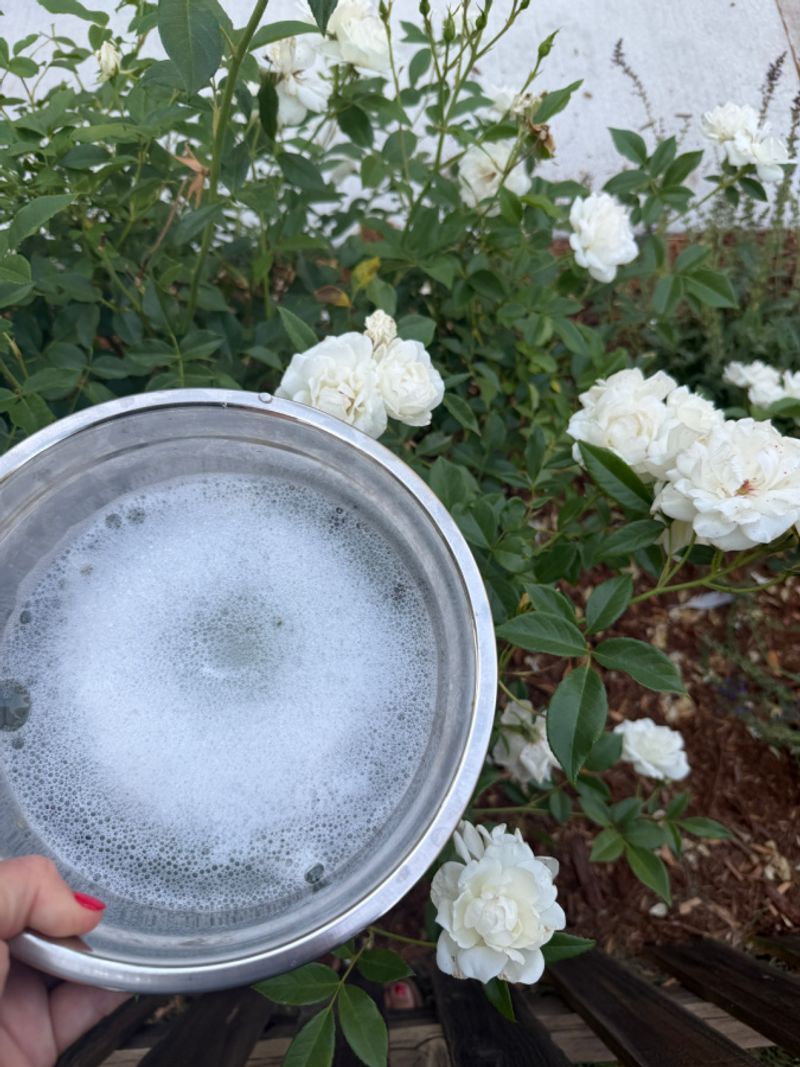
Putting it all together comes down to a short sequence. Confirm the metallic green body, copper wing covers, and white side tufts so you know what you are managing. Then head out to the roses in the morning, hold a soapy water container beneath each affected branch, and tap the beetles in. Repeat while the swarm persists, which in North Carolina typically means through most of July.
NC State Extension and its rose pest resource both point to morning hand removal as the most practical low-risk starting point for homeowners.
The lawn is a separate conversation. If you see brown or spongy patches in your turf, inspect them before buying a grub product. Beetles on the roses do not prove that your lawn has a damaging grub infestation. University of Minnesota Extension is clear that grub treatment belongs to a confirmed turf problem, not to the mere presence of adult beetles on ornamental plants nearby.
No single action this season locks in next year’s outcome. Adult beetles travel freely across the landscape, and regional populations shift with weather, soil conditions, and factors well outside any one yard. The jar of soapy water is not a guarantee, but it is the most targeted, lowest-risk tool available for reducing feeding on the plants you care about right now, and that is enough reason to start there.