
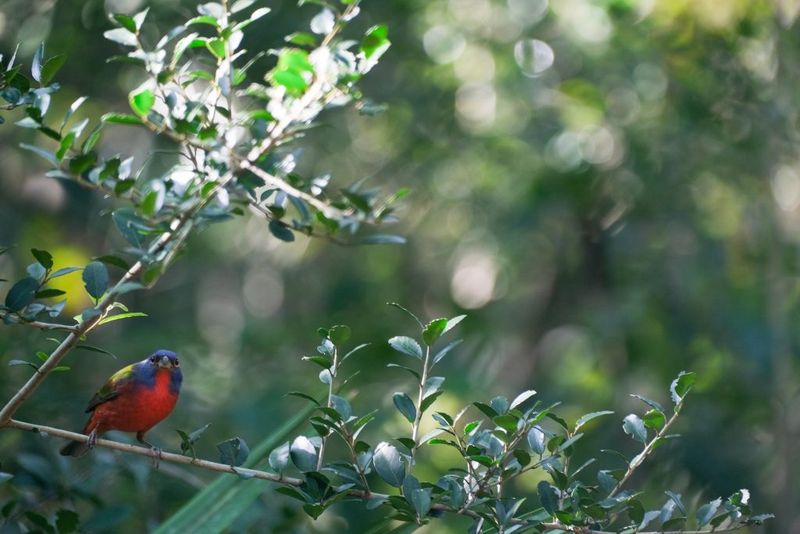
Painted buntings are among the most colorful birds in North America, and Florida gardeners often wonder why these little gems pass by without stopping. Many people assume a new feeder is the answer, but the real picture is more interesting than that. Improving your yard’s habitat structure – the mix of plants, cover, and open space – may raise the odds of a visit, even if nothing can guarantee one.
No single yard change can guarantee a painted bunting return
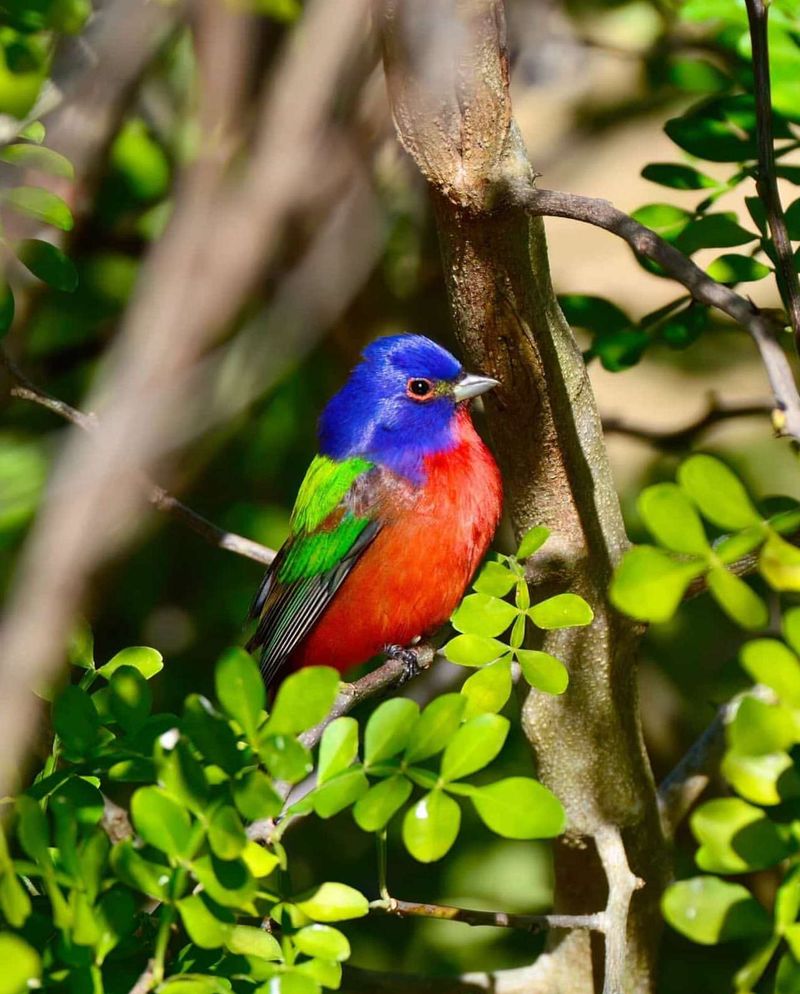
Painted buntings capture attention the moment they appear, but attracting them reliably is harder than most gardening articles suggest. No published research points to one plant, one feeder type, or one yard modification that reliably brings painted buntings back to a yard. What the evidence does support is that improving habitat structure can make a yard more suitable – and a more suitable yard has a better chance of being used when birds are present in the surrounding landscape.
That distinction matters. A yard change can improve the odds of a visit; it cannot cause a visit or guarantee one. Whether a painted bunting shows up also depends on the bird’s regional range, the season, the surrounding habitat, migration timing, and natural annual variation in where individuals travel. Even a yard that checks every box may go seasons without a sighting.
Florida Fish and Wildlife Conservation Commission habitat data shows that painted buntings use a wide range of settings in Florida, including coastal scrub, edges of coastal oak hammocks, roadside thickets, uncultivated fields, abandoned citrus groves, and some urban areas. Cornell Lab’s life-history account adds palmetto thickets, maritime-hammock edges, hedges, and fallow fields to that list. The birds are not locked into a single habitat type, which means a Florida yard does not need to replicate one specific ecosystem.
Feeders are also part of the real story. Audubon reporting on painted bunting migration notes that some individuals return to the same feeders in subsequent years. A feeder alone may not supply nesting cover or insect habitat, but it is not useless either. The practical goal is to combine habitat structure with a clean supplemental feeder, rather than treating them as competing approaches.
Create a semi-open edge with cover and feeding space
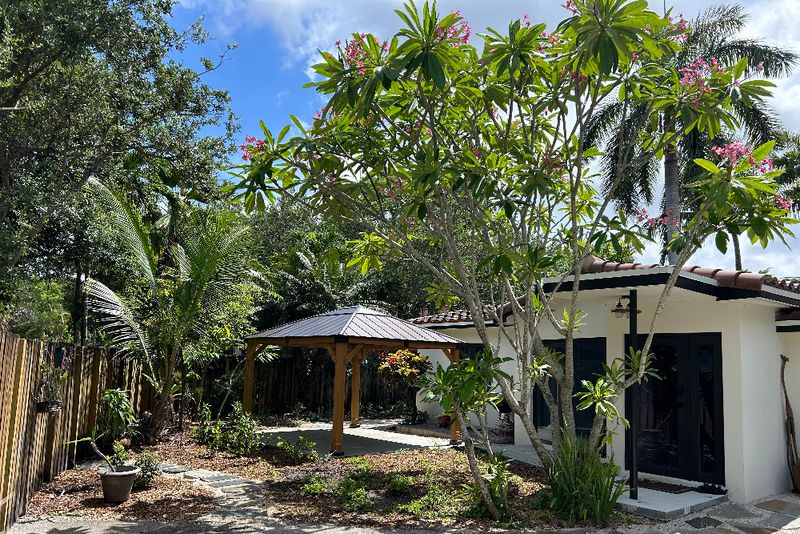
A backyard that sits somewhere between a bare lawn and a dense thicket gives painted buntings more of what they actually use. The structural strategy that habitat evidence supports is a semi-open edge: a band of low, dense vegetation with nearby shrubs or small trees, a few natural perches, seed-producing grasses or wildflowers, and some open ground or short vegetation where birds can forage. Neither a closely mowed expanse of turf nor a closed forest canopy provides that combination.
Cornell Lab notes that painted buntings nest in dense foliage and forage near open feeding grounds, which is why both elements belong in the same design. Nests are generally placed in dense cover roughly 3 to 6 feet above the ground, though birds will nest higher when low vegetation is unavailable. That height range puts the emphasis on shrubs and tall grasses rather than either ground-level plantings or tall tree canopy.
Foraging happens at or near ground level, mostly on seeds, so a patch of open soil, low-cut grass, or leaf litter beside the dense edge gives birds a place to land and feed without feeling exposed on all sides. FWC’s species profile confirms this semi-open pattern, describing habitat that combines brushy cover with accessible open ground rather than either extreme.
Perches matter too. A few woody stems, low branches, or fence posts at the edge of the planting give males a place to sing and survey their surroundings during the breeding season. Adding perches costs almost nothing and fits naturally into a layered shrub-and-grass design. The overall goal is a transition zone – not a perfectly manicured bed and not an impenetrable tangle, but a deliberate middle ground that resembles the thicket-edge habitat painted buntings actually use across Florida.
Use Florida-native plants for ecological fit, not as a magic lure
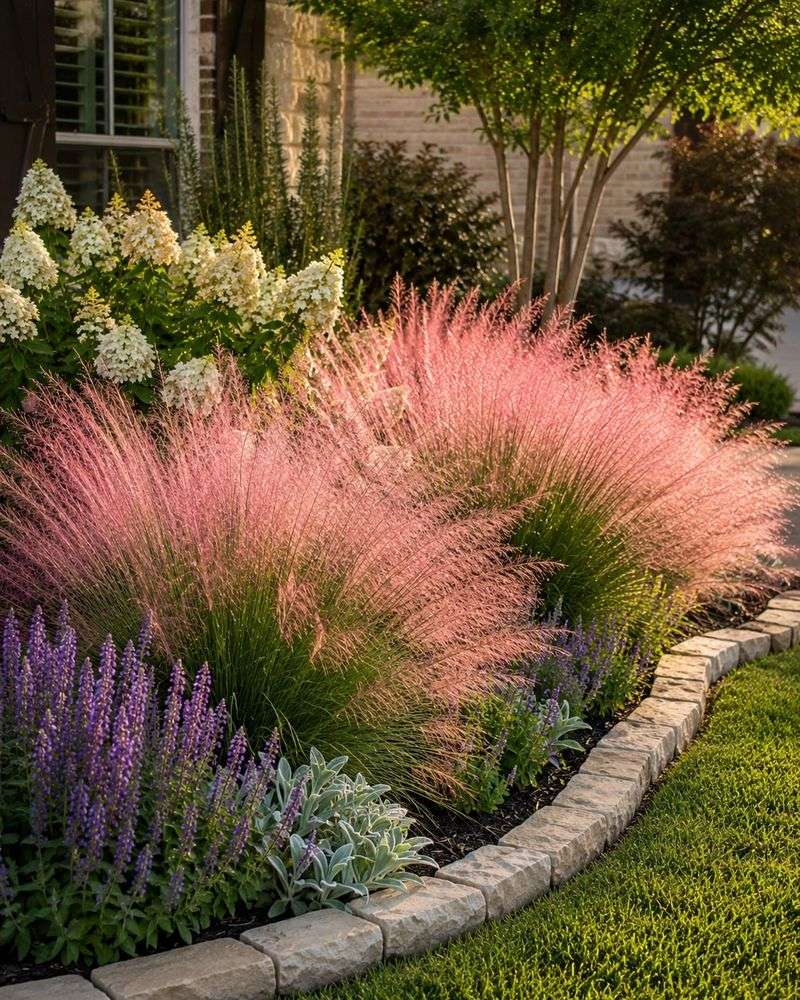
Turning the structural idea into a real planting means choosing plants suited to your specific site before worrying about which species painted buntings prefer. UF/IFAS bird-friendly landscape guidance recommends matching plants to a site’s light levels, soil moisture, drainage, and regional conditions rather than selecting by wildlife appeal alone. A plant that struggles in your yard’s sandy, fast-draining soil or heavy summer shade provides little structural value even if it looks good on a species list.
Florida-native plants earn their place in a habitat planting through ecological function. UF/IFAS native plant resources explain that natives adapted to local conditions can provide seeds, fruit, cover, and insect populations that support a wide range of birds. That is the case for native plants generally – not a claim that native status alone has been proven to draw painted buntings specifically to a yard.
Native grasses can add useful structure on appropriate sites. UF/IFAS native grass profiles describe muhly grass as tolerant of full sun, drought, and periodic flooding, making it a reasonable fit for open, sunny Florida yards with well-drained soil. Elliott’s lovegrass handles hot, dry conditions and sandy landscapes well. Both can contribute seed production and low-cover structure on the right site.
Neither has been shown in controlled studies to attract painted buntings more than other seed-bearing grasses, so treat them as site-appropriate options rather than guaranteed draws.
UF/IFAS community ecology guidance and UF/IFAS backyard wildlife landscaping guidance both stress that intentional planting is not a one-time task. Invasive species can move into any planting, especially in Florida, and controlling them is an ongoing responsibility. A small open feeding area at the edge of the planting rounds out the design and gives foraging birds a clear, accessible spot to land.
Protect the insects painted buntings need during breeding
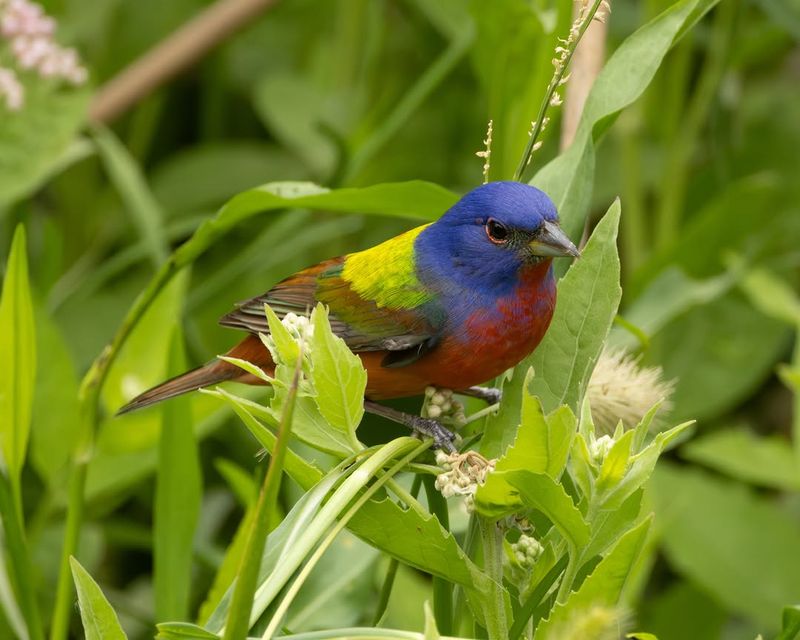
A yard full of seed-producing plants covers a lot of painted bunting needs, but not all of them. Cornell Lab’s diet data shows that painted buntings eat seeds for much of the year but shift toward insects during breeding season. Adults consume grasshoppers, beetles, caterpillars, bugs, spiders, snails, wasps, and flies during that period, and nestlings depend on insect prey for protein-rich early nutrition. A yard that eliminates insects through routine pesticide use can undercut the habitat value of even the most carefully planted edge.
Layered vegetation – shrubs, grasses, and wildflowers growing together – tends to support more insect diversity than a monoculture or bare ground, though no specific planting combination guarantees a particular prey supply. The practical value is structural: varied plant types create more microhabitats for the insects that breeding painted buntings need.
UF/IFAS pest-management guidance recommends a sequence that protects beneficial organisms while still addressing real pest problems. Start by identifying the specific pest and monitoring its population before taking action. Use cultural controls – such as adjusting irrigation, removing debris, or changing plant placement – and mechanical controls like hand-picking or physical barriers when feasible. Conserve beneficial insects, spiders, and other predators that already manage pest populations naturally.
Reserve pesticide applications for situations where they are clearly necessary, and choose the most selective product available. UF/IFAS bird-friendly landscape resources reinforce that broad-spectrum insecticides used routinely around a habitat patch can reduce the insect populations that birds rely on, which is especially counterproductive during the weeks when adults are feeding nestlings.
Keep the feeder as a clean seasonal supplement
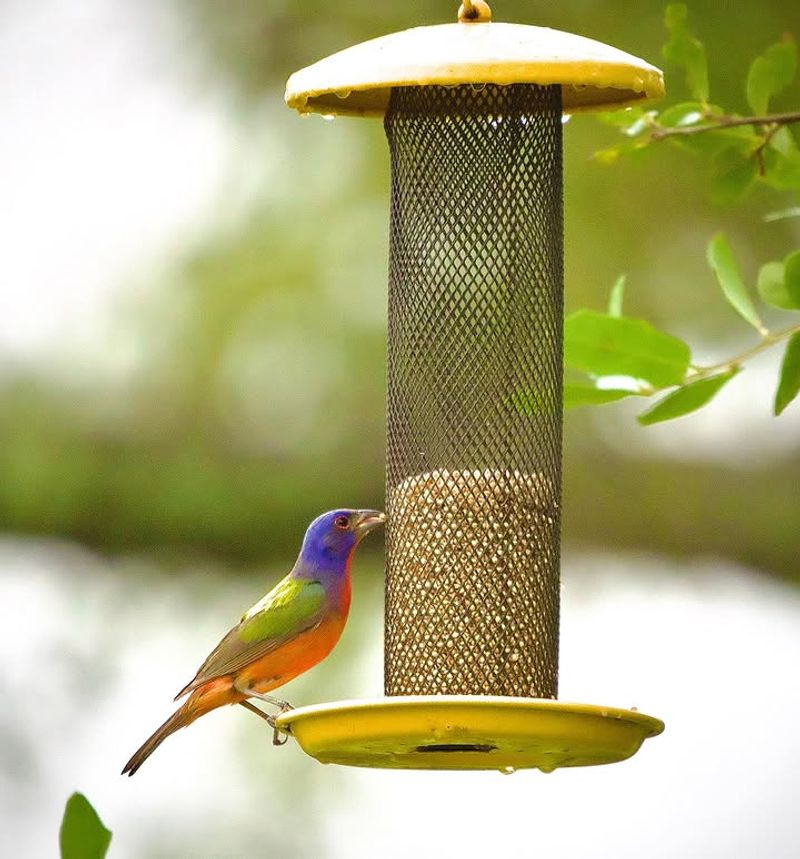
Feeders have a real role in a painted bunting yard strategy, particularly during Florida winters when birds from the eastern population move through or settle in for the season. Audubon’s painted bunting field guide documents feeder visits, and Cornell Lab’s life-history account confirms that painted buntings eat seeds at feeders in addition to foraging in natural habitat. The point is not that feeders fail – it is that a feeder sitting in a bare, exposed yard is offering food without the cover, perches, or insect access that the birds also need.
Cornell’s bird seed guide lists white millet and sunflower as seed types that painted buntings eat. White millet, in particular, suits tube feeders or platform feeders placed near low vegetation. Offer only as much seed as visiting birds consume within a day or two, especially during Florida’s humid months when uneaten seed can become wet and moldy quickly.
Feeder hygiene is not optional in Florida’s warm, wet climate. Cornell’s feeder-cleaning guidance recommends cleaning seed feeders approximately every two weeks under normal conditions, and more often during wet weather, heavy bird traffic, or local reports of disease. Remove moldy seed, accumulated droppings, and wet debris each time. A Cornell winter bird-feeding resource also recommends rinsing feeders and allowing them to dry fully before refilling.
If visibly sick birds appear near your feeder, remove or pause both feeders and birdbaths immediately, then clean and disinfect all equipment before putting it back out. Keep pets away from spilled seed and any areas where sick birds have been present. CDC investigation data on Salmonella and wild songbirds and a published outbreak study in Emerging Infectious Diseases both document human Salmonella infections linked to contact with wild songbirds and feeder equipment, which is a real risk worth taking seriously in any backyard bird setup.
Read Florida visits through the right seasonal lens
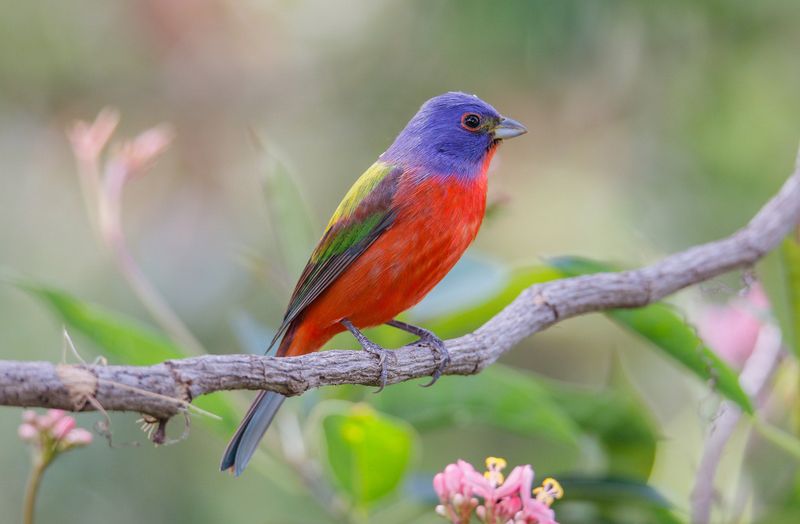
Where you live in Florida shapes the painted bunting story more than almost any yard decision. FWC’s painted bunting species profile places the eastern breeding population along the Atlantic coast from the Georgia border south to roughly northern Brevard County, with additional birds using habitat inland along major river corridors. Gardeners in that coastal zone have a genuine chance of hosting breeding birds during the season. Much of the rest of Florida is more relevant for wintering birds, occasional migrants passing through, or irregular movements outside the core breeding range.
FWC’s broader painted bunting overview and Cornell Lab’s life-history account both identify May through mid-July as the Florida breeding season. During that window, males are territorial, adults rely more heavily on insects, and nesting cover becomes the critical habitat element. Outside of breeding season, wintering birds may form loose flocks and depend more on seeds, which is when a well-stocked, clean feeder can be most useful as a supplement.
Seasonal patience matters as much as habitat design. A yard that goes unvisited during one winter or one breeding season is not necessarily a failed habitat – painted bunting presence varies from year to year based on regional population levels, migration routes, weather, and the quality of surrounding landscape. Tracking observations across multiple seasons, rather than judging success from a single sighting or a single missed year, gives a much more accurate picture of whether a yard is being used over time.
Measure improved habitat, not a guaranteed comeback
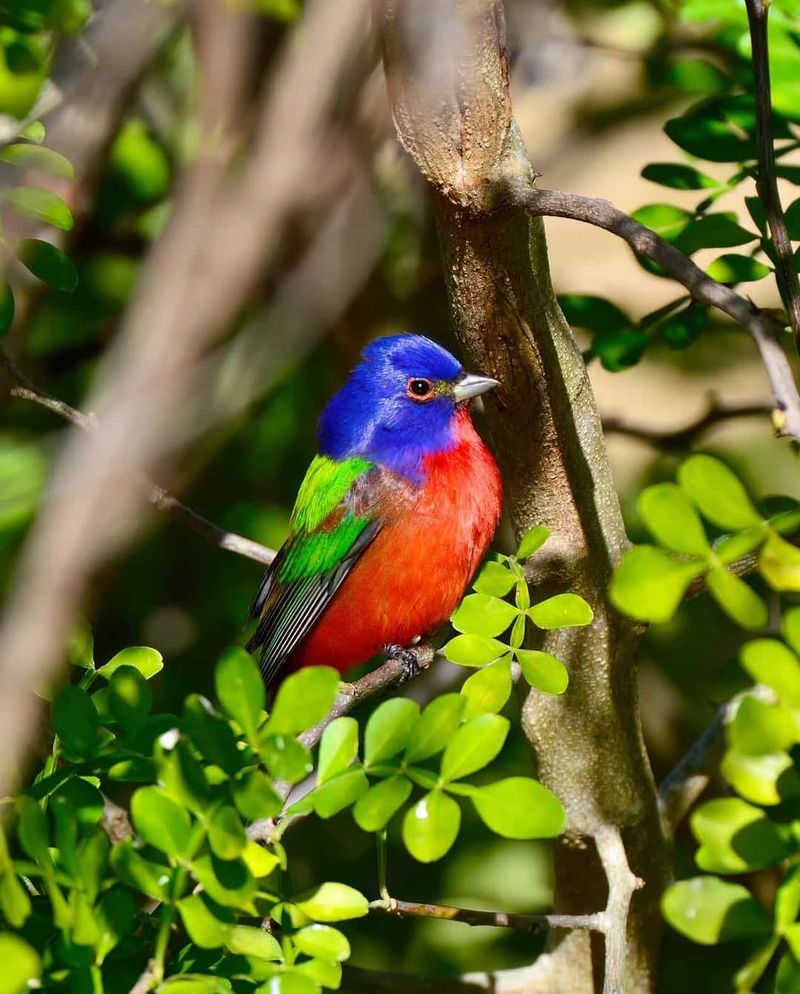
A practical way to evaluate your yard is to ask whether it now offers the combination that habitat evidence supports: low, dense cover, site-appropriate seed-producing plants, nearby perches, some open ground for foraging, access to insects, and a clean supplemental feeder placed near the edge of the planting. FWC and Cornell Lab both describe painted buntings using that kind of semi-open edge habitat across Florida, which makes it a reasonable target for a home garden.
Meeting those criteria may improve the odds that a painted bunting uses your yard when one is present in the surrounding landscape. It cannot guarantee a visit, produce nesting where breeding birds are absent, or reverse broader population trends on its own. UF/IFAS bird-friendly landscape guidance frames the goal well: provide food, fresh water, and safe cover, then observe what uses the space across seasons.
One painted bunting landing at your feeder is a welcome sight, but it is not proof that your yard restored a breeding population. Track observations over both the breeding season and winter, note which habitat features birds are using, and adjust the planting over time based on what you actually see. The most honest measure of a habitat yard is not a single spectacular bird – it is a yard that keeps getting used.