
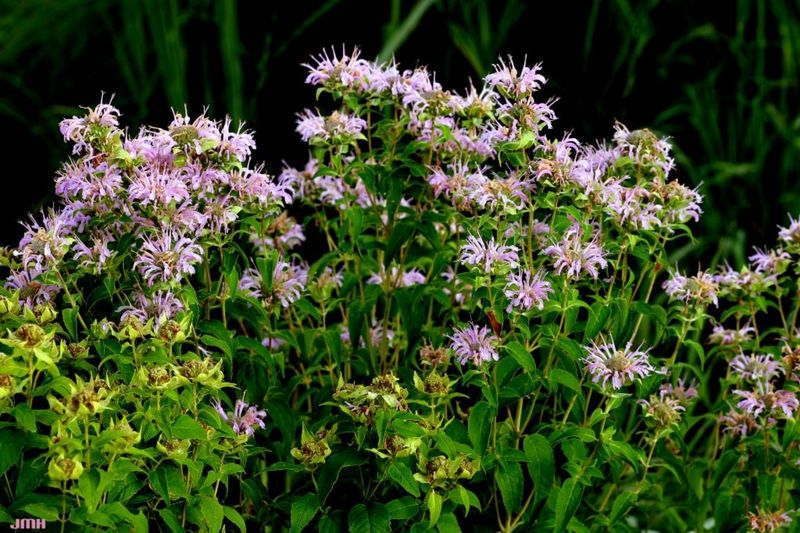
If you want bees buzzing, butterflies landing, and hummingbirds hovering in your yard from June through September, one native perennial does a lot of that work on its own. Wild bergamot, known scientifically as Monarda fistulosa, grows about 2 to 4 feet tall and blooms for much of summer in many North Carolina gardens. It is not a towering plant, and no single flower replaces a full pollinator habitat, but wild bergamot is one of the most well-rounded summer choices a Piedmont or Mountain gardener can make. Plant it right, give it a few companions, and your yard becomes a place pollinators return to all season long.
Wild bergamot offers a well-supported summer pollinator anchor
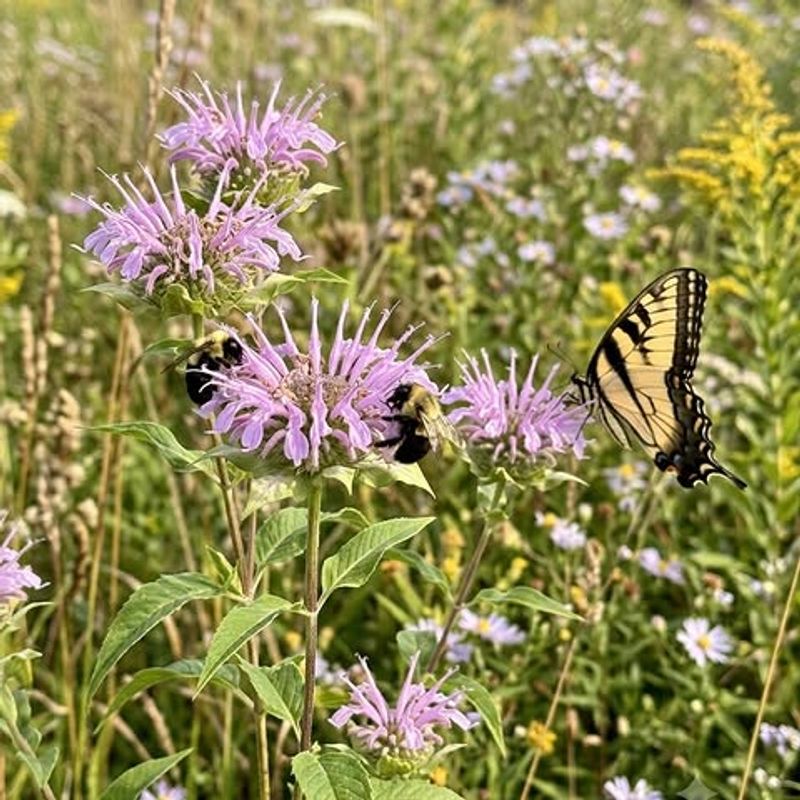
Wild bergamot, Monarda fistulosa, earns its place in a North Carolina pollinator garden because the evidence behind it is specific and practical. NC State Extension’s plant profile for Monarda fistulosa documents that it attracts bees, butterflies, and hummingbirds, reaches about 2 to 4 feet in height, and blooms from June through September. That combination of documented visitors, a defined summer bloom window, and manageable size makes it a reliable anchor for a warm-season planting.
Before going further, the headline deserves a quick correction. Wild bergamot is a substantial summer perennial, but it is not an exceptionally tall plant, and its bloom window covers much of summer rather than the full growing season from spring through frost. No reviewed source provides a controlled comparison showing that it attracts more pollinators than an entire flower bed combined. That claim overstates what the plant actually does.
What the evidence does support is more useful anyway. Wild bergamot is a native North Carolina perennial with documented appeal to three target groups, reasonable tolerance for clay and occasionally dry soils, and a bloom period that covers the heart of summer. For homeowners in the Piedmont and Mountains who want a single species to anchor a pollinator bed without exotic inputs or difficult soil prep, it is a well-matched starting point. The sections that follow explain where it fits, how to grow it well, and which companions round out the habitat it cannot build alone.
Its tubular flowers serve several visitor groups
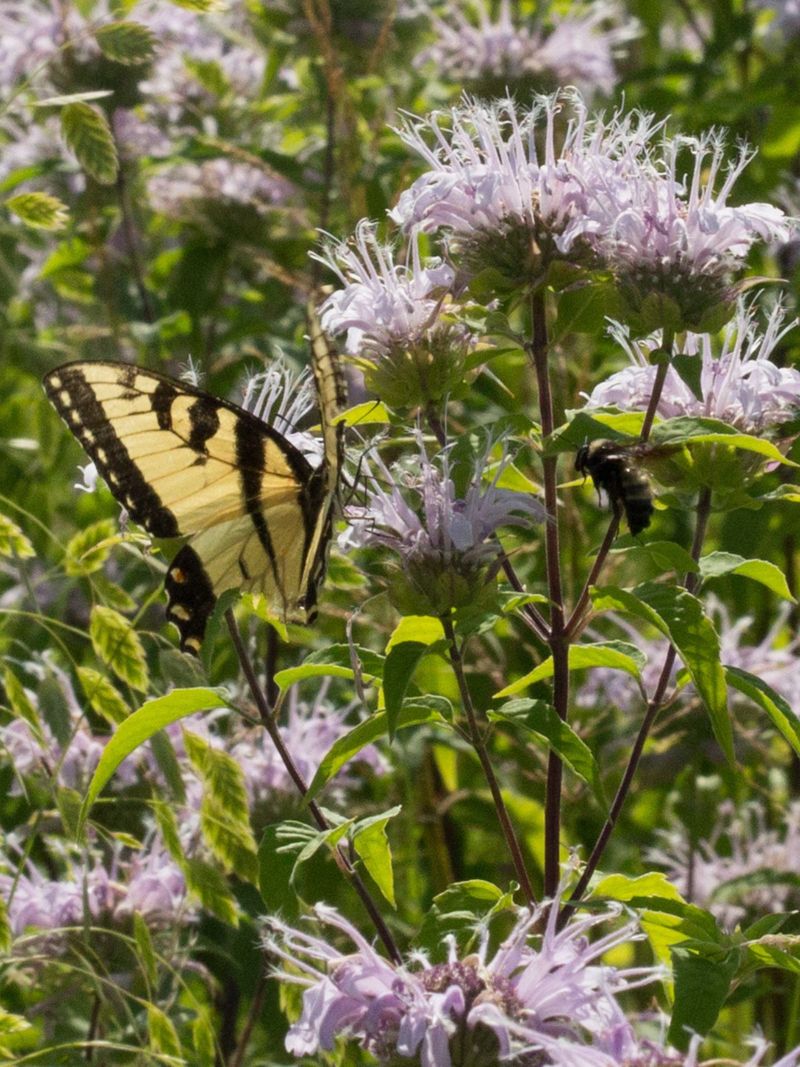
The shape of a wild bergamot flower does a lot of the recruiting. Hummingbirds are strongly drawn to tubular flowers because their long bills and tongues can reach nectar that shorter-tongued visitors cannot easily access. NC Wildlife Resources Commission guidance on suburban backyards lists bergamot and bee balm among the plants that attract hummingbirds in North Carolina, alongside cardinal flower, trumpet creeper, and red buckeye.
Butterflies work the same flowers for nectar, and NC State’s hummingbirds and butterflies resource connects bee balm to butterfly attraction as well. Beyond the generalist visitors, the Monarda genus supports several specialized native bees that depend on plants in the mint family. Some of those bees are oligolectic, meaning they collect pollen almost exclusively from Monarda species, so a planting of wild bergamot can support pollinators that a generic nectar flower simply would not serve.
That said, documented attraction is not the same as a guaranteed show. Pollinator visitation depends on weather, the surrounding landscape, how many competing blooms are nearby, plant size, and even the time of day you step outside to look. A newly established plant in a yard with little nearby habitat may draw far fewer visitors than a mature clump surrounded by diverse native plantings. Wild bergamot gives pollinators a reason to visit; the rest of the yard determines whether they stay.
Match the plant to your North Carolina site
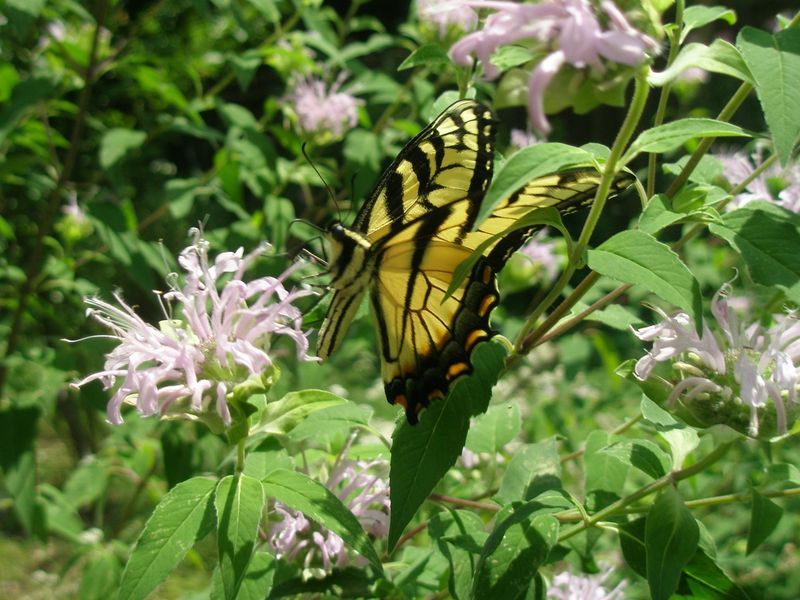
Regional fit matters more than most gardeners realize when choosing a bee balm. NC State’s profile for wild bergamot lists it for the Mountains and Piedmont, where it performs best in full sun with moderately moist soil. Importantly, it tolerates clay and occasionally dry conditions, which makes it a practical choice for many typical Piedmont yards that struggle with heavy, sometimes-dry soil in midsummer.
Scarlet beebalm, Monarda didyma, is a related but distinct species with different requirements. NC State’s scarlet beebalm profile lists it for all three North Carolina regions, including the Coastal Plain, but associates it strongly with the mountains and Appalachians. It prefers full sun and moist to occasionally wet, organically rich soil, and its red tubular flowers make it especially appealing to hummingbirds. Gardeners in the mountains with consistently moist, humus-rich soil may find scarlet beebalm an equally strong or even better fit.
For Coastal Plain gardeners, neither species is an obvious first choice without checking local conditions. Scarlet beebalm’s NC State listing covers the Coastal Plain, but its moisture and soil preferences may not align with every site there. Wild bergamot’s listing is specific to the Mountains and Piedmont. If you garden near the coast or in the sandhills, explore coastal-adapted natives before assuming either bee balm will perform well.
The common name “bee balm” covers multiple Monarda species and cultivars sold at garden centers, so always check the scientific name before purchasing to know what you are actually getting.
Expect a long summer display, not continuous bloom
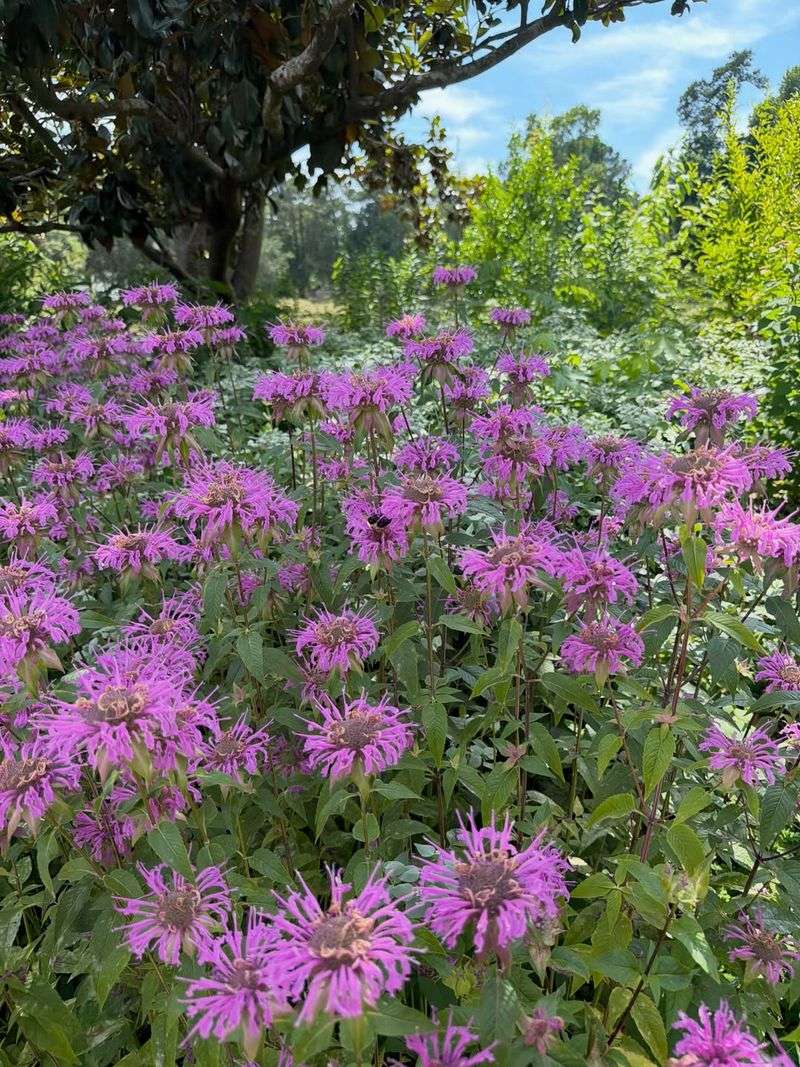
Wild bergamot’s documented bloom window runs from June through September, which covers the heart of summer in North Carolina. That is a genuinely useful stretch of time, but it is not the full growing season. Spring-emerging pollinators will need other flowers before bergamot opens, and fall-active species will need sources that carry on after it finishes. Setting realistic expectations about timing helps you plan a bed that works rather than one that leaves gaps.
Scarlet beebalm generally runs from July through September, so the two species overlap but do not fill the same window. Xerces Society guidance on pollinator-friendly flowers emphasizes planting diversity and overlapping bloom times precisely because different pollinators emerge and forage at different periods of the season. A bed anchored by wild bergamot in June and July, supplemented with late-summer and fall bloomers like asters, goldenrod, or Joe-Pye weed, provides a far more continuous resource than wild bergamot planted alone.
USDA-NRCS pollinator garden design guidance reinforces the same principle, recommending multiple flowering species with staggered bloom periods throughout the growing season. Wild bergamot’s role in that system is to anchor the summer window reliably. Pair it with early-spring bloomers like native violets or wild columbine, and late-season plants like native asters, and the garden sustains pollinators from the first warm weeks through the last warm days of fall rather than offering a single burst of midsummer activity.
Give wild bergamot sun, moisture, and breathing room
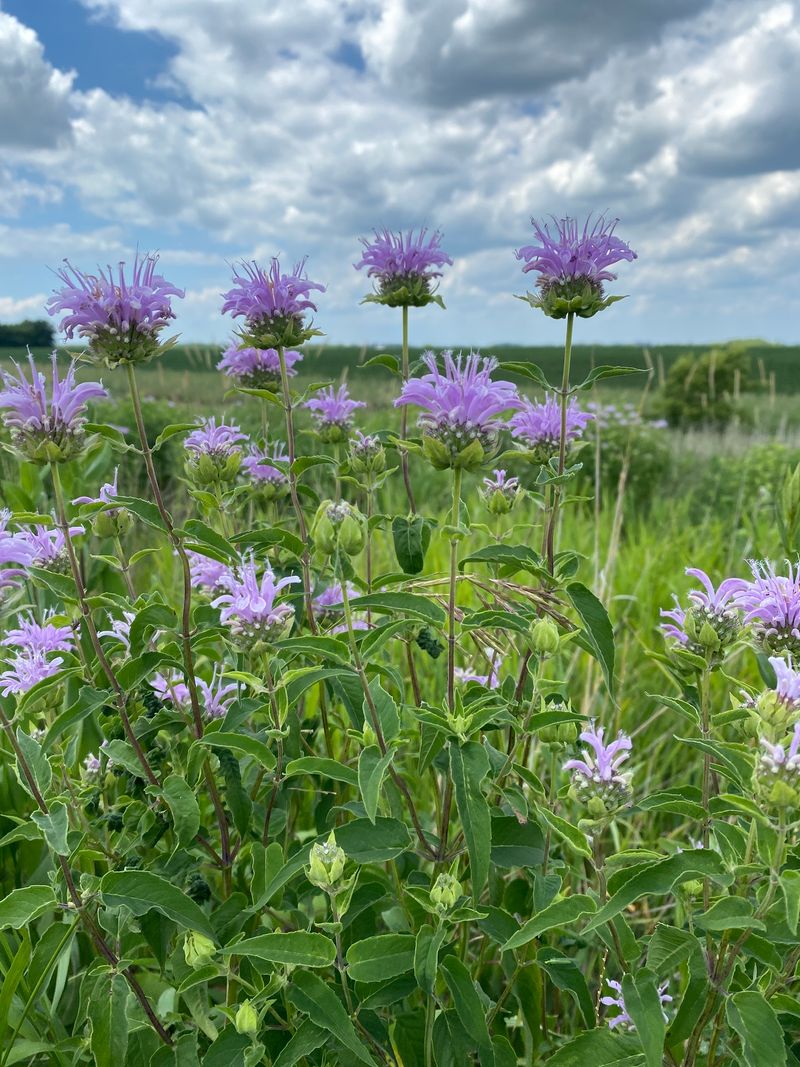
Powdery mildew is the most common complaint about bee balm species, and wild bergamot is not immune. NC State’s profile for Monarda fistulosa notes that powdery mildew is common in the genus and that even relatively resistant wild bergamot can develop the disease, especially when plants are crowded together with poor airflow or when drought stress weakens them. The good news is that the main risk factors are within a gardener’s control.
Full sun is the first requirement. Wild bergamot planted in shade or partial shade tends to stretch, produce fewer flowers, and become more vulnerable to fungal problems. Spacing matters just as much: give each plant enough room so air moves freely around the stems. When clumps spread and crowd each other after a few years, divide them in early spring to restore spacing and vigor.
Thinning the stems within a clump can also help airflow without waiting for a full division.
Soil moisture plays a dual role. Wild bergamot tolerates occasional drought, but plants that are consistently dry during summer heat become more susceptible to mildew. Maintaining moderate, consistent moisture through mulching and supplemental watering during dry stretches reduces that risk. If mildew does appear, remove and dispose of affected leaves rather than composting them, and consider a mildew-resistant selection the next time you replant.
Routine insecticide spraying is not a solution here and should be avoided entirely around pollinator plantings. Wild bergamot is manageable, but calling it maintenance-free would be misleading; it carries a medium maintenance rating and rewards attentive care with a healthier, longer-lasting display.
Leave some stems for native bees
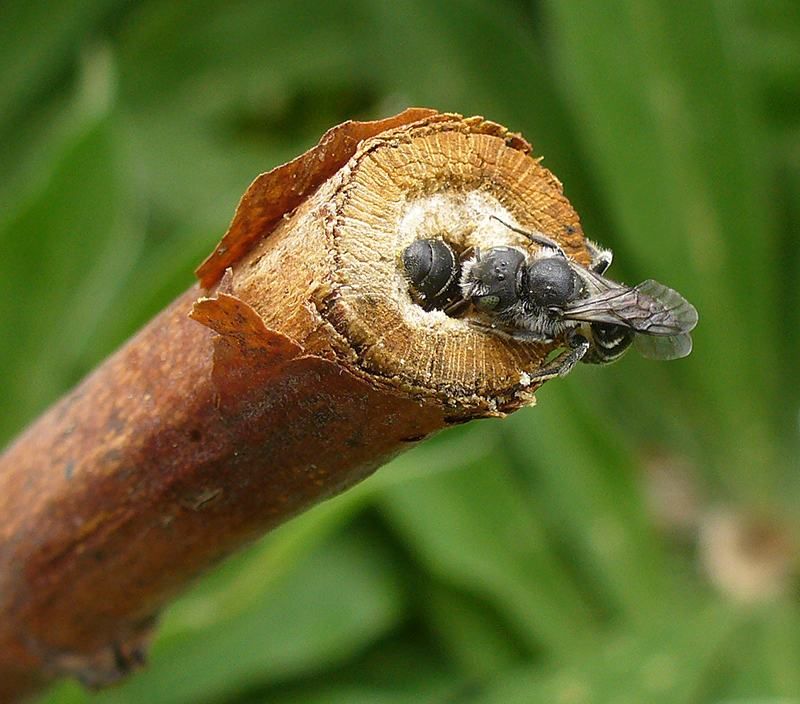
End-of-season cleanup feels satisfying, but cutting every stem of wild bergamot to the ground removes something pollinators actually need. NC State’s wild bergamot profile reports that native bees use the dead hollow stems for nesting and recommends cutting stems back to roughly 12 to 24 inches rather than removing all of them at once. Leaving those shortened stubs through winter and into early spring gives cavity-nesting bees a place to overwinter or lay eggs.
Pruning earlier in the season serves a different purpose. Cutting the plant back by about one-third in late spring or early summer, before buds form, can delay flowering slightly and improve the plant’s overall shape and airflow. Removing spent flower heads during the bloom period encourages additional branching and can extend the display by a few weeks. Thinning crowded stems at any point in the growing season reduces the still-air pockets where mildew takes hold.
The key is treating maintenance as two separate jobs: one that supports plant health during the growing season and one that supports wildlife after it ends. Removing all dead material immediately after frost is efficient for the gardener but eliminates nesting structure before bees have finished using it. A practical compromise is to do a light tidy in fall, cutting the tallest stems back to knee height, and then wait until late winter or early spring, just before new growth emerges, to cut the remaining stubs lower. That window gives nesting bees the most time while still allowing you to refresh the bed before the new season begins.
Choose Joe-Pye weed when dramatic height comes first
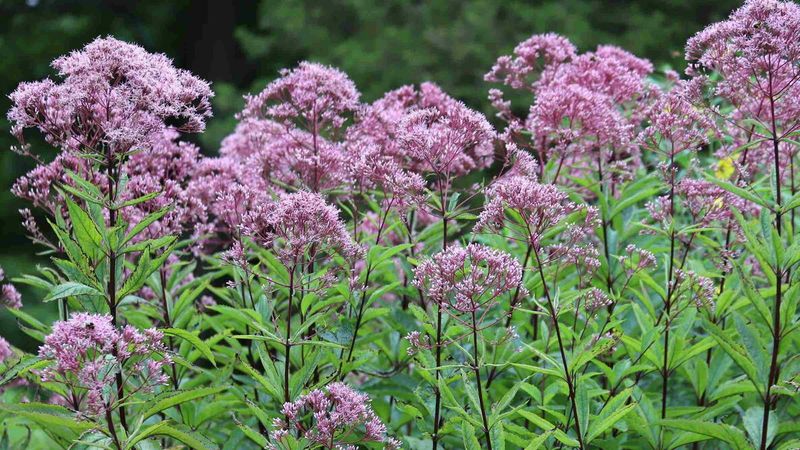
When a homeowner wants a plant that genuinely commands the back of a border, wild bergamot’s 2-to-4-foot frame may not deliver the drama they had in mind. Hollow Joe-Pye weed, Eutrochium fistulosum, is the more appropriate answer in that situation. NC State’s profile for Eutrochium fistulosum places it at 4 to 7 feet tall, with a preference for full sun to partial shade and moist or occasionally wet soil. It is listed for the Coastal Plain, Piedmont, and Mountains, and NC State recommends siting it in moist meadows, rain gardens, pond margins, or the back of a border.
In part shade, the stems may need staking.
Coastal Plain Joe-Pye weed, Eutrochium dubium, is a shorter relative that reaches roughly 3 to 6 feet. NC State’s Eutrochium dubium profile notes that it favors moist, humus-rich to sandy or gravelly soils and blooms from July into October, extending the season a bit past what hollow Joe-Pye weed typically offers. It is also listed as resistant to powdery mildew, which makes maintenance somewhat simpler than with bee balm species. Both Joe-Pye weeds are documented as strong attractors of bees and butterflies.
There is one distinction worth keeping clear. Wild bergamot has more direct documentation from NC State for attracting all three target groups, including hummingbirds, while the NC State species pages for both Joe-Pye weeds focus on bee and butterfly value without specifically verifying hummingbird attraction. If hummingbirds are the priority, wild bergamot remains the better-documented choice. If dramatic height and a moist planting site are the priorities, either Joe-Pye weed is a well-adapted, lower-maintenance option that extends bloom into October and gives the border a striking vertical presence.
Build the rest of the habitat around the anchor plant
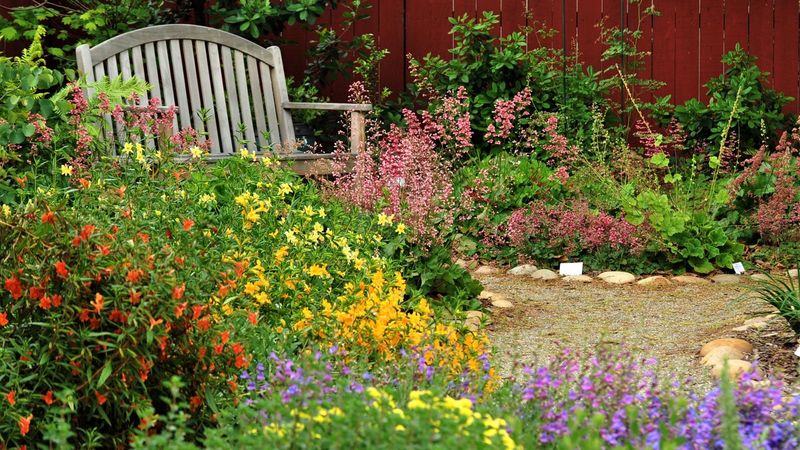
Wild bergamot works best as an anchor, not a standalone solution. NC State’s hummingbirds and butterflies resource makes clear that butterflies need more than adult nectar: they also require larval host plants, shelter, sunny basking areas, moisture, and pesticide-free conditions. A yard with a single nectar plant, however well-chosen, supports only part of the butterfly life cycle. Avoiding insecticides entirely is especially important because butterflies and caterpillars can be harmed or killed even by products that seem targeted.
Xerces Society recommendations for pollinator-friendly flowers call for plant diversity and overlapping bloom times, because the range of pollinators active across a full season is far wider than any one plant can serve. Pair wild bergamot with early bloomers like native columbine or wild blue indigo, midsummer companions like purple coneflower and milkweed, and fall finishers like native asters and goldenrod. USDA-NRCS pollinator garden design guidance and the NRCS habitat assessment guide for yards and gardens both reinforce that a diverse native planting supports more kinds of pollinators than any monoculture, no matter how attractive that single species may be.
Wild bergamot earns its place in a North Carolina yard because it delivers a documented, reliable summer window for bees, butterflies, and hummingbirds with reasonable site tolerance. The pollinators that find it in June will be better served if they find something waiting for them in April and again in October. A yard that gives them that full sequence is not just a garden; it is a habitat worth returning to.