
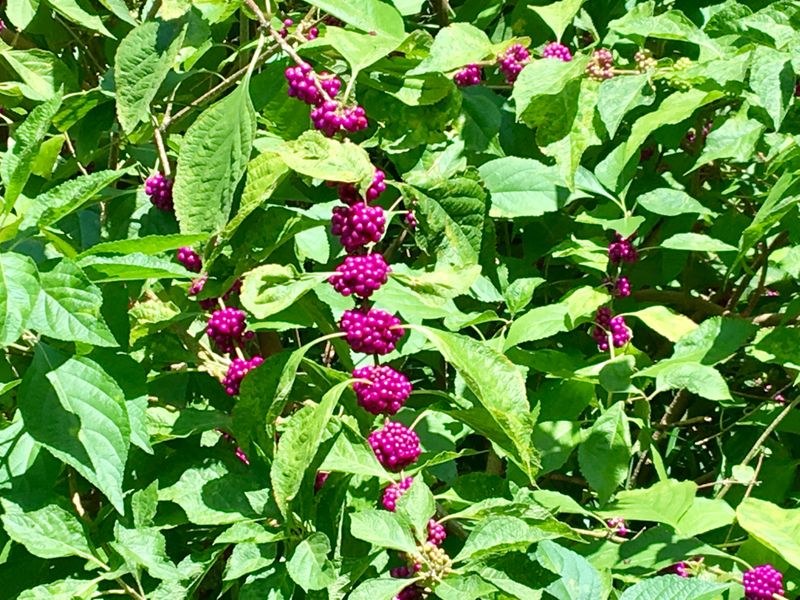
Your wooded property line is one of the first places you should think about when it comes to tick exposure in North Carolina. A native shrub called American beautyberry has been getting attention lately because compounds from its leaves showed tick-repellent activity in lab tests, but the full story is more complicated and more useful than the headline suggests. Understanding what the research actually found, and what it did not, will help you make smarter decisions about your yard’s edge this season.
A wooded edge creates a possible exposure zone, not a guaranteed tick hot spot
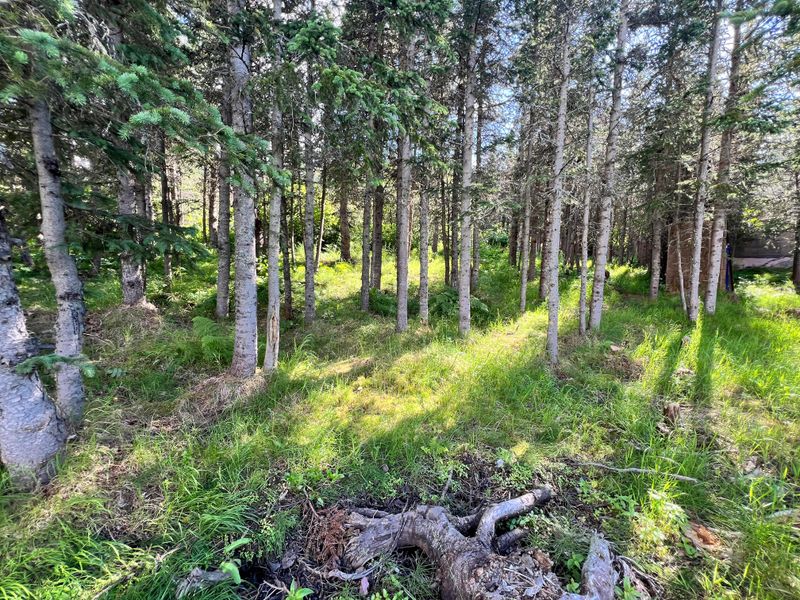
Wooded property lines deserve attention, but they are not automatic tick danger zones. Ticks in North Carolina are commonly found in wooded areas, brushy spots, tall grass, and leaf litter, and people face more contact with ticks when vegetation reaches into spaces they use every day. NC Cooperative Extension tick guidance notes that ticks can climb grasses and shrubs and attach to people when that vegetation brushes against them, which is why the edge between your lawn and the woods matters more than the deep forest itself.
Tick pressure at any given edge varies based on species, local host animals, moisture levels, and vegetation density. Calling any wooded boundary a guaranteed hot spot overstates what the science shows. What holds up is that frequently used spaces near unmaintained edges create more opportunities for contact, and managing that transition is the practical starting point.
American beautyberry comes up in conversations about tick management because a USDA study found that purified compounds from its leaves showed repellent activity in controlled laboratory tests. That finding is real and interesting, but it does not mean that planting beautyberry along your property line will slow, control, or repel ticks. CDC tick prevention guidance centers on habitat modification and personal protection, not on which shrubs you plant. Beautyberry can improve a native planting transition and provide genuine wildlife value, and those are good reasons to consider it, but they are separate from any tick-control claim.
American beautyberry suits many North Carolina woodland margins
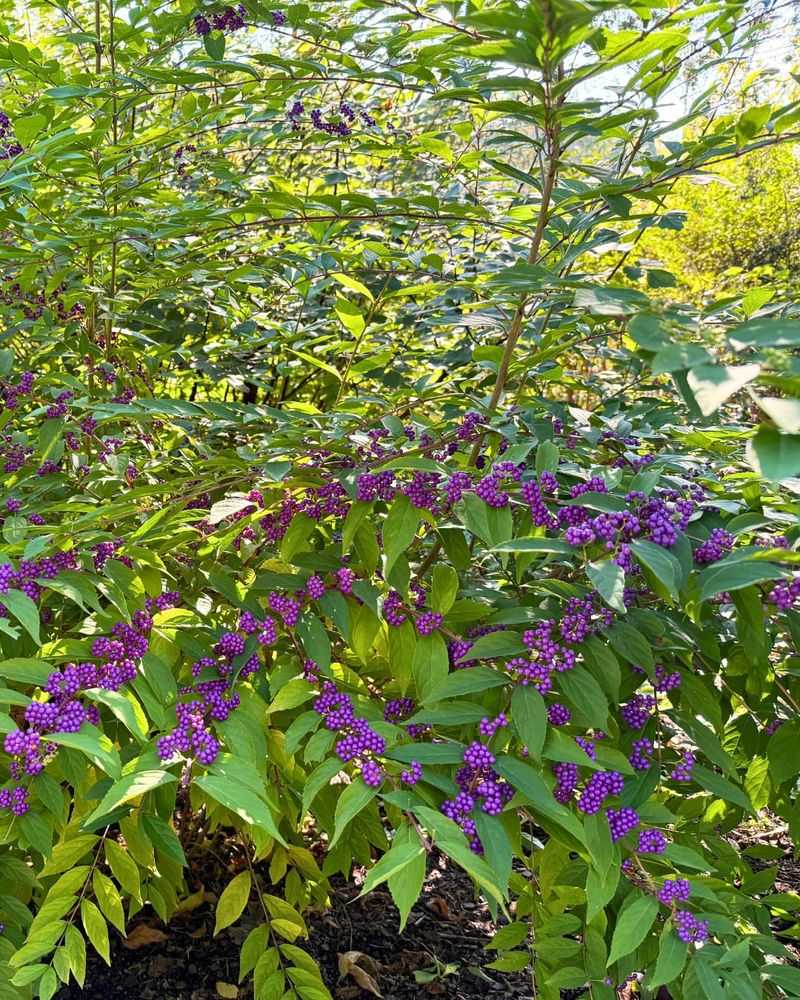
American beautyberry, known botanically as Callicarpa americana, is native across all three of North Carolina’s major regions: the Coastal Plain, the Piedmont, and the Mountains. That wide native range makes it a genuinely regional option rather than a plant borrowed from somewhere else and hoped to adapt. NC State Extension’s beautyberry profile describes the shrub as typically reaching three to eight feet tall and three to six feet wide at maturity, which puts it in a practical size range for most residential woodland edges without overwhelming a smaller yard.
Site conditions matter more than most gardeners expect. Beautyberry tolerates full sun to partial shade, but deep shade causes it to perform poorly, producing sparse growth and fewer berries. Well-drained soil is also important; consistently wet or compacted ground is not a good match. Before committing to a planting, check whether your wooded edge gets at least a few hours of direct or filtered light and whether the soil drains reasonably after rain.
Not every shaded property boundary will give this shrub what it needs.
Fall planting generally gives native shrubs in North Carolina the best start, allowing roots to establish during cooler months before summer heat arrives. NC State Extension’s native landscaping guide recommends matching plants to site conditions rather than forcing a species into a spot where it will struggle. For beautyberry, that means assessing light and drainage honestly before you plant, because a shrub in the wrong spot will not deliver the wildlife benefits or the tidy edge you are hoping for.
The tick research involves isolated compounds, not a living hedge

The study that generated most of the buzz about beautyberry and ticks came from USDA researchers who tested purified chemical compounds isolated from beautyberry leaves. The key compound, callicarpenal, was applied to treated cloth and evaluated in controlled laboratory assays. Researchers were not testing a living shrub, a planted hedge, or any kind of North Carolina landscape. They were testing specific isolated chemicals at specific concentrations under laboratory conditions, and that distinction matters enormously for how you interpret the results.
The published USDA study found that callicarpenal repelled 98% of blacklegged tick nymphs at one test concentration, which sounds striking. Against lone star tick nymphs, however, the same compound repelled only about 20% at a higher concentration. Both blacklegged ticks and lone star ticks are common in North Carolina, so a result that is strong for one species and weak for the other is not a basis for claiming broad tick protection. The study also tested another compound, intermedeol, with varying results across species and concentrations.
The limitations go further. Researchers tested nymphs specifically, not every life stage, and repellency declined over time under the study conditions. The full Carroll et al. 2007 paper reports that callicarpenal’s repellency against blacklegged tick nymphs fell from 100% at three hours to 53.3% at four hours. That kind of decline matters if anyone is hoping for lasting protection from a landscape plant.
The only defensible conclusion from this research is that purified compounds isolated from beautyberry leaves showed laboratory repellency under controlled conditions. Planting beautyberry in your yard has not been shown to lower tick abundance, alter tick movement, or reduce the number of bites people experience. Those are different claims, and the evidence does not support them.
Beautyberry earns its place through wildlife value
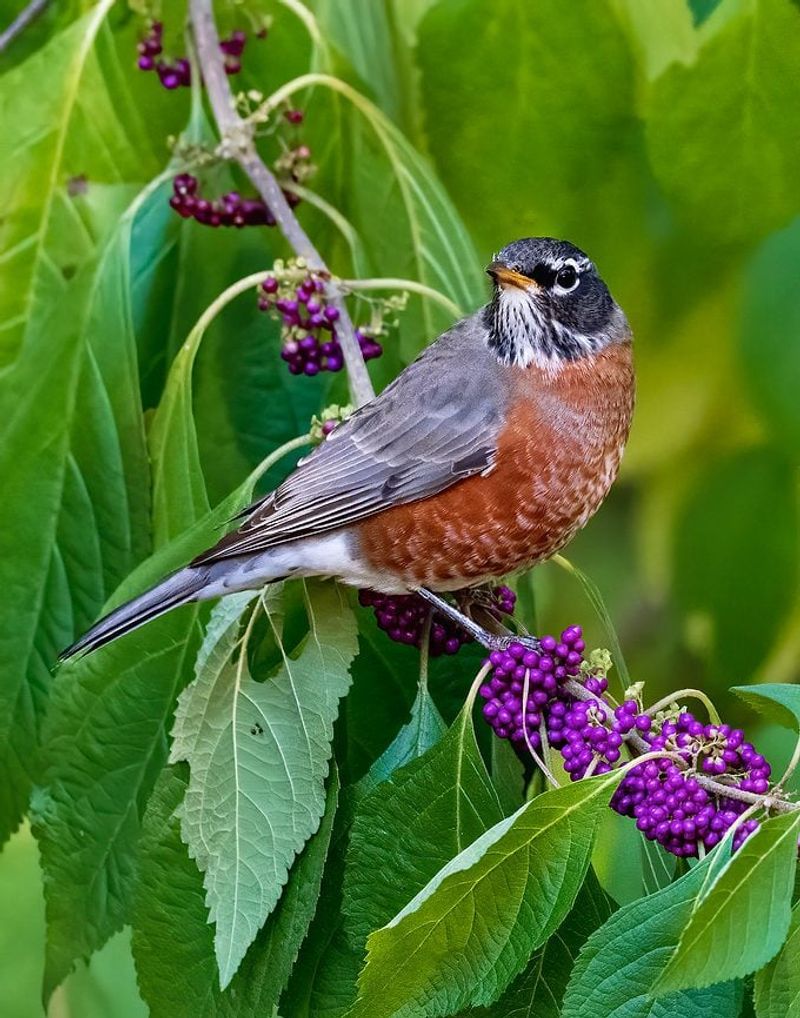
Whatever the tick research does or does not prove, American beautyberry has a legitimate claim to space along a North Carolina woodland edge on its own terms. Its purple berry clusters appear in late summer and persist into fall, providing food at a time when many other native fruiting plants have already finished. NC State Extension documents the shrub’s value to songbirds including robins, brown thrashers, purple finches, and eastern towhees, along with small mammals such as deer, raccoons, opossums, and squirrels.
Cover is a second benefit that often goes unmentioned. Dense native shrubs at a woodland margin give birds and small animals places to shelter, move between habitat patches, and raise young. That structural role is separate from berry production and adds to the plant’s value across seasons, even after the fruit is gone. A shrub that feeds and shelters wildlife has earned its spot in the yard before anyone raises the topic of tick compounds.
These wildlife benefits do not validate the tick-repellency claim or demonstrate lower tick pressure around your property. NC Wildlife’s suburban backyard guidance recommends transitioning from lawn to native shrubs and small trees rather than maintaining a hard, uniform edge, and beautyberry fits that layered approach well. However, wildlife habitat and tick exposure can overlap, and adding dense vegetation near the house or a play area can increase brushing contact regardless of which species you plant. The wildlife case for beautyberry is strong and stands on its own; it just does not extend into tick control.
Keep beautyberry out of the highest-contact parts of the yard
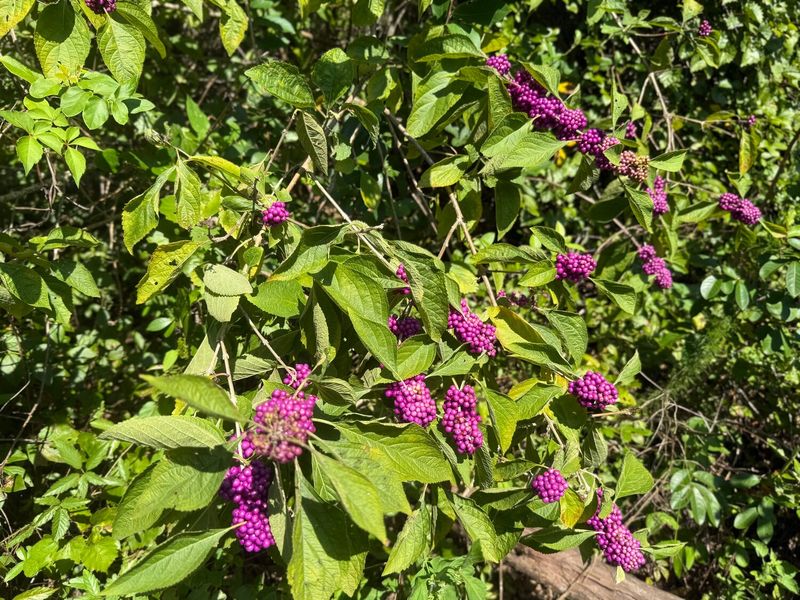
Placement is where landscape enthusiasm and cautious risk management have to meet. Using beautyberry in a maintained woodland-edge transition makes sense. Planting it as a dense hedge right beside a patio, play set, or frequently walked path is a different choice, and not a recommended one. NC Cooperative Extension explains that ticks climb grasses and shrubs and transfer to people when vegetation brushes against them, so keeping any shrub away from high-contact areas reduces the chance of that contact, regardless of the plant’s identity.
This recommendation is about managing vegetation contact, not about proving that distance from beautyberry lowers tick abundance. No study has shown that. The practical logic is simpler: vegetation that brushes against people creates tick-transfer opportunities, so shrubs near patios and play areas carry more risk than shrubs set back into the edge. NC Wildlife’s guidance on suburban backyards supports a layered edge design where habitat plantings sit farther from high-use areas and a maintained lawn buffer separates the house from the woods.
One practical limitation deserves mention: beautyberry is deciduous. Its leaves drop in fall, and it goes dormant through winter. NC State Extension’s plant profile confirms this seasonal pattern, which means the shrub cannot function as a year-round visual screen or physical barrier. If you are hoping for a continuous green edge that blocks the view of the woods or maintains a defined border through January, beautyberry will not deliver that.
Plan for its seasonal nature and pair it with other native plants that offer winter structure if a year-round edge is your goal.
Pair the shrub with recommended edge-management practices
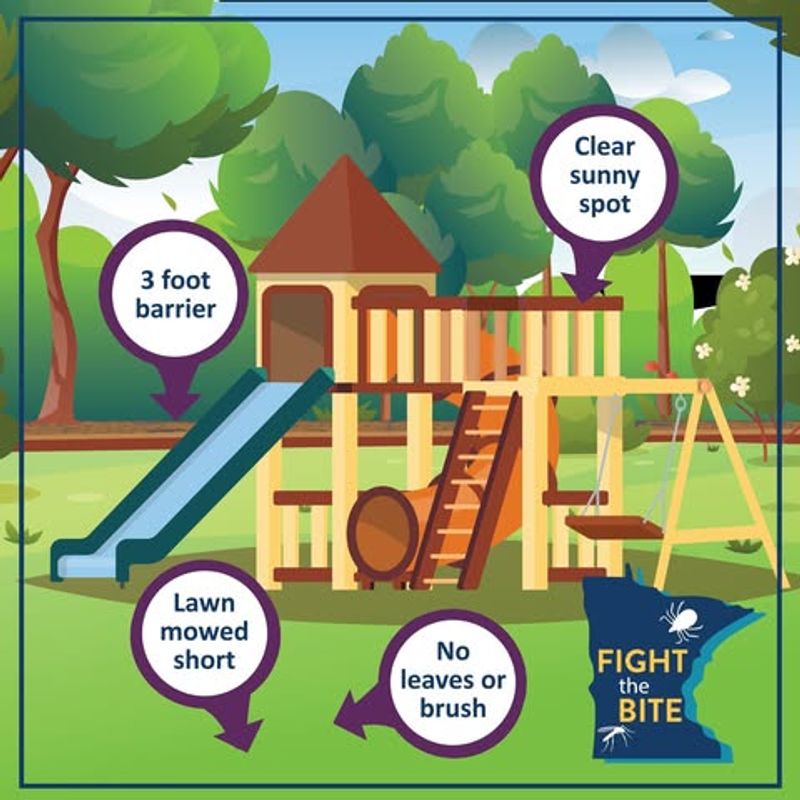
Beautyberry can improve the look and wildlife value of your woodland edge, but the practices that public-health and extension agencies actually recommend for reducing tick exposure are habitat-management steps, not shrub selections. CDC tick prevention guidance calls for removing leaf litter, clearing tall grass and brush near lawns, mowing regularly, and installing a three-foot-wide wood-chip or gravel barrier between your lawn and the woodland edge. Those steps address the conditions that support tick survival and movement near spaces where people spend time.
Leaf litter is worth focusing on specifically. It holds moisture, provides cover, and supports the small animals that host immature ticks. Raking it back from the lawn edge and away from the house foundation removes habitat that favors tick development. Mowing keeps grass short enough that ticks have fewer opportunities to climb and wait for a host.
NC Cooperative Extension’s tick pest alert reinforces these steps as practical and accessible for most homeowners with wooded boundaries.
The wood-chip or gravel barrier deserves particular attention because it creates a physical transition that ticks are reluctant to cross. Placing beautyberry and other native shrubs on the woodland side of that barrier, rather than between the barrier and the lawn, keeps the planting’s wildlife benefits intact while maintaining the separation that matters for contact reduction.
Pesticide applications around woodland edges can reduce ticks in treated areas, but they are a secondary option rather than a primary strategy. If you consider them, follow product labels carefully, note potential effects on beneficial insects including pollinators, and recognize that spraying alone is not sufficient for managing tick exposure over time. The habitat-management steps come first, and beautyberry contributes to the planting and wildlife goals within that maintained edge, not to the exposure-reduction work itself.
Use tested personal protection instead of beautyberry leaves
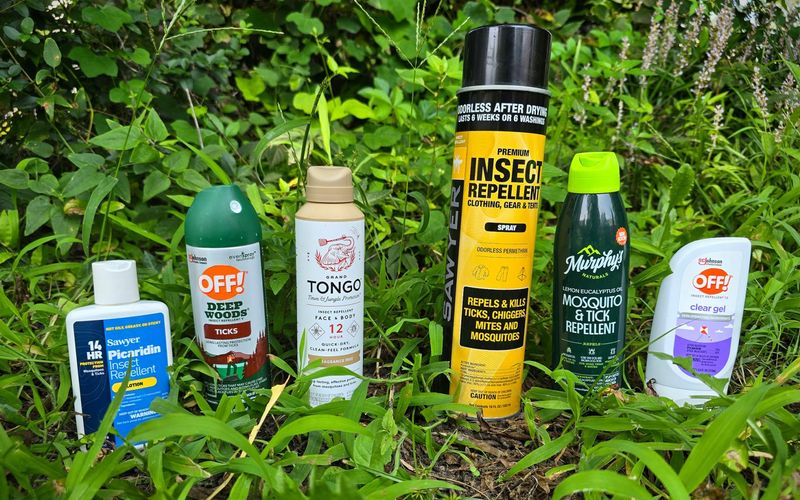
Landscape planning and personal tick protection are two separate jobs, and beautyberry handles neither one on its own. After you spend time near your wooded edge, the protection that matters most comes from what you put on your body and how carefully you check afterward. CDC tick prevention recommendations call for using EPA-registered repellents according to product directions, considering permethrin-treated clothing and gear for extended outdoor activity, and performing thorough tick checks after coming inside.
One idea that surfaces in popular articles about beautyberry is rubbing the leaves on skin as a natural repellent. That is not a safe or validated approach. The USDA study tested purified, isolated compounds at specific concentrations on treated cloth in a laboratory, not crushed leaves applied to skin. EPA’s guidance on skin-applied repellents explains that registration indicates a product has been evaluated for safety and effectiveness.
Crushed leaves have no established dose, formulation, duration, or safety record for use on people, children, or pets. Substituting them for a registered repellent is not supported by the research and is not recommended.
EPA’s repellent finder tool can help you identify registered products that fit your activity level and the people in your household, including options for children. Tick checks remain important regardless of what repellent you use, because no product is 100% effective and prompt removal of attached ticks reduces the risk of disease transmission. Personal protection is the layer that travels with you, and it does not depend on what is growing along your property line.
Treat beautyberry as a useful layer, not a tick solution
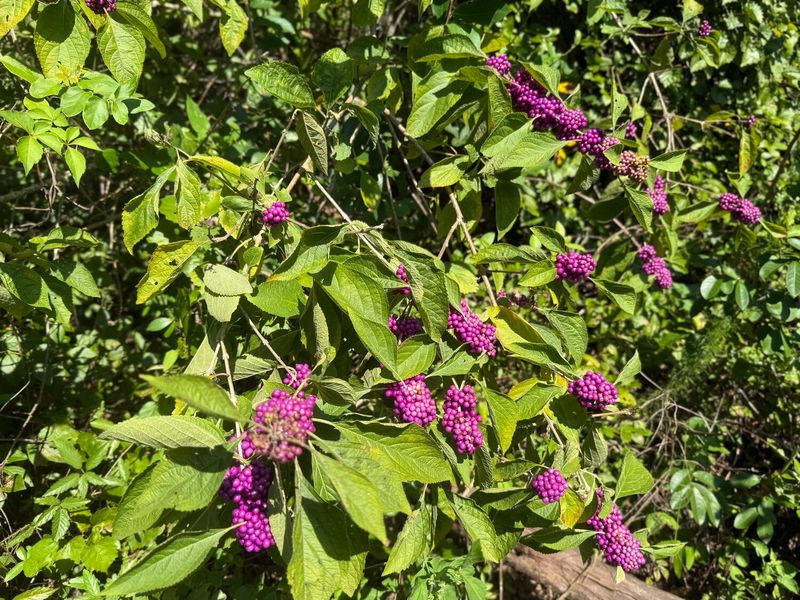
American beautyberry is a native North Carolina shrub with real value for wildlife and a genuinely interesting laboratory finding attached to its name. The USDA research showing that purified compounds from its leaves repelled blacklegged tick nymphs under controlled conditions is worth knowing about. What it does not show is that planting beautyberry along your property line will slow, repel, or eliminate ticks in your yard. No evidence supports that conclusion, and framing the shrub as a tick-control plant sets up expectations the research cannot meet.
The practical sequence for a North Carolina homeowner is straightforward. Choose a planting site that matches beautyberry’s needs: partial to full sun and well-drained soil, as confirmed by NC State Extension. Keep it away from patios, play areas, and frequently used paths. Maintain the lawn-to-woods transition with mowing, leaf-litter removal, and a wood-chip or gravel barrier.
Use CDC-recommended personal protection whenever you spend time near the edge.
Beautyberry fits into that plan as a native wildlife plant with a well-documented role in the regional landscape. That is a worthwhile contribution on its own, without asking the shrub to do a job the science has not given it.